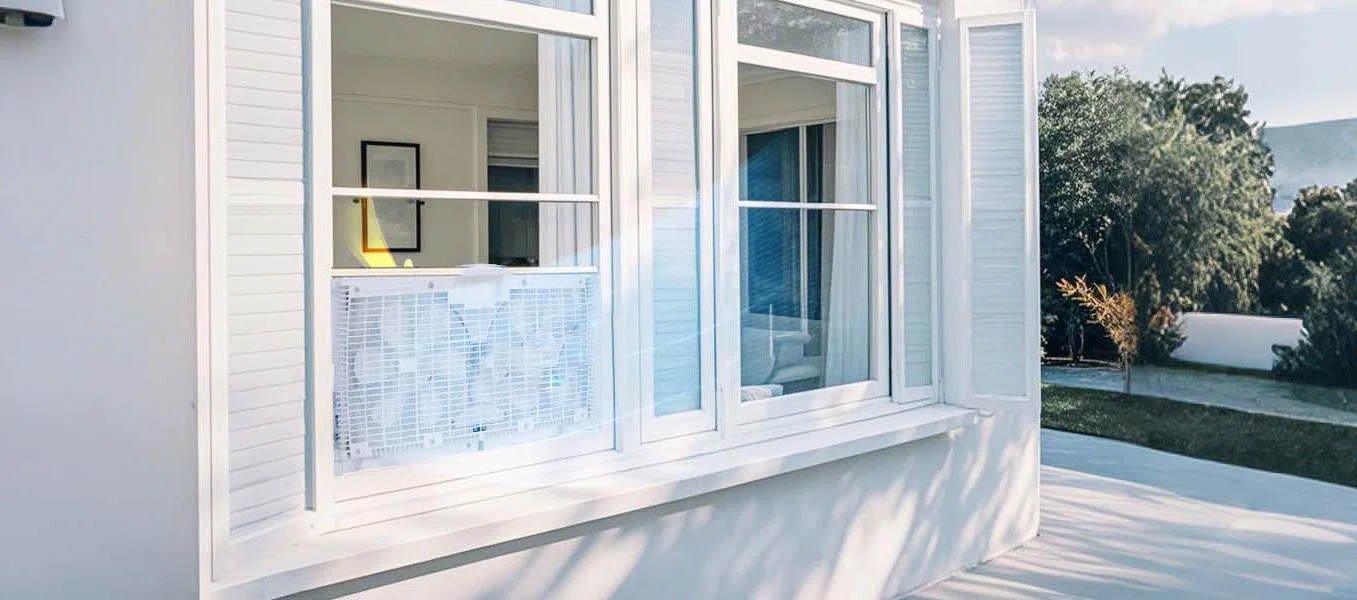
Let’s be honest: we’ve all been there. It’s a sweltering July afternoon, your AC is struggling to keep up with the rising electricity bill, and your living room windows are just sitting there, doing nothing. You buy a nice dual-blade window fan, bring it home, and—clunk—it doesn’t fit. Either the crank handle is in the way, or there’s a massive gap letting in every mosquito in the neighborhood.
As someone who manufactures high-performance exterior windows for a living, I can tell you that ventilation isn’t just about moving air; it’s about understanding the “anatomy” of your home’s envelope.
In this guide, we’re going to solve the puzzle of home ventilation. Whether you are dealing with a standard slider or the “end-boss” of installation—the casement window fan—I’ll show you exactly what works, what doesn’t, and how to stay cool without compromising your home’s security.
The Science of Summer Cooling: How Windows Affect Home Ventilation
Before we talk about fans, we need to talk about cross-ventilation. According to Energy Star, strategic natural ventilation can reduce your reliance on air conditioning by up to 30%.
But here is the kicker: a fan in a window is only as good as the window it’s in. If your exterior windows are leaky or poorly insulated, you’re just fighting a losing battle against the sun. Modern energy-efficient cooling starts with the frame itself.
Pro Tip: If you want a 50% boost in airflow, don’t just point the fan “in.” Use the “In-and-Out” method. Place one fan on the cool side of the house blowing in, and another on the opposite side blowing out. This creates a high-speed “wind tunnel” effect that clears out stale air in minutes.
Double-Hung & Single-Hung Window Fan Installation Tips
If your home features traditional vertical-sliding windows, consider yourself lucky. These are the most fan-friendly designs on the planet.
The Real-World Scenario
Imagine your bedroom at 10:00 PM. The air outside has finally cooled down, but your room is still a sauna. With a hung window, you simply pop the fan onto the sill and slide the sash down. The sash acts like a natural clamp, holding the unit steady.
Installation Hacks:
The “No-Gap” Hack: Most fans come with cheap plastic “accordion” sliders. They leak air and look terrible. Instead, go to your local hardware store and get a strip of foam pipe insulation. Wedge it into the gaps. It seals better, stops the rattling, and keeps the bugs out.
Security Check: Since the window is technically “open,” place a wooden dowel or a security bar in the track above the sash. This prevents anyone from sliding the window up further from the outside while you sleep.
Horizontal Sliding Windows Fan Installation: Seal Gaps for Maximum Airflow
Horizontal sliders are common in modern living room windows. They offer great views, but they present a unique challenge: they leave a massive vertical void above the fan that ruins your DIY window fan efficiency.
Why standard setups fail:
If you put a horizontal fan in a vertical opening, the “exhaust” air often loops right back in through the gap above the fan. You’re just spinning air in a circle.
The Pro Solution:
Vertical Orientation: Look for fans that are specifically rated for “vertical use.” Some motors don’t like being turned 90 degrees, so check the manual!
Plexiglass Fillers: If this is a permanent summer setup, have a piece of clear Plexiglass cut to the width of the fan and the height of the remaining gap. It keeps the view clear and stops the “re-entry” of hot air.
Casement Window Fan Installation: Slim Vertical Fans & Expert Tips
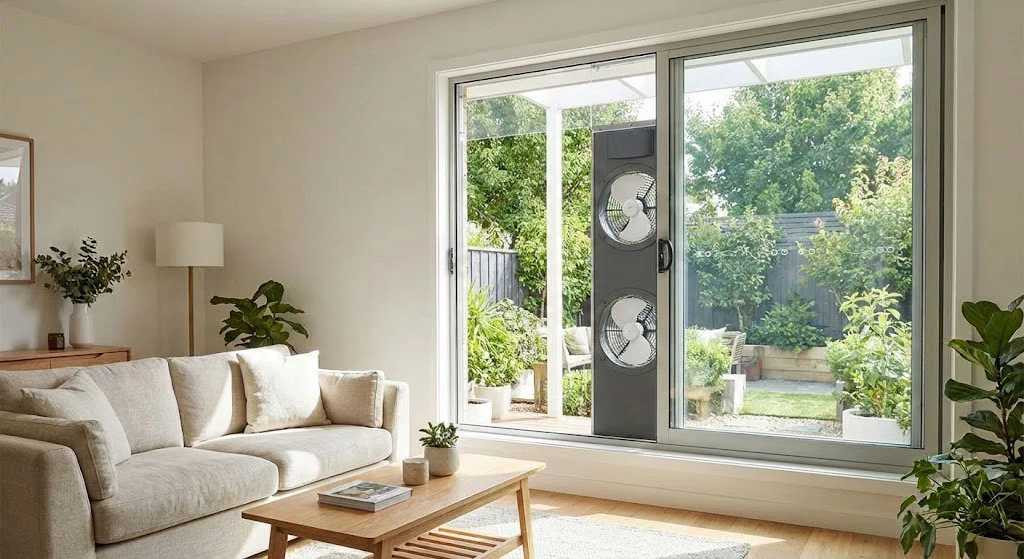
This is where most people give up. Casement windows (the ones that crank out) are superior for thermal performance because they create a tight seal when closed. But they are notoriously difficult for fans.
Why it's a "Challenge":
The Crank Handle: It usually sticks out right where the fan needs to sit.
The Swing: The window swings out, leaving no track to secure the fan.
The "Expert" Casement Solution:
You need a specialized casement window fan. These are typically “slim-profile” vertical units.
The Tension Bar Hack: Use a spring-loaded tension rod (like a shower curtain rod) inside the window frame. Place the fan against the frame and use the rod to press it firmly into place.
The Screen Factor: You will likely have to remove your interior insect screen. Make sure your fan has its own built-in mesh, or you’ll wake up with a room full of uninvited guests.
Window Fan Compatibility Matrix: Difficulty, Security & Recommended Types
To make your life easier, I’ve put together this quick-reference table for your next summer cooling project.
| Window Style | Compatibility | Install Difficulty | Security Risk | Recommended Fan Type |
|---|---|---|---|---|
| Double-Hung | ⭐⭐⭐⭐⭐ | Very Easy | Low | Standard Expandable Dual Fan |
| Sliding | ⭐⭐⭐⭐ | Medium | Medium | Reversible Vertical-Rated Fan |
| Casement | ⭐⭐ | Hard | High | Casement Window Fan (Slim/Vertical) |
| Awning | ⭐ | Expert Only | High | High-Velocity Floor Fan directed at window |
| Fixed/Picture | ❌ | N/A | N/A | Table/Pedestal Fan |
Real Project Story: The Melbourne High-Rise Cooling Challenge
Last year, we worked on a project in Melbourne (you can see the full Solution Case Study here). The developer had beautiful, floor-to-ceiling living room windows but complained that the units felt like greenhouses in the afternoon.
Because these were high-performance exterior windows, we advised a two-part strategy:
Thermal Optimization: We used Low-E glass to block the solar heat.
Strategic Exhaust: We helped them select slim-profile fans for the side-casement windows to pull the air out, while the large main windows stayed closed to maintain the building’s thermal envelope.
The result? A significant temperature drop and a much happier group of tenants.
Safety, Security, and Your Exterior Windows
Putting a fan in a window is essentially creating a temporary hole in your house. Here is how to do it without regrets:
UV Resistance: Cheap fans will turn yellow and brittle in a single season. If your windows face the direct sun, only buy fans made from UV-stabilized ABS plastic.
Rain Protection: Most window fans aren’t waterproof. If a storm hits, a standard fan sucks water directly onto your floors. Always look for “Rain-Resistant” motors or fans that allow you to close the window behind them.
FAQ: Your Home Ventilation Questions Answered
Which window fan is best for casement windows?
A: Look for “Tower-style” or “Slim Vertical” fans. They are designed to fit into narrow openings without interfering with the crank handle or the hinges.
Can I use a window fan with a screen?
A: Yes! We recommend it to prevent debris and bugs. Just be aware that it reduces airflow by about 10%.
Is it better to blow air in or out?
A: During the day, if it’s hotter outside, blow OUT (exhaust) to remove hot air trapped at the ceiling. At night, blow IN to bring in the cool breeze.
Summary: A Good Fan Deserves a Great Window
At the end of the day, a fan is just a tool. If your exterior windows are drafty, stuck, or outdated, you are fighting a losing battle. At Superwindowhouse, we don’t just sell glass; we sell the comfort of a well-ventilated home.
Ready to upgrade your home’s ventilation?
👉 Explore our Full Energy-Efficient Window Catalog
👉 [Get a Custom Quote for Your Next Project]