A vinyl awning window is a top-hinged, out-swinging unit with a single or multi-pane sash, designed to provide ventilation even during rain while maintaining a weathertight seal. The core engineering relies on a scissor-gear mechanism or friction hinges that allow precise push-out or crank-out operation, with a multi-chamber uPVC frame that enhances thermal performance and structural rigidity. For B2B buyers, these windows typically meet AAMA/WDMA/CSA 101/I.S.2/A440 standards, offer standard rough opening widths from 18″ to 48″, and can be combined in stacked or horizontal configurations to achieve egress compliance without compromising energy efficiency.
What Defines a Vinyl Awning Window?
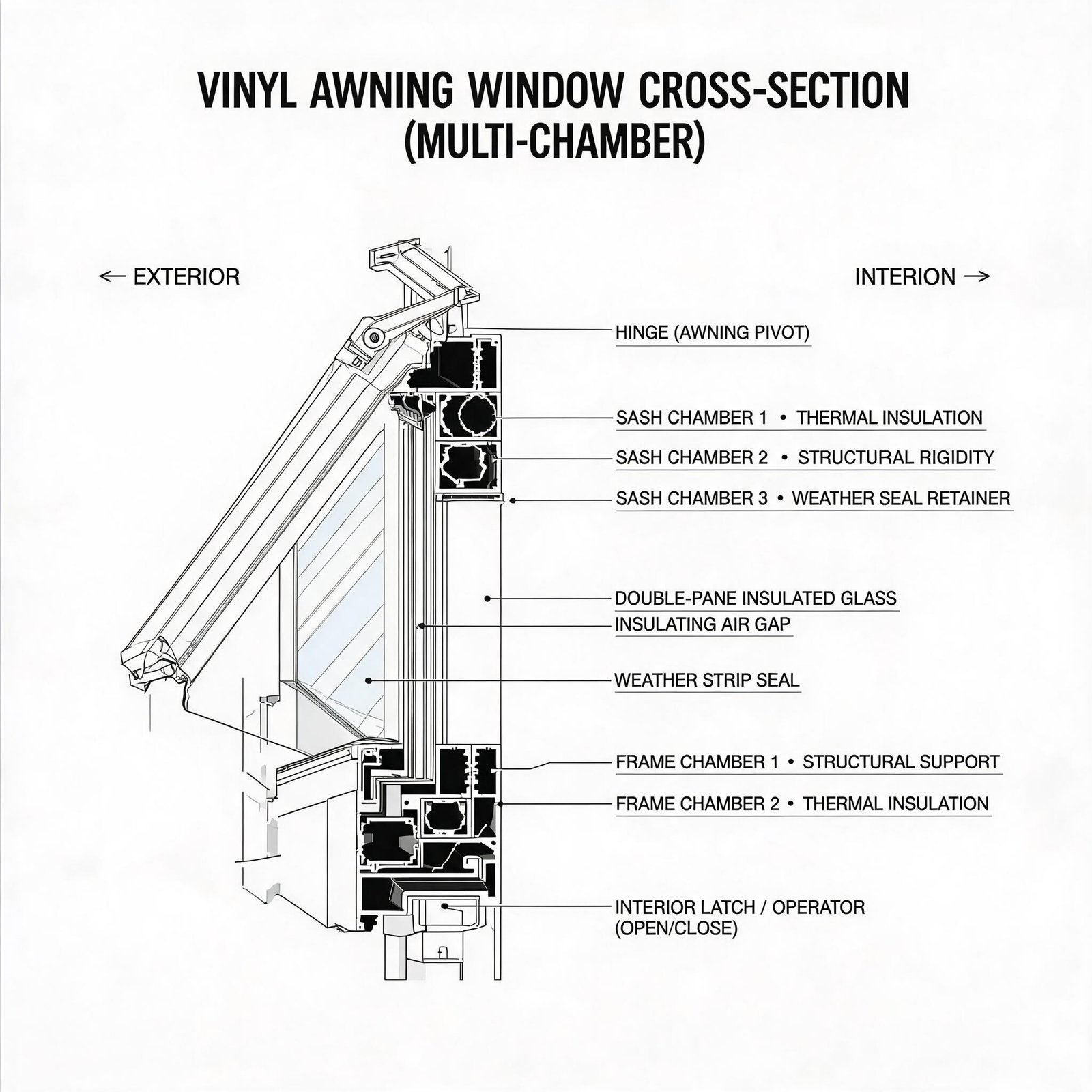
A vinyl awning window hinges at the top and opens outward via a manual crank or push-out mechanism. Unlike casement windows (hinged on the side), the top-hinged design creates an awning-like overhang that deflects rain away from the opening. The sash is fully fusion-welded into a multi-chamber uPVC frame, eliminating thermal bridging and reducing condensation. Key identifiers:
- Top-hinged operation – the sash swings outward from the bottom.
- Scissor-gear or friction hinge hardware – provides smooth, controlled movement.
- Multi-point locking system – typically 2–3 points along the side opposite the hinge.
- Standard sill angle – often 5° to 7° to shed water.
Manufacturers like Superwindowhouse optimize these windows for both residential and light commercial projects, offering custom sizes and integrated reinforcement for hurricane-prone regions.
Mechanisms: How They Open and Close
1. Crank-Out (Scissor Gear) Mechanism
The most common operator for larger awning windows. A crank handle on the sill rotates a threaded rod, which drives a scissor-arm assembly to push the sash outward. This mechanism provides excellent leverage for heavy sashes (up to 40 lbs) and allows for a wide opening angle—typically 10–12 inches at the bottom.
Advantages:
- Consistent force, even in windy conditions.
- Self-locking in open position.
- Easy to operate for tall or stacked units.
2. Push-Out (Friction Hinge) Hardware
For smaller awning windows or systems where a crank is undesirable, friction hinges are mounted at the top corners of the sash. These hinges incorporate a friction stay that holds the window at any open position. Push-out hardware is often paired with a simple button or lever lock.
Benefits:
- Streamlined appearance (no visible crank).
- Fewer moving parts, reducing maintenance.
- Ideal for narrow openings or mulled combinations.
Both hardware types are available on crank out vinyl awning windows from Superwindowhouse, with stainless steel or zinc alloy components to resist corrosion.
Standard Sizes and Configurations
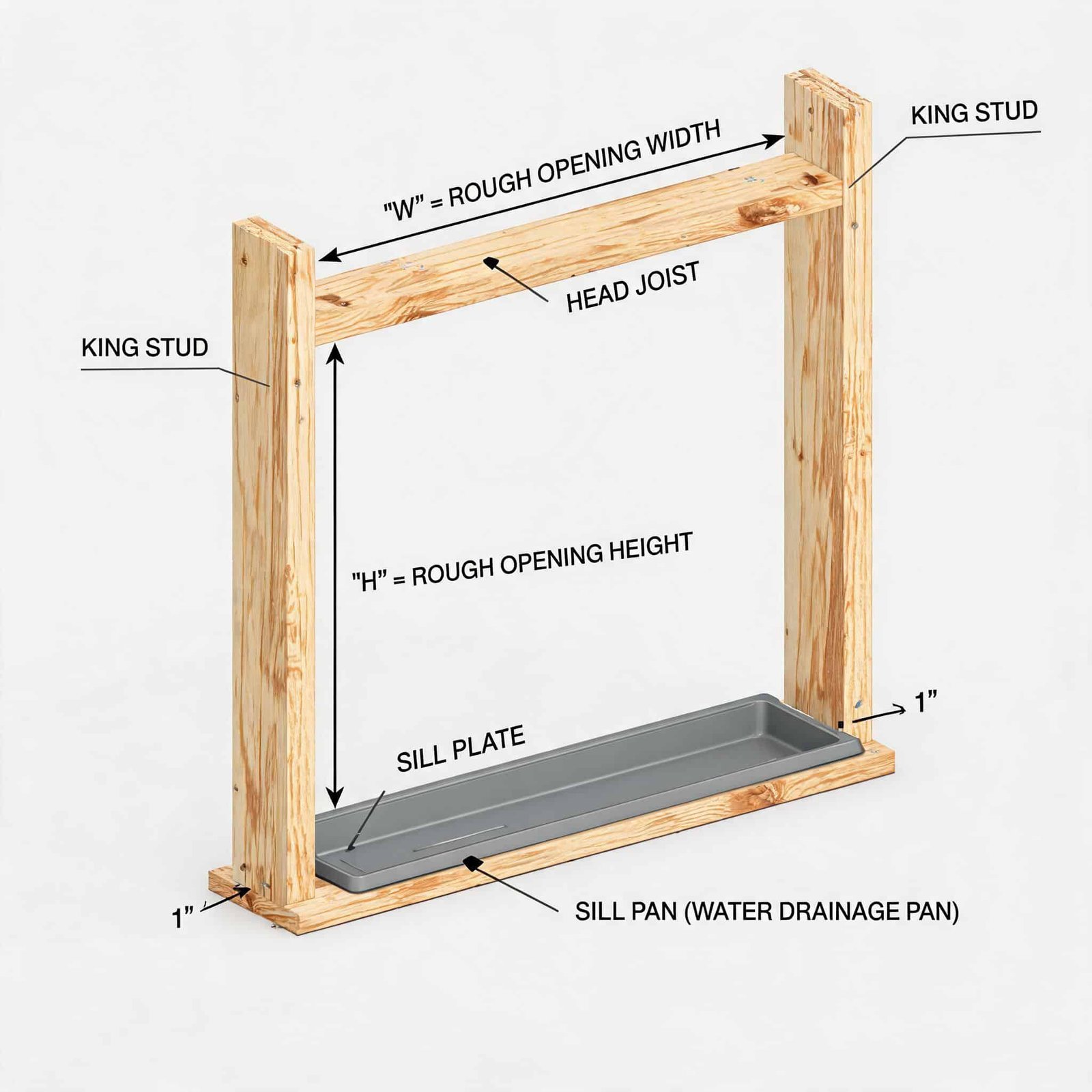
Vinyl awning windows are manufactured in a wide range of sizes, but most follow industry-standard rough opening dimensions to simplify framing and installation. Below is a consolidated reference table based on common B2B specifications.
Typical Rough Opening Sizes (Width x Height)
| Configuration | Width Range | Height Range | Notes |
|---|---|---|---|
| Single sash | 18″–48″ | 12″–36″ | Most common for venting |
| Two-lite stacked (1/2+1/2) | 24″–48″ | 24″–60″ | Equal sashes, both operable |
| Two-lite horizontal (1/2+1/2) | 36″–60″ | 18″–36″ | Side-by-side, independent operation |
| Three-lite horizontal | 48″–72″ | 18″–30″ | Center fixed, outer operable |
| Custom mulls | Up to 96″ | Up to 72″ | Multiple units ganged together |
Standard frame depth is typically 2-7/8″ to 3-1/4″ for multi-chamber uPVC frames.
Note: For egress compliance, the net clear opening must be at least 5.7 sq ft. Many stacked or side-by-side awning configurations can meet this requirement when properly sized.
Performance and Thermal Standards
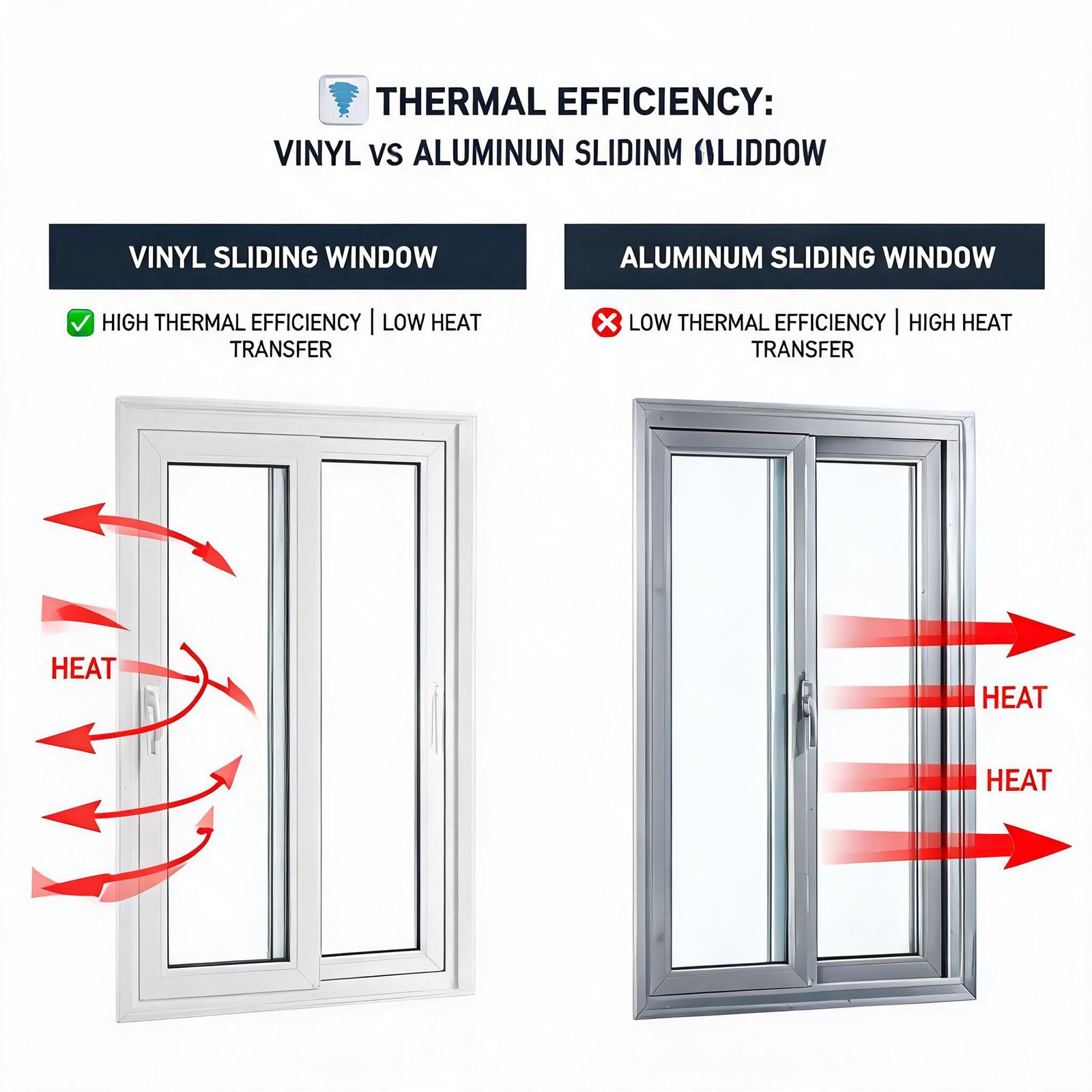
Vinyl awning windows are popular in both cold and warm climates because the uPVC material is an excellent insulator. With multi-chamber frames and double or triple glazing, they easily meet ENERGY STAR® requirements.
- U-Factor: Typically 0.25–0.32 (depending on glass package).
- SHGC: Range 0.20–0.50 (customizable for solar heat gain).
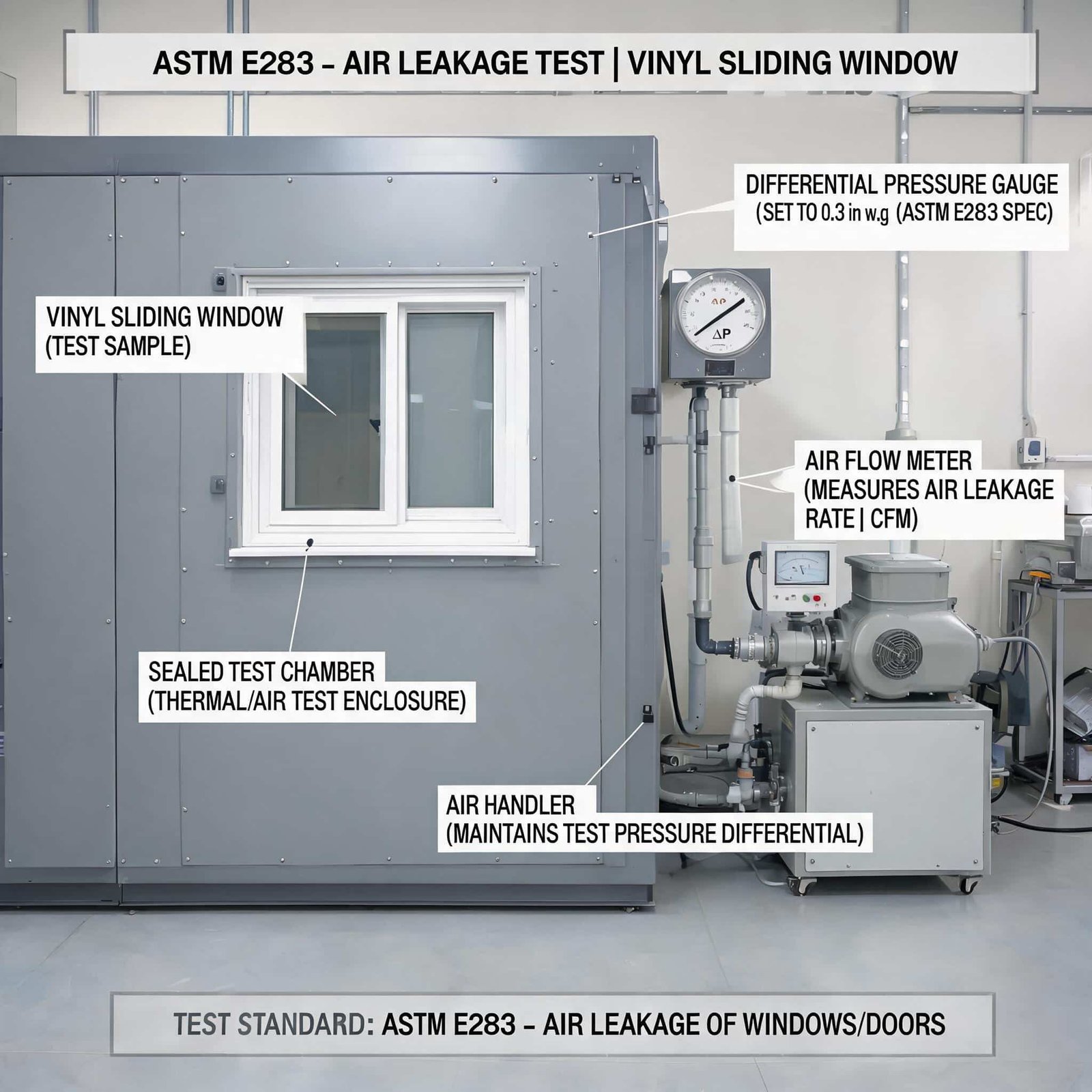
- Air leakage: ≤ 0.30 cfm/ft² (often achieves ≤ 0.10).
- Water resistance: Tested to AAMA 910 standards (minimum 0.25 psf, many pass 0.50 psf).
For commercial projects, look for AAMA 101/HVHZ certification (impact resistance) when specifying for Florida or coastal areas.
Multi-Chamber uPVC Frames: Why It Matters
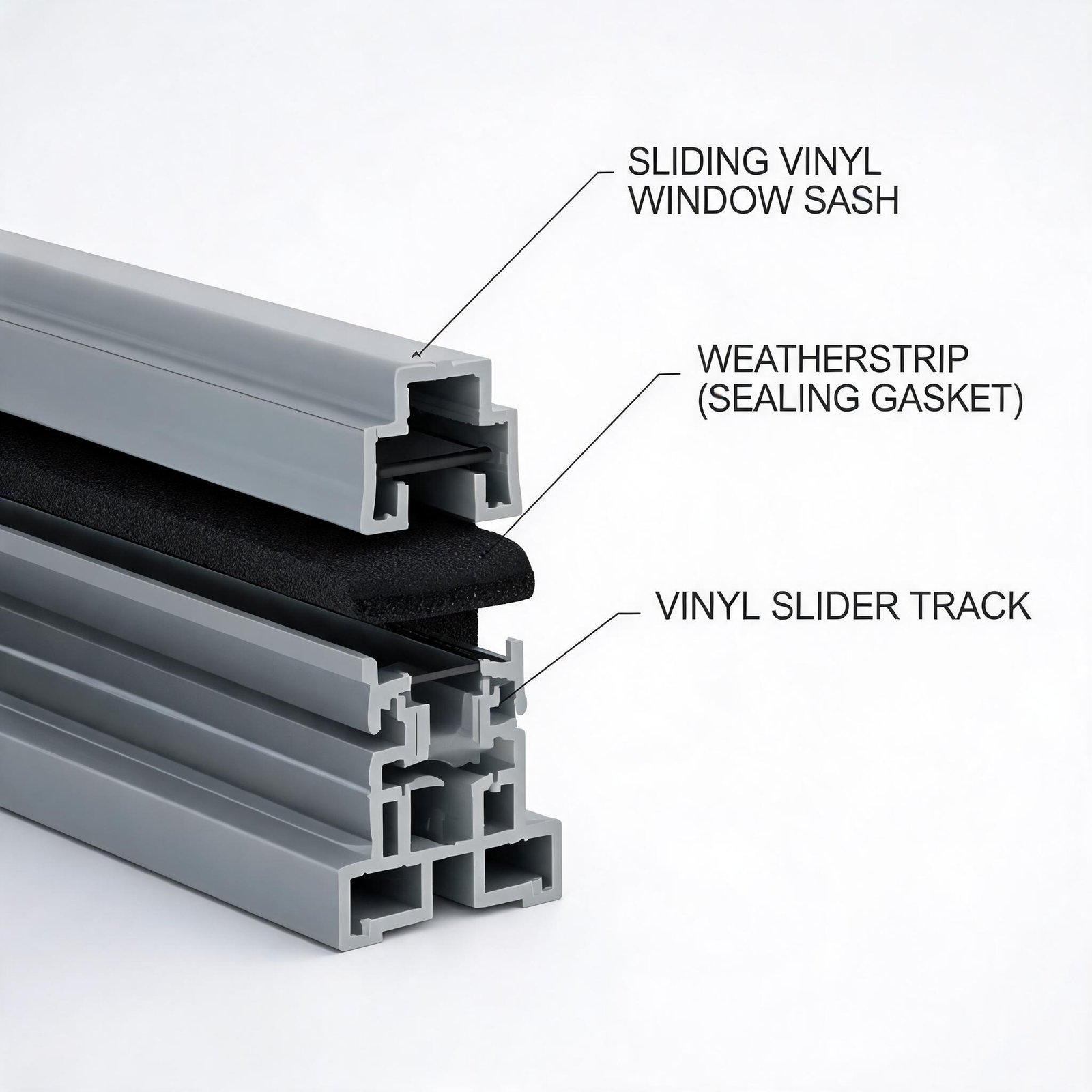
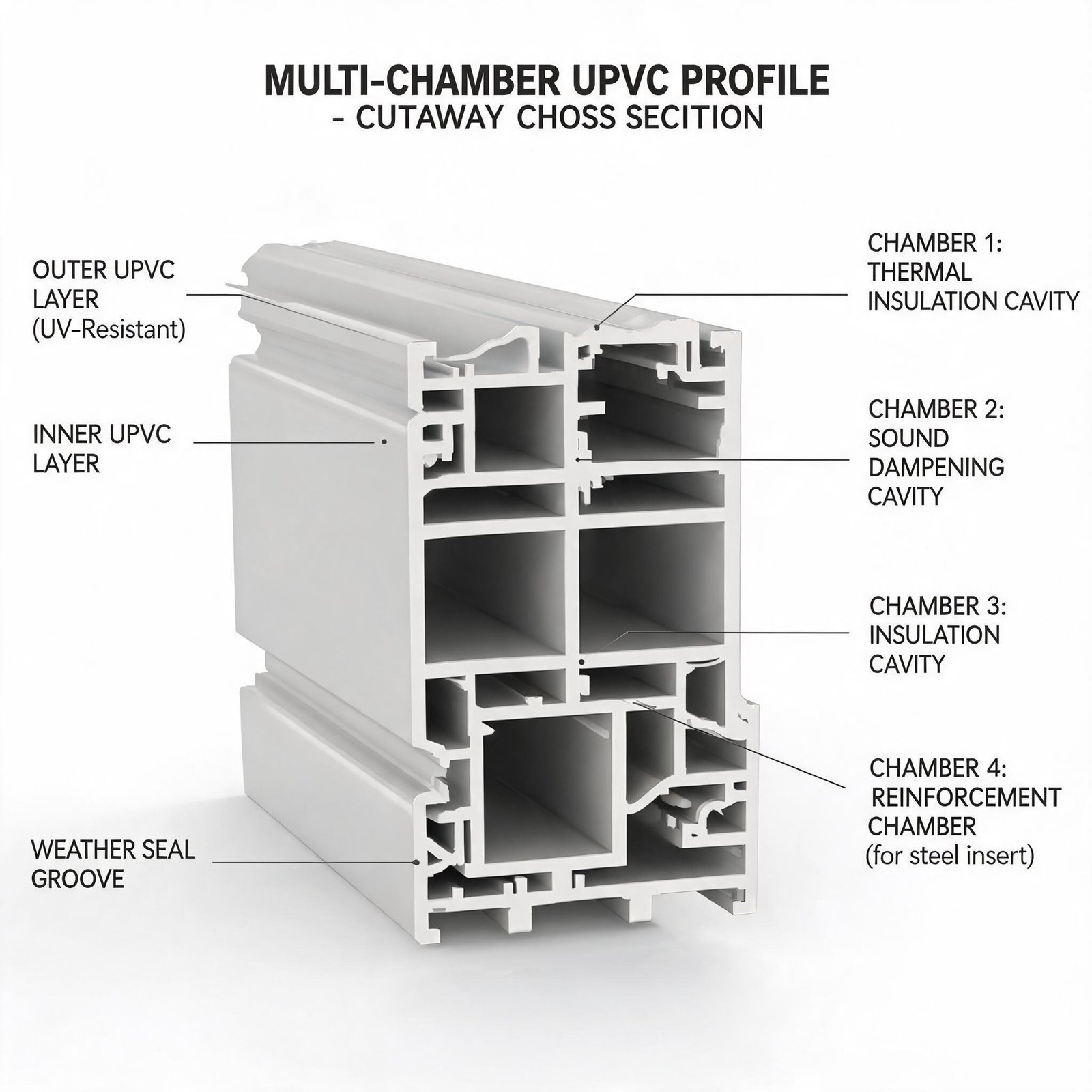
The term “multi chamber uPVC awning frames” refers to extrusion profiles with multiple internal voids (typically 3 to 7 chambers). These chambers trap air, reducing heat transfer and improving structural stiffness. Compared to single-chamber designs:
- Thermal performance: Up to 20% better U-factor.
- Structural rigidity: Higher resistance to wind load (up to 50 psf).
- Condensation resistance: Reduced risk on edge of glass.
Superwindowhouse’s vinyl awning windows use a minimum 5-chamber profile with internal steel or aluminum reinforcement for tall sashes.
Installation Considerations for Builders and Contractors
When specifying or installing vinyl awning windows, follow these best practices:
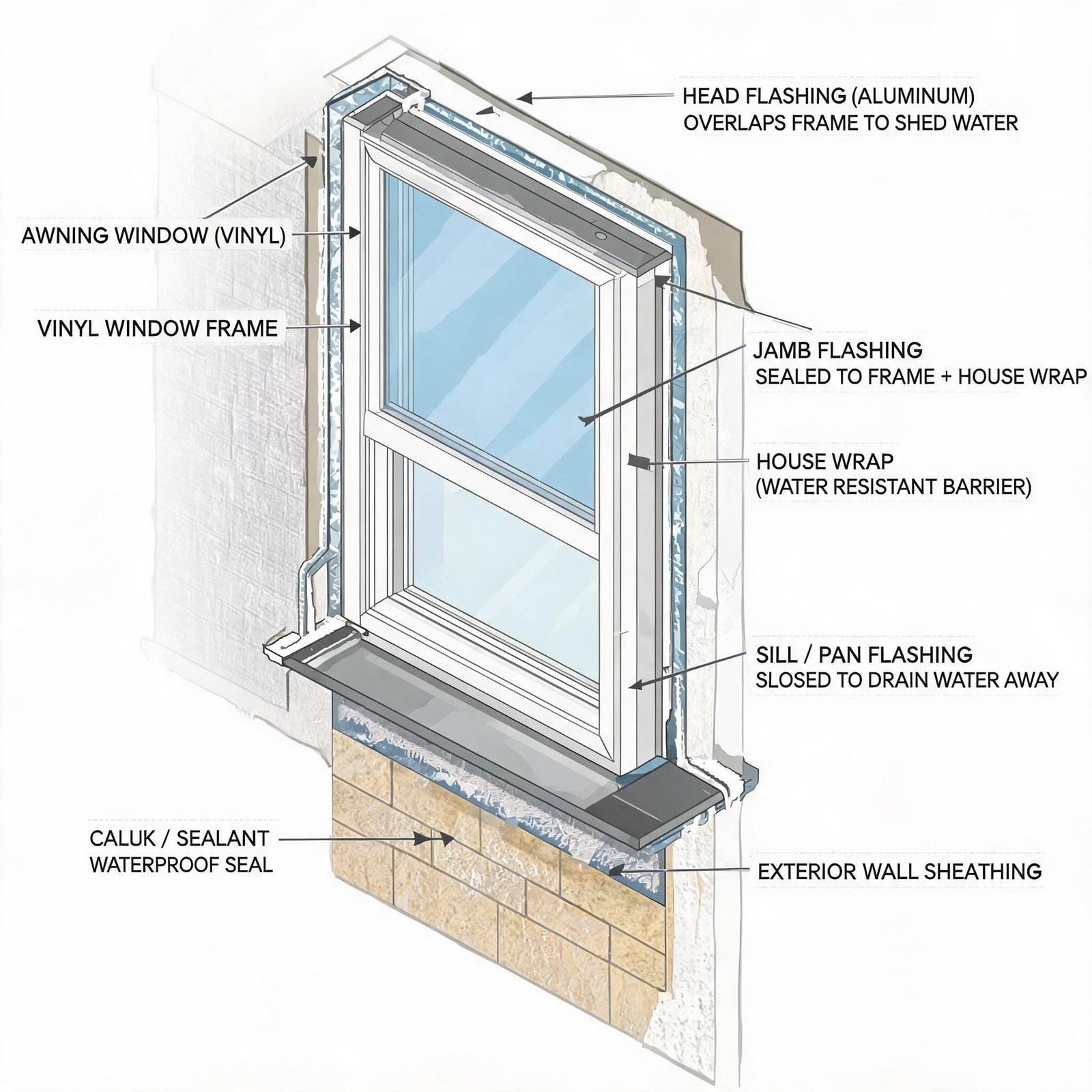
- Rough opening preparation: Ensure square (within 1/8″ over 36″). Shim and seal around perimeter.
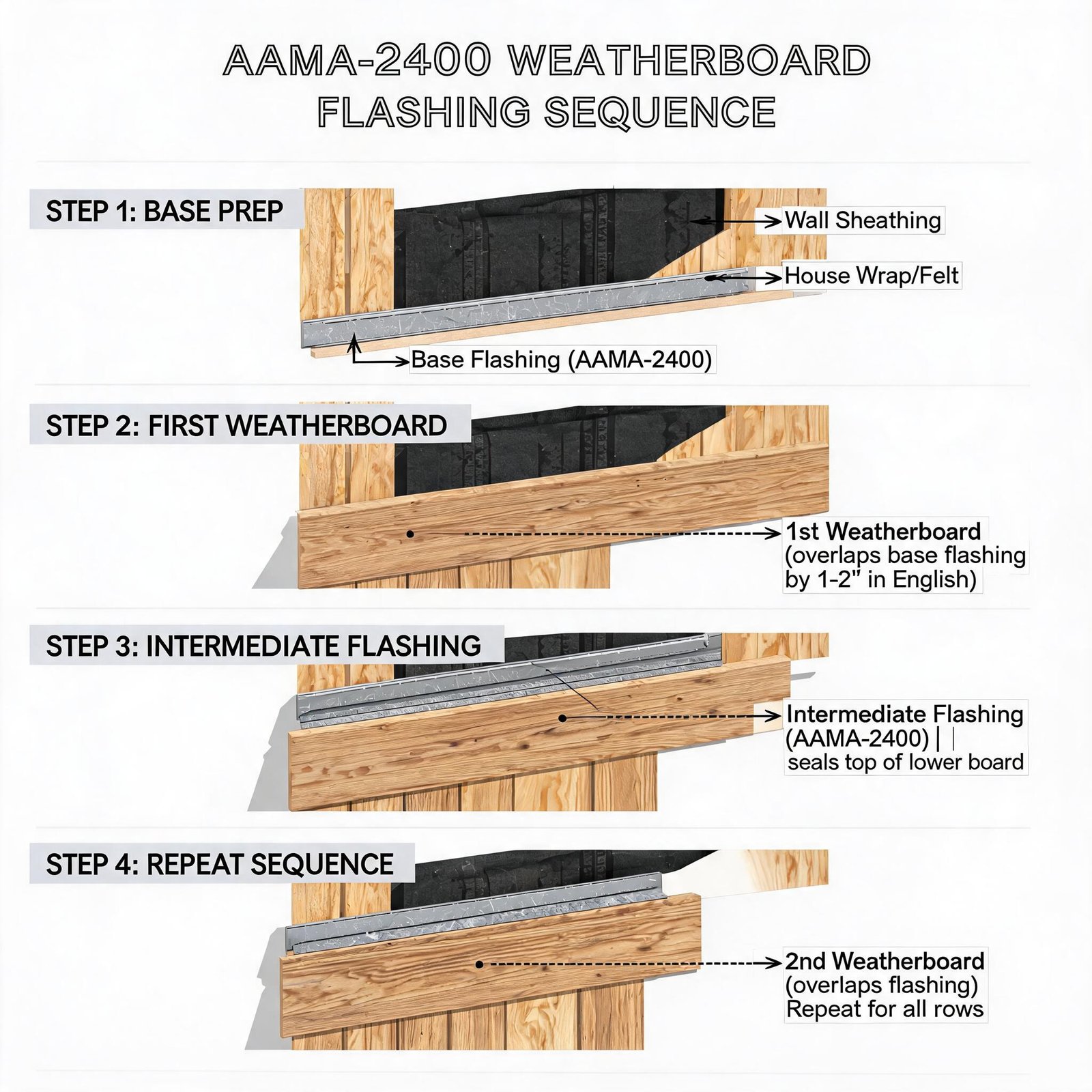
- Flashing: Integrate head flashing above the window to divert water over the top-hinge.
- Anchoring: Use stainless steel screws through pre-punched fastener slots—never through the frame wall (can cause deflection).
- Sill support: For windows over 36″ wide, use a sill angle or support bar to prevent sag.
For a complete selection of top hinged vinyl windows including custom sizes, visit our product page.
Common Applications in B2B Projects
- Above picture windows: Mulled as a transom for added ventilation.
- In basements or below-grade: Where outward projection is safer than inward-swinging.
- Over kitchen sinks or counters: Easy crank operation without reaching far.
- Stacked window walls: Three or four vertically stacked awning sashes create a dramatic look.
- Rain-prone regions: Pacific Northwest, Gulf Coast—where opening a casement window would let in water.
Why Choose Superwindowhouse for Your Awning Window Supply?
As a factory-direct supplier, Superwindowhouse offers:
- Custom sizes up to 72″ x 72″ (mulled combinations to 120″ width).
- Hardware options: Scissor gear, friction hinges, or push-out.
- Glass packages: From double glazed low-E/argon to impact-rated laminates.
- Multi-chamber uPVC with full fusion welding.
- AAMA certification and compliance with 2024 IECC codes.
Our engineering team supports architects and contractors with shop drawings and structural calculations.
Frequently Asked Questions (from the Field)
Q: Can a vinyl awning window be used as a means of egress?
A: Yes, when sized appropriately (net clear opening ≥ 5.7 sq ft). A single 36″ x 36″ sash typically meets this. Stacked configurations can also qualify when both sashes are operable.
Q: What is the difference between a push out and crank out vinyl awning window?
A: Push-out uses friction hinges for manual opening; crank-out uses a gear mechanism for heavier sashes or limited reach. Both are reliable, but crank-out is preferred for windows over 30″ tall.
Q: How do I clean the exterior of a top-hinged window?
A: Most vinyl awning windows can be cleaned from inside by tilting the sash inward (some models have a cleaning position). Others require reaching out—use a long-handled tool.
Final Word for B2B Specifiers
Vinyl awning windows deliver the perfect balance of ventilation, weather protection, and energy efficiency. Understanding the mechanisms—whether scissor gear or friction hinges—and standard sizing allows you to plan with confidence. For custom projects requiring non-standard dimensions or high-performance glass, Superwindowhouse offers factory-direct pricing and engineering support.
For detailed specs, download our architectural catalog or contact our sales team for a project quote.