The Engineering Foundation: Why Hinge Placement Drives Performance
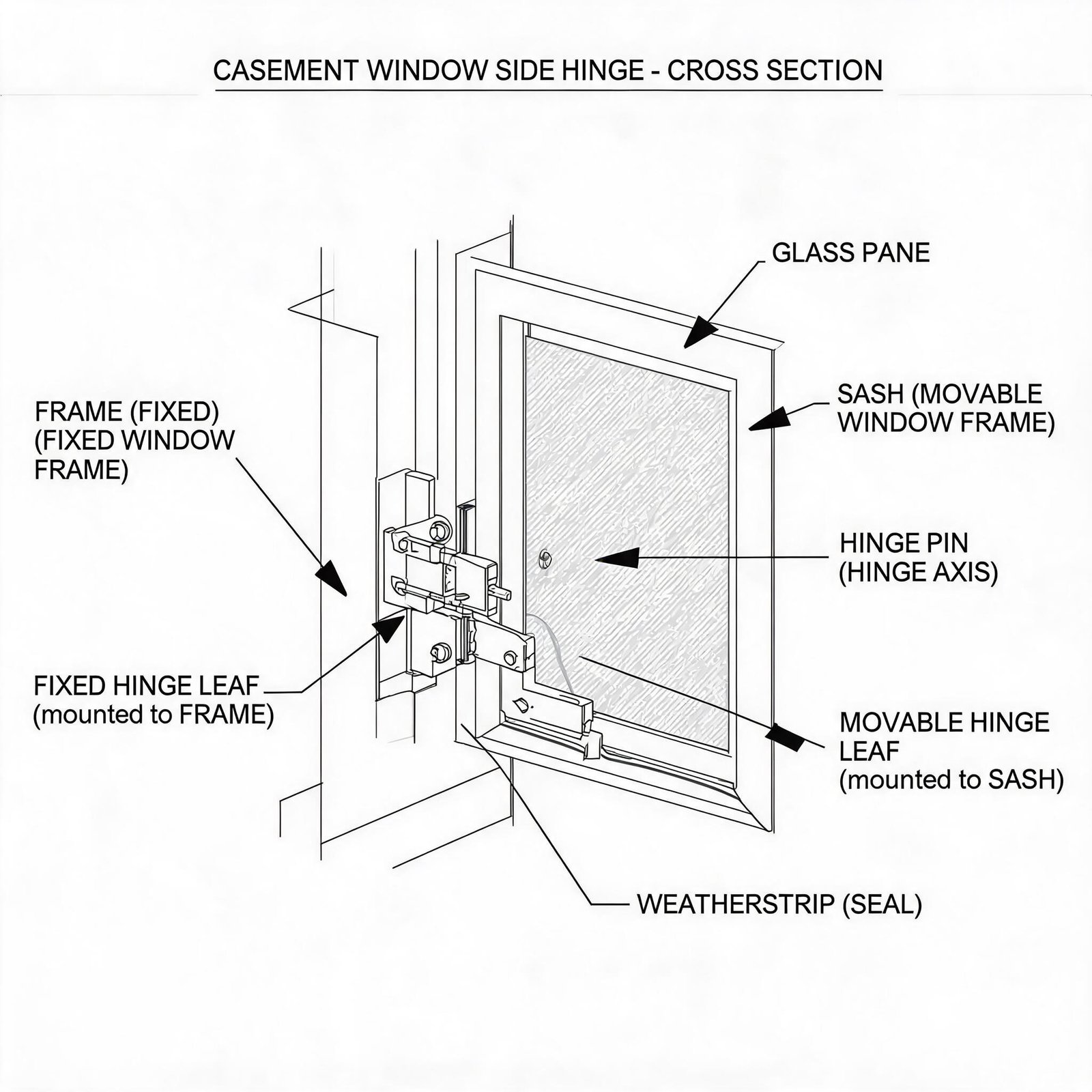
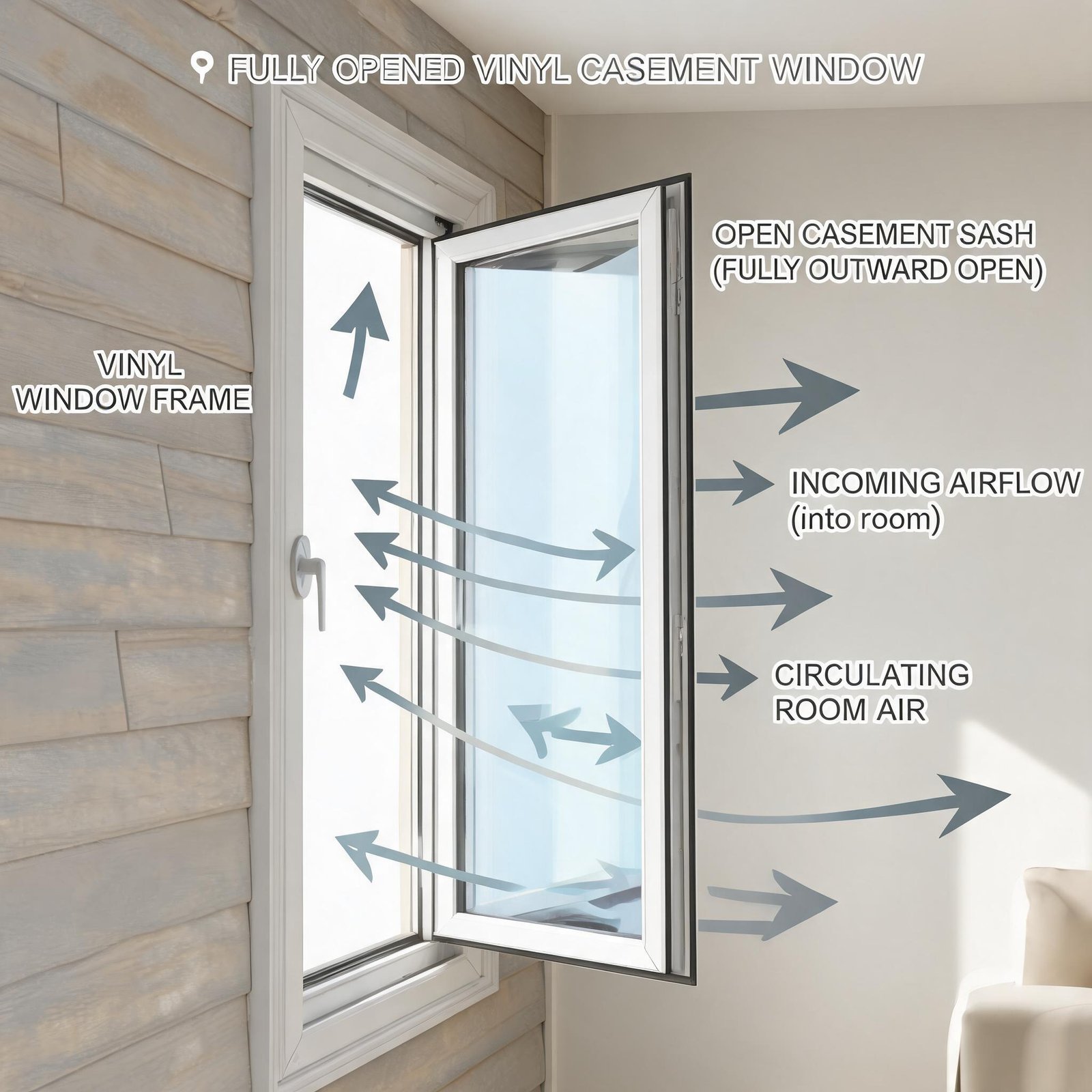
Every production builder and architect needs to understand this: the physics of airflow through an opening window is governed by the hinge location. Casement windows, also called crank-out windows, hinge on the vertical side and swing outward like a door. This design creates a “scoop” effect, capturing prevailing winds and channeling them into the interior. Awning windows, known as top-hinged windows, hinge at the horizontal top and push outward from the bottom, creating a protective overhang effect.
The air infiltration rate (AAMA certified) for quality crank-out windows typically measures below 0.15 cfm/ft²—significantly better than the 0.30 cfm/ft² standard for sliding windows. Both styles achieve this tight seal through compression locking, but the application determines which one delivers superior ventilation for your specific project.
Casement Windows: The Ventilation Powerhouse
When your priority is moving air through a space, casement windows are the undisputed champions. Here’s what 15 years of field testing has confirmed:
Airflow Capacity:
– Fully open at 90 degrees: captures 85–95% of available wind energy
– Operable sash area: 100% of the rough opening (no center rail obstruction)
– Can be angled to direct airflow up, down, or across a room
Structural Advantages:
– Multi-point locking (typically 2–4 cam locks depending on sash height)
– Compression seal technology achieving ENERGY STAR Most Efficient ratings
– Available in ultra-narrow frame profiles (2.5 to 3.5 inch frame depth)
Best Applications:
– Living rooms and bedrooms requiring active air exchange
– Corner installations where prevailing wind capture is critical
– Egress windows (casements often meet IRC egress requirements at smaller sizes than awnings)
The downside? Casement windows require exterior clearance—at least 24 inches of unobstructed space for full operation. This matters for multifamily projects where adjacent walls, walkways, or landscaping limit swing.
Awning Windows: Ventilation Without Weather Compromise
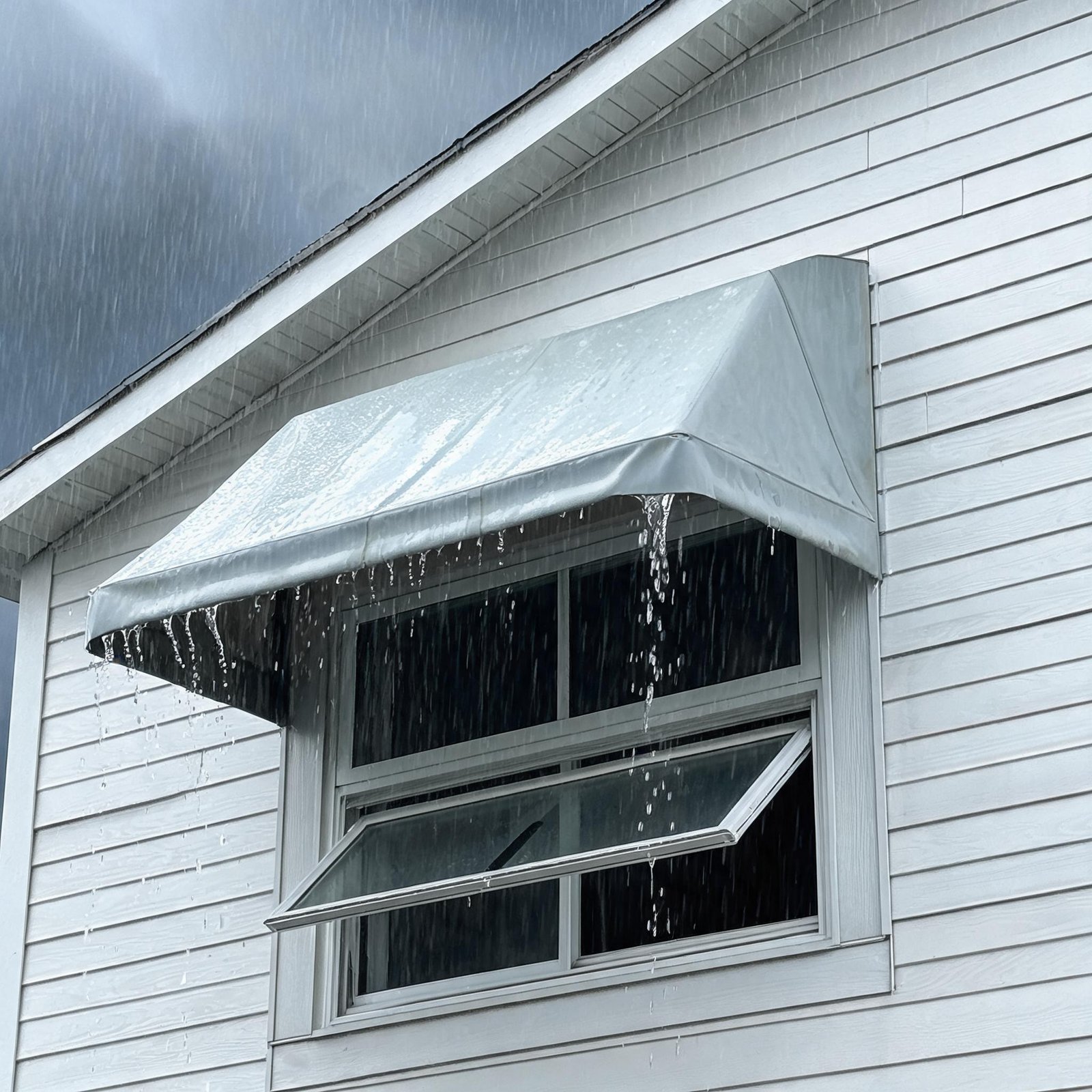
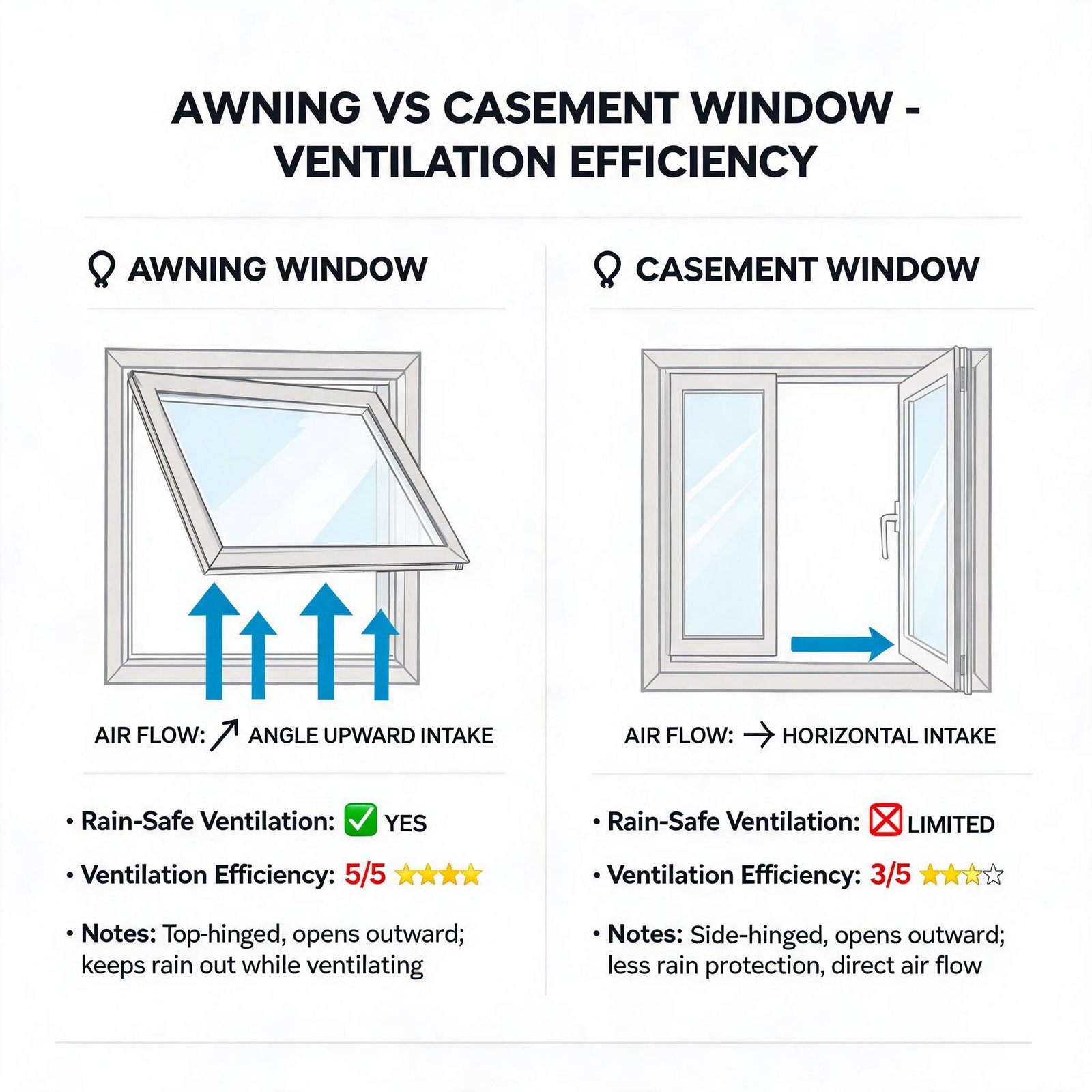
Top-hinged windows serve a distinct niche that casements simply can’t fill: ventilation during precipitation. The glass panel itself acts as a canopy, deflecting rain while allowing air to enter through the bottom gap.
Ventilation Characteristics:
– Effective open area: 65–75% of rough opening at full extension
– Rain protection: glass overhang shields opening during light to moderate precipitation
– Stack effect: works well in tall vertical openings for passive ventilation
Critical Technical Specs:
– Maximum opening angle: typically 30–45 degrees (mechanical stop limits further extension)
– Hardware load rating: crank mechanisms rated for 50+ pound sash weights
– Wind load resistance: tested to ±35 psf (AAMA/WDMA standards)
Where Specifiers Should Install Awning Windows:
– Above kitchen sinks (easy reach for crank handle, moisture resistance)
– Bathroom applications (privacy with ventilation, no exterior walkway needed)
– Basement hopper windows (top-hinged design prevents debris accumulation)
– Commercial storefront bands (paired with fixed picture windows for aesthetic continuity)
The trade-off: awning windows can’t match casements for total airflow volume. The top hinge limits the effective capture area, and the restricted opening angle reduces air exchange rates by roughly 20–30% compared to an equivalently sized casement.
Head-to-Head Technical Comparison: Casement vs Awning Windows
Here’s the data matrix that every project estimator and design-build firm needs on their spec sheet:
| Parameter | Casement Window | Awning Window | Notes for Specifiers |
|---|---|---|---|
| Ventilation efficiency (max) | 85–95% | 65–75% | Percentage of total sash area open to airflow |
| Rain operation | Not recommended | Safe in light rain | Glass canopy effect for awnings |
| Egress compliance | Yes, at smaller sizes | Limited | IRC requires 5.0 sq ft clear opening |
| Air infiltration rating | 0.01–0.05 cfm/ft² | 0.01–0.06 cfm/ft² | AAMA Class LC or HC |
| Frame depth (vinyl) | 2.5–3.5 inches | 2.75–3.75 inches | Depends on reinforcement |
| Max sash weight | Up to 80 lbs | Up to 60 lbs | Heavier sashes need stronger hardware |
| Cleaning access | Both sides from interior* | Exterior side needs access | *With Easy Wash hinge option |
| Best width-to-height ratio | Taller than wide | Wider than tall | Architectural guideline |
| Hardware cost delta | +15–20% vs double-hung | +10–15% vs double-hung | Crank mechanisms add cost |
| Typical lead time | 4–6 weeks | 4–6 weeks | Both built-to-order |
Air Exchange Rates: The Numbers That Matter
For commercial builders and architects working to meet ASHRAE 62.2 ventilation standards, here’s the real-world math:
A standard 24″ x 36″ casement window at full open provides approximately 12.5 square feet of clear open area (the equivalent of a 36″ door opening). The same size awning window at maximum extension delivers roughly 7.2 square feet of effective open area due to the restricted opening angle.
This difference translates directly to air changes per hour (ACH). In a 200-square-foot bedroom with 8-foot ceilings, one 24″ x 36″ casement window can achieve 8–10 ACH with moderate wind. An equivalent awning window delivers 4–6 ACH under identical conditions.
Bottom line for specifiers: If code compliance and active ventilation drive your design, casement windows reduce the total window count needed by approximately 30% compared to top-hinged units.
Casement vs Awning Windows Pros and Cons: The Builder’s Perspective
After working on hundreds of residential and commercial installations, here’s the honest assessment that no homeowner blog will give you:
Casement Window Pros (For the Construction Team)
- Easier to meet egress: One casement window often satisfies code where two awnings would be needed
- Superior thermal performance: Compression seal maintains seal integrity even with thermal cycling
- Better sightlines: Single sash design eliminates the center mullion of pair assemblies
- Simplified flashing: The side-hinge design integrates cleanly with modern weather-resistive barriers
Casement Window Cons (Field Realities)
- Operator maintenance: Crank mechanisms need yearly lubrication; stripped gears are a warranty issue
- Screen interference: Interior screens must be removed for full cleaning access
- Wind vulnerability: High-wind scenarios require the window to be closed or risk hardware stress
- Cost premium: Typically 25–40% more than basic double-hung units
Awning Window Pros (Installation Advantages)
- Rain-tolerant operation: critical for multi-story buildings where quick response to weather isn’t possible
- Small opening suitability: ideal for 18″ x 24″ to 24″ x 36″ openings in narrow wall sections
- Clean integration with picture windows: creates a “ventilating transom” effect
- Child safety: Restricted opening height can limit fall risk without separate locks
Awning Window Cons (What They Don’t Tell You)
- Exterior glass cleaning: Requires outside access—problematic for second and third stories
- Limited ventilation: The restricted angle means less air movement
- Structural limitation: Taller awning windows (over 48″) require heavy-duty hardware that adds cost
- Potential for debris collection: Leaves and snow accumulate on the open sash
Ventilation Strategy: Room-by-Room Specification Guide
Let’s apply this engineering knowledge to actual construction scenarios:
Kitchens and Bathrooms
Recommendation: Awning windows (or combination units)
Rationale: These rooms require moisture management. A crank-out awning window positioned above a sink or tub can stay cracked open during a rainstorm without water intrusion. Pair one awning unit over a fixed picture window for the ideal balance of light and airflow.
Pro tip: Specify a high-performance vinyl awning window with a factory-applied UV-stable finish for bathroom applications where condensation and cleaning chemicals accelerate degradation.
Living Areas and Bedrooms
Recommendation: Casement windows
Rationale: Maximum ventilation is the priority. A pair of casement units flanking a picture window delivers the best airflow-to-daylight ratio available in any window configuration.
Pro tip: For master bedrooms, consider two casement windows on adjacent walls—this creates cross-ventilation channels that reduce mechanical HVAC load by 15–20% during shoulder seasons.
Basement and Daylight Basement Applications
Recommendation: Awning windows (hoppers)
Rationale: Below-grade installations require windows that can remain open during precipitation while keeping debris and pests out. The top-hinged design of an awning window provides this protection naturally.
Commercial Storefront and Multi-Family
Recommendation: Combination approach
Rationale: For commercial specifiers, use awning windows in continuous ribbon bands where visual consistency matters, and casement windows in tenant units where occupant ventilation control is required.
Energy Efficiency: Are Top-Hinged Windows Better Than Crank-Out Units?
The short answer: both styles achieve comparable thermal performance when properly specified. The critical factor isn’t hinge orientation—it’s the frame material, glass package, and air seal design.
For our production at Superwindowhouse, we engineer both styles to meet or exceed ENERGY STAR requirements across all climate zones:
Standard Specification (Residential):
– Frame: Multi-chambered vinyl or thermally broken aluminum
– Glazing: Double-pane, low-E, argon-filled
– U-factor: 0.28–0.32 BTU/hr·ft²·°F
– SHGC: 0.25–0.40 (glass coating dependent)
– Air leakage: ≤0.08 cfm/ft²
Premium Specification (Passive House / Net Zero):
– Frame: Fiberglass-reinforced vinyl or aluminum with polyamide thermal break
– Glazing: Triple-pane, krypton-filled, warm-edge spacers
– U-factor: 0.17–0.22 BTU/hr·ft²·°F
– SHGC: 0.35–0.50
– Air leakage: ≤0.04 cfm/ft²
The tightest air seals are achieved with the compression locking mechanism shared by both styles. Unlike sliding or double-hung windows, crank-out windows compress the weatherstripping directly against the frame, creating a gasket-like seal that reduces infiltration by 40–60% compared to track-based systems.
Installation Considerations for General Contractors
For GCs managing window installation crews, here’s what you need to know about both styles:
Rough Opening Preparation
Casement windows: The frame must be perfectly square—even a 1/8″ out-of-square condition will cause the sash to bind. Shim the frame at hinge-side first, then level across.
Awning windows: Less sensitive to squareness, but critical for level. If the sill is not level, the sash will not seal evenly across the top compression gasket.
Flashing Sequence
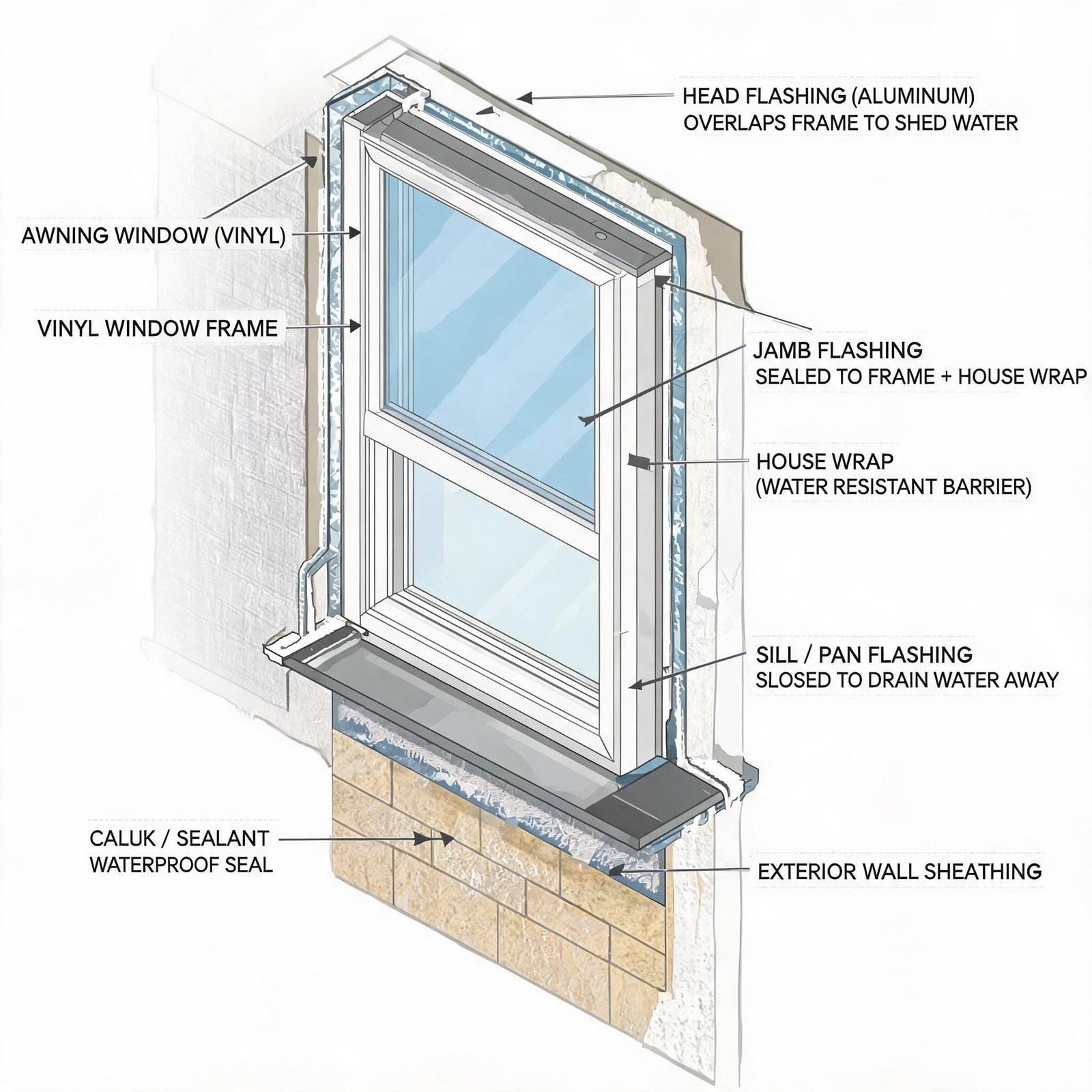
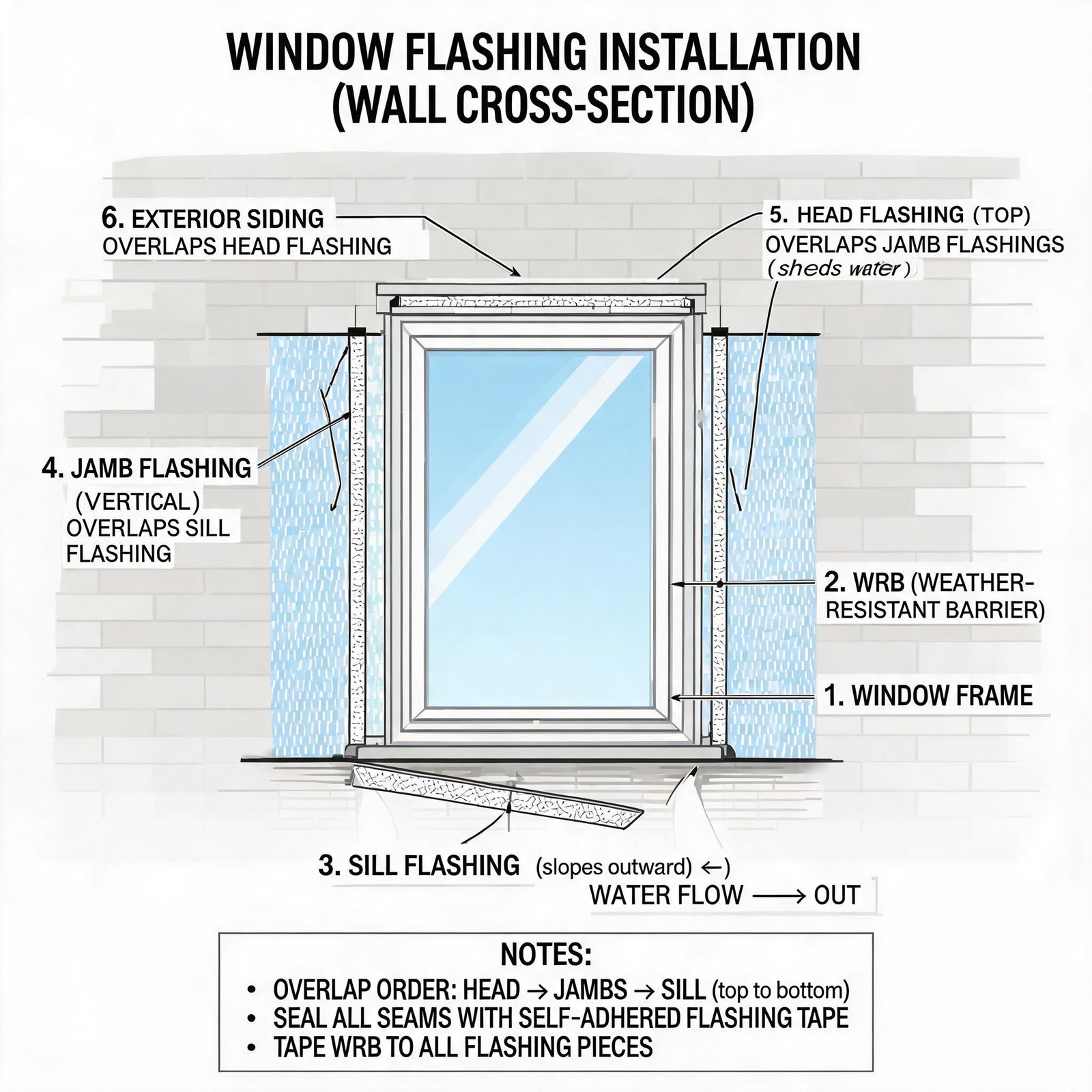
Both styles require factory-applied nailing fins and integrated J-channels. For casement units, verify that the hinge-side flashing extends under the adjacent building wrap. For awning windows, the top-hinge assembly requires careful head flashing to prevent water channeling behind the frame.
Hardware Timing
Crank handles and locking mechanisms should be installed after the window is fully anchored and shimmed. Forcing the crank before the window is squared can strip the operator gears—a common field error that voids warranties.
Cost Analysis: Production vs Custom Builds
For home builders and commercial estimators, budget is always a factor. Here’s the cost reality:
Production Quantity (50+ units per project):
– Casement window (vinyl, double-pane, mid-grade): $350–$550 per unit (installed)
– Awning window (vinyl, double-pane, mid-grade): $300–$450 per unit (installed)
– Casement premium (fiberglass, triple-pane): $500–$800 per unit
– Awning premium (thermal break aluminum): $450–$700 per unit
Custom / Small Volume (1–10 units):
– Add 25–40% for custom sizing and shortened production runs
Installation Labor:
– Both styles: 1.5–2.0 hours per unit (standard wood frame construction)
– Add 0.5 hour for stucco, brick veneer, or EIFS exteriors
The cost differential between casements and awnings narrows as volume increases. For a 200-unit multifamily project, the difference may be as little as $30–$50 per unit—easily justified by the superior ventilation of casements in living spaces.
Practical Specification Checklist for Architects
When writing your window schedule, use this checklist to differentiate applications:
Use Casement Windows When:
– [ ] Primary ventilation requirement
– [ ] Egress compliance needed
– [ ] Owner wants full sash opening for cleaning
– [ ] Wall cavity depth restricts frame options
– [ ] Wind-directing capability desired
Use Awning Windows When:
– [ ] Window is below grade or in moisture-prone area
– [ ] Continuous ribbon band with fixed picture windows
– [ ] Over sink, counter, or work surface
– [ ] Second or third story with no exterior access
– [ ] Child safety is a primary concern
Use Combination (Casement + Awning) When:
– [ ] Maximum design flexibility needed
– [ ] Different rooms have different ventilation priorities
– [ ] Mixed-use commercial/residential project
The Superwindowhouse Advantage: Engineered for Performance
For architects, builders, and wholesalers specifying window systems, the conversation always comes back to reliability. At Superwindowhouse, we manufacture both custom aluminum and UPVC crank-out windows designed to meet the specific demands of North American construction.
Every unit we produce undergoes:
– AAMA 101 testing for air, water, and structural performance
– NFRC certification for U-factor, SHGC, and VT
– Continuous hinge torque testing (rated for 20,000+ cycles)
– Factory screen fitment with extruded aluminum frames
Our engineering team works directly with production builders to optimize window schedules for both performance and cost. Whether you’re specifying 2,000 units for a garden apartment complex or 12 units for a custom lake house, we provide the technical support—from thermal modeling to installation drawings—that general contractors and architects rely on.
Final Recommendation: Which Window Style Wins?
For ventilation alone, casement windows are the better choice—period. The side-hinge design captures up to 35% more wind energy than a top-hinged unit of identical size. For bedrooms, living rooms, and any space where air quality and occupant comfort are the primary metrics, casements deliver measurable advantages.
However, awning windows are the better choice for specific applications—specifically kitchens, bathrooms, basements, and any location where the window will be open during rain. In these applications, the top-hinged design is not a compromise; it’s a functional necessity.
The smartest specification strategy? Use both in the same project. A home with casement windows in the primary living zones and awning windows in wet areas achieves superior overall performance to a project that forces one style everywhere.
For commercial and multifamily projects, consult with Superwindowhouse during the design phase. Our engineering team can run computational fluid dynamics (CFD) models on your specific floor plans to optimize window placement and type selection—ensuring you meet ventilation codes while minimizing glazing costs.
Need technical specifications for your next project? Request our complete engineering binder, including NFRC ratings, AAMA test reports, and installation details for both casement and awning window configurations.