I’ve been in the trenches of home renovation across the Midwest for fifteen years, and this question keeps showing up in my DMs and on every building forum worth its salt. A homeowner in Minnesota posted on Reddit asking whether to buy a super insulated wood-look garage door from Menards or go straight to a garage door company for their high-R-value needs. It’s a classic dilemma—big-box store convenience versus specialized expertise—but here’s the thing that most people miss: the same fundamental principle applies when you’re picking entry doors for these brutal winters. Before you lock in any decision, you need to understand what insulation actually does in a door assembly, and where most mass-market options quietly cheat you.
The Red Flag Most Minnesota Homeowners Ignore
When that Reddit user mentioned “super insulated wood-look doors” for their garage, they were doing exactly the right thing—looking for high thermal resistance. But here’s where the conversation gets interesting: garage doors and entry doors share one critical weakness. Both are large, moving assemblies where the seals, cores, and framing materials determine whether your house bleeds heat like a sieve or holds it like a thermos.
The problem with shopping at Menards or any big-box retailer for an insulated entry door isn’t the brand—it’s the engineering philosophy. These doors are designed to meet code minimums at a price point that moves inventory fast. In Minnesota, where you’re looking at subzero temps for weeks at a time, code minimum doesn’t cut it. The foam core in a standard stock door is usually polyurethane, but the density, the thickness, and—most importantly—the thermal bridging through the frame and thresholds are where you get burned.
R-Value Isn’t the Whole Story
Let’s get technical for a second. When that Reddit poster questioned whether to buy from Menards or a garage door company for their wood-look insulated door, they were laser-focused on R-value. Good instinct, incomplete picture.
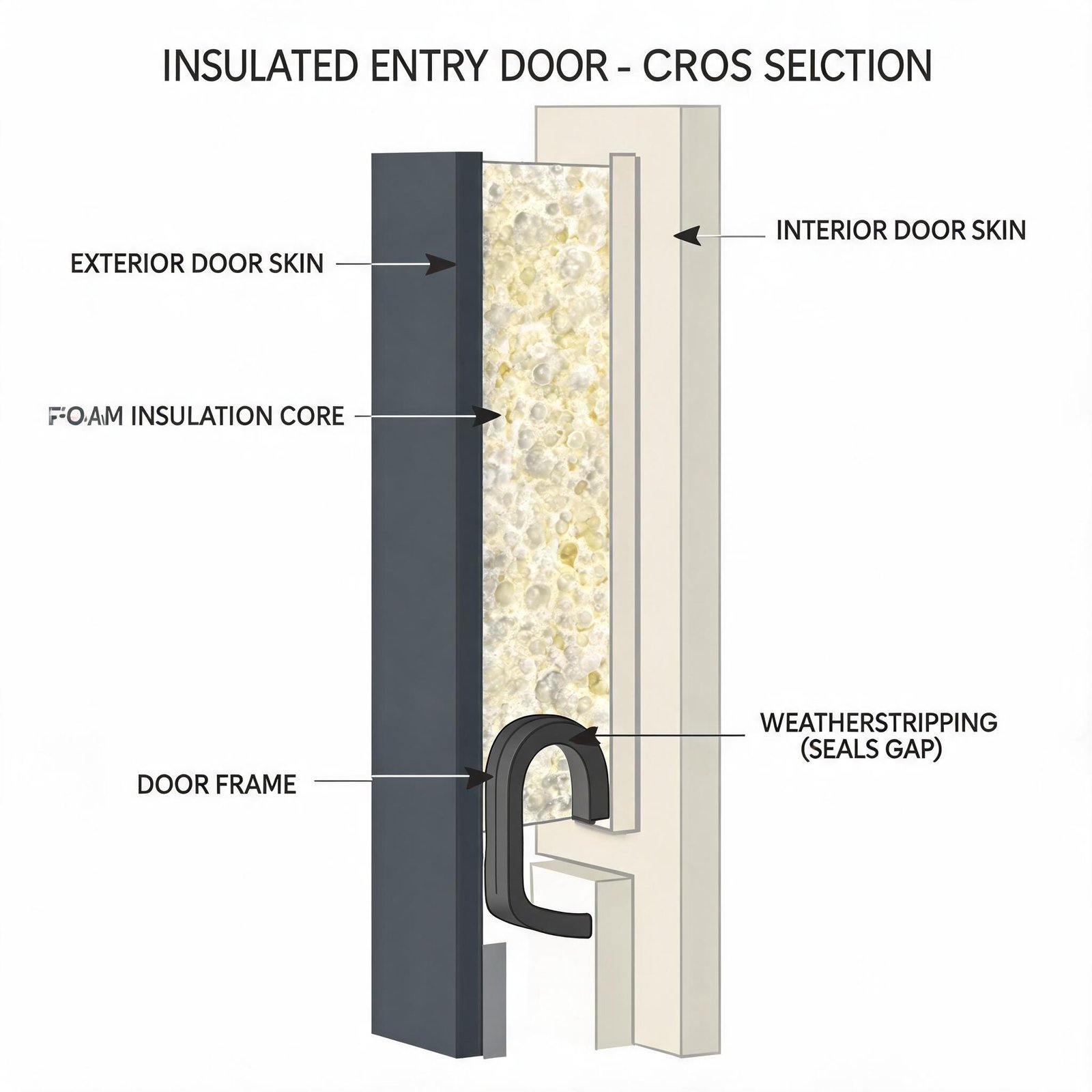
An entry door’s R-value measures the insulation of the door slab itself. But a door system’s effective thermal performance depends on three things working together:
- The core – Foam density and thickness
- The frame – How much heat bleeds through wood or aluminum
- The seal – Weatherstripping compression and material longevity
Most stock doors use a steel face with a thin polyurethane core. That works fine in moderate climates. In a Minnesota January, that same door becomes a thermal bridge where the cold metal literally conducts heat directly through your threshold. The weatherstripping on a $400 Menards door will last maybe two seasons before it hardens and cracks from the freeze-thaw cycles. Then you’re losing heat through gaps you can feel with your bare hand.
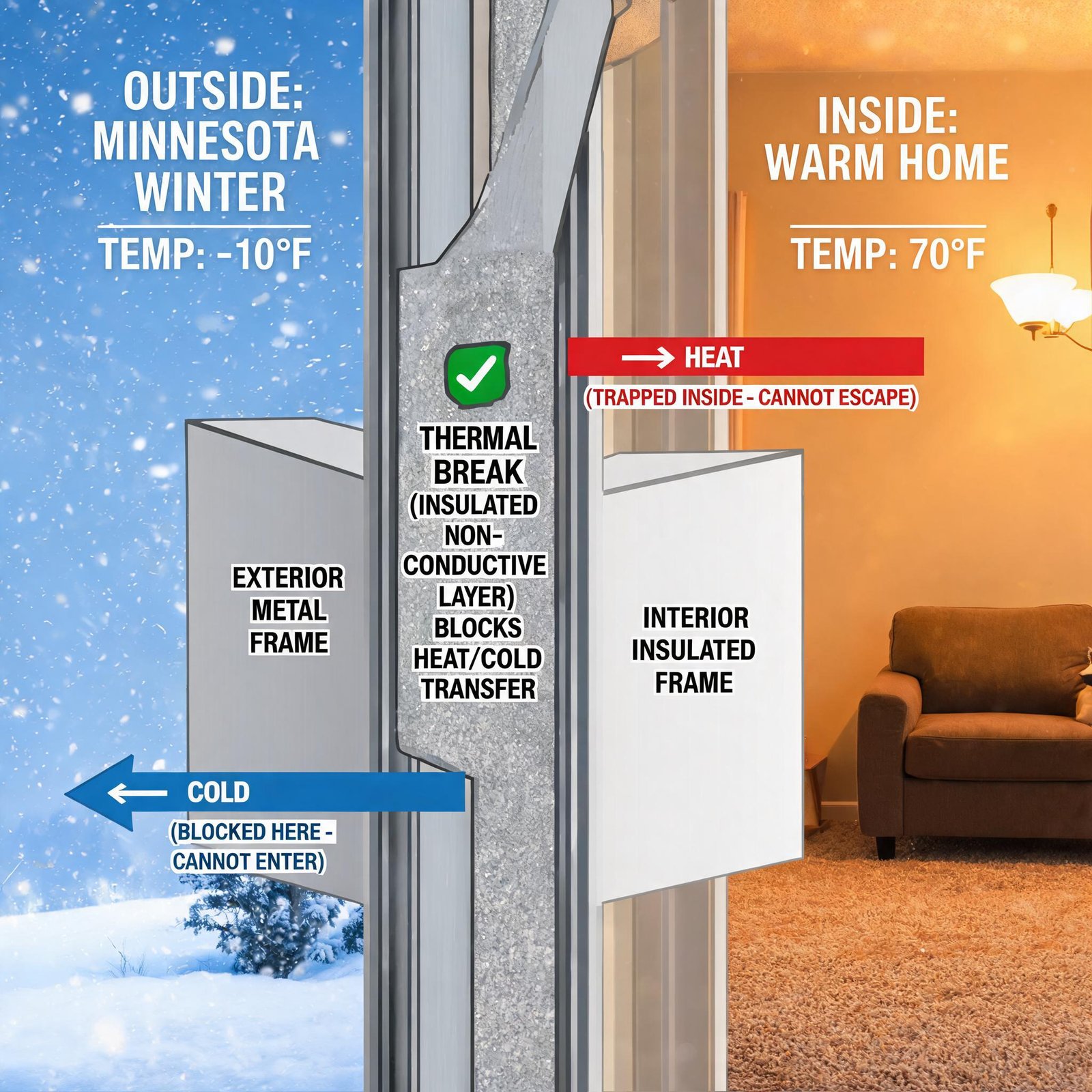
This is where Superwindowhouse’s heavy-duty entry doors separate themselves from the crowd. We spec foam cores with higher density and deeper weatherstripping channels that maintain compression down to -40°F. Our door frames incorporate thermal breaks in the critical areas where standard doors just let the cold march right through.
The Wood-Look Question: Aesthetic vs. Performance
The Reddit homeowner specifically mentioned “wood-look” doors. That’s smart for curb appeal, but it introduces a material variable that most builders don’t talk about enough. A wood-look finish on a garage door or entry door usually means either:
- Real wood veneer over a composite core (beautiful, but requires constant maintenance in humid/temperature swings)
- Fiberglass with a wood grain texture (lower maintenance, better insulation properties)
- Steel with a faux wood finish (cheapest option, worst thermal performance)
For a Minnesota entry door, fiberglass with a high-definition wood grain is the sweet spot. It gives you the look you want without the maintenance nightmare of real wood. More importantly, fiberglass doesn’t conduct cold like steel, and it doesn’t warp or swell like solid wood when your porch gets buried in snowdrifts.
Here’s the reality check: a fiberglass entry door with a dense polyurethane core and magnetic weatherstripping will outperform any stock steel door on the market, regardless of what the R-value sticker says. I’ve retrofitted hundreds of homes where homeowners replaced their Menards special with a properly insulated fiberglass system and saw double-digit percentage drops in their heating bills within one winter.
Why Garage Door Logic Applies Perfectly Here
Let me tie this back to the original Reddit post. That homeowner comparing Menards garage doors to a garage door company’s offerings was wrestling with the same tension: do I save upfront cost, or do I invest in something that actually performs under extreme conditions?
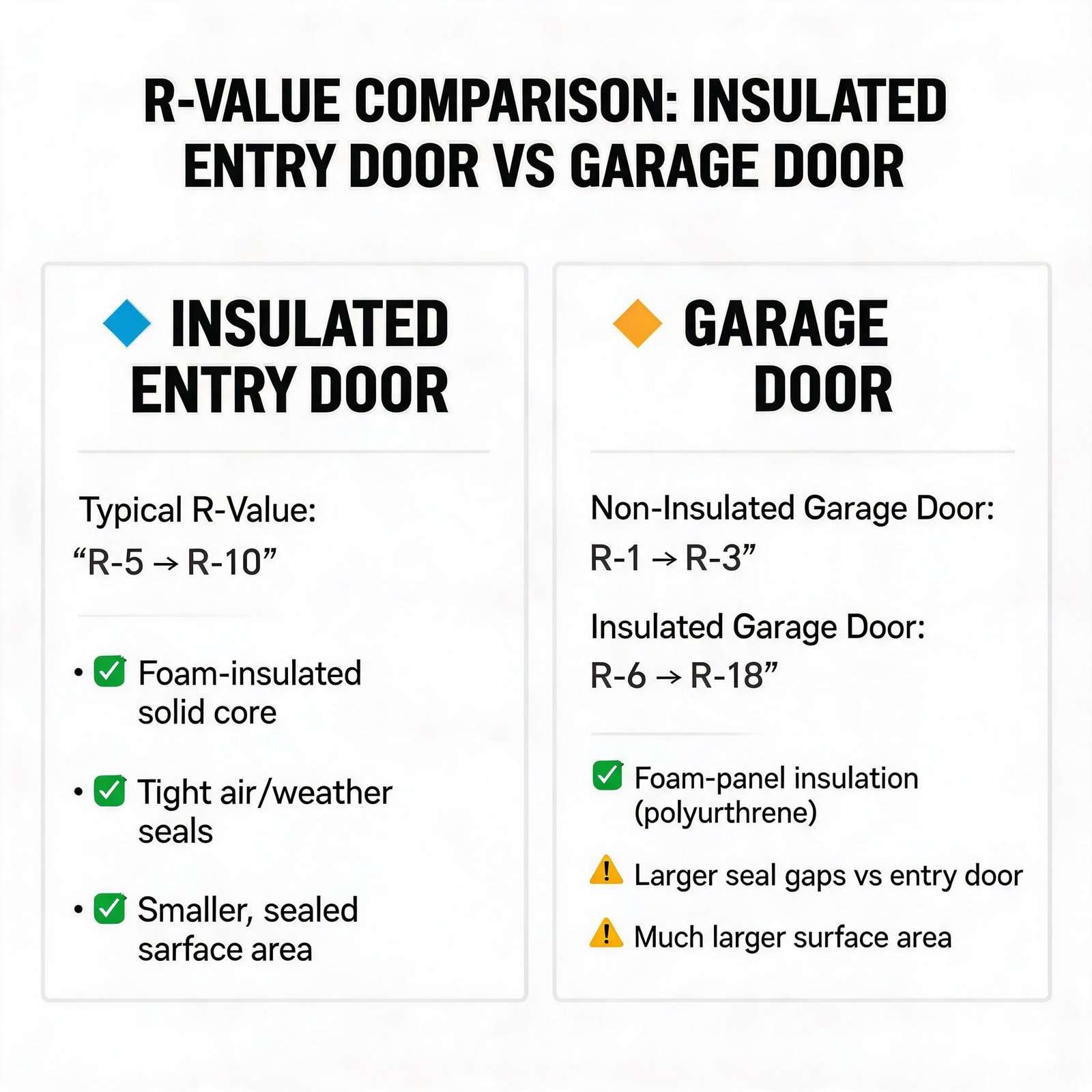
The answer for entry doors is the same as for garage doors: you pay for the integration. A garage door company that specializes will quote you a system where the tracks, springs, seals, and door slab are engineered to work together. The same logic holds for entry doors. A door manufacturer like Superwindowhouse designs the entire assembly—slab, frame, threshold, weatherstripping, and hardware—as a unified system. You’re not buying a door slab and hoping the frame and seals you pick up at the hardware store will match up under load.
When you buy from a big-box store, you get disconnected components that were designed for the lowest common denominator. That magnetic seal that works fine in Ohio? It’s useless when the temperature differential between your 72°F interior and the -10°F outside creates enough vacuum to pull cold air through the tiniest gaps.
The Bottom Line for Your Minnesota Home
If you’re standing at the same crossroads as that Reddit poster, here’s your actionable takeaway:
Don’t compromise on the system. Buy from a specialist who backs their thermal engineering with data.
For entry doors specifically, look for:
- Polyurethane foam core with minimum 1.75-inch thickness
- Full perimeter weatherstripping with compression gaskets rated for severe cold
- Fiberglass face with wood-grain texture (if aesthetics matter)
- Thermal break in the aluminum threshold
- Magnetic contact seal at the frame strike
Superwindowhouse’s entry doors check every one of these boxes. Whether you’re replacing a back door that lets in a draft every time the wind blows from the north, or you’re building new and want a front door that doesn’t require a storm door three months out of the year, the same engineering principles apply. And if you’re still on the fence about whether to go with a specialty door company versus a big-box retailer, think about it this way: you wouldn’t trust a surgeon who also worked the front desk at a motel. Specialization matters when your house’s thermal envelope is at stake.
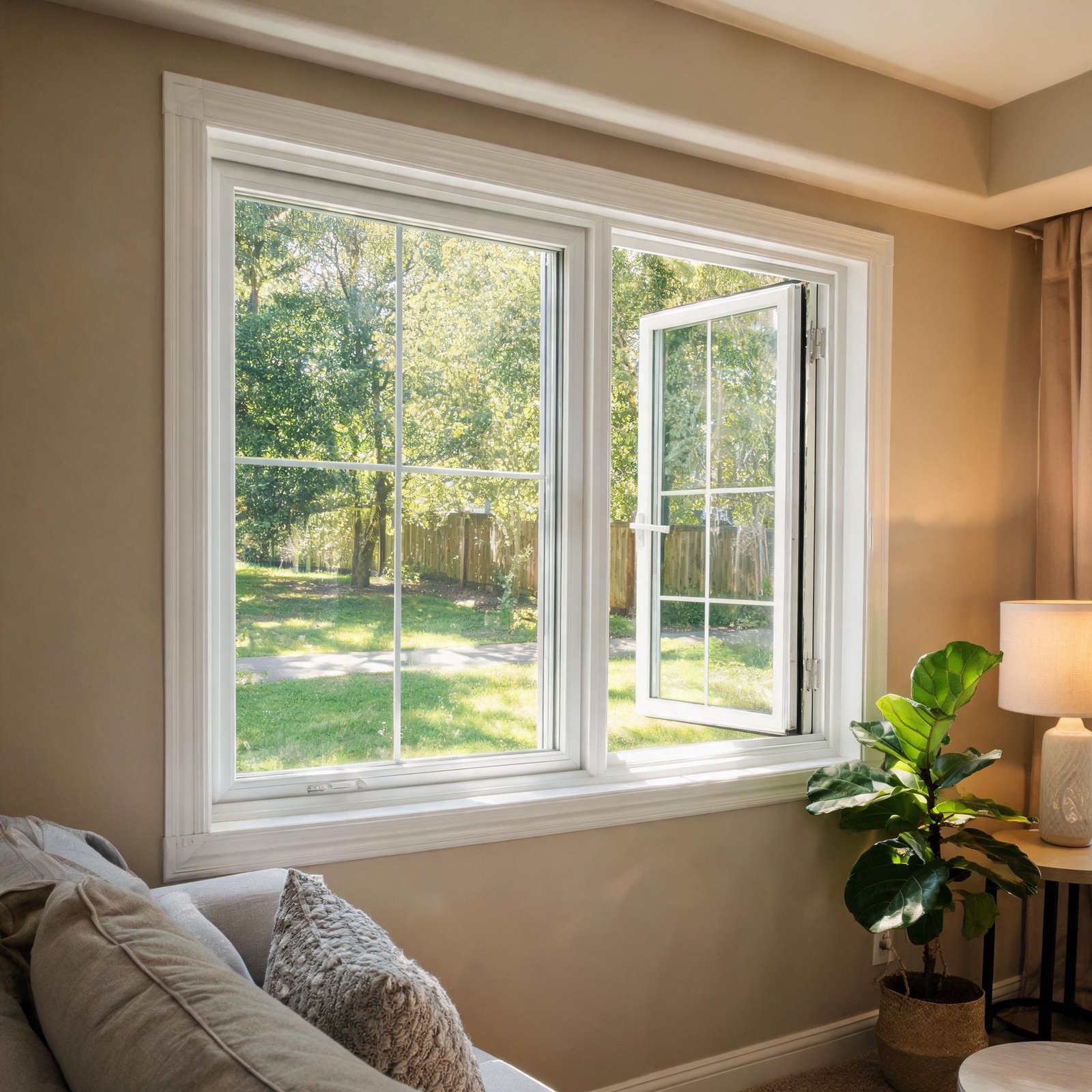
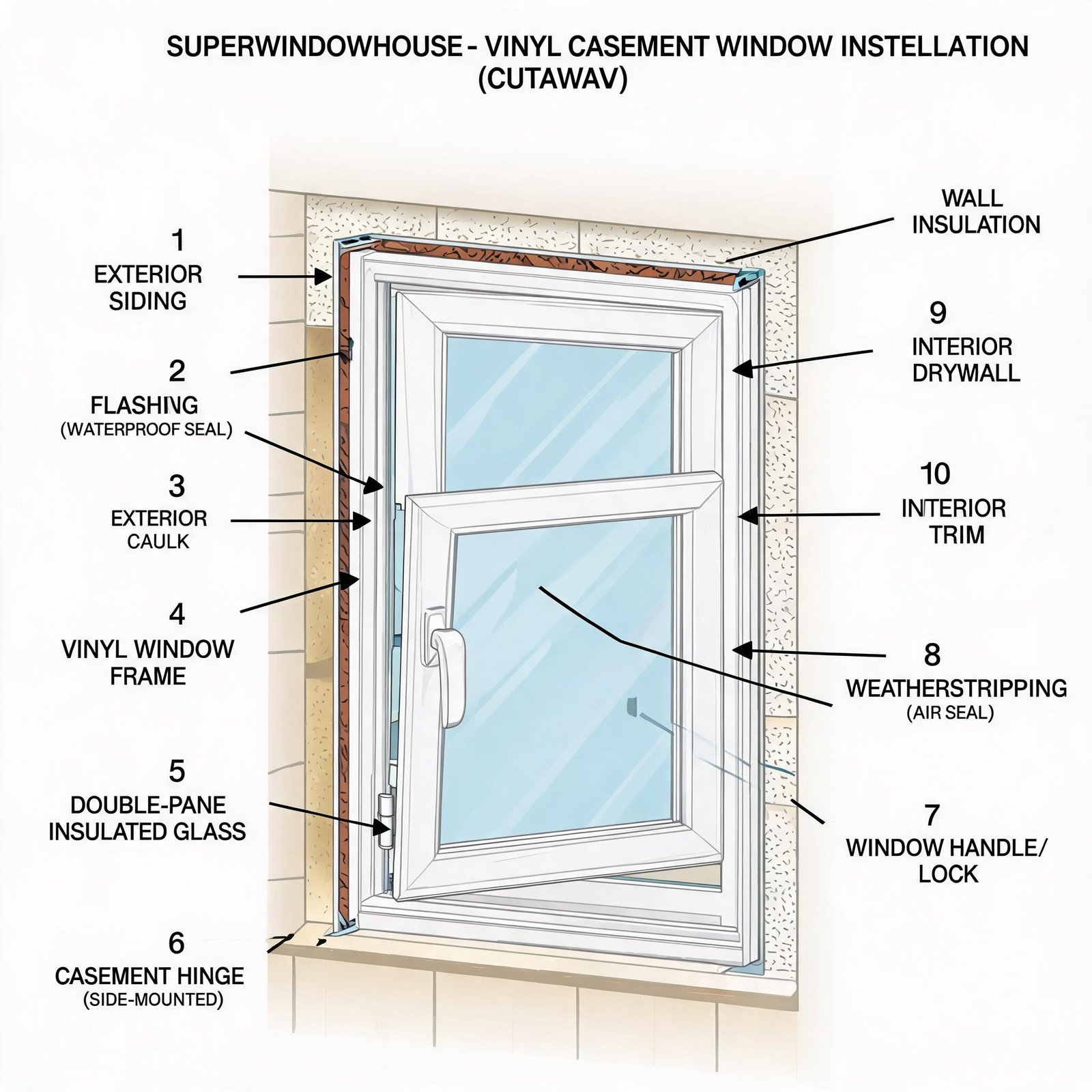
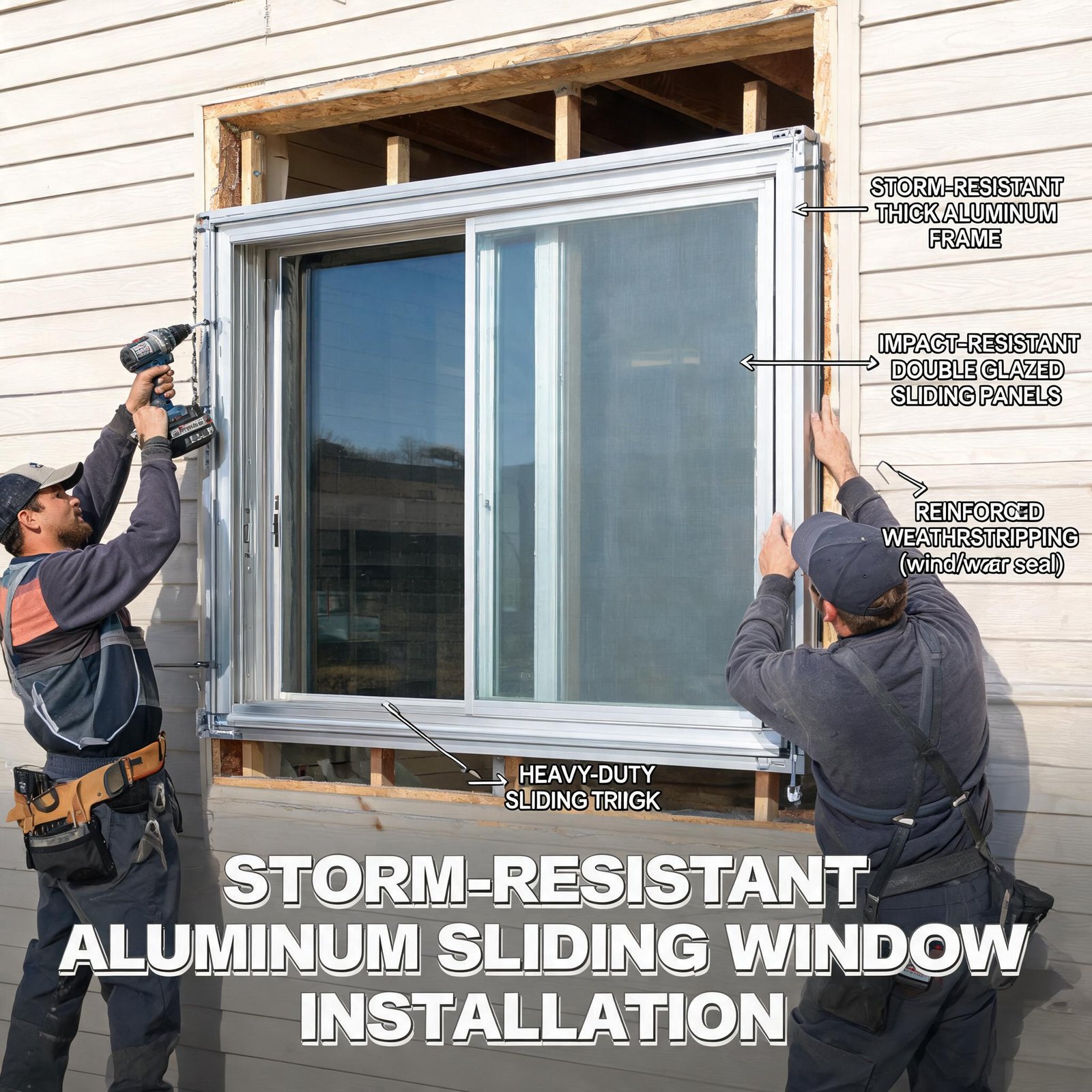
For homeowners who are also considering upgrading their windows to match that insulation performance, I’d recommend taking a look at the energy-efficient vinyl double hung windows we spec for severe climates. The same core-to-frame integration philosophy applies. For sliding patio doors that often bleed heat, the vinyl sliding patio doors with reinforced thermal breaks give you that same system-level performance. And if you’re going for a modern look with slim sightlines, the slim frame modern aluminum casement windows offer exceptional insulation without sacrificing aesthetics.
Winter in Minnesota isn’t forgiving. Your entry door is the single largest thermal hole in your home’s envelope. Fill it right, or pay the heating bill forever.