That musty smell in your basement. The water droplets running down your window glass every morning. The black spots creeping up the drywall corners. If you’ve been on Reddit’s HomeImprovement sub lately, you’ve seen the same desperate post a hundred times: “Found mold in my basement. High humidity. Windows are sweating like crazy. What’s the fix?”
Here’s the hard truth most homeowners don’t want to hear: that condensation isn’t just a cosmetic nuisance. It’s the visible symptom of a systemic building envelope failure. And when you’ve got cracked upstairs window caulking and weeping basement windows, moisture is entering your home from multiple directions. Before you waste hundreds of dollars on dehumidifiers and bleach treatments, understand this: if you don’t address the window assembly, you’re fighting a losing battle.
Let’s talk about what’s actually happening in your basement, and why upgrading to condensation-resistant triple-pane windows is the only permanent solution.
What’s Really Causing Basement Window Condensation?
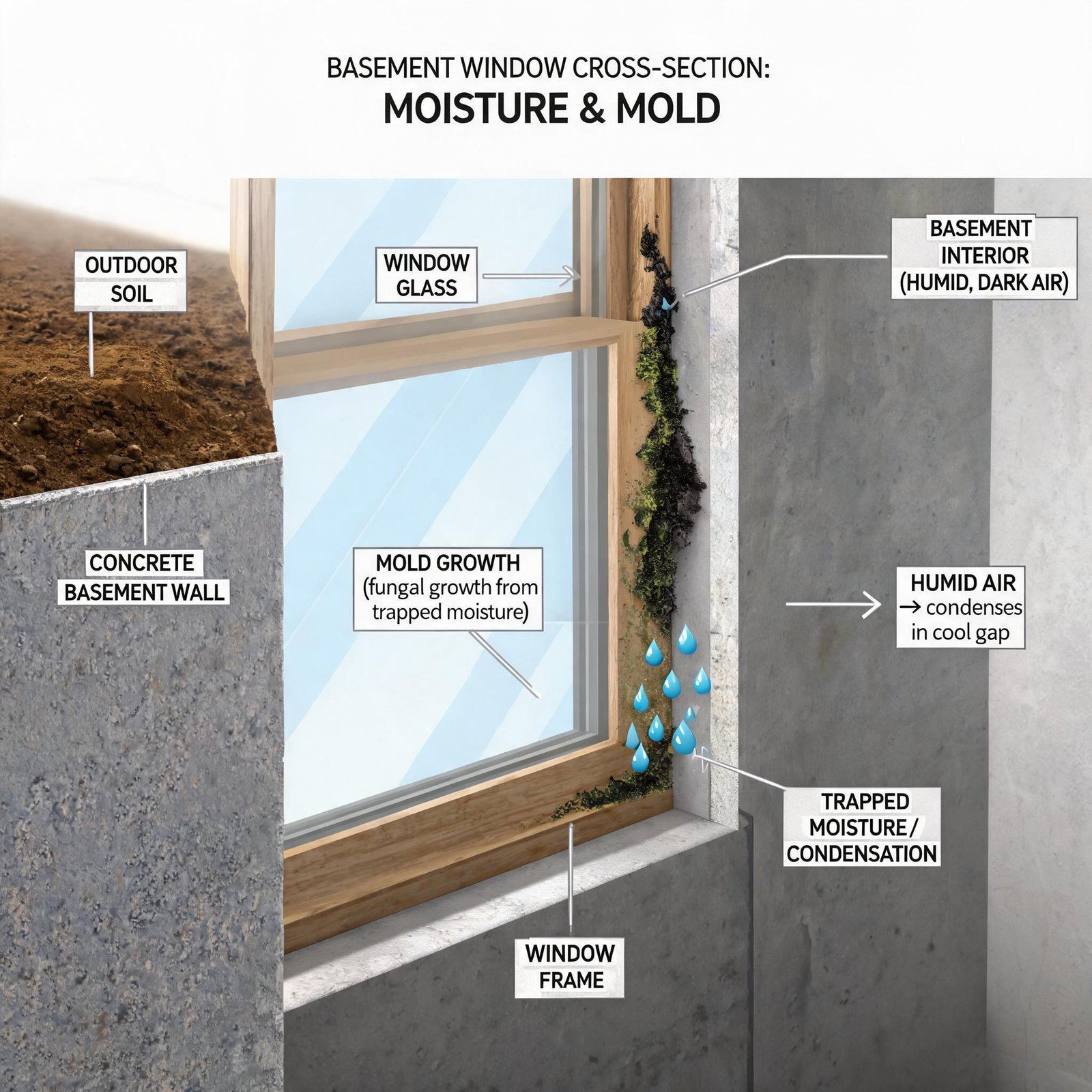
Most people think basement window condensation is caused by “cold glass meeting warm air.” That’s only half the story. The real culprit is thermal bridging through the window frame combined with air infiltration at the perimeter seals.
Here’s the physics: when your window frame has a U-factor greater than 0.40 (which is standard for old single-pane or even basic double-pane windows), the interior surface temperature of the glass and frame can drop below the dew point of your basement air. Warm, moisture-laden air hits that cold surface, and condensation forms immediately.
But it gets worse. That condensation doesn’t just sit on the glass. It runs down the sash, collects in the sill track, and seeps into the wall cavity. Within 48 hours in a typical basement environment (55°F, 60% RH), you’ve got active mold colonization happening in the framing and insulation behind your window.
The cracked upstairs window caulking only compounds the problem. Every time your HVAC system runs, it creates negative pressure inside the house, pulling humid outdoor air through those gaps. That moisture migrates downward and condenses in the coolest part of your home—the basement.
Why Cheap “Fixes” Fail
Homeowners love to grab a can of spray foam, a tube of silicone, and a $20 moisture absorber from Home Depot. I’ve seen it a thousand times. Here’s why those temporary band-aids don’t work:
- Caulk alone cannot stop thermal bridging. Even perfectly sealed, a single-pane aluminum or thin vinyl window is still a thermal hole in your wall.
- Dehumidifiers treat symptoms, not sources. You’ll run your electric bill through the roof and still see moisture on glass during cold snaps.
- Spray foam in gaps often traps moisture. If you don’t properly air-seal and insulate the rough opening, you create a moisture sandwich that rots your framing faster.
The only reliable basement window condensation fix is to eliminate the cold surface and the air leak at the same time. That requires a complete window replacement with products designed for condensation resistance and thermal performance.
The Superwindowhouse Difference: Engineered for Condensation Resistance
At Superwindowhouse, we’ve spent 15 years watching homeowners throw money at moisture problems. The products that actually solve this issue aren’t the cheapest options on the market—but they’re the only ones that deliver a permanent solution.
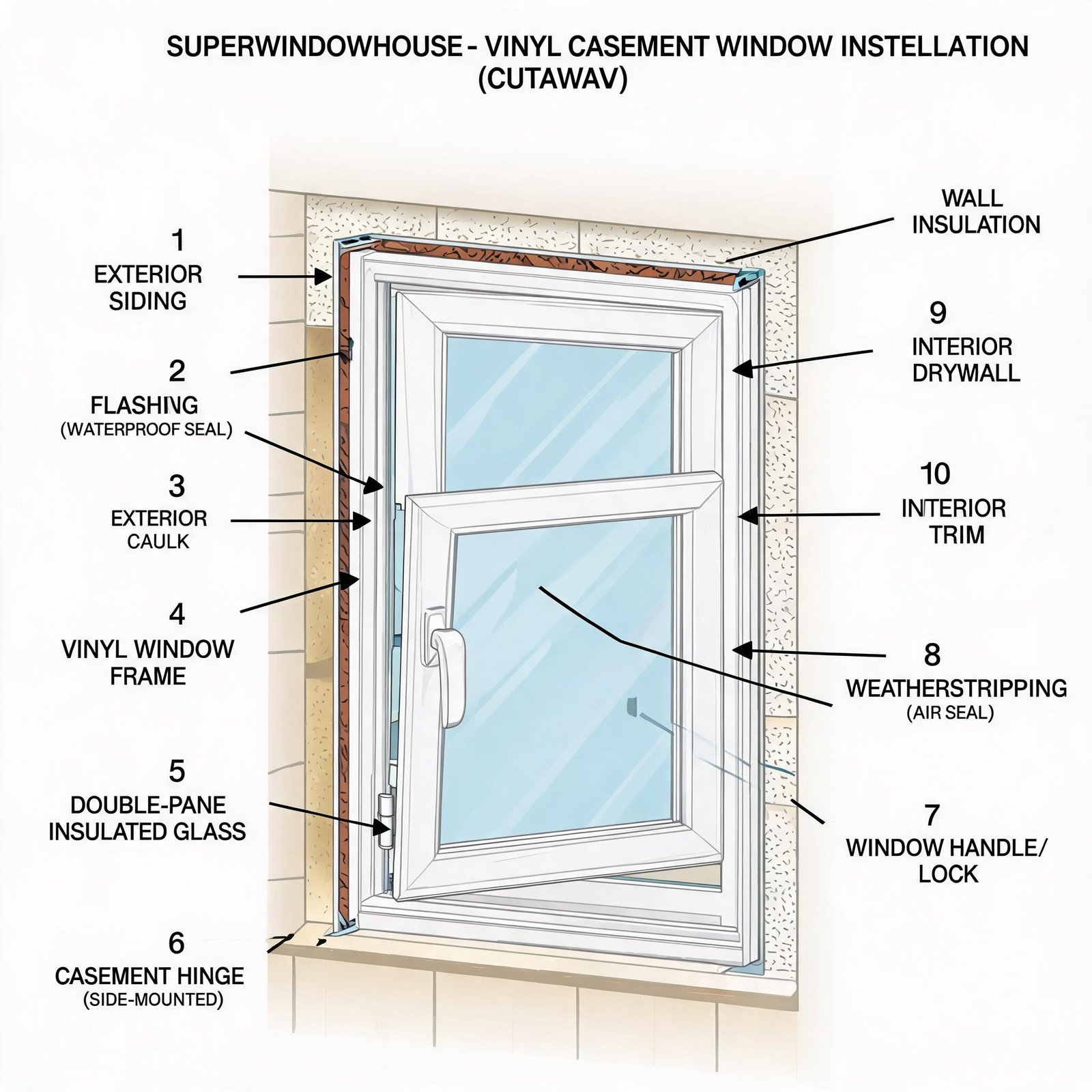
Our high-performance vinyl casement windows are specifically designed for applications where condensation control is critical. Here’s why they outperform standard builder-grade windows:
1. Triple-Pane Low-E Glass: The Condensation Killer
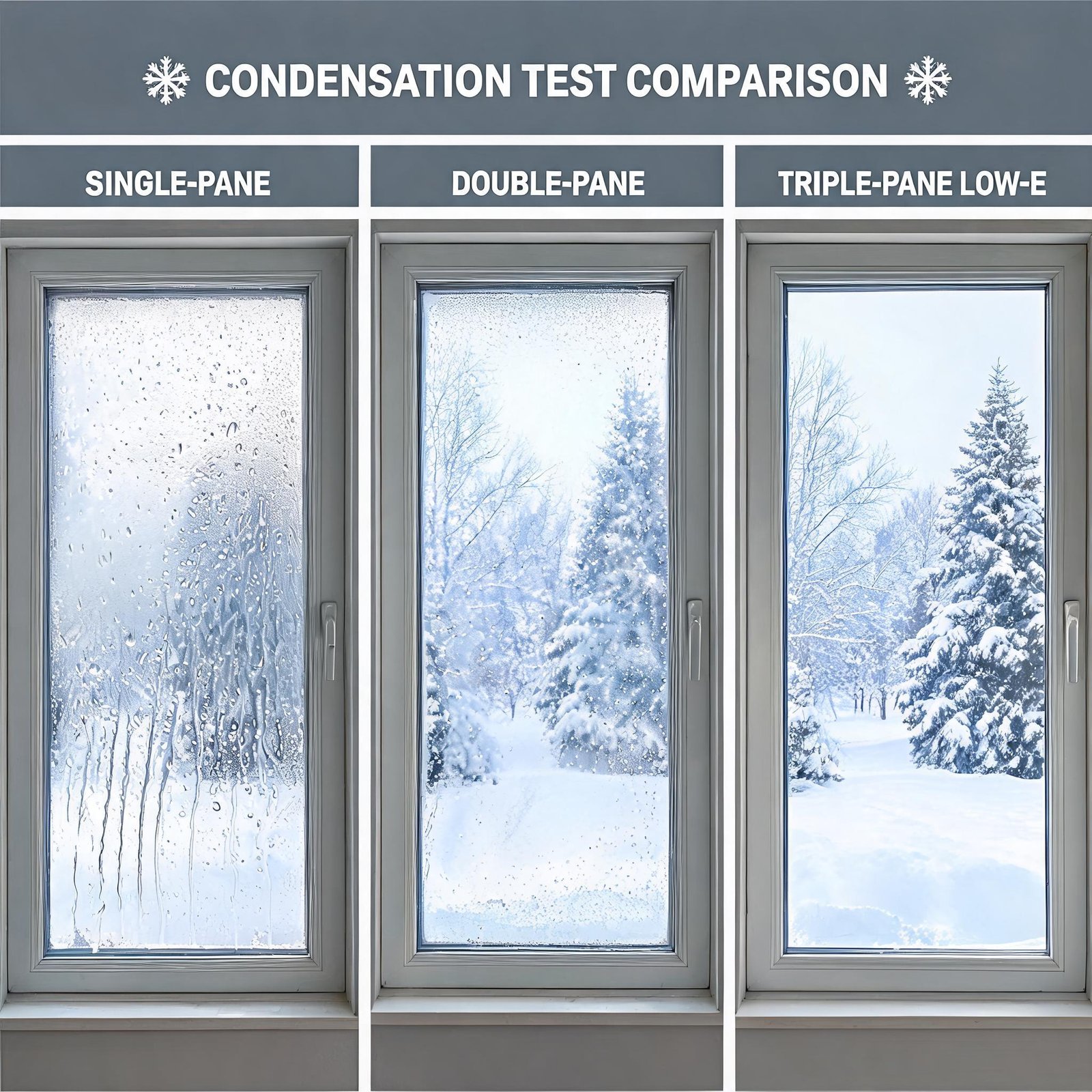
Standard double-pane windows have a U-factor around 0.30-0.35. That’s already better than single-pane (U-1.10). But our triple-pane Low-E configurations achieve U-factors as low as 0.18-0.22.
What does that mean for your basement? At 0°F outdoor temperature, a double-pane window’s interior glass surface might hit 38°F—easily below the 42°F dew point of a 60% RH basement. That’s instant condensation.
A triple-pane Low-E window’s interior surface stays above 55°F in the same conditions. No dew point crossing. No condensation. No mold food source.
The Low-E coatings also reflect interior radiant heat back into the room, keeping the glass warmer while reducing your heating load. You’re not just solving condensation—you’re cutting energy loss through the basement’s largest thermal weak point.
2. Full-Frame Thermal Isolation
Most cheap vinyl windows use hollow multi-chamber frames with minimal wall thickness. Aluminum windows are even worse for condensation—they conduct cold directly into the interior frame surface.
Superwindowhouse’s vinyl series uses thick-walled, multi-chambered extrusions with integral foam filling in critical cavities. The warm-edge spacer systems between glass panes further break the thermal bridge at the perimeter.
When we install these in a typical basement rough opening, the interior frame temperature stays within 3-4°F of room temperature. Compare that to a hollow vinyl frame that can be 10-15°F colder on the interior surface.
3. Factory-Engineered Air Seal Kits
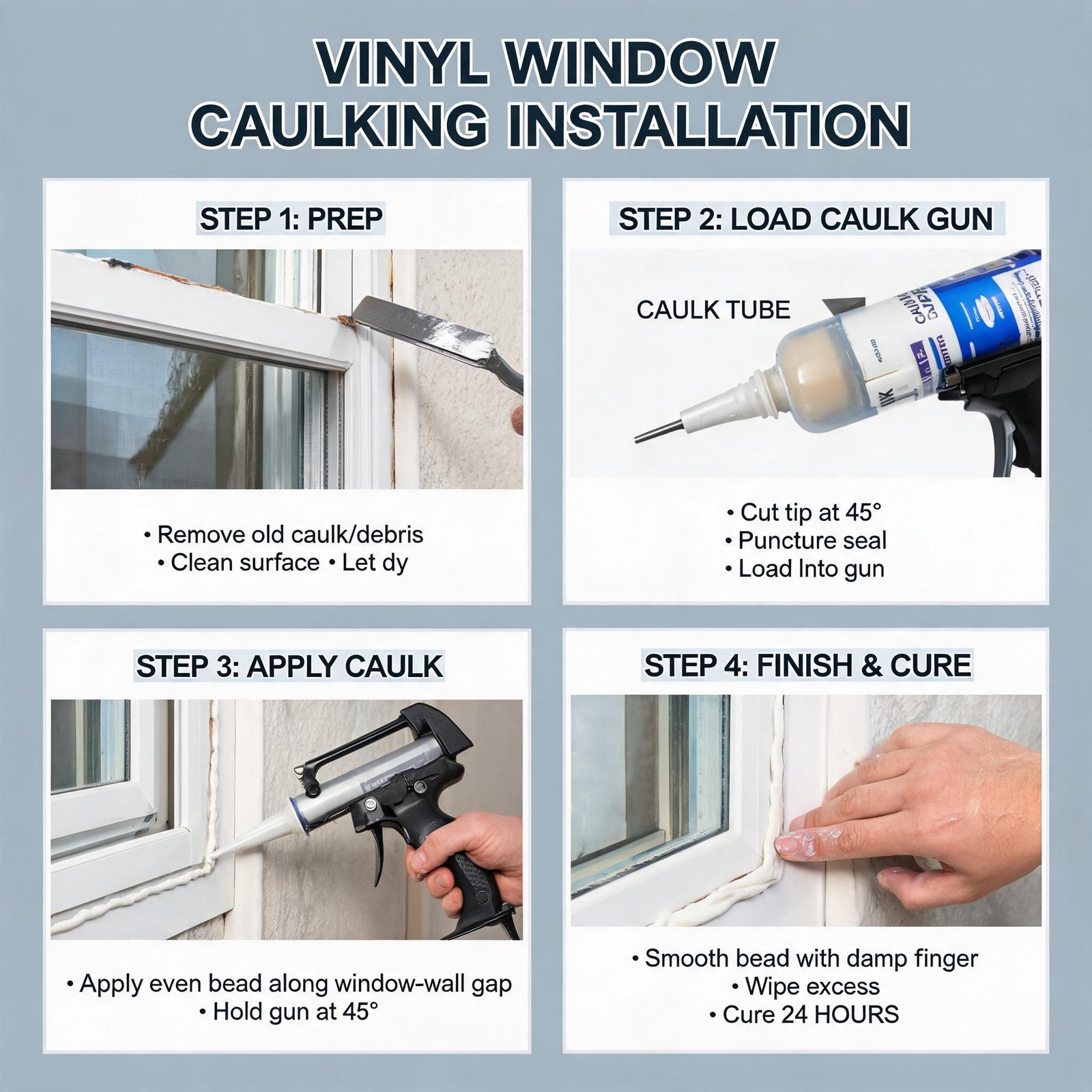
Your upstairs window has cracked caulking because someone field-applied cheap silicone, it expanded and contracted through a few seasons, and the bond failed. That’s standard for site-applied sealants on windows that aren’t designed for extreme thermal cycling.
Superwindowhouse ships every window with our proprietary weatherseal caulking kits—pre-compressed, expanding foam tapes and butyl-based sealants engineered specifically for the window’s dimensions and frame material. These aren’t off-the-shelf products. They’re formulated to maintain a permanent, flexible bond across temperature swings from -30°F to 120°F.
When properly installed according to our specifications, the window-to-building interface achieves less than 0.03 CFM/ft² air leakage—essentially a solid wall performance. That stops the upstairs-to-basement moisture migration path completely.
For homeowners looking for a slimmer aesthetic with similar performance, our s