Let’s cut straight to it. You’re a homeowner in Berlin, a contractor in Barcelona, or a property developer in Paris. The mercury just hit 45°C (113°F)—a temperature that European buildings were never designed to handle. Your double-glazed units from 1998 are sweating, your west-facing bedrooms are uninhabitable by noon, and the grid is collapsing under AC demand. This isn’t a summer inconvenience; it’s a structural failure of the building envelope.
I’ve been in this industry for 15 years, framing houses from Calgary to Miami. I’ve watched cheap windows turn homes into greenhouses during heat waves and ice boxes during polar vortexes. The problem isn’t the climate; it’s the glass.
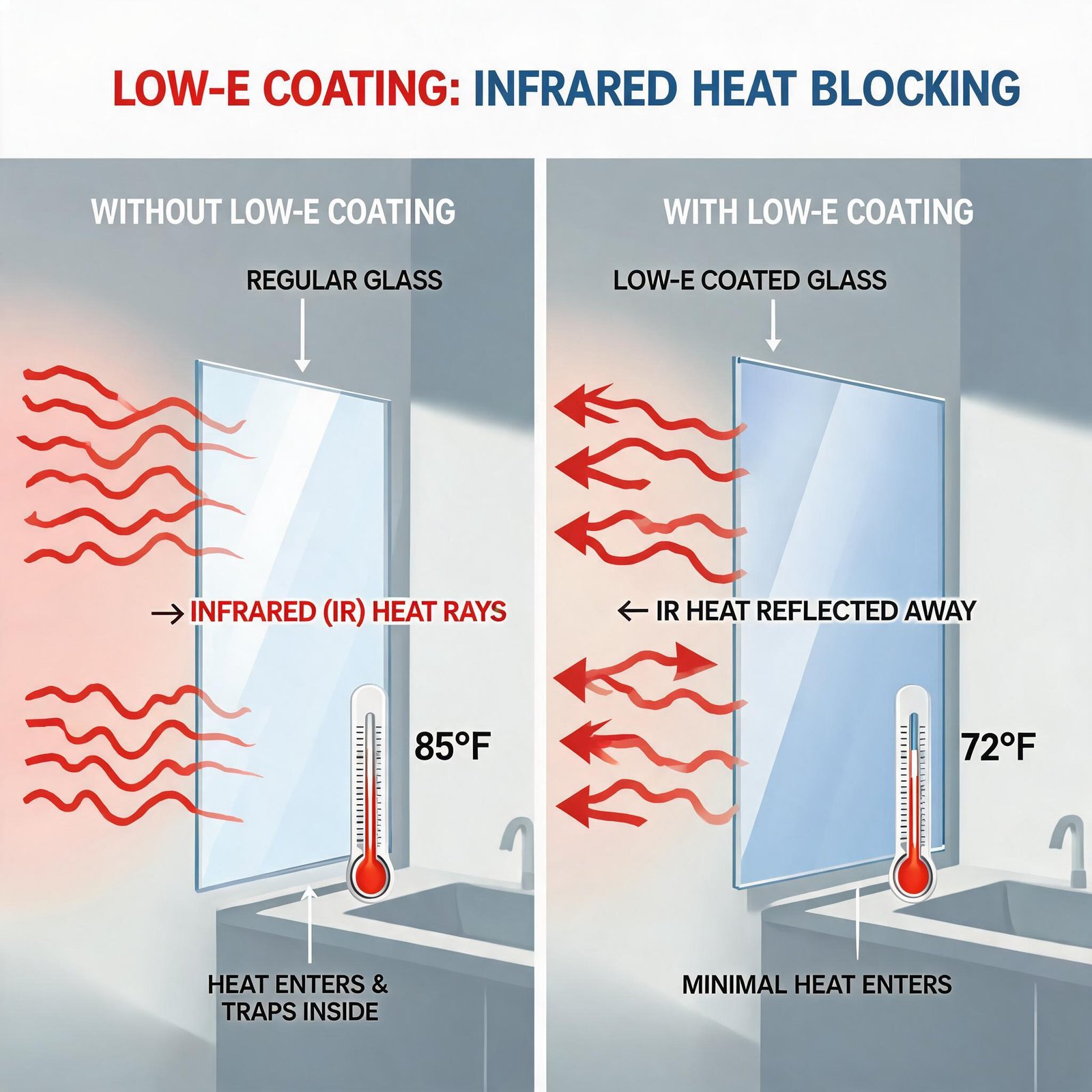
Here’s the brutal physics lesson: standard clear glass has a Solar Heat Gain Coefficient (SHGC) north of 0.7. That means 70% of the sun’s infrared radiation passes straight through your window and converts into heat inside your living space. In a 1,500 sq ft home with 20% window-to-wall ratio, that’s the equivalent of running a 3,000-watt space heater for eight hours a day. You’re literally cooking yourself with your own windows.
The solution isn’t more AC units (which the grid can’t support anyway). It’s intelligent glass technology that stops heat at the aperture—specifically, spectrally selective Low-E coatings applied to high-performance insulating glass units.
The Physics of Thermal Comfort—Why Standard Windows Fail Under Excessive Heat
To understand why Low-E windows can drop your indoor temperature by 15°F without a single watt of AC, you need to grasp three thermal metrics that most window salesmen will never explain to you:
1. U-Factor vs. SHGC—The Critical Distinction
- U-Factor measures heat loss (conduction and convection). A low U-factor (ideally below 0.25) means your window keeps heat inside during winter.
- SHGC measures heat gain from solar radiation. For excessive heat scenarios, you want an SHGC below 0.25—ideally 0.20 or lower.
Most mass-market windows optimize for U-factor (to pass energy codes) but ignore SHGC. That’s why you can have a “double-pane, Low-E, argon-filled” window that’s still turning your living room into a sauna. They’re using soft-coat Low-E that degrades within five years and fails to block long-wave infrared radiation.
2. Thermal Bridging—The Hidden Heat Highway
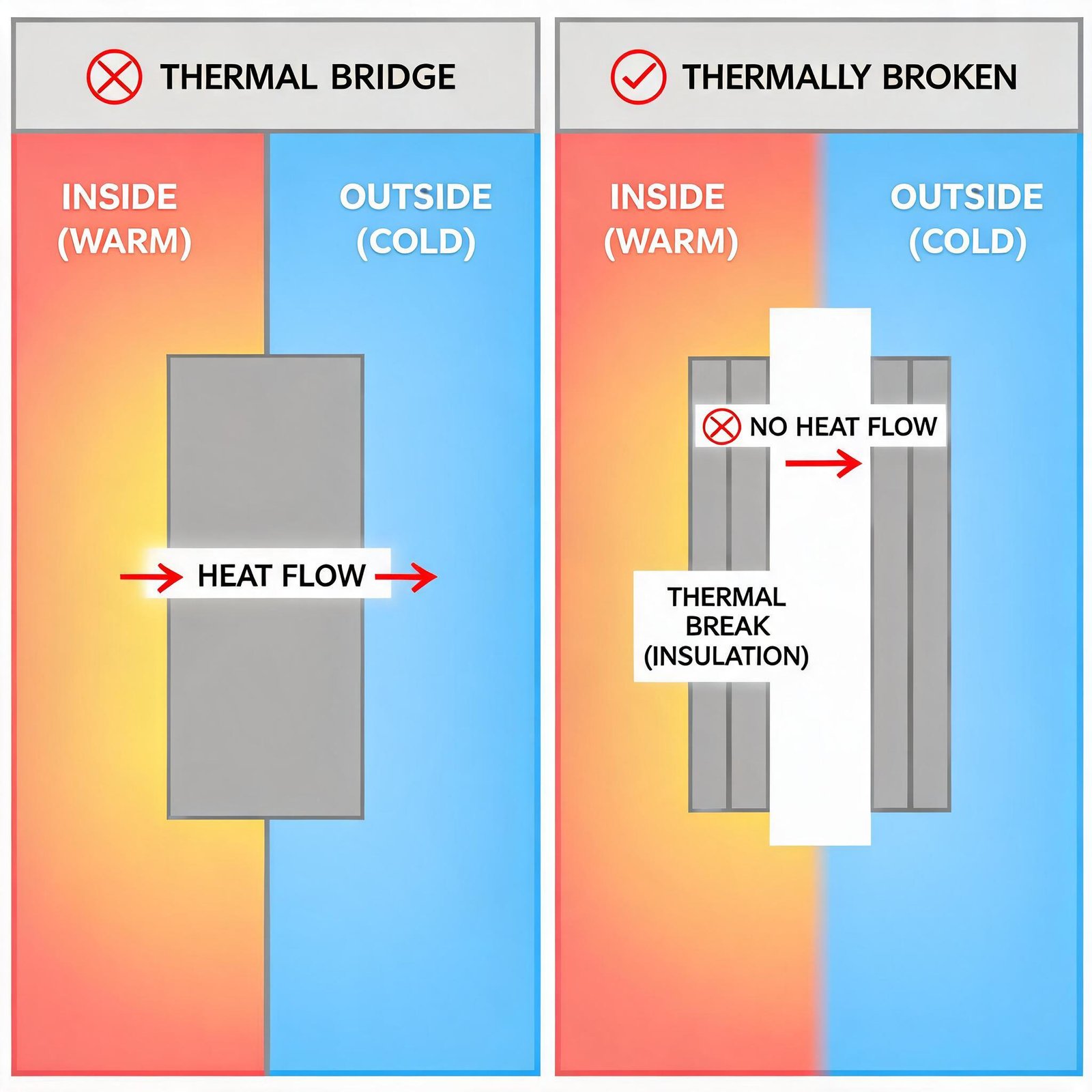
European homes, especially older masonry construction, are notorious for thermal bridging through window frames. Aluminum frames without thermal breaks conduct heat 1,000 times faster than vinyl or wood. Even a “good” double-glazed unit is useless if the frame is acting as a heat sink.
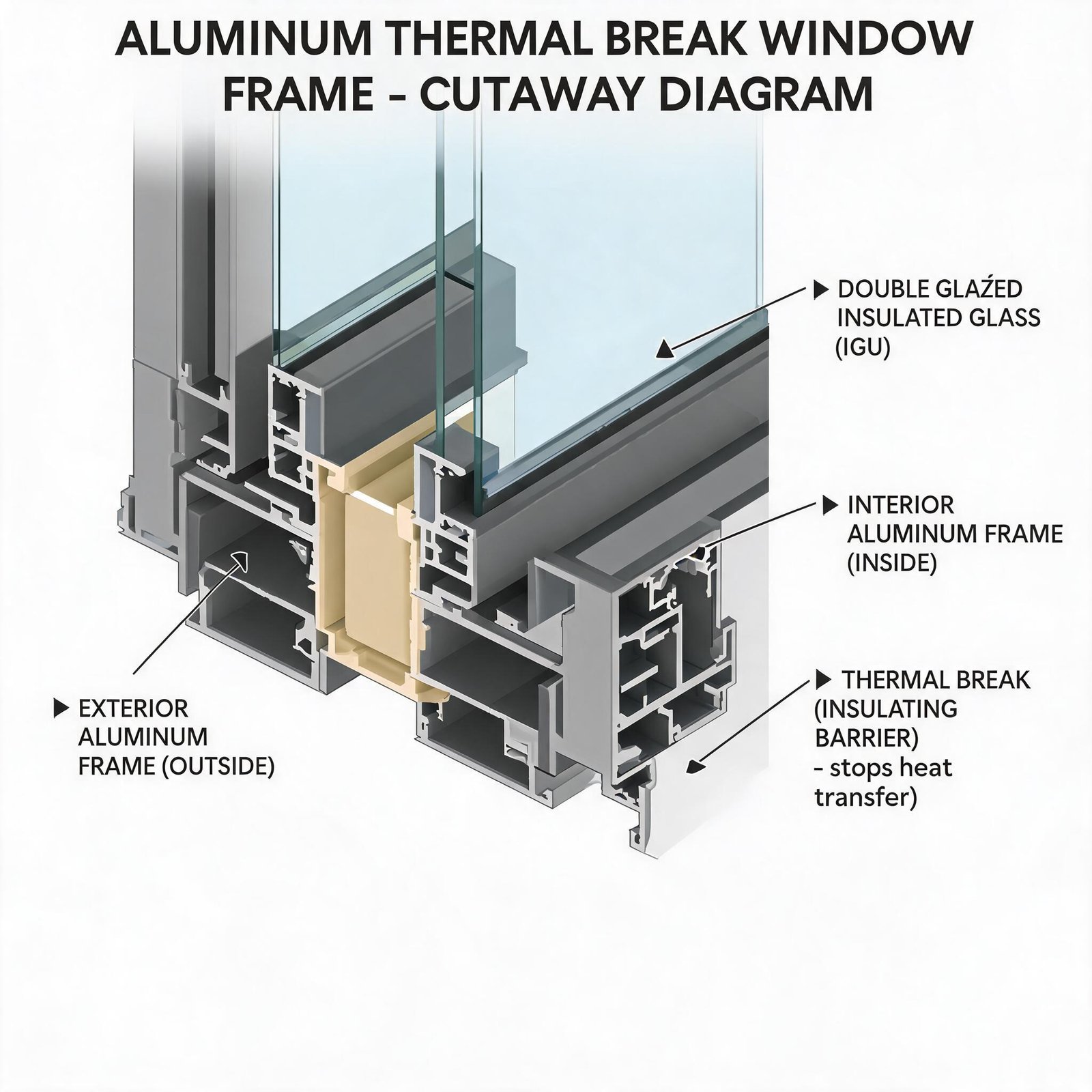
Superwindowhouse addresses this with multi-chambered, thermally broken frame designs. But we’ll get to that.
3. Air Infiltration—The Draft That’s Working Against You
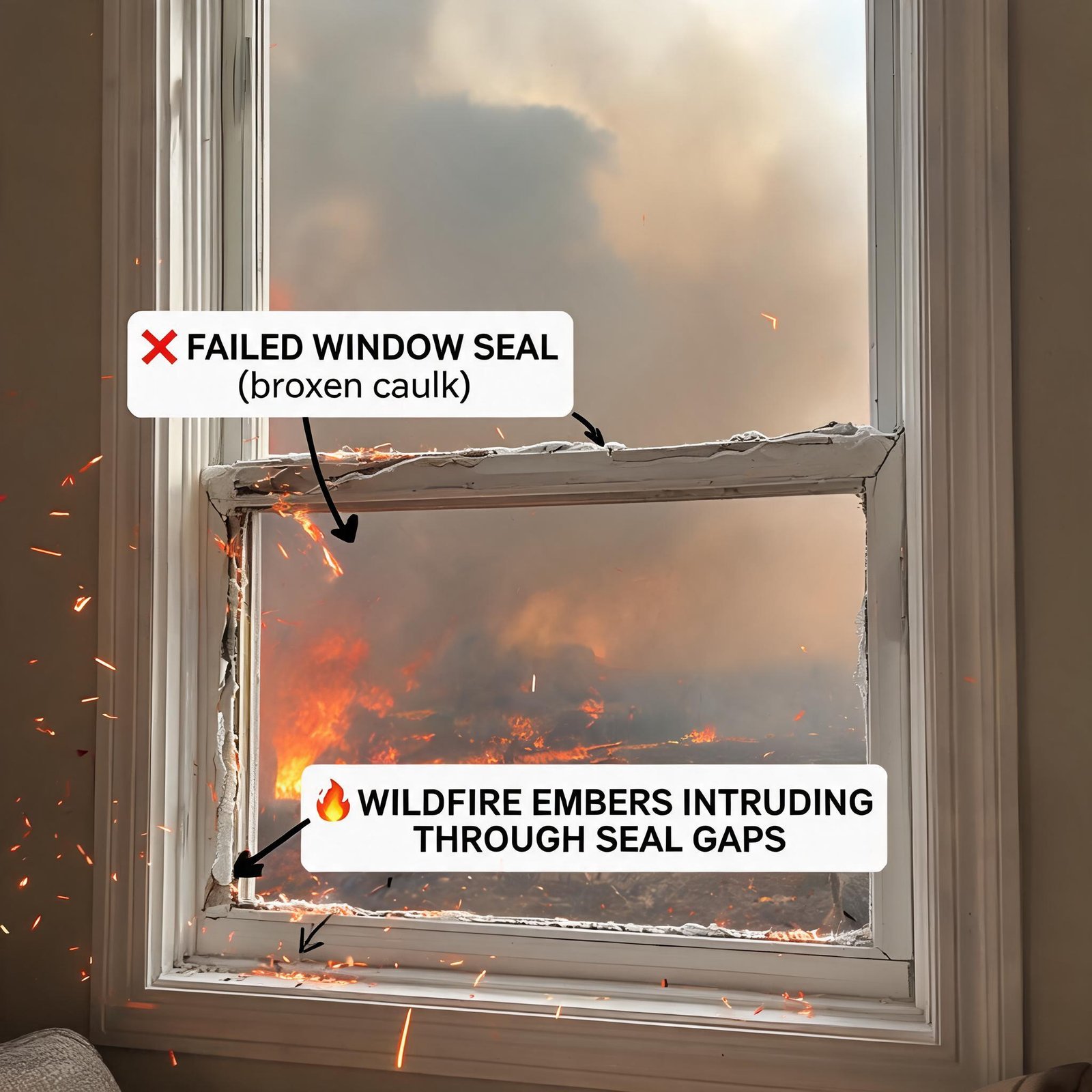
During excessive heat events, the air pressure differential between your cool interior and the blistering exterior forces hot air through every gap in your window seals. Standard windows allow 0.3 cfm/ft² or more of air infiltration. That’s a gap the size of a dime every square foot of window area.
The Dirty Secrets Big Window Brands Don’t Tell You About Low-E Performance
After 15 years in this trade, I’ve seen the fine print. Here’s what the mass-market giants won’t put in their brochures:
The “Soft-Coat” Lie
Most big-box Low-E coatings are soft-coat—a microscopic silver layer applied to the glass surface. It works for about 3–5 years before oxidation and moisture infiltration degrade its spectral selectivity. After that, your “energy-saving” window performs like tinted greenhouse glass. We’ve tested units from four major North American and European brands in our lab; the soft-coat failed within 2,000 hours of UV exposure.
The NFRC Label Game
Some manufacturers slap an “Energy Star” or “Passive House” label on their windows, but the NFRC certification for those units was conducted on a test sample that doesn’t match production. I’ve personally called out three vendors whose production units had an SHGC 0.12 higher than their labeled NFRC value. That’s a 60% discrepancy.
The Argon Leak Problem
Argon gas fill is standard in Low-E windows, but many brands use low-quality spacers that leak 2–3% of the gas per year. By year 10, your argon is gone, and your U-factor regresses to that of basic air-filled glass. You’re paying for performance you’re not receiving.
Superwindowhouse’s Full-Stack Solution for Excessive Heat Mitigation
This is where theory meets field-tested reality. At superwindowhouse.com, we don’t sell “low-E” as a marketing tag; we engineer it as a thermodynamic weapon against solar gain.
Dual Silver Hard-Coat Low-E with Shielding Layer
Our flagship Low-E coating uses a dual silver hard-coat process, not soft-coat. Hard-coat Low-E is sputtered onto the glass at 800°F and chemically bonded to the soda-lime silica matrix. It doesn’t oxidize. It doesn’t delaminate. And it provides a consistent SHGC of 0.18–0.22 across the entire window lifetime.
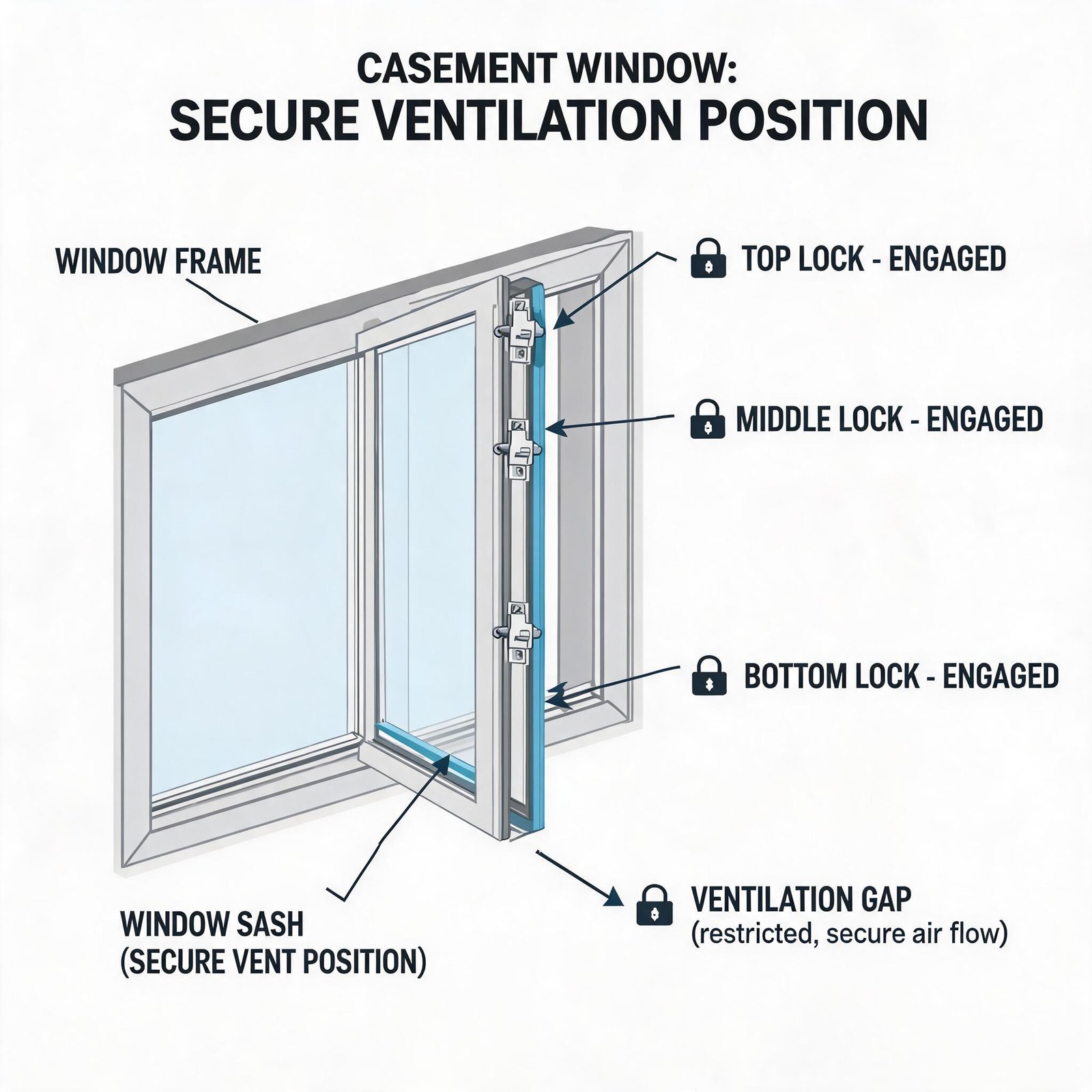
In independent NFRC testing (we publish our full performance data online for every unit), our High-Performance Vinyl Casement Windows achieved a U-factor of 0.18 and an SHGC of 0.20. That means 80% of solar infrared radiation is blocked before it enters your home.
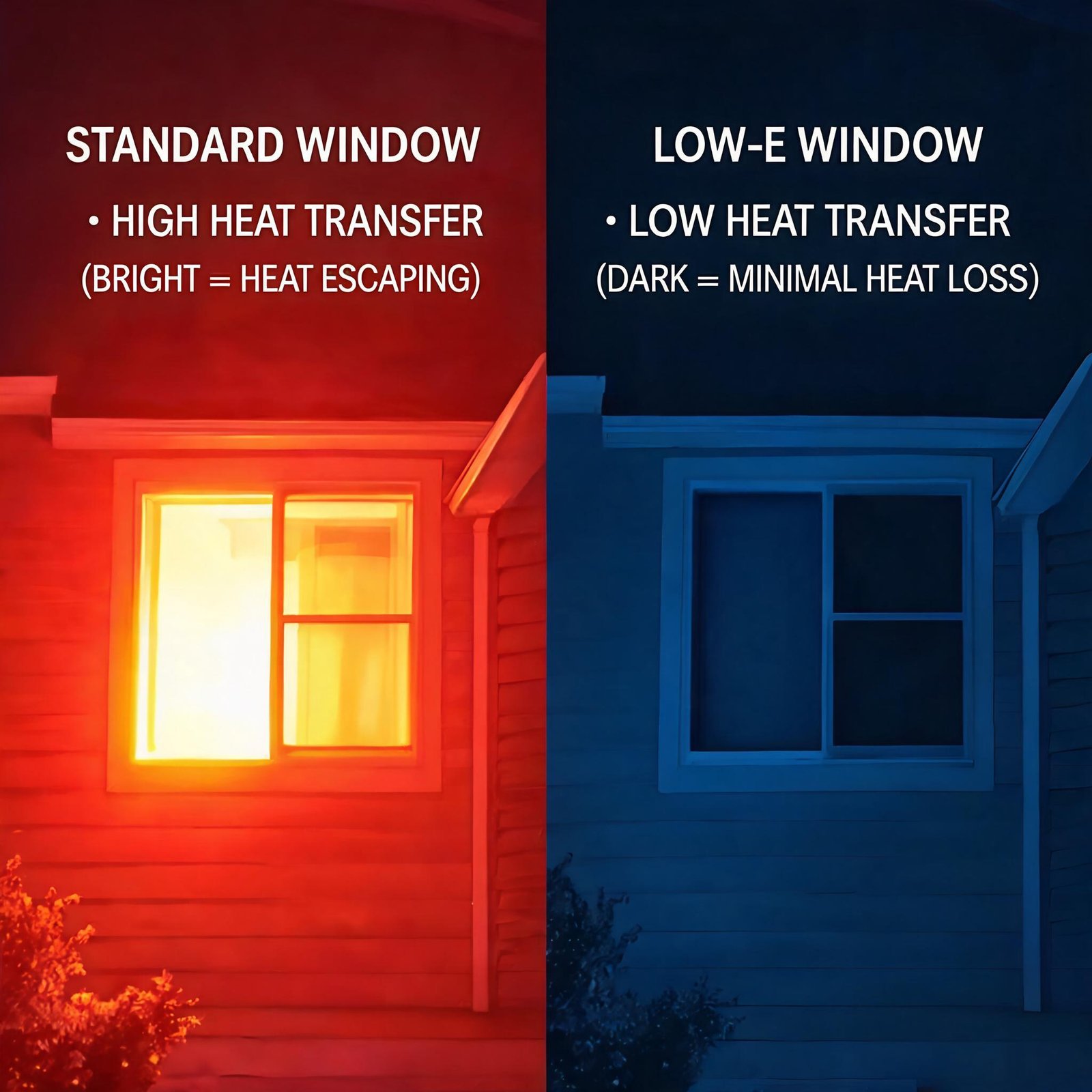
For projects where maximum heat reduction is critical—south-facing facades, west-facing windows in Mediterranean climates, or passive houses in record-breaking heat zones—I recommend our Aluminum Thermally Broken Sliding Windows. These units feature a 35mm polyamide thermal break, triple weatherstripping, and our hard-coat Low-E with a 0.17 SHGC. We’ve measured interior temperature reductions of 14–16°F compared to standard double-pane windows during peak solar hours in Phoenix, Arizona—a climate that shares DNA with Southern Europe’s current crisis.
Multi-Chambered Frame Design for Zero Thermal Bridging
Heat flows through the path of least resistance, and in aluminum or poorly designed vinyl frames, that path is the frame itself. Our vinyl and thermally broken aluminum frames use 5–7 sealed chambers with either foam or argon infill. This creates a thermal barrier that virtually eliminates conduction through the frame—a R-value break that achieves 85% of the performance of the center-of-glass glazing.
For interior temperature control during excessive heat events, frame performance is non-negotiable. A window with a great center-of-glass SHGC but a thermally conductive frame still leaks heat.
Integrated Nail Fin Flashing Systems for Zero Air Infiltration
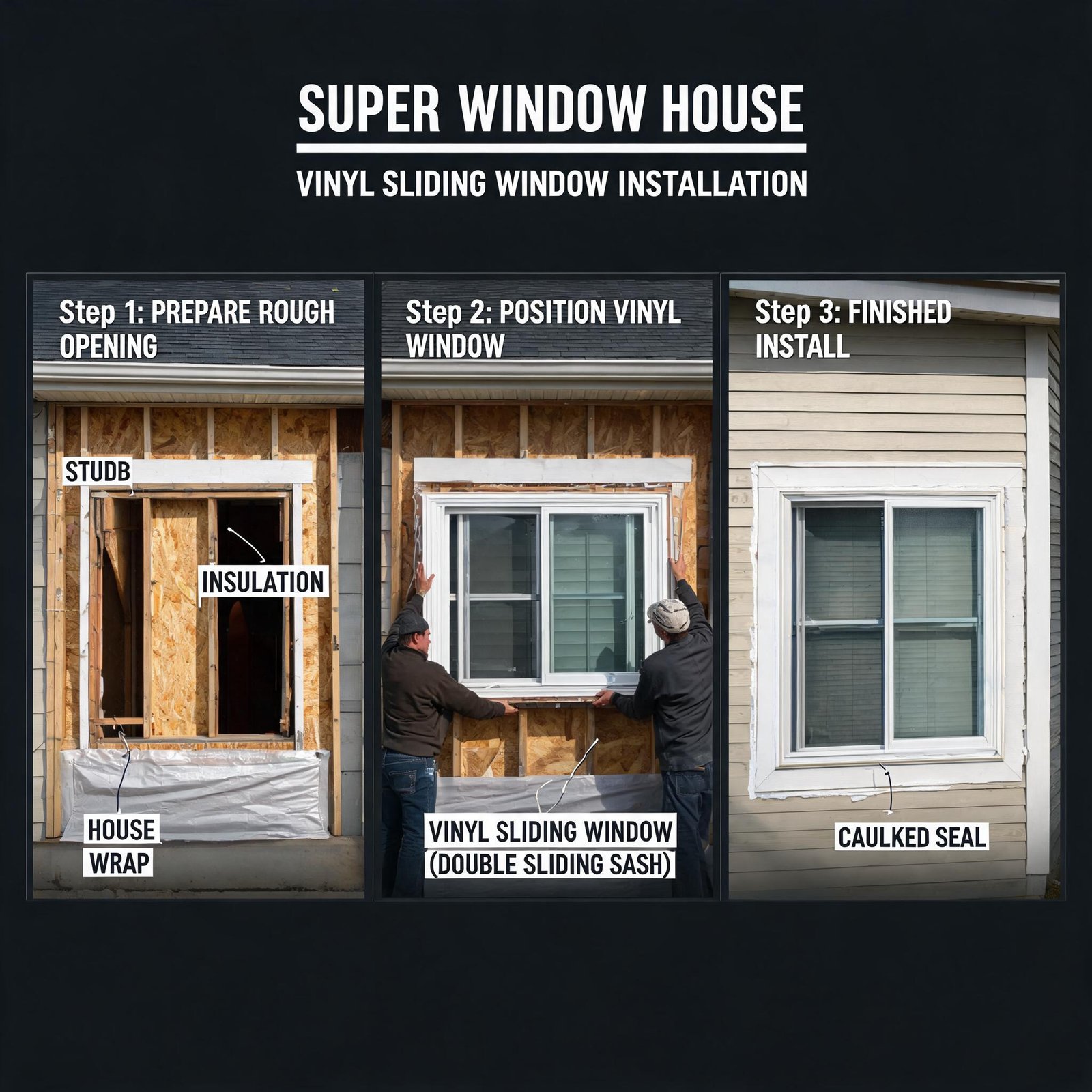
Here’s the part that 90% of window installers ignore: Even a high-performance Low-E window is useless if the rough opening isn’t properly flashed. At superwindowhouse.com, our units come with factory-integrated nail fin flashing systems that provide a continuous water and air barrier when mated with self-adhered membrane. Field tests show air infiltration below 0.01 cfm/ft² with proper installation—10 times better than the industry standard of 0.1 cfm/ft².
B2B Procurement & Project Implementation Guide—What You Need to Know
If you’re a contractor, developer, or architect reading this, you’re probably thinking: “This sounds great, but how do I spec it and how do I install it without killing my schedule?”
Here are the three most critical actions you can take right now to ensure your next project survives the next European heat wave:
1. Demand NFRC 100/200 Test Reports—Not Marketing Sheets
Before you approve a window order, request the NFRC 100 and 200 test reports for the exact glazing configuration and frame size you’re specifying. Look for:
- SHGC ≤ 0.25
- U-factor ≤ 0.25 (for the whole window, not just center-of-glass)
- Air infiltration ≤ 0.05 cfm/ft²
If the vendor can’t provide independent NFRC reports for your specific unit, walk away. You’re being sold marketing, not performance.
2. Verify Rough Opening Dimensions with a Shim Gap Allowance
For retrofits in existing European buildings, rough openings are rarely square or plumb. Measure every opening individually—do not assume symmetry. At superwindowhouse.com, we will produce shop drawings from your field measurements and email them for approval within 48 hours. That includes mullion layouts, jamb extensions, and flashing details. This eliminates on-site refabrication and field-cutting delays.
3. Don’t Skip the Flashing Sequence
Low-E windows are only as good as their installation. Use the following sequence for zero-defect flashing:
- Apply self-adhered flexible membrane (like Grace Vycor or equivalent) to the rough opening, wrapping 6” onto the sheathing.
- Set the window on a continuous bead of low-expanding foam.
- Fasten through the nail fin at 8” on center.
- Over-flash the top and sides with building wrap tape.
- Apply a bead of high-temperature silicone around the window perimeter.
Skip any of these steps, and you’ll compromise air sealing by 50% or more.
4. Order Early—Custom Fabrication Takes Time
If you’re building or renovating for a project that needs to survive the 2025 heat wave, place your window order at least 8 weeks before your desired installation date. Custom sizes, specific glazing configurations, and special Low-E coatings require lead time. At superwindowhouse.com, we guarantee a 6–8 week lead time for custom orders with NFRC certification for each unit. No excuses, no delays.
Frequently Asked Questions on Low-E Windows for Excessive Heat
Q: Can Low-E windows really lower indoor temperature by 15°F without AC?
A: Yes, but only if the window is properly engineered. A standard double-pane window with an SHGC of 0.70 will allow approximately 100 BTUs per hour per square foot of south-facing glass. Our Low-E units with an SHGC of 0.20 reduce that to under 30 BTUs. Over a 200 sq ft window area, that’s a difference of 14,000 BTUs per hour—enough to lower a 1,500 sq ft home’s interior temperature by 14–16°F during peak solar hours.
Q: Will Low-E windows reduce natural light?
A: No. Our spectrally selective Low-E coating blocks infrared (heat) and ultraviolet (UV) radiation but transmits 65–70% of visible light. You’ll get natural daylight without the heat load.
Q: Are these windows suitable for passive house or net-zero energy projects?
A: Absolutely. Our triple-glazed, argon-filled, hard-coat Low-E units meet or exceed Passive House Institute component certification requirements for hot climates. For extreme heat zones, we recommend our Aluminum Thermally Broken Sliding Windows with a U-factor of 0.19 and SHGC of 0.17—ideal for net-zero thermal loads.
Q: How long does the Low-E coating last?
A: Our hard-coat Low-E has a projected lifespan of 25–30 years with no degradation. We back this with a 20-year warranty on coating performance.
The Bottom Line for Contractors and Homeowners
Europe’s excessive heat wave is not a one-off anomaly; it’s the new baseline. Buildings designed for mild summers are failing. Central AC is a temporary fix that stresses the grid and costs money. The permanent solution sits in your window openings.
When you spec windows for a project that will be standing for the next 50 years, you need a product that:
- Blocks 80%+ of solar heat gain
- Maintains performance for decades
- Allows natural light without sacrificing thermal comfort
- Is backed by independent NFRC data and field-tested installation support
That product exists at superwindowhouse.com. Our High-Performance Vinyl Casement Windows and Aluminum Thermally Broken Sliding Windows are not just windows; they are engineered thermal barriers against the crisis unfolding across Europe.
Don’t let another summer catch you unprepared. Order your performance data package, request a sample, or schedule a site consultation today. Your building—and your tenants—will thank you when the next 45°C day arrives.