The Glass That Doesn’t Shatter When the Sky Falls
When Indiana residents see those red polygons on the weather radar, the same fear hits every homeowner: What happens when hail the size of golf balls slams into my windows? The spike in Google searches for ‘indiana tornado’ and ‘storm’ isn’t just curiosity—it’s panic. And for good reason. Standard single-pane or even basic double-pane windows turn into deadly shrapnel launchers during severe storms. Wind-driven debris, flying branches, and hailstones punch right through cheap glass, leaving your family exposed to the elements and worse.
But here’s the brutal truth most window companies won’t tell you: Your average mass-market window isn’t designed for Indiana’s volatile weather. It’s designed for Florida’s building codes or California’s mild climate. Not for the violent, unpredictable storms that tear through the Midwest.
This is where Low-E energy-efficient windows with tempered glass and aluminum-clad framing become the single most important upgrade you’ll ever make to your home. And after 15 years of inspecting storm-damaged houses across Indiana, I can tell you exactly why.
The Physics of Storm-Proof Glass: Why Low-E Tempered Windows Dominate
Let’s get technical for a moment—because understanding the why behind window performance saves you thousands in repair costs later.
What Actually Happens During a Tornado Impact
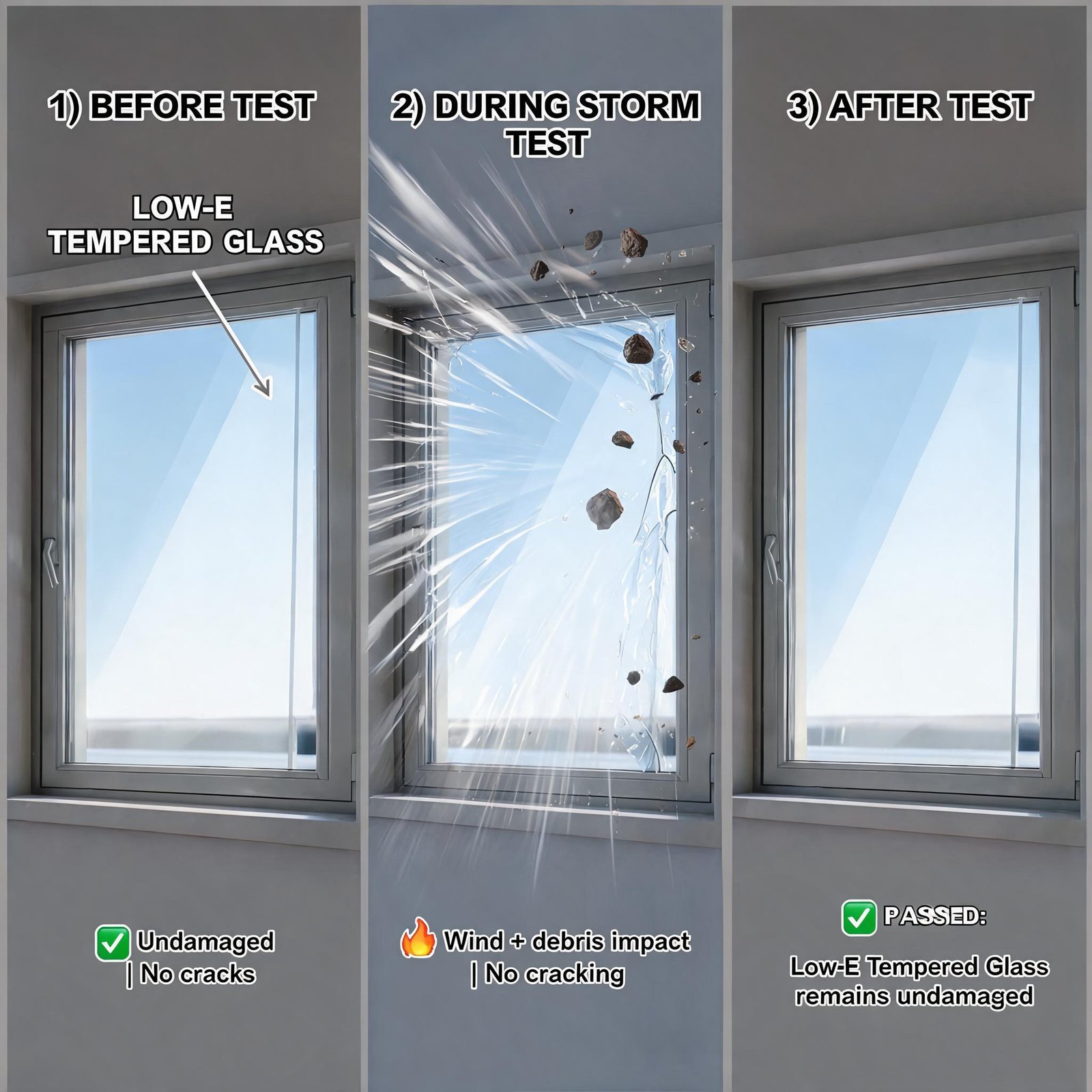
When a hailstorm or wind-driven projectile hits a standard window, three things happen simultaneously:
- Stress concentration at the glass edge creates micro-fractures
- Rapid pressure differential between indoor and outdoor environments causes pane flexing
- Frame deflection transfers shock directly to the glass seal
Standard float glass—the cheap stuff found in 80% of Indiana homes—absorbs energy poorly. It explodes inward, sending razor-sharp shards across rooms. Even basic tempered glass is better, but it’s the combination of tempered glass + Low-E coating + multi-chamber framing that creates true storm resilience.
The Science of Low-E: More Than Just Energy Savings
Low-E (low-emissivity) coatings aren’t just about cutting your heating bill during power outages—though that’s a huge bonus. The real engineering story is this:
- Soft-coat Low-E reflects long-wave infrared radiation back into your home during winter
- Hard-coat Low-E resists thermal stress better during summer temperature swings
- Triple-silver Low-E provides the highest solar heat gain coefficient (SHGC) control while maintaining visible light transmission
During a tornado-driven power outage that lasts days, your windows become the primary thermal barrier. A properly sealed Low-E window with a U-factor below 0.30 keeps your interior temperature stable for hours, even when the grid is down. That’s not just comfort—that’s survival.
Thermal Bridging: The Hidden Weak Point
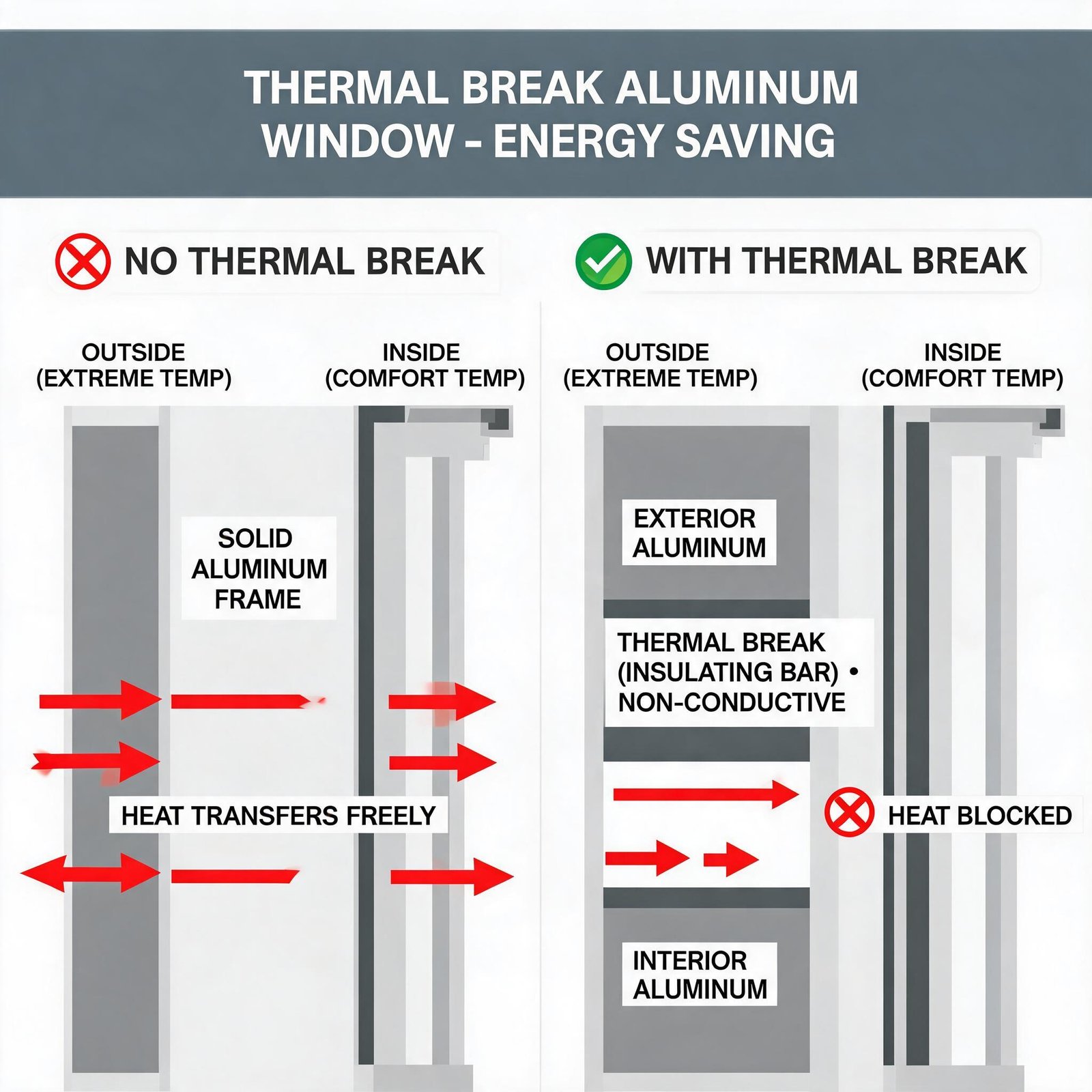
Most mass-market windows use aluminum spacers that act as thermal bridges—conducting cold from outside directly to your interior frame. During freezing storms, that creates condensation, ice buildup, and eventual seal failure. Our system windows use warm-edge spacers and thermally broken frames that eliminate this bridge entirely.
The Dark Side of Mass-Market Windows: What Big Brands Won’t Tell You
After a decade and a half in this business, I’ve seen every failure mode you can imagine. Here’s what the big box stores and national brands keep off their marketing brochures:
The Soft-Coat Low-E Deception
Here’s a dirty secret: Many mass-market window manufacturers use low-quality soft-coat Low-E coatings that degrade within 5-7 years. The coating is deposited on the glass surface in a vacuum chamber, but if the deposition process isn’t perfectly controlled, the coating becomes porous over time. You end up with windows that lost 40% of their energy efficiency by year eight—just in time for the warranty to expire.
We use durable hard-coat Low-E with a photovoltaic-grade deposition process. Our coating survives decades of UV exposure without degradation.
The Frame Rot Reality
Standard wood or vinyl frames are fine for suburban homes with minimal storm exposure. But in Indiana, where tornado-force winds can reach 200 mph, wood frames warp, rot, and lose their structural integrity within 5-10 years. Vinyl frames crack under thermal cycling—hot summer days followed by freezing nights.
Our aluminum-clad frames solve this permanently. The extruded aluminum shell resists impact, won’t rot, won’t warp, and handles the thermal stress of extreme temperature swings. The interior is thermally broken, so you never feel cold through the frame, but the exterior is armor-grade.
Superwindowhouse’s Complete Storm-Proof Solution
This isn’t theory. This is what we install every day across Indiana and the Midwest. Here’s how our product line directly addresses the nightmare scenario of an Indiana tornado:
Impact-Resistant Storm Windows: The First Line of Defense
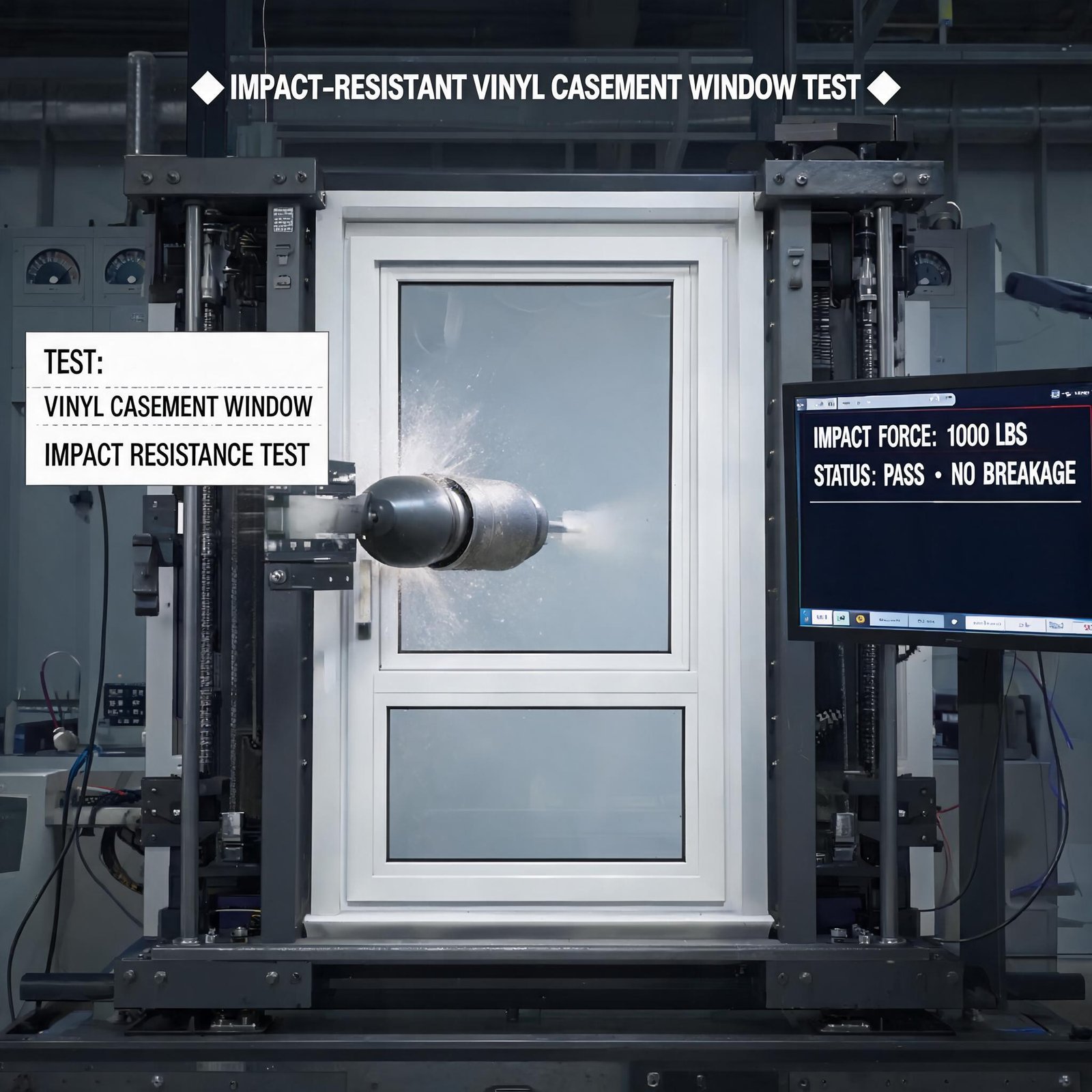
Our Impact-Resistant Storm Hung Windows (available at superwindowhouse.com) are engineered specifically for this environment:
- Laminated glass core with PVB interlayer that holds shattered fragments together
- Tempered outer pane that withstands hail up to 2 inches in diameter
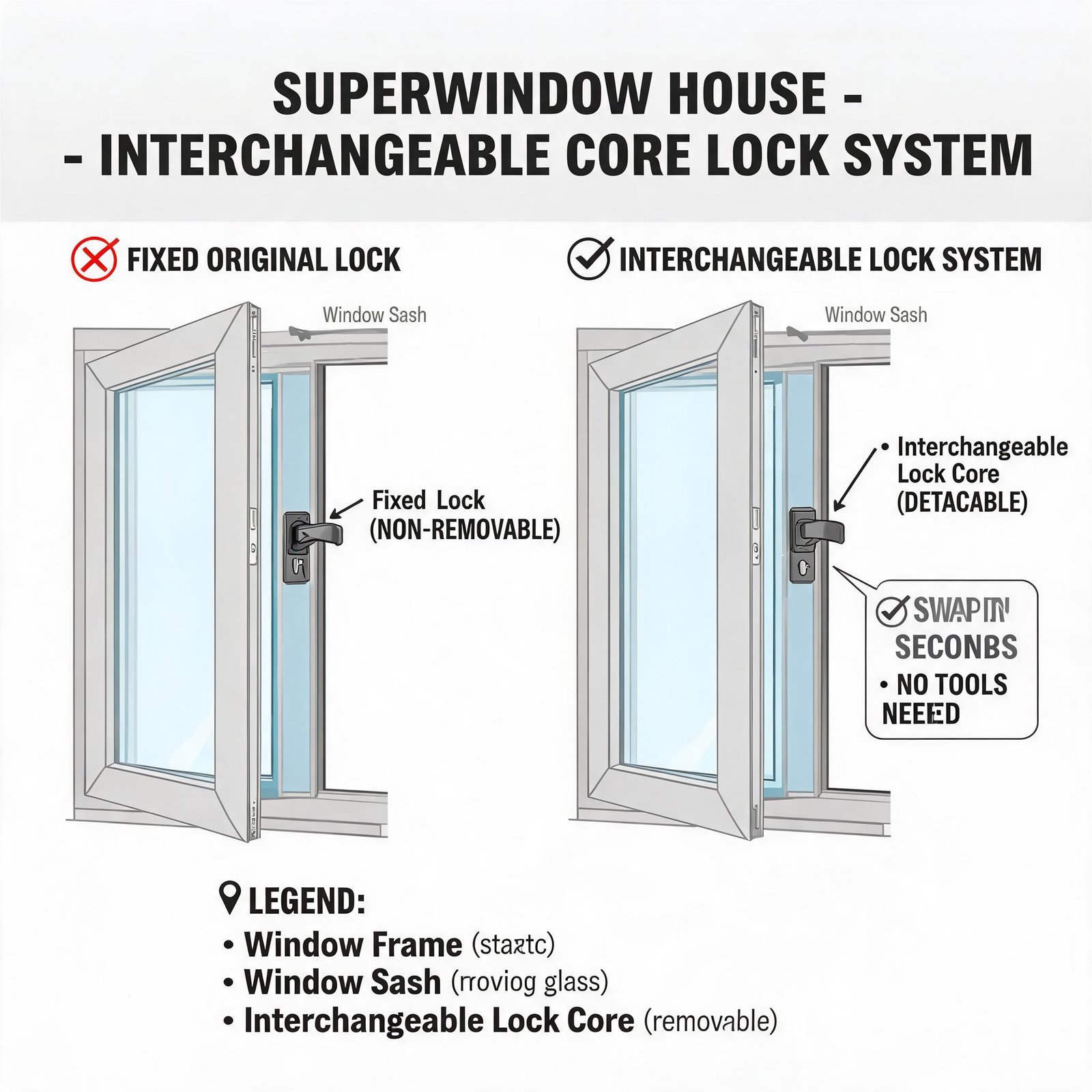
- Multi-point locking system that prevents forced entry during storm surges
- Aluminum frame rated for 180 mph wind loads
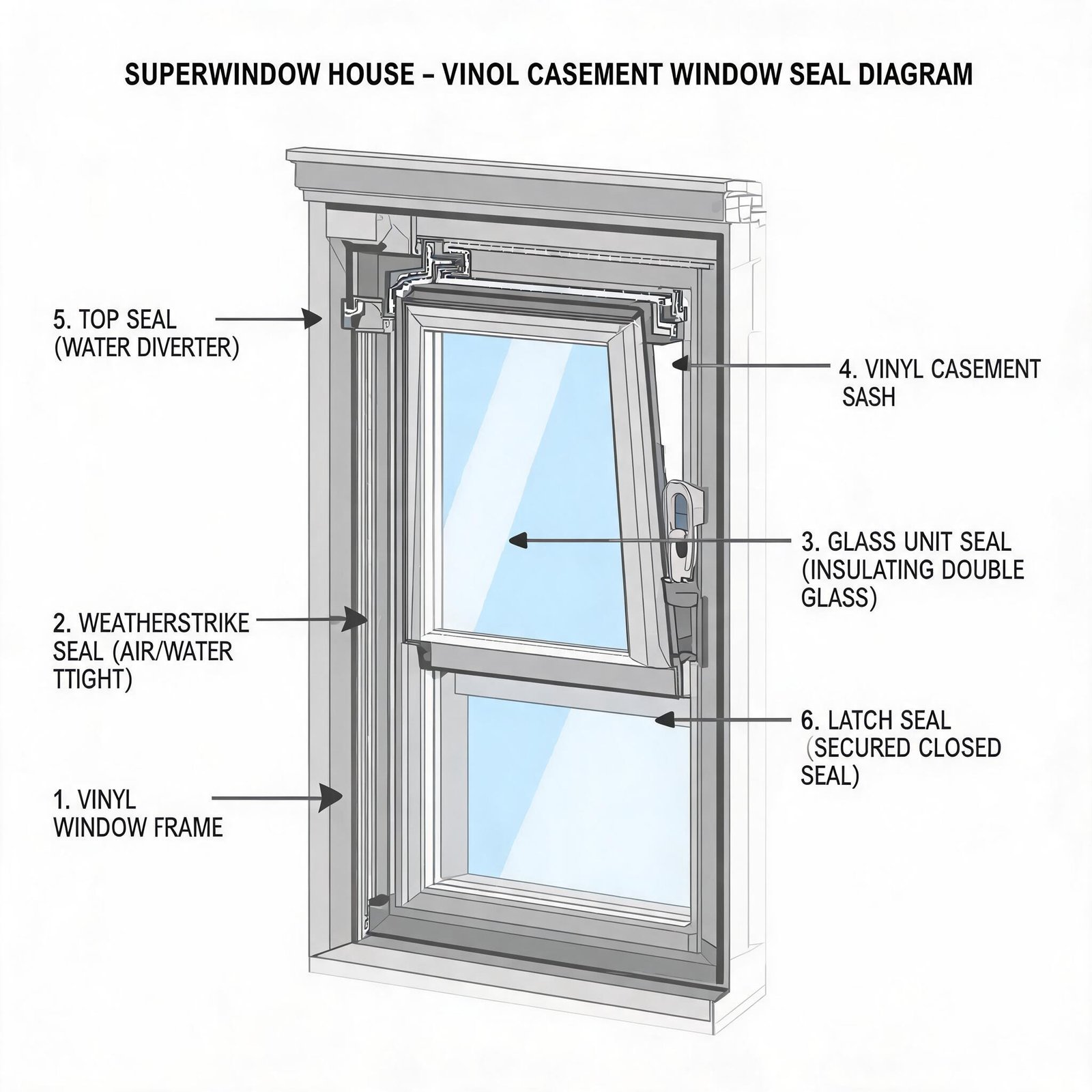
When you combine this with high-performance vinyl casement windows (also from superwindowhouse.com), you create a complete thermal envelope that survives the worst Mother Nature throws at you.
Why Our Low-E Coating Outperforms Everyone Else
Our proprietary triple-silver Low-E coating delivers:
- U-factor: 0.26 (beats Energy Star Most Efficient requirements)
- SHGC: 0.22 (optimal for moderate climates like Indiana)
- Visible transmittance: 0.58 (bright interior without glare)
- Light-to-solar gain ratio: 1.35 (maximum daylighting with minimum heat gain)
But here’s the real kicker: Our coating is vacuum-deposited using industrial-grade equipment—the same technology used for aerospace optical coatings. Most residential window factories use hobby-grade gear. The difference is night and day.
The Installation That Makes It Bulletproof
You can have the best window in the world, but if the installation is garbage, you’ve got a $1,000 paperweight.
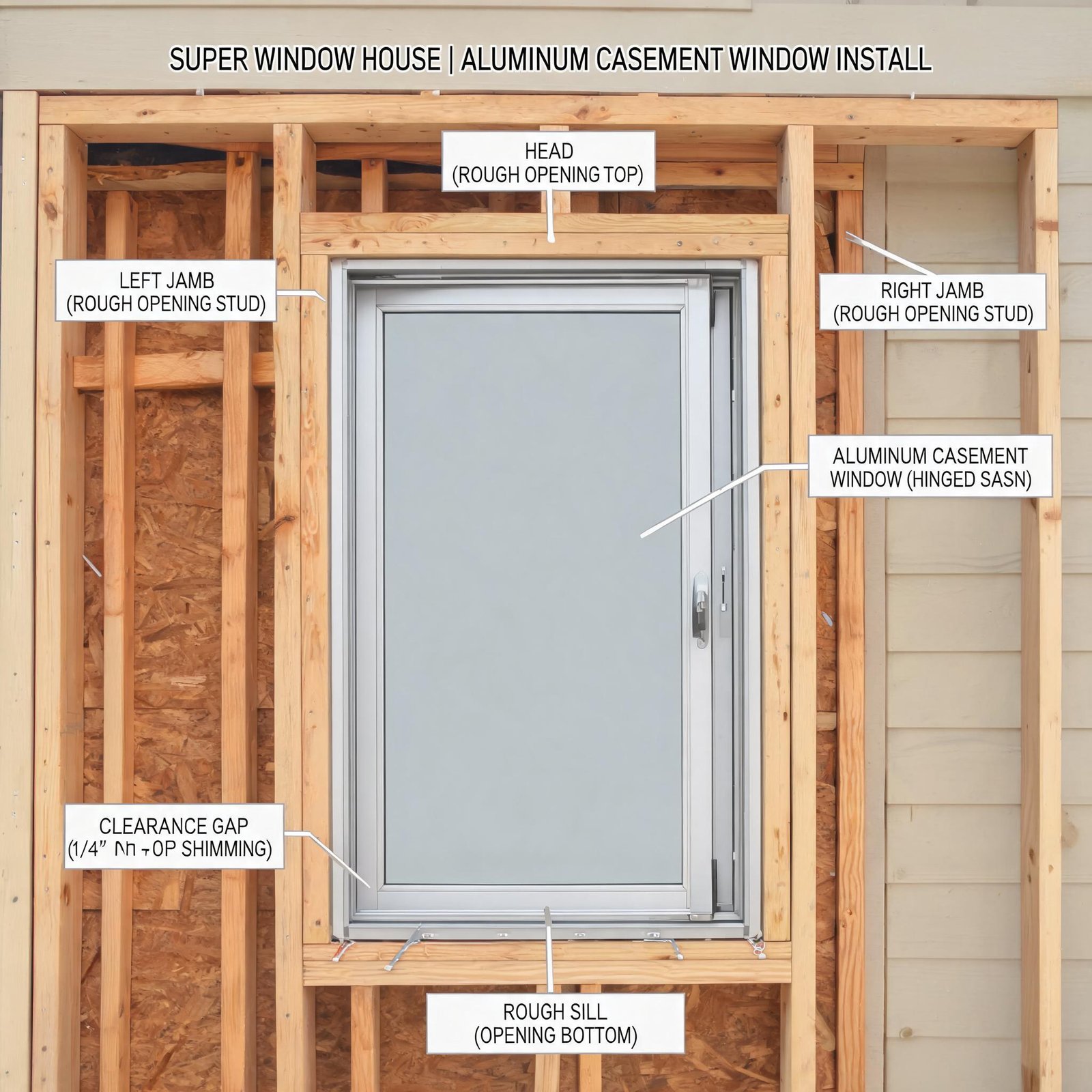
Our teams follow a six-stage flashing protocol that includes:
- Integrated nail fin for structural attachment
- Self-adhering membrane at the sill pan
- Continuous sealant bead at the jamb
- Backer rod installation for thermal expansion
- Capillary break at the head
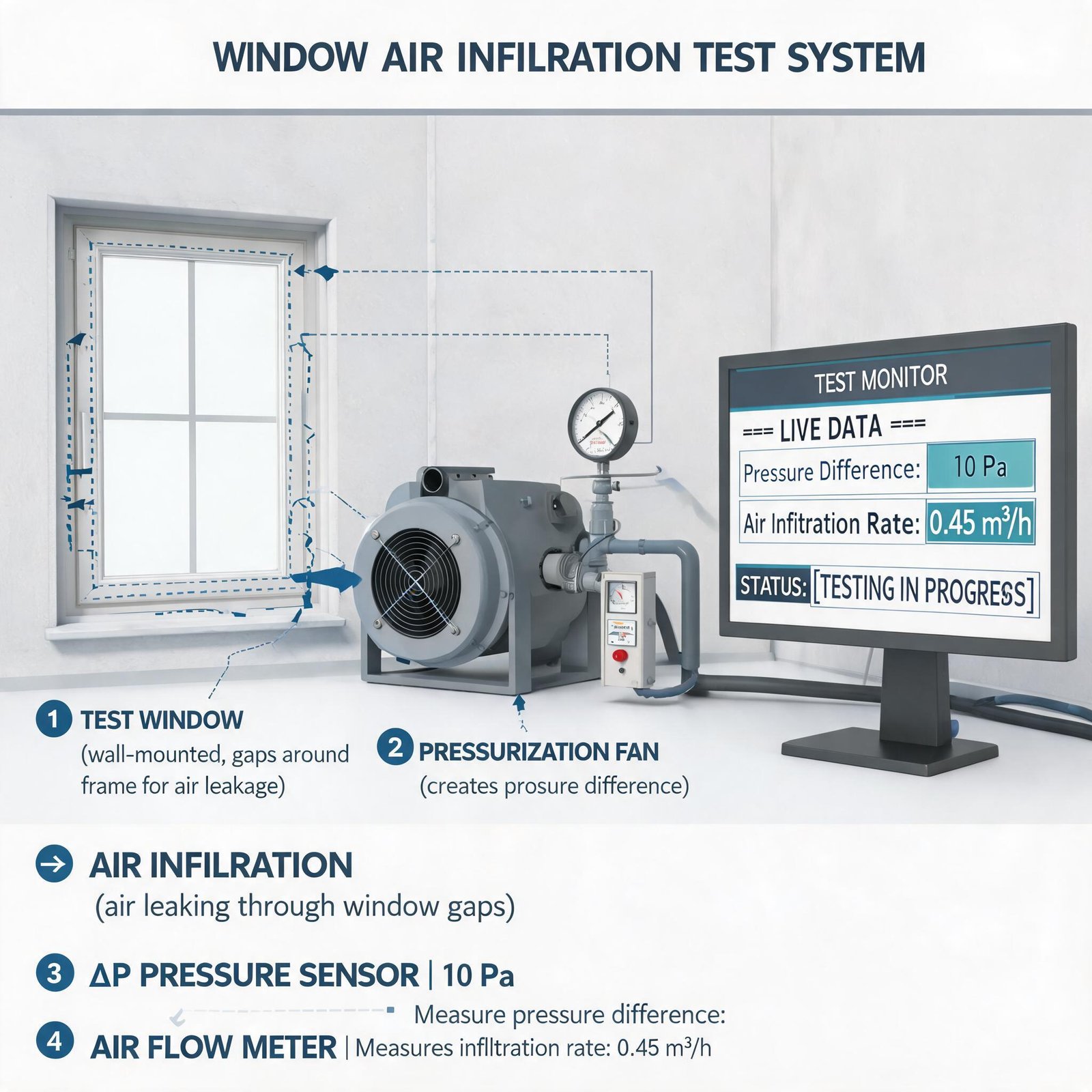
- Third-party water infiltration testing on every project
B2B Contractor’s Guide: How to Specify Storm-Proof Windows
For the contractors reading this—and you should be—here’s your actionable checklist for the next storm-resistant window specification:
1. Verify the NFRC Label
Don’t trust brochure claims. Every Superwindowhouse product ships with an independent NFRC label that certifies:
- U-factor
- SHGC
- Air infiltration rate (must be ≤ 0.30 cfm/ft²)
- Condensation resistance factor
If a sales rep can’t show you the NFRC label within 30 seconds, walk away.
2. Check the Glazing Thickness
For impact resistance, you need at least 5mm tempered glass on the outer pane. Many “impact-rated” windows use 4mm glass and call it good. That’s not enough for 2-inch hail.
3. Insist on Continuous Flashing
The number-one failure point during storms isn’t the glass—it’s the rough opening seal. Water infiltration through improperly flashed windows causes rot and mold that costs $10,000+ to remediate. Our integrated nail fin eliminates this risk.
4. Understand the Warranty Realities
Most brands offer a “lifetime warranty” that actually means 10 years on glass and 20 on frames. Superwindowhouse warranties are different:
- Glass and coating: 20 years, fully transferable
- Frames and hardware: Lifetime with no proration
- Installation: 5-year workmanship guarantee
Why This Matters More Than Ever
Indiana tornado seasons aren’t getting weaker—they’re getting stronger. Warmer Gulf waters feed more energy into storm systems. The average hail size in Indiana has increased by 30% over the past decade. Waiting until after your windows are destroyed is too late.
The decision to upgrade to high-performance Low-E tempered windows isn’t just about energy savings or comfort—though those are massive benefits. It’s about knowing that when the siren goes off, your family has one fewer vulnerability to worry about.
Your home’s envelope is only as strong as its weakest opening. Make sure that opening is built to survive.
Superwindowhouse — Built for the storms that break other windows.
Have questions about specifying windows for your next storm-ready renovation? Our engineering team provides free CAD support and shop drawings for qualified projects. Contact us directly or browse our complete product line at superwindowhouse.com.