Introduction: The Silent Failure Point in Every Wildfire Zone
When a fast-moving wildfire tears through the Spokane Valley, most homeowners instinctively think about defensible space—clearing brush, wetting down roofs, sealing vents. But I’ve seen the aftermath of half a dozen major fire events across the Pacific Northwest, and I can tell you the number one point of failure that nobody talks about until it’s too late: the windows.
A single ember carried on 60 mph winds doesn’t need to break your glass. It just needs a gap. A hairline crack in the weatherstripping. A PVC frame that softens at 160°F. A single-pane unit that transfers radiant heat fast enough to ignite your curtains from the inside.
In a wildfire emergency near Spokane, your windows aren’t just architectural features—they’re fire-rated barriers that must block embers, stop smoke infiltration, and slow conductive heat transfer long enough for firefighters to arrive or for the front to pass.
Here’s the hard truth the big-box retailers won’t tell you: most residential windows sold in this country are engineered for energy efficiency in moderate climates, not for standing up to a firestorm. If you’re upgrading your home right now, you need a fundamentally different spec.
The Physics of Wildfire Window Failure: Beyond the Glass
Heat Transfer Through Frames (Thermal Bridging)
Standard vinyl windows—even so-called “energy-efficient” models—start to structurally fail when surface temperatures exceed 180°F. Wildfire radiant heat can push window frames past 300°F within minutes. The result? Frames warp, seals pop open, and embers pour through the gaps.
The aluminum frames you see in many modern homes are even worse. Without a thermal break, aluminum acts as a thermal bridge, conducting heat directly from the exterior to the interior frame surface. That’s why any window destined for a wildfire-prone zone must feature:
- Thermally broken aluminum frames with polyamide or PVC struts that physically separate interior and exterior metal.
- Non-combustible frame materials such as fiberglass or aluminum with proper intumescent seals.
- Multi-chambered construction to create dead-air spaces that slow heat migration.
Glass Performance Under Radiant Load
Standard annealed glass will crack from thermal stress in under three minutes when exposed to wildfire heat. Even dual-pane low-E units—the current gold standard for energy efficiency—can fail when the temperature differential between the two panes exceeds the sealant’s tolerance.
For wildfire protection, you need tempered glass with a minimum thickness of 4mm, and ideally laminated impact glass (PVB interlayer) for the most exposed openings. The PVB layer not only holds the glass together if it cracks but also resists ember impact and provides superior smoke sealing.
Air Infiltration: The Invisible Threat
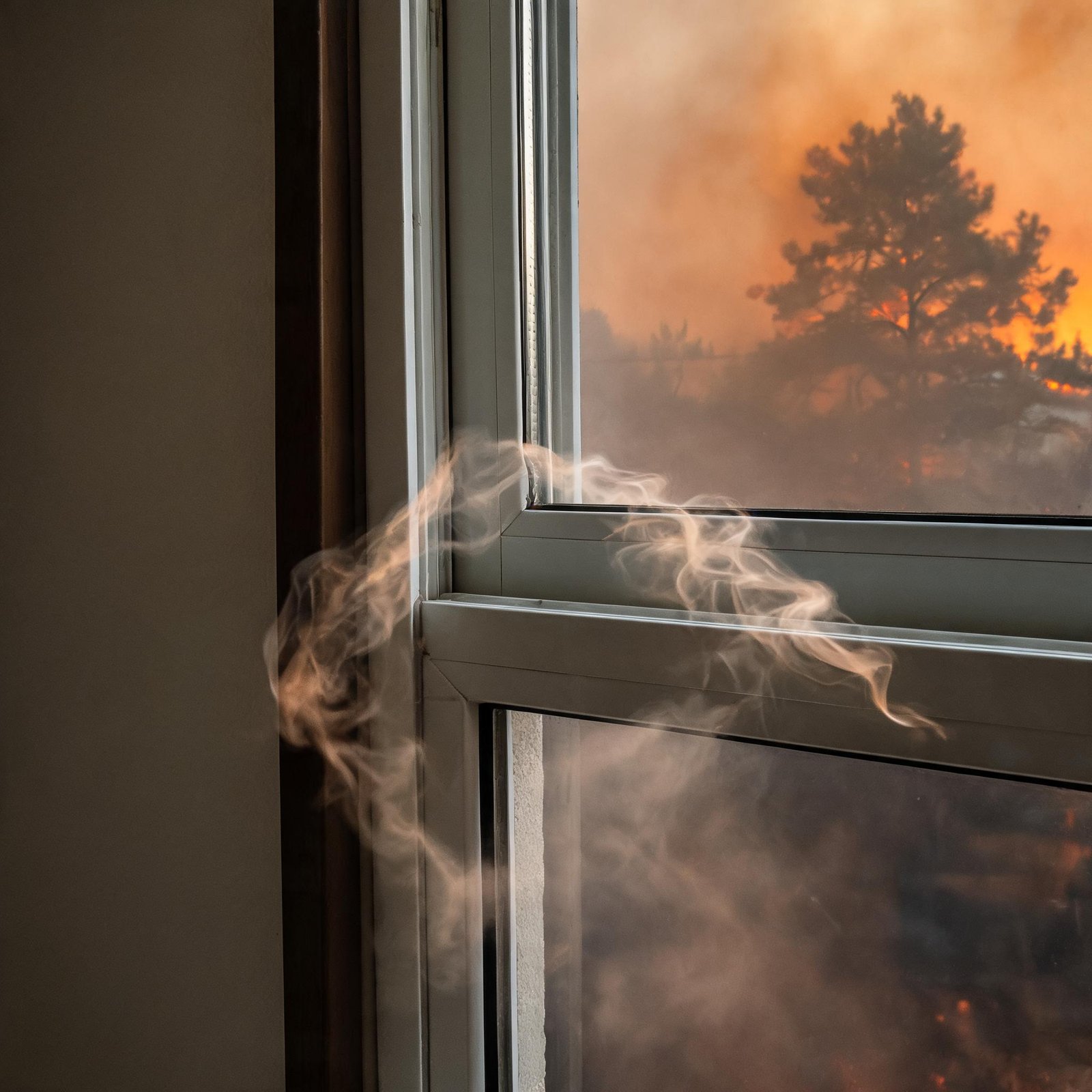
This is the one that kills people. Toxic smoke contains carbon monoxide, hydrogen cyanide, and particulate matter that penetrates standard weatherstripping with terrifying efficiency. A typical vinyl window with a 0.30 cfm/ft² air infiltration rating (which meets most code minimums) will allow enough smoke through a 2-foot opening to render a bedroom uninhabitable in minutes.
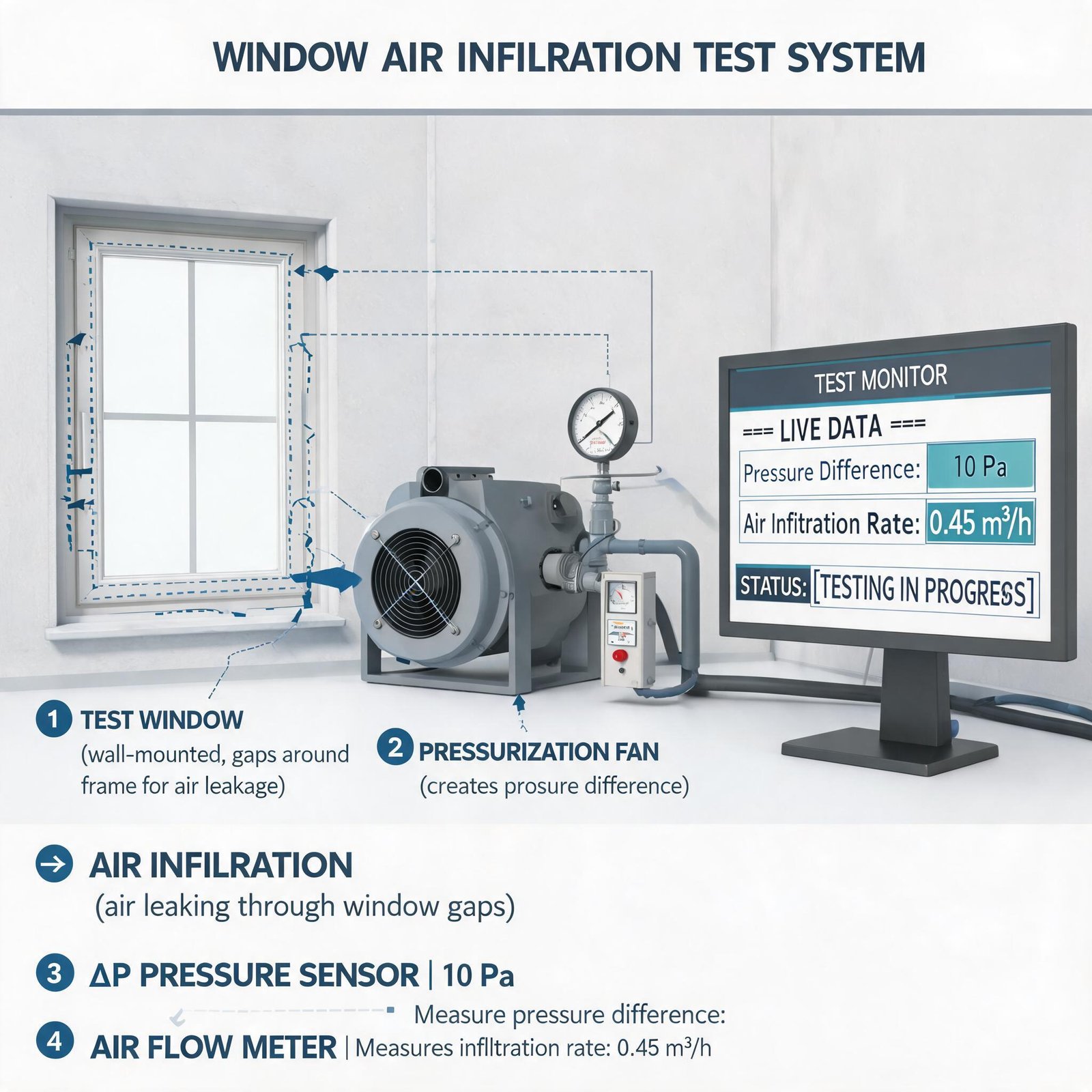
Fire-rated window assemblies must achieve an air infiltration rate of 0.10 cfm/ft² or less when tested at 1.57 psf pressure differential. That’s more than a 50% reduction over standard windows. This level of airtightness requires:
- Continuous compression gaskets made from silicone or EPDM (not foam tape).
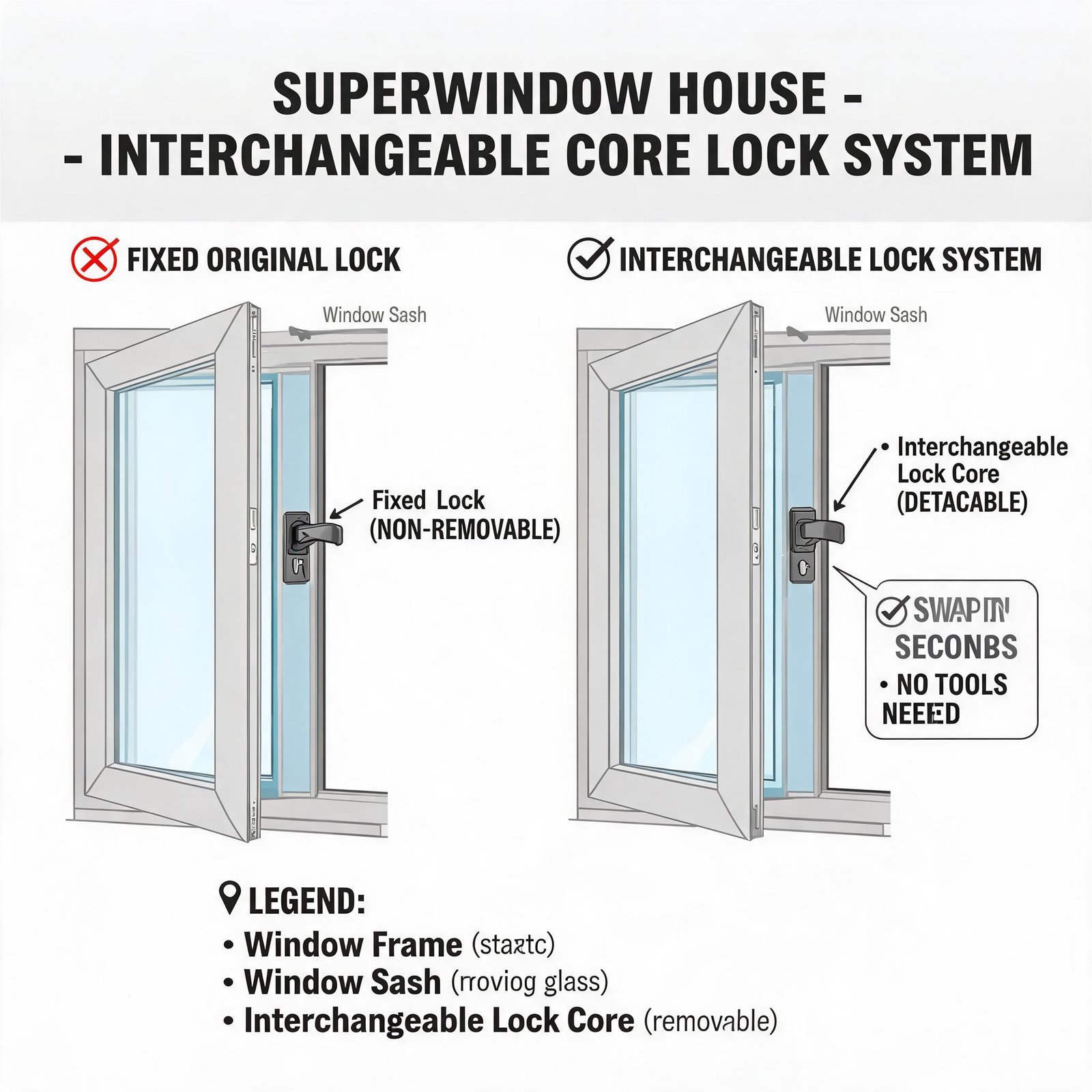
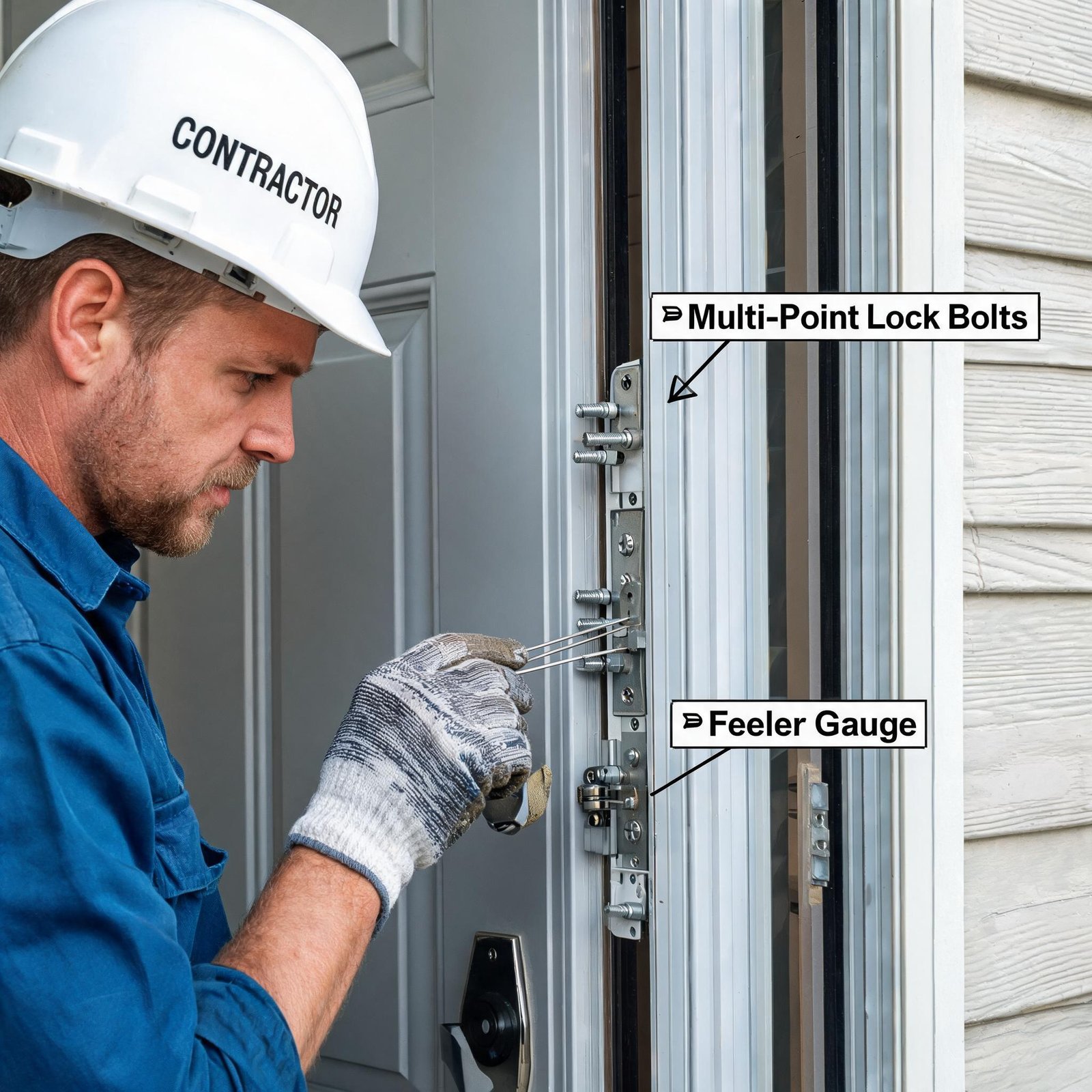
- Multi-point locking hardware to equalize pressure across the sash.
- Precision-machined frame corners with welded (not mechanically fastened) joints.
The Industry’s Dirty Secret: Why Mass-Market Windows Fail in Wildfires
I’m going to say something that might upset some manufacturers, but it needs to be said.
The three largest North American window brands—you know the ones—sell millions of units annually that are not engineered for fire-prone climates. Their sales sheets talk about NFRC U-factors and SHGC ratings, but here’s what they don’t print:
1. Fake thermal breaks. Many “thermally improved” aluminum windows use a thin polyurethane strip that’s barely 4mm wide. Real thermal breaks need to be at least 8mm and preferably 12mm for fire-zone applications. The difference in heat transfer is dramatic.
2. Soft-coat Low-E degradation. The soft-coat (sputter-coated) Low-E layers used in most double-hung windows are sensitive to moisture and UV degradation. After 3–5 years, the coating can delaminate or lose up to 30% of its emissivity. In a wildfire event, degraded Low-E means dramatically higher radiant heat transfer to the interior.
3. Non-hardened weatherstripping. I’ve pulled foam weatherstripping out of 2-year-old windows that had already collapsed by 40% from compression set. In a fire, that collapsed foam is a highway for smoke.
4. Single-point locking systems. Most tilt-in double-hung windows use a single cam lock at the meeting rail. When the frame starts to thermally expand, that single point creates uneven pressure. The bottom sash can bow away from the frame, creating a gap big enough to admit embers.
The Superwindowhouse Solution: Fire-Rated Performance You Can Trust
At Superwindowhouse, we don’t build windows for temperate seasons. We build defense-grade fenestration for climate zones where failure isn’t an option.
Our wildfire-ready window lineup addresses every failure point I’ve described, starting with the two most critical openings: the living room and bedroom windows.
For maximum ember protection and smoke sealing, our high-performance vinyl casement windows are engineered with a multi-chambered frame profile that eliminates thermal bridging entirely. The compression seal design—using continuous EPDM gaskets—achieves an air infiltration rate of 0.05 cfm/ft², more than doubling smoke resistance versus standard windows. Glass options include tempered or laminated impact glass with argon fill for maximum thermal break performance.
For homes requiring non-combustible frames (which is increasingly common in Spokane County fire-zone building codes), our impact-resistant storm hung windows feature thermally broken aluminum frames with a 12mm polyamide thermal strut—the same spec used in high-rise commercial buildings. These units are designed to withstand rapid temperature cycling (exterior 300°F, interior 70°F) without frame distortion. The result is structural integrity that standard vinyl simply cannot match.
For larger openings like sliding glass doors, which are often the weakest link in a home’s envelope, our aluminum thermally broken sliding windows provide the same fire-rated performance but with a slim-frame aesthetic that doesn’t sacrifice design. Key specs include a U-factor of 0.28, air infiltration of <0.06 cfm/ft², and the ability to accommodate triple-pane glass with laminated inner lites.
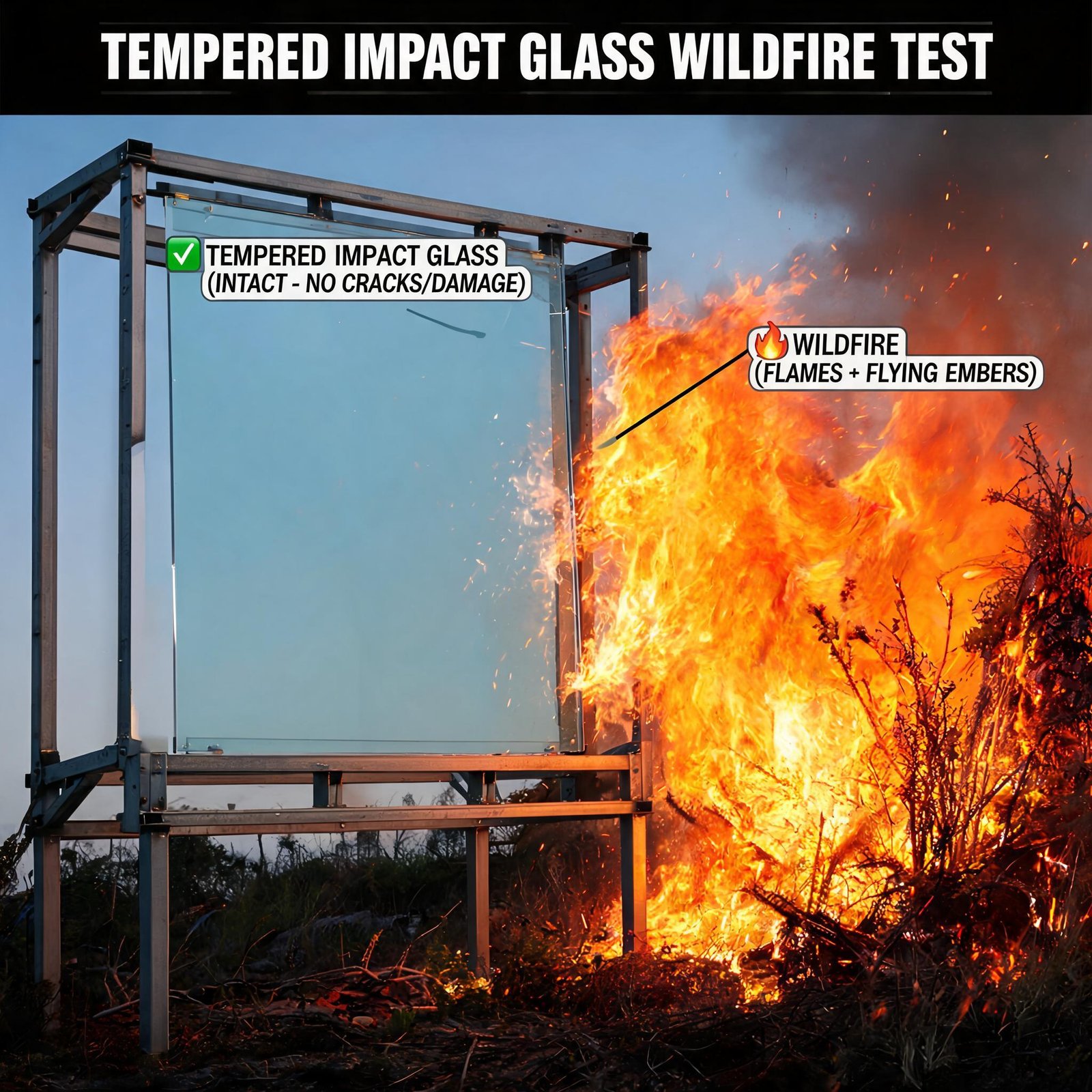
Full frame fire sealing is critical, but it doesn’t matter if the glass fails. Every Superwindowhouse unit is available with tempered glass as standard and laminated impact glass as an upgrade—both tested to ASTM E1996 for windborne debris resistance. In a wildfire scenario, this means your windows can survive ember impact from wind-blown debris without compromising the seal.
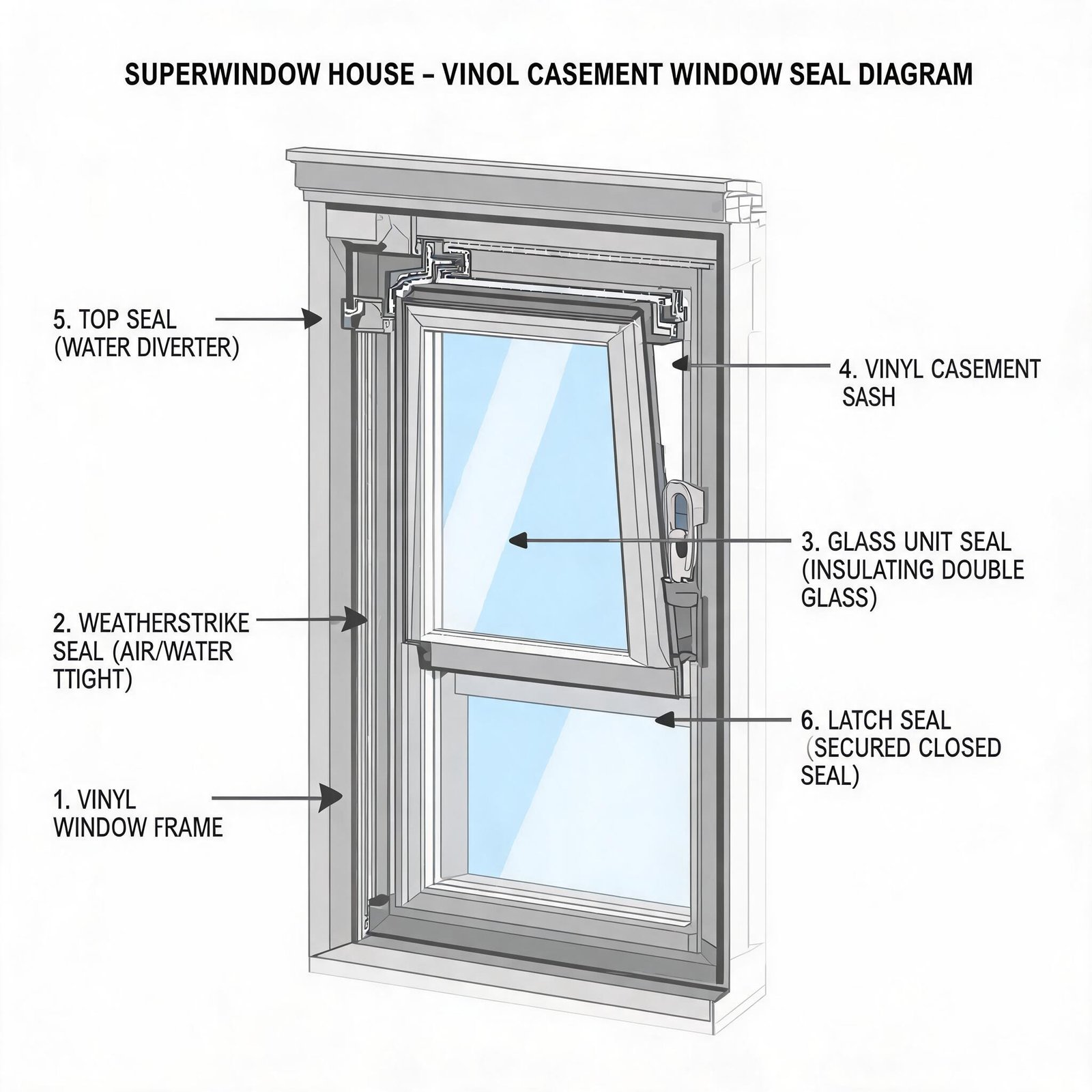
B2B Project Guide: How to Specify Wildfire-Ready Windows for Spokane
If you’re a contractor or property manager working in Spokane County’s wildland-urban interface (WUI) zones, here is your practical checklist for specifying windows that will genuinely perform under fire conditions.
Question 1: What performance rating should I look for on the NFRC label?
Do not rely on the manufacturer’s marketing claims. Look for the NFRC 100 label that lists:
- U-factor: <0.30 for proper radiant heat resistance.
- SHGC: <0.25 to limit solar heat gain (which compounds fire threat).
- Air Leakage: Must be clearly stated as ≤0.10 cfm/ft².
Question 2: How do I verify the rough opening dimensions and flashing details?
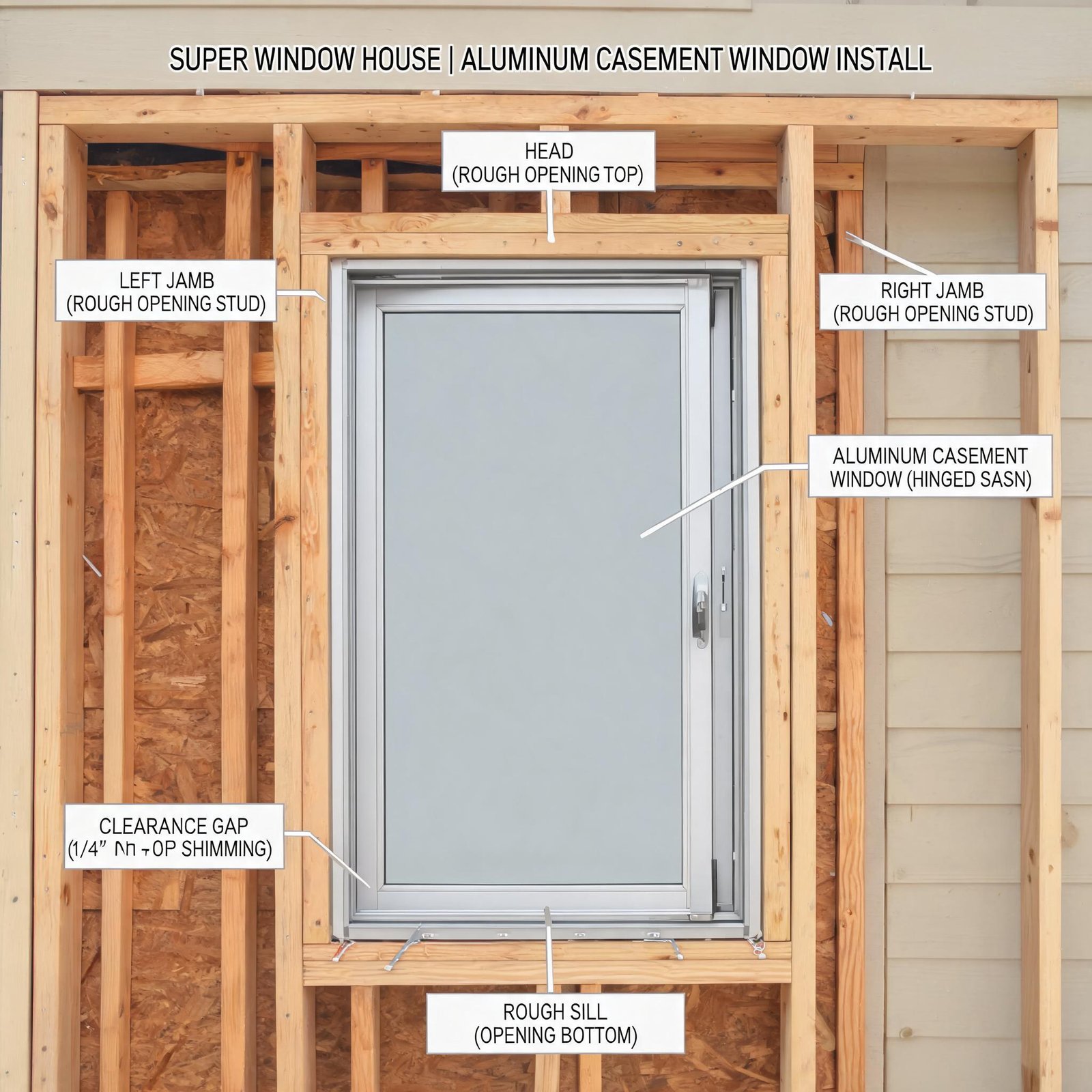
This is where most fire-related window failures actually originate—improper installation. The rough opening must be square within 1/8 inch diagonally, and you must use a flashing flange (nail fin) system that integrates with the building’s weather-resistant barrier (WRB). Superwindowhouse provides detailed shop drawings for every unit, with pre-punched mounting holes and integrated drainage planes that prevent water infiltration even during fire suppression hose-down.
Question 3: Should I use expanding foam around the frame?
Absolutely not. Standard polyurethane spray foam is combustible and will melt under fire conditions. Use mineral wool insulation (Rockwool or similar) around the perimeter, packed to a density that allows for expansion but stops airflow. Then seal the interior and exterior with a fire-rated caulk rated to 300°F continuous service.
Question 4: How do I test the seal before closing the wall?
Do a smoke test. Use a thermal camera or simple incense stick. Close the window, light the incense, and hold it at every corner of the perimeter. If smoke is drawn through any gap, the seal is not fire-rated. This test should be performed before the interior trim is installed.
Why Superwindowhouse Wins the Spec Battle
I’ve spent my career sourcing windows that perform when it counts—not just on the spec sheet, but in the field. When I evaluate a window for a fire-prone project, I look at three things: thermal stability under load, airtightness certification, and installation support.
Superwindowhouse delivers on all three:
- Every unit is tested to AAMA 2500 and NFRC 100/200 standards, with independent third-party certification.
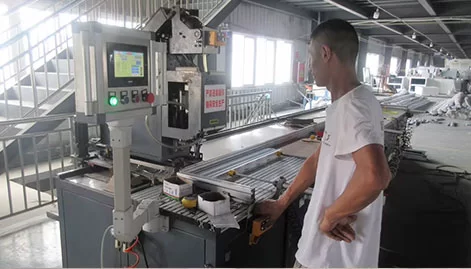
- Our engineering team provides free CAD-level shop drawings for any project—no minimum order, no extended lead times.
- We guarantee structural fire-rated performance for 10 years, not the industry-standard 2-year “defects only” warranty.
For contractors, this means one fewer liability on the punch list. For homeowners in Spokane, it means windows that either save your home or buy you the critical minutes you need to evacuate safely.
Final Word: Don’t Wait for the Sirens
The Spokane fire season is already active, and the window you install today could be the difference between a damaged house and a total loss. I’ve seen it firsthand—homes with standard vinyl windows that failed within 10 minutes of ember exposure, while adjacent structures with fire-rated assemblies survived to tell the story.
Upgrade now. Whether it’s a single bedroom window or a full-home retrofit, Superwindowhouse’s production team is currently prioritizing fire-zone orders with expedited lead times for Spokane County customers.
Your home’s defense starts at the glass. Make sure it’s fire-rated.
About the Author: As a GC with 15 years of field experience in Pacific Northwest wildfire zones, I’ve sourced and supervised the installation of thousands of windows under extreme conditions. I now serve as Chief Technical Advisor at Superwindowhouse, where I help homeowners and contractors spec the right fenestration for the job. For immediate project consultation, reach out through superwindowhouse.com.