You’re staring at your driveway, your neighbor’s dog has been barking for three straight hours, and you’re ready to dig a moat. That Reddit post you just read – “Sliding solid gate vs sectional garage door for driveway?” – hits home. You want to block that noise, but you’re stuck choosing between two heavy-duty closures. Let me save you the trial-and-error: neither a sliding gate nor a sectional garage door is designed for serious noise reduction. They’re built for security and vehicle access, not STC ratings. But before you give up on peace and quiet, listen up. There’s a better way – and it starts with understanding what truly stops sound.
The Real Problem: Sound Leaks Through Every Gap
Sound transmission is not a simple “thick wall = silence” equation. It’s about mass, air gaps, and flanking paths. A barking dog in the driveway sends low-frequency and mid-frequency waves right through cracks, hollow panels, and poorly sealed perimeters. Both sliding gates and sectional garage doors have these weaknesses in spades.
Sliding Solid Gate: Heavy but Leaky
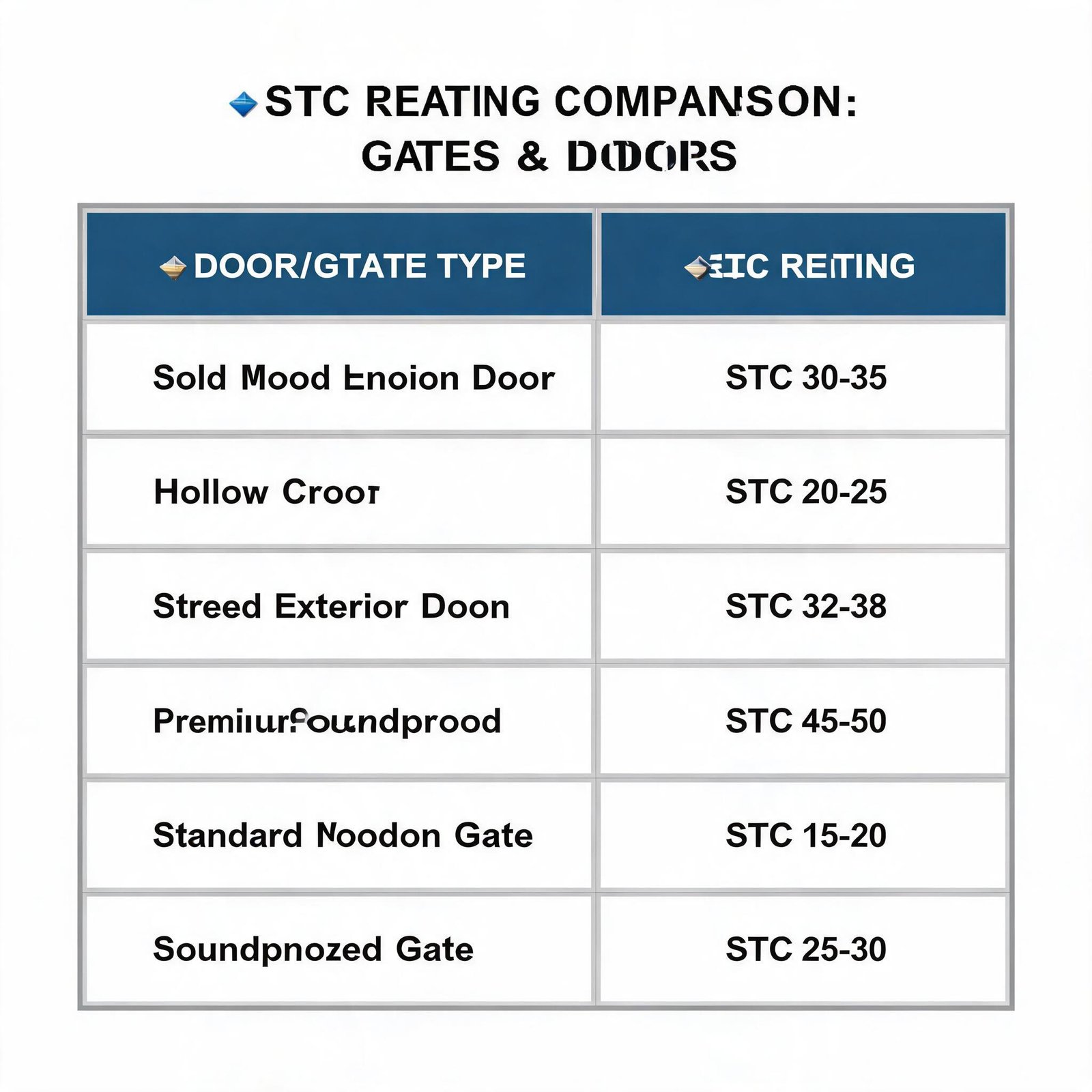
A sliding solid gate often uses a steel or aluminum frame with a sheet metal skin. The mass helps – heavier gates do attenuate some noise. But the real enemy is the gap under the gate, the gap along the track, and the lack of continuous compression seals. Most sliding gates rely on a simple rubber sweep that degrades in a year or two. Plus, the mounting brackets and rollers transmit vibration directly into the gate frame. You might block visual line-of-sight, but the sound waves simply bend around those gaps. STC of a typical sliding gate? Maybe 20-25 at best. That’s not enough to stop a 70 dB bark from waking your toddler.
Sectional Garage Door: Insulated but Hollow-Cored
A sectional garage door with foam insulation core (R-value 12-18) does better on thermal performance but still fails acoustically. The panels themselves can reach STC 25-30 if they’re thick steel with polyurethane foam. However, the critical weak points are the panel joints, the top and bottom seals, and the weatherstrip around the sides. Most garage door manufacturers prioritize smooth operation, not airtightness. Over time, the seals compress and crack. And let’s be honest – a garage door is designed to roll up, not to create a sound lock. The gap between the door and the concrete floor alone can let in 10 dB of noise. You’d need a drop seal or bottom astragal with serious compression, which most residential doors don’t have.
Why Both Fall Short for True Soundproofing
The homeowner in that Reddit thread wants to block a specific, persistent sound source – a barking dog. That’s a high-frequency, intermittent noise that demands STC ratings of 40 or higher for noticeable reduction. Neither a sliding gate nor a sectional garage door can reliably hit that target without massive custom modifications. You could add mass-loaded vinyl, seal every crack with acoustic caulk, and install a drop seal – but you’d still end up with a solution that’s expensive, maintenance-heavy, and ugly.

Here’s the shift in perspective: instead of trying to seal a vehicle access point with an industrial door, consider treating the entry point to your home as the primary noise barrier. If the dog is barking outside your driveway, the real path into your living room is through your front door, side door, or even a patio door. Upgrade those with proper soundproofing, and you’ll cut the noise at the source of entry.
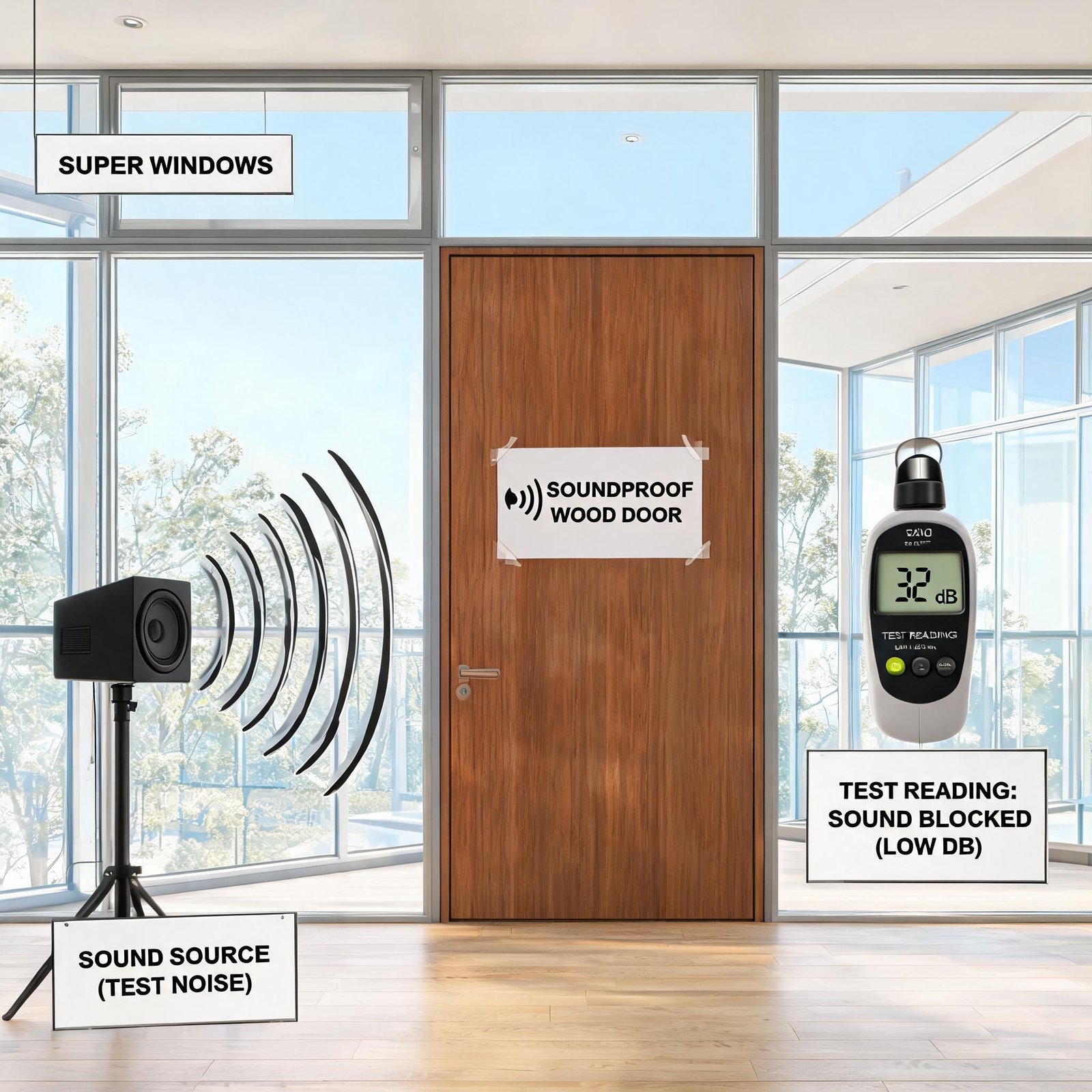
That’s where Superwindowhouse comes in. Our heavy-duty entrance doors and soundproof interior doors are engineered to deliver STC ratings of 40-50, comparable to what you’d expect from a commercial studio partition. For blocking pet barks, these doors are night and day compared to any gate or garage door.
How Superwindowhouse Doors Achieve Real Noise Reduction
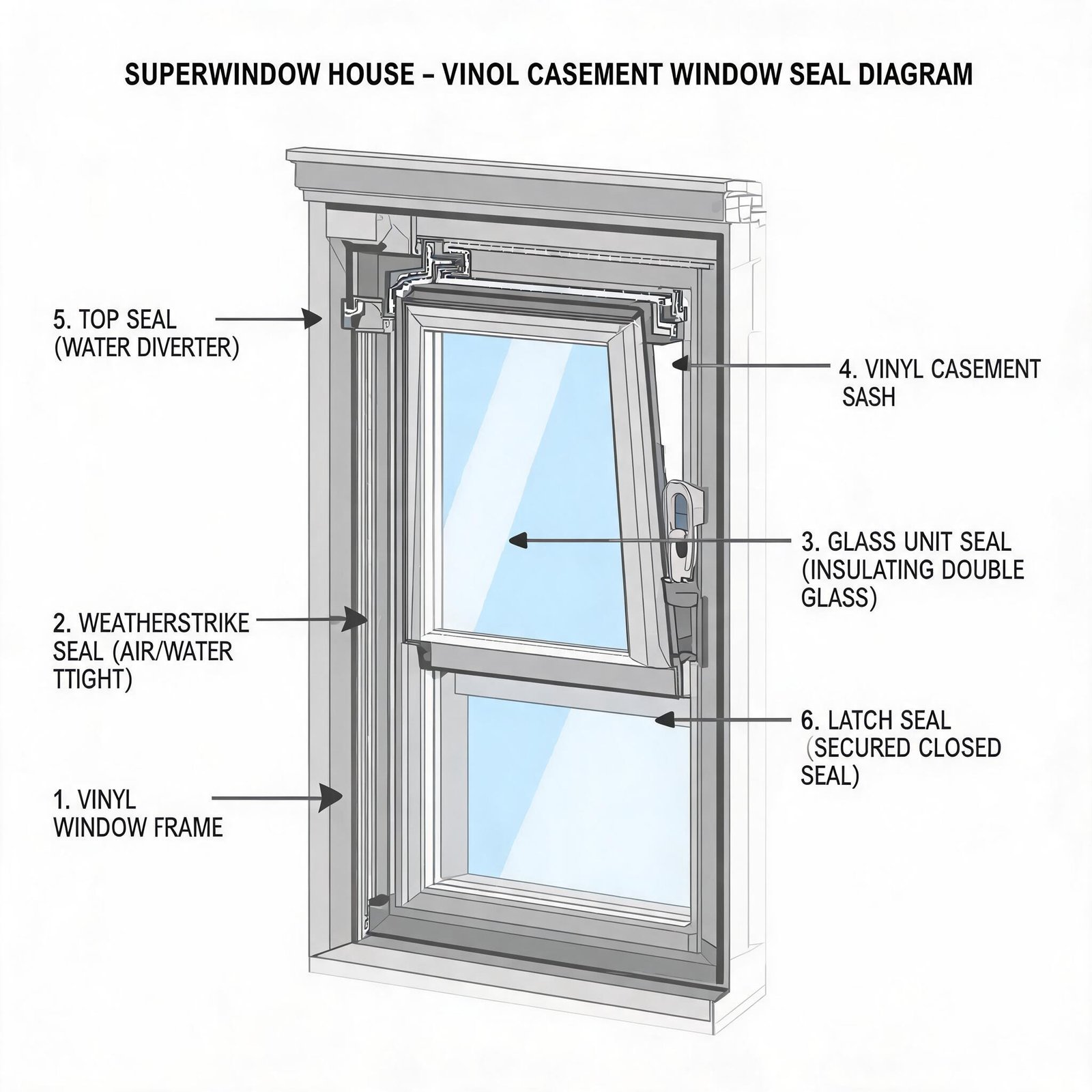
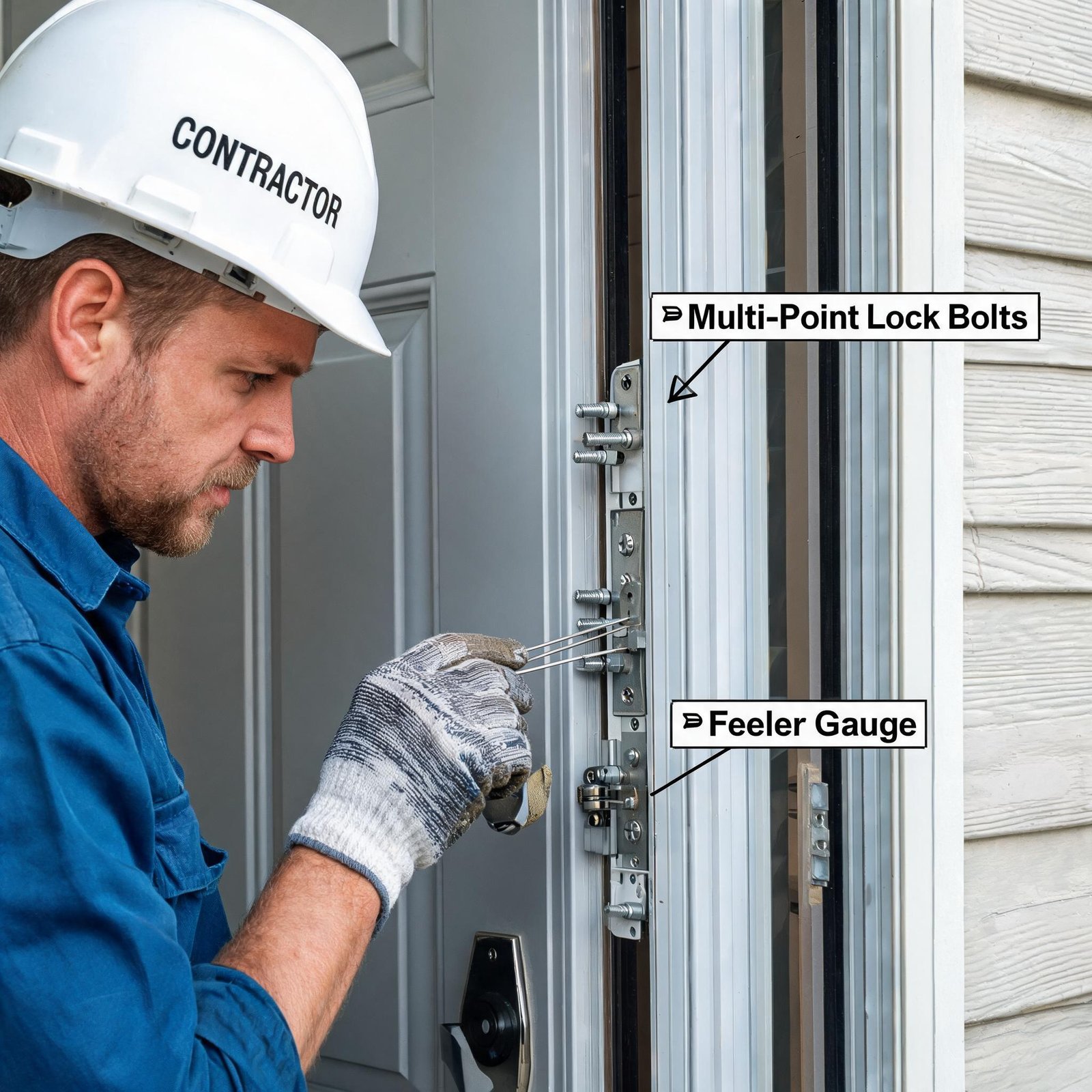
First, the construction. Our entrance doors use a solid core (not hollow) with multiple layers: steel or fiberglass skins with a dense polyurethane foam core, plus an internal mass-loaded barrier. The perimeter is fitted with a triple-seal magnetic compression gasket, similar to a refrigerator door but scaled up. The threshold has a spring-loaded drop seal that creates an airtight lock when the door closes.
Second, the framing. We use heavy-gauge aluminum or steel frames with thermal breaks and acoustic isolation pads that decouple the door from the wall. That eliminates vibration transmission. Even the hinges are designed with nylon bushings to avoid metal-on-metal contact.
Third, glass if you need it. Many homeowners want a sidelight or transom. We offer double or triple glazing with laminated acoustic glass (STC 38-42) and inert gas fills.
For interior doors – think about reducing the noise that travels inside your home from the driveway through hallways and rooms. Our high-end interior wood doors feature a solid wood core and perimeter gaskets that block sound transmission between rooms. Combined with an exterior soundproof door, you create a layered defense.
Practical Recommendations for Homeowners
Let’s go step by step.
Step 1: Identify the weakest link. Walk around your property with the dog barking. Stand at your front door, side door, patio door. Can you hear the bark clearly? Feel for air drafts with a candle flame. That’s your primary sound leak.
Step 2: Upgrade that door. If it’s your front entrance, consider a Superwindowhouse heavy-duty steel entry door with a 3/4-inch solid core and magnetic seal. If it’s a sliding patio door, our vinyl sliding patio doors come with dual compression weatherstrips and laminated glass options that can reduce noise by 35-40 dB. That’s enough to turn a barking dog into a faint background murmur.
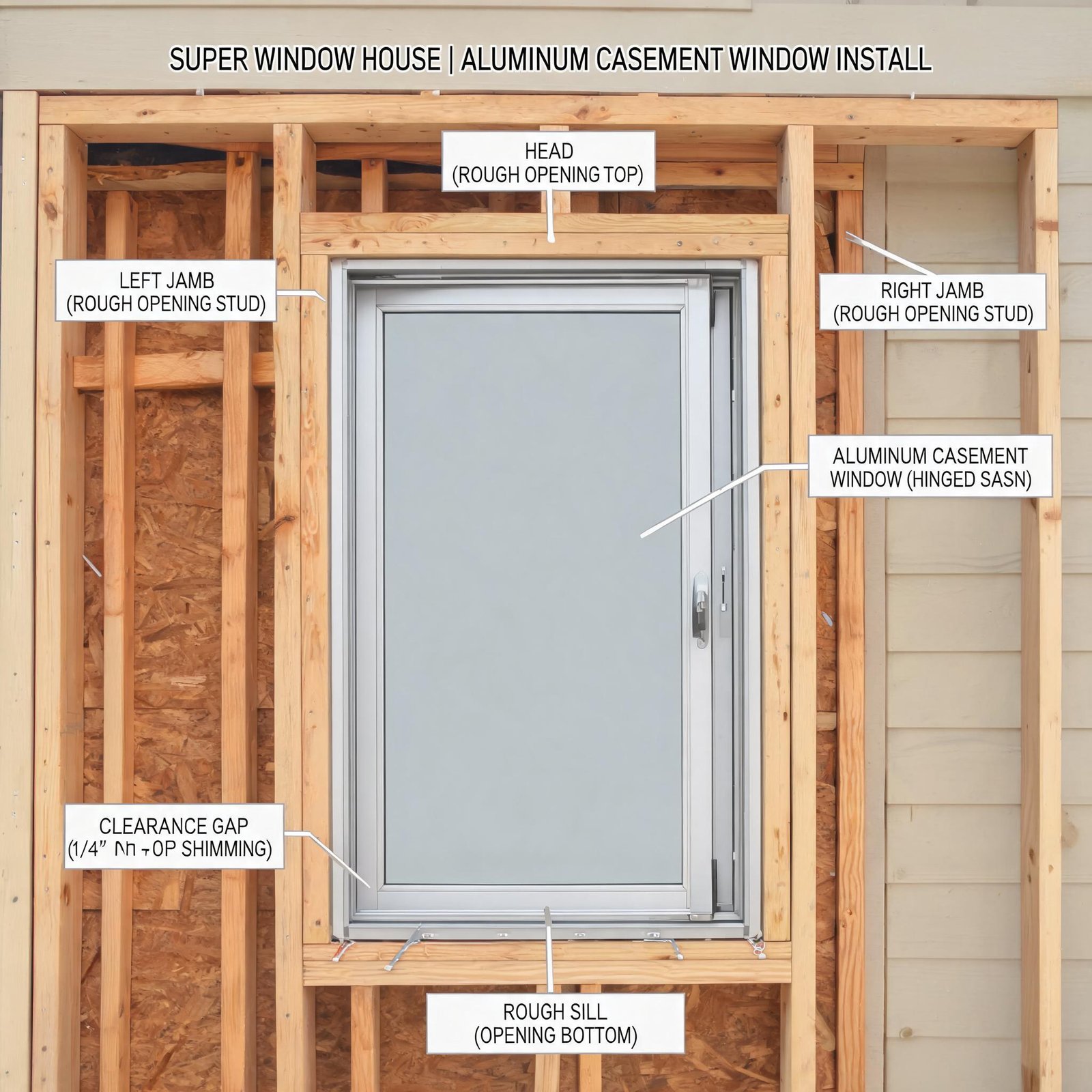
Step 3: Don’t forget windows near the driveway. If the sound enters through a window before hitting the door, you need to treat that too. Our high-performance vinyl casement windows with triple-pane acoustic glass can cut noise transmission by an additional 10-15 dB. Combine that with a soundproof door, and you’ve built a fortress.
Step 4: Seal the garage itself (if you have one). If you absolutely must keep the garage door, add a drop seal to the bottom, install a weatherstrip on top and sides, and wedge a foam backer rod into the panel joints. But understand – this is a bandaid. The real solution is the door into your home from the garage. Upgrade that interior door to a solid-core unit with gaskets, and the barking dog will barely register.
The Takeaway: Stop Fighting the Gate, Fix the Entry
The Reddit debate over sliding solid gate vs sectional garage door for driveway noise reduction misses the point. Neither is built for serious sound control. You’re trying to attack the symptom instead of the root. The barking dog’s noise path into your home goes through doors and windows – the actual envelope of your house. Invest in a proper soundproof door system from Superwindowhouse, and you’ll get measurable, repeatable noise reduction. Plus, you gain thermal efficiency, security, and curb appeal that no industrial gate can match.
Skip the gate. Upgrade your doors. Your ears – and your neighbors – will thank you.