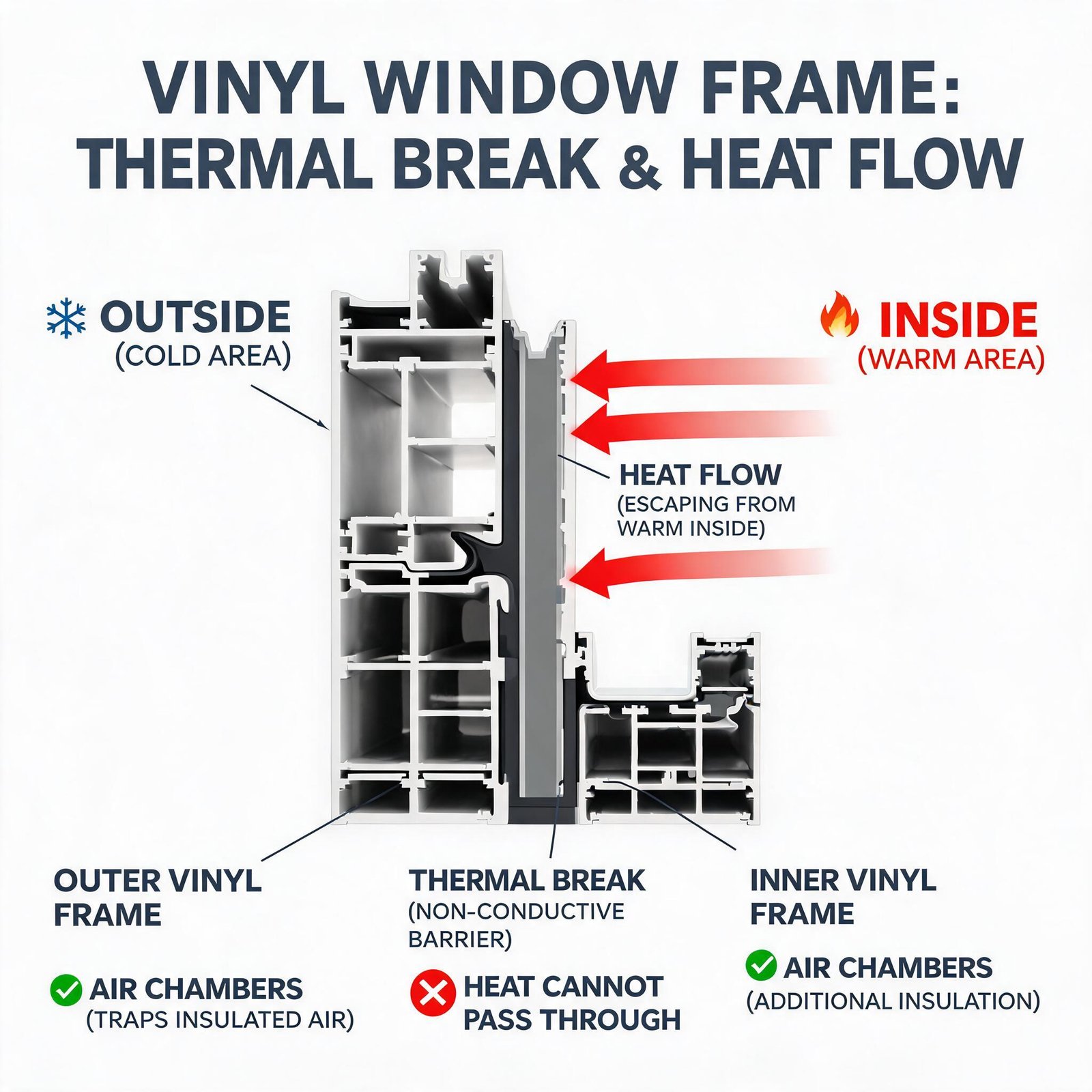
I’ve seen this question pop up on r/HomeImprovement more times than I can count: “New home: how to re-key locks?” The answer isn’t just about swapping pins in a cylinder—it’s about understanding the security envelope of your entire house. Let me cut through the noise.
You closed on your first home. Congratulations. But here’s the hard truth: you have no idea who still has keys to that front door. The previous owner’s nephew, the handyman who did a “quick fix” on the back lock, the realtor’s assistant? In 15 years as a GC, I’ve seen master keys show up in the darndest places. Re-keying isn’t just smart—it’s non-negotiable.
Let me break down the DIY vs. professional debate from the perspective of someone who’s re-keyed thousands of locks and, more importantly, understands how your door system fits into the bigger picture of home security.
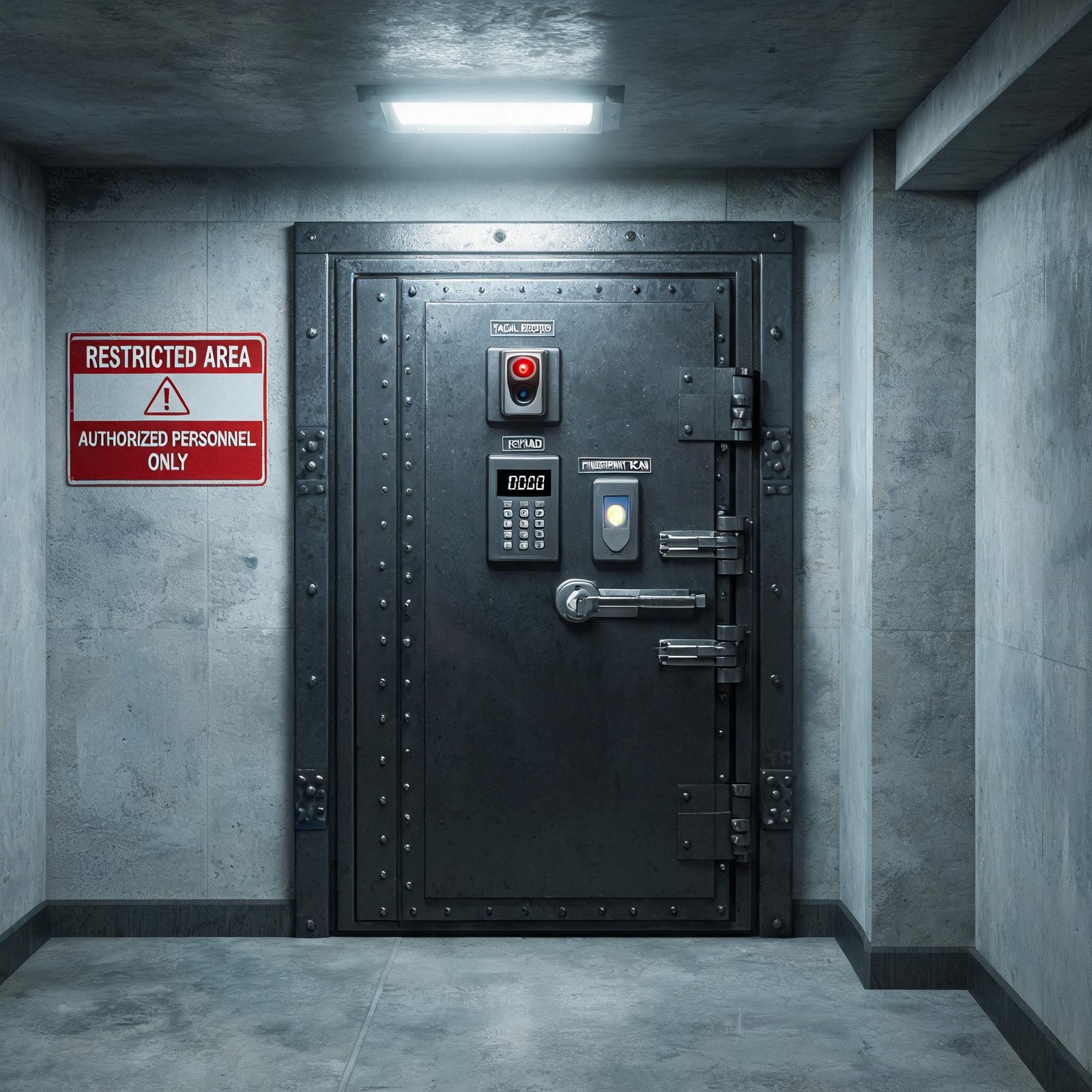
The Core Problem: Why New Homeowners Need to Re-Key Immediately
When you move into a new house, every exterior lock is a potential vulnerability. The standard Kwikset or Schlage deadbolt you see on most production homes is fine—for basic security. But here’s what most DIY guides won’t tell you:
The lock is only as good as the door it’s mounted in, and the door is only as good as the frame and hinges.
I’ve walked into new construction homes where the builder slapped a $40 lock on a hollow-core exterior door. The re-keying job was perfect—and utterly pointless. An intruder could kick through that door in under three seconds. The lock wouldn’t even be tested.
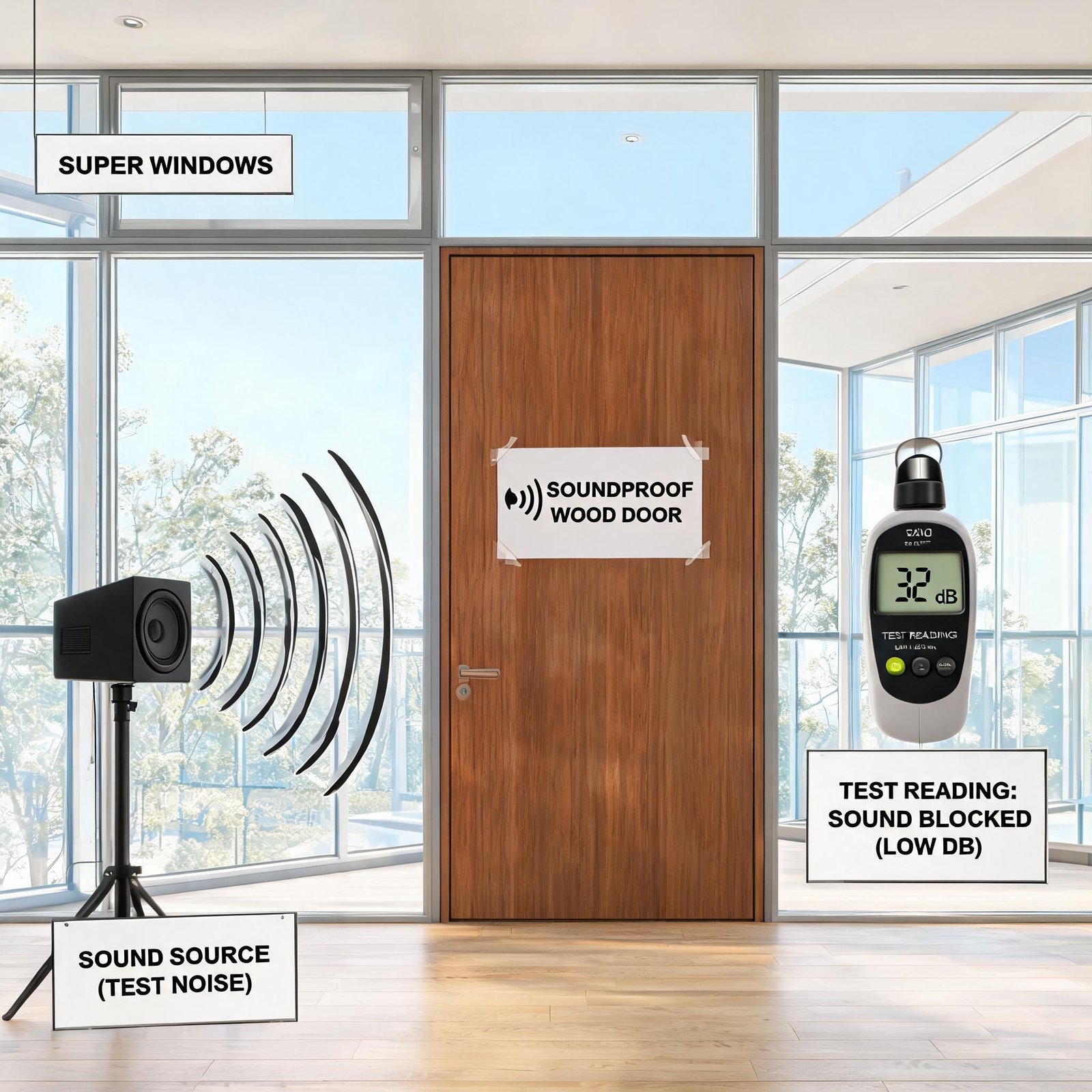
This is where superwindowhouse.com changes the game. When customers ask me about re-keying, I tell them: start by evaluating the door itself. If you’re investing in a high-security lock system, pair it with a door that won’t compromise the entire setup.
DIY Re-Keying: What the Reddit Threads Won’t Tell You
The r/HomeImprovement threads on “how to re-key locks new home” usually focus on two things: the re-keying kit and the pin-tumbler process. Let me save you some frustration.
The DIY Process:
- Remove the lock cylinder from the knob or deadbolt
- Extract the old pin stack using the included tool
- Insert new pins from the re-keying kit
- Reassemble and test
The reality check:
- Most homeowner-grade locks (Kwikset SmartKey, Schlage SecureKey) allow re-keying without removing the cylinder. This takes about 60 seconds per lock.
- Premium locks require more skill. Miss one pin alignment, and you’re locked out of your own house.
- You need matching key blanks and a functioning key cutter.
My professional advice: If you’re comfortable with small hand tools and have patience, DIY re-keying works. But here’s what those Reddit threads miss—the lock is the entry point, not the entire security system. A DIY re-key on a flimsy door is like putting a vault lock on a tent.
Professional Re-Keying: When to Call a Locksmith
You should call a locksmith when:
- You have high-security locks (Medeco, Mul-T-Lock, Abloy) that require proprietary tools
- You want a master key system for multiple properties or rental units
- You’re dealing with commercial-grade hardware on residential doors
- The existing lock is damaged or corroded
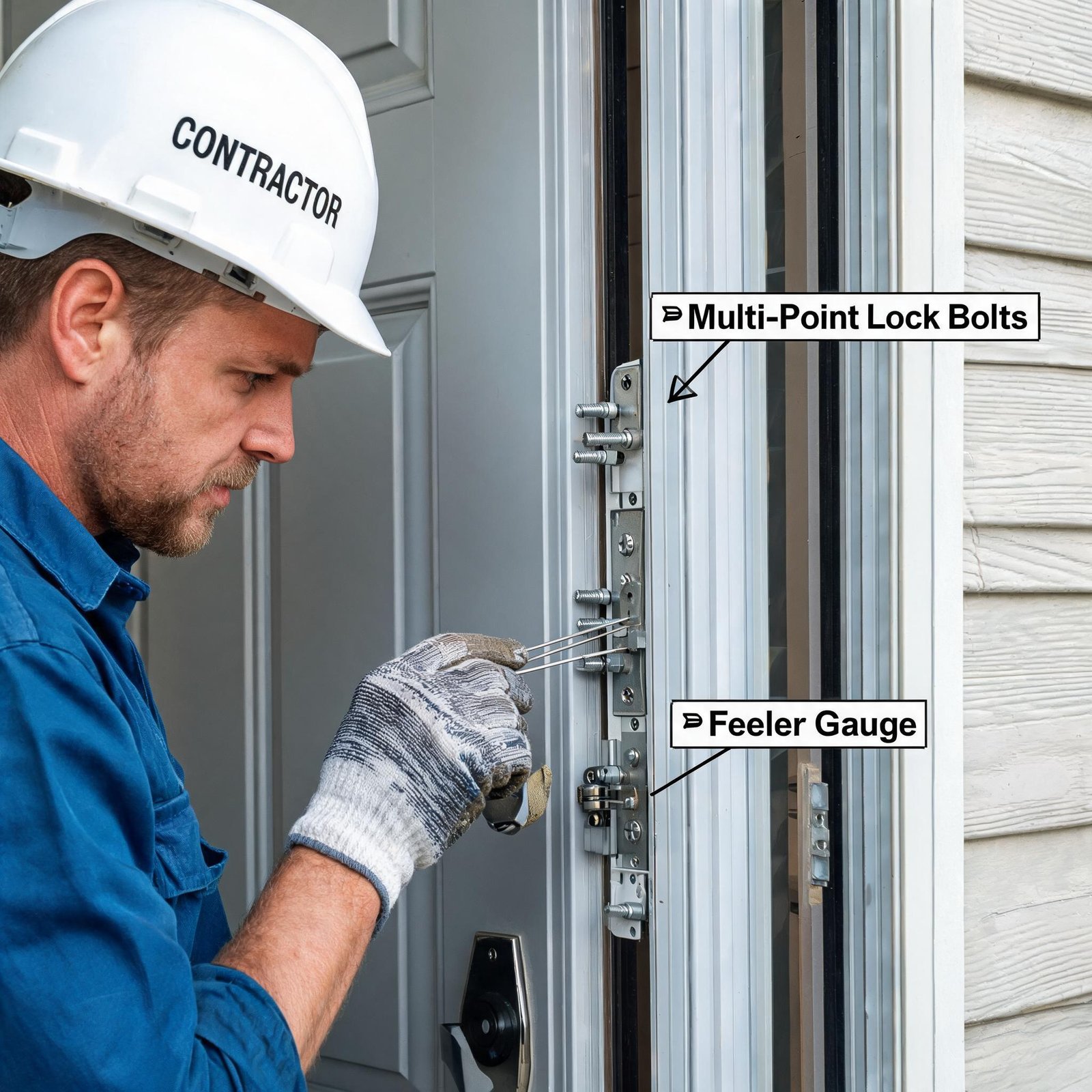
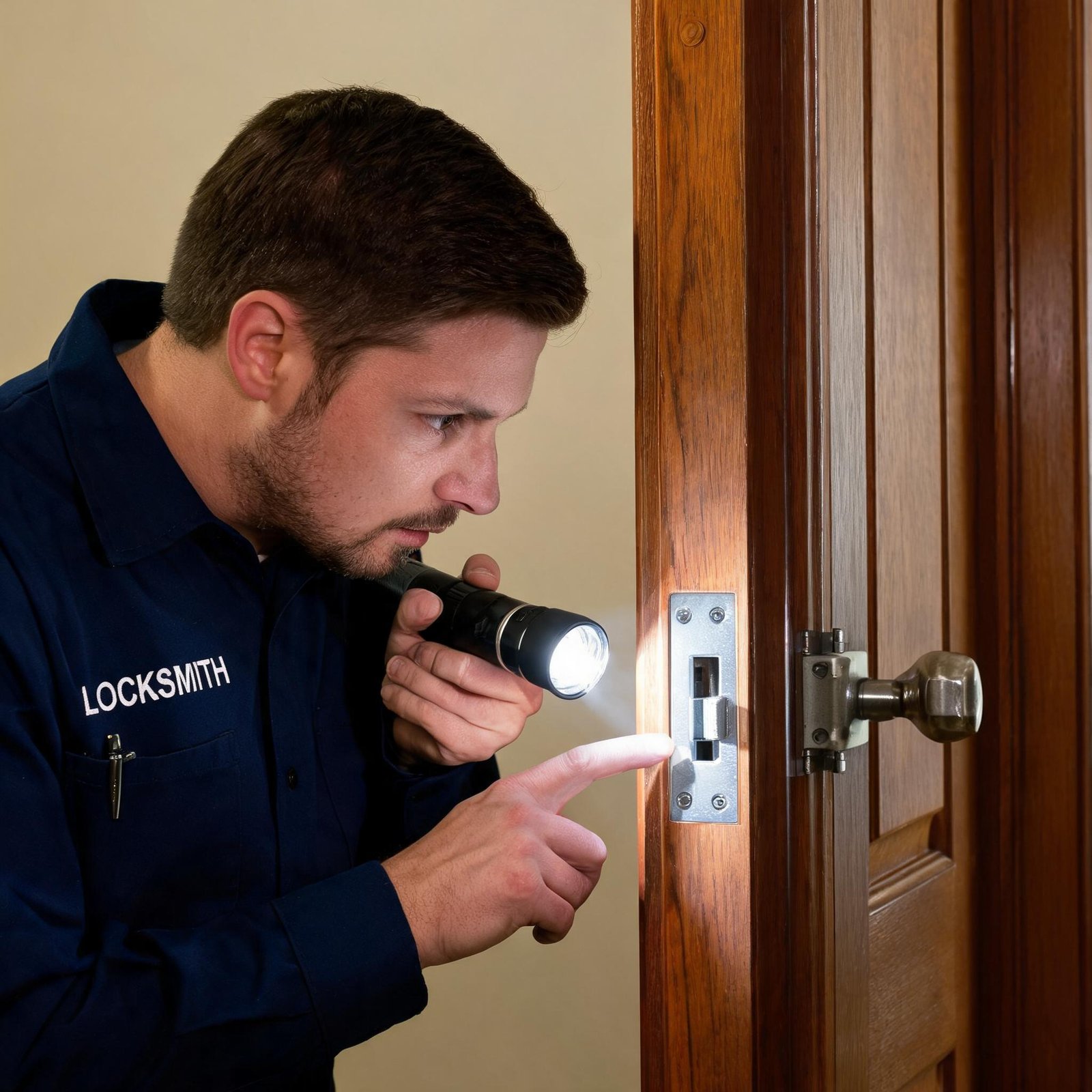
A professional locksmith will also inspect the door frame, strike plate, and hinges. I’ve seen too many DIY re-key jobs where the lock works perfectly but the frame is rotted from water intrusion. That’s a security breach that no pin stack can fix.
Cost comparison:
- DIY re-keying kit: $15–$30
- Professional re-key (per lock): $15–$40
- New lock installation: $50–$150
But here’s the hidden cost: a bad DIY job on a poorly maintained door means you’ll be paying for emergency lockout service later. I’ve been on that call at 2 AM. It’s not pretty.
Beyond the Lock: Why Your Entrance Door System Matters
This is where the conversation shifts from “how to re-key locks new home” to “how to secure my home properly.”
Every exterior door should be evaluated as a system:
- The door slab: Solid core or steel. Hollow-core is unacceptable for any exterior application.
- The frame: Should be 2×4 or thicker, with proper screw reinforcement at hinge and strike locations.
- The hinges: Three hinges minimum, with 3-inch screws penetrating into the framing.
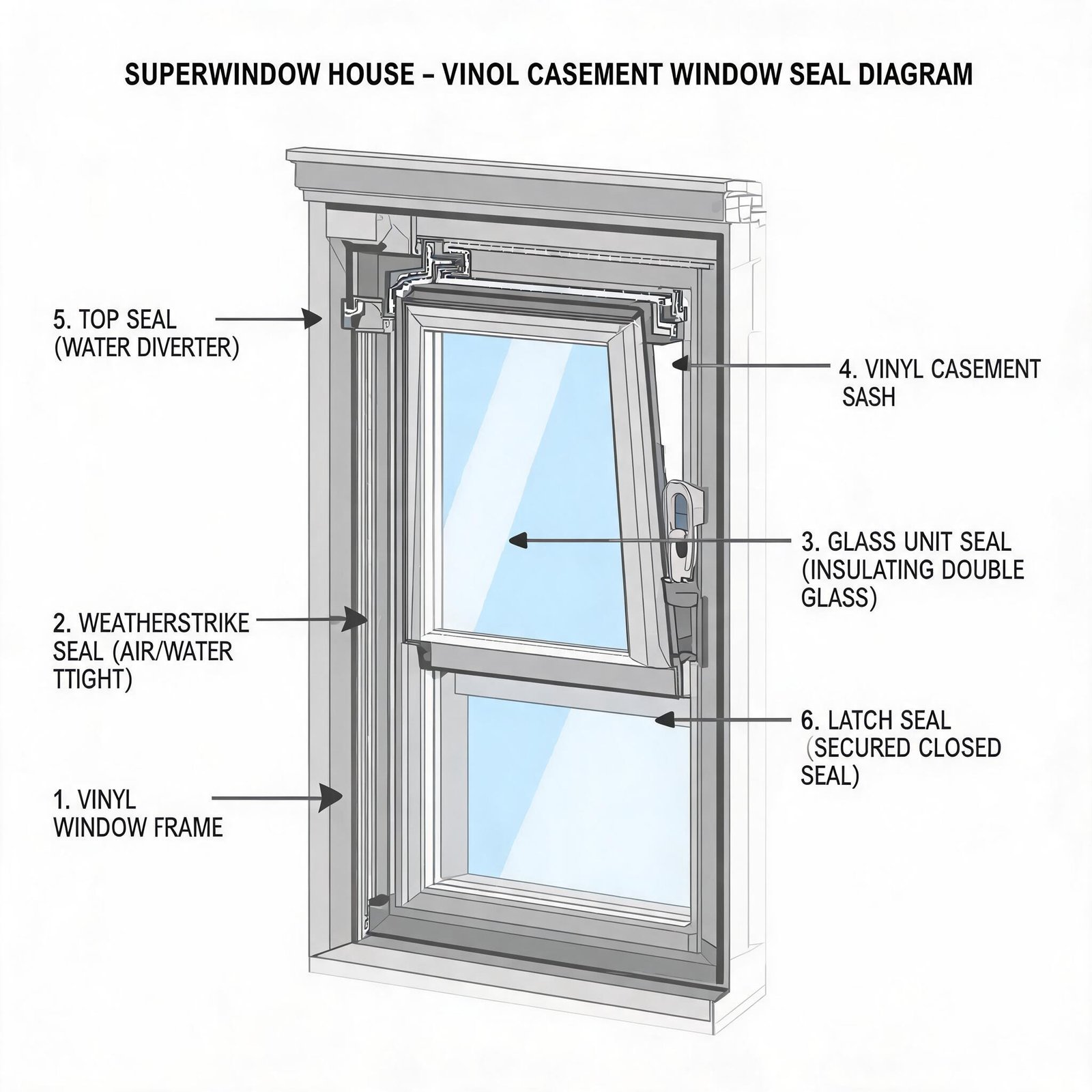
- The weatherstripping: Prevents air infiltration and water damage—two things that destroy door performance over time.
- The lock: Grade 1 or Grade 2 deadbolt with a minimum 1-inch throw.
At superwindowhouse.com, our high-security entrance doors are engineered from the ground up. We don’t just sell a door with a lock—we sell a fully integrated system where every component works in harmony.
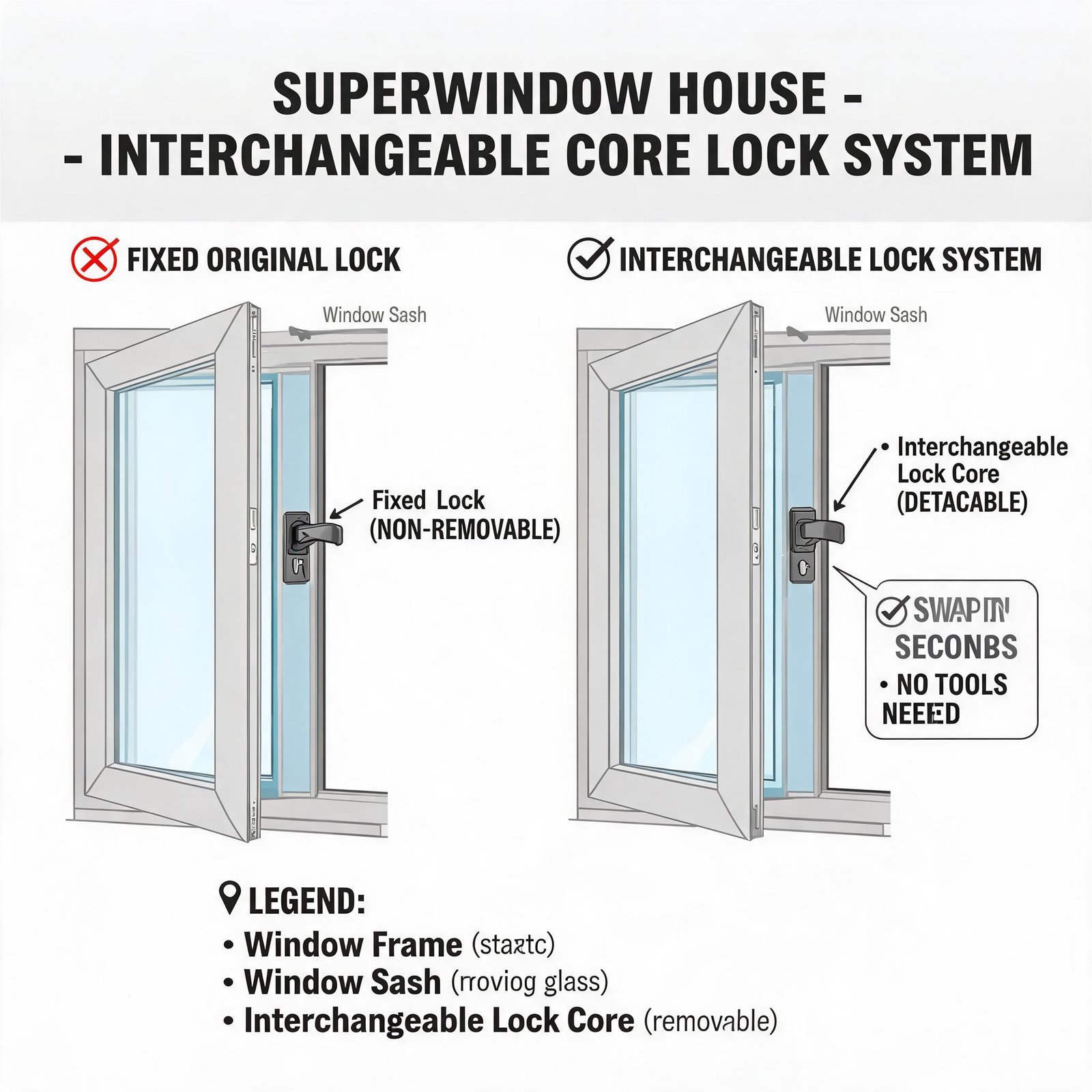
Our advanced locking mechanisms are designed for simple re-keying. Many of our models feature interchangeable core systems that allow you to re-key in under 30 seconds without any tools. No pins to drop, no springs to lose. Just a clean, secure swap.
How Superwindowhouse Makes Re-Keying Easier and More Secure
When you choose a high-security door from superwindowhouse.com, you’re getting:
1. Tool-free re-keying cores
Insert the control key, rotate, remove the core, and replace. That’s it. The whole process takes less time than finding the right screwdriver.
2. Upgraded strike plates and frames
Our doors ship with reinforced strike plates and jambs that can withstand forced entry attempts. The lock isn’t isolated—it’s part of a system designed to resist kick-in attacks.
3. Matching key systems across all entry points
Whether you’re installing vinyl sliding patio doors or a traditional pre-hung entry door, you can key all of them alike. No more juggling five different keys for one house.
4. Smart lock compatibility
Many of our doors accept standard smart lock retrofits, so you can pair physical re-keying with electronic access control.
5. Warranty that covers the door and the lock
Unlike builder-grade setups where the lock dies in three years, our hardware is rated for commercial-grade cycles. You’re not replacing the lock every time you re-key.
The Smartest Approach: Combine Re-Keying with a Door Upgrade
Here’s what I tell every new homeowner who asks me about re-keying:
You’re going to pay for the re-keying labor anyway—either in your time or in cash to a locksmith. If your current door is builder-grade or shows signs of wear, consider investing that money in a new door system instead.
A high-performance vinyl casement window next to your entrance door won’t mean much if the door itself is weak. But when you pair quality windows with a proper entry door system, your whole home security profile rises.
My recommended upgrade path:
- Immediate: Re-key all existing locks (DIY or professional)
- Short-term: Inspect and reinforce door frames, strike plates, and hinges
- Medium-term: Replace the weakest entry door with a high-security model
- Long-term: Ensure all windows and sliding doors have matching security features
This approach gives you security today while building toward a fully integrated system tomorrow.
Frequently Asked Questions About Re-Keying Locks in a New Home
Q: Can I re-key locks without removing the entire lock?
Yes. Most modern residential locks from Kwikset (SmartKey) and Schlage (SecureKey) allow re-keying directly through the keyway. For older systems, you’ll need to remove the cylinder.
Q: How much does it cost to re-key all locks in a new home?
DIY costs $15–$30 per lock kit. Professional re-keying runs $15–$40 per lock, plus a service call fee. For a 3-bedroom house with 4 exterior locks, expect $100–$200 professionally.
Q: Should I re-key or replace the locks?
If the locks are cheap builder-grade units, replacing them with Grade 2 or Grade 1 deadbolts is worth the cost. High-quality locks maintain their integrity through multiple re-key cycles.
Q: Can I re-key locks myself if I’ve never done it before?
Yes, but start with a cheap lock on a side door. Watch a few YouTube videos specifically for your lock brand. Be patient, and have a backup plan in case you mess up the pin arrangement.
Q: Do I need to re-key every door, including the garage?
Yes. Any door that provides access to the home should be re-keyed. Include the garage service door and any sliding glass doors if they have integrated locks.
Q: What’s the lifespan of a re-keyed lock system?
Quality locks survive 5–10 re-key cycles before the pins wear. Replace the entire lock when key insertion feels rough or when keys stick.
Q: Does your company offer doors with pre-configured master key systems?
Absolutely. At interior wood doors and exterior entry doors can be keyed alike from the factory. Just specify your requirements during ordering.
Q: What about smart locks? Do they eliminate the need for re-keying?
Smart locks change the game. You can reprogram access codes without touching physical hardware. However, the physical key override still exists on most models—so re-key that cylinder or disable the override.
Q: How do I know if my door frame needs reinforcement?
Check for:
– Gaps between the door and frame when closed
– Soft or rotted wood around strike plate screw holes
– Visible daylight around the door perimeter
– Difficulty aligning the deadbolt into the strike plate
Any of these signs means the frame needs work regardless of re-keying.
Q: Can I re-key locks to match a previous house key?
Yes. Locksmiths can re-key any lock to accept your existing key. This is common for homeowners with multiple properties or for families moving to a new house.
Q: What’s the most secure re-keying method for a new homeowner?
Professional re-keying with a licensed locksmith, combined with a door system that has reinforced frames and upgraded strike plates. The lock is the last line of defense—not the only one.
The Bottom Line
Re-keying your locks within the first week of moving in should be non-negotiable. But don’t stop at the lock cylinder. Ask yourself: is this door system actually secure, or am I just putting a Band-Aid on a bullet wound?
If your doors are builder-grade, consider this an opportunity to upgrade. A high-security entrance door from superwindowhouse.com doesn’t just make re-keying simpler—it redefines what “secure” means for your home.
You’ve already made the biggest investment of your life. Spend the extra afternoon (or the extra $200) to protect it properly.
Now go lock down that house. Literally.
Need a door system that pairs with your re-keying plans? Contact us at superwindowhouse.com for technical specs and custom quotes.