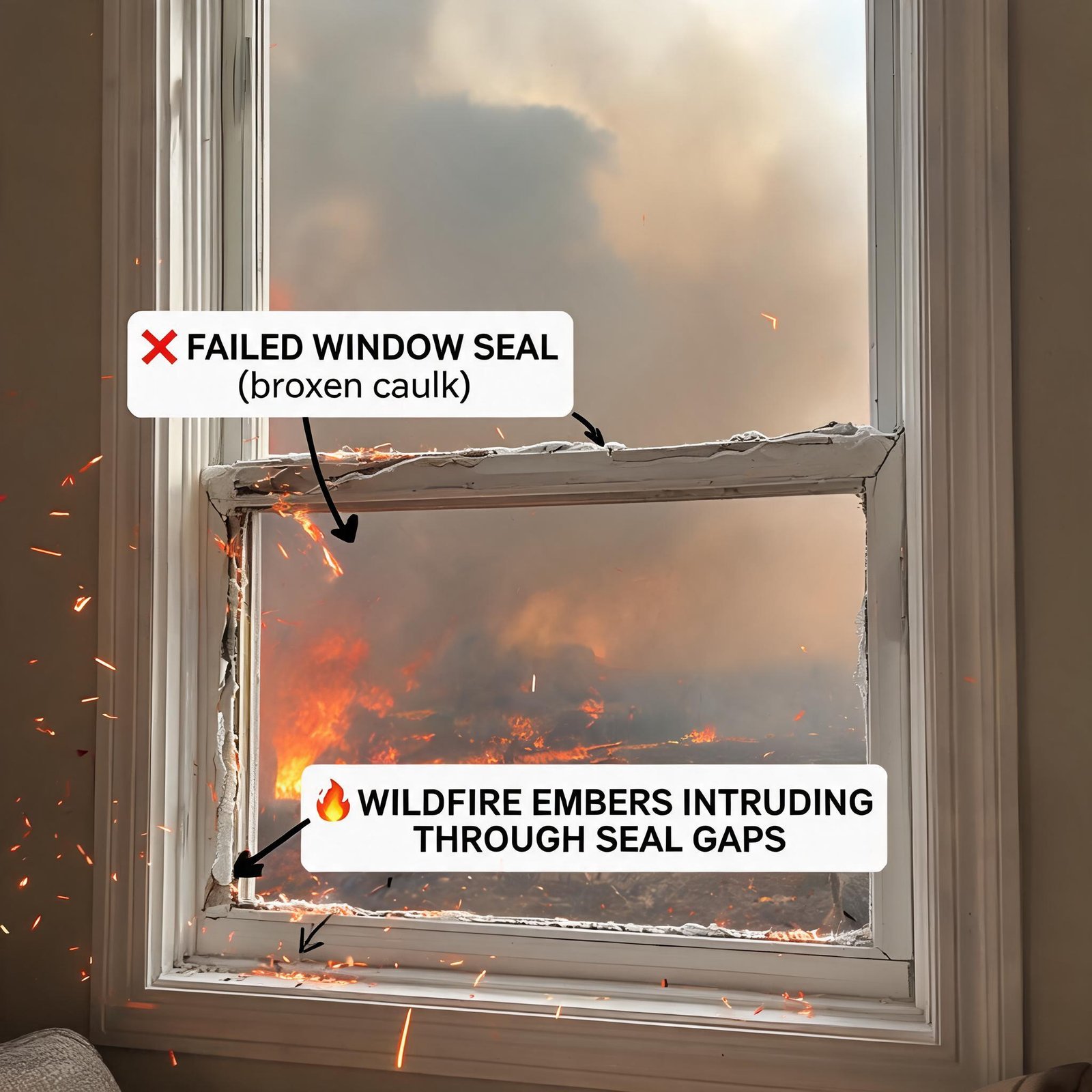
When a vandal slashed through the reinforced liner of the Lincoln Memorial Reflecting Pool—a deliberate act of destruction that took weeks and thousands of dollars to repair—it sent a chilling message to property owners across North America. If a national monument’s security can be breached with a single blade, what chance does your suburban home or commercial building have against a determined smash-and-grab attacker?
The answer lies not in thicker walls or more cameras, but in the engineering of your entry points. I’ve spent 15 years as a general contractor watching the evolution of residential security, and I can tell you this: the weakest link in your property’s defense isn’t the door or the window—it’s the locking mechanism. And today, multi-point lock systems paired with laminated security glass are the single most effective upgrade you can make to stop forced entry cold.
The Anatomy of a Smash-and-Grab: Why Single-Point Locks Fail
Let’s get technical for a moment. A standard single-point deadbolt—the kind found on 90% of North American homes—relies on a single steel bolt engaging into a strike plate. Under normal circumstances, that’s fine. But a trained intruder with a crowbar or a hydraulic spreader can defeat that single point in under 30 seconds. Here’s why:
- Leverage physics: A crowbar applied to the door edge concentrates force at one point. The wood frame splinters, the strike plate pulls out, and the bolt is exposed.
- Blade attacks: A serrated knife or saw can work through the weatherstripping and attack the latch mechanism directly.
- Glass break-and-reach: On doors with standard single-pane or even double-pane glass, the intruder breaks a small section, reaches through, and unlocks the single-point deadbolt from inside.
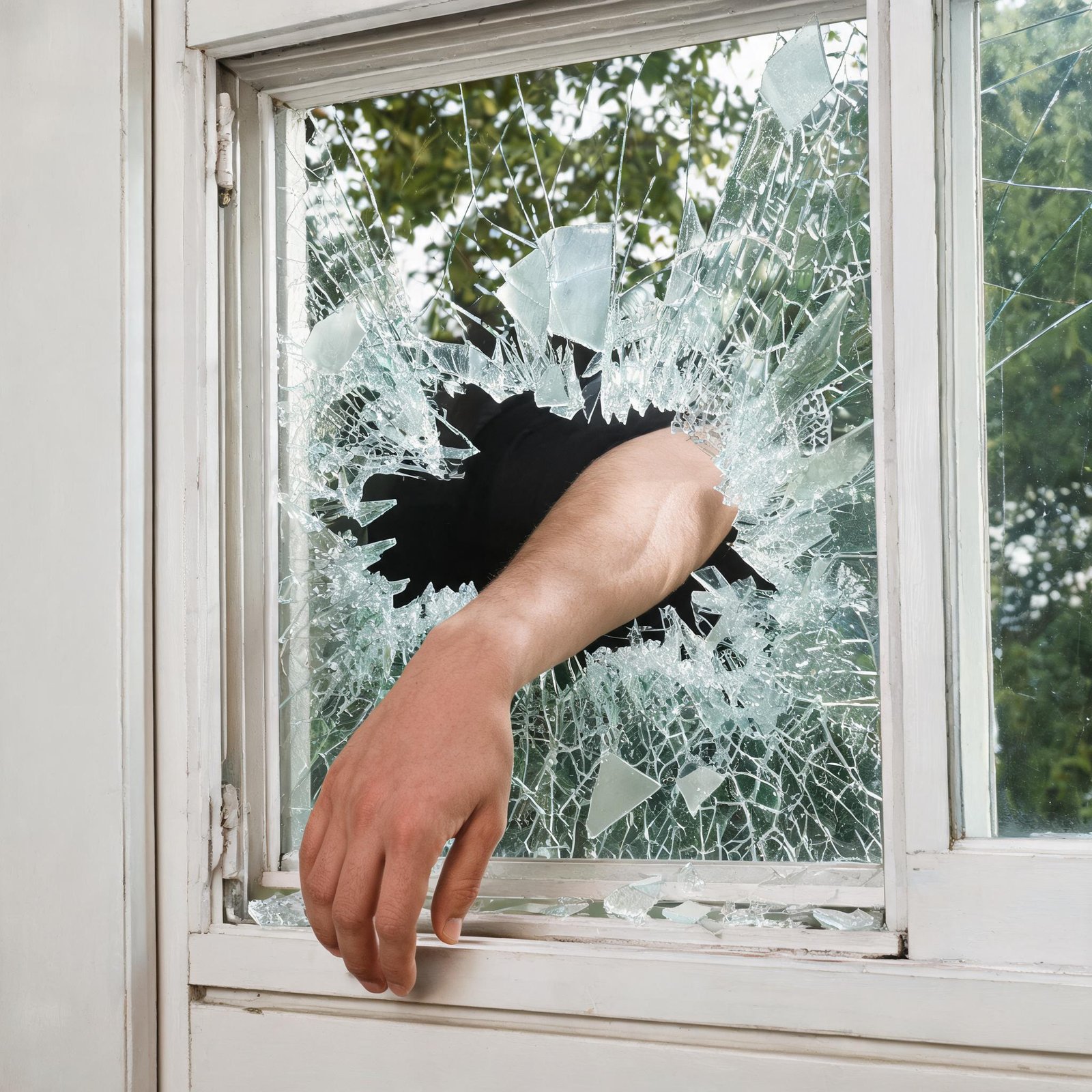
This isn’t theoretical. I’ve seen it happen on job sites, in rental properties, and in homes where the owner swore they had “secure” doors. The Lincoln Memorial reflecting pool incident—where a vandal deliberately slashed through a reinforced membrane—proves that even institutional-grade materials are vulnerable when the attack is focused and determined. Your home is no different.
Multi-Point Lock Systems: Engineering the Fortress
This is where Superwindowhouse’s approach changes the game. A multi-point lock system—often called a “3-point” or “5-point” locking mechanism—engages multiple steel bolts along the entire height of the door or window frame. Instead of one weak point, you have three, four, or even five hardened steel points distributed across the edge.
Here’s the technical breakdown of why this works:
- Force distribution: With multiple engagement points, the force from a crowbar or kick is distributed across the entire frame. The door flexes less, and the frame absorbs energy rather than concentrating it at one spot.
- Anti-pry design: The bolts often use hook-shaped or roller-cam mechanisms that actually pull the door tighter into the frame as they engage. This eliminates the gap that a crowbar would exploit.
- Blade resistance: The bolts are typically made of hardened steel or zinc alloy, resistant to sawing and cutting. Even if an attacker manages to defeat one point, two or three remain locked.
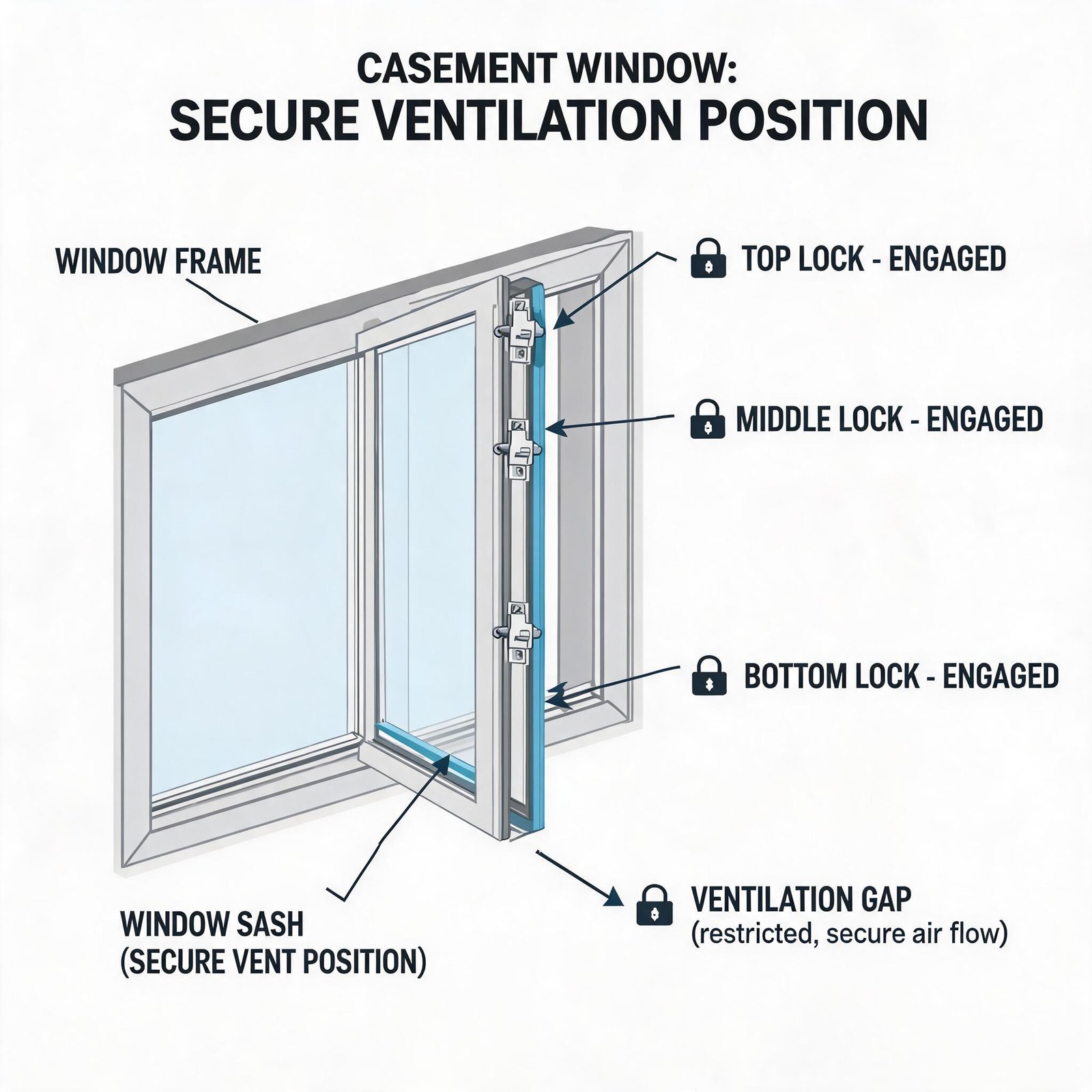
For windows, the same principle applies. Standard casement or sliding windows often have a single latch point. A multi-point locking window engages bolts at the top, middle, and bottom of the sash. This makes it virtually impossible to pry the window open from the outside.
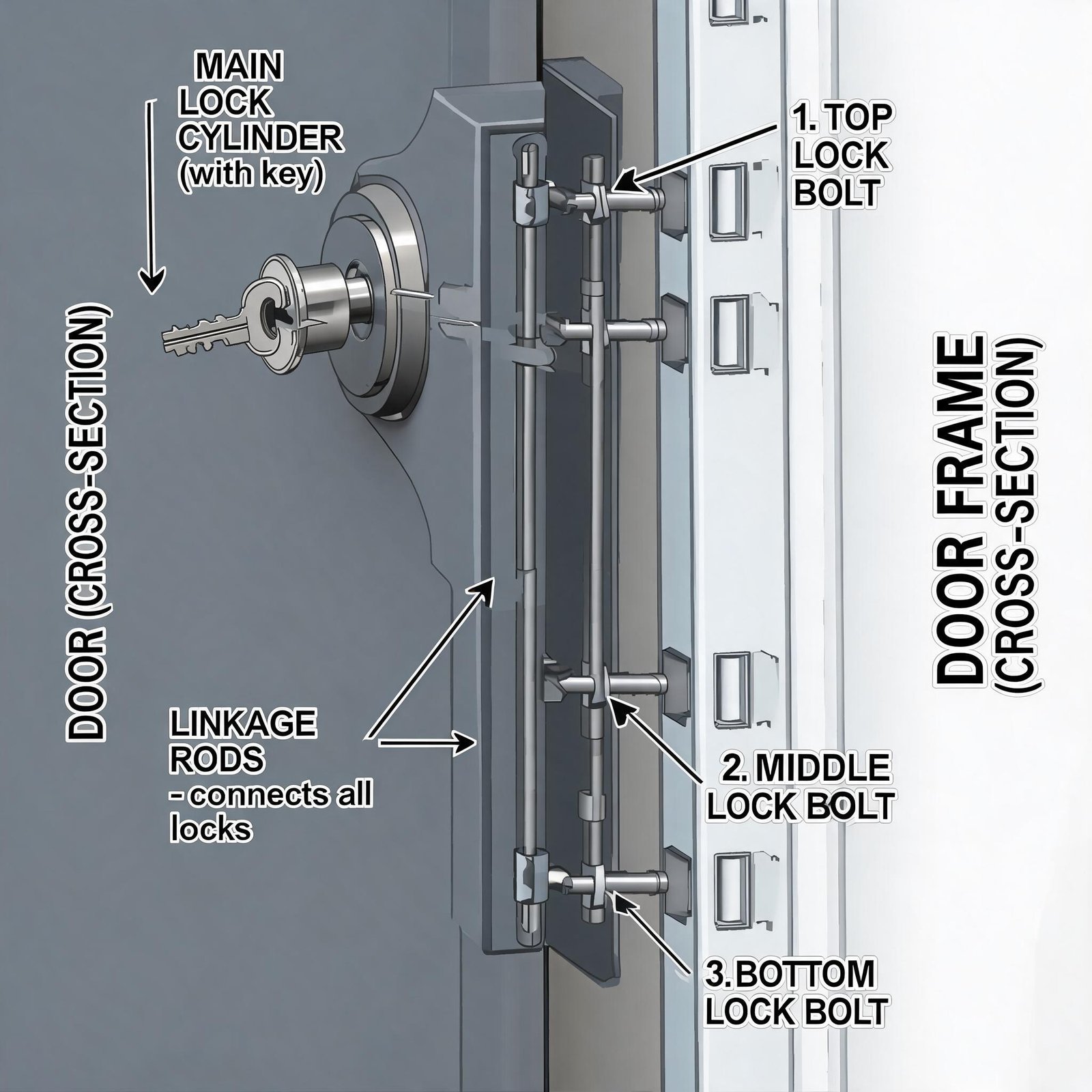
At Superwindowhouse, our High-Performance Vinyl Casement Windows come standard with multi-point locking systems that meet or exceed ASTM F588 security standards. These aren’t just “locks”—they’re engineered security components designed to withstand sustained attack.
Laminated Security Glass: The Second Line of Defense
But locks alone aren’t enough. Remember the Lincoln Memorial reflecting pool liner? It wasn’t the liner’s thickness that failed—it was the material’s inability to resist a sustained cutting attack. The same is true for standard window glass.
Standard annealed glass shatters on impact. Even tempered glass, which is stronger, explodes into small pieces when hit hard enough. That’s fine for safety, but terrible for security. An intruder with a hammer or a rock can breach standard glass in under 10 seconds.
Laminated glass changes everything. It’s constructed with a polyvinyl butyral (PVB) or ethylene-vinyl acetate (EVA) interlayer sandwiched between two layers of glass. When impact occurs:
- The glass may crack, but the interlayer holds the pieces together
- The interlayer absorbs and disperses energy
- Even after multiple blows, the interlayer remains intact, preventing penetration
This is the same technology used in hurricane-rated windows, car windshields, and—yes—security enclosures for national landmarks. For a residential or commercial application, laminated glass with a PVB interlayer of 0.030 inches or thicker provides Level 1 or Level 2 forced-entry resistance.
Superwindowhouse integrates laminated glass options across our product lines, including our Impact-Resistant Storm Hung Windows, specifically designed to resist both hurricane debris and deliberate vandalism. The combination of multi-point locks and laminated glass creates a security system that stops smash-and-grab attacks cold.
The Industry Dirty Secret: Why Big Brands Cut Corners
I’ve worked with every major window and door manufacturer in North America over the past 15 years. Here’s what the mass-market brands won’t tell you:
Secret #1: Single-point locks are cheaper, and they know it’s a security risk.
The big box brands love single-point locks because they save $8–$12 per unit in manufacturing costs. Multiply that by thousands of units, and you’re talking significant profit margins. They’ll tell you the lock is “heavy-duty” or “commercial-grade,” but the engineering hasn’t changed in 50 years. A single-point lock is still a single point of failure.
Secret #2: Standard glass meets building codes, not security needs.
Building codes in most jurisdictions require breakage safety—not forced-entry resistance. Standard double-pane glass with no laminated interlayer passes code but offers zero protection against a determined attacker. The big brands know this but won’t voluntarily add laminated glass because it triples their material costs.
Secret #3: Installation quality is the biggest variable—and they won’t train for security.
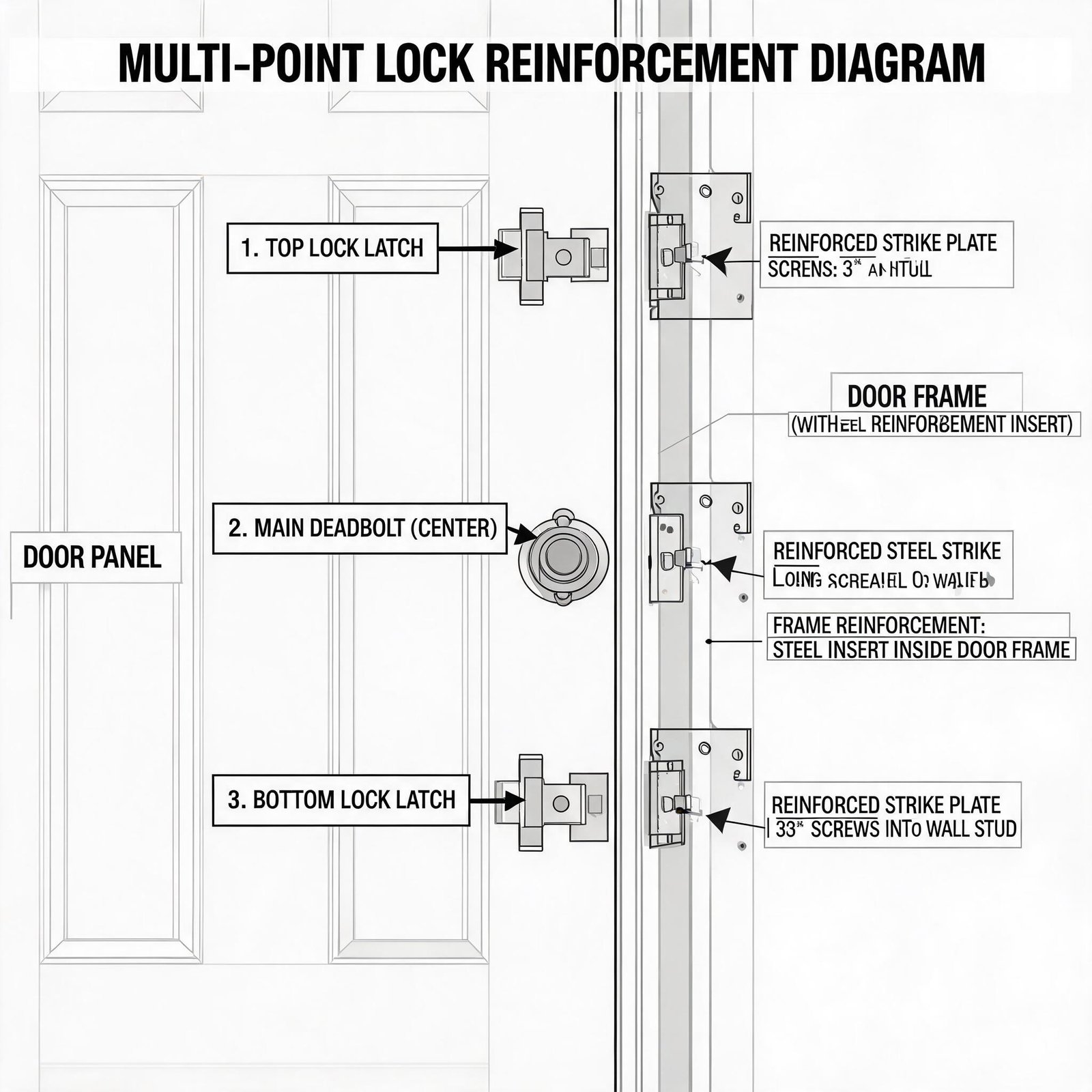
I’ve seen $5,000 security doors installed with $10 worth of screws into a wood frame. The lock is only as strong as the substrate it’s anchored to. Multi-point locks require proper frame reinforcement, deep strike plate pockets, and hardened screws that reach into the studs. Most big-brand installers aren’t trained to do this correctly.
Secret #4: No one tests for sustained cutting attacks.
The Lincoln Memorial reflecting pool liner was slashed deliberately—not just impacted. Standard security testing (ASTM F588, for example) measures forced entry via prying, impact, and manipulation. It doesn’t simulate a sustained cutting attack with a serrated blade. Only custom-engineered solutions with laminated interlayers and hardened steel components address this real-world threat.
Superwindowhouse’s Complete Security Solution
At Superwindowhouse, we don’t cut corners because we don’t have to. We’re a custom manufacturer, which means every window and door is engineered to the specific security requirements of your project.
For homeowners and commercial property managers concerned about smash-and-grab attacks, we recommend a layered approach:
Layer 1: Multi-Point Locking Windows
Our High-Performance Vinyl Casement Windows feature a 3-point locking system with stainless steel bolts that engage into reinforced steel keepers. The bolts are designed to resist prying, sawing, and manipulation. Combined with a heavy-duty handle that locks with a key, these windows meet or exceed ASTM F588 Class 40 forced-entry resistance.
Layer 2: Laminated Security Glass
We offer laminated glass options with PVB interlayers from 0.030 inches to 0.060 inches thick. For high-security applications, we can even specify Level 3 forced-entry glass that withstands repeated hammer blows for over 5 minutes. This same glass is available in our Vinyl Sliding Patio Doors, where the large glass panels are often the most vulnerable entry point.
Layer 3: Reinforced Frames and Installation
Our frames are designed with internal steel reinforcement channels that accept high-tensile screws reaching 2 inches into the wood or concrete structure. We provide detailed shop drawings and installation specifications to ensure every multi-point lock is properly aligned and anchored.
B2B Project Guide: What General Contractors Need to Know
For fellow contractors and property developers, here are four practical questions to ask before specifying security windows and doors:
Q1: What is the frame thickness at the lock point?
Standard vinyl windows often have thin walls at the lock engagement area—sometimes as thin as 0.080 inches. Ask for frames with minimum 0.120-inch wall thickness at all lock points. Superwindowhouse’s vinyl windows use engineered reinforcement plates that increase this to 0.150 inches.
Q2: Are the strike plates reinforced?
Many manufacturers provide thin aluminum strike plates that pull out under force. Demand hardened steel strike plates with minimum 0.100-inch thickness, anchored with screws that penetrate at least 1.5 inches into the subframe.
Q3: Does the glass carry a forced-entry rating?
Not all laminated glass is security glass. Check for ASTM F1233 or UL 972 burglar-resistant ratings. If the manufacturer can’t produce certification documents, assume the glass is standard laminated (which resists impact but may not resist sustained cutting).
Q4: Is the multi-point lock system field-adjustable?
After installation, doors and windows often settle, causing misalignment. A good multi-point lock system should allow for micro-adjustment of each engagement point. Superwindowhouse’s systems include adjustment screws at every lock point, enabling precise calibration without removing the unit.
The Bottom Line: Don’t Be the Next Headline
The Lincoln Memorial reflecting pool vandalism reminds us that no property is immune from deliberate destruction. But unlike a public monument, your home or commercial building can be engineered to resist these attacks.
Multi-point lock systems and laminated security glass are not luxury features—they’re essential investments in safety and peace of mind. Whether you’re building a new custom home, renovating a historic property, or upgrading a commercial building, the security strategy should start at the openings.
At Superwindowhouse, we deliver industrial-grade security with residential aesthetics. Our products are designed, tested, and certified to stop forced entry—not just deter it.

Is your home next? It doesn’t have to be. Contact our technical team at Superwindowhouse for a security consultation. We’ll analyze your property’s vulnerabilities, recommend the right multi-point lock and laminated glass configuration, and provide full shop drawings and installation support.
Because when it comes to security, a single point of failure is one too many.