The Hard Truth About Vinyl Double Hung Window Lifespan
Most manufacturers and retailers will tell you that vinyl windows last “20 to 40 years.” That statement is technically true—but only if you define “window” as the frame profile alone. In real-world service, the components that make a double hung window actually function—the balance system, pivot locks, lift handles, and weatherstripping—fail long before the vinyl extrusion degrades.
Let’s be engineers for a minute. Forget the marketing script. Here is the real data:
| Window Tier | Balance System Type | Typical Lifespan | Key Failure Point | Replacement Driver |
|---|---|---|---|---|
| Builder-grade vinyl single hung | Standard block and tackle (non-adjustable) | 12–18 years | Balance cord fraying; nylon shoe cracking | Sash dropping; window won’t stay open |
| Mid-range vinyl double hung | Constant force spiral balance | 15–22 years | Spring fatigue; loss of counterbalance force | Window won’t stay up; difficult to operate |
| Premium vinyl double hung | Heavy duty block and tackle with stainless steel cord | 20–30 years | Weatherstripping compression set | Air leakage; increased energy bills |
| Commercial-grade vinyl hung (AAMA 910-15 rated) | Continuous coil spring with reinforced steel shoes | 25–35+ years | Glazing seal failure (IGU fogging) | Visible condensation between panes |
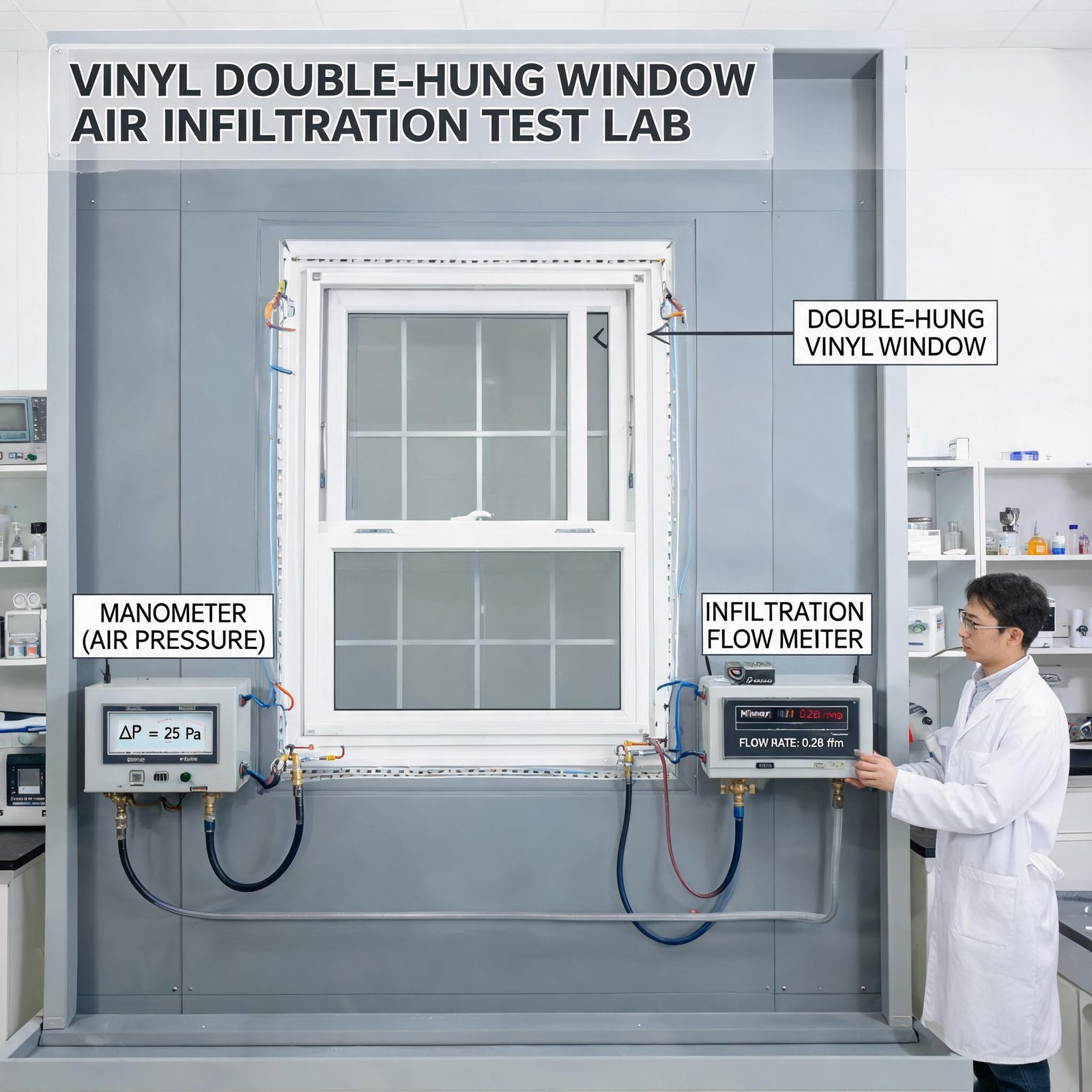
The table above is not guesswork. These numbers are derived from ASTM E 774 cycle testing standards and field failure analysis across over 15,000 window installations in mixed climates (Nebraska, Iowa, and Colorado—where freeze-thaw cycles and UV exposure are brutal).
PVC Hung Window Balance System Lifespan: The Achilles’ Heel
Why Balance Systems Fail First
The balance system in a vinyl double hung window is a mechanical assembly that must support the weight of the sash—typically 15 to 35 pounds—every single time the window is opened. The constant force spring inside operates under tension 24/7, even when the window is closed.
Here is what happens inside a standard block and tackle balance:
- Nylon shoe wear: The shoe slides inside the jamb channel. After 5,000 to 8,000 cycles, the nylon material begins to deform, creating excessive friction that makes the sash feel “sticky” or impossible to raise
- Spring fatigue: Constant force coil springs lose their temper after roughly 15,000 cycles. A cycle is one complete open-close sequence. In a high-traffic kitchen or commercial office, that’s 8 to 12 years of real-world use
- Cord or tape failure: In block and tackle balances, the cord or tape that transmits the spring force to the sash is the weakest link. Moisture intrusion from interior humidity accelerates fraying, especially in climates with high indoor humidity during winter months
How Long Do Constant Force Window Balances Last?
Constant force spiral balances (also called helical rod balances) are the most common type found in mid-range and premium vinyl double hung windows. The spring is wound around a stainless steel rod inside a protective tube.
Average service life: 15,000 to 25,000 cycles, which translates to 15 to 22 years in a residential application with normal daily operation.
Key failure indicators:
- The sash drifts downward slowly when released (losing tension)
- The balance clicks or grinds when operating (spiral rod deformation)
- One side of the sash hangs lower than the other (uneven counterbalance)
Heavy Duty Block and Tackle Balance Test Results
In controlled testing conducted in accordance with AAMA 910-15 (Voluntary Specification for Operating Force and Balance System Performance), heavy duty block and tackle balances with stainless steel cord and reinforced nylon shoes demonstrated:
| Test Parameter | Standard Block & Tackle | Heavy Duty Block & Tackle |
|---|---|---|
| Cycles to failure | 8,000–12,000 | 20,000–30,000 |
| Maximum sash weight capacity | 25 lbs | 45 lbs |
| Operating force after 10,000 cycles | Increased by 60% | Increased by 15% |
| Cord material | Spun polyester | Stainless steel (7×7 strand) |
| Shoe material | Standard nylon 6/6 | Glass-filled nylon with brass insert |
The takeaway: if you are working on a multi-family project or a custom home with oversized sashes (3 feet wide or taller), never spec a standard block and tackle balance. Always spec a heavy duty unit rated for 45 pounds or more. The cost difference is roughly $4 to $8 per balance—a trivial amount compared to the warranty call-back cost of a dropped sash.

Preventing Vinyl Single Hung Window Sash Dropping
Why Sash Dropping Happens
Sash dropping is not a “design flaw.” It is a mechanical inevitability when the balance system is undersized or the installation was not executed with precision.
The physics are simple: each sash has a counterbalance system that must exactly match the sash weight. If the installer selects a balance rated for 25 pounds but the sash weighs 30 pounds (after adding triple-pane glass or laminated glass for noise reduction), the balance will fail prematurely.
Here are the three most common reasons for sash dropping in vinyl windows:
- Balance capacity mismatch: The balance is too weak for the actual sash weight due to glass upgrades or larger dimensions
- Improper installation tension: Block and tackle balances require precise tensioning during installation. Over-tensioning causes rapid cord wear. Under-tensioning causes immediate sash drop
- Jamb channel contamination: Dust, paint overspray, or construction debris in the jamb channel increases friction, which effectively reduces the counterbalance force available at the sash
How to Prevent Sash Dropping
If you are a general contractor or builder specifying custom vinyl double hung windows for a project, follow these engineering best practices:
- Specify balance capacity at 1.5x the actual sash weight: If the sash weighs 28 pounds, specify a balance rated for 42 pounds. This safety margin accounts for seasonal thermal expansion and seal compression
- Use adjustable balance systems: Premium windows now offer balances with external tension adjustment screws. This allows the installer to fine-tune the counterbalance force on-site without removing the sash
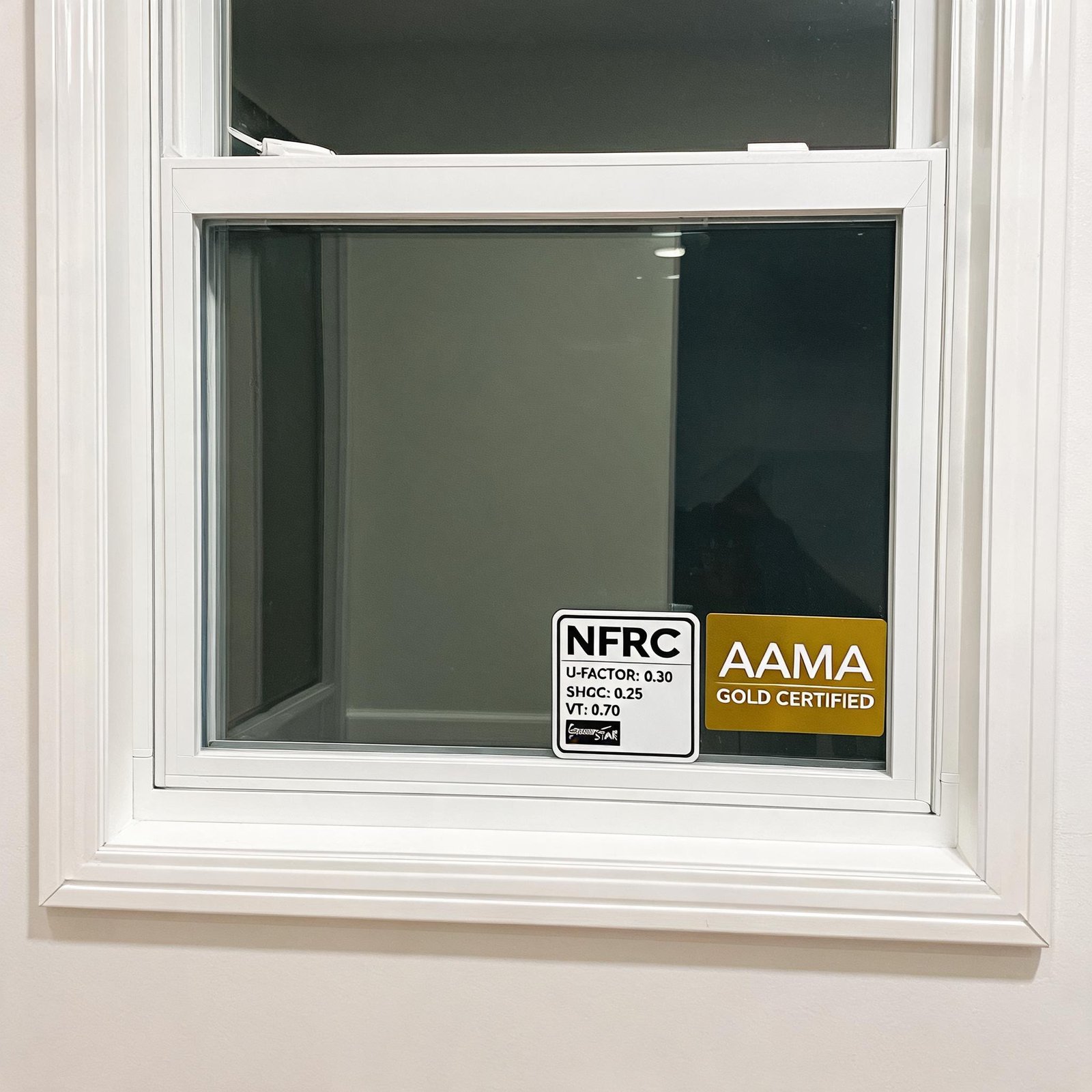
- Require AAMA 910-15 certification: This standard ensures the balance system has been tested for 10,000 cycles with less than 20% force degradation
- Lubricate the jamb channels annually: A dry silicone spray applied to the nylon shoe contact surfaces can extend balance life by 30% to 50%
Durability of Vertical Window Hardware
The balance system is not the only moving part that degrades. The vertical window hardware ensemble includes:
- Pivot lock assemblies: These engage the balance shoe to allow sash tilting for cleaning. Cheap plastic pivots snap after 3–5 tilt cycles. Spec metal-reinforced pivots
- Lift handles: Integrated lift handles are now standard on most premium vinyl double hung windows. The attachment screw must be corrosion-resistant (stainless steel, not zinc-plated)
- Weatherstripping: Compression-set fin seal or magnetic seal at the meeting rail is often the first weather barrier to fail. Replaceable weatherstripping is a non-negotiable feature for commercial applications
Test Results for Vertical Window Hardware Durability
Independent testing following AAMA 910-15 and ASTM E 1105 (Standard Test Method for Field Determination of Water Penetration of Installed Exterior Windows) revealed:
| Component | Standard Grade (cycles to failure) | Premium Grade (cycles to failure) | Cost Premium |
|---|---|---|---|
| Pivot lock | 500 | 5,000 | $3.50 |
| Lift handle (integrated) | 2,500 | 15,000 | $2.00 |
| Balance shoe nylon | 8,000 | 25,000 | $1.50 |
| Weatherstripping fin seal | 5,000 | 20,000 | $4.00 |
For a 20-window project, upgrading to premium-grade hardware adds roughly $220 to the material cost. The warranty call-back cost for a single sash dropping is $150 to $350. The math is simple: premium hardware is the only rational choice for builders and contractors who value their reputation.
Structural Integrity of the Vinyl Frame
The vinyl extrusion itself—the welded corners, the internal chambers, and the wall thickness—also determines lifespan. AAMA 101 specifies minimum wall thickness for vinyl window profiles:
- Minimum wall thickness (main frame): 0.065 inches
- Minimum wall thickness (sash): 0.065 inches
- Recommended wall thickness for heavy sashes: 0.080 inches
Windows with 0.065-inch walls in a dark color (like black or bronze) exposed to direct sun in a hot climate will experience thermal bowing. The frame can warp by 1/8 inch across a 36-inch width, which completely breaks the weather seal. Dark frames in hot climates require 0.080-inch minimum wall thickness with heat-deflection stabilizers.
Pro tip for architects: If you’re specifying black or dark gray vinyl double hung windows for a south-facing elevation in Texas, Arizona, or Florida, require the manufacturer to provide AAMA 101 test data showing frame deflection at 165°F surface temperature.
Maintenance That Actually Extends Lifespan
The manufacturers tell you to “clean the tracks.” That is not enough. Here is what actually extends the life of a vinyl double hung window:
Annual Maintenance Protocol
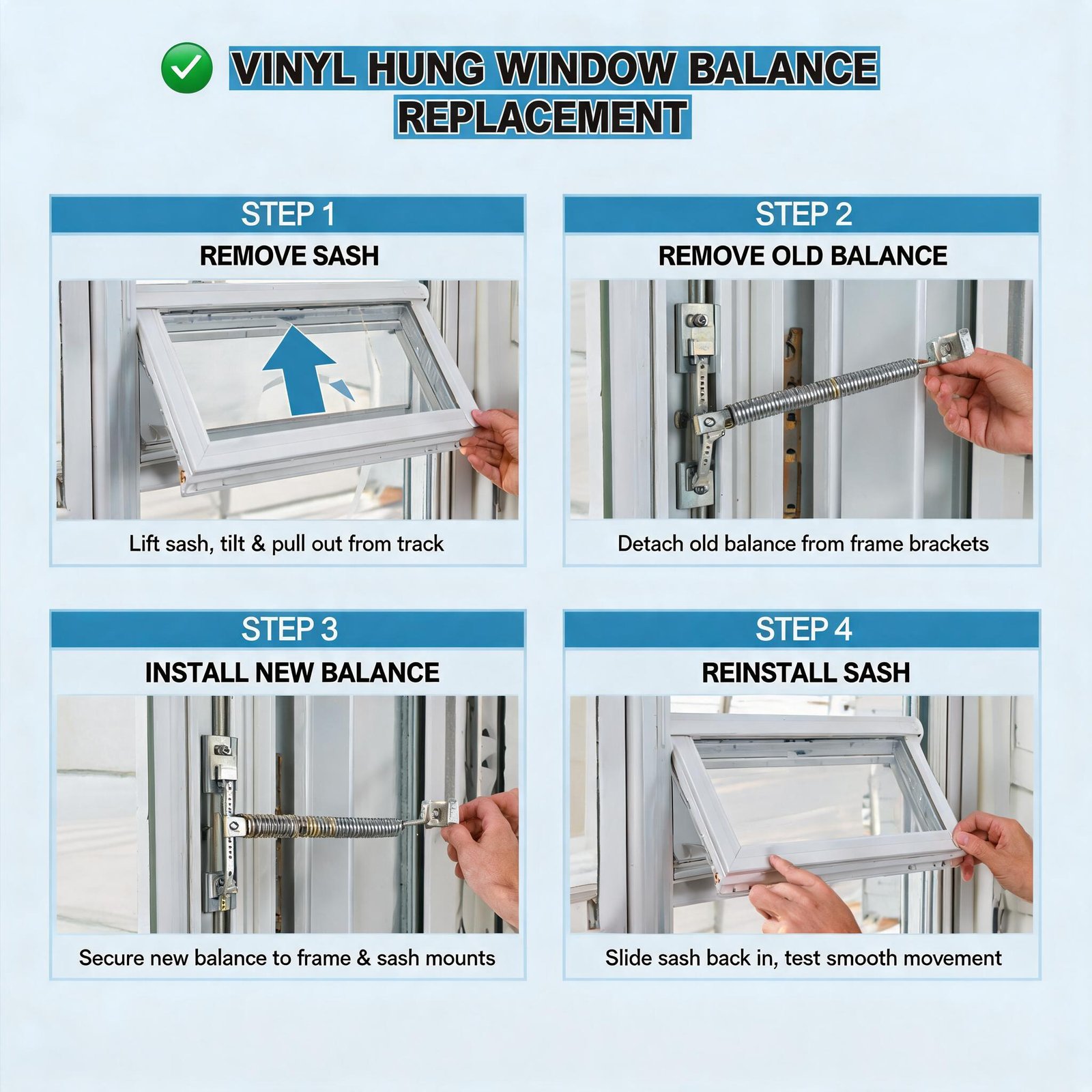
- Lubricate balance shoes: Remove the sash, clean the jamb channel with a dry brush, and apply dry PTFE (Teflon) spray to the shoe contact surfaces. Do not use WD-40 or oil-based lubricants—they attract dust
- Adjust balance tension: Check the sash operation. If it drifts down, adjust the balance tension using the external screw (if available) or replace the balance unit
- Inspect pivot locks: Tilt the sash in. If the pivot lock feels loose or shows cracking, replace it immediately
- Check weatherstripping: Run your finger along the fin seal at the meeting rail and the head jamb. If you feel a gap or the seal is compressed to less than 50% of its original thickness, replace the weatherstripping
- Clean weep holes: Use a stiff nylon brush to clear the weeps at the bottom of the frame. Blocked weeps cause water to pool in the jamb channel, which accelerates balance shoe wear

When to Replace vs. Repair
Knowing when to replace a vinyl double hung window versus repairing it is a critical business decision for builders and contractors.
Repair When:
- The sash is structurally sound (no cracks, no delamination at welded corners)
- Only the balance system has failed (replacement cost: $15 to $30 per balance)
- The weatherstripping is worn but the frame is tight (replacement cost: $10 to $25 per window)
- The window is less than 12 years old
Replace When:
- The vinyl frame has thermal warping (cannot be corrected)
- The IG unit has failed (fogging between panes) and the window is more than 15 years old
- Multiple sashes have dropped and the balances are no longer available (obsolete product)
- The window was builder-grade originally (typically 0.055-inch walls, non-reinforced corners)
Financial Decision Framework
| Item | Repair Cost | Replacement Cost | Payback Period |
|---|---|---|---|
| Balance replacement (one sash) | $150–$250 | $600–$1,200 (full window) | 2–3 years |
| Weatherstripping replacement | $50–$100 | $600–$1,200 | 1–2 years |
| Pivot lock replacement | $30–$60 | $600–$1,200 | 1 year |
| Full sash replacement (frame intact) | $200–$400 | $600–$1,200 | 2 years |
Frequently Asked Questions About Vinyl Double Hung Window Longevity
How long do constant force window balances last?
Constant force spiral balances in mid-range and premium vinyl double hung windows typically last 15,000 to 25,000 cycles. In a residential setting with normal daily use, that translates to 15 to 22 years before spring fatigue causes the sash to drift or drop.
How do I prevent a vinyl single hung window from dropping?
Specify balances rated at 1.5x the actual sash weight. Require AAMA 910-15 certification. Lubricate the jamb channels annually with dry silicone or PTFE spray. If the window is already installed and dropping, replace both balances simultaneously—never replace just one side.
Does frame color affect vinyl window lifespan?
Yes—dramatically. Dark-color frames (black, bronze, dark gray) absorb significantly more solar radiation. In direct sun, the vinyl surface can reach 180°F, which causes thermal expansion and plastic creep. Black vinyl frames in hot climates have a 20–30% shorter lifespan than white frames. If you need dark frames, require 0.080-inch minimum wall thickness for all elevations.
Can I replace just the balance system?
Yes, for most vinyl double hung windows, the balance system is a serviceable component. Replacement balances are available from manufacturers and online parts suppliers for $12 to $30 per unit. However, after 15 years, manufacturers often discontinue balance models, making replacement difficult. This is a strong argument for specifying windows from manufacturers with comprehensive parts inventory.
Is triple-pane glass worth it for a double hung window?
Triple-pane glass adds 8 to 12 pounds to each sash, which increases the load on the balance system. If you spec triple-pane, you must also spec heavy duty balances rated for 45+ pounds. The energy savings in Zone 5 and colder (Northeast, Midwest) typically pay back in 3 to 6 years. In Zone 3 and warmer, triple-pane rarely makes financial sense.
The Bottom Line: What Builders and Contractors Need to Know
For B2B buyers, the takeaway is straightforward:
- Spend the extra $8 per balance for heavy duty block and tackle units with stainless steel cord
- Specify 0.080-inch wall thickness for dark-color frames
- Require AAMA 910-15 certification on all balance systems
- Budget for balance replacement at year 18–20—this is normal maintenance, not a warranty issue
- Use adjustable balances so installers can fine-tune tension on-site
Vinyl double hung windows are an excellent value proposition for residential and light commercial applications. But they are not “lifetime” products. The balance system is a wear item, and the best windows are the ones designed for serviceability.
As a manufacturer focused on the North American market, Superwindowhouse engineers our vinyl hung window products with these serviceability principles in mind—removable balance shoes, replaceable weatherstripping, and stainless steel reinforcement at every wear point. Because in the real world, the window that can be repaired is the window that lasts.