What Exactly Are Vinyl Windows?
When people say “vinyl windows,” they’re talking about frames and sashes extruded from rigid polyvinyl chloride, better known as uPVC. Unlike the flexible vinyl used in siding or garden hoses, uPVC is engineered for structural strength. The polymer is blended with impact modifiers, UV stabilizers, and heat‑reflective additives at the compounding stage—long before the extrusion line fires up. This chemistry determines how the window will hold color, resist sagging under summer heat, and survive decades of temperature swings.
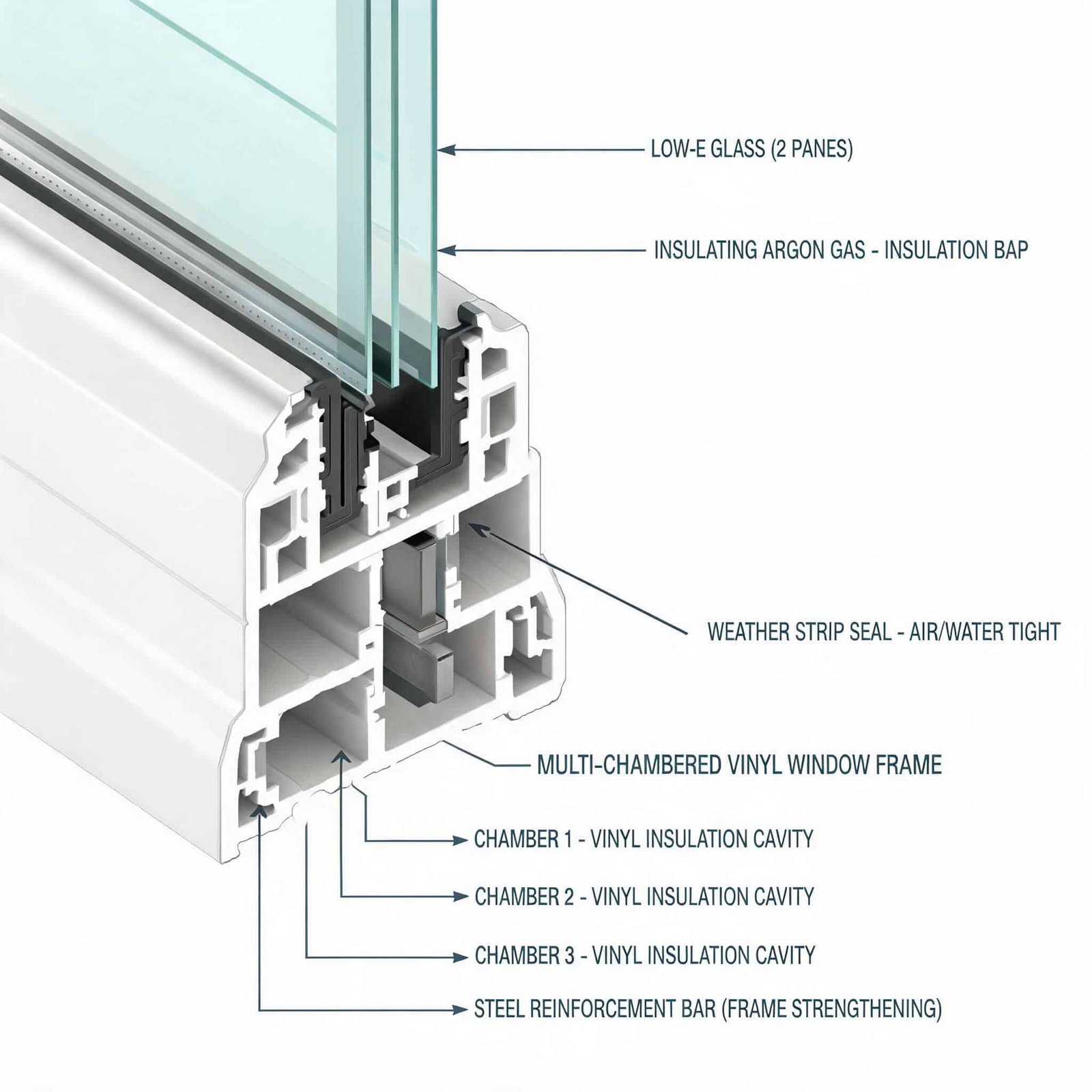
Inside those hollow profiles, you’ll find a series of chambers. Entry‑level vinyl windows might have two or three thin‑walled chambers. Premium systems, including what we produce for coastal and extreme‑climate markets, use multi‑chambered designs with walls that are structurally deeper, often reinforced with galvanized steel or composite inserts in the meeting rails and jambs. These chambers do double duty: they trap air for better thermal resistance and create rigid geometric shapes that reduce flex. Welded corners on the sash and frame replace old mechanical fasteners, turning the window into a single fused unit that won’t loosen over time. If you’ve ever wondered why choose vinyl windows over leaky wood assemblies, the welded construction is one major reason.
Glazing options are equally important. A vinyl frame can hold double‑ or triple‑pane insulated glass units, often filled with argon or krypton gas. Low‑E coatings on the glass surface control radiant heat, and warm‑edge spacer systems keep the perimeter of the glass warmer, reducing condensation. All of these pieces—the multi‑chambered extrusion, the gas fill, the spacer—work together as a system, not a collection of parts.
A Deeper Look at Vinyl Window Performance
Thermal Efficiency Beyond the U‑Factor Label
When you look at a window label, the U‑factor steals the show. Vinyl frames naturally insulate better than aluminum, which is a notorious heat conductor. A well‑designed vinyl double‑hung can achieve U‑factors between 0.25 and 0.28 with double‑pane glass and low‑E coating. That’s excellent for cold climates, and it’s one of the most straightforward answers to the question, are vinyl windows a good investment in a heating‑dominated climate? They absolutely can be, especially when you combine a low U‑factor with a decent solar heat gain coefficient that captures free winter warmth.
But thermal performance isn’t just the number on a sticker. It’s about how the entire frame assembly handles real‑world temperature extremes. Vinyl expands and contracts more than wood or fiberglass. Without engineering to accommodate this movement—like flexible corner seals and properly sized glazing pockets—the frame can bow slightly, breaking the weatherstripping’s contact. A high‑quality vinyl window accounts for thermal movement through design tolerances and specialized sealants, keeping air infiltration below 0.1 cfm/ft². That’s the difference between a drafty “vinyl special” and a window that feels solid during a nor’easter.
Sound Insulation That Often Gets Overlooked
Because the base material is inherently resilient and the multi‑chambered profiles disrupt sound waves, vinyl windows deliver better acoustic insulation than aluminum, and on par with well‑sealed wood units. When combined with laminated glass or asymmetric double‑pane units, an STC (Sound Transmission Class) rating in the mid‑30s is achievable. For homes near highways or under flight paths, this is a massive quality‑of‑life upgrade that rarely makes the brochure.
Real‑World Durability: What Decades of Service Look Like
Vinyl windows don’t rot, peel, or attract termites. That’s the headline. The deeper truth is more nuanced. Early vinyl formulations from the 1970s did chalk and discolor after a few years of harsh sun exposure. Today’s compounds include advanced titanium dioxide and other UV blockers that significantly resist fading. In accelerated weathering tests, modern high‑quality uPVC retains color integrity for the life of the unit, which is typically projected at 30 to 40 years depending on maintenance and location.
What owners do need to watch is hardware wear. The frame itself may outlast the original glazing seal, the sash balance system, or the locking mechanism. Fixing those is generally simpler and far cheaper than replacing a rotten wood frame down to the studs. We always recommend choosing a window with accessible, replaceable hardware—not the kind that’s friction‑fit into the vinyl with no plan for future servicing.
Another subtle factor: darker colors. Dark vinyl frames absorb more solar heat, increasing the risk of heat distortion if the formula isn’t reinforced. Capstock technology or co‑extruded color layers can solve this by putting a durable, reflective skin over a strong white core. If you’re weighing whether high-quality vinyl windows from a reputable manufacturer can be specified in deep bronze or black, the answer is yes—but only if the extrusion is engineered with heat‑resistant additives and internal stiffeners. Cheap dark vinyl will warp, and that’s a painful lesson learned by many.
The Pros and Cons of Vinyl Windows, With No Sugar‑Coating
Every window material has trade‑offs. Over the years, I’ve overseen product development meetings where these exact lists were pinned on the wall. Here’s the honest breakdown, expanded beyond the typical five‑bullet‑list.
Advantages Worth Your Attention
Consistently Lower Upfront Cost
Vinyl windows are the most budget‑friendly option in the replacement market, frequently coming in 20% to 40% less than a comparable wood or fiberglass unit. The extrusion process is highly automated, the raw material is inexpensive, and the supply chain is mature. For a whole‑house retrofit, that can mean a savings of several thousand dollars. This advantage is real, not a marketing trick.
Near‑Zero Maintenance
There’s no painting, staining, or sealing. Washing with soapy water once or twice a year is all that’s required. The color is integral to the material, so scratches don’t reveal a different substrate underneath, and minor abrasions can often be polished out. For busy families or rental properties, this is a massive time and expense saver.
Excellent Energy Performance for the Price
When you compare U‑factors per dollar, vinyl is the clear leader. Hitting Energy Star Most Efficient criteria is routine for a mid‑range vinyl window with double‑pane glass. The cavities naturally reduce thermal bridging, and the material doesn’t sweat or grow mold like wood in humid summers. An owner choosing vinyl is making one of the most cost‑effective energy upgrades available, short of attic insulation.
Design Flexibility That’s Often Underrated
Today’s vinyl windows are not limited to basic white rectangles. They come in a huge variety of styles—double‑hungs, casements, sliders, awnings, architectural shapes—and an expanding palette of wood‑grain laminates and colored finishes. New printing and foil technologies mimic oak, mahogany, and even matte charcoal so convincingly that from across the room, even a professional may need a closer look.
Moisture and Pest Resistance
Vinyl is impervious to water absorption. It won’t swell in a humid Florida summer or rot after repeated rainstorms. There’s also no organic matter for insects to consume. In regions where termites and carpenter bees destroy wood frames, vinyl offers a stress‑free alternative that doesn’t rely on chemical treatments.
Disadvantages That Need to Be Understood
Aesthetic Depth and Perceived Value
One common criticism persists: do they look cheap? I’ll be blunt—low‑end vinyl windows can indeed look plastic, with visible weld seams, fake‑looking wood grain, and boxy profiles. However, premium vinyl windows with sculpted details, narrow sightlines, and realistic foil laminates can rival painted wood in appearance, especially from the interior. The key is profile design. Avoid windows with flat, slab‑like frames; look for contoured, beveled shapes and concealed welding technology that produces clean corners. The second part of the answer is that if historic authenticity is paramount, wood is still the gold standard, but vinyl has closed the gap dramatically.
Limited Structural Rigidity Without Reinforcement
Vinyl is not as inherently rigid as aluminum, fiberglass, or solid wood. Large windows or heavy triple‑pane glazing require steel or composite reinforcements inside the frame. If those reinforcements are missing, the sash can sag, the locking points can misalign, and the window becomes difficult to operate. When evaluating a vinyl window, ask about meeting rail reinforcement and maximum size limits. A good manufacturer will be transparent about the engineering.
Thermal Expansion and Contraction
Earlier I mentioned expansion. This is a genuine physical property, not a defect. A six‑foot vinyl frame can grow and shrink by a few millimeters between winter and summer. In poorly designed windows, this causes seal failures or sticking. High‑performance windows manage the movement with precision weatherstripping, flexible glazing beads, and welded frame corners that expand uniformly. Still, if you live in an area with extreme daily temperature swings—like a desert climate where nights are freezing and afternoons bake—fiberglass might be a safer long‑term bet.
Environmental Footprint of PVC
Vinyl is a petrochemical product, and its manufacturing process involves chlorine. While today’s factories are tightly regulated and many brands include recycled content, uPVC is not easily recyclable at the end of its life. Some companies have take‑back programs that grind old frames into new ones, but the infrastructure isn’t universal. For homeowners who prioritize cradle‑to‑cradle sustainability, fiberglass or certified wood windows may align better with their values. Still, a vinyl window that saves heating energy for 30 years offsets some of that initial footprint.
Color Limitations in Direct Sun
Despite advances, very dark solid vinyl remains risky in hot, sunny locations. If you want a true black or dark bronze and cannot use fiberglass or aluminum, look for co‑extruded acrylic capstock technology, which reflects heat better than pure uPVC. It’s a specific product category, so ask your supplier directly.
Vinyl Windows vs. Other Materials: A Nuanced Comparison
Rather than a simple chart, let’s walk through the decision matrix you’d use in a product development meeting.
- Vinyl vs. Wood: Wood wins on timeless beauty and repairability—you can sand and repaint indefinitely. But wood requires ongoing maintenance, has a higher upfront cost, and expands and contracts with humidity. Vinyl eliminates that labor, offers better thermal performance per dollar, and never rots. If maintenance budget is zero, vinyl is the pragmatic choice.
- Vinyl vs. Aluminum: Aluminum is dramatically stronger and allows for ultra‑thin frames that maximize glass area. It’s the go‑to for commercial curtain walls and modern architectural design. The downside? Aluminum conducts heat like a frying pan, so it requires a thermal break to even approach vinyl’s insulating values. In residential settings, aluminum thermally broken frames are often more expensive than vinyl and still not as efficient in cold climates.
- Vinyl vs. Fiberglass: Fiberglass is the stiffest, most dimensionally stable material, with nearly zero expansion. It can be painted dark colors without warping and is incredibly durable. Its natural insulating value sits between vinyl and wood. However, fiberglass windows are typically 30‑50% more expensive than vinyl. For many homeowners, vinyl provides 90% of the performance at a significantly lower price, leaving budget for better glass packages or professional installation.
- Vinyl vs. Composite: Composite windows (blends of wood fiber and resin) aim to combine the warmth of wood with the low maintenance of vinyl. They’re strong and stable but often come at a premium price and can be heavy. They’re an excellent middle ground if budget allows, but vinyl still holds the value crown.
How Much Do Vinyl Windows Cost, and What Drives the Numbers?
Vinyl windows cover a massive price spectrum. At the low end, off‑the‑shelf single‑hung units can be found for under $300 per window. A custom‑sized, triple‑pane casement with high‑performance coatings, laminated glass, and woodgrain interior laminate can easily surpass $1,400 per unit. Installation adds anywhere from $150 to $500 per opening depending on access, trim work, and whether it’s a full‑frame replacement or an insert.
The biggest cost drivers are:
- Glass package: Double‑pane with low‑E and argon is standard. Triple‑pane, krypton gas, and specialized coatings that control heat gain add 15‑30% to the cost but dramatically boost U‑factor and comfort.
- Style and operation: Casements and awnings cost more than double‑hungs or sliders because they involve compress‑seal weatherstripping, multi‑point locking, and more complex hardware. Their air‑tightness is superior, often justified in windy or noisy environments.
- Color and finish: Integral color uPVC or film laminates add roughly 10‑20% over standard white. That’s a small premium for a permanent, fade‑resistant finish that doesn’t require painting.
- Reinforcements and sizing: Large windows (think picture windows over 12 square feet) need steel or composite strengthening. This adds cost but is mandatory for structural integrity.
When you do the math, a typical 2,000‑square‑foot home with 15‑20 windows might see a total project cost ranging from $10,000 to $25,000 installed. Given that replacement vinyl windows can cut heat loss through fenestration by 30‑50%, the payback on energy bills—especially in cold regions—can materialize in 5 to 10 years. That’s a strong argument when a homeowner asks, are vinyl windows a good investment relative to doing nothing or patching drafty 1970s aluminum?
Lifespan: How Long Will Vinyl Windows Actually Last?
We’ve seen properly manufactured and installed vinyl windows still functioning well after 30 to 35 years, often with just a few hardware replacements along the way. The frame itself rarely fails; it’s the wear components—weatherstripping, balances, and glazing seals—that determine practical service life. Many manufacturers offer lifetime limited warranties that cover the frame and glass unit against seal failure, though installation workmanship is typically covered separately.
Climate plays a role. In a moderate environment with little direct UV exposure, a well‑built vinyl window could easily outlive its warranty by a decade. In the Southwest, intense sun may degrade the weatherstripping faster, but the frame remains sound if the formulation has adequate UV stabilizers. If you’re thinking 40‑year windows, fiberglass holds an edge. For a 20‑ to 30‑year horizon with good care, vinyl meets the assignment.
Installation Quality: The Invisible Half of Performance
I can’t stress this enough—even the best vinyl window will perform badly if installed incorrectly. The rough opening must be square, level, and properly flashed. The gap between the frame and the structure needs to be filled with low‑expansion foam insulation, not stuffed with fiberglass batts, which lose R‑value when compressed. The exterior must be sealed with a graduated system of flashing tape, drip caps, and sealant that directs water down and out. A surprising number of “window leaks” are actually installation failures, not product defects. When you hire an installer, check for AAMA or InstallationMasters certification. It’s a simple step that separates a long‑term investment from a headache.
Tying It All Together: Should You Choose Vinyl Windows?
We often walk clients through a decision tree:
- If your priority is maximizing value per dollar and minimizing maintenance, vinyl windows are extremely hard to beat.
- If you must have the deepest, richest wood interior for a historic restoration, stick with solid wood.
- If you face extreme temperature swings or want the slimmest possible frames for a modern design, fiberglass or thermally broken aluminum may be a better fit.
- If you are concerned that do they look cheap echoes in the back of your mind, I encourage you to visit a showroom and compare a premium vinyl window with a painted wood window side‑by‑side. The gap is far smaller than a generation ago.
Ultimately, between the pros and cons of vinyl windows, the balance tilts in favor of vinyl for the vast majority of homeowners. The key is to buy from a manufacturer that doesn’t cut corners on wall thickness, UV stabilizers, or corner welding, and to have the units installed by a professional who treats air sealing as seriously as you do.
So, What’s Next?
Start by identifying the top two or three performance characteristics that matter