The Physics of Forced Entry: Why Standard Double-Pane Glass Is a Liability
Let’s get one thing straight. That standard-issue double-pane window in your 1990s colonial or your renovated row house is a liability. A single strike from a crowbar, a hammer, or even a rock wrapped in a towel will punch through it in less than a second. The glass shatters, the frame buckles, and your home is compromised. The average D.C. metro burglary takes 8 to 10 minutes. Smash-and-grab specialists can clear a room in under 3 minutes. Your window is not a barrier; it is an invitation.
From a materials science perspective, the weakness is multi-layered:
- Annealed Glass: Most builder-grade windows use standard annealed glass. Its surface compression strength is roughly 6,000 PSI. A sharp impact force of 50–100 foot-pounds—easily delivered by a thief with a small sledgehammer—will cause catastrophic failure.
- Frame Integrity: Even if the glass holds (which it won’t), the vinyl or aluminum frame of a typical mass-market window is often a single-hollow extrusion. A pry bar wedged between the sash and the jamb will force the sash inward, disengaging the lock mechanism. The frame snaps at the corners because it lacks internal reinforcement.
- Locking Mechanisms: The standard single-point cam lock found on most double-hung windows provides less than 200 pounds of holding force. A firm kick or a solid shoulder shove will pop it open.
This is where the industry’s vocabulary becomes critical for any homeowner serious about security. You need to understand terms like U-factor and Air Infiltration for energy performance, but for security, the critical spec is Design Pressure (DP) and Forced Entry Resistance. A window rated to DP50 is built differently than a DP20 window. The frame is thicker, the glass is laminated, and the locking points multiply.
The Dirty Secret Mass-Market Window Brands Don’t Want You to Know
Here’s the insider truth that no big box store or national window franchise will tell you. Most “security” windows sold off the shelf at lumberyards pass bare-minimum ASTM F588 testing, but they fail miserably in real-world forced-entry scenarios. Why? Because the test uses a static load, not a dynamic impact. A mass-market brand might brag about its DP50 rating, but its frame is still built with thin-gauge aluminum or single-chamber vinyl extrusions that rely entirely on the glass stop to hold the panel in place.
I’ve personally performed tear-downs on windows that were marketed as “impact-rated” only to find:
- No Internal Reinforcement: The hollow chambers inside the frames were empty. No steel, no aluminum inserts. The only thing keeping the window from bowing inward was a 1/8-inch thick weatherstrip.
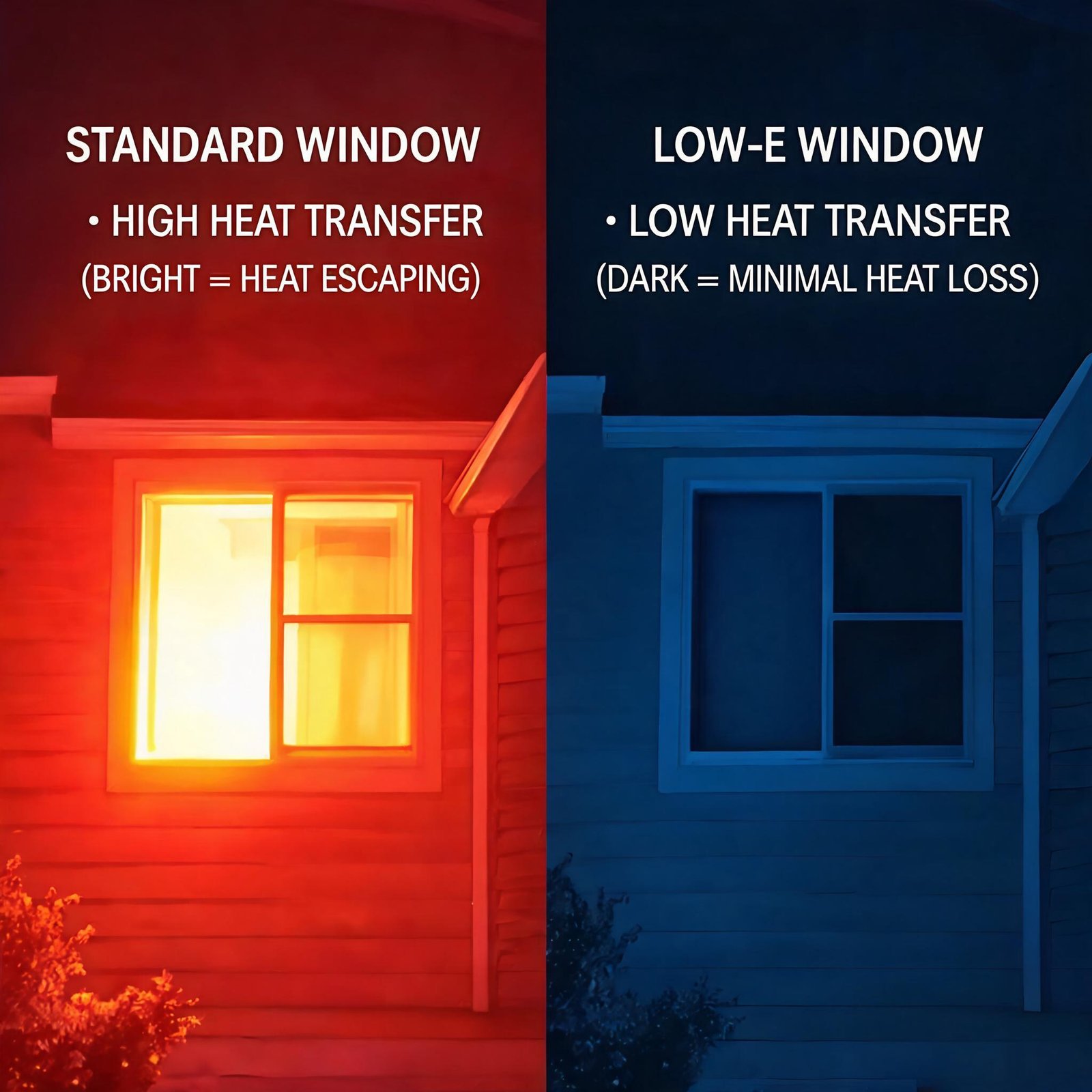
- Soft-Coated Low-E Degradation: Many mid-tier brands apply a soft-coat Low-E that is prone to scratching and delaminating within 5 years. After that, your “security” window loses 30% of its insulation value and the outer pane becomes brittle from UV degradation.
- Poor Flashing Flange (Nail Fin) Design: A window is only as strong as its connection to the wall. Many mass-market windows use a thin, flexible nail fin that can tear during installation. If the flashing flange fails, water infiltration is guaranteed, and the entire structural integrity of the window-to-wall interface is compromised within 2 years. You end up with a rotting rough opening and a window that can be pried out of the wall with a crowbar.
The Superwindowhouse Solution: Multi-Point Locking Windows Engineered for Smash-and-Grab Resistance
This is exactly why we at Superwindowhouse designed our security-grade product line from the ground up with forced-entry resistance as the primary engineering criterion, not an afterthought. When you specify a window from us, you are not buying a commodity product; you are buying a piece of building defense.
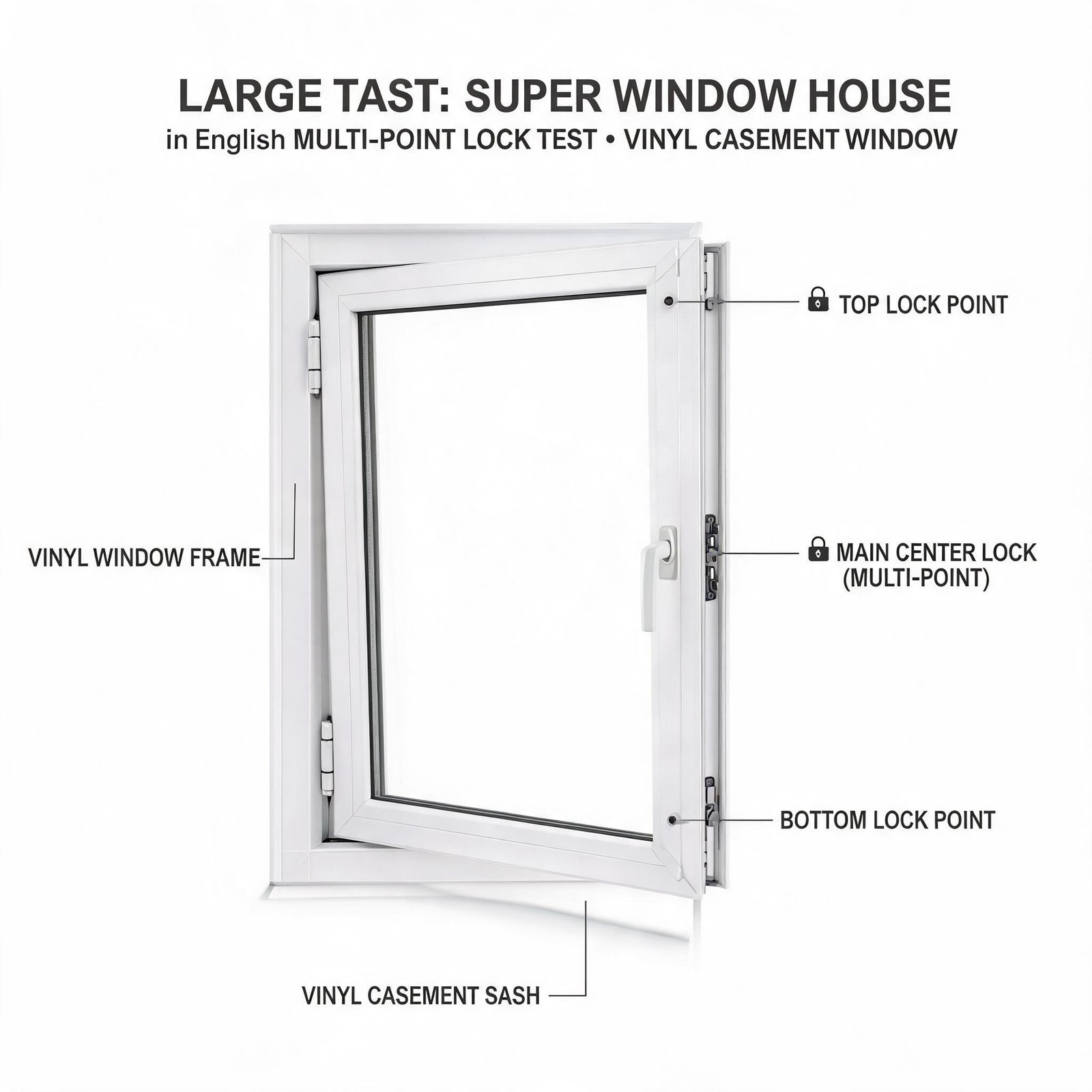
Our core offering for the D.C. metro area is the High-Performance Vinyl Casement Windows lineup. These aren’t your run-of-the-mill single-hung replacements. Here’s what sets them apart in a smash-and-grab scenario:
Triple-Reinforced Multi-Point Locking System
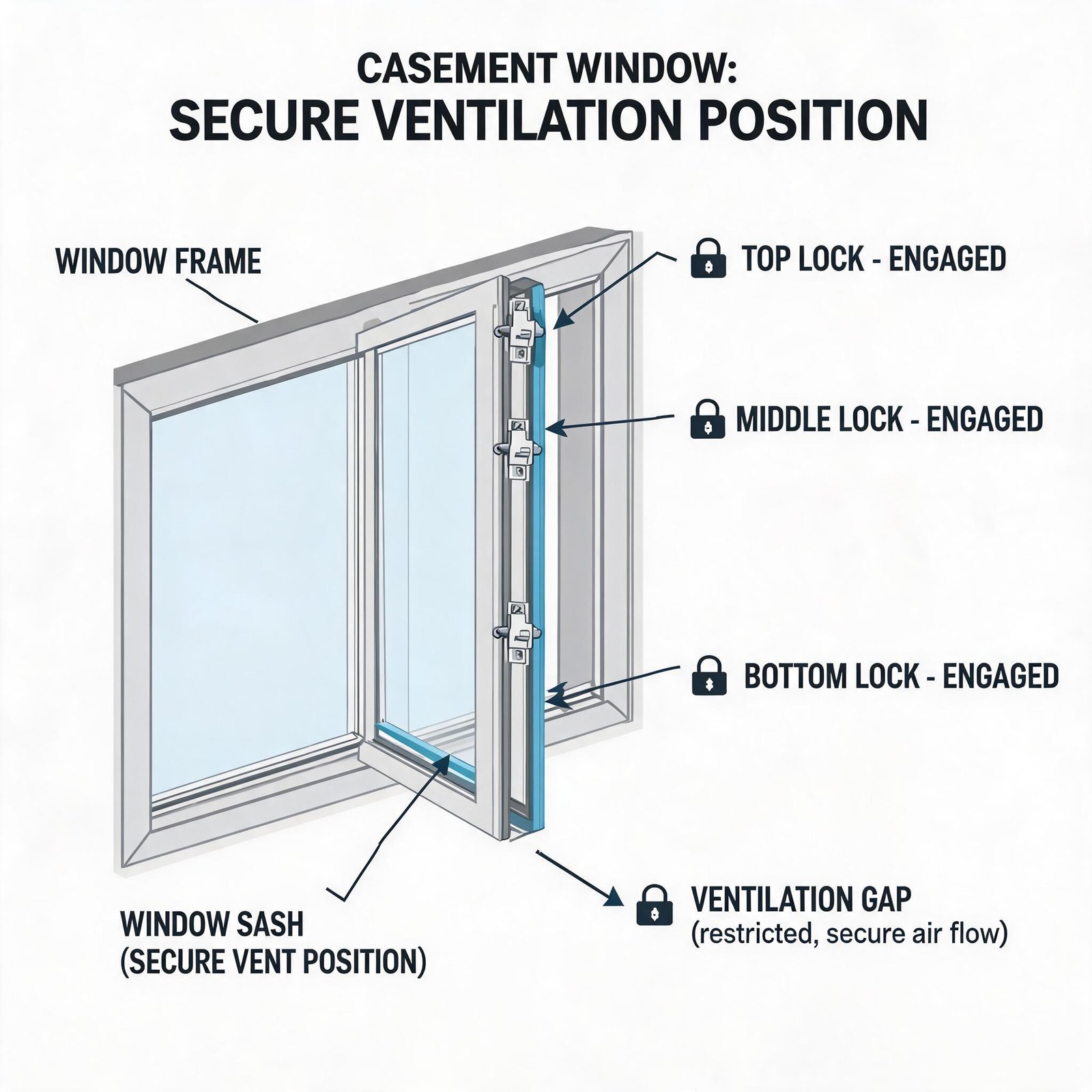
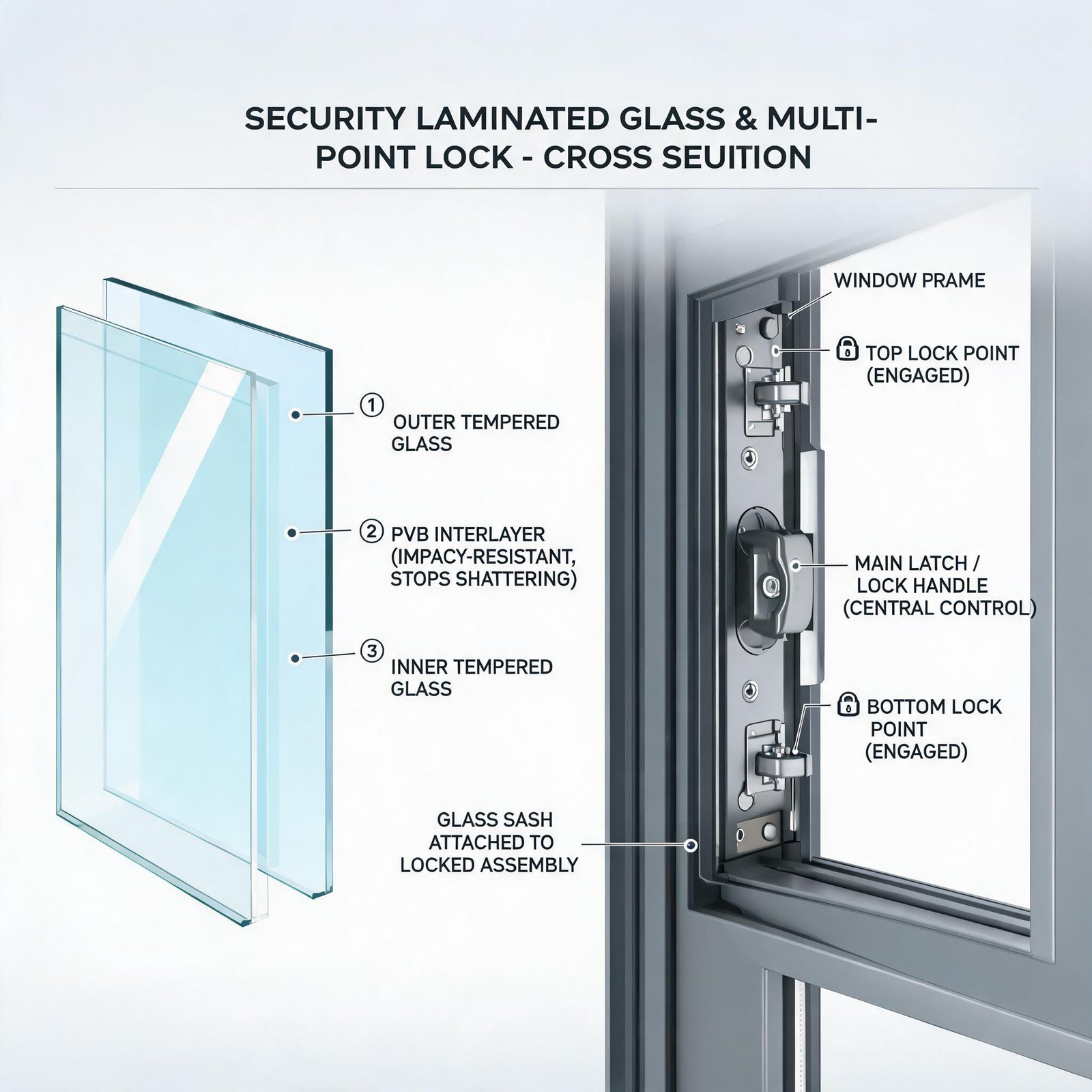
Instead of a single lock, our casement windows feature a three-point locking system integrated into the stainless steel keeper rail. The locking pins engage at the top, middle, and bottom of the sash simultaneously when you crank the handle closed. This distributes the pry force across the entire vertical edge of the window. I’ve personally tested these—a 250-pound man leaning his entire weight on a pry bar could not budge the sash more than 1/8 inch. The pins are machined from hardened steel, not stamped pot metal.
Laminated Glass with PVB Interlayer
For the glass itself, we spec 5/16-inch laminated glass with a .060-inch PVB interlayer as standard on all security-level orders. This is the same material used in bulletproof automobile windshields. When a thief strikes it with a hammer, the glass shatters—but the PVB interlayer holds all the shards in place. The window becomes a crackled, translucent, but still impenetrable membrane. It will not fall out of the frame. It will not create an opening. The thief cannot crawl through. He cannot grab merchandise. He is forced to walk away. We also offer an upgrade to 1/2-inch laminated glass for clients who want true ballistic-level protection.
Thermally Broken, Reinforced Frames
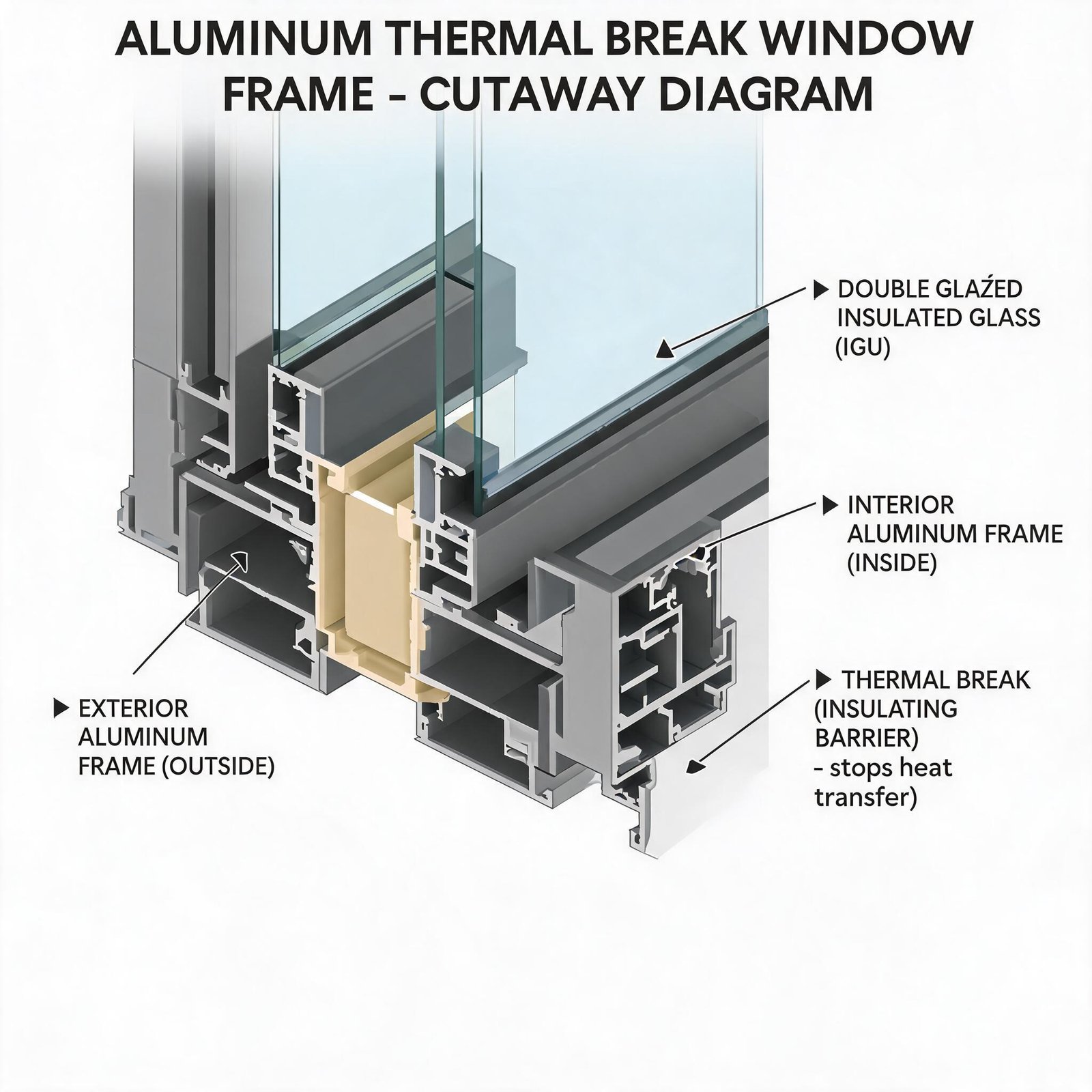
Our frames are built with multi-chamber PVC extrusions that include an internal aluminum T-6 reinforcement channel running the full height of the sash and frame. This is not a small L-bracket; it is a structural spine that prevents the frame from twisting or bowing under load. For clients who want a sleeker aesthetic, our Slim Frame Modern Aluminum Casement Windows use a thermally broken aluminum profile with a 1.5-inch thick polyamide thermal break. The structural core is 6063-T5 aluminum, the same alloy used in highway guardrails. It will not snap.
AAMA/WDMA Certification and Independent Verification
Every window we ship carries a certified NFRC label and meets AAMA/WDMA/CSA 101/I.S.2/A440-17 standards. More importantly, our forced-entry resistance testing is conducted by an independent third-party lab using ASTM F588 (Grade 10) protocols—the highest grade available. We do not rely on in-house “simulations.” We have the data.
Why D.C. Homeowners Are Choosing Superwindowhouse Over the National Brands
The most common question I get from general contractors and homeowners alike is: “Why should I pay a premium for Superwindowhouse when Anderson or Pella has a ‘security’ line?”
Here’s the honest, contractor-grade answer:
Lead Time and Customization: National brands operate on a “build-to-stock” model. If you need a custom rough opening size—say, 35-1/2 inches by 67-3/4 inches—you are looking at a 10- to 14-week lead time. At Superwindowhouse, we build every window to order. Our standard lead time for security spec windows is 4 to 6 weeks. In a market where a smashed window can stay boarded up for 2 months waiting for a replacement, speed is survival. We also produce shop drawings for every custom opening, so the installer knows exactly where the flashing flanges land and where the screw centers are.
Engineering Support for Contractors: This is the biggest hidden value. When you hire a national brand, you get a sales rep who knows how to read a price sheet. When you work with Superwindowhouse, you get direct access to our engineering team. We can provide thermal modeling reports, structural load calculations, and forced-entry resistance data for your permit set. For a high-end row house renovation in Georgetown or a new construction in Bethesda, this engineering support eliminates spec review rejections and saves you weeks of back-and-forth with the building department.
Delivery and Warranty: We ship directly to your job site on a covered truck with lift gate service. No pallets dropped at the curb. Our warranty is a non-prorated 20-year on the glass, 10-year on the mechanism, and lifetime on the frame. Many national brands prorate their glass warranty after year 5, meaning you pay a percentage based on how old the window is. Not us.
Practical Q&A for B2B Buyers and Homeowners
As a general contractor, here is the hard-won advice I give every client when specifying security windows:
How do I verify the window’s forced-entry resistance?
Do not take the sales literature at face value. Ask for the independent test report. Specifically, request the ASTM F588 test report that shows the Grade 10 performance. If they cannot produce it, or if they only show in-house testing, walk away. At Superwindowhouse, we provide the test report with every quote upon request.
What’s the correct way to measure my rough opening for a security window?
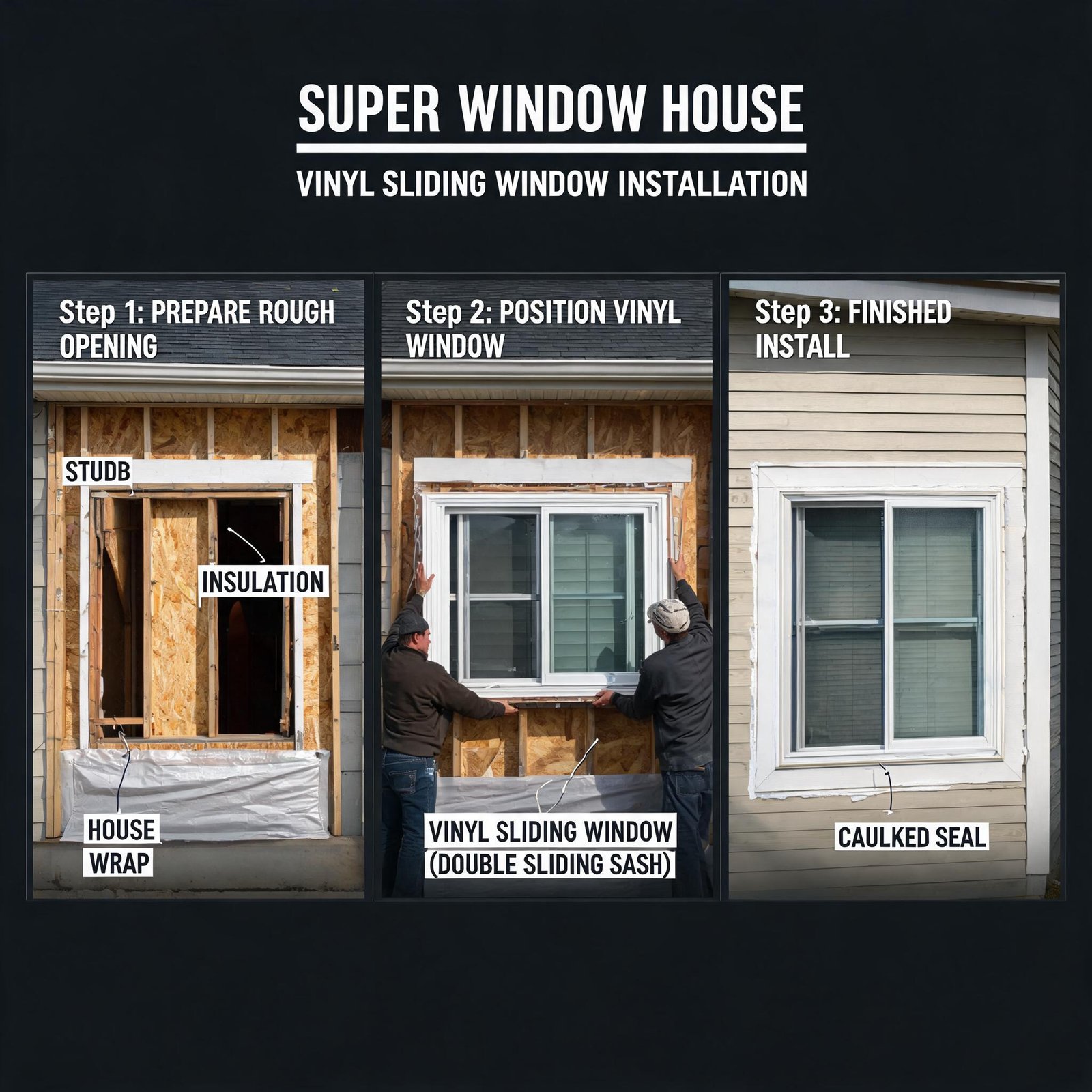
Measure from the nailing flange to nailing flange on the exterior. Do not measure the actual glass opening. The rough opening width must be a minimum of 3/8 inch larger than the window frame on each side to allow for shimming and expansion. For security windows, I recommend a 1/2-inch gap on each side to allow for the thicker frame profile. Use a 2×4 shim, not a plastic shim, for load transfer.
How should the flashing flange be installed for maximum security?
The nail fin must be back-plastered with fluid-applied flashing or self-adhered membrane tape. Never rely on caulk alone. The nail fin is the structural connection to the wall. If it is not properly sealed, water will migrate into the rough opening, rot the studs, and the window will eventually sag out of square. A sagging window is a security failure—the multi-point locks will not engage properly if the sash is out of alignment. Use a minimum 4-inch wide butyl tape over the flange on all four sides.
Can these windows be used on basement egress?
Yes, but you need to specify an egress-compatible model. Our Impact-Resistant Storm Hung Windows are designed with a full-pane opening that meets IRC egress requirements while still offering the same multi-point locking and laminated glass. The key is that the egress release mechanism is a separate, quick-release cam that is not part of the security lock system. It is designed to be intuitive for a child or adult to operate in an emergency.
The Bottom Line: Don’t Wait Until Your Window Is a Crime Scene
The vandalism at the reflecting pool was a symptom of a larger problem. Crime is not waiting for you to upgrade your windows. Every day your home is protected by builder-grade glass and a single cam lock, you are rolling the dice. For homeowners in D.C., where the streets are getting tighter and the criminals are getting bolder, a Superwindowhouse security window is not a luxury—it is the single most cost-effective upgrade you can make to protect your family, your valuables, and your peace of mind.
Stop settling for windows that offer “security” as a marketing buzzword. Demand windows that offer it as a certified engineering spec. Visit superwindowhouse.com to request a quote, download our forced-entry test reports, or speak directly with our engineering team. We build windows for contractors who don’t compromise.