**Can You Paint Vinyl Windows? The Complete Professional Guide for Homeowners**
If you’ve been staring at your vinyl windows wondering whether a fresh coat of paint could transform your home’s appearance without the expense of full replacement, you’re not alone. The question “can you paint vinyl windows” comes up frequently among homeowners looking to refresh their interiors or exteriors on a budget. The short answer is yes—but only if you follow the correct preparation and material selection process. Painting vinyl windows requires specific techniques that differ significantly from painting wood or aluminum frames, and getting it wrong can lead to peeling, cracking, or voided warranties.
In this comprehensive guide, we’ll cover everything from paint chemistry to application methods, ensuring you have the authoritative knowledge needed to achieve professional results that last.
**Understanding Vinyl Window Composition and Paint Adhesion**
Before diving into the painting process, it’s essential to understand what makes vinyl windows unique. Vinyl (PVC) is a thermoplastic material that expands and contracts with temperature changes far more than wood or metal. This thermal movement is the primary reason why standard house paints fail on vinyl surfaces—they lack the flexibility to move with the substrate.
Modern vinyl windows also feature a factory-applied finish that creates a low-energy surface. This means paint has difficulty bonding without proper surface preparation. The question “can vinyl windows be painted” depends entirely on your willingness to follow the correct surface preparation protocol and select paints specifically formulated for vinyl substrates.
**The Temperature Factor**
Vinyl windows can reach surface temperatures of 160°F or higher in direct sunlight. Dark paint colors absorb more heat, potentially causing the vinyl to warp or soften. This is why the question “can you paint vinyl windows black” requires special consideration—while technically possible, dark colors demand specific paint formulations and careful monitoring of surface temperatures.
**Essential Materials for Painting Vinyl Windows**
The difference between a paint job that lasts three years and one that lasts a decade comes down to material selection. Here’s what you need:
**Paint Selection**
Not all paints are created equal when it comes to vinyl. The most reliable options include:
– **100% acrylic latex paint**: This offers the flexibility needed to accommodate thermal expansion. Look for paints labeled specifically for vinyl or plastic surfaces.
– **Alkyd urethane paint**: A hybrid option that provides excellent adhesion and durability. Brands like Sherwin Williams offer formulations specifically for vinyl.
– **Spray paint formulated for plastic**: For smaller projects or detailed work, aerosol cans designed for plastic surfaces provide consistent coverage.
Avoid oil-based paints entirely—they become brittle over time and will crack as the vinyl expands and contracts.
**Primer Requirements**
Priming is non-negotiable for vinyl windows. Use a high-bonding primer designed for slick surfaces. Some manufacturers recommend self-etching primers, while others suggest acrylic bonding primers. The key is to select a product that creates a mechanical bond with the vinyl surface.
**Tools and Supplies**
– Fine-grit sandpaper (220-grit or higher)
– Tack cloth or lint-free rags
– Painter’s tape (high-quality, low-tack)
– Drop cloths
– Paint sprayer or high-quality brushes
– Denatured alcohol or vinyl-safe cleaner
– Paint conditioner (for brush application)
**Step-by-Step Guide: How to Paint Vinyl Windows**
The process of learning how to paint vinyl windows involves several critical stages. Rushing any step will compromise the final result.
**Step 1: Surface Preparation**
Preparation accounts for 80% of a successful paint job. Begin by thoroughly cleaning the window frames with a solution of mild detergent and water. Remove all dirt, grease, and any existing paint flakes. Follow this with a wipe-down using denatured alcohol to eliminate any remaining residue.
Next, lightly sand the entire surface using 220-grit sandpaper. The goal isn’t to remove material but to create microscopic scratches that give the primer something to grip. Pay special attention to corners and edges where paint tends to peel first.
**Step 2: Masking and Protection**
Proper masking prevents paint from reaching glass, hardware, and surrounding walls. Use low-tack painter’s tape to avoid damaging the vinyl when removed. Cover the glass with paper or plastic sheeting, and protect any nearby surfaces with drop cloths.
**Step 3: Priming**
Apply a thin, even coat of bonding primer. Spray application provides the most consistent coverage, but a high-quality brush works well for smaller projects. Allow the primer to dry completely according to manufacturer instructions—typically 24 hours for optimal adhesion.
**Step 4: Painting**
When applying paint, thin coats are superior to thick ones. Multiple thin layers allow each coat to cure properly and reduce the risk of drips or uneven coverage. If using a brush, work in the direction of the vinyl grain and maintain a wet edge to prevent lap marks.
For spray application, hold the nozzle 8-12 inches from the surface and use steady, overlapping passes. Apply 2-3 thin coats, allowing adequate drying time between each.
**Step 5: Curing and Reassembly**
Paint on vinyl requires extended curing time—often 7-14 days—before the surface reaches full hardness. During this period, avoid cleaning the windows or subjecting them to moisture. Reinstall any hardware only after the paint has fully cured.
**Special Considerations for Dark Colors**
The question “can you paint vinyl windows black” requires addressing heat absorption concerns. Dark colors absorb more solar radiation, causing the vinyl to heat beyond its designed temperature range. This can lead to warping, softening, or premature paint failure.
If you’re determined to use dark colors, consider these precautions:
– Select paint specifically rated for high-temperature applications
– Ensure the windows are in shaded locations or receive limited direct sunlight
– Monitor surface temperatures during application and curing
– Consider using lighter colors on south and west-facing windows
Some manufacturers explicitly void warranties if windows are painted dark colors. Check your window warranty before proceeding.
**Common Mistakes and How to Avoid Them**
Even experienced DIYers make errors when painting vinyl windows. Here are the most frequent pitfalls:
**Skipping the primer**: This is the number one cause of paint failure on vinyl. The slick surface requires a bonding agent.
**Using the wrong paint**: Standard interior or exterior house paints lack the flexibility needed for vinyl. Always use paint formulated for plastic or vinyl surfaces.
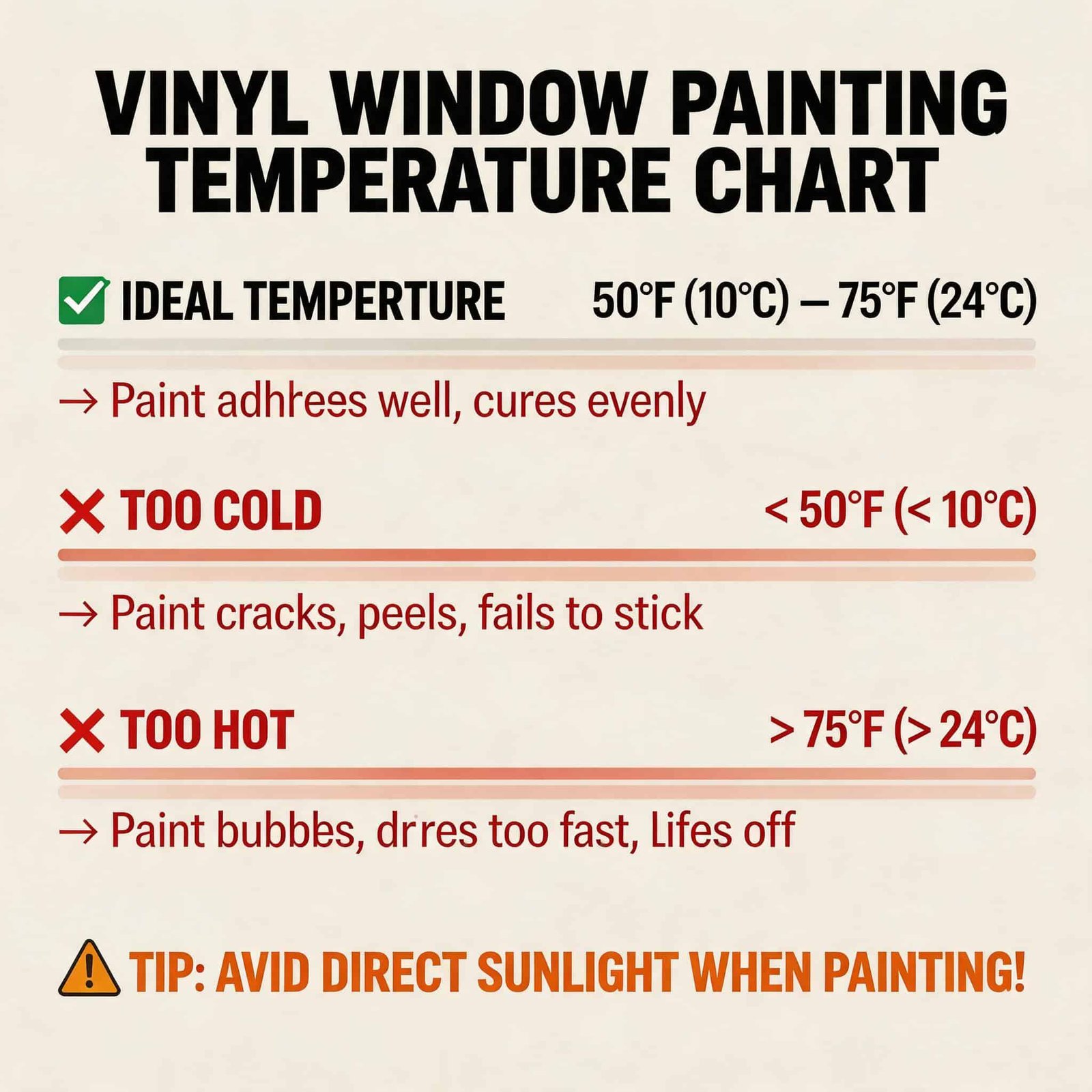
**Painting in extreme temperatures**: Ideal application temperatures range from 50°F to 85°F. Painting in direct sunlight or below 50°F compromises adhesion.
**Applying thick coats**: Thick paint layers crack as the vinyl expands. Multiple thin coats provide better durability.
**Ignoring manufacturer guidelines**: Each paint brand has specific instructions for surface preparation, drying times, and application methods. Follow them precisely.
**Maintenance and Longevity**
Properly painted vinyl windows can maintain their appearance for 5-10 years before needing touch-ups. To extend this lifespan:
– Clean painted surfaces gently with mild soap and water
– Avoid abrasive cleaners or scrub brushes
– Inspect annually for signs of peeling or cracking
– Touch up small areas promptly to prevent moisture infiltration
If you notice paint peeling or cracking, address it immediately. Moisture trapped beneath failing paint can damage the vinyl substrate.
**When Painting Isn’t the Answer**
While painting can refresh vinyl windows, it’s not always the best solution. Consider replacement if:
– The windows are more than 15-20 years old
– There’s visible warping or damage to the frames
– The windows no longer seal properly
– You want to change the window style or configuration
– The manufacturer’s warranty prohibits painting
In these cases, investing in new windows provides better long-term value than attempting to paint damaged or outdated units.
**Frequently Asked Questions**
**Q: Can you paint vinyl windows without sanding?**
A: While some bonding primers claim to work on unsanded surfaces, sanding significantly improves adhesion. For best results, always lightly sand before priming.
**Q: How long does painted vinyl last?**
A: With proper preparation and quality materials, painted vinyl windows typically maintain their appearance for 5-10 years before requiring touch-ups or repainting.
**Q: Can you paint vinyl windows a different color than white?**
A: Yes, but lighter colors perform better than dark ones. Pastels and medium tones offer the best balance of aesthetic appeal and thermal performance.
**Q: Will painting void my window warranty?**
A: Many manufacturers void warranties if windows are painted, especially with dark colors. Check your warranty documentation before proceeding.
**Q: Can you use spray paint on vinyl windows?**
A: Yes, spray paint formulated for plastic surfaces works well, particularly for detailed areas or small projects. Ensure proper ventilation and masking.
**Q: How do you remove paint from vinyl windows?**
A: Use a plastic-safe paint remover or carefully scrape with a plastic putty knife. Avoid metal scrapers that can scratch the vinyl.
**Q: Is it better to brush or spray paint vinyl windows?**
A: Spray application provides more even coverage and reduces brush marks, but requires more preparation for masking. Brushing works well for small areas and allows better control.
**Final Thoughts**
The question “can you paint vinyl windows” has a definitive yes—but with important caveats. Success depends on proper surface preparation, selecting the right materials, and understanding the unique properties of vinyl as a substrate. By following the techniques outlined in this guide, you can achieve professional-quality results that transform your windows without the cost of replacement.
Remember that patience is your greatest ally. Rushing through preparation or applying thick coats will compromise the final result. Take your time, use quality materials, and your painted vinyl windows will provide years of beauty and performance.