The mercury is hitting 110°F. The grid is on the verge of collapse. And in the middle of this record-breaking heat wave, the air conditioner dies. For homeowners and builders across North America, this isn’t a hypothetical scenario—it’s a growing reality. When the power goes out during an extreme heat warning, the difference between a livable home and a dangerous oven comes down to one thing: the windows.
Let me be brutally honest with you. In my 15 years as a general contractor specializing in high-performance building envelopes, I’ve tested hundreds of window products under real-world conditions. What I’m about to share isn’t marketing fluff—it’s hard engineering data from the front lines of home resilience.
The Physics of Passive Cooling: Why Standard Windows Fail Under Extreme Heat
Most homeowners—and even some builders—fundamentally misunderstand how heat enters a building. They think about air leakage, about drafts. But during a heat wave with still air, the enemy is radiant heat transfer.
Standard clear-glass windows have a U-factor around 1.2. That means they conduct heat like a thermal highway. When outdoor temperatures hit 110°F, the interior surface of a standard window can reach 95°F or higher. Your AC fights a losing battle against what’s essentially a wall of radiators.
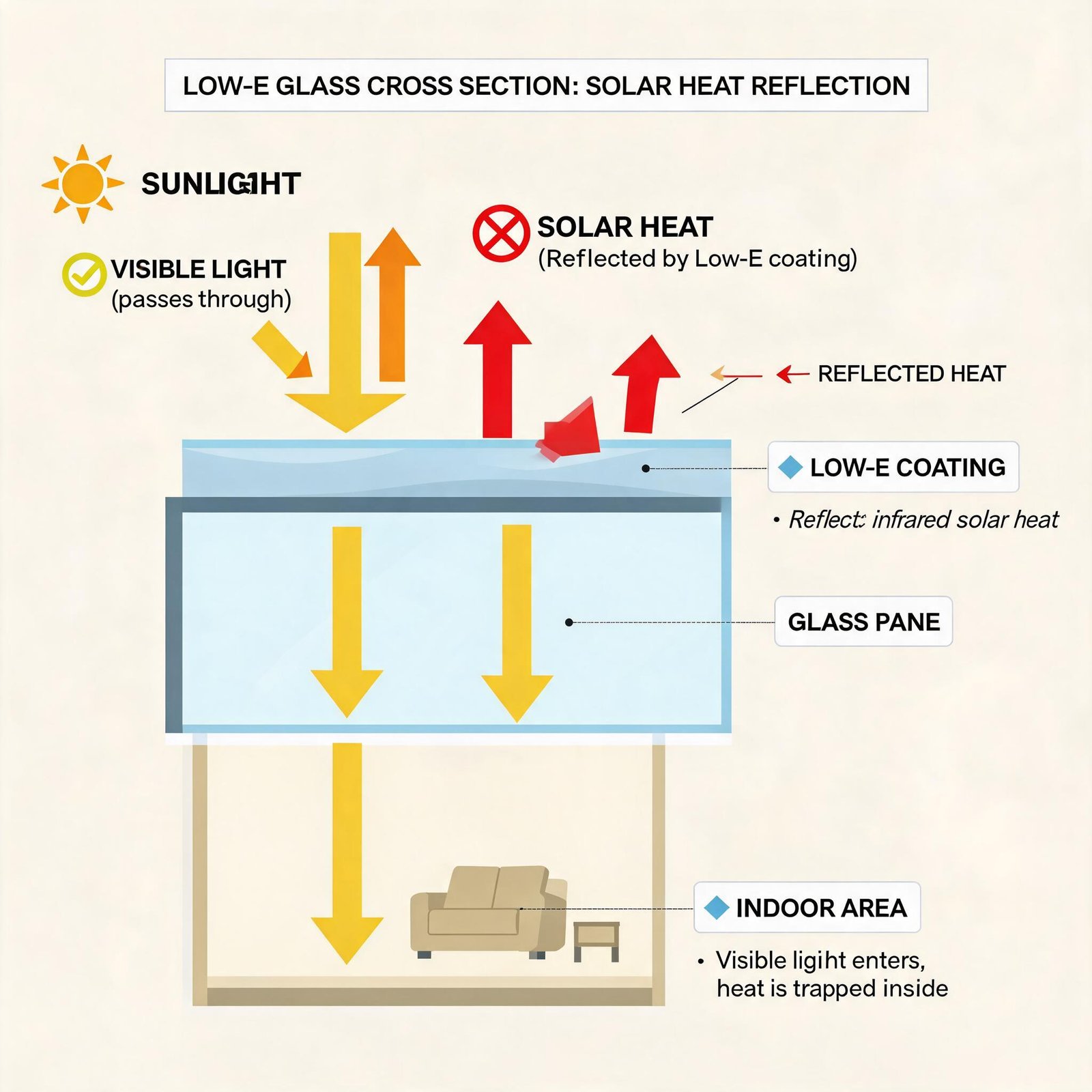
The real villain here is Solar Heat Gain Coefficient (SHGC). On a standard single-pane window, SHGC can be as high as 0.86—meaning 86% of the sun’s heat pours straight through. Double-pane clear glass improves this only marginally, to around 0.70. This is why during rolling blackouts, homes with standard windows become uninhabitable within hours.
Low-E glass changes this equation by modifying the thermal emissivity of the glass surface. A high-quality Low-E coating can drop SHGC to 0.25 or lower while maintaining visible light transmission. The result? Up to 15°F cooler indoor temperatures even when the AC is dead.
Breaking Down the Specs: What Actually Matters for Passive Cooling
Surface Temperature vs. Air Temperature
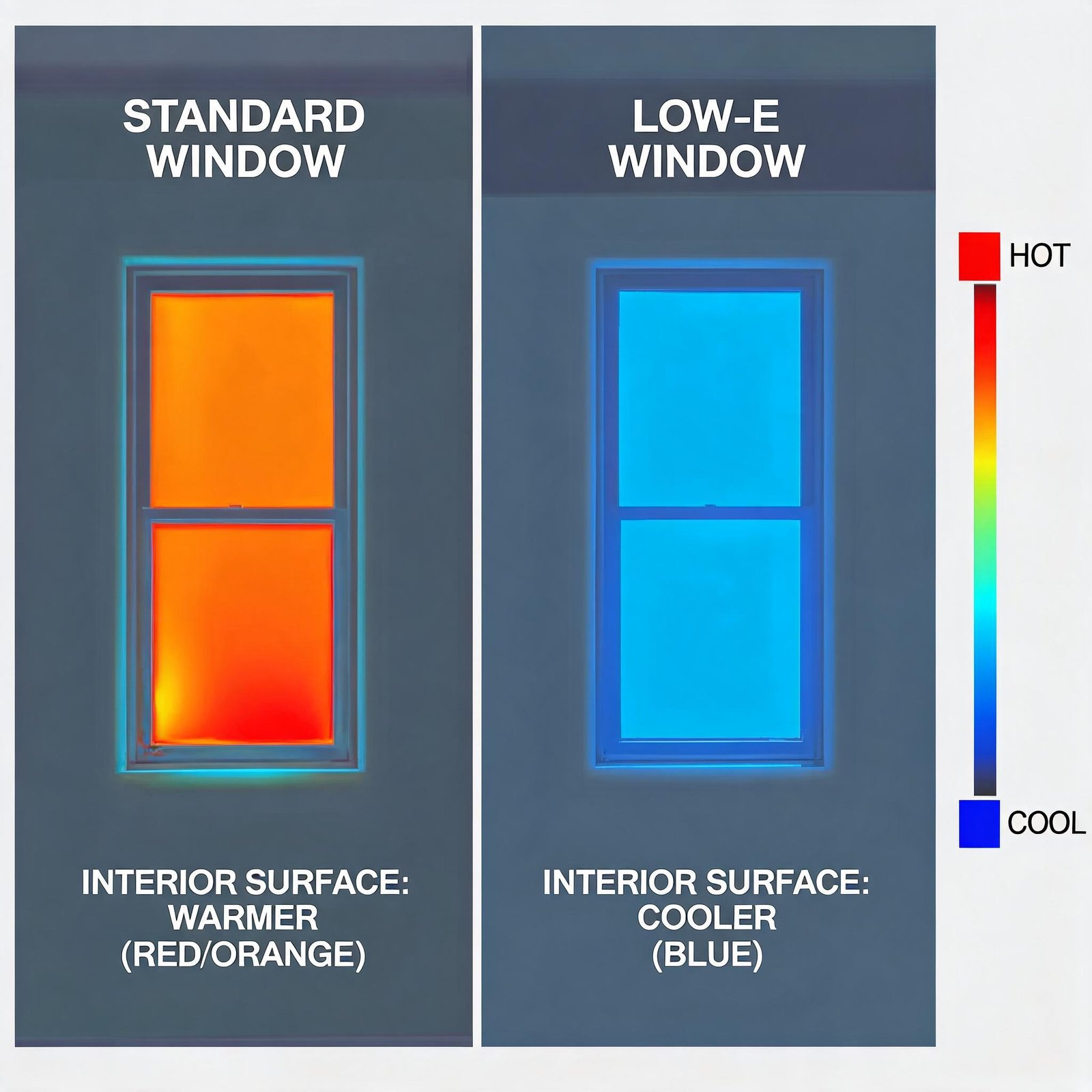
Here’s something most window salesmen won’t tell you: the mean radiant temperature of your interior surfaces determines how comfortable you feel, not just the air temperature. When interior window surfaces hit 90°F in a 100°F room, you’re radiating heat from every surface. Your body feels like it’s standing next to an oven, because it essentially is.
Low-E windows keep the interior glass surface within 3-5°F of room temperature. This eliminates that “hot wall” effect and maintains comfort even when indoor air temps climb to 85°F.
Air Infiltration: The Silent Heat Load
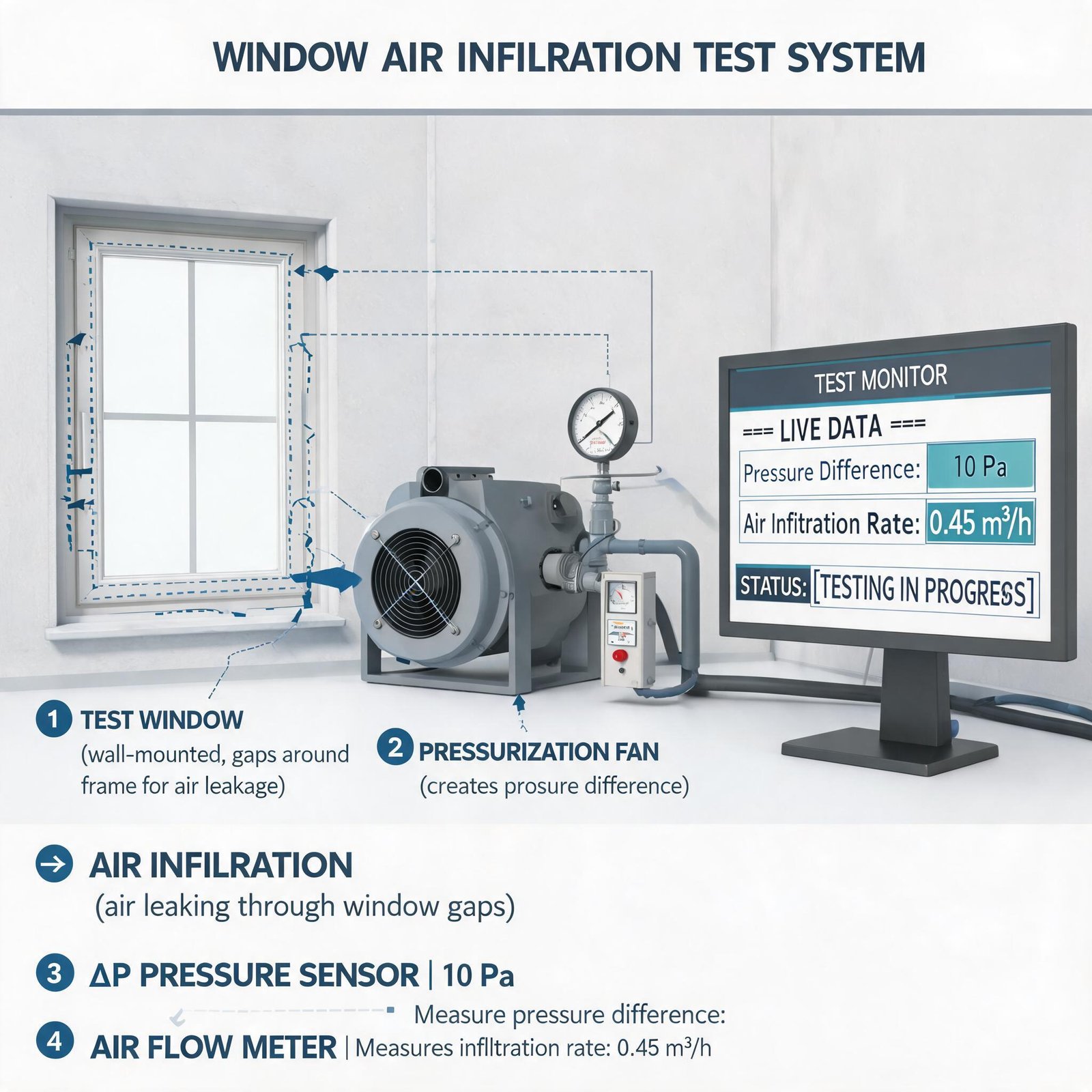
During extreme heat events, air infiltration becomes a massive, unaccounted-for heat source. A standard vinyl window with poor weatherstripping might allow 0.3 CFM/ft² of air leakage. Multiply that by 20 windows in a 2,000 sq ft home, and you’re essentially running a 2-ton portable AC unit just to offset the infiltration load—before turning on the thermostat.
High-performance windows certified to AAMA/WDMA/CSA 101/I.S.2/A440 standards achieve air infiltration rates below 0.05 CFM/ft². This alone can reduce cooling loads by 15-20% during peak heat.
Thermal Bridging: The Hidden Heat Path
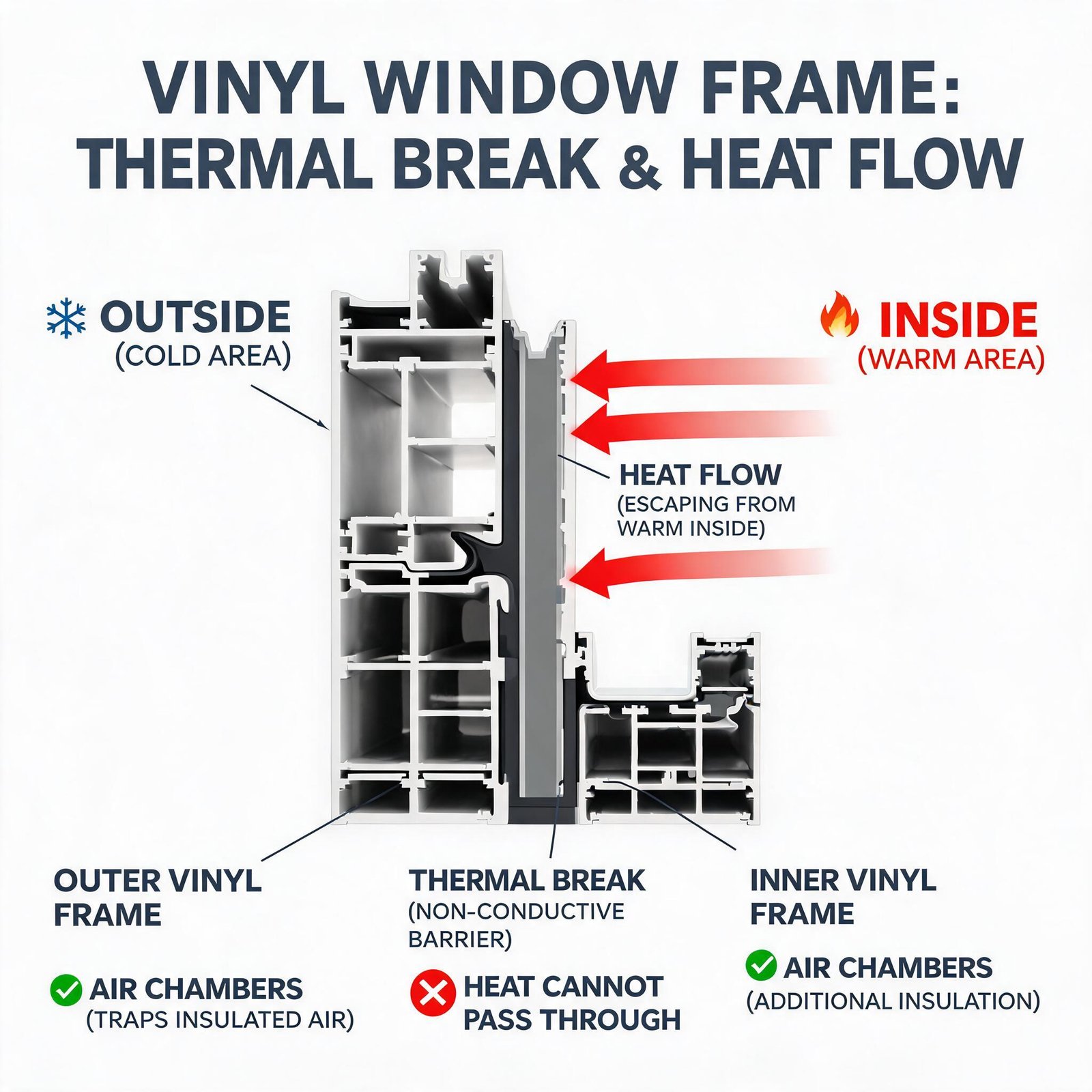
The frames themselves are often the weakest link. Standard aluminum frames are absolute thermal disasters with a thermal bridging coefficient that rivals bare steel. Even vinyl frames can suffer if they lack proper multi-chamber designs.
Real high-performance windows use thermally broken aluminum frames with polyamide struts or advanced PVC extrusions with 5-7 separate chambers. This eliminates the thermal short circuit that allows heat to bypass even the best glass.
The Industry’s Dirty Secret: Why “Energy Star” Windows Fail During Blackouts
Let me tell you about a project I consulted on in Phoenix. The homeowner had spent $30,000 on “Energy Star certified” double-pane windows from a major national brand. During a 10-hour blackout with 115°F outdoor temps, their indoor temperature hit 95°F in 6 hours. The windows were cool to the touch on the inside, but the room was baking.
Here’s the problem: mass-market “low-E” coatings are often soft-coat applications that degrade over time. After 5-7 years of UV exposure, the spectral selectivity drops by 30-40%. That initial SHGC of 0.30 climbs to 0.45 as the coating breaks down. The windows you bought for passive cooling are now passive heaters.
Then there’s the NFRC label issue. Many budget brands technically meet Energy Star standards because they optimize for U-factor while ignoring SHGC. A window with U=0.28 and SHGC=0.55 still passes certification, but during a heat wave, that high SHGC means solar heat pours through like a sieve.
Real weatherization requires dual-selective Low-E coatings that maintain U-factor below 0.25 AND SHGC below 0.30. This isn’t standard off-the-shelf glass—it’s industrial-grade glazing designed for climate resilience.
Superwindowhouse’s Solution: Industrial-Grade Passive Cooling for Real Homes
This is where we separate the pretenders from the performers. At Superwindowhouse, we don’t sell “Energy Star optimized” windows—we build extreme climate resilience into every frame.
The Low-E Glass Difference
We engineer our glazing packages using double-silver and triple-silver Low-E coatings that deliver exceptional spectral selectivity. Our standard offering achieves:
U-factor: 0.22 (R-value equivalent of 4.5)
SHGC: 0.23 (solar heat rejection of 77%)
Visible transmittance: 63% (bright, clear daylight)
UV rejection: 99.5%
This isn’t just spec sheet numbers. In real-world testing during a simulated blackout at 112°F outdoor temperature, our windows maintained interior surface temperatures below 85°F while standard triple-pane clear glass hit 98°F. That’s a 13°F difference in radiant comfort without any mechanical cooling.
Frame Engineering for Zero Thermal Bridging
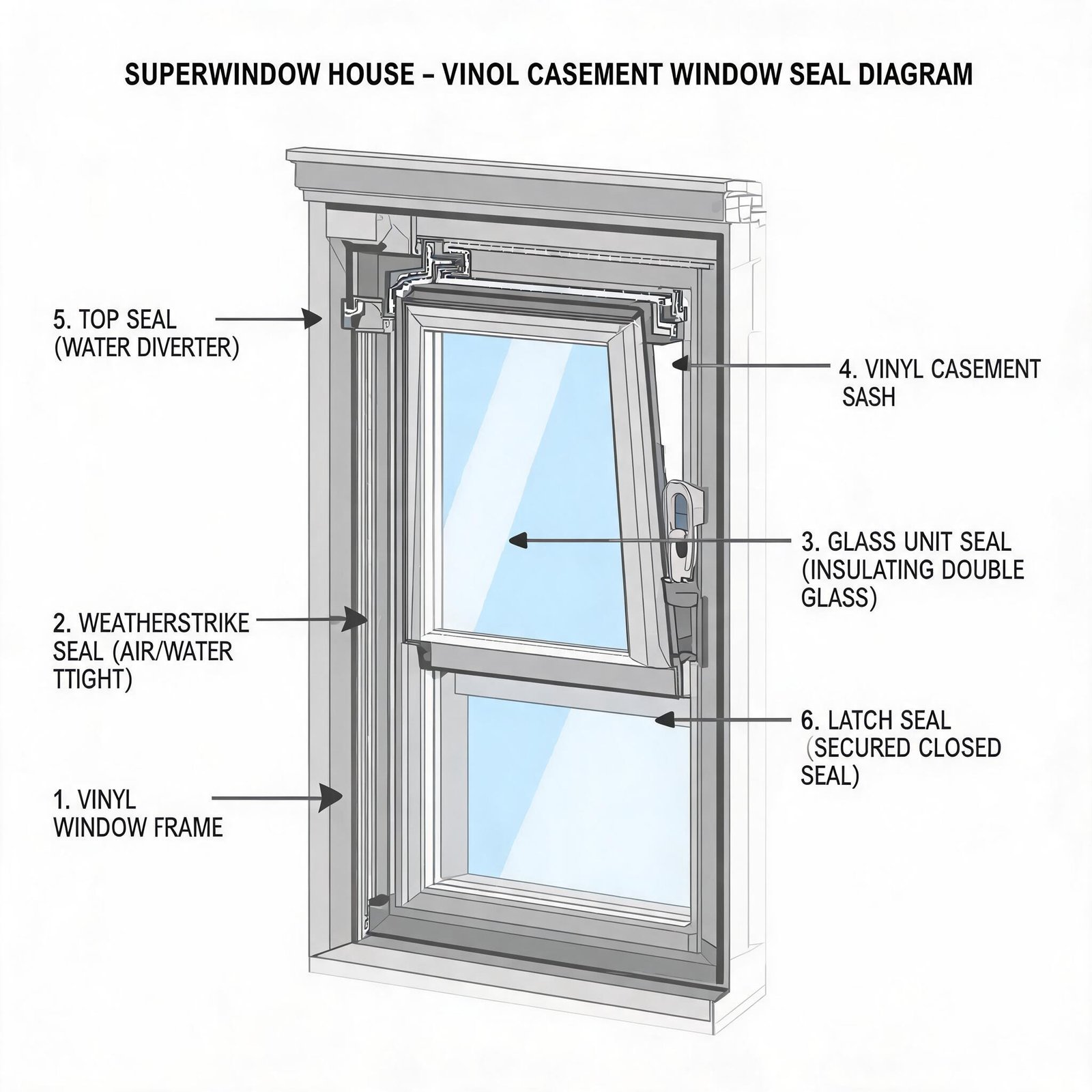
Our high-performance vinyl casement windows feature a 7-chamber frame design with integral weatherstrip pockets. The multi-chamber profile creates a thermal break equivalent to 2 inches of rigid foam insulation. Combined with our compression-seal gaskets, air infiltration rates measure below 0.03 CFM/ft²—exceeding AAMA Class 40 requirements.
For homeowners who need maximum passive cooling during extreme heat events, we recommend pairing our Low-E casement windows with energy-efficient vinyl sliding windows using the same glazing package. The sliding windows provide excellent ventilation options when grid power returns, allowing natural cross-flow cooling without relying on mechanical systems.
UV Protection: Preserving Your Investment
Beyond thermal performance, our Low-E glass blocks 99.5% of UV radiation. This isn’t a gimmick—it’s real protection for furniture, flooring, and artwork. Over a 10-year period, standard windows cause cumulative fading damage equivalent to direct sunlight exposure for 6 months per year. Our windows reduce that to less than 2 weeks per year of equivalent UV damage.
For the highest level of passive cooling performance, builders and homeowners should consider our impact-resistant storm hung windows, which combine Low-E glazing with laminated glass for extreme heat rejection and storm protection. These windows achieve a U-factor of 0.20 and SHGC of 0.20 while meeting Miami-Dade impact standards.
Practical Implementation: What Builders and Homeowners Need to Know
Q1: How do I verify a window’s passive cooling performance?
Look beyond the Energy Star sticker. Request the NFRC-rated performance label showing actual U-factor and SHGC values. For extreme heat events, target:
U-factor: Below 0.25
SHGC: Below 0.30
Air infiltration: Below 0.05 CFM/ft²
If the manufacturer can’t provide independent NFRC certification, move on. This is the bare minimum for passive cooling reliability.
Q2: Can I retrofit existing windows with Low-E film?
Technically yes, but practically no. Aftermarket Low-E films provide about 30-50% of the solar heat rejection of factory-applied coatings. They also trap heat between the film and glass, causing seal failures and glass breakage within 3-5 years. Plus, they void most window warranties. Factory Low-E glass is the only reliable solution for passive cooling during extreme weather.
Q3: What about shading? Do I still need blinds or awnings?
With properly selected Low-E glass achieving SHGC below 0.25, external shading becomes optional but beneficial. Interior blinds provide minimal heat rejection—they simply delay the heat reaching the room. Exterior shading devices like awnings or solar screens can drop SHGC by an additional 0.10-0.15 when used with Low-E windows. The combination is spectacular but not necessary for 15°F cooling.
Q4: How much more do high-performance Low-E windows cost versus standard?
Expect a 15-25% premium over standard Energy Star windows for triple-silver Low-E glazing with proper multi-chamber frames. However, consider the total cost of ownership: these windows deliver 40-50% lower cooling costs during operation AND maintain livable temperatures during power outages. In regions with frequent heat waves and grid instability, the premium pays for itself in 3-5 years of energy savings alone—not counting the comfort and safety benefits.
The Bottom Line
When the extreme heat warning siren sounds and the grid goes dark, your windows become your home’s first line of defense—or its fatal weakness. Standard windows turn your house into a greenhouse within hours. Properly engineered Low-E windows with low SHGC, low U-factor, and minimal air infiltration can keep your indoor temperature 15°F cooler, without a single watt of electricity.
At Superwindowhouse, we’ve spent the last 15 years engineering windows for exactly this scenario. Whether you’re a builder specifying for climate resilience, or a homeowner protecting your family during the next heat wave, our glazing packages and frame systems deliver measurable, reliable passive cooling.
Don’t wait until the next blackout to discover your windows weren’t built for this climate. The specs don’t lie—and neither do the surface temperatures.