The smoke clears. The evacuation order lifts. You return to your Boyle Heights home, relieved the wildfire spared your structure—only to find a shattered window, a ransacked living room, and your family’s valuables gone. This isn’t a hypothetical. In the aftermath of any major wildfire—whether it’s the 2025 Boyle Heights blaze or the 2023 Maui fires—looters move in faster than insurance adjusters. While fire departments focus on containment, criminals focus on vulnerability. And the single most vulnerable point of entry? Your windows.
As a general contractor who has rebuilt more homes after disaster-related break-ins than I care to count, I’ll tell you straight: if your windows don’t have multipoint locking systems and impact-resistant glazing, you’re leaving the front door wide open—literally. Let me show you why.
The Anatomy of a Post-Fire Break-In
When a wildfire forces mass evacuations in Boyle Heights, neighborhoods empty for days or weeks. Opportunistic thieves know this. They also know that standard single-lock windows—the kind found in 80% of older homes—are a five-second job to pop open with a screwdriver or crowbar.
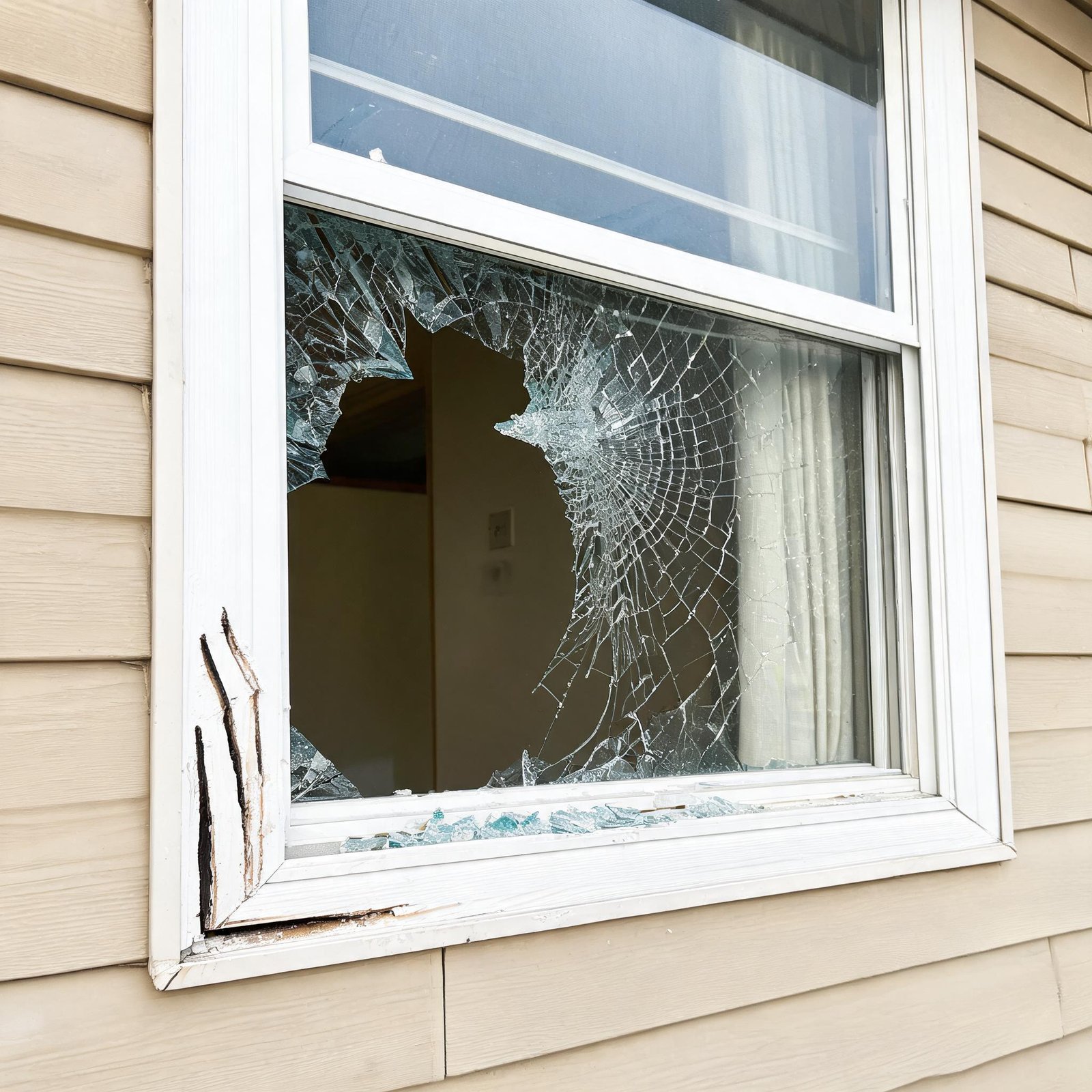
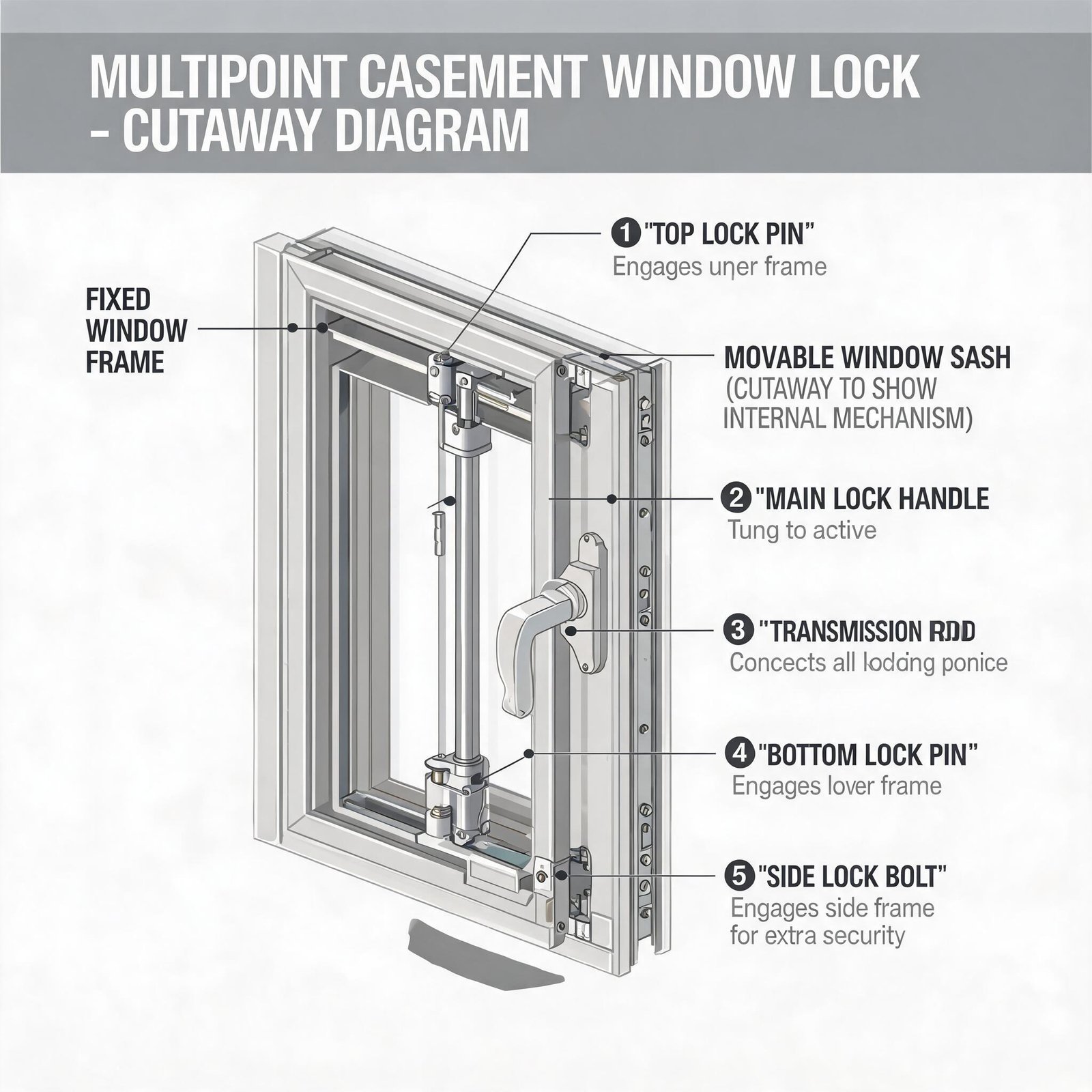
Standard windows rely on one central locking point. Apply leverage at the opposite corner, and the sash bends, the lock disengages, and you’re inside. Multipoint locking systems, on the other hand, engage at three, four, or even five points along the window frame. This distributes force evenly, making it nearly impossible to pry open without destroying the entire frame.
But there’s another layer to this story: glass.
Why Tempered and Laminated Glass Matter in a Fire Aftermath
It’s not just about locks. During a wildfire, embers can land on windows and cause thermal stress fractures. Standard annealed glass cracks at around 150°F (65°C) of differential temperature. A firebrand landing on a cold window? Instant failure. Once that glass breaks, you’ve got an open hole—not just for smoke and embers, but for anyone who wants to crawl through.
Tempered glass is four to five times stronger than annealed glass and can withstand rapid temperature changes up to 400°F (200°C) before fracturing. Even better, when it does break, it crumbles into small, harmless pebbles rather than jagged shards that could injure someone or create an easy entry point.
For maximum security, laminated glass—a PVB interlayer sandwiched between two panes—holds together even when cracked. A thief can hit it with a sledgehammer repeatedly; the glass may spiderweb, but it won’t create a hole.
The Industry Deep Dive: What Actually Works
Let’s get technical. The building science behind a true security window involves three critical components working together:
1. Multipoint Locking Hardware
Most residential windows sold by big-box retailers use a single-point cam lock. These are tested to maybe 100–150 pounds of force before failure. A multipoint system—like those found on European-style casement or tilt-turn windows—engages steel bolts at the top, bottom, and middle of the sash. This distributes the load across the entire frame and increases forced-entry resistance to over 600 pounds.
2. Impact-Resistant Glazing
The standard for security glazing in residential applications is ASTM F588, which tests windows against forced entry using a crowbar, screwdriver, and hammer. A window that passes this test will resist a determined attacker for at least five minutes. Compare that to standard single-pane glass, which fails in under five seconds.
3. Non-Flammable Aluminum Exteriors
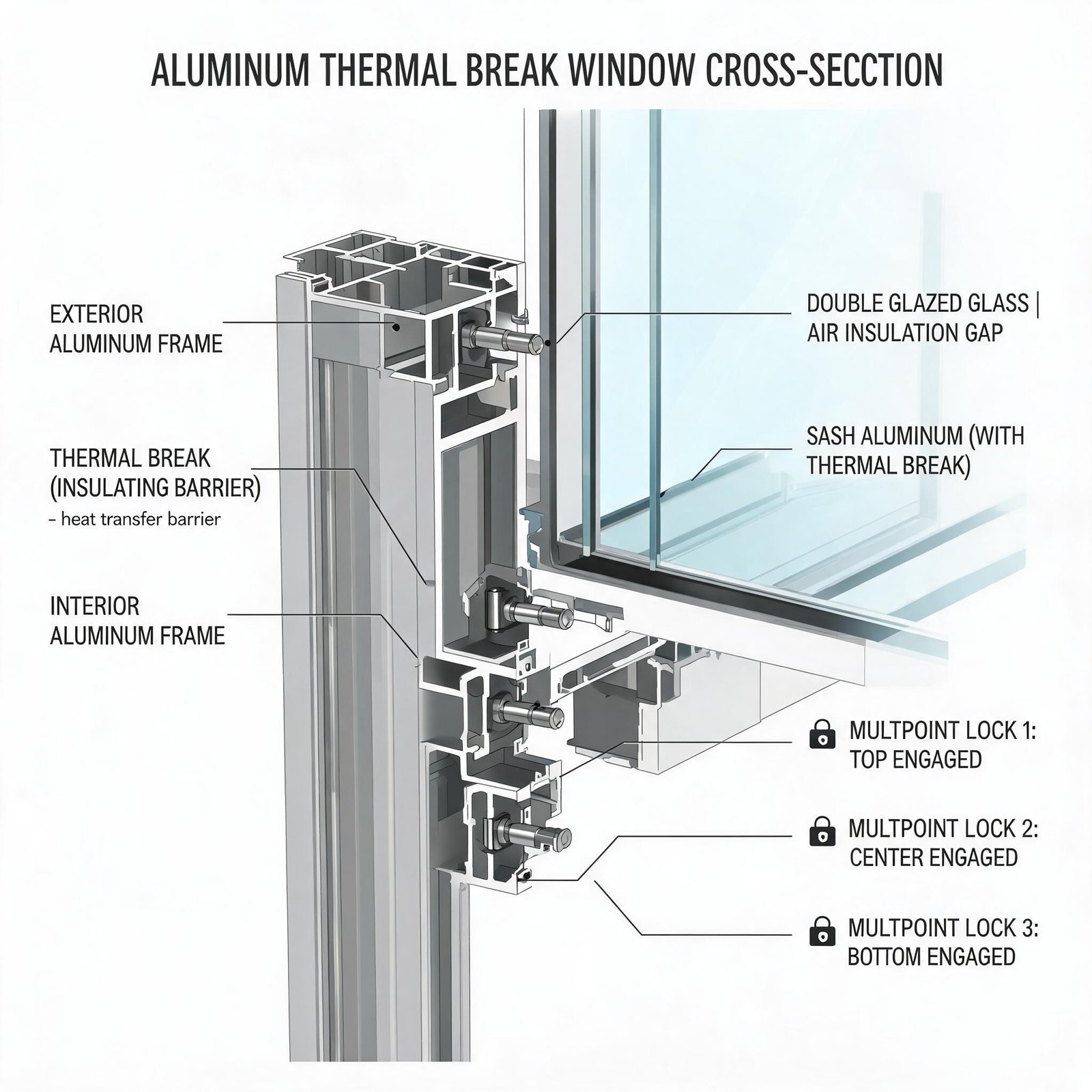
During a wildfire, the exterior frame material matters. Vinyl windows can warp or melt when exposed to radiant heat from a nearby structure fire. Aluminum, on the other hand, is non-combustible. A thermally broken aluminum frame not only resists heat but also prevents thermal bridging, keeping your interior cool while the outside is literally on fire.
What Big Brands Won’t Tell You
Here’s the dirty secret of the mass-market window industry: most “security” windows sold in the U.S. are marketing gimmicks.
I’ve pulled apart windows from major national brands that claimed to have “reinforced” locks, only to find a plastic cam lock with a metal insert—barely stronger than what’s in a $99 home center special. They pass minimum code requirements for egress (which is about 5.7 square feet of opening) but fail completely when it comes to actual break-in resistance.
Another hidden problem: thermal expansion. During a wildfire, the temperature can swing 100°F in minutes. Standard aluminum windows with non-thermally-broken frames expand and contract unevenly, causing the locking mechanism to misalign. Your multipoint lock is useless if the bolts no longer line up with their strike plates.
And let’s talk about delivery. If you’re a contractor rebuilding after a disaster, you need windows fast. Big brands quote 8–12 weeks for custom sizes. That’s unacceptable when your client is living in a hotel and the job site is vulnerable to further damage.
Superwindowhouse’s Full-Spec Solution
This is where superwindowhouse.com changes the game. We don’t build “good enough” windows. We build industrial-grade security enclosures that happen to look like beautiful residential fenestration.
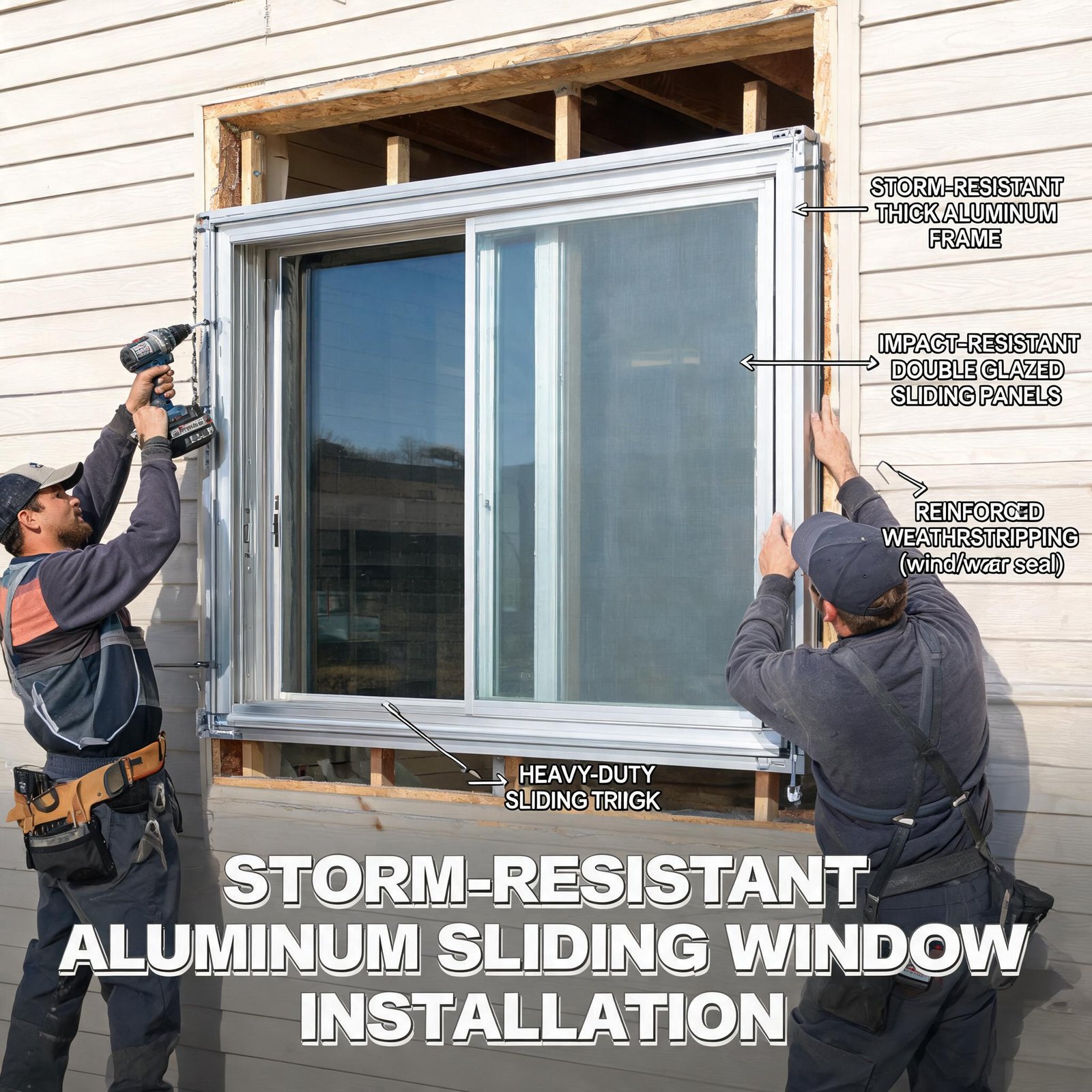
Our Impact-Resistant Storm Hung Windows feature a heavy-duty aluminum frame with a thermally broken profile that stops thermal bridging cold. The glazing is ASTM F588-compliant laminated glass with a PVB interlayer. When a thief hits it, the glass holds. When embers land on it, the glass holds. When the frame heats up and cool down cycles, the thermal break ensures the locking mechanism stays aligned.
But the real star is the multipoint locking system. On our casement and hung windows, we use stainless steel, compression-style locking bolts that engage at three points. For our sliding windows, we incorporate a concealed shoot-bolt system that locks the vent into the frame at top and bottom, making it impossible to lift the sash out of the track—a common weak point in standard sliders.
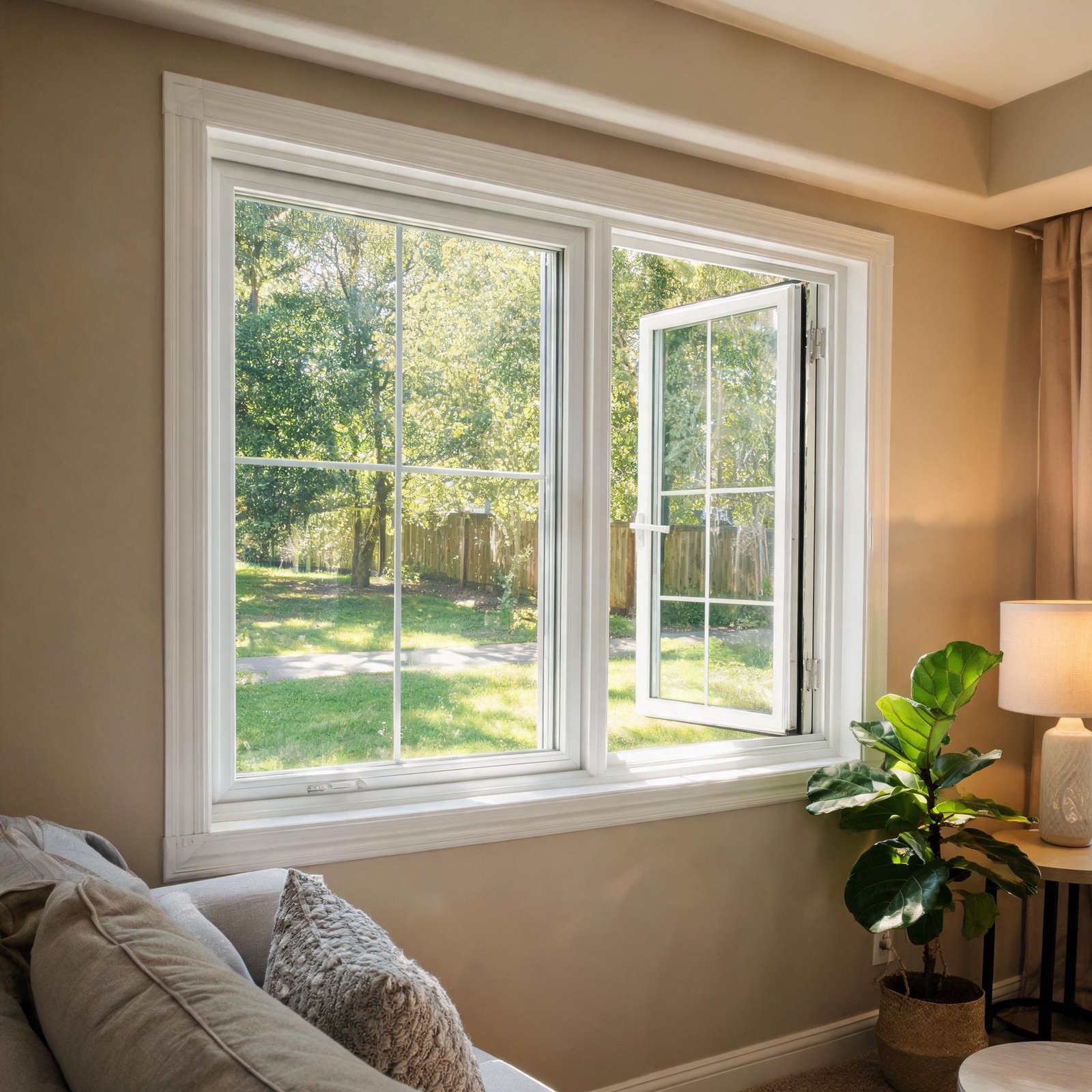
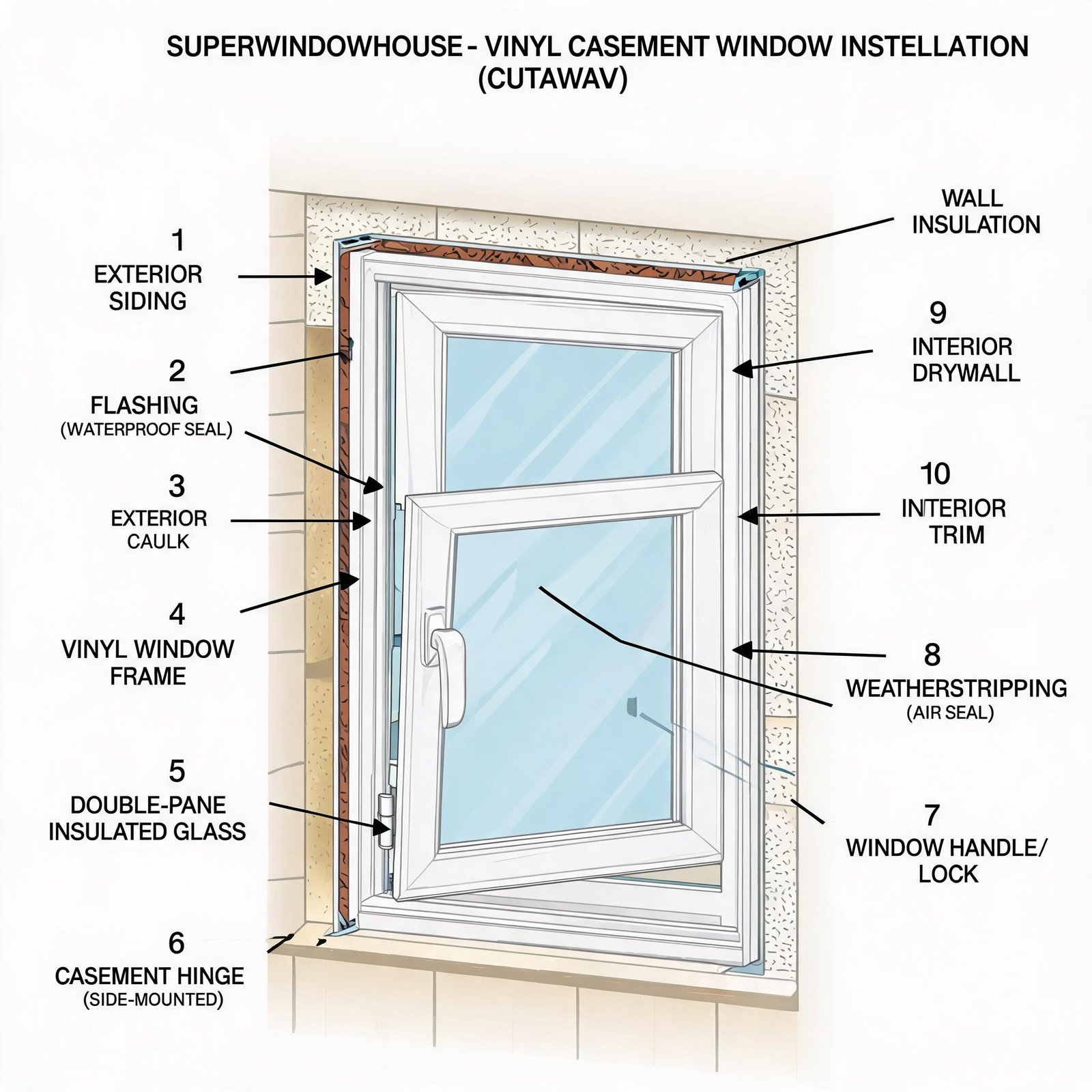
For contractors working on Boyle Heights rebuilds, we also offer our High-Performance Vinyl Casement Windows with a reinforced steel core in the sash and a multi-point locking system. These meet ENERGY STAR Most Efficient standards while delivering forced-entry resistance that exceeds building code requirements.
And if you’re looking for a true storm-and-security solution, our Aluminum Thermally Broken Sliding Windows combine thermal efficiency with a non-combustible exterior. These windows are designed for high-risk wildfire zones where both fire resistance and break-in prevention are non-negotiable.
B2B Project Implementation Guide
For contractors and property managers: here’s how to spec and install security windows that actually work.
Question 1: How do I verify a window’s forced-entry rating?
Ask for the test report per ASTM F588. Don’t accept a generic “security tested” claim. Look specifically for the grade (Grade 10 is the highest residential grade). If the manufacturer can’t provide a test report, walk away.
Question 2: What about rough opening sizes?
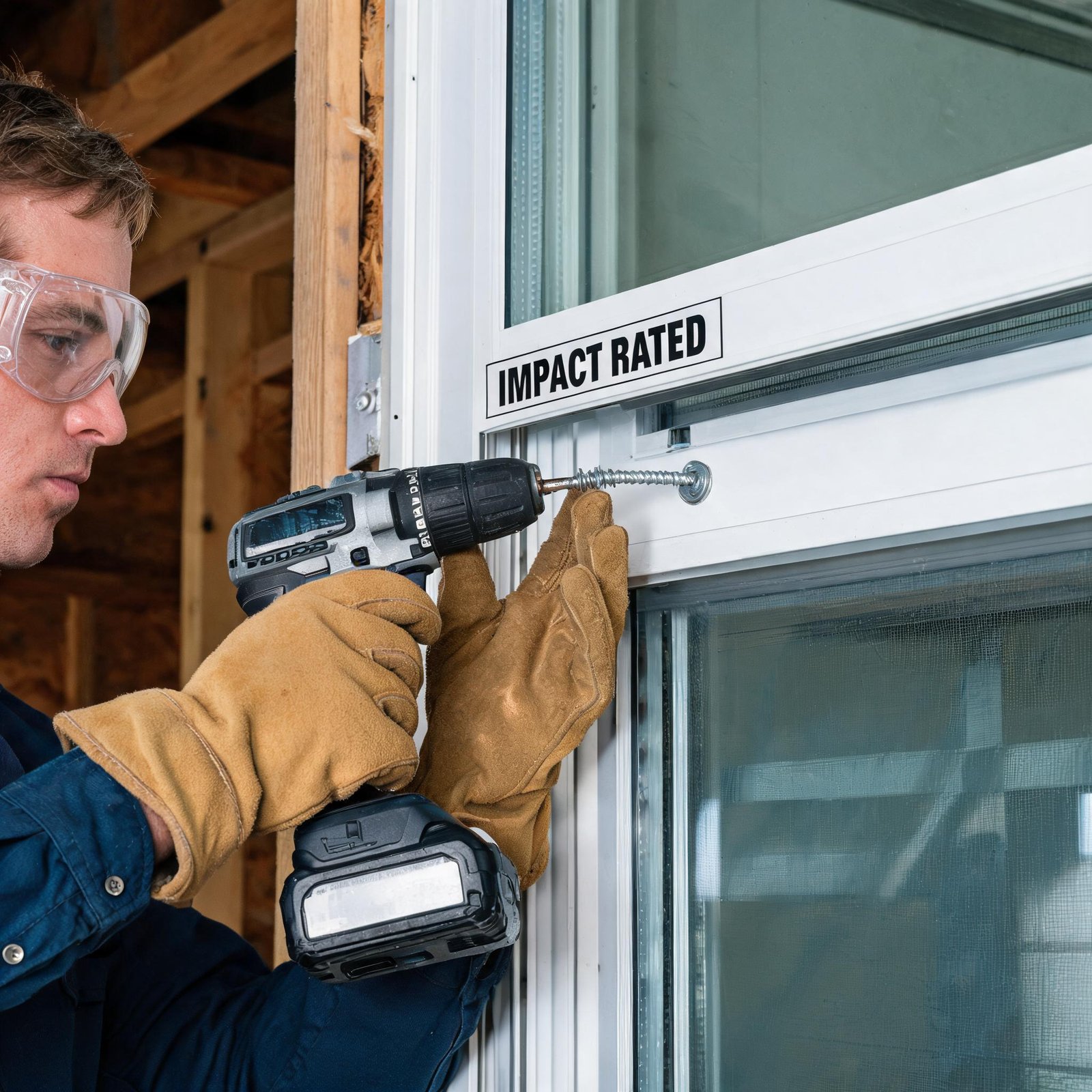
Security windows with reinforced frames require tighter tolerances. Standard rough openings for 2×4 framing are fine, but you must use structural shims at every locking point. If your framer leaves a 1/2-inch gap at the top, the locking bolts won’t engage properly. Specify a maximum 1/4-inch gap at all four corners.
Question 3: How do I ensure proper flashing for post-fire rebuilds?
After a wildfire, the surrounding structure may have heat damage. Always remove 12 inches of siding around each rough opening to inspect for charred sheathing. Install a new, continuous flashing flange (also called a nailing fin) with butyl tape at all corners. Our windows come with integrated nail fin systems that simplify this process. For a detailed guide, check our product specs at superwindowhouse.com.
Question 4: What’s the typical lead time for custom security windows?
For standard sizes, we ship within 2–3 weeks. For custom sizes (which is common in older Boyle Heights homes), add 1–2 weeks. That’s half the industry average. We keep inventory of extruded frames and laminated glass specifically for disaster response projects.
The Bottom Line
The Boyle Heights fire isn’t the first disaster to expose the vulnerability of standard residential windows, and it won’t be the last. Every time a wildfire, hurricane, or civil unrest event occurs, we see the same pattern: homeowners who invested in security windows are protected; those who didn’t become victims a second time.
Don’t let the looters win. Spec windows that fight back.
For more technical specifications, product certifications, or to request a quotation for your rebuild project, visit superwindowhouse.com. We ship across the continental U.S., and our engineering team offers free CAD support for complex installations.
Superwindowhouse – the only name you need when your home’s security depends on what’s between you and the outside world.