Let’s cut through the bullshit: if your room is overheating and you’re reaching for insulation paint, you’re treating a gunshot wound with a Band-Aid. I’ve been in this trade for 15 years, and I’ve walked into hundreds of homes where homeowners spent thousands on radiant barrier paint, foam boards, and reflective attic coatings—only to find that the real culprit was sitting right there in the wall opening, letting in more solar heat than the entire roof combined. The physics doesn’t lie: glass is the weakest link in your thermal envelope. And if you live in a hot climate, your windows aren’t just a minor contributor—they’re the primary heat source.
Why Insulation Paint Can’t Fix a Bad Window
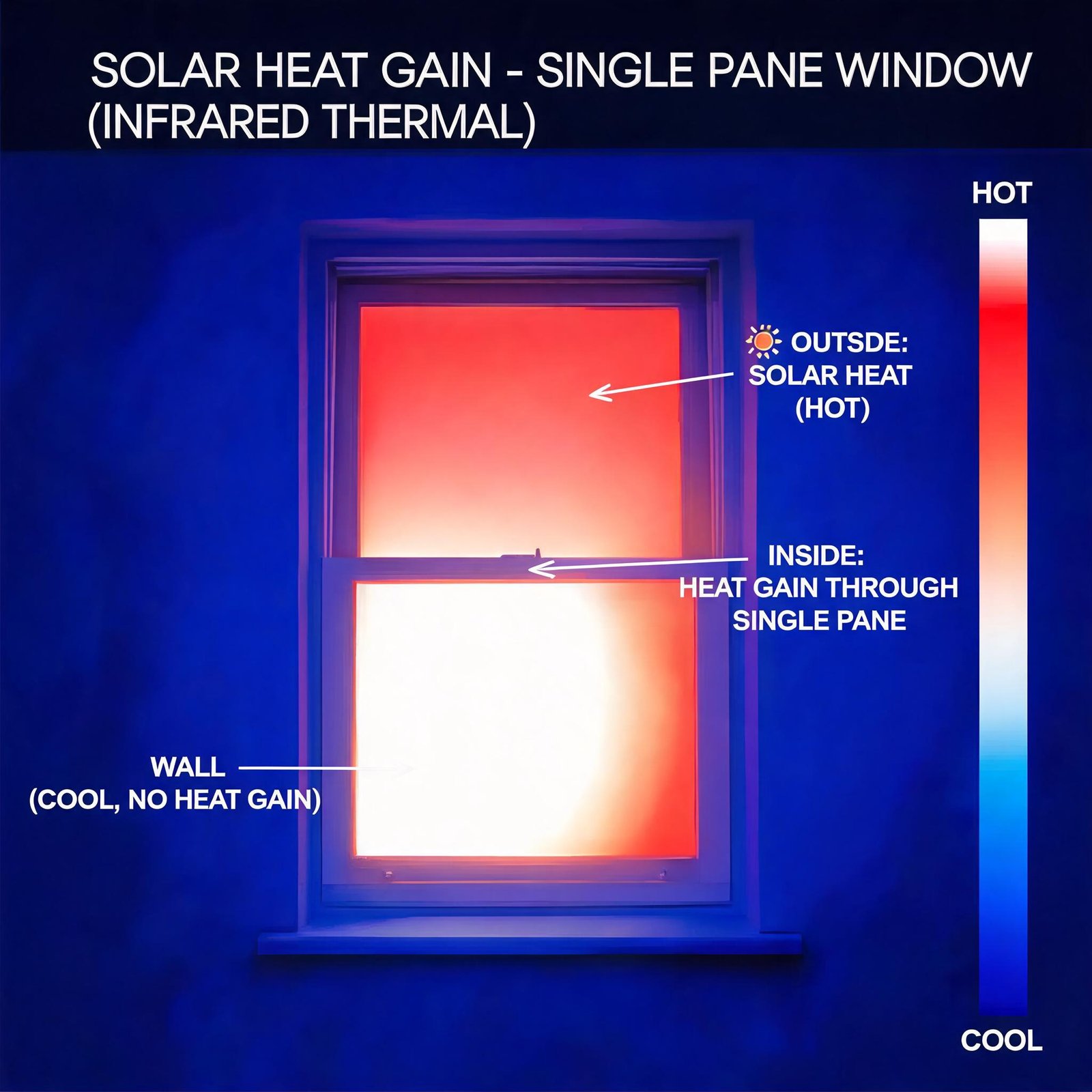
Here’s the hard truth that most paint manufacturers won’t tell you: insulation paint—whether it’s ceramic microsphere loaded, reflective, or “low-E” in a can—has an R-value that’s laughable compared to real building science. At best, a coat of insulation paint adds R-1 or R-2 to your wall. Meanwhile, a single-pane aluminum window has an R-value of about R-0.9. That’s worse than a sheet of drywall. But the real problem isn’t just conductive heat transfer—it’s solar radiation.
The sun blasts roughly 1,000 watts per square meter onto your south-facing walls. A standard clear glass window transmits 70% to 80% of that energy directly into your living space. That’s why your room turns into an oven by 2 PM even if your walls have R-30 insulation and your attic has R-60. The windows are the open door for heat. And no amount of paint on your interior drywall is going to stop that.
So when a Reddit user posts “Room overheating problem shows need for insulation; windows are major heat source,” they’re exactly right—but the solution isn’t more wall insulation or paint. It’s replacing the windows with a proper solar-control system.
The Physics of Triple-Pane Low-E Windows with Argon
Let’s geek out for a second. A triple-pane window isn’t just three panes of glass slapped together. It’s a carefully engineered thermal system that uses multiple glazing layers, low-emissivity (Low-E) coatings, and gas fills to do what insulation paint claims but fails to achieve: block heat without blocking light.
Here’s how it works. Each pane of glass has a microscopically thin Low-E coating that reflects long-wave infrared radiation—the kind of heat that makes your furniture radiate warmth back at you. But the key for hot climates is the selective nature of these coatings. Modern solar-control Low-E coatings are tuned to block short-wave solar radiation while allowing visible light to pass. That’s how you get a room that’s bright but not hot.
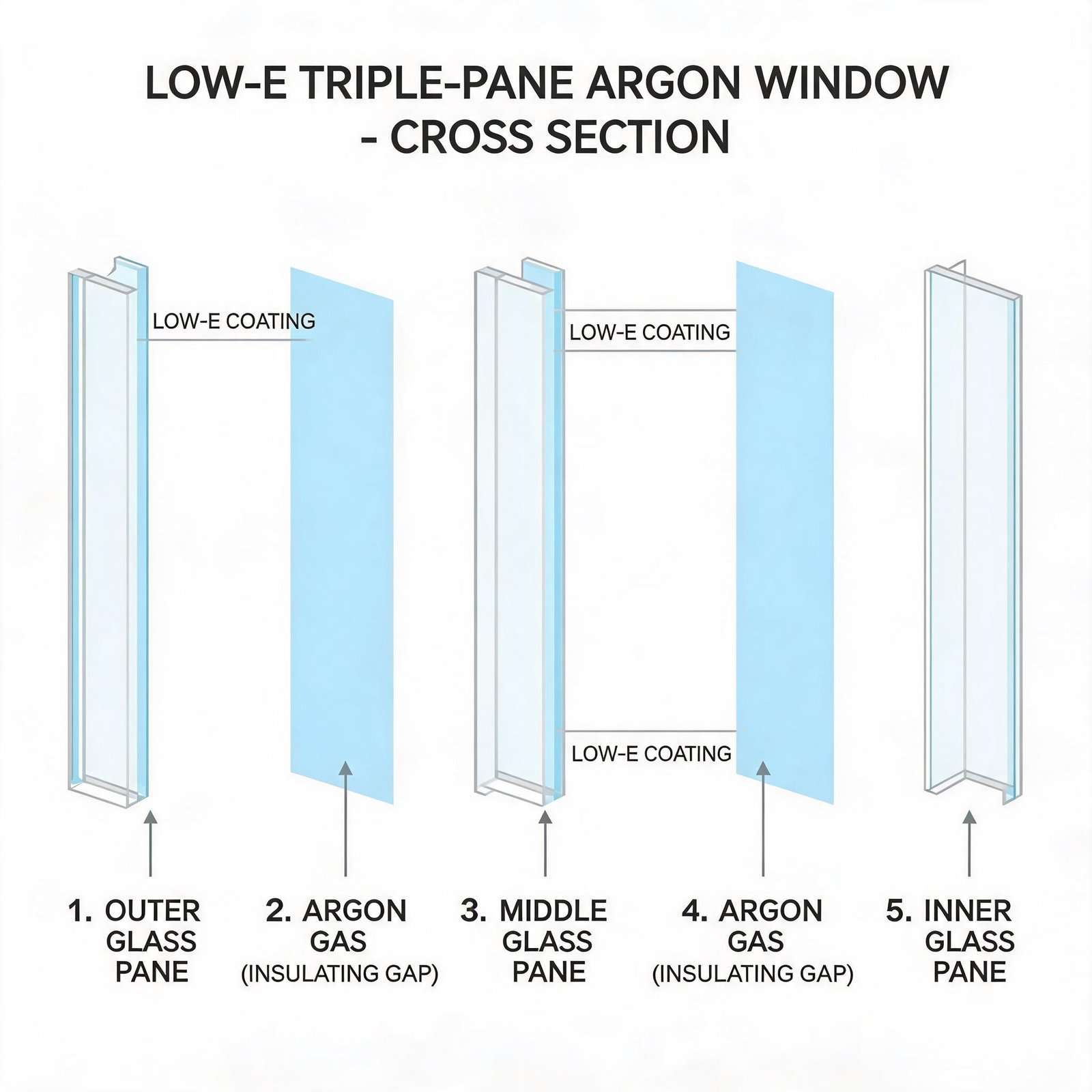
Now add argon gas between the panes. Argon has a lower thermal conductivity than air—about 30% lower at standard temperatures. This reduces the heat transfer from the warm outdoor glass to the cooler indoor glass. But the real magic happens when you triple-glaze. The center-of-glass U-factor drops to around 0.15 BTU/h·ft²·°F—compared to 1.0 for single-pane clear glass. That’s a 85% reduction in conductive heat loss and gain.
But wait—the Solar Heat Gain Coefficient (SHGC) is where the rubber meets the road for hot climates. A good solar-control triple-pane window will have an SHGC of 0.25 or lower. That means 75% of the sun’s heat is reflected away from your interior. Insulation paint? It doesn’t even have an SHGC rating because it doesn’t address solar radiation directly. It’s a joke.