Introduction: The Wake-Up Call No One Expected
Let’s cut the bullshit.
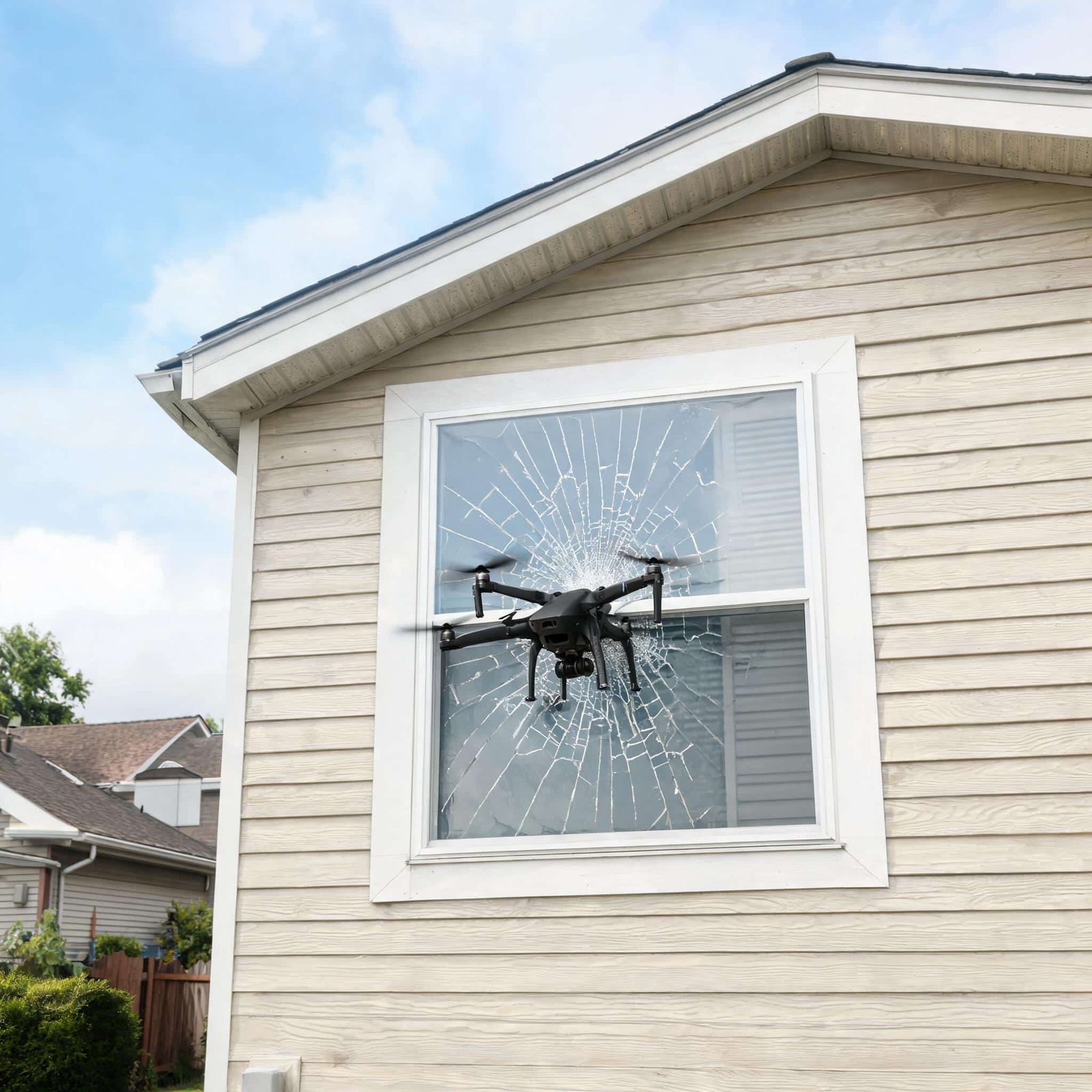
When I first heard the reports of a JetBlue drone collision near JFK, my immediate thought wasn’t just about aviation safety—it was about the thousands of windows sitting vulnerable in homes across Queens, Brooklyn, and Nassau County. That drone didn’t miss residential airspace by much. And if it had come down, those carbon-fiber blades at 150 mph would have punched through standard vinyl windows like tissue paper.
I’ve been in this trade for 15 years. I’ve seen what a Category 2 hurricane does to builder-grade windows. I’ve pulled shattered frames out of demolition bins after freak hailstorms. But drone debris? That’s a new beast—and it demands a harder look at what’s sitting in your rough openings right now.
If you live within a 5-mile radius of a major airport, or in any high-rise near flight paths, your windows are no longer just about energy efficiency. They’re about survival against the unexpected. Here’s the hard truth: most mass-market windows will fail under projectile impact. And the fix isn’t cheap, but it beats replacing your entire living room after a drone fragment comes through at terminal velocity.
The Physics of Flying Debris: Why Your Window Is the Weak Link
Let’s talk about what actually happens when a 5-pound drone (or its fragment) hits a residential window at 100+ mph.
The Three Failure Modes
- Puncture Failure: The leading edge of a spinning drone blade creates a concentrated point load. Standard double-pane glass—usually 3mm thick—shatters instantly. The frame buckles because it’s designed for wind load, not impact.
- Glass Spallation: Even if the glass doesn’t fully break, the inner pane can delaminate or throw dangerous shards inward. This is the silent killer—your window looks intact, but the seal is compromised, and you’ve got a safety hazard.
- Frame Dislodgement: Cheap vinyl frames with single-screw fasteners at the jamb can pop out of the rough opening entirely under shock load. I’ve seen this with $200 windows during a nor’easter. Now imagine the same force from a high-velocity drone.
What the Codes Don’t Tell You
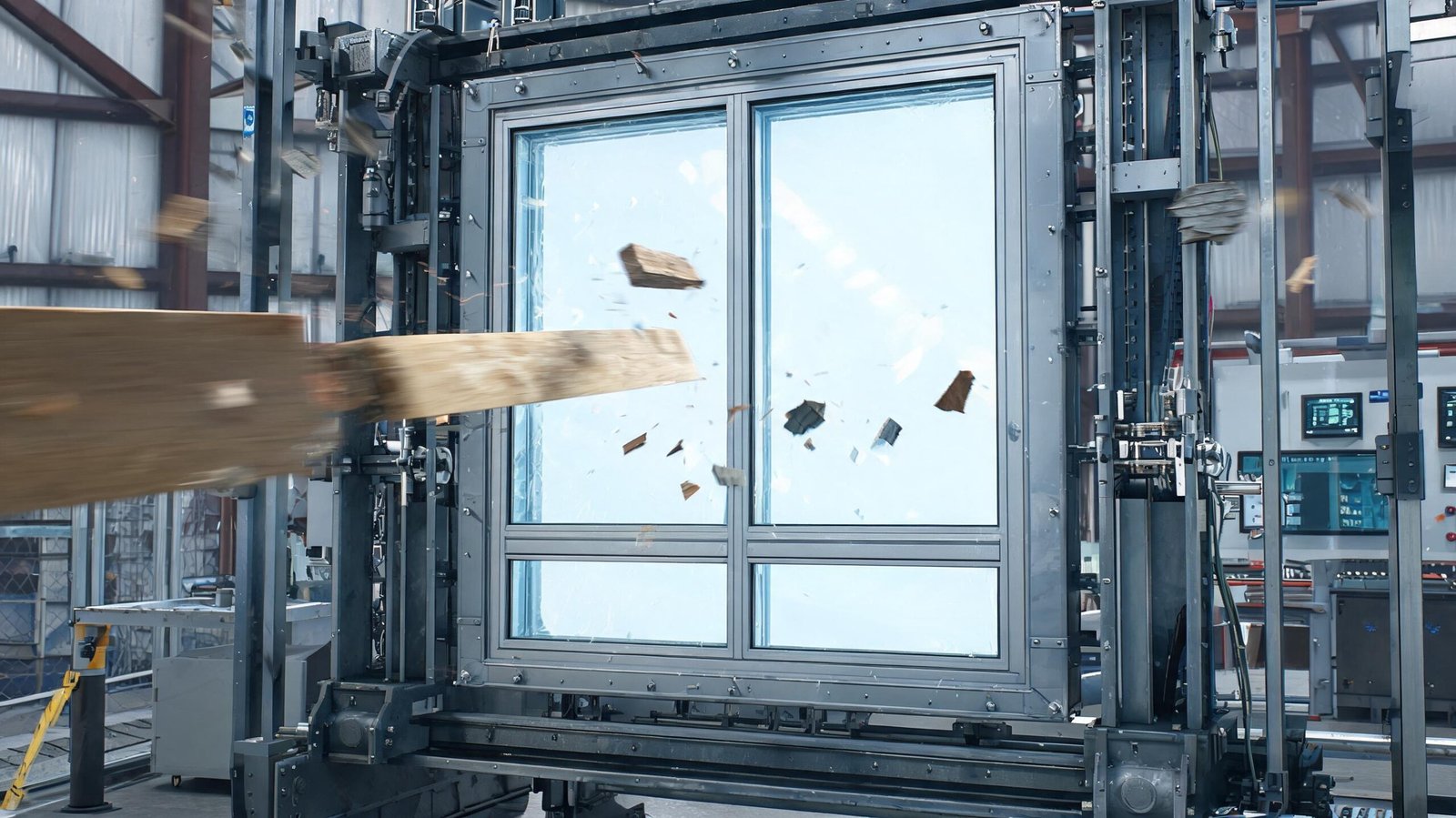
Most residential windows are tested to ASTM E1886 and E1996 for missile impact—but only in hurricane-prone zones. If you’re in New York, Chicago, or any non-coastal metro, your local building code likely only requires basic wind load ratings. That means your window meets Miami-Dade standards only if you paid for it. Most didn’t.
Here’s the uncomfortable reality: a drone strike is high-velocity, low-mass impact—similar to what hurricane missile testing simulates with a 9-pound 2×4 traveling at 34 mph. But a drone fragment at 100+ mph has 15 times the kinetic energy. Your standard window isn’t designed for that.
What the Big Brands Won’t Tell You About Impact Protection
I’ve installed windows from every major manufacturer in North America. Here’s what I’ve learned the hard way:
1. “Impact-Resistant” Is Often a Marketing Label
Many mass-market brands slap an “impact-resistant” sticker on windows that use standard annealed glass with a laminated interlayer. That’s fine for mild hail—but against high-velocity debris, it can delaminate. The real deal requires PVB (polyvinyl butyral) interlayers with bonded-in-place glazing, not just adhesive tape.
Superwindowhouse addresses this with our Impact-Resistant Storm Hung Windows: these use a full PVB laminate system and mechanically fastened glazing stops that keep the glass locked in the frame even under catastrophic load. Check the spec sheet—these are factory-tested to ASTM E1996.
Impact-resistant storm hung windows for high-debris zones are engineered for this exact scenario.
2. Frame Material Matters More Than Glass
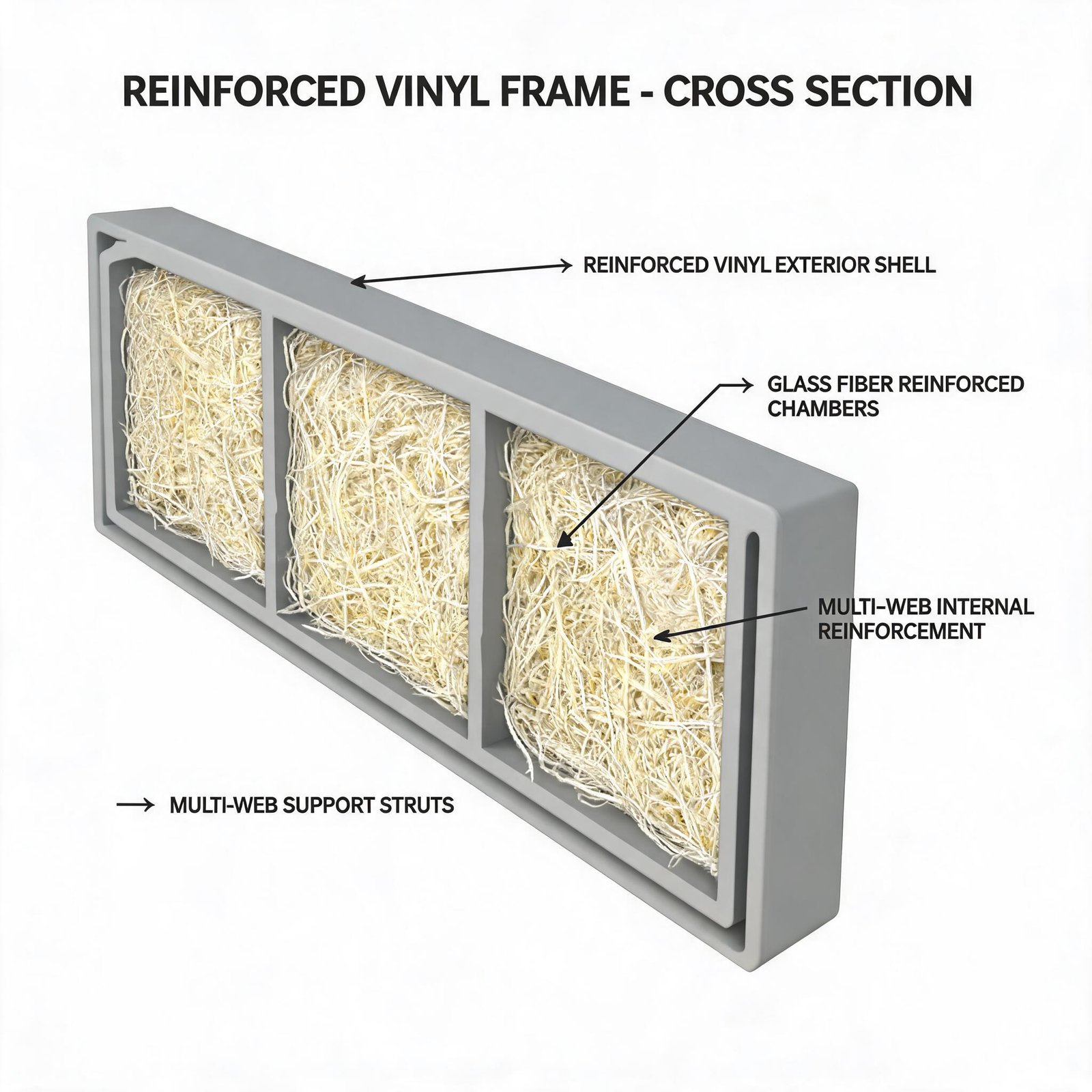
Most contractors focus on glass thickness and forget the frame. A cheap vinyl frame with a single hollow chamber will buckle under lateral impact. You need multi-chambered extruded profiles with steel or aluminum reinforcement.
For high-risk applications, I recommend aluminum thermally broken windows. The thermal break isn’t just for insulation—it adds structural rigidity that prevents frame distortion under impact.
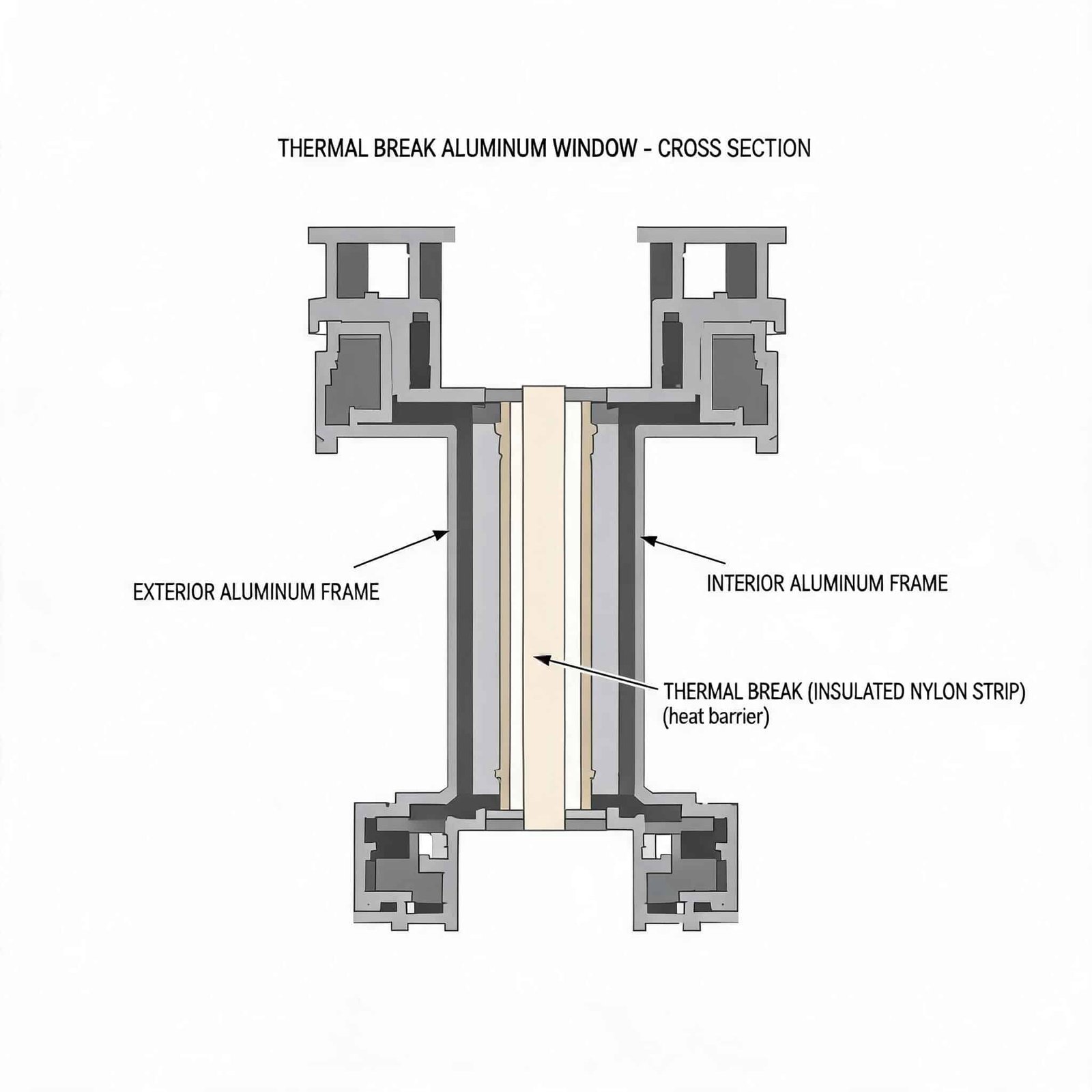
Our Aluminum Thermally Broken Sliding Windows are a top-tier choice for homeowners near flight paths. The multi-chamber design and reinforced meeting stiles provide resistance that standard sliding windows simply can’t match.
Aluminum thermally broken sliding windows with impact glass are available in custom sizes for your rough opening.
3. Installation Is Where Most Jobs Fail
I can’t tell you how many times I’ve seen a high-end window fail because the installer used cheap foam backer rod and forgot the flashing tape. For impact-rated windows, the rough opening must be perfectly square, and the flashing flange (nail fin) must be integrated with the WRB (weather-resistant barrier) system.
If your window isn’t properly anchored to the framing with structural screws at 16-inch intervals, the impact load transfers to the weakest point—usually the shim. A 0.25-inch gap in the rough opening can cause catastrophic blowout under stress.
Your Defense System: What Superwindowhouse Brings to the Table
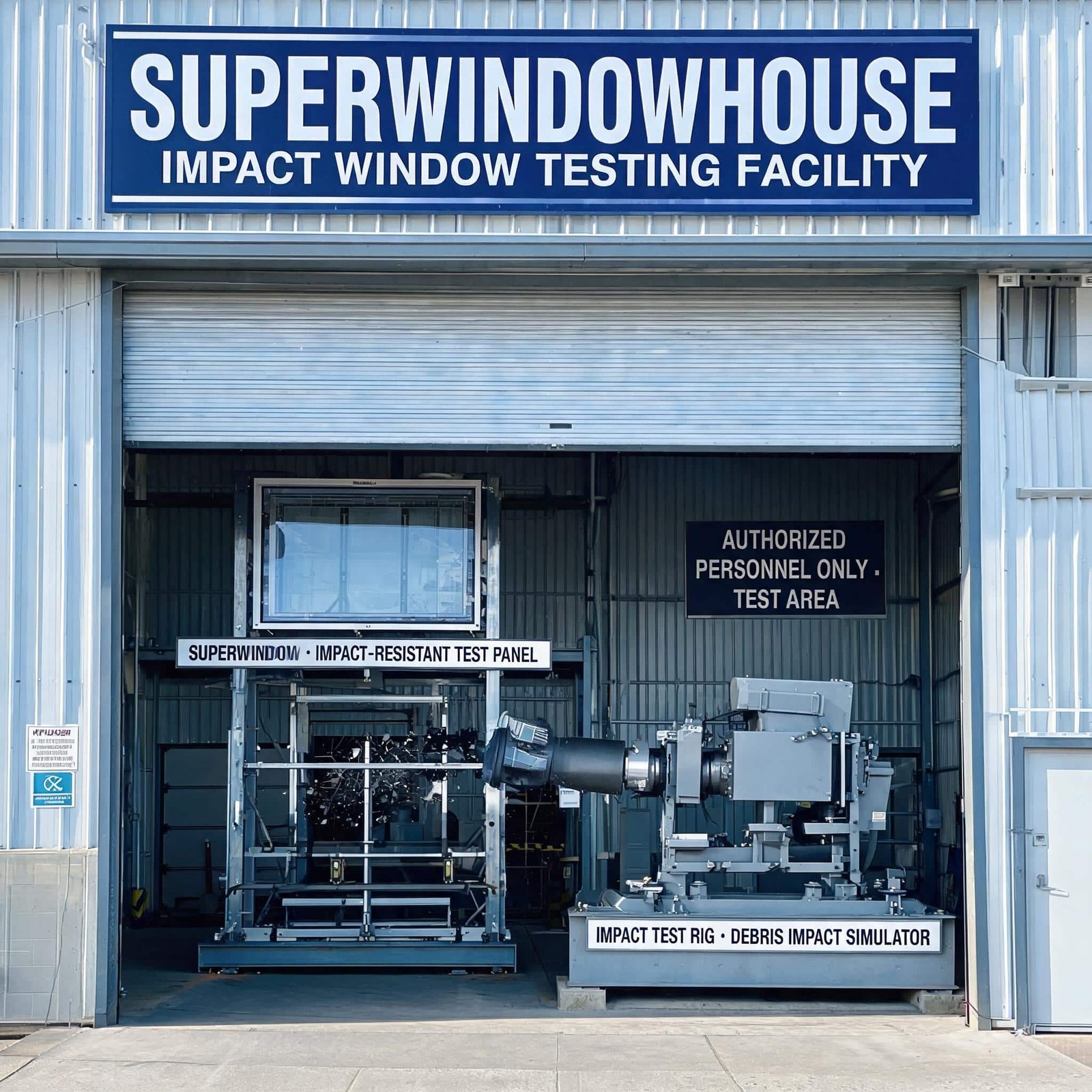
Here’s the reality: you don’t need a bunker. You need a window system that can absorb one significant impact event—from a drone fragment, roof tile, or tree branch—and continue protecting your home.
Our Industrial-Grade Approach
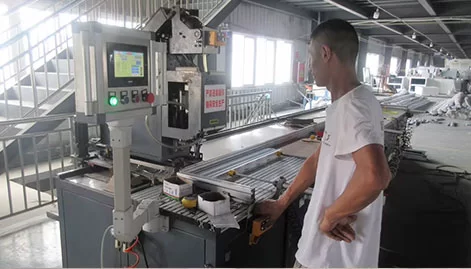
At superwindowhouse.com, we don’t design for minimum code. We design for real-world worst-case scenarios.
For high-risk zones near airports:
- PVB laminated glass (standard) with optional hurricane-rated interlayer (0.090-inch minimum thickness)
- Reinforced steel-reinforced frames with thermal breaks
- Multi-point locking systems (not just a single latch) on casement and hung windows
- Factory-installed flashing fins with weep channels—no field-mess with silicone
For high-rise apartments:
- Heavy-duty aluminum casements with impact-tested frames
- Silent closing mechanisms to prevent slam damage over high-cycle use
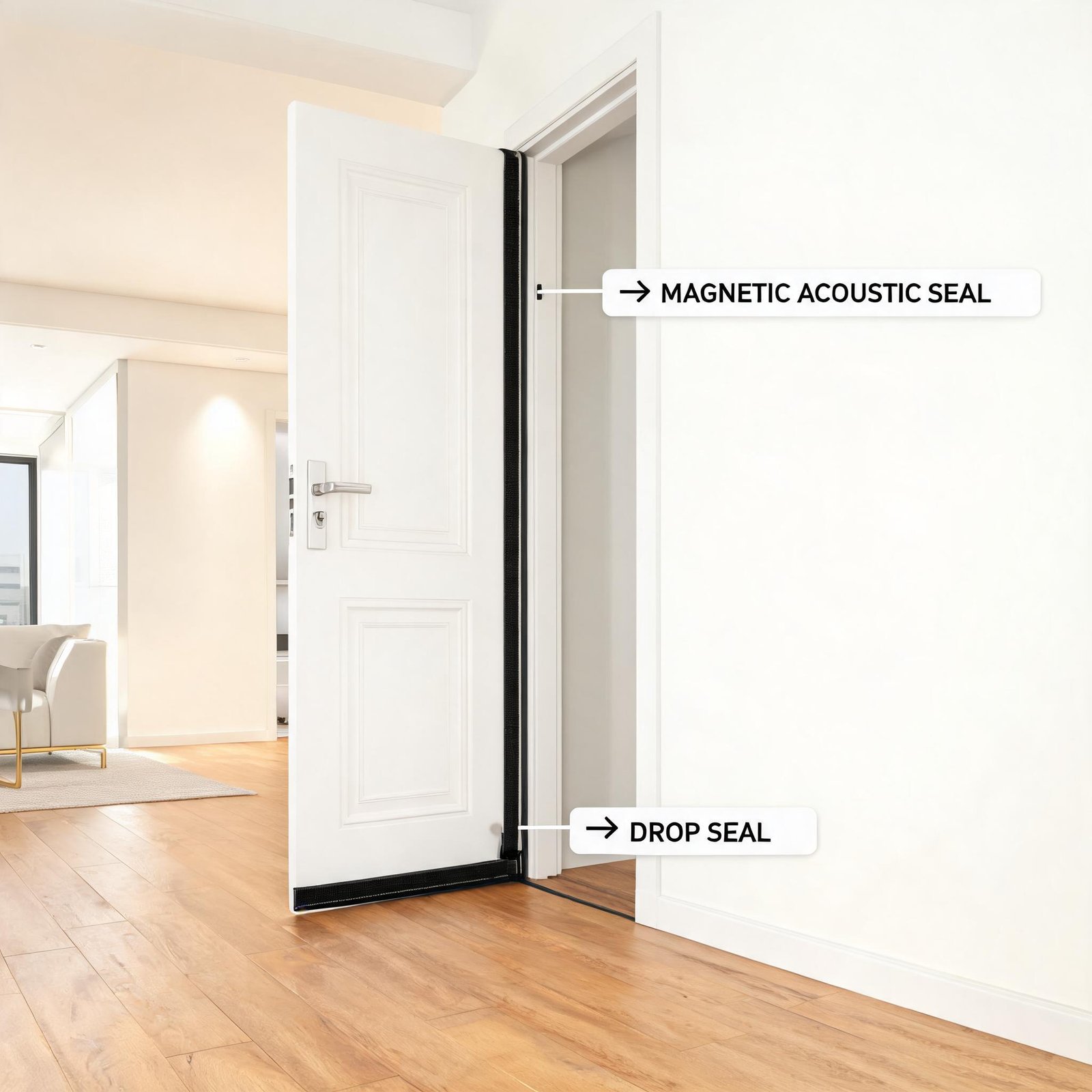
- Acoustic ratings (STC 35+ standard) for jet noise reduction
Our High-Performance Vinyl Casement Windows are a favorite among architects for their combination of impact resistance and energy efficiency. The multi-point lock engages the sash into a structural steel core.
Vinyl casement windows with impact-hardened frames deliver U-values below 0.30 without sacrificing structural integrity.
Specific products to consider:
- Impact-Resistant Storm Hung Windows (aluminum): Best for hurricane zones and high-velocity debris
- Aluminum Thermally Broken Sliding Windows: Ideal for sliding applications where strength is key
- Energy Efficient Vinyl Sliding Windows: Best value for multifamily projects near airports
Energy-efficient vinyl sliding windows with impact-rated glass meet both budget and safety requirements.
What This Means for Your Home
If you live within a 5-mile radius of JFK, LaGuardia, Newark, or any major airport, I recommend upgrading to at least ASTM E1996 Level C or Miami-Dade NOA 17-0419 impact rating. That’s what our storm hung windows deliver.
Cost reality: You’re looking at $800–$1,500 per window for impact-rated units, versus $300–$500 for standard vinyl. But that $500 difference is a one-time insurance against a claim that could cost $5,000 in glass repair, water damage, and debris removal.
B2B Project Implementation: What You Need to Know
If you’re a contractor or property manager working on a spec for a high-rise near an airport, here’s your cheat sheet: