How to Replace Interior Doors in an Old House: Fixing Out-of-Square Frames and Warped Doors
Let’s cut right to it. If you’ve ever tried to swap out a hollow core door in a 1980s house, you’ve already discovered the brutal reality: those old frames are rarely square, the rough openings are inconsistent, and the doors themselves are probably warped. You’re not alone. I’ve seen this in hundreds of homes across the Midwest and Northeast. The problem isn’t just the door—it’s the entire opening. And the standard off-the-shelf replacement won’t cut it. You need a system that accounts for out-of-square conditions, offers warp resistance, and gives you a clean, functional install.
The Hollow Core Disaster: Why Your 1980s Doors Have Failed
Let’s talk about what actually happens to a hollow core door over 30-plus years. The construction is simple—two thin veneers of plywood or hardboard over a honeycomb cardboard core. That core offers zero structural integrity. In a climate with seasonal humidity swings, those doors wick moisture through the bottom and top edges. The result? Warping, sagging, and delamination. In older homes, the problem is compounded by the fact that the frames themselves were often nailed in with little regard for plumb and level. Builders in the 80s were cranking out subdivisions at speed. Precision was not the priority.
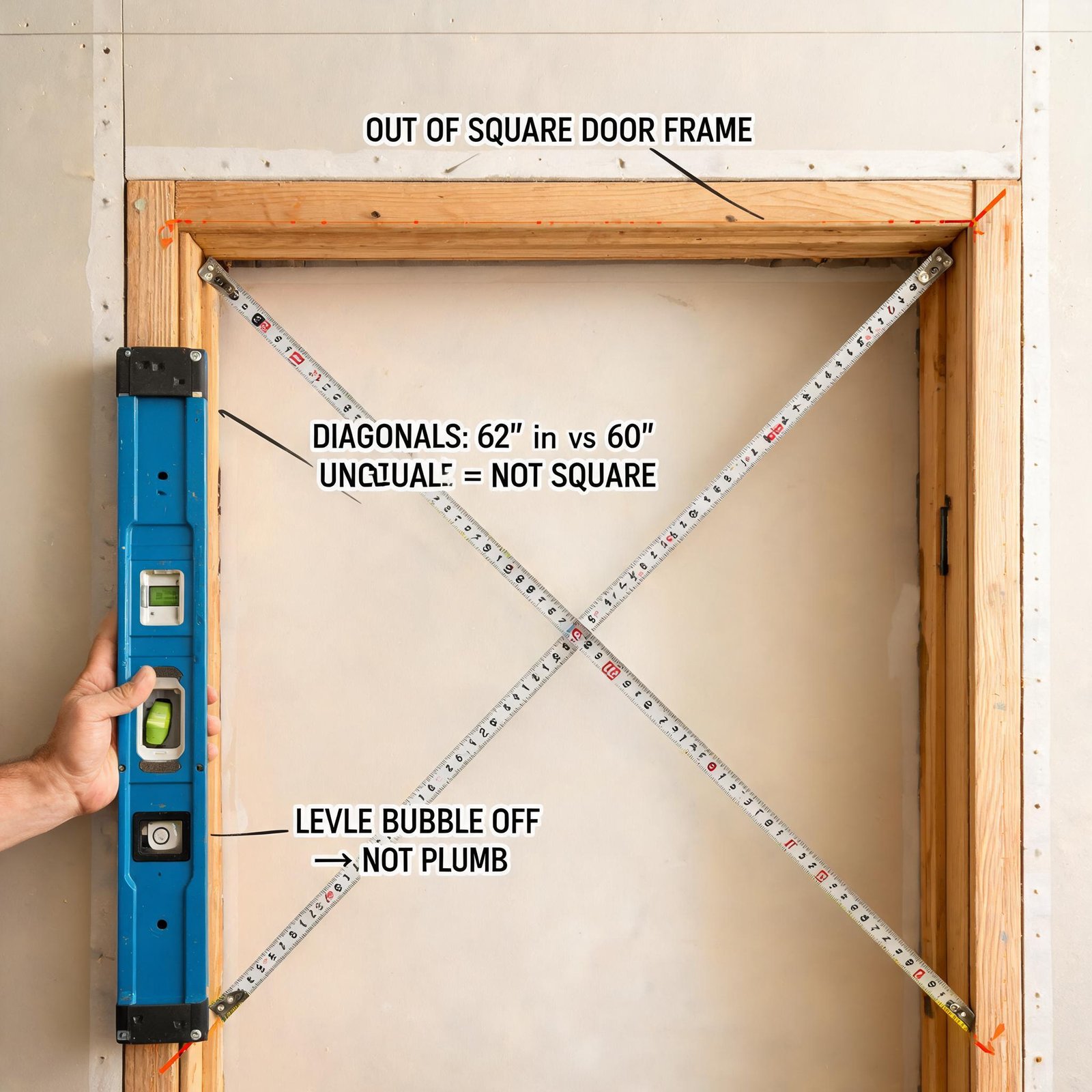
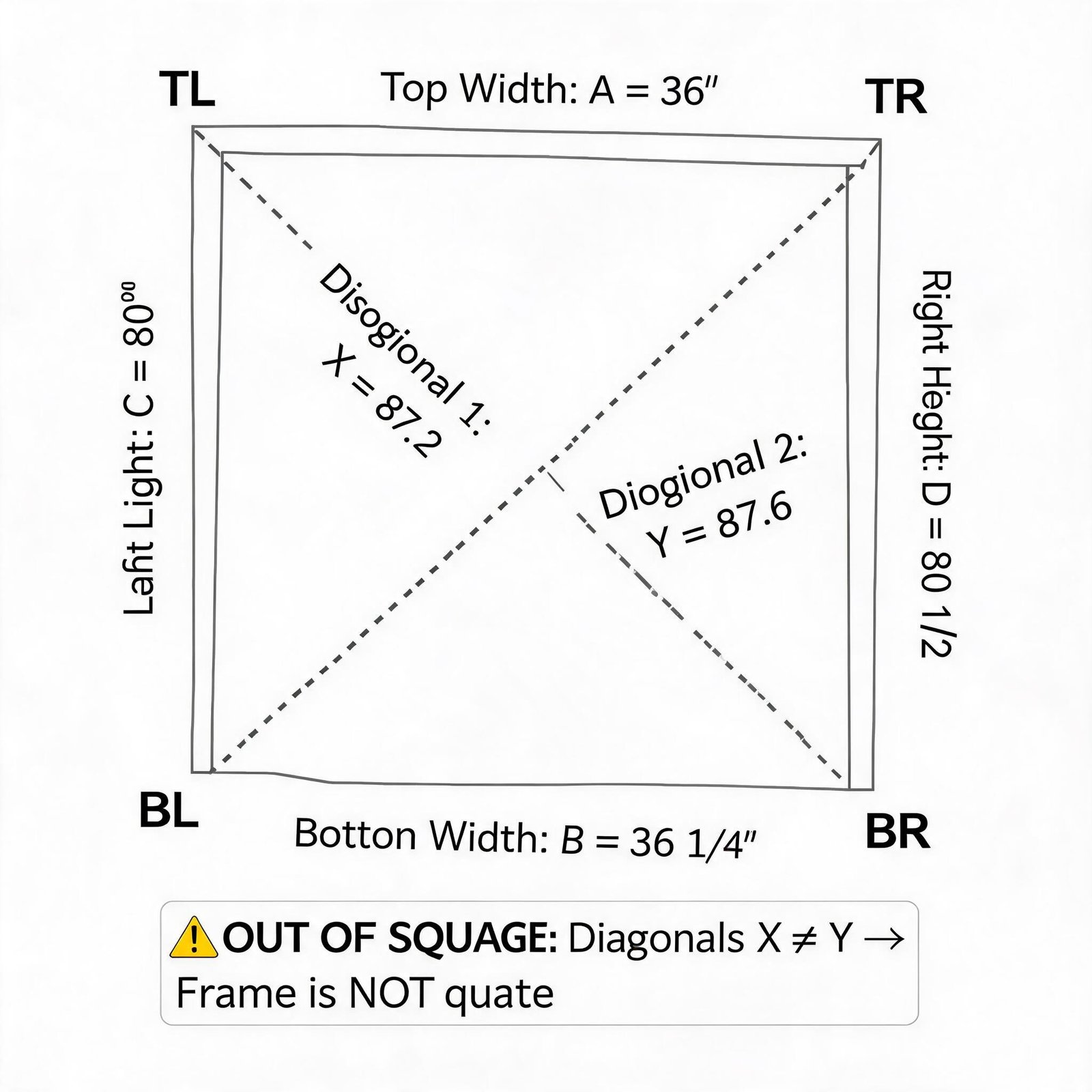
When you go to replace one of these doors, you quickly discover that the frame is out of square by 1/4 inch or more, and the rough opening width can vary by 3/8 inch from top to bottom. Standard prehung units won’t fit without major frame tear-out, which is a messy, time-consuming job. The smart move is to address both the door and the opening together.
The Real Challenge: Out-of-Square Frames and Rough Opening Variations
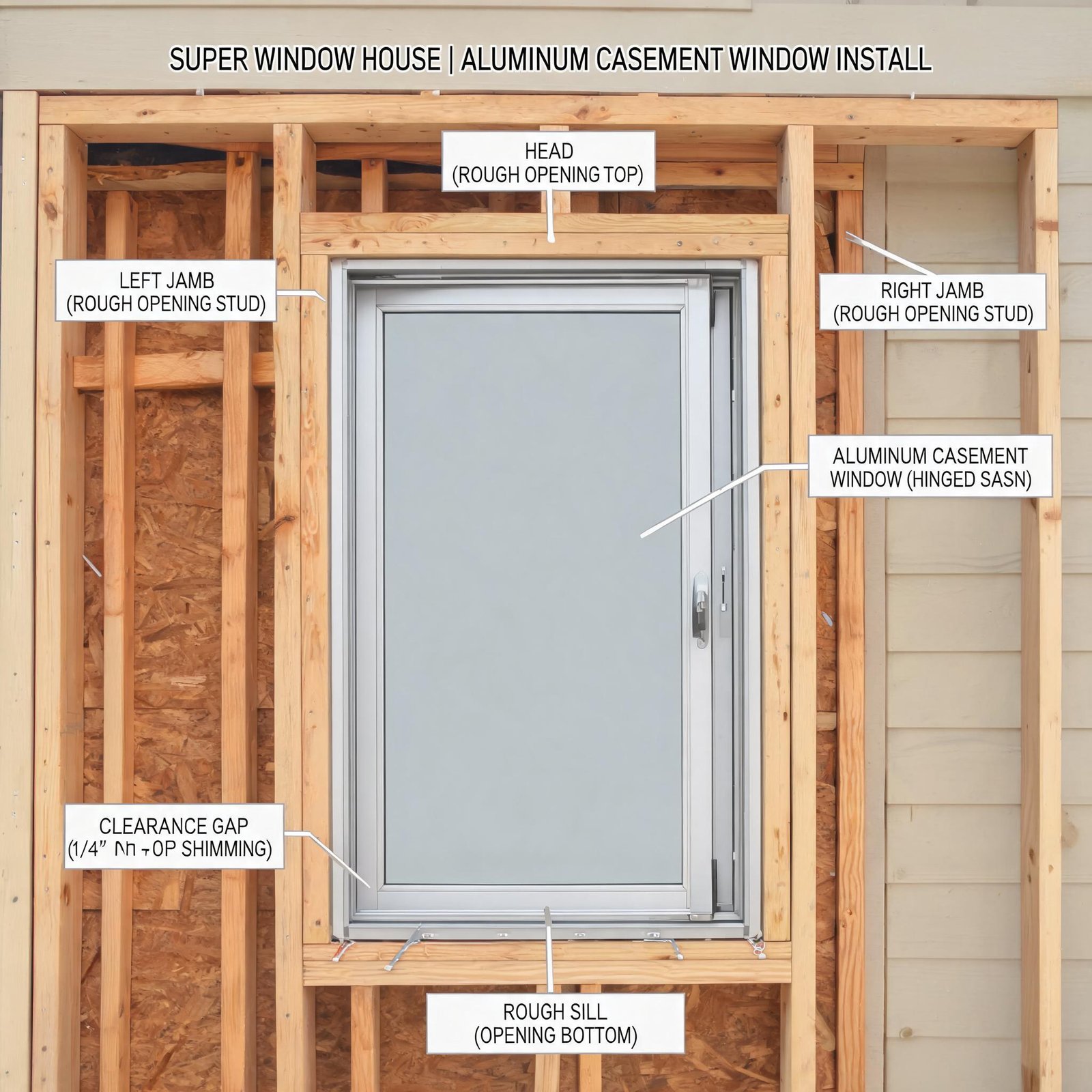
First, let’s break down exactly what you’re dealing with. In a typical 1980s split-level or ranch home, interior doors were often installed using the “slab-on-hinge” method, meaning the door slab was hung directly on jamb legs that were already in place. Over time, foundation settlement and seasonal wood movement cause those jambs to shift. The top of the frame might be plumb, but the bottom is bowed out by 1/2 inch. The header (top jamb) may not be level. And the rough opening studs are rarely parallel.
Here’s the thing: a standard 30-inch wide interior door slab is designed for a perfectly square opening. If you try to jam it into a crooked frame, you’ll get binding, gaps, and a door that won’t latch. The traditional fix—shimming and planing—only works if the frame is moderately out of whack. When you’re dealing with variations of 3/8 to 1/2 inch, you need a different approach.
The Superwindowhouse Solution: Warp-Resistant Solid Core and Custom Sizing
For professionals and serious homeowners, the answer is to skip hollow core altogether and move to a solid core door that’s built to resist warping, and just as importantly, one that can be ordered to size. That’s where Superwindowhouse comes in. Our solid core interior doors are constructed from engineered wood cores with high-density fiberboard skins. They’re dimensionally stable—meaning they won’t twist or cup even in high-humidity environments like bathrooms or basements.
But the real game changer is the ability to order custom widths and heights. Instead of wrestling with an out-of-square frame, you can order a slab that’s slightly oversized, then trim it to match the actual opening. For example, if your rough opening measures 30 3/8 inches at the top and 30 5/8 inches at the bottom, you order a 31-inch slab and scribe it to fit. This approach saves hours of framing work and produces a professional result every time.
Professional Tips for Hinge Placement and Door Trimming
Even with a custom-sized slab, you still need to account for the frame’s imperfections. Here’s the workflow I use on every job:
-
Assess the Frame Condition – Check if the jambs are plumb and if the header is level. If the frame is severely racked (more than 1/2 inch out), you’re better off replacing the jambs too. For moderate issues, you can work with the existing frame.
-
Hinge Placement Adjustment – When the frame is twisted, a standard three-hinge pattern can bind. I recommend using adjustable pivot hinges or mortised hinges with deep receivers. In a 1980s house, the hinge mortises on the frame are likely already cut. If they’re off by 1/8 inch, you can pack them with solid wood shims and recut the mortise. Better yet, use a hinge template system that allows you to shift the hinge location on the door slab by 1/16 inch increments.
-
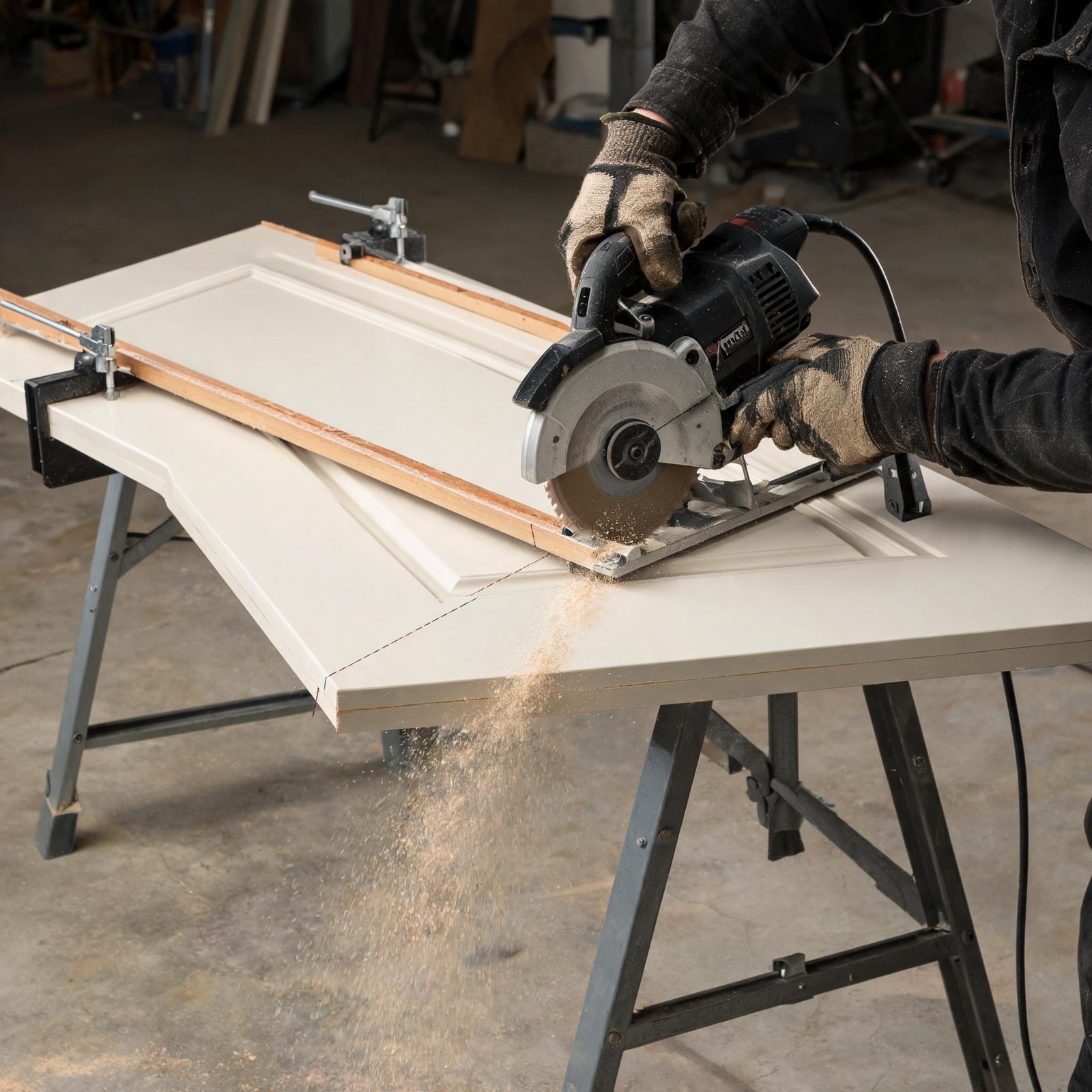
Trimming the Door Slab – For a truly custom fit, use a straightedge guide and a circular saw with a fine-tooth blade. Leave a 1/8 inch gap at the top and 1/2 inch at the bottom for air circulation. On the hinge side, mark the reveal (usually 1/16 to 1/8 inch) and plane the edge accordingly. If you’re dealing with a frame that leans 1/4 inch to the left, you’ll need to taper the door by that amount—meaning the top hinge side is narrower than the bottom.
-
Latch and Strike Plate Alignment – A common mistake is to assume the strike plate will line up perfectly. In an old house, the latch side of the frame is almost never square. Use a file or chisel to enlarge the strike plate mortise vertically or horizontally. A magnetic latch is a simple upgrade that tolerates minor misalignment.
When to Replace the Frame vs. Replace Only the Door Slab
Here’s a hard truth: if your jambs are rotting, the frame is visibly split, or the rough opening has shifted more than 3/4 inch, you need to pull the entire jamb assembly and start fresh. But if the frame is structurally sound—just a little out of square—a slab replacement is faster and cheaper. The key is to measure the frame depth, the hinge spacing, and the latch location with laser accuracy. I always use a digital caliper and a 48-inch level.
For professionals handling high-value renovations, I recommend pairing the door upgrade with new casing and trim. But for a straightforward slab swap, you can reuse the existing jamb if you’re willing to put in the fine-tuning.
The Value of Upgrading: From Hollow Core to Solid Core Performance
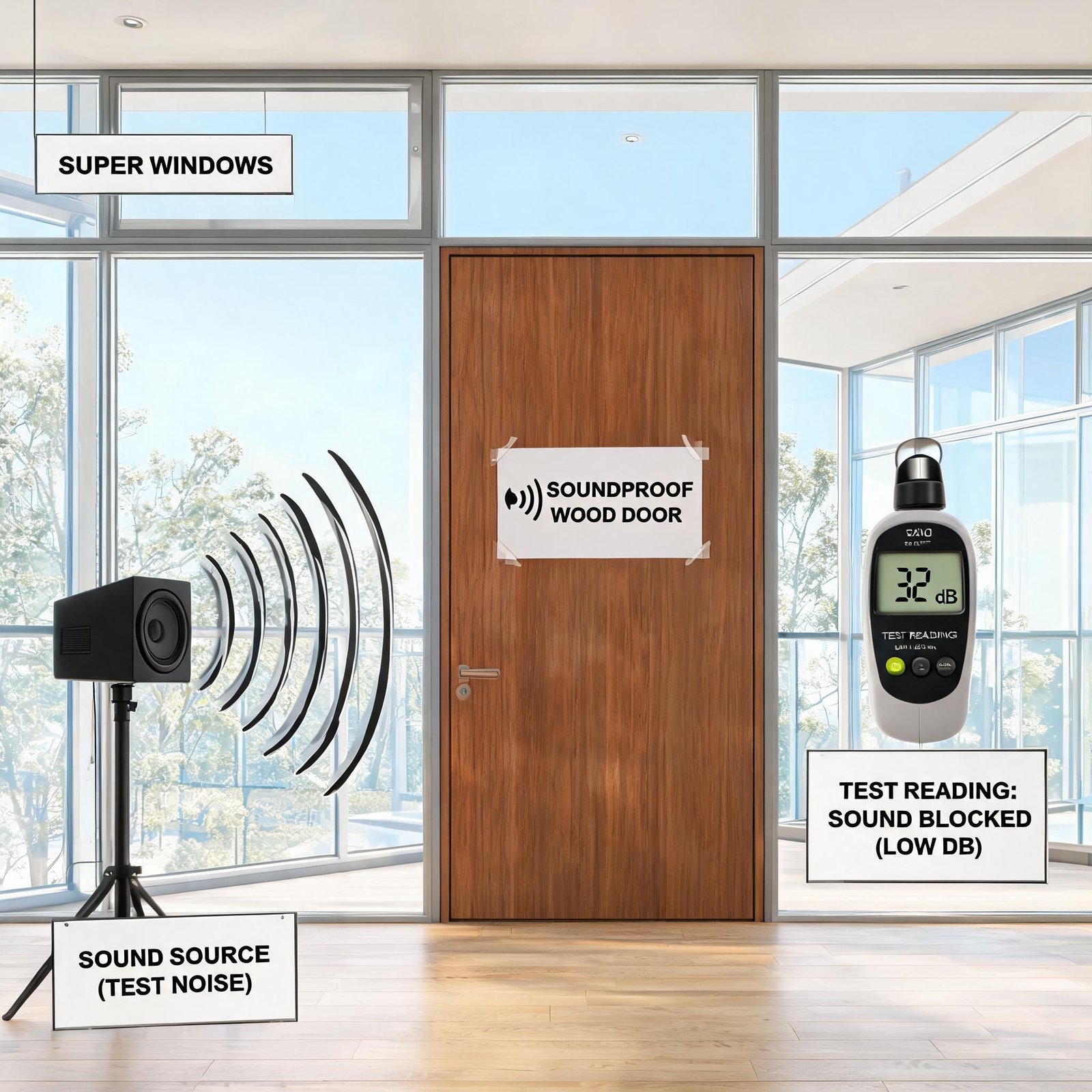
Beyond the fit issues, there’s a performance argument for moving away from hollow core. Solid core doors offer superior sound attenuation (STC ratings in the 30-35 range), better thermal insulation (usable in conditioned spaces like basements), and dramatically better fire resistance. In a 1980s house, the interior doors are often the weakest link in the home’s fire barrier. Typical hollow core doors offer about 20 minutes of fire resistance; a solid core door can provide 45 minutes or more. That’s a tangible safety upgrade.
And if you’re already replacing doors, consider upgrading the entry points to the home as well. Pairing the project with a high-performance entry door system, like our vinyl sliding patio doors, can completely transform the energy envelope of the house.
Final Thoughts on the Job
Replacing interior doors in older homes with out-of-square frames isn’t a job for cheap materials or guesswork. The hollow core doors from the 80s were never meant to last 40 years. Your solution needs to account for the realities of a settled foundation, weathered jambs, and inconsistent framing. By choosing a warp-resistant solid core slab and utilizing professional hinge adjustment and trimming techniques, you can achieve a fit that looks custom, operates smoothly, and adds genuine value to the home.
Superwindowhouse’s approach to this challenge is rooted in 15 years of field experience. We don’t sell you a product and walk away; we give you the tools and knowledge to execute the job right. Whether you’re a contractor managing a full renovation or a homeowner tackling a single door, the principles are the same—measure twice, order custom, and always plan for the frame to be imperfect.