The Physics of a 70mph Gust — Why Standard Windows Fail
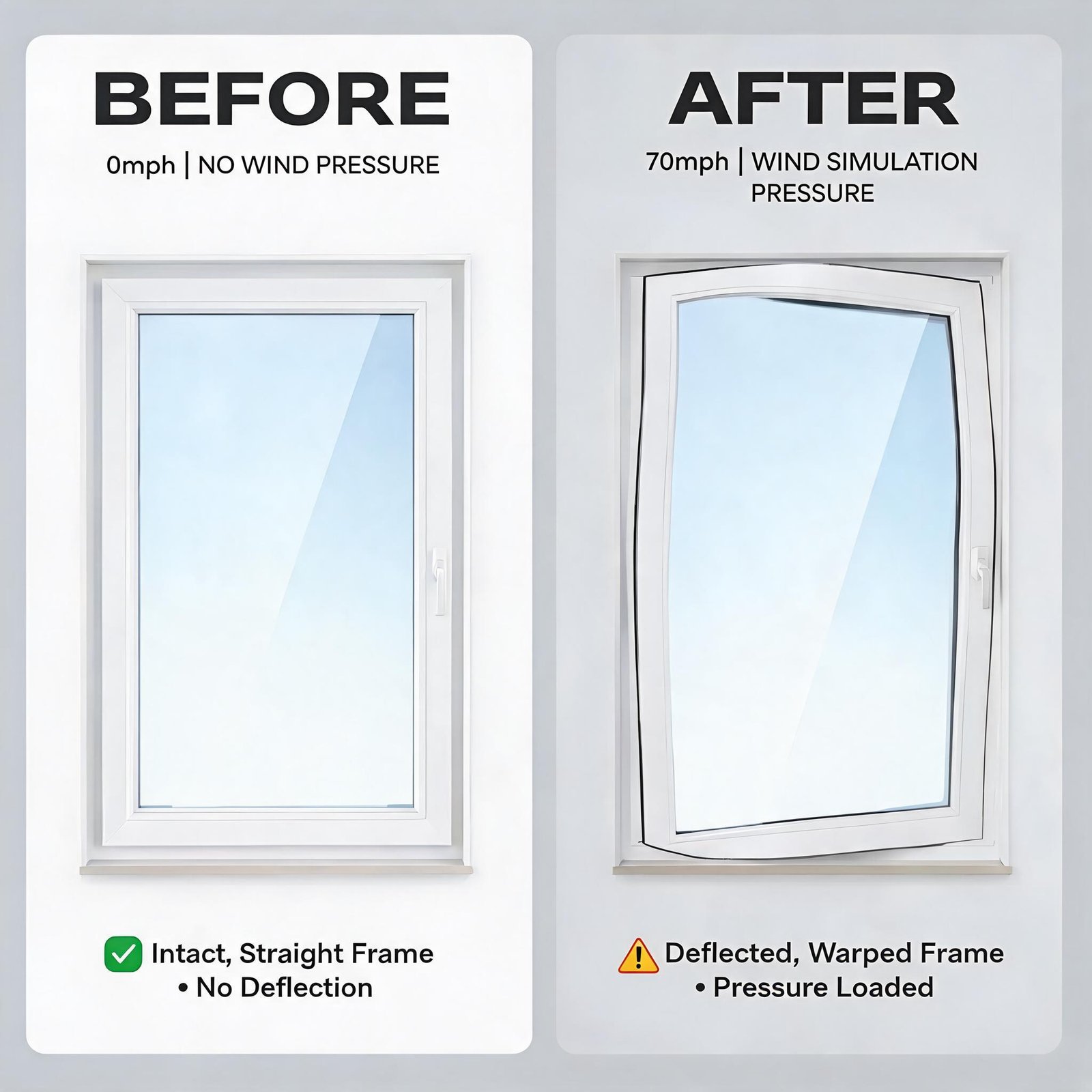
Let’s strip this down to engineering. A 70 mph wind exerts roughly 20.5 psf (pounds per square foot) of pressure on a vertical surface. But that’s static. In real gust conditions, dynamic suction on the leeward side can double the load. A typical 3’×5’ double-hung window rated for 15 psf design pressure (DP) — common in many mass-market vinyl windows — will deform or even blow out under sustained 70 mph winds. The frame bows, the glass cracks at the edge, and the lock strip pops.
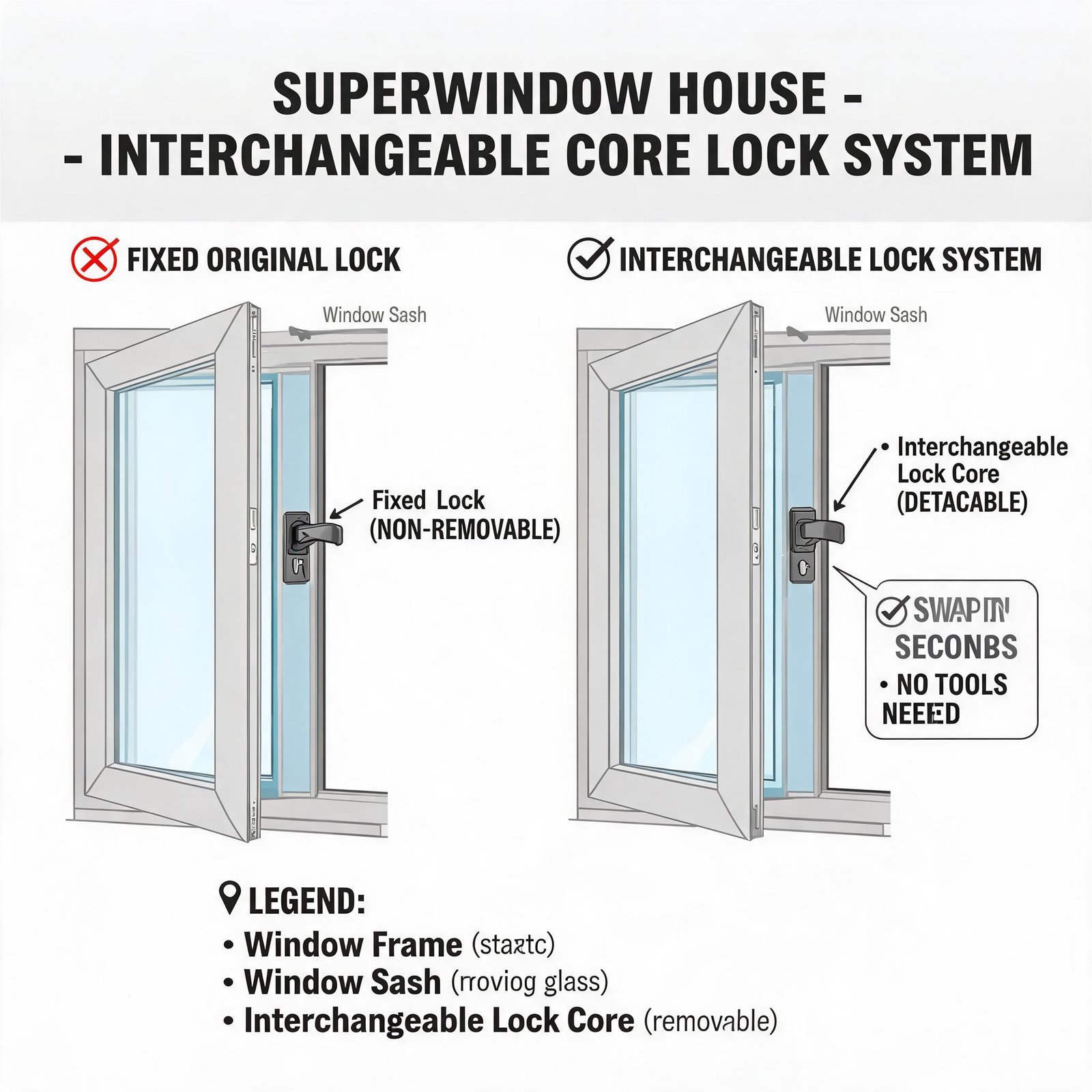
The real vulnerability isn’t the glass alone — it’s the interface: the sill attachment, the nailing fin connection, and the locking mechanism. Many budget windows use a single-point cam lock that provides no structural continuity. Under wind load, the sash shifts, the latch releases, and the door is open for flying debris to enter.
Understanding the Numbers: DP Rating vs. Actual Performance
When you see a DP rating of 35 or 40 on a window label, that means it’s been tested to withstand 35 psf of wind load without structural failure. That’s roughly equal to 100 mph sustained wind, but with an ASTM safety factor. For a 70 mph advisory, you want a DP of at least 30. Most residential vinyl windows from big-box retailers are DP 15–25. That’s a problem.
What the Big Brands Won’t Tell You: The Soft-Coat Low-E Scam
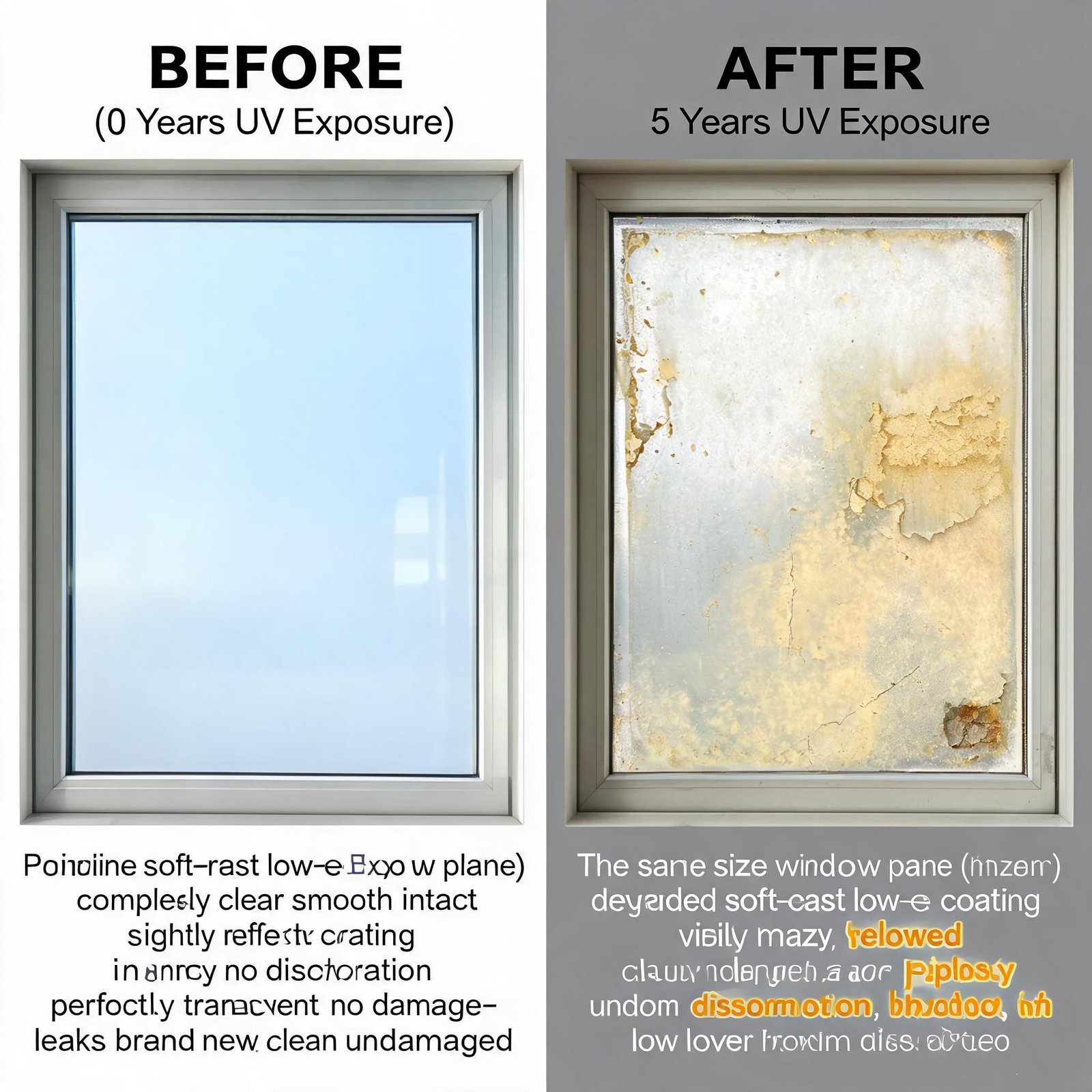
Here’s the inside track from 15 years of field tear-downs. Many mass-market window manufacturers use soft-coat Low-E coatings that degrade after 5–7 years of UV exposure, especially in regions with high solar loads. The coating turns hazy, the U-factor climbs, and the window loses its thermal performance. But worse for wind events: soft-coat Low-E is often applied to the #2 surface, and the coating itself doesn’t affect structural strength. However, to cut costs, these brands use thinner glass — 3mm instead of 4mm — and smaller edge gaps, which reduce the overall structural capacity of the IGU (insulated glass unit). When a 70 mph gust slams the window, the thinner glass becomes the first failure point.
The Hidden Danger of “Standard” Nailing Fin Installations
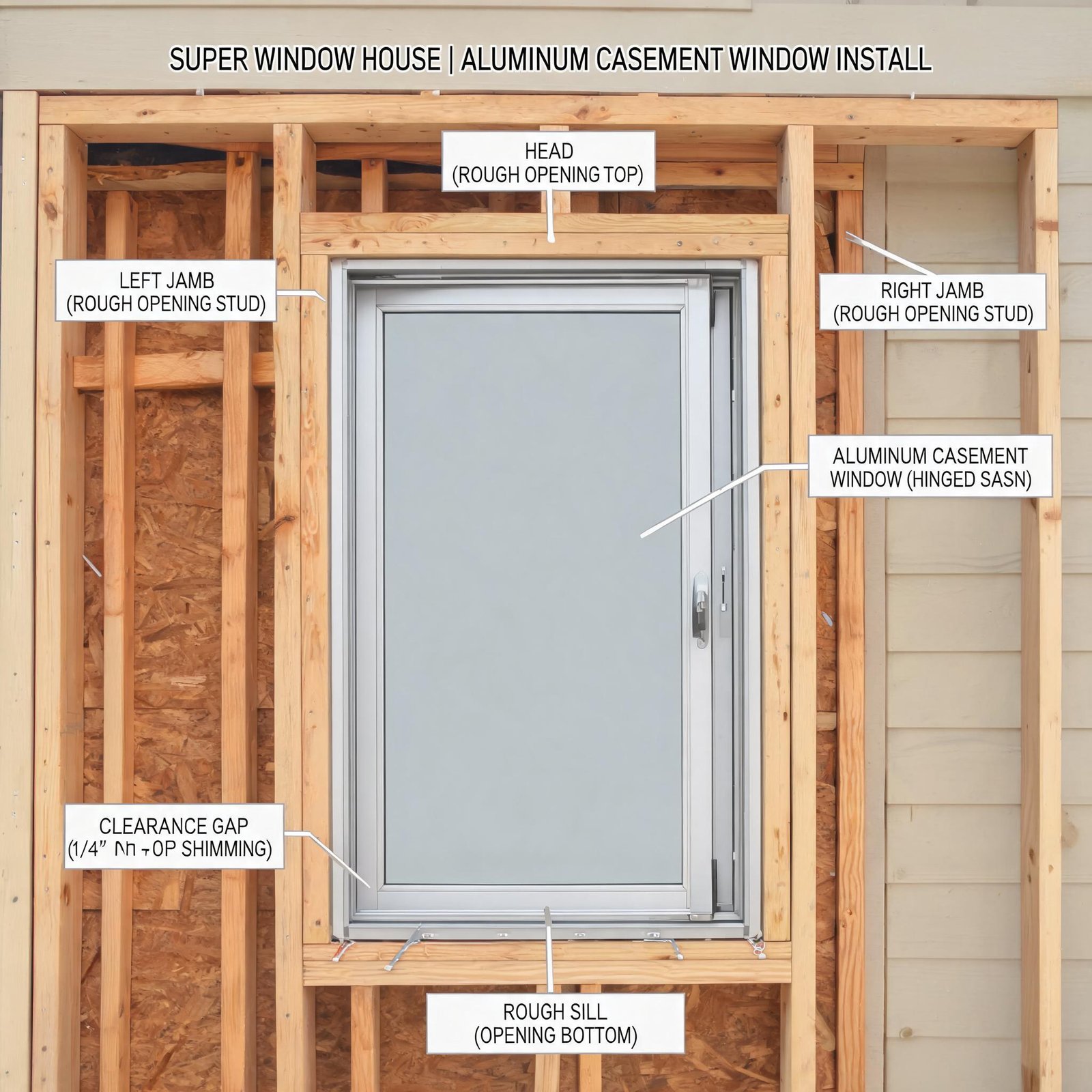
Even a high-DP window can fail if the flashing flange isn’t properly integrated with the house wrap. I’ve seen countless new construction homes where the contractor didn’t use a self-adhered membrane at the sill, or where the nailing fin was caulked to the plywood sheathing instead of being mechanically fastened. In a wind advisory, those hidden leaks become catastrophic — water pressure forces moisture into the wall cavity, and mold follows within weeks. The window itself might survive, but the building envelope doesn’t.
Superwindowhouse’s Impact-Ready Family: Engineered for Gusty Conditions
This is where the game changes. At Superwindowhouse.com, we don’t sell “storm windows” — we sell building science solutions. Our impact-resistant storm hung windows are designed with a heavy-duty extruded aluminum frame that passes ASTM E1996 large missile impact tests (a 9 lb 2×4 timber launched at 50 ft/s). The frame is reinforced with multi-chambered structural ribs, and the glass is a dual-layered laminated PVB assembly — not just a single tempered pane. This means the glass stays intact even if cracked, preventing air infiltration and maintaining pressure resistance.
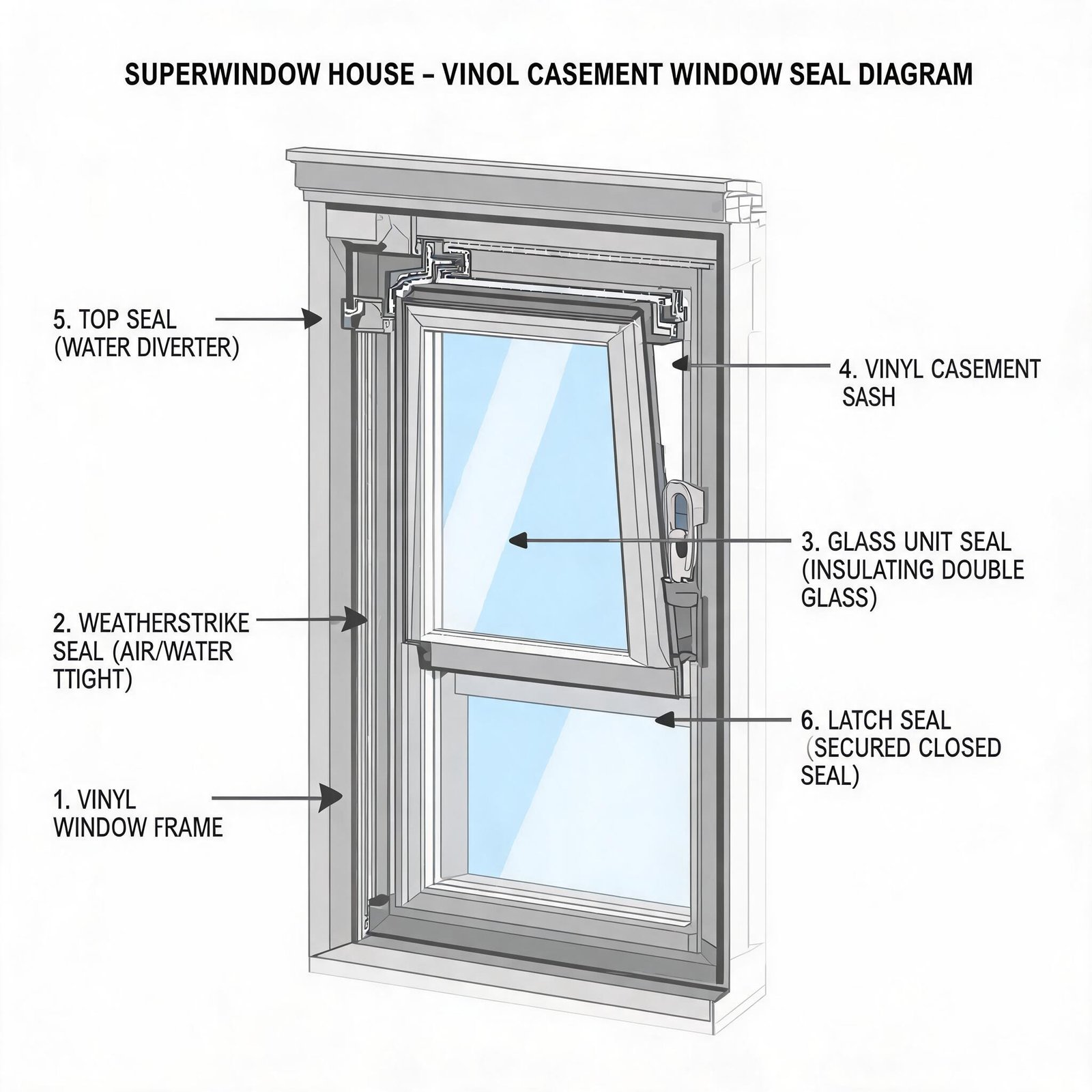
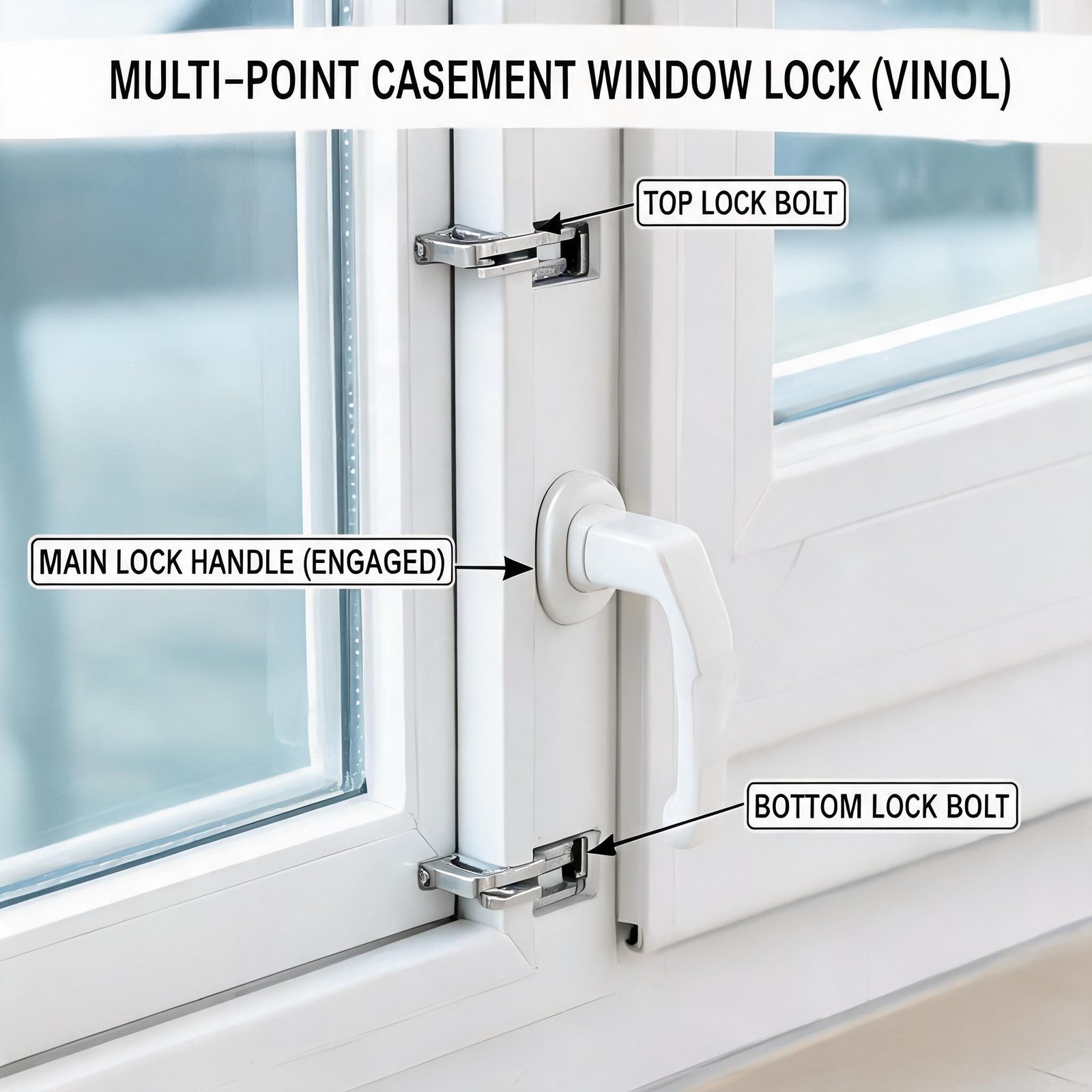
For homeowners who prefer a traditional look with modern performance, our high-performance vinyl casement windows are a different breed. They feature a heavy-duty multi-point locking system with four compression latches per sash, engaging deep into the perimeter frame. Tested to DP 50, these windows can handle 100+ mph wind gusts without any frame deflection. The vinyl formulation is UV-stabilized and includes a continuous glass fiber reinforcement in the main chamber — eliminating the thermal expansion warping common in cheaper vinyl products.
And if you’re looking to secure large sliding door openings — the biggest vulnerability in any wind event — our vinyl sliding patio doors come standard with a heavy-duty interlock stile and a four-point locking system that ties the door panels into the head and sill. Even at 70 mph, the door won’t rattle off its track.
B2B Contractor’s Guide: 4 Hard Questions to Ask Before Specifying Windows for a Wind-Advisory Region
1. What is the actual design pressure (DP) rating, and do you have AAMA 2605 certification?
Don’t accept “tested to code” — get the NFRC label with DP number. A DP 35 is minimum for 70 mph zones. DP 40 or 50 is better. Ensure the manufacturer provides independent third-party test reports.
2. Is the glass laminated or just tempered?
Tempered glass can blow out when a large projectile hits. Laminated (PVB or SentryGlas) remains bonded to the interlayer. Even if cracked, the envelope stays sealed. This is the single most important upgrade for wind advisory areas.
3. Does the window have a continuous nail fin with integrated flashing?
Look for a Nail Fin that is part of the window frame extrusion, not a separate snap-on piece. It should work with the house wrap to create a water barrier. Ask for a shop drawing showing the rough opening preparation.
4. How many locking points does the sash have?
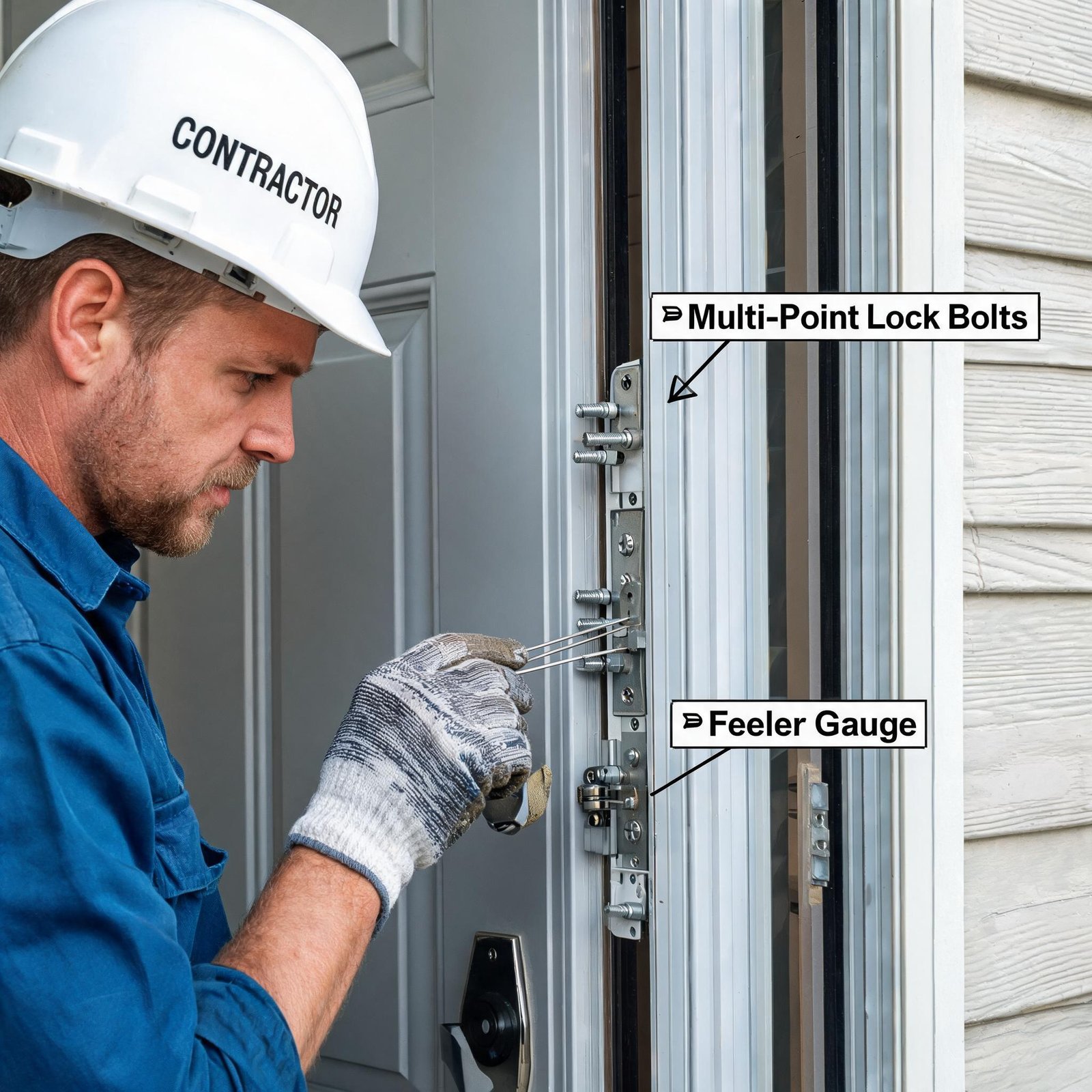
A single cam lock at the handle is inadequate. Demand multi-point locking (minimum 3 points on a casement, 2 on a hung window). The locks must engage into metal or reinforced vinyl strike plates.
Final Word: Don’t Wait for The Next Advisory
Every wind advisory is a free warning — a chance to upgrade the weakest link in your building envelope. Whether you’re a contractor managing a spec home or a homeowner fortifying against the coming season, prioritize impact-rated windows from a manufacturer that backs up its DP claims with real-world testing. Superwindowhouse.com’s product line is built for this exact scenario: high wind, flying debris, and forced entry prevention. Don’t let a 70mph gust turn your home into a liability.