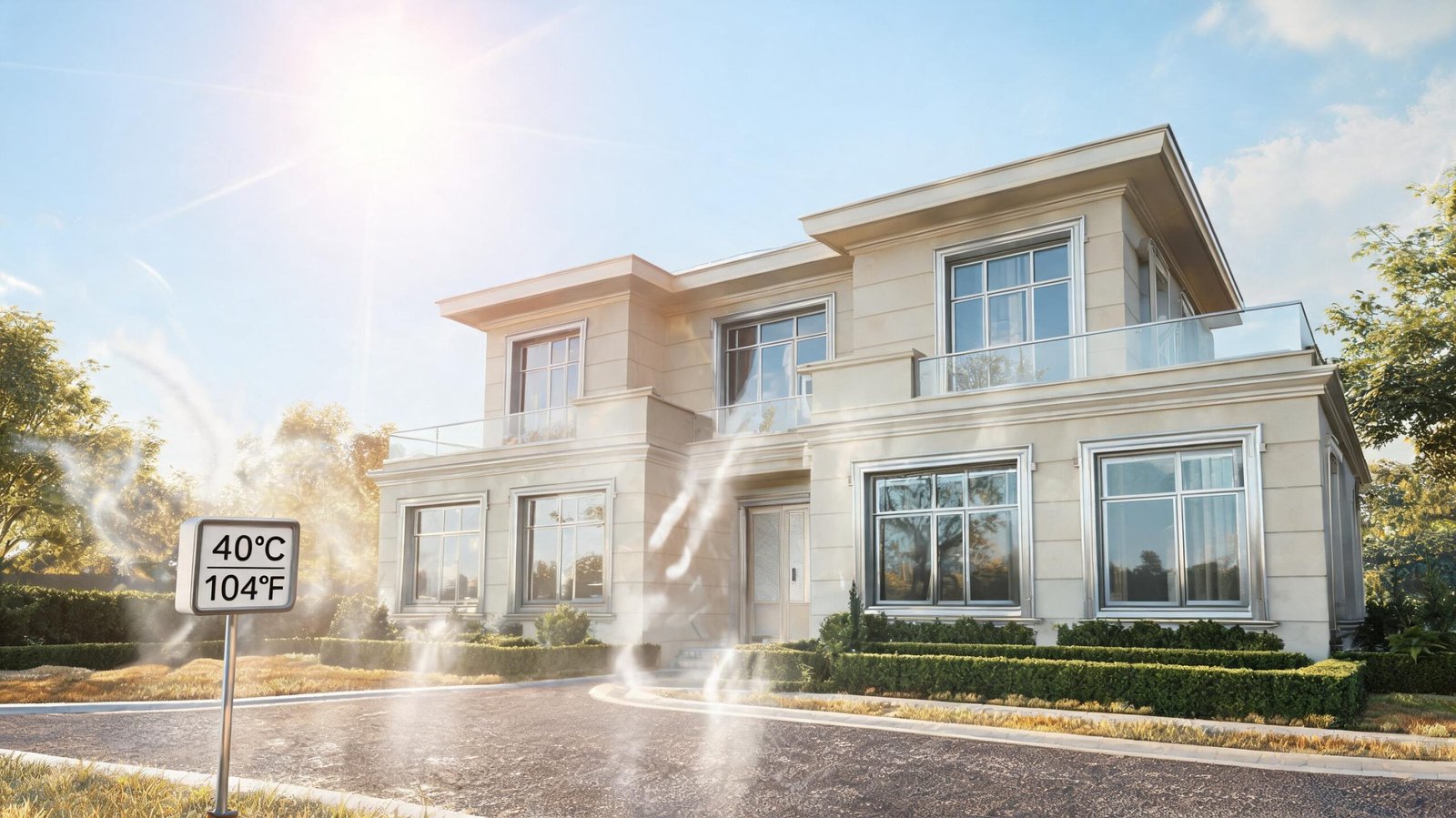
You know that sinking feeling when the lights flicker, the hum of your central air conditioner stops, and the silence is broken only by the roar of an approaching Texas thunderstorm. Within minutes, the indoor temperature starts climbing. Within an hour, your home becomes an oven.
For San Antonio homeowners, this isn’t hypothetical. When severe weather hits—whether it’s a sudden hailstorm, straight-line winds, or the kind of heatwave that makes asphalt shimmer—power outages are inevitable. You pull out your phone, type ‘cps energy’ into the search bar, and refresh desperately for restoration times that never seem to come.
Here’s the brutal truth that most window manufacturers won’t tell you: conventional builder-grade windows are the biggest weak link in your home’s thermal defense. When the grid goes down, every single-pane or poorly insulated window turns into a radiant heater, pumping solar heat directly into your living space. Your walls might be insulated, but those cheap windows? They’re thermal bridges—literally connecting your interior to the blazing outdoors.
This is where Low-E triple-glazed windows transform from a luxury upgrade into a life-safety system.
The Physics of Passive Survivability—Why Standard Windows Fail
Let’s cut through the marketing fluff and talk about what actually happens at the molecular level.
Thermal Bridging—Your Home’s Hidden Heat Highway
Every window frame is a potential thermal bridge. In standard aluminum or even vinyl windows with single-pane glass, the frame acts like a copper wire connecting the hot exterior to your cool interior. During a San Antonio blackout, when outdoor temperatures hit 100°F and your interior is struggling to stay below 90°F, that thermal bridge never stops transferring heat.
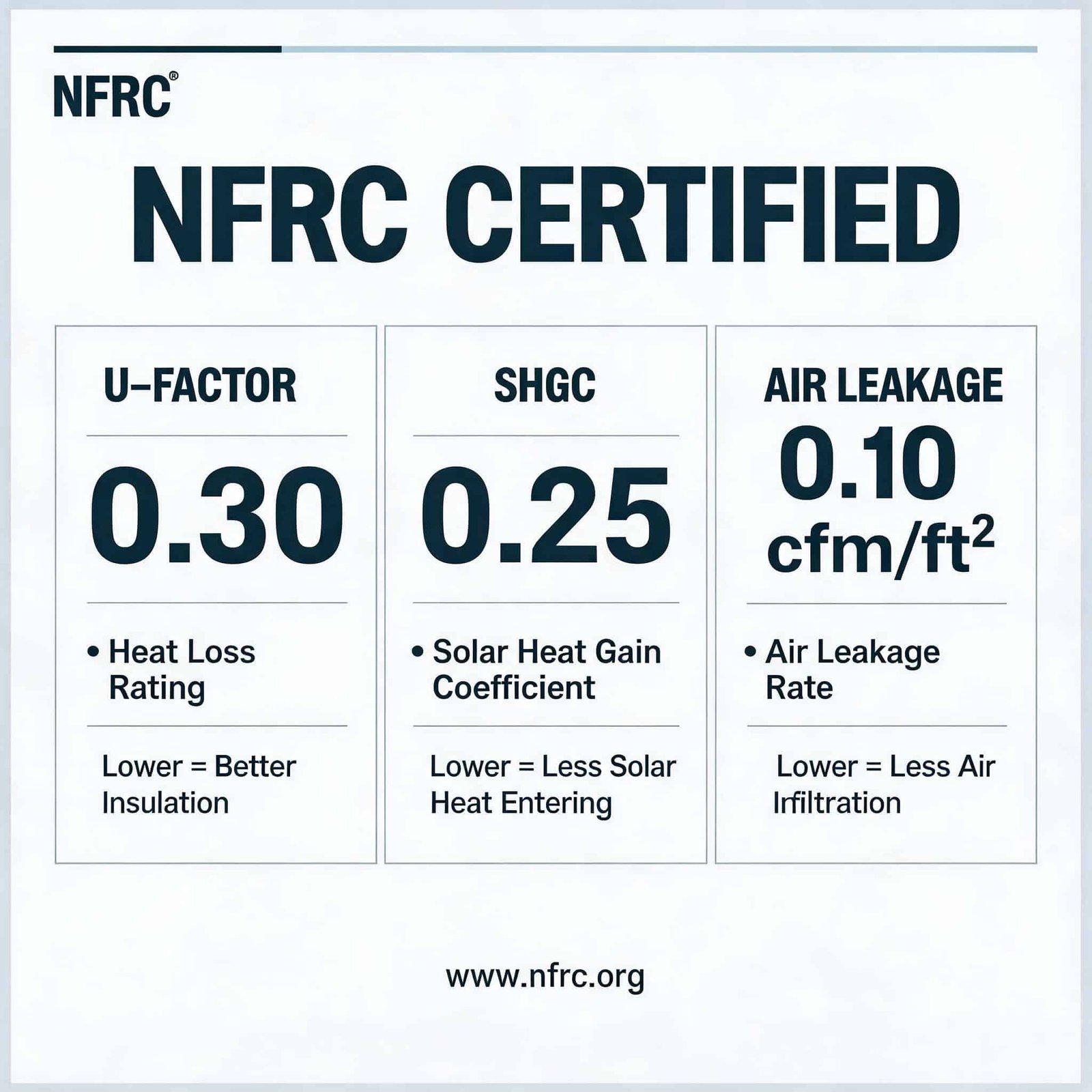
The industry measures this with U-factor—the lower the number, the better the insulation. A typical single-pane window has a U-factor around 1.0. An energy-efficient double-pane might reach 0.30. Our High-Performance Vinyl Casement Windows achieve a U-factor as low as 0.18—nearly 80% better than standard windows.
Solar Heat Gain Coefficient (SHGC)—Your AC’s Best Friend or Worst Enemy
SHGC measures how much solar radiation passes through the glass. In San Antonio, where the sun is relentless for eight months of the year, high SHGC means your AC works overtime—until it can’t. During a blackout, high SHGC windows turn your home into a greenhouse.
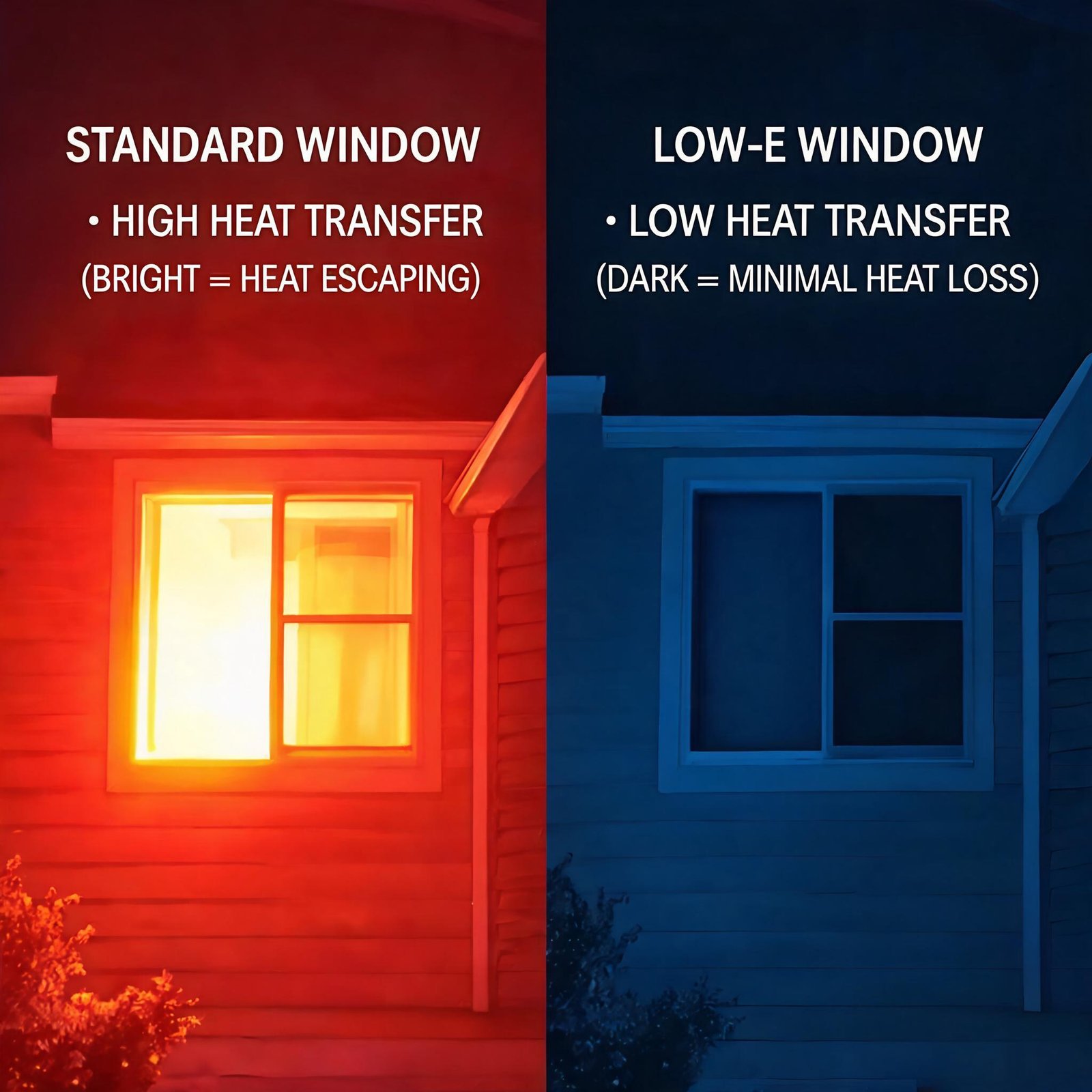
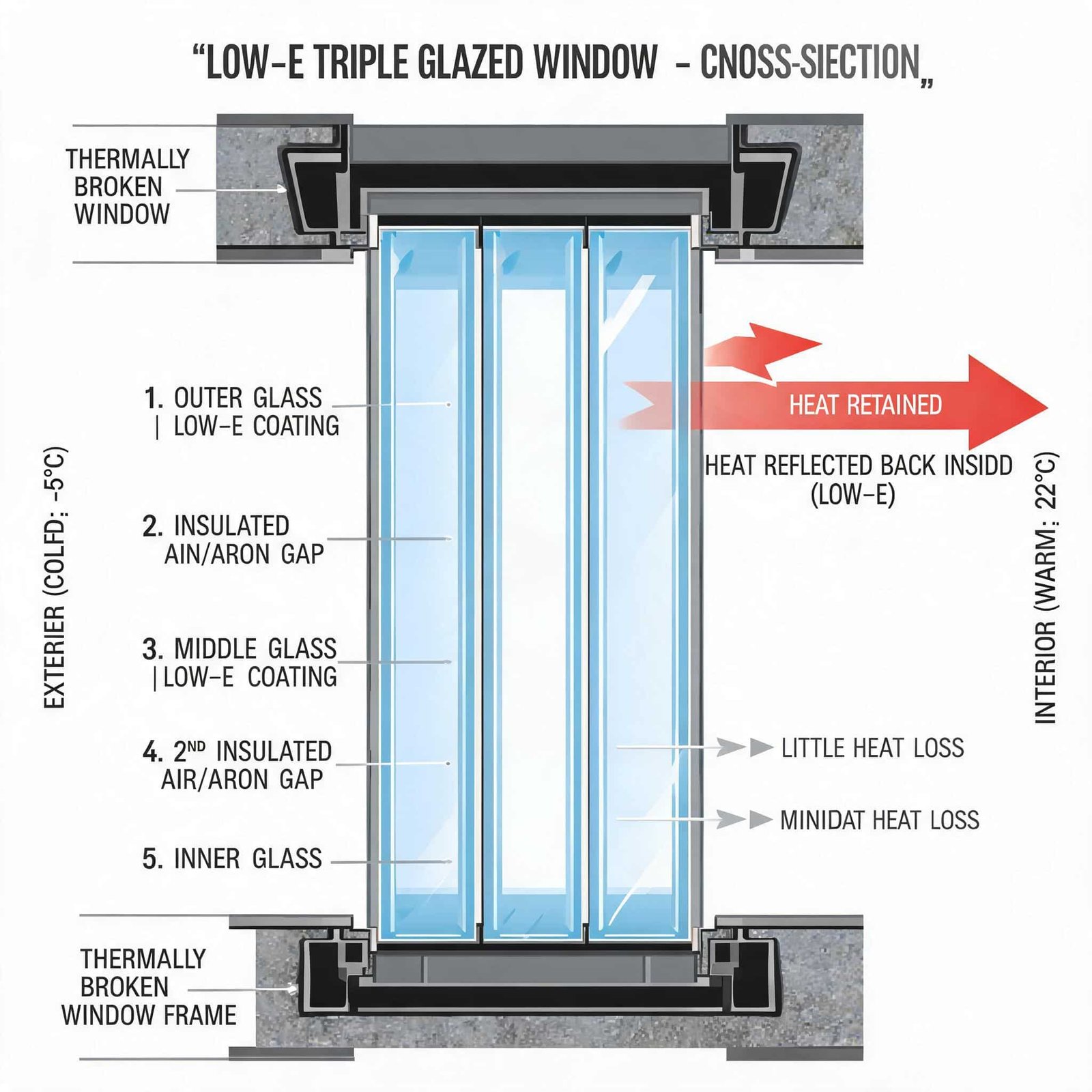
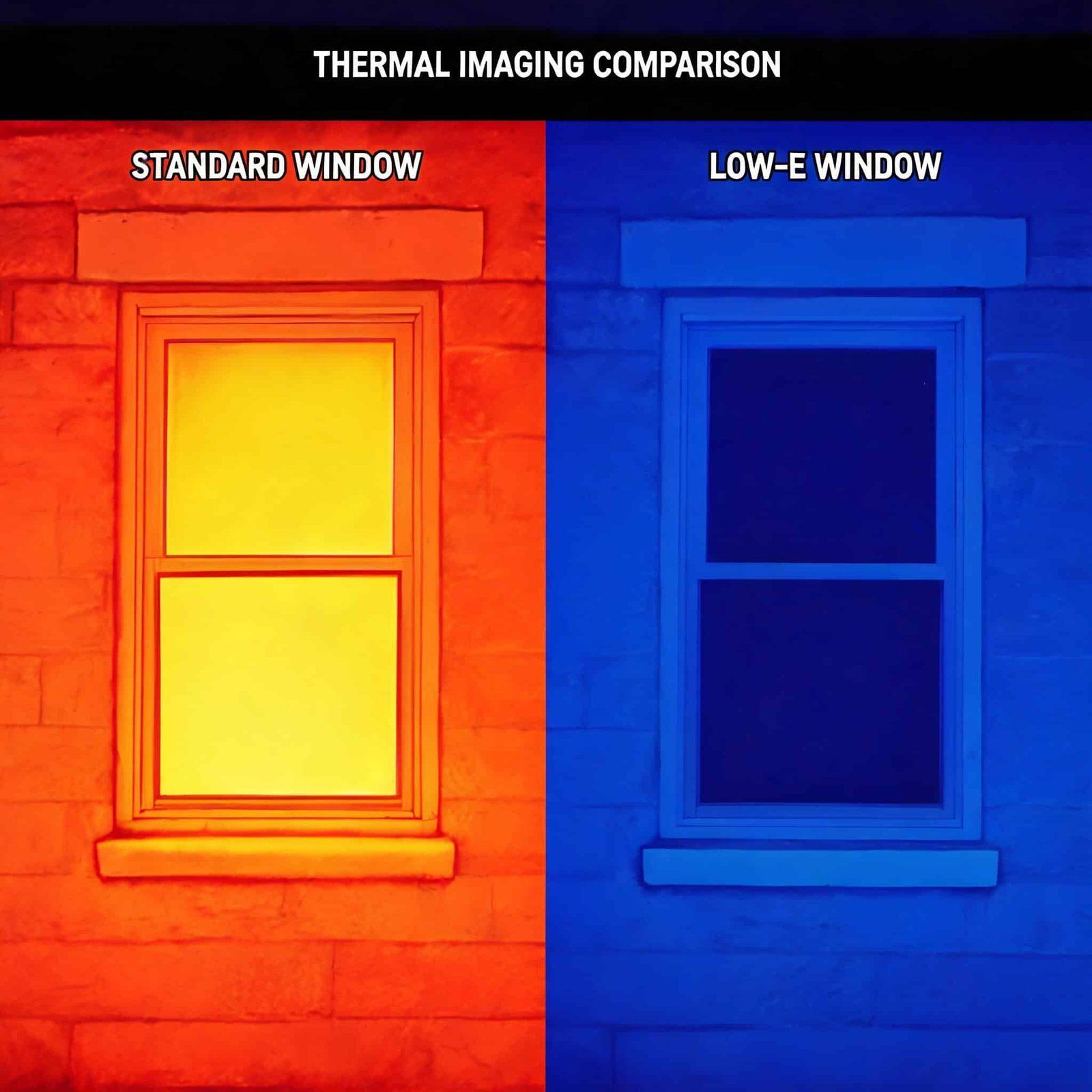
Low-E coatings work by selectively filtering solar radiation. They block short-wave infrared heat from the sun while allowing visible light to pass through. This is not the same as tinting. Tinting simply darkens the glass; Low-E actively rejects heat energy.
Our triple-glazed Low-E solutions achieve SHGC ratings between 0.20 and 0.25—meaning 75-80% of solar heat never enters your home in the first place.
Air Infiltration—The Draft You Can’t Afford
Even the best glass is useless if the window itself leaks air. The industry standard for air infiltration is measured in cubic feet per minute per square foot of window area. Most builder-grade windows leak at 0.30 CFM/ft² or worse.
Superwindowhouse.com windows undergo rigorous testing to achieve air infiltration rates below 0.05 CFM/ft². That’s six times tighter than code minimum. When the power is out and every degree matters, that sealed envelope keeps your conditioned air inside and the Texas heat outside.
The Hidden Trap—What Mass-Market Window Giants Won’t Tell You
After 15 years in this industry, I’ve seen every shortcut, every corner cut, and every warranty denial letter in the book. Here’s the ugly truth about the major brands flooding San Antonio home improvement stores:
The Soft-Coat Low-E Degradation Lie
The vast majority of big-box store windows use soft-coat Low-E technology. It’s cheap to manufacture and performs well in initial testing. But here’s the catch: soft-coat Low-E is applied after the glass is manufactured, creating a delicate layer that’s exposed to air and moisture at the edge of the sealed unit.
Within 3-5 years, many soft-coat windows show measurable degradation in performance. The coating begins to oxidize at the edges, creating a creeping failure that progresses toward the center of the glass. By year 7, your “energy-efficient” window is performing like a standard double-pane.
At Superwindowhouse, we manufacture Energy Efficient Vinyl Sliding Windows using hard-coat Low-E technology. The coating is pyrolytically applied during the glass manufacturing process—fused directly into the glass surface. It cannot oxidize. It cannot degrade. It will outlast the window itself.
The SHGC Loophole
Here’s another trick: some manufacturers tout their low U-factor while completely ignoring SHGC. A window with excellent insulation but high solar heat gain is worthless in San Antonio. It keeps heat from escaping in winter (which you barely need) but lets solar radiation flood in during summer (which you desperately want to block).
Always, always ask for the NFRC label. This independent certification, administered by the National Fenestration Rating Council, provides U-factor, SHGC, and air infiltration ratings all in one place. If a window lacks an NFRC label, you cannot verify its performance claims.
The “Meets Code” Trap
“Meets code” is the emptiest phrase in the window industry. Code minimum in most Texas jurisdictions is a U-factor of 0.35 and an SHGC of 0.30. That’s barely better than the windows installed in 1990s tract housing. “Meets code” means your home will still become uninhabitable within two hours of a power outage.
Passive survivability—the ability of a building to maintain livable temperatures without mechanical systems—requires windows that far exceed code minimums.
The Superwindowhouse Solution—Industrial-Grade Thermal Performance
Let me be direct: if you’re building or remodeling in San Antonio, you need windows designed for worst-case scenarios, not average days. Here’s what Superwindowhouse.com delivers.
Triple-Glazed Low-E with Krypton Fill
Our premium systems combine three panes of hard-coat Low-E glass with krypton gas fill. Krypton has lower thermal conductivity than argon, and because it’s denser, it performs better in the narrower cavities typical of triple-glazed units.
The result: U-factor ratings as low as 0.15, compared to 0.25-0.30 for standard double-pane Low-E windows.
Multi-Chamber Vinyl Frames
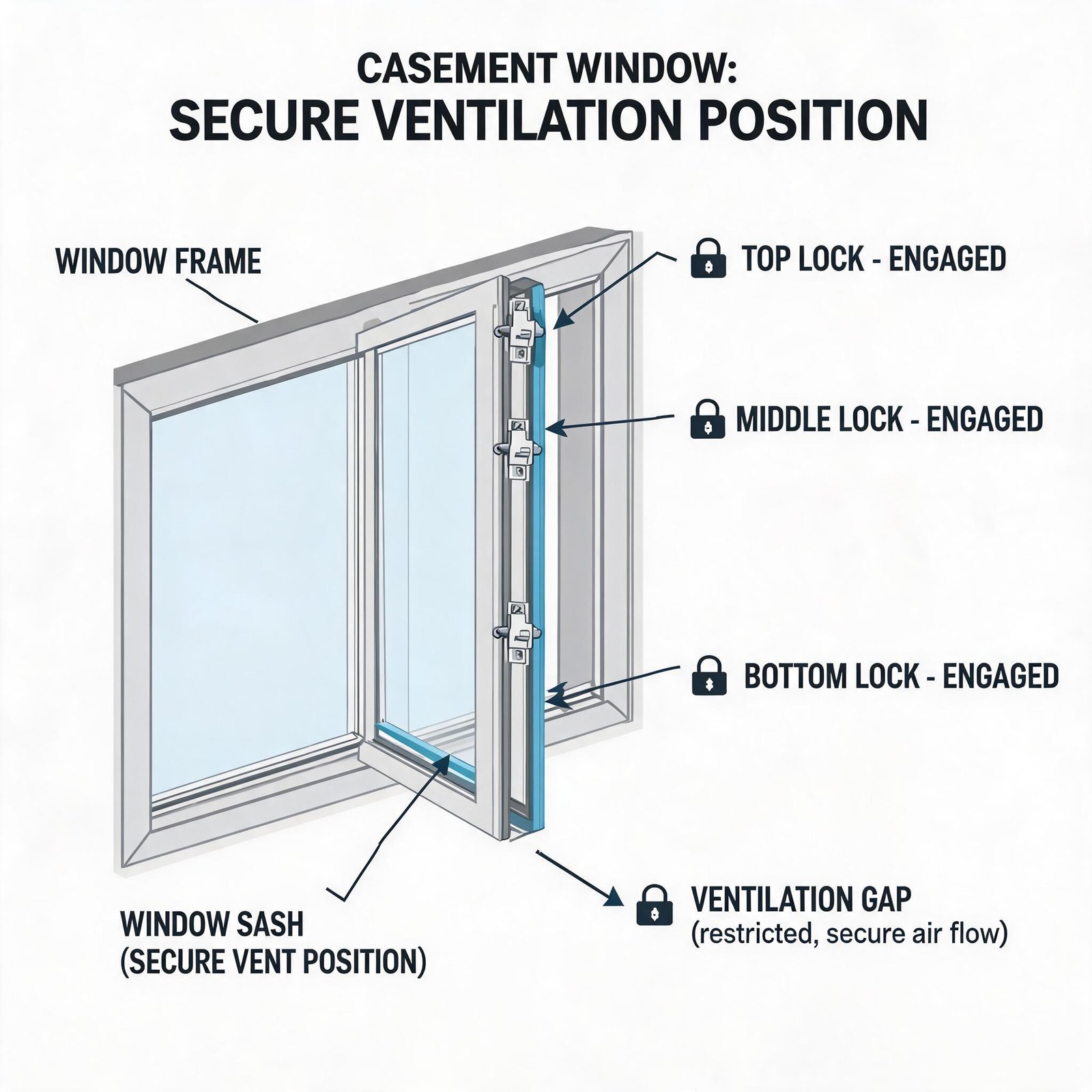
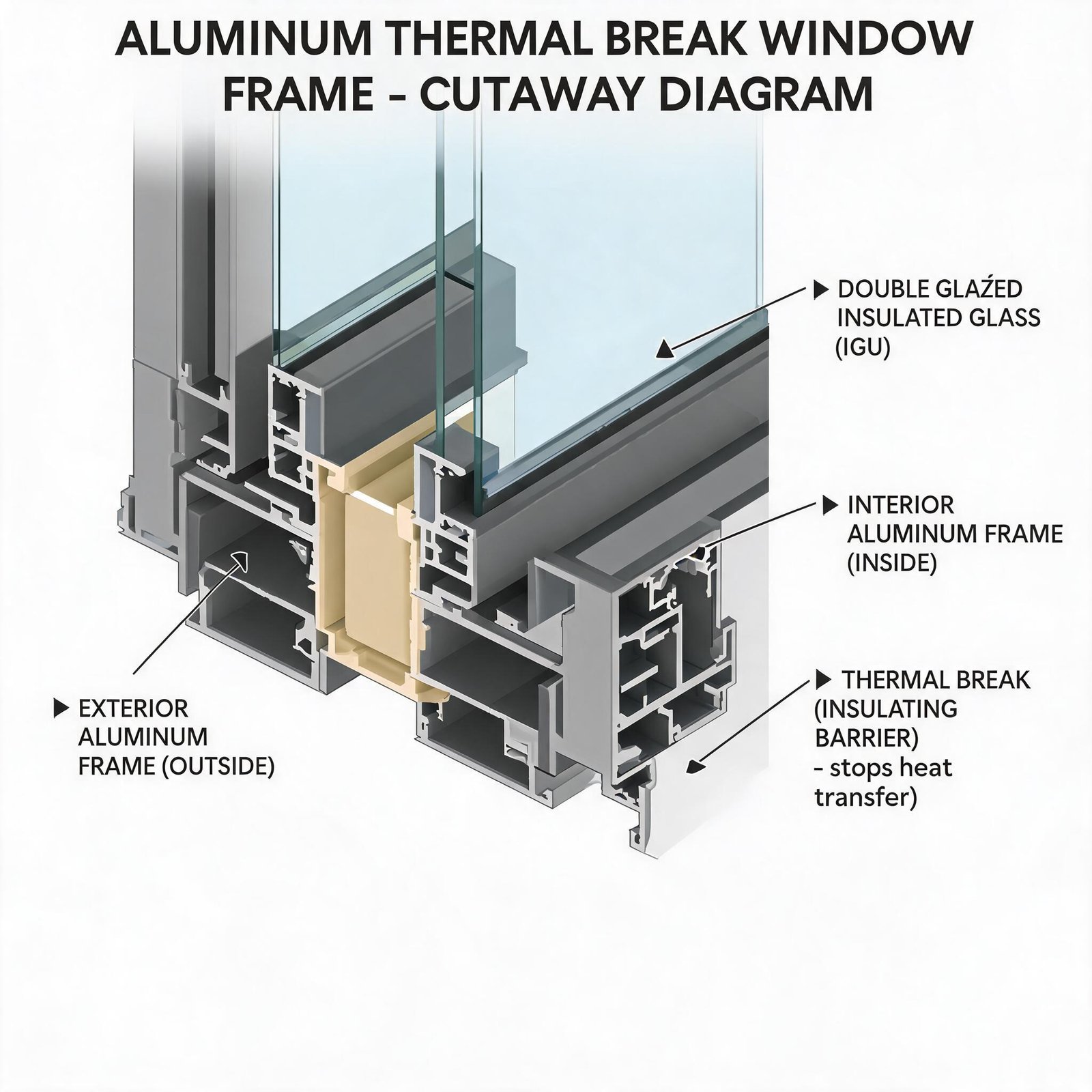
Heat transfer through the frame is just as important as through the glass. Our Vinyl Sliding Patio Doors and casement windows feature multi-chambered profiles that disrupt thermal bridging. Each chamber acts as an insulating dead air space, creating a thermal break that’s physically inherent to the extrusion—no plastic strips, no mechanical joins, no failure points.
For extreme performance, our Aluminum Thermally Broken Sliding Windows use poured-and-debridged polyurethane thermal breaks that eliminate metal-to-metal contact across the frame.
Structural Integrity for Severe Weather
San Antonio weather isn’t just hot—it’s violent. Straight-line winds from thunderstorms can exceed 70 mph. Hail can shatter standard glass. Our windows are engineered for DP-50 (Design Pressure) ratings and higher, meaning they’re tested to withstand wind loads that would tear standard windows from their frames.
For properties in exposed locations, our Aluminum Thermally Broken Sliding Windows provide both thermal performance and structural rigidity, with reinforced frames that handle extreme pressure differentials.
Passive Survivability in Practice
Here’s what this means during a blackout:
With standard double-pane windows, a 2,000-square-foot San Antonio home will reach 90°F within 90 minutes of AC failure on a 100°F day. With Superwindowhouse triple-glazed Low-E windows, that same home stays below 80°F for over four hours. The difference is the passive survivability that protects vulnerable family members—elderly parents, infants, anyone with heat-sensitive health conditions.
B2B Project Implementation—Getting It Right on Site
For contractors and builders, specifying and installing high-performance windows requires precision. Here are the non-negotiable steps.
Rough Opening Verification—Measure Three Times
The industry standard for window rough openings allows ½ inch clearance on each side and ¾ inch at the top. For triple-glazed units, which are heavier and thicker, maintain exact specifications from the shop drawings. A ¼-inch error in the rough opening creates installation problems that compromise thermal performance forever.
Always request shop drawings from your window supplier. Superwindowhouse.com provides these free of charge, with exact dimensions, flashing specifications, and installation details for each project.
Flashing and Waterproofing—The Hidden Performance Killer
Even the most thermally efficient window fails if water enters the rough opening. In San Antonio’s climate, where we alternate between baking heat and tropical downpours, proper flashing is critical.
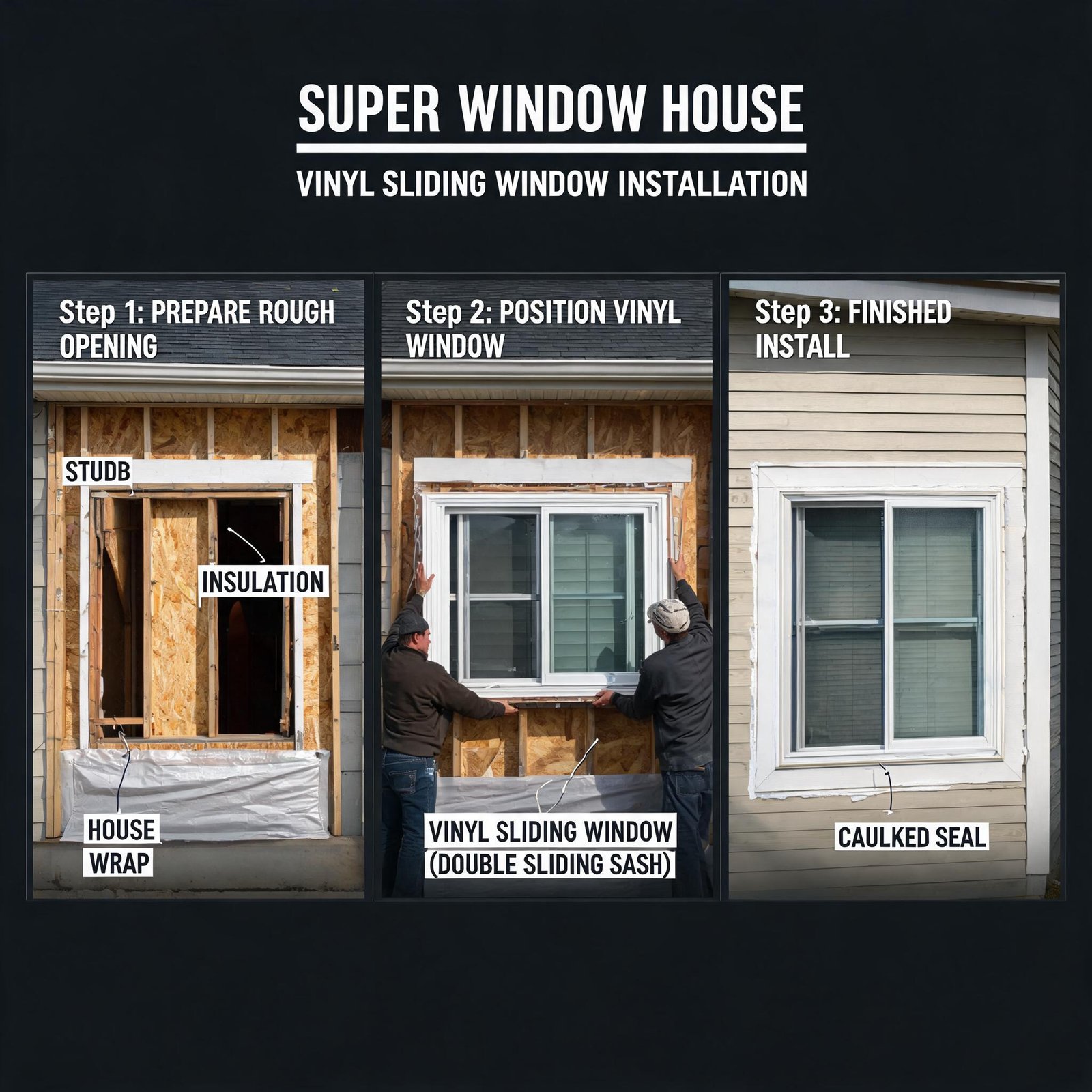
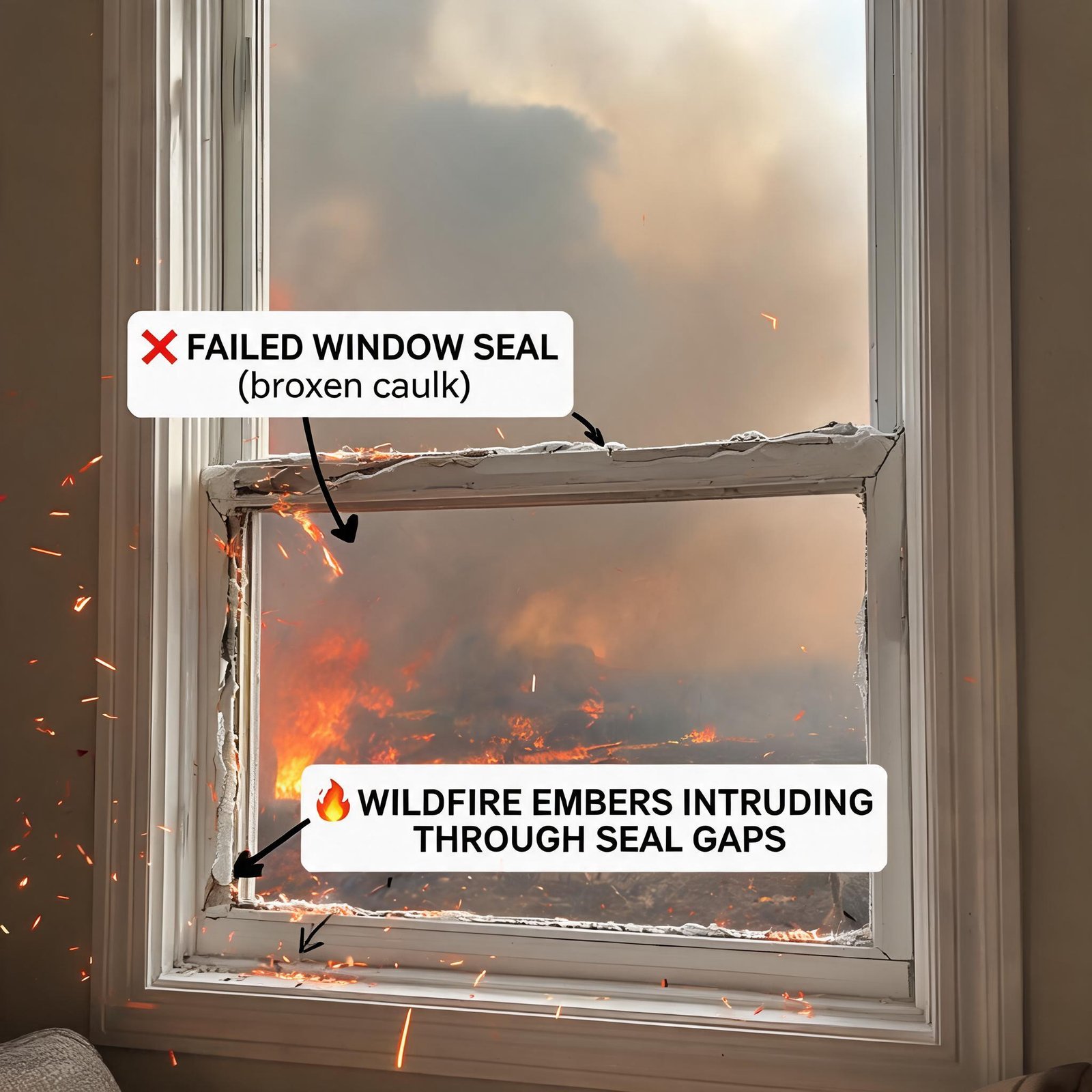
Use a pan flashing system at the sill, jamb flashing on the sides, and head flashing above. Never rely solely on caulk—it fails within 3-5 years. Integrate a nail fin or flashing flange system that mechanically connects the window to the weather-resistant barrier (WRB) of the wall assembly.
Our vinyl windows come with factory-installed nail fins designed for seamless integration with modern house wrap and fluid-applied WRBs.
AAMA Certification—Your Specification Insurance
When specifying windows for commercial or multifamily projects, require AAMA Certification. The American Architectural Manufacturers Association certifies that windows meet performance standards for air, water, and structural integrity. Not all “tested” windows carry AAMA certification—and those that don’t are a liability.
Superwindowhouse.com windows are AAMA-certified and NFRC-rated, giving you the documentation needed for permitting, code compliance, and energy code credits.
B2B Buyer Q&A—Critical Questions Before You Order
Q: How do I verify the NFRC label on windows before installation?
A: Every window should have a permanent NFRC label affixed to the frame or sash. The label lists U-factor, SHGC, visible transmittance (VT), and air leakage. Cross-reference the label number on the NFRC website to verify it matches the product you ordered. If your supplier can’t provide this, walk away.
Q: What’s the typical lead time for triple-glazed Low-E windows from Superwindowhouse?
A: Our standard lead time for custom-size triple-glazed windows is 4-6 weeks, compared to 10-14 weeks for major mass-market brands. We maintain inventory of common sizes and can expedite rush orders for active construction projects.
Q: Do I need to upgrade my rough openings for triple-glazed windows?
A: Usually not. Our windows are designed to fit standard rough openings. However, the weight difference is significant—triple-glazed units can be 30-50% heavier than double-pane. Ensure your framing can support the additional load, especially for large windows.
Q: Can Low-E windows be used in hurricane-prone areas?
A: Yes. Our Impact-Resistant Storm Hung Windows combine Low-E coating with laminated glass and reinforced frames, meeting both energy efficiency and impact resistance requirements for coastal and storm-prone regions.
Final Verdict—Your San Antonio Home’s First Line of Defense
When the next San Antonio weather event knocks out your power—and it will—your windows determine whether your home becomes a shelter or a hazard. The choice between builder-grade and high-performance windows is measured in minutes of survivability, in dollars of energy waste, and in the comfort of knowing your family is protected.
Standard windows save you money at the closing table. Superwindowhouse windows save you money every month for decades—and potentially save you from a dangerous situation when the grid goes dark.
[CTA: Explore our full range of triple-glazed Low-E windows and schedule a consultation for your San Antonio project.]