Modern vinyl sliding windows can be energy-efficient when the complete, installed product is selected and verified for the project—not simply because it is vinyl or because it uses Low-E glass. For builders, architects, and wholesale distributors, the reliable comparison point is the whole-window NFRC rating for the exact size, configuration, frame, glass package, and spacer being purchased. Low-E coated insulated glass units (IGUs), insulated vinyl frame profiles, effective weatherstripping, and climate-appropriate solar control can help reduce heat transfer and improve comfort. ENERGY STAR eligibility and federal tax-credit eligibility are separate, product- and year-specific determinations, so confirm them with current official requirements and the manufacturer’s documentation before specifying or purchasing.
Why Sliding Window Energy Efficiency Is an Engineering Problem, Not a Marketing Claim
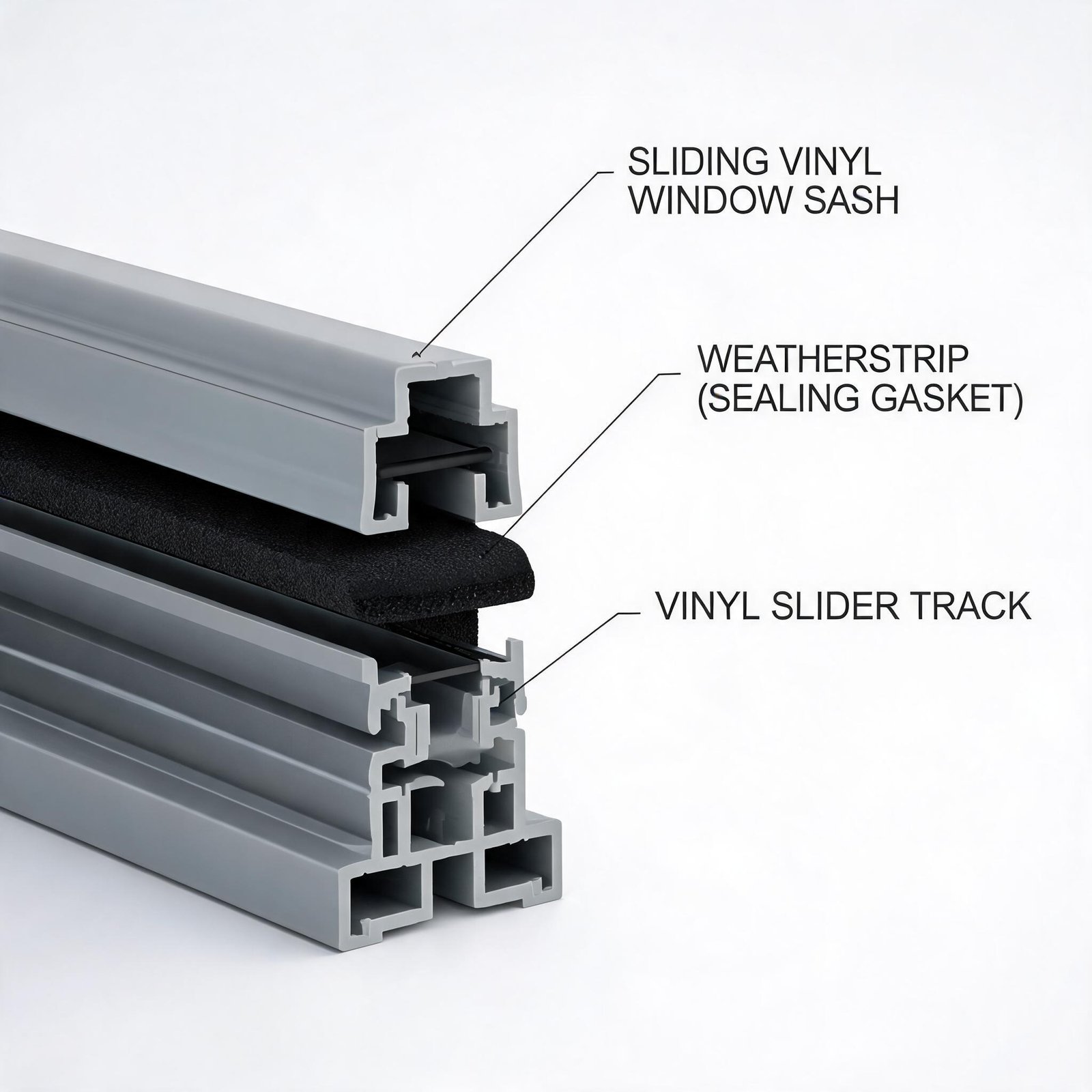
A sliding window’s thermal and air-performance results depend heavily on the interface between the sash and frame. Unlike a casement or awning unit that commonly uses compression seals, a horizontal slider uses meeting rails, weatherstripping, tracks, and drainage details. Those details must balance air control, smooth operation, and water management. Performance therefore varies by product design, size, fabrication quality, and installation.
A poorly designed, damaged, or incorrectly installed slider can allow more air movement than a comparable compression-sealed window. Rather than relying on a generic leakage number, compare the exact product’s reported air-leakage information, applicable test documentation, and installation requirements.
That’s why the NFRC label on a vinyl sliding window should be evaluated as a whole-system rating rather than as a glass-only claim. Whole-window values account for the glazing and relevant frame and sash effects; center-of-glass figures can be useful for glass comparison but should not be substituted for the complete product rating. Ask the supplier for the label or certificate that applies to the exact SKU and size under consideration.
The Real-World Thermal Dynamics of a Vinyl Sliding Window
Three heat-transfer pathways determine how a slider performs:
- Conduction through the frame, sash, glass edges, and spacer. Vinyl is generally less conductive than uninsulated aluminum, while frame geometry and insulating chambers also influence whole-window performance.
- Radiation across the IGU cavity and through the glass. Low-E coatings are designed to reduce radiative heat transfer while allowing useful daylight.
- Convection within the IGU cavity and air movement around the window. Properly selected gas fills, spacer systems, weatherstripping, flashing, and air sealing can help manage these losses.
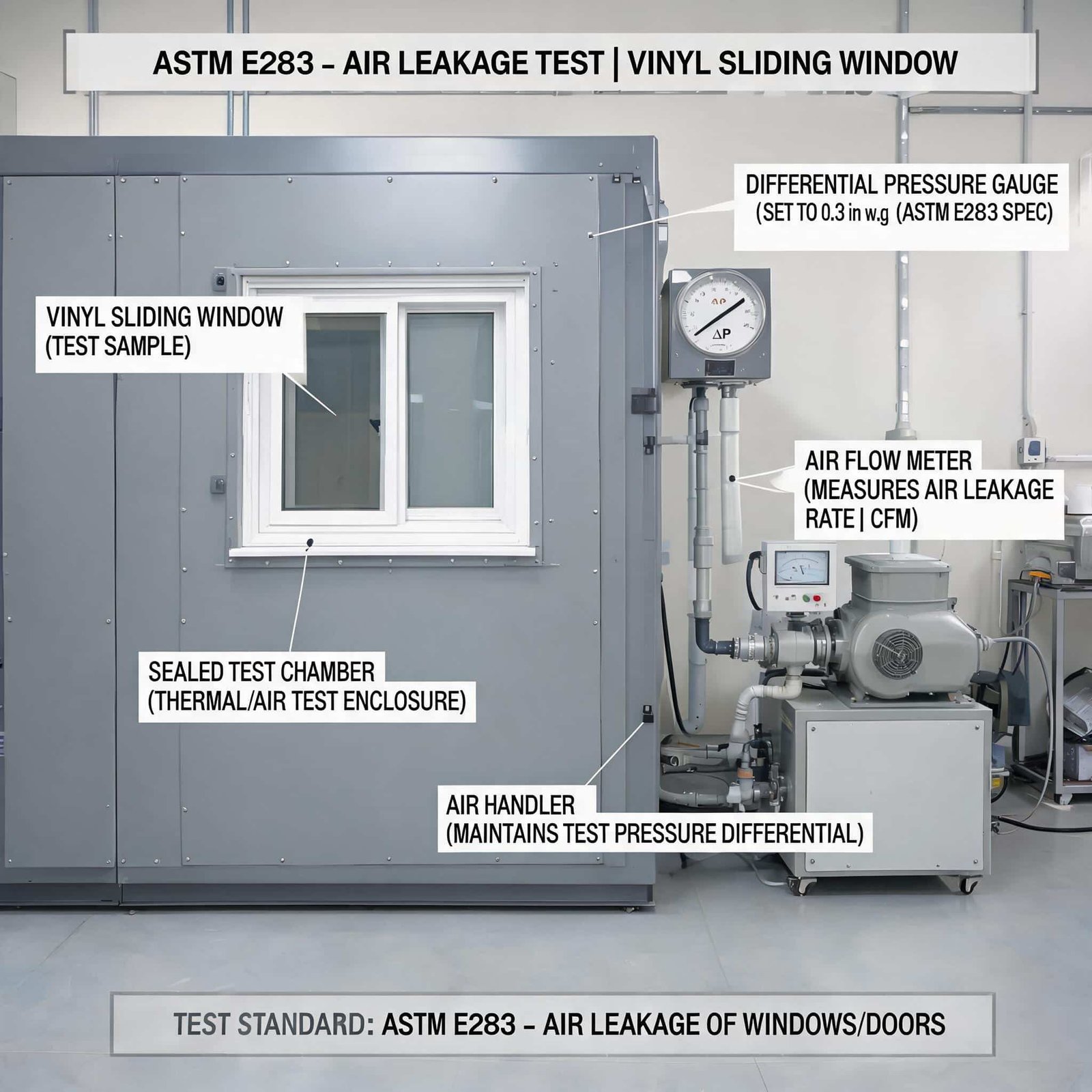
When a builder selects a horizontal slider for a production run in Climate Zone 3 or another cooling- and heating-influenced market, the glazing, frame, spacer, orientation, overhangs, and installation details all matter. In South-Central markets, reference material identifies ENERGY STAR targets of U-Factor ≤ 0.28 and SHGC ≤ 0.23; however, the applicable requirement for a specific project must be verified against the current ENERGY STAR specification, local code, and the exact product’s NFRC documentation. Consult the manufacturer’s installation manual for approved glazing and installation configurations.
Decoding the NFRC Label: U-Factor, SHGC, and the Metrics That Matter
The National Fenestration Rating Council administers an independent rating and labeling system used to compare fenestration products. U-Factor and solar heat gain coefficient (SHGC) are central measures in the reference materials, and visible transmittance and air-leakage information may also be relevant when available for the product. Do not assume every metric is displayed in the same location or format for every product; review the actual NFRC label, certificate, and manufacturer documentation.
U-Factor (U-Value): The Measure of Conducted Heat Loss
U-Factor quantifies non-solar heat flow through a window assembly. Lower values indicate better resistance to heat flow and generally better insulation. The reference materials explain that U-Factor is most useful when comparing complete window assemblies, including glazing, frame, and spacer effects. High-performance double-pane products can achieve low whole-window U-Factors, while single-pane products generally provide much less insulation; actual results must be confirmed by the product label.
U-Factor and R-Value are inverse ways of expressing thermal resistance in simplified terms: R is approximately 1 divided by U when the units are compatible. For example, a U-Factor of 0.25 corresponds approximately to R-4. This comparison is useful for basic interpretation, but a window should not be marketed as equivalent to a wall insulation assembly because windows also involve solar gain, air leakage, glass-edge effects, and installation conditions.
SHGC (Solar Heat Gain Coefficient): The Solar Control Metric
SHGC measures the fraction of incident solar radiation admitted through a window as heat, either directly or after absorption and inward re-radiation. It ranges from 0 to 1, and a lower value generally means less solar heat gain. In cooling-dominated climates such as much of Texas, Arizona, Florida, and Nevada, SHGC is especially important because solar gain can increase cooling demand.
A window with an SHGC of 0.23 is designed to admit less solar heat than a window with a higher SHGC. The practical impact, however, also depends on window area, orientation, exterior shading, local weather, interior loads, and HVAC design. Use SHGC together with U-Factor, visible transmittance, and the project’s energy model rather than treating one rating as a complete prediction of utility savings.
Air Leakage and Condensation Resistance: The Overlooked Performance Indicators
- Air Leakage (AL) describes air passing through a closed window under a specified test condition. Lower reported values generally indicate tighter performance, but ratings, test methods, limits, and whether the value is shown on a label should be verified in the product documentation.
- Condensation Resistance (CR) is intended to indicate relative resistance to interior condensation under defined conditions; where it is reported, higher values are generally preferable. It is not a guarantee against condensation, because indoor humidity, outdoor temperatures, installation, and airflow at the window also matter.
Neither metric should be evaluated in isolation. For cold-weather or high-humidity projects, request the available product data, review the design conditions, and follow the manufacturer’s installation and maintenance guidance. This approach is more reliable than assuming that a generic CR or AL figure predicts every jobsite outcome.
How Low-E Glass and Insulated Glass Units (IGUs) Transform Sliding Window Performance
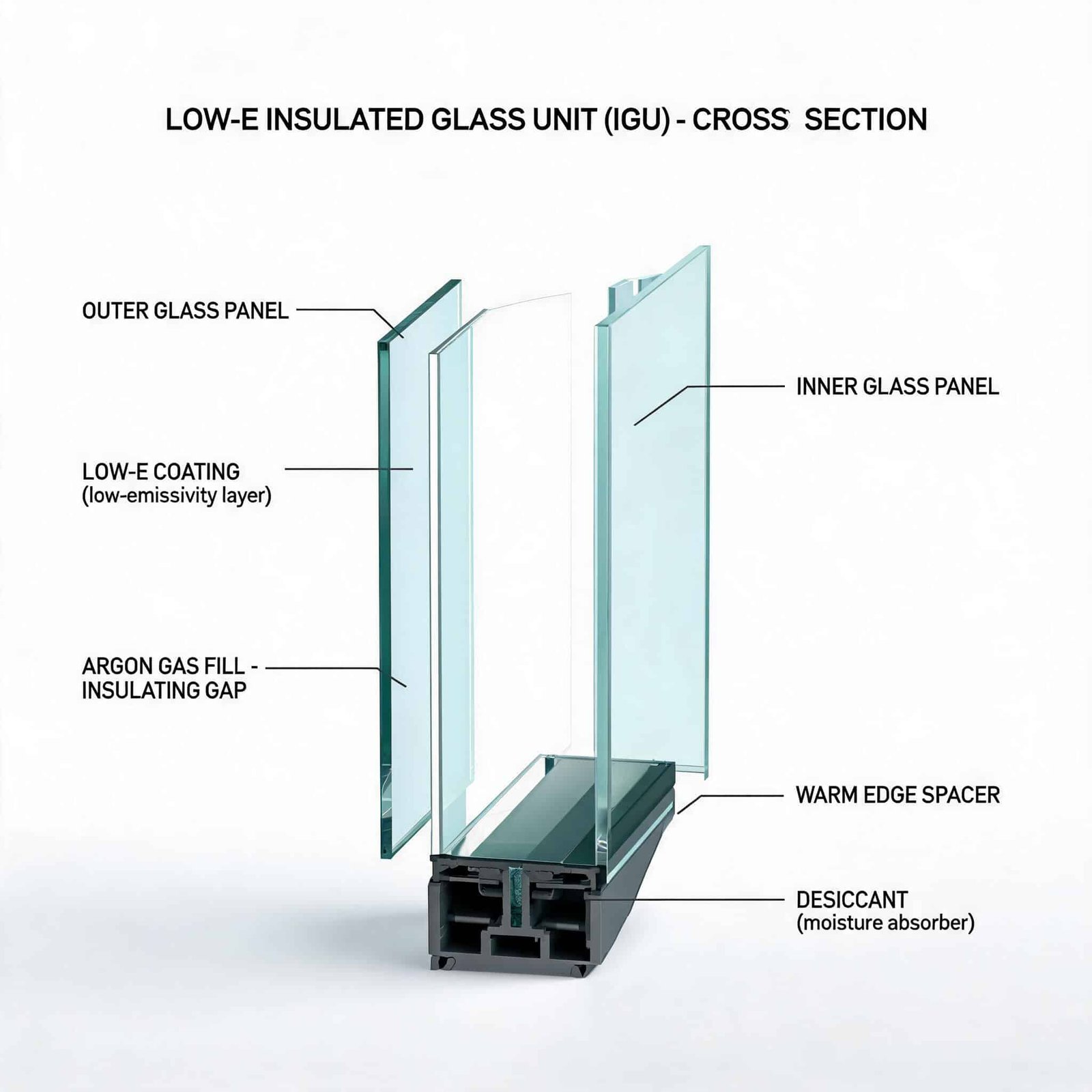
Low-E coatings are thin layers engineered to reduce emissivity and manage radiant heat transfer. When paired with an insulated glass unit (IGU)—typically two or more panes separated by a sealed space and spacer system—the window can provide substantially better thermal performance than clear single glazing. The exact result depends on coating type, glass configuration, gas fill, spacer, frame, window size, and whole-product certification.
Soft-Coat vs. Hard-Coat Low-E: Which Spec Belongs in Your Climate Zone
| Coating Type | Emissivity | SHGC Range | U-Factor Contribution | Durability | Best For |
|---|---|---|---|---|---|
| Pyrolytic (hard-coat) | Varies by product | Often higher than solar-control options | Can improve insulating performance | Durable coating type | Projects balancing daylight, passive solar considerations, and climate needs |
| Sputtered (soft-coat) | Varies by product | Can be configured for lower solar gain | Can provide strong thermal performance in an IGU | Used within sealed IGU constructions | Mixed and hot climates when selected for the design target |
| Solar-control soft-coat | Varies by product | Often selected for lower SHGC | Depends on the full window assembly | Used within sealed IGU constructions | Cooling-dominated projects and high-sun exposures |
For a South-Central project, solar-control Low-E glass may help a product meet low-SHGC targets, but no coating position or IGU thickness guarantees a particular whole-window result. Select the glazing package by using the current climate-zone criteria, building energy model, window orientation, and the exact NFRC-certified performance data supplied by the manufacturer.
Argon vs. Krypton Gas Fill: Cost-Performance Analysis for Production Builders
Argon and krypton are inert-gas options used in some IGUs to reduce convection and improve thermal performance relative to air-filled configurations. Argon is commonly used in residential IGUs, while krypton may be considered in specialized, narrower-cavity, or very-low-U-Factor designs. The cost and benefit depend on cavity dimensions, glass package, local availability, and the certified whole-window result—not on gas type alone.
For production builders, compare the incremental cost against the documented U-Factor, SHGC, condensation behavior, warranty terms, and project energy target. Request the manufacturer’s specification for the exact IGU and consult the manufacturer’s installation manual rather than assuming a gas fill will deliver a fixed percentage improvement.
Warm-Edge Spacers and the Thermal Bridging Problem
The spacer bar separating glass panes affects edge-of-glass temperatures and can influence whole-window U-Factor and condensation resistance. Conventional metal spacers can create more conductive paths around the glass perimeter than some alternative spacer designs.
Warm-edge spacer systems use different materials and geometries to reduce edge-of-glass heat transfer. Their value should be assessed through the certified whole-window rating and available condensation-related data for the actual product. Do not rely on a generic percentage improvement, because results vary with the spacer, glazing, frame, size, and test method.
ENERGY STAR Sliding Windows: Climate Zone Compliance Matrix
ENERGY STAR requirements change over time and are based on the current program specification and climate-zone definitions. The matrix below is a procurement-oriented guide, not a substitute for the current official specification. The supplied reference material specifically identifies South-Central/Texas criteria of U-Factor ≤ 0.28 and SHGC ≤ 0.23. Verify every other regional threshold, the applicable version, and the exact product qualification before making a certification, code, or tax-credit claim.
| Climate Zone | U-Factor (Max) | SHGC (Max) | Typical Compliant Glazing Package | Representative U.S. Regions |
|---|---|---|---|---|
| Northern | Verify current ENERGY STAR requirement | Verify current ENERGY STAR requirement | Often emphasizes low U-Factor; product-specific certification required | Cold and heating-dominated markets |
| North-Central | Verify current ENERGY STAR requirement | Verify current ENERGY STAR requirement | Balance insulation and solar-control needs by project | Mixed heating and cooling markets |
| South-Central | ≤ 0.28 in supplied reference material | ≤ 0.23 in supplied reference material | Often uses low-SHGC Low-E IGU options; verify whole-window label | Texas and other South-Central locations |
| Southern | Verify current ENERGY STAR requirement | Verify current ENERGY STAR requirement | Often prioritizes solar control and appropriate insulation | Hot and cooling-dominated markets |
In heating-dominated locations, solar gain may be evaluated differently than in cooling-dominated locations. In South-Central and Southern projects, low SHGC is often important, but applicable limits are not universal assumptions. Always consult the latest ENERGY STAR criteria, local energy code, and the NFRC label for the specific window size and configuration.
A qualified glazing supplier like custom windows for house applications should provide NFRC-certified product information for the actual SKU, configuration, and size—not only generic family data. Before permit submission, purchase approval, or an incentive claim, request the relevant label, certificate, installation instructions, warranty terms, and any required manufacturer statement.
Vinyl vs. Aluminum Sliding Windows: A Direct Performance and Cost Comparison
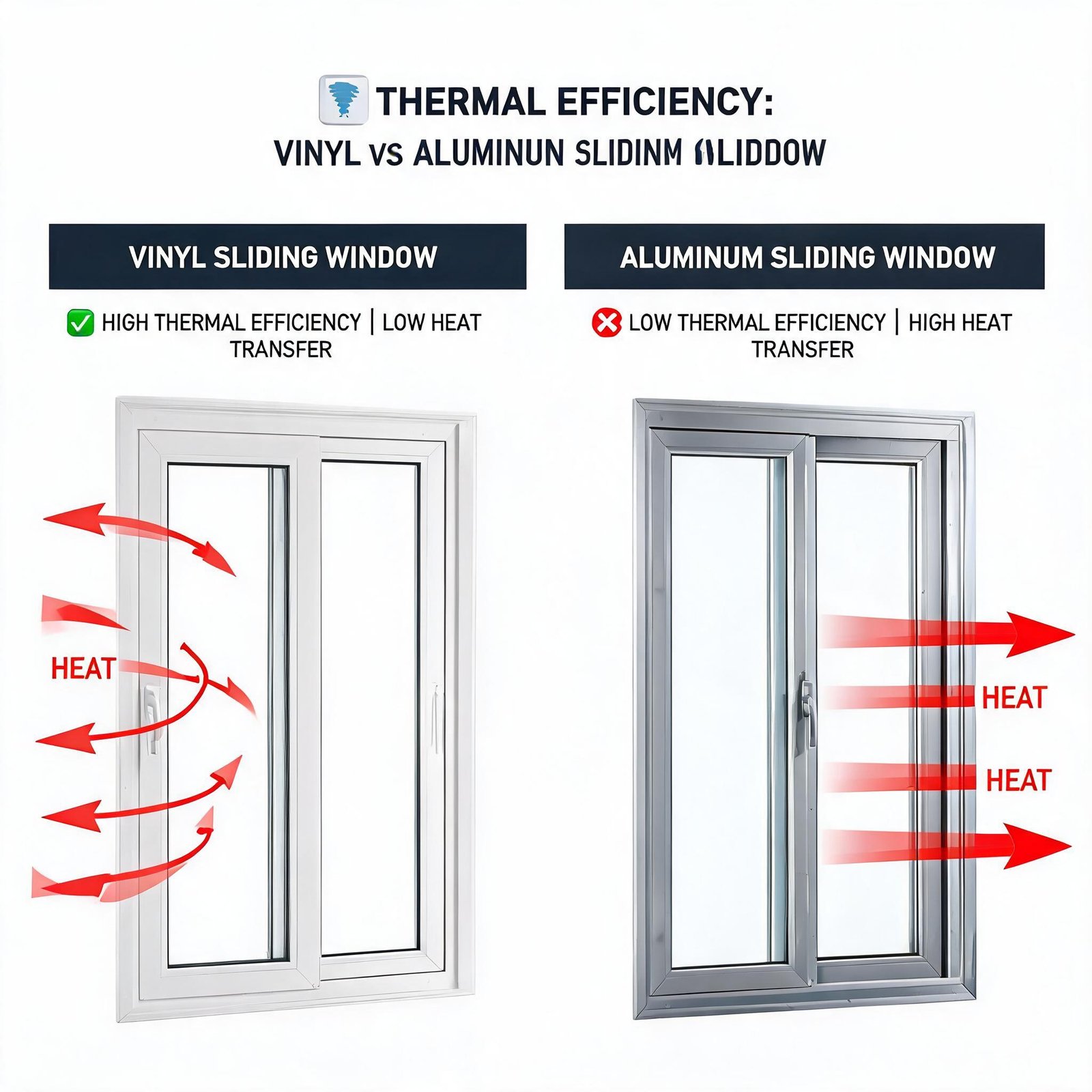
Uninsulated aluminum frames generally conduct heat more readily than vinyl frames. Modern thermally broken aluminum systems can improve thermal performance significantly, but their final U-Factor, SHGC, air leakage, structural capacity, sightlines, finish options, and cost vary by system. The appropriate choice depends on the specific project rather than on frame material alone.
| Assembly Configuration | Whole-Window U-Factor | SHGC Range | Condensation Resistance | Relative Cost Index | Primary Application |
|---|---|---|---|---|---|
| Single-pane, clear, aluminum | Generally higher; verify product rating | Generally higher; verify product rating | Varies by product and conditions | $ | Legacy buildings or limited-use applications |
| Double-pane, clear, aluminum | Varies by frame thermal break and glass package | Varies by glazing | Varies by product and conditions | $$ | Projects requiring aluminum appearance or structural characteristics |
| Double-pane, Low-E, argon, vinyl | Verify whole-window NFRC rating | Verify glazing and product label | Verify available product data | $$$ | Many residential replacement and new-construction projects |
| Double-pane, solar-control Low-E, argon, vinyl | Verify whole-window NFRC rating | Can be selected for low SHGC | Verify available product data | $$$ | Cooling-dominated and high-sun exposures |
| Triple-pane, dual Low-E, krypton, warm-edge vinyl | Can target very low U-Factor; verify certification | Varies by coating selection | Verify available product data | $$$$ | Cold climates or high-performance projects |
For volume residential construction, a aluminum sliding window may be appropriate where structural demands, coastal exposure, large openings, or slim sightlines are priority considerations. Vinyl can be a strong option for many single-family and low-rise projects because of its insulating frame characteristics. Compare NFRC ratings, design-pressure documentation, water-resistance requirements, warranty terms, and local code requirements before deciding.
Specifying Energy Efficient Sliding Windows for Your Next Project
Use this checklist before you release a purchase order:
- Verify the NFRC label for every SKU and relevant size—use whole-window U-Factor and SHGC as the baseline comparison, then review other available performance information.
- Match the glazing package to the climate zone—do not assume one IGU works optimally across every region, orientation, or building type.
- Confirm AAMA/WDMA/CSA 101/I.S.2/A440 certification or other applicable documentation for structural performance, water penetration resistance, and the project’s required performance grade.
- Request available air-leakage test information and compare products on the same reported basis; confirm the applicable acceptance criteria with the manufacturer and local code official.
- Specify warm-edge spacers when the project’s thermal and condensation objectives support them, and confirm the actual product construction rather than assuming they are standard.
- Confirm IGU construction and gas-fill documentation when gas fill is specified; use the manufacturer’s certified product data rather than a generic concentration assumption.
- Check the window’s Section 25C tax credit eligibility for the applicable tax year—the manufacturer must provide the relevant qualification documentation, and IRS and ENERGY STAR requirements should be reviewed before purchase.
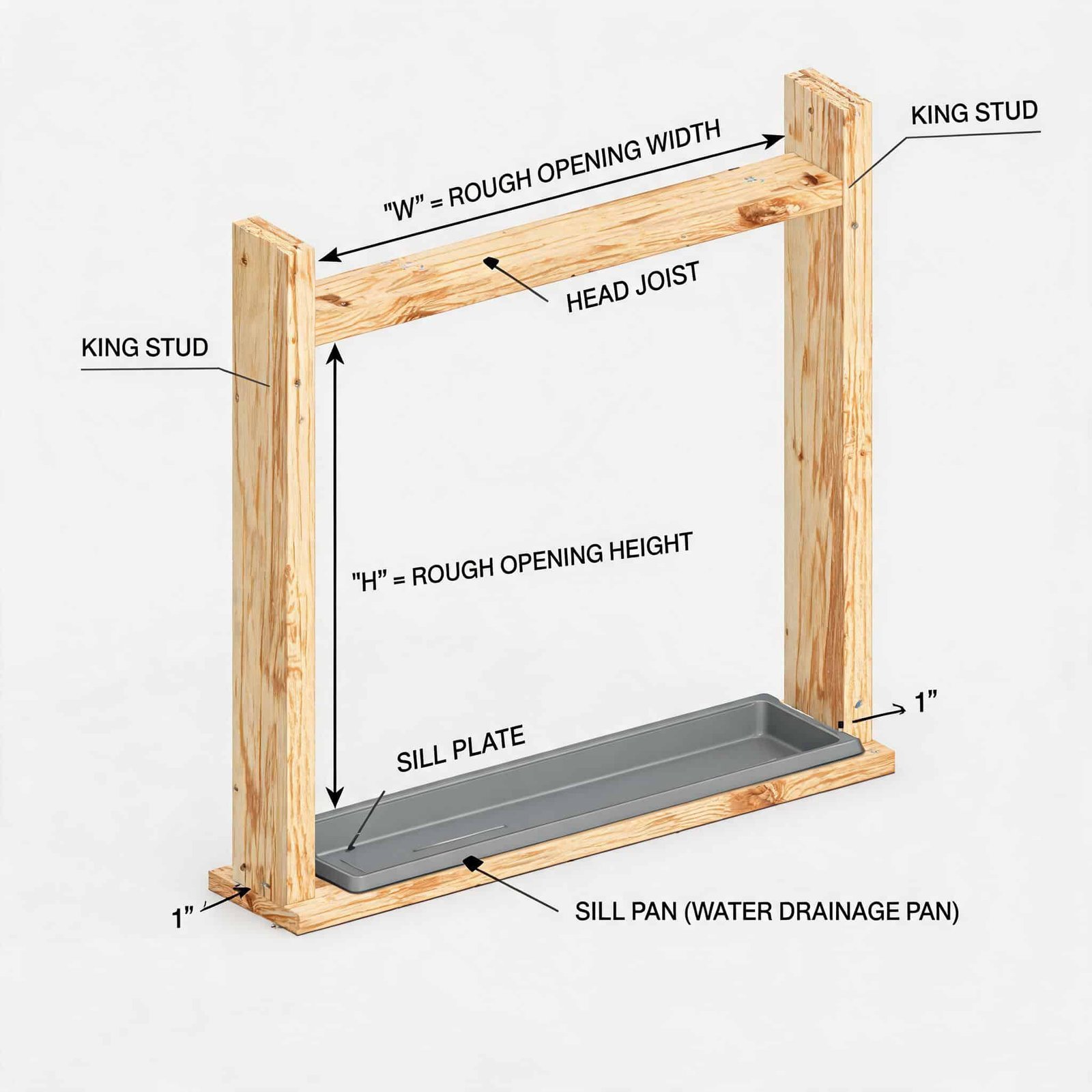
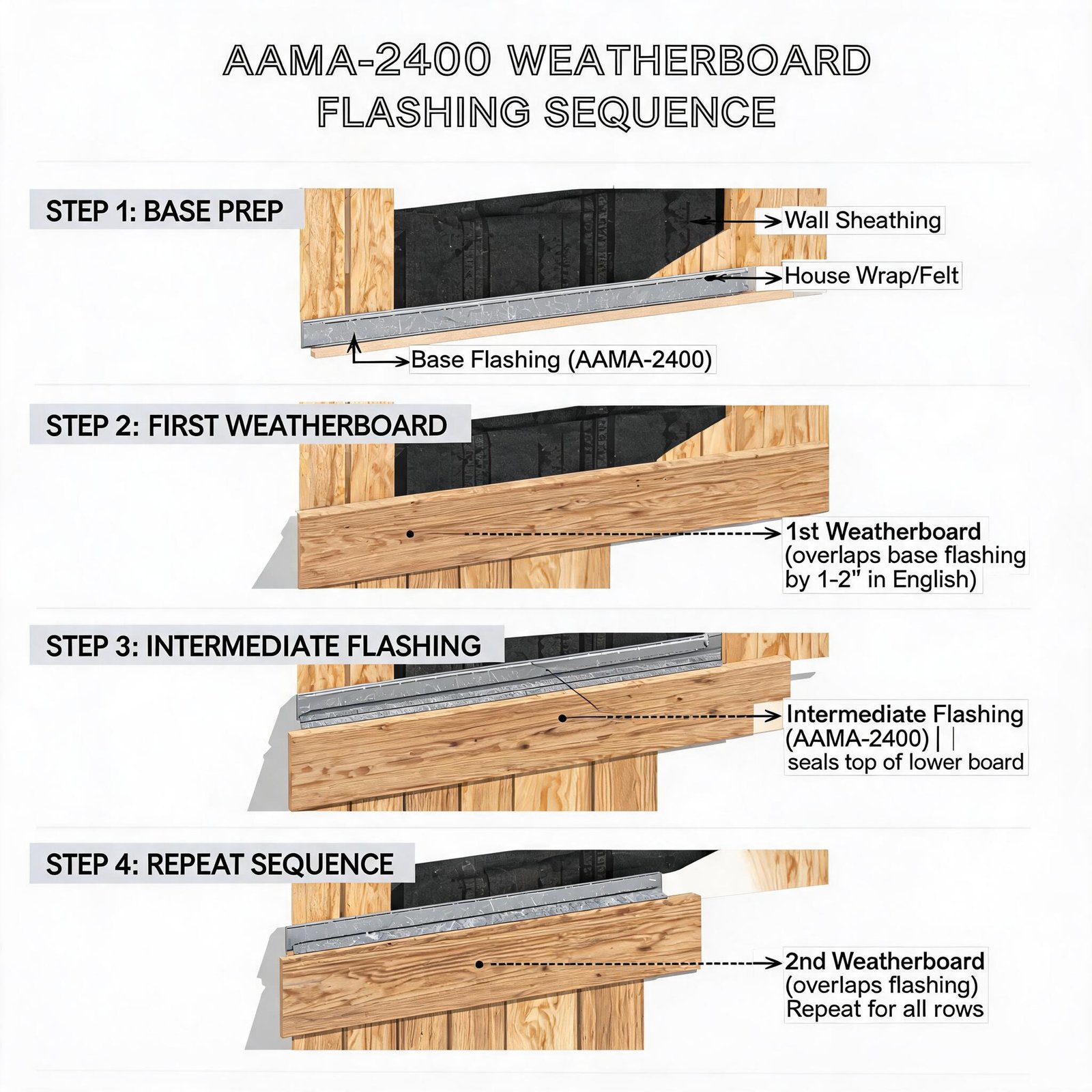
- Audit installation details—even a high-performing window can underperform if the rough opening is not flashed, drained, insulated, and air-sealed according to the manufacturer’s instructions, applicable standards, and local requirements.
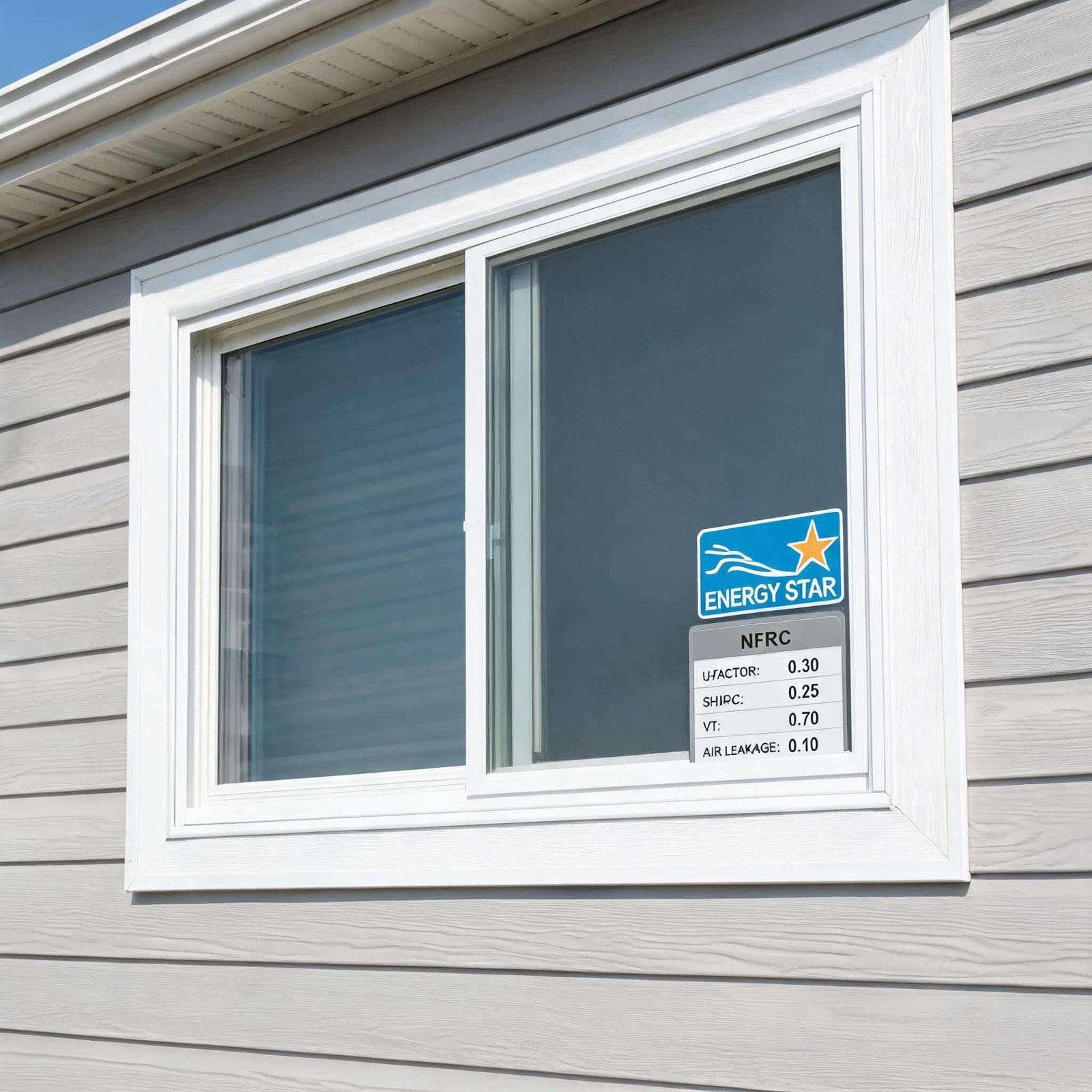
A Sliding window that meets the documented requirements for its intended project is more than a commodity item—it is part of the building envelope system. Treat it that way in procurement documentation. Ask the supplier to provide the exact NFRC label, configuration details, installation manual, warranty, and applicable test or certification reports so the energy rater, HVAC designer, installer, and buyer can evaluate the same verifiable product.
Frequently Asked Questions
Are vinyl sliding windows as energy efficient as casement or awning windows?
They can be competitive, but the answer depends on the exact product. Casement and awning windows commonly use compression seals, while sliders rely on meeting rails and weatherstripping, so air-performance differences can occur. Compare the whole-window NFRC U-Factor, SHGC, available air-leakage data, size, and installation requirements for the specific models. Specifying a casement windows style may be appropriate where operating style, air control, wind exposure, or project-specific performance requirements favor it.
Do ENERGY STAR sliding windows qualify for federal tax credits?
Not automatically. Federal Section 25C eligibility, annual credit limits, qualifying performance thresholds, and documentation requirements can change. Before purchase, check the current IRS guidance, current ENERGY STAR requirements, and the manufacturer’s written eligibility statement for the exact product. Keep all required purchase and product records.
How much can energy efficient sliding windows actually save?
U.S. Department of Energy information cited in the reference materials states that window heat gain and loss account for about 25–30% of residential heating and cooling energy use. Savings from replacement windows depend on the existing windows, window area, climate, orientation, shading, air leakage, installation quality, energy prices, and HVAC system. Use an energy model or a qualified local professional for a project-specific estimate rather than relying on a universal savings percentage.
What U-Factor should I specify for a sliding window in Texas?
The supplied South-Central reference identifies ENERGY STAR values of U-Factor ≤ 0.28 and SHGC ≤ 0.23 for Texas-related guidance. Confirm the current requirement for the project location and product category, then compare the exact whole-window NFRC rating. A lower U-Factor or SHGC is not automatically better in every design; daylight, orientation, shading, winter comfort, and code requirements should also be considered.
Do low-E sliding windows reduce visible light transmission significantly?
Low-E glass can affect visible transmittance, but the extent varies by coating and glass package. Some solar-control products are designed to lower solar heat gain while retaining useful daylight. Compare the product’s NFRC visible transmittance value, SHGC, color appearance, and sample glass under real project conditions instead of assuming a fixed percentage reduction.