Yes, properly engineered vinyl awning windows deliver exceptional energy efficiency, typically achieving U-values between 0.25 and 0.30 and air leakage ratings below 0.05 cfm/ft²—making them among the most thermally efficient operable window styles available for residential and light commercial applications. This performance stems from the compression-seal design inherent to awning windows, where the sash presses firmly against the frame when closed, combined with multi-chambered uPVC frames and dual-pane Low-E glass packages. For builders and contractors specifying windows for projects requiring both ventilation and thermal performance, vinyl awning windows offer a compelling solution that consistently outperforms sliding or double-hung alternatives in independent NFRC testing.
Understanding the Anatomy of a Vinyl Awning Window’s Thermal Performance
When we talk about energy efficiency in vinyl awning windows, we’re really discussing three interconnected engineering systems working together: the frame construction, the glazing package, and the sealing mechanism. Each component must be optimized for the window to deliver its rated performance.
Multi-Chamber Frame Design
The foundation of any energy-efficient vinyl awning window begins with its extruded uPVC frame. Unlike aluminum frames that conduct heat readily, vinyl’s inherently low thermal conductivity makes it an excellent insulator. However, not all vinyl frames are equal.
Premium manufacturers utilize multi-chamber profiles—typically 3 to 7 separate air pockets running the length of the frame. These chambers trap still air, which acts as a thermal barrier. The more chambers, the higher the insulation value. Industry benchmark testing shows that a 5-chamber uPVC frame can reduce heat transfer by up to 40% compared to a basic 2-chamber design.

The Compression-Seal Advantage
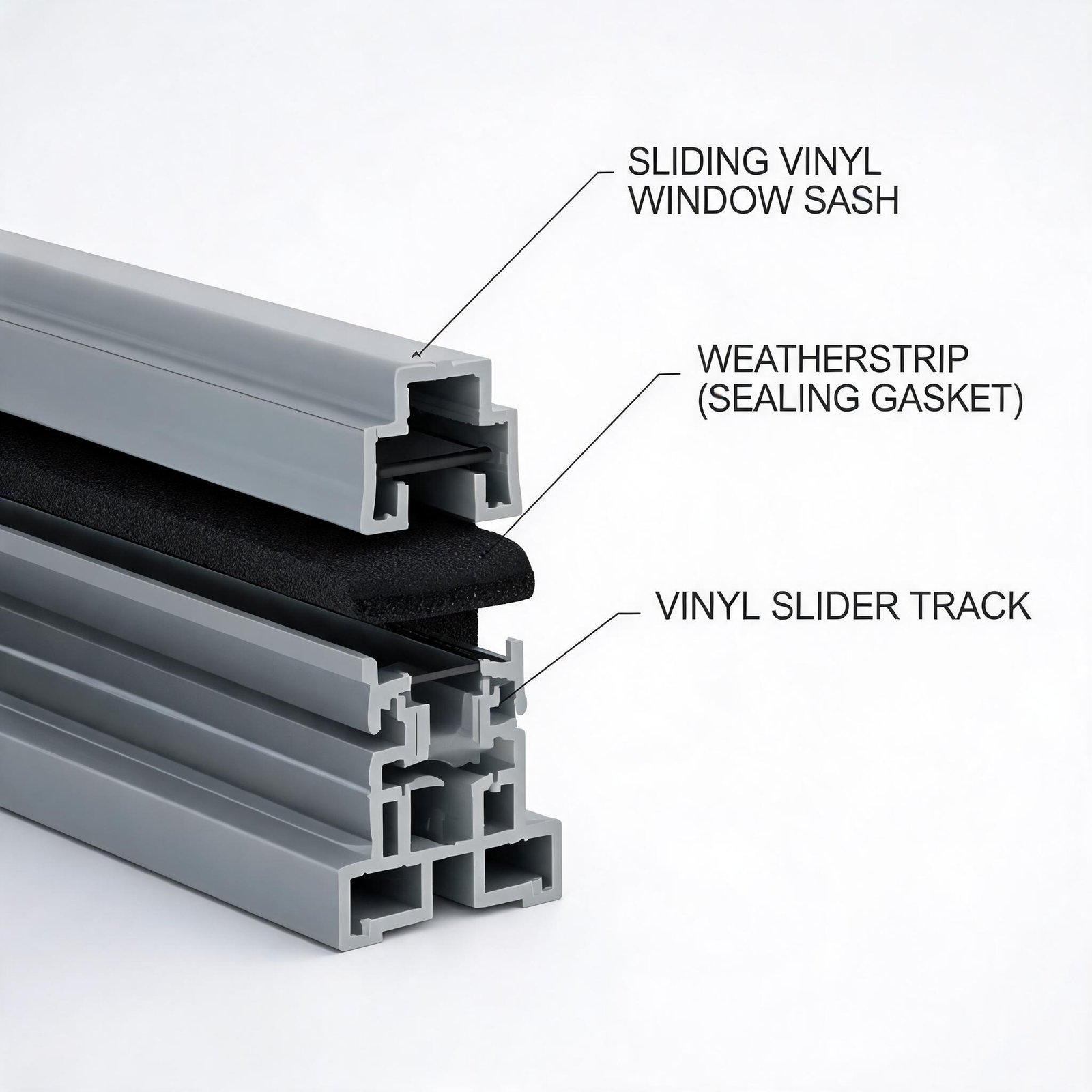
What truly sets awning windows apart from other operable styles is their compression-seal operation. When you crank the sash closed, it pulls tight against the frame, compressing the weatherstripping along all four sides. This creates a seal that significantly outperforms the sliding seals found on double-hung or sliding windows.
For context, a standard double-hung window with pile weatherstripping might achieve an air leakage rating of 0.15 cfm/ft². A well-designed vinyl awning window typically tests at 0.03 to 0.05 cfm/ft². That’s a 60-70% reduction in uncontrolled air infiltration. In B2B terms, this means fewer callbacks for draft complaints and lower total energy costs for the building over its lifecycle.
Breaking Down the U-Value: What Contractors Need to Know
The U-factor (or U-value) measures how effectively a window prevents heat from escaping. It’s the inverse of R-value—lower numbers mean better insulation. For vinyl awning windows, here’s what the numbers look like across different glazing configurations:
| Glazing Package | Center-of-Glass U-Value | Whole Window U-Value | Typical SHGC | Air Leakage (cfm/ft²) |
|---|---|---|---|---|
| Single-pane clear | 1.05 – 1.15 | 1.10 – 1.20 | 0.70 – 0.80 | 0.10 – 0.20 |
| Double-pane clear | 0.48 – 0.55 | 0.50 – 0.60 | 0.60 – 0.70 | 0.05 – 0.10 |
| Double-pane Low-E, Argon fill | 0.25 – 0.30 | 0.28 – 0.35 | 0.25 – 0.40 | 0.03 – 0.05 |
| Triple-pane Low-E, Krypton fill | 0.18 – 0.22 | 0.20 – 0.27 | 0.20 – 0.30 | 0.02 – 0.04 |
What this table tells you as a professional specifier: specifying a double-pane vinyl awning window with Low-E coating and argon gas fill drops the U-value by approximately 70% compared to a basic single-pane unit. That’s the difference between a window that meets ENERGY STAR requirements and one that wastes energy every day.
Why U-Value Matters on Your Job Sites
For residential builders working in Climate Zone 4 (mixed-humid) through Zone 7 (very cold), ENERGY STAR now requires windows to achieve U-values of 0.30 or lower. A vinyl awning window with a proper glazing package easily meets this threshold. For commercial projects, LEED v4.1 and IgCC requirements often push toward U-values below 0.28. Triple-pane options can deliver that performance.
Air Leakage Ratings: The Overlooked Performance Killer
Here’s something many general contractors don’t fully appreciate: a window with an excellent U-value but poor air leakage will perform worse in real-world conditions than a moderate U-value window with excellent air sealing. Why? Because air leakage bypasses the insulation entirely.
Understanding Air Infiltration Testing
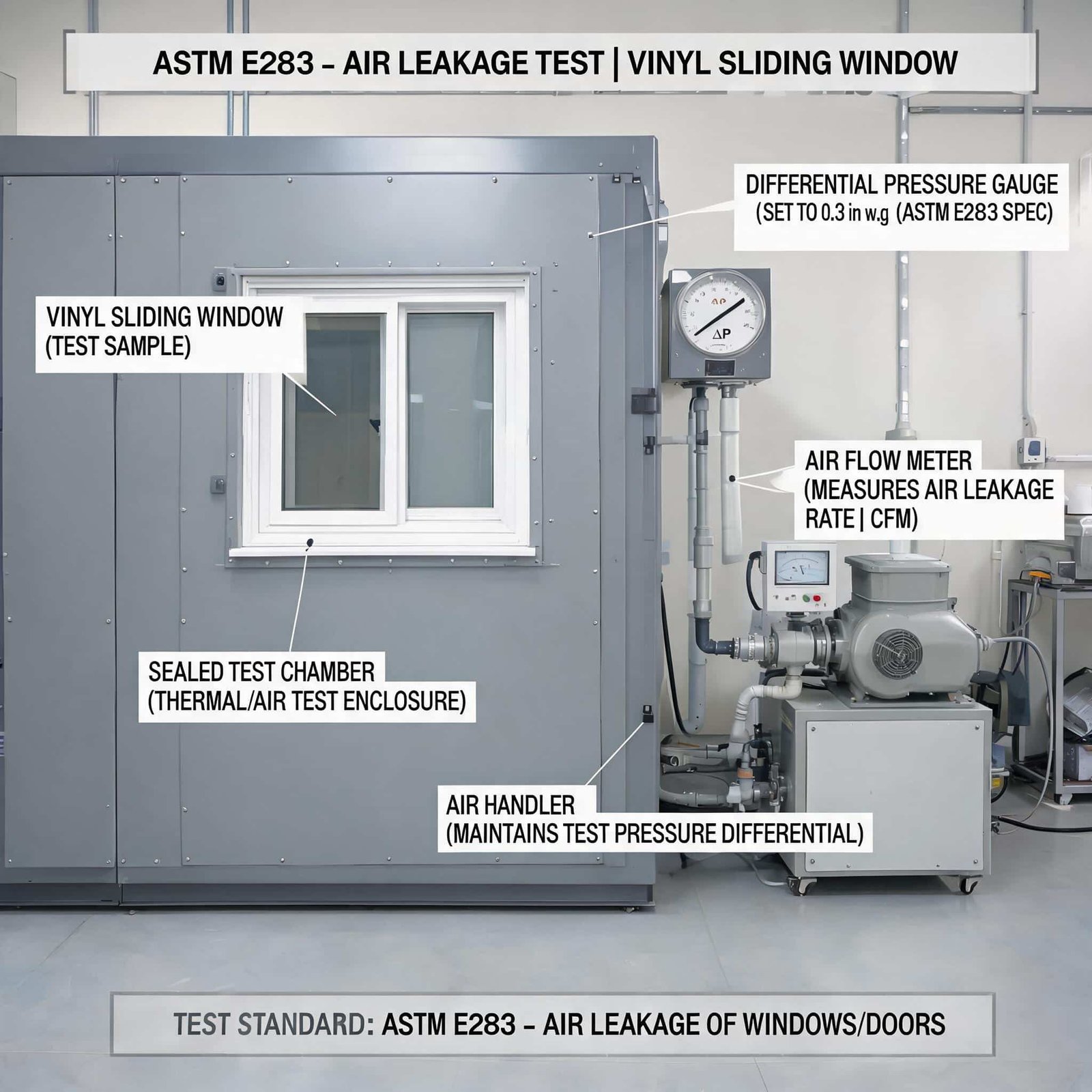
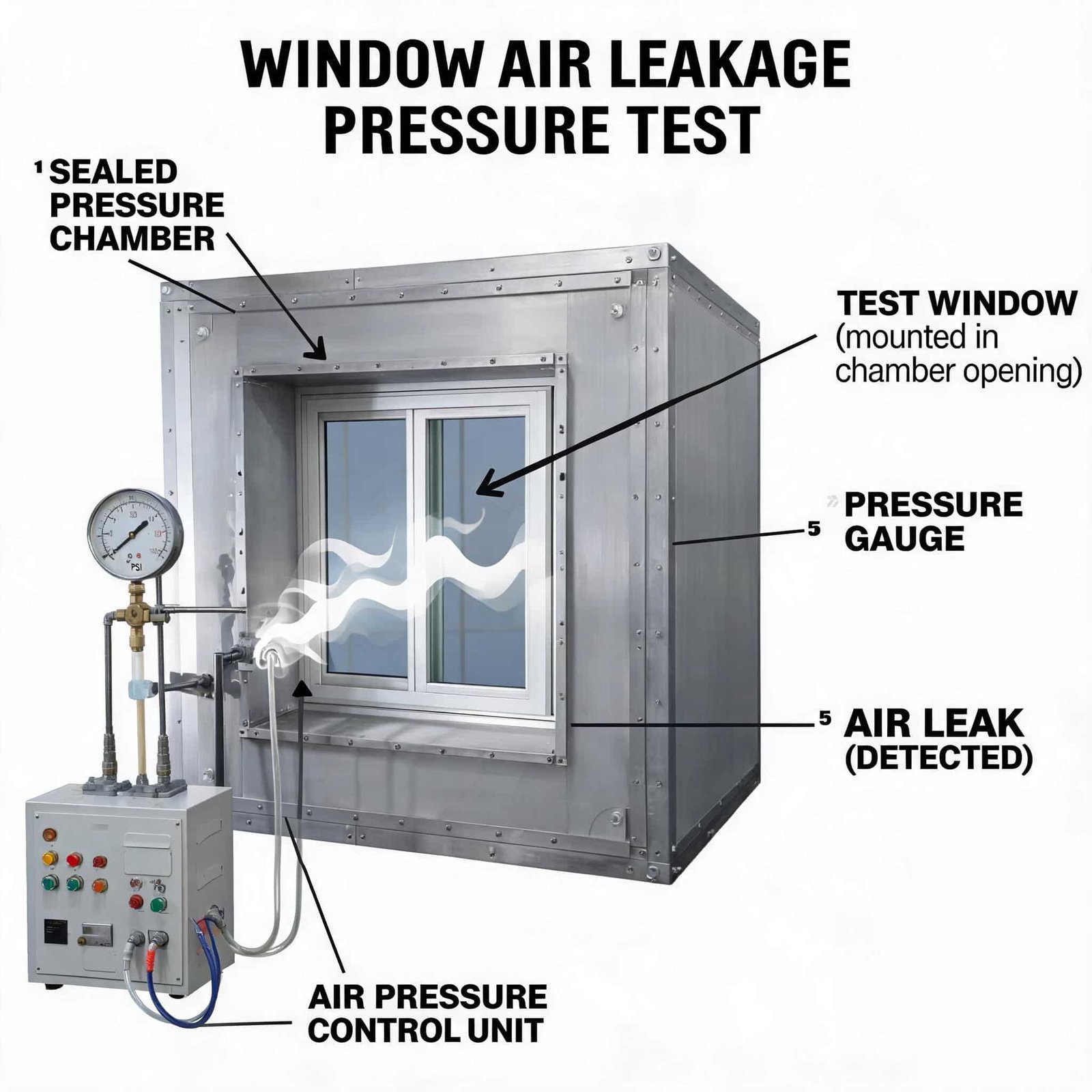
The air leakage rating, measured in cfm/ft² at a standard pressure differential of 1.57 psf (75 Pa), tells you how much outside air can infiltrate through the closed window’s seals. The AAMA/WDMA/CSA 101/I.S.2/A440 standard establishes performance classes:
- R-Class (Residential): ≤ 0.3 cfm/ft²
- LC-Class (Light Commercial): ≤ 0.2 cfm/ft²
- CW-Class (Commercial Window): ≤ 0.15 cfm/ft²
- AW-Class (Architectural Window): ≤ 0.08 cfm/ft²
Well-designed awning windows typically test at AW-Class performance levels—the highest classification possible. This is why architects increasingly specify awning windows for high-performance building envelopes.
Real-World Impact on Building Performance
Consider a 2,500 sq ft home with 15 windows averaging 12 sq ft each. If those windows have an air leakage rating of 0.15 cfm/ft² instead of 0.04 cfm/ft², that’s an additional 19.8 cubic feet of unconditioned air entering the building every minute during a 15 mph wind. Over a heating season, this adds up to significant energy waste—and uncomfortable drafts that homeowners notice immediately.
For builders working on custom homes or production developments, the difference between 0.05 and 0.15 cfm/ft² air leakage can be the deciding factor between passing or failing a blower door test for ENERGY STAR certification.
Are Vinyl Windows Energy Efficient? The Material Science Answer
This question comes up on every project spec review. The short answer: yes, premium uPVC window systems are among the most energy-efficient framing materials available today. Here’s the engineering breakdown:
Vinyl vs. Other Frame Materials
| Frame Material | Thermal Conductivity (BTU-in/hr-ft²-°F) | Typical Frame U-Value | Maintenance Requirements | Relative Cost |
|---|---|---|---|---|
| uPVC (vinyl) | 1.0 – 1.3 | 0.20 – 0.35 | Very low | $$ |
| Aluminum (no thermal break) | 120 – 145 | 0.80 – 1.20 | Moderate | $$ |
| Thermally broken aluminum | 2.5 – 4.0 | 0.40 – 0.60 | Moderate | $$$$ |
| Fiberglass | 3.0 – 5.0 | 0.30 – 0.45 | Low | $$$ |
| Wood | 0.8 – 1.2 | 0.25 – 0.40 | High | $$$ |
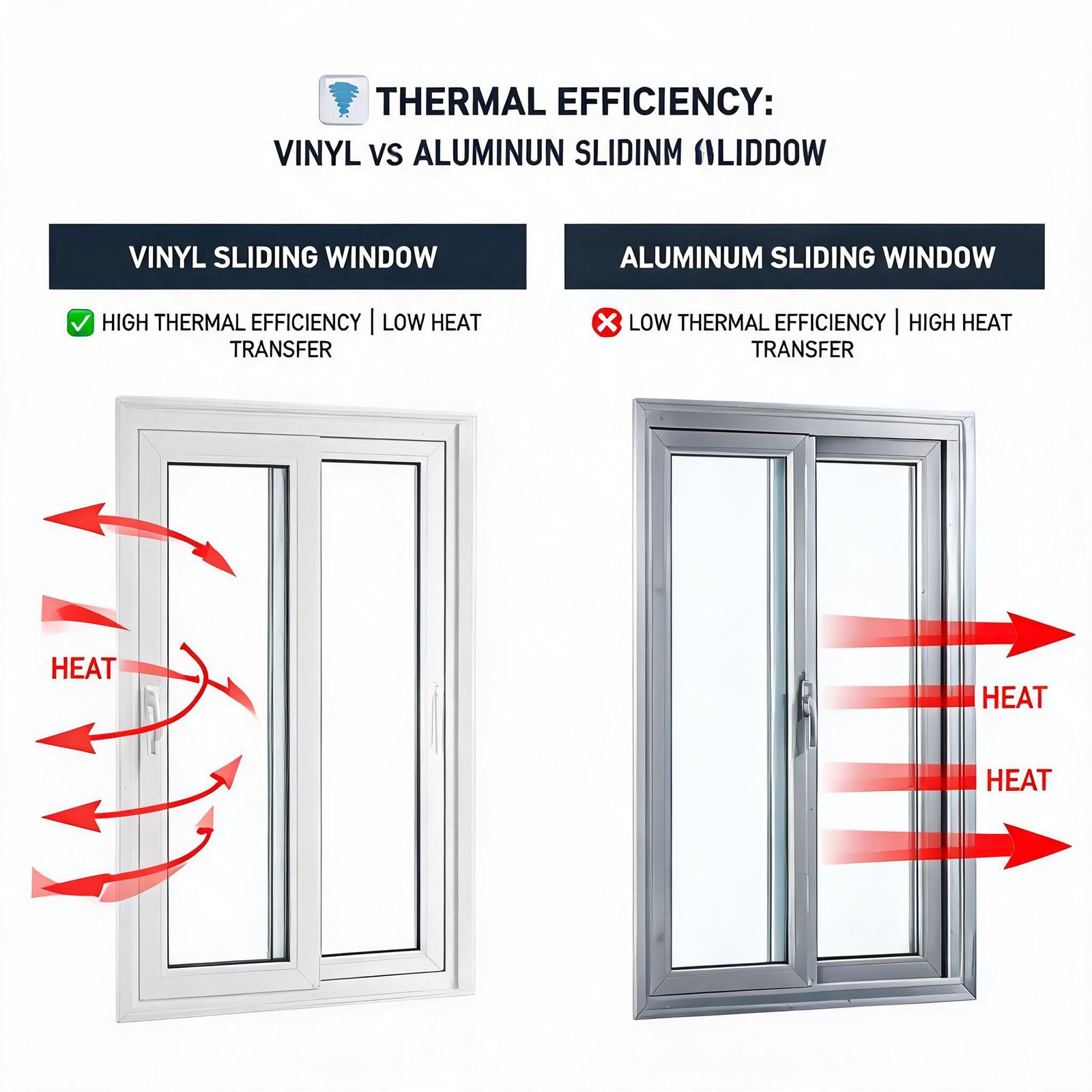
Vinyl’s thermal conductivity is roughly 100 times lower than aluminum. Even when aluminum frames incorporate thermal breaks (polyamide or polyurethane strips separating interior and exterior sections), they still conduct more heat than a solid uPVC profile.
The uPVC Awning Window Advantage
When you combine the material properties of uPVC with the awning window’s compression-seal design, you get a window system optimized for thermal performance. We manufacture our awning windows using a specialized uPVC formulation that maintains structural rigidity across temperature extremes from -20°F to 140°F, ensuring consistent sealing performance year after year.
Rainproof Ventilation Window: The Practical Engineering Solution
One of the most compelling features of vinyl awning windows is their ability to provide ventilation during rain—something no other operable window style can match. The sash hinges at the top and opens outward from the bottom, creating a physical barrier that deflects rainwater while allowing air to circulate beneath.
Engineering the Rainproof Seal
The critical detail here is the weatherstripping configuration. Our rainproof ventilation window design incorporates dual-fin weatherstripping: one fin seals against the sash face, while a secondary fin seals at the frame’s drainage channel. This double-barrier approach ensures that even if some moisture penetrates the primary seal, it’s channeled outward through weep holes before reaching the interior.
For project managers overseeing multifamily buildings or hotels, this feature eliminates the common complaint of having to close windows during summer thunderstorms. Units stay ventilated regardless of weather conditions.
Vinyl Windows U Factor: Certification and Compliance Requirements
If you’re specifying windows for code compliance, understanding the certification chain is essential.
NFRC Label Requirements
Every window installed in residential and commercial buildings in the US must carry a National Fenestration Rating Council (NFRC) label. This label provides four critical ratings:
- U-Factor: As discussed, the lower the better
- Solar Heat Gain Coefficient (SHGC): Measures solar heat transmission
- Visible Transmittance (VT): How much natural light passes through
- Air Leakage (AL): Expressed in cfm/ft²
For vinyl awning windows to meet code, the NFRC-tested values must be verified by an accredited independent laboratory. We maintain continuous testing through Intertek and Architectural Testing Inc. to ensure our published ratings remain current.
Meeting ENERGY STAR 7.0 Requirements
The most recent ENERGY STAR revision (version 7.0, effective October 2023) raised performance thresholds significantly. Here’s what’s required for vinyl awning windows by climate zone:
- Northern Zone: U-factor ≤ 0.27
- North-Central Zone: U-factor ≤ 0.30, SHGC ≤ 0.40
- South-Central Zone: U-factor ≤ 0.30, SHGC ≤ 0.25
- Southern Zone: U-factor ≤ 0.40, SHGC ≤ 0.23
A properly configured uPVC awning window with dual-pane Low-E glass and argon gas fill achieves U-factors of 0.28-0.30, making it eligible for ENERGY STAR certification across all climate zones with appropriate glazing specifications.
Cost Analysis for Builders and Wholesalers
Let’s talk numbers that matter to your bottom line. The initial cost premium for energy-efficient vinyl awning windows typically ranges from 15-25% above standard single-hung or slider windows. However, the ROI calculation changes when you factor in:
- Reduced HVAC load: Lower U-values and air leakage allow for smaller, less expensive heating and cooling equipment
- Code compliance assurance: Meeting energy code thresholds avoids costly remediation or plan re-submittals
- Marketing value: ENERGY STAR-rated homes command 2-3% higher resale values
- Reduced callbacks: Compression-seal designs maintain performance for decades with minimal adjustment
For a typical 3,000 sq ft production home, specifying mid-grade vinyl awning windows with double-pane Low-E glass adds approximately $2,500-3,500 to the window package. The resulting annual energy savings average $300-500 in mixed climates, delivering payback within 5-8 years—well within the home’s first mortgage term.
Air Leakage Rating Windows: Field Performance vs. Lab Testing
Here’s a fact that separates experienced builders from amateurs: installed performance never matches lab-tested performance. The NFRC’s air leakage rating reflects testing under ideal conditions with precise installation. Real-world air leakage depends heavily on installation quality.
Critical Installation Factors
Three installation variables determine whether your vinyl awning windows achieve their rated air leakage performance:
- Square and level rough opening: Even 1/8″ out-of-square increases air leakage by 15-20%
- Proper shimming at hinge locations: Awning windows require shims at each hinge point to prevent frame flex
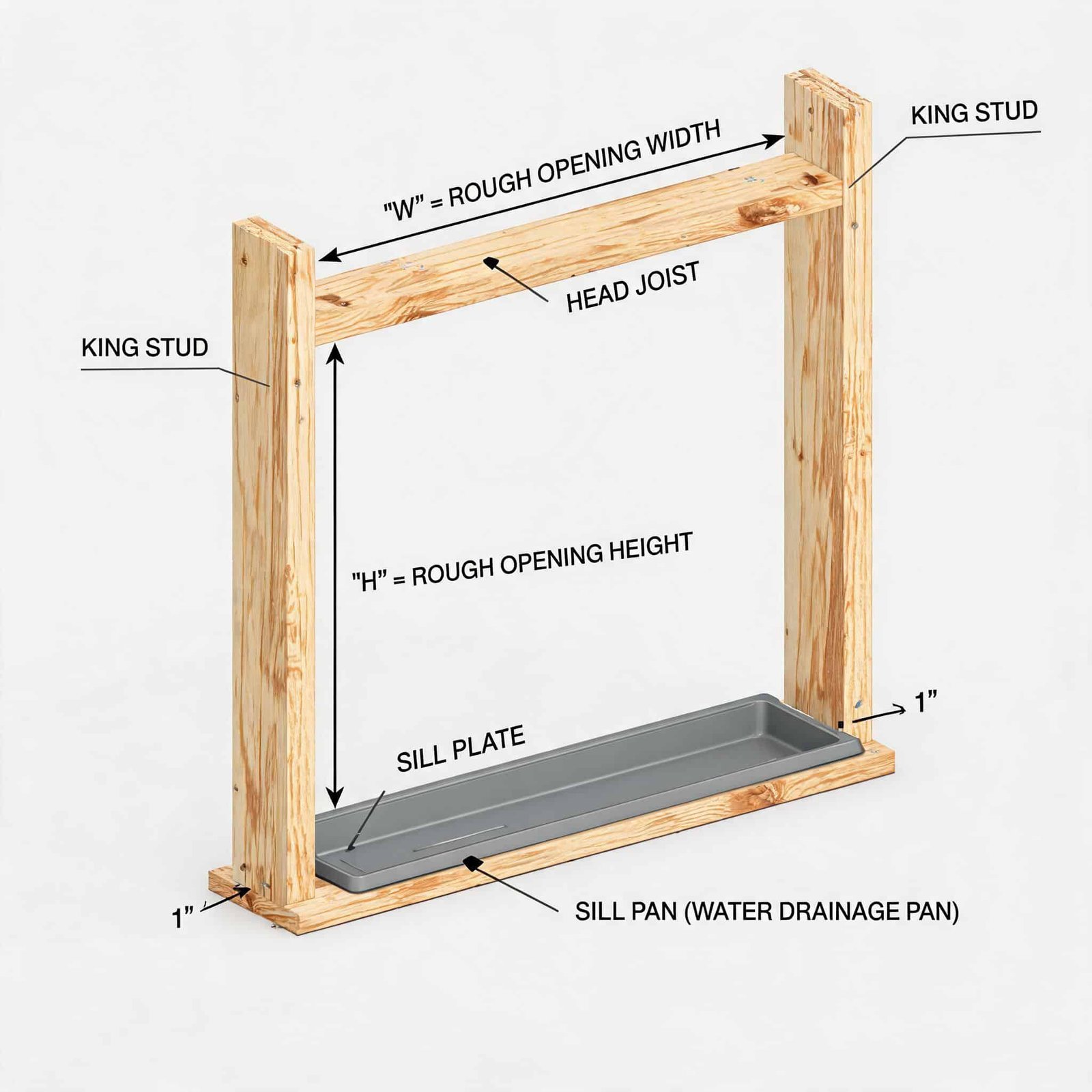
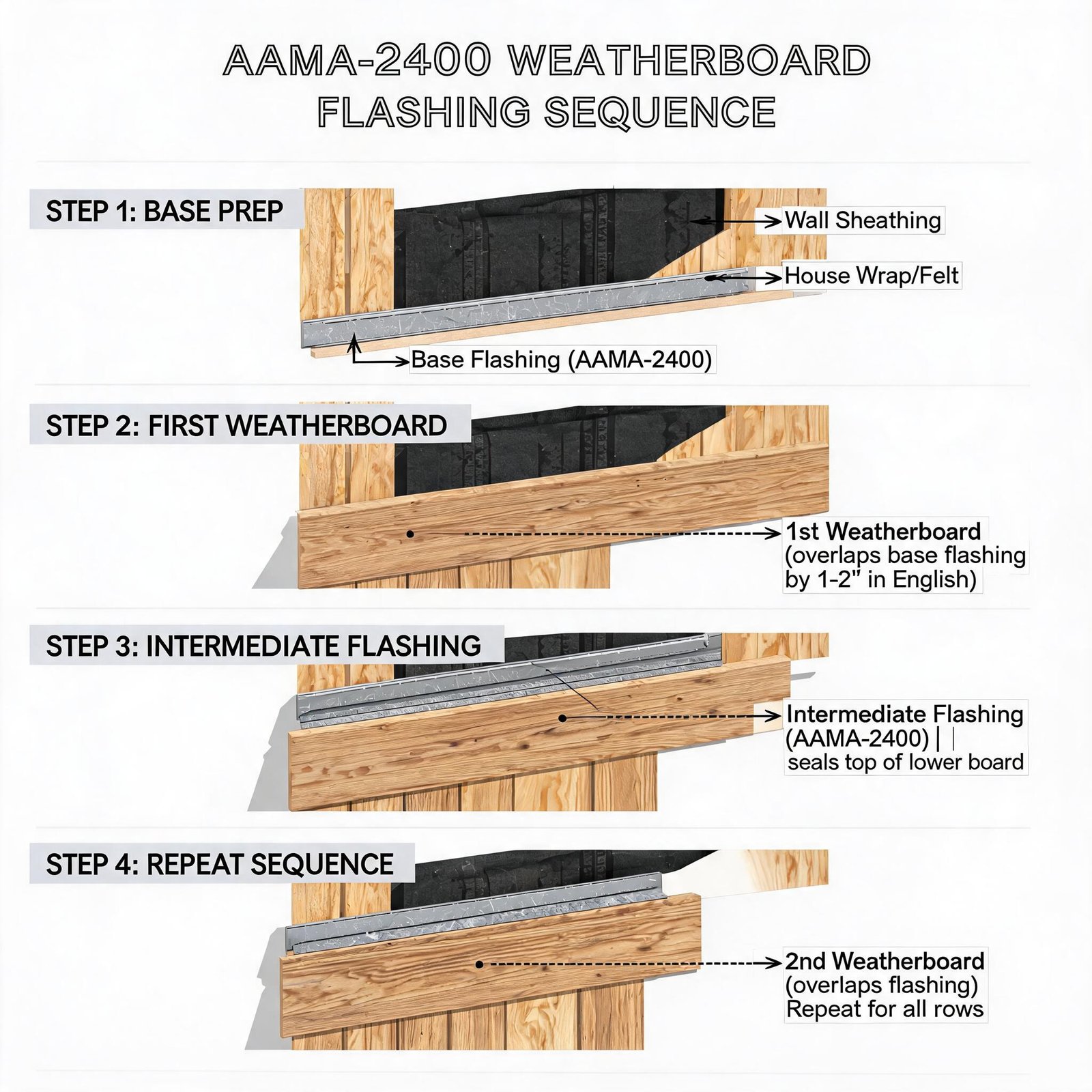
- Correct weather-resistant barrier integration: Flashing tape must overlap the nailing fin by minimum 2 inches
We manufacture our windows with integral nailing fins designed to accept standard self-adhered flashing membranes. For commercial applications, we recommend continuous perimeter sealant in addition to flashing.
Specifying the Right Glazing Package
For wholesalers and architects developing project specifications, here’s a practical decision matrix for selecting glazing packages:
Moderate Climate (Zones 3-4): Double-pane, Low-E (solar control coating on surface #2), argon gas fill, 0.30 U-factor target
Cold Climate (Zones 5-7): Double-pane, Low-E (passive coating on surface #3), argon gas fill, optional triple-pane for net-zero projects, 0.25-0.28 U-factor target
Hot Climate (Zones 1-2): Double-pane, Low-E (spectrally selective coating on surface #2), argon gas fill, low SHGC (0.25 or below), 0.30-0.40 U-factor target
Commercial High-Performance (All Zones): Triple-pane, dual Low-E coatings, krypton or argon fill, warm-edge spacers, 0.18-0.25 U-factor target
The Superwindowhouse Difference
At Superwindowhouse, we’ve engineered our vinyl awning windows to meet the demands of professional builders and specifiers. Our frames utilize a proprietary 5-chamber uPVC formulation that exceeds AAMA 3020 grade requirements for impact resistance and weatherability. Every sash is fitted with dual compression seals made from EPDM rubber—not the silicone or thermoplastic polyurethane (TPU) seals found in budget products—ensuring consistent sealing performance across temperature swings.
For bulk orders and wholesale partnerships, we offer aluminum and uPVC windows custom-engineered to match project-specific performance requirements, including NFRC-certified ratings that meet or exceed local energy code thresholds.
Frequently Asked Questions
Can vinyl awning windows be used in commercial applications?
Yes. Premium uPVC awning windows with reinforced steel internal chambers meet CW-Class performance requirements for commercial applications up to 80 psf wind load. We regularly supply windows for hotels, schools, and medical office buildings.
What is the lifespan of a vinyl awning window?
Industry data shows uPVC window frames have a service life of 30-50 years. The operating hardware requires lubrication every 2-3 years, and weatherstripping may need replacement at the 15-20 year mark. Properly maintained, these windows will outlast most building components.
Do vinyl awning windows meet egress requirements?
Awning windows can meet egress code requirements provided the clear opening size meets IRC and IBC specifications. Typical egress-compliant awning windows require a sash height of at least 24 inches and width of 20 inches, with clear opening area of 5.7 sq ft for sleeping rooms. Consult local building code for specific requirements.
How do uPVC awning windows compare to casement windows for energy efficiency?
Both styles use compression seals, so their air leakage ratings are comparable. Casement windows tend to have slightly better U-values because they can accommodate larger glazing areas. Awning windows excel at rainproof ventilation and low sill height installations common in basements and daylight windows.