A properly engineered uPVC/vinyl awning window with multi-chambered framing and dual-seal insulated glass will deliver 25 to 35 years of reliable service in harsh climates, provided the installation meets AAMA/WDMA certification standards. The decisive factors are not the vinyl itself but the quality of fusion-welded corner joints, UV-stabilized PVC compounds, and the integrity of warm-edge spacer systems that prevent seal degradation under thermal cycling. For commercial builders and specifiers, the difference between a 20-year and a 35-year service life often comes down to frame reinforcement and glass unit specifications—factors that directly impact long-term operating costs and warranty exposure.
The Engineering Reality: What Actually Determines Vinyl Awning Window Lifespan
When a top-hinged vinyl window fails prematurely in a desert climate or coastal environment, the root cause is rarely the frame material alone. The real story lives in four interrelated systems: the extrusion profile design, the insulated glass unit (IGU) seal, the hardware mechanism, and the installation envelope.
Frame Chemistry and Structural Integrity
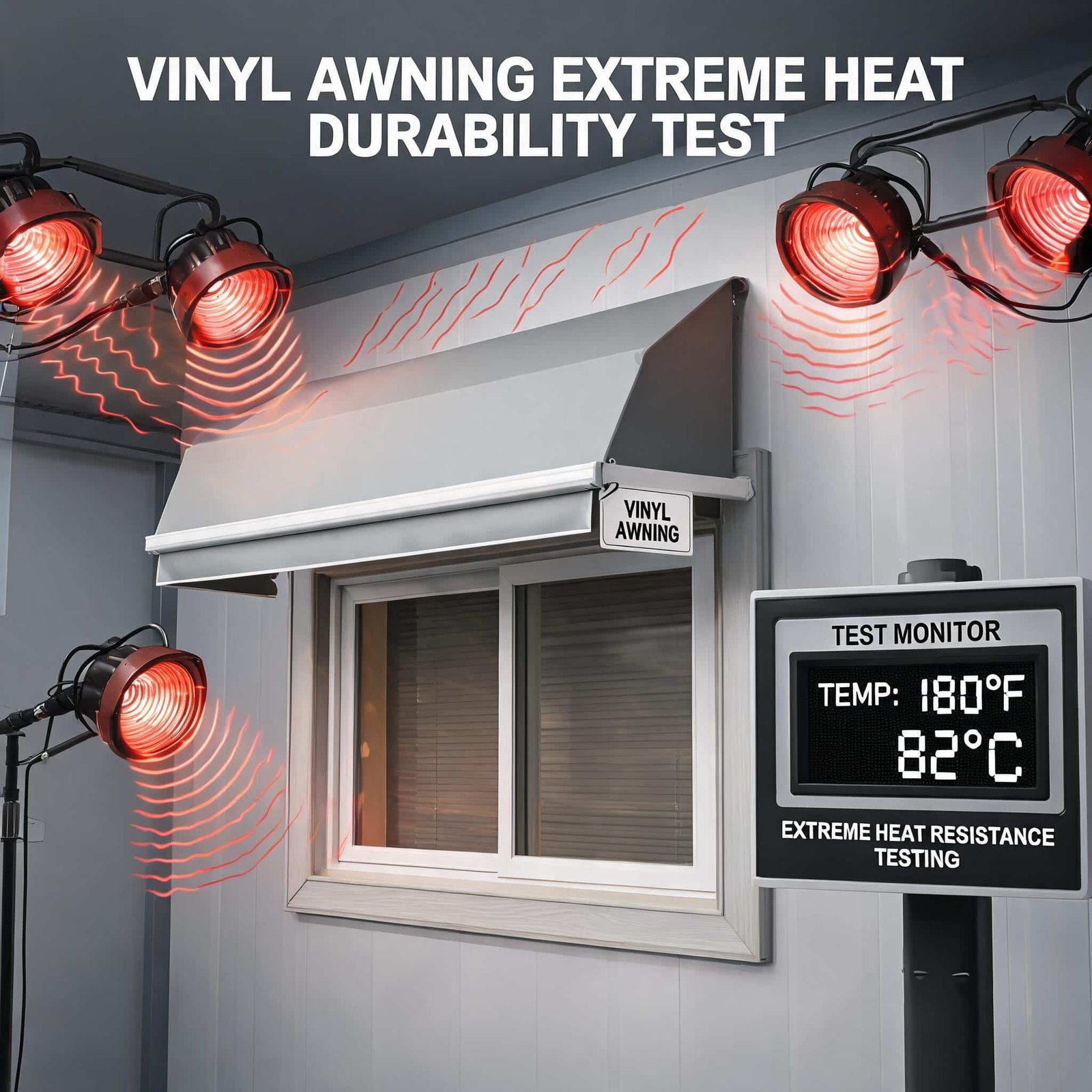
Modern uPVC windows are not the thin, brittle products of the 1990s. Today’s American manufacturers use impact-modified PVC compounds with titanium dioxide UV stabilizers and acrylic impact modifiers. These formulations resist yellowing and maintain impact strength even after decades of 120°F surface temperatures.
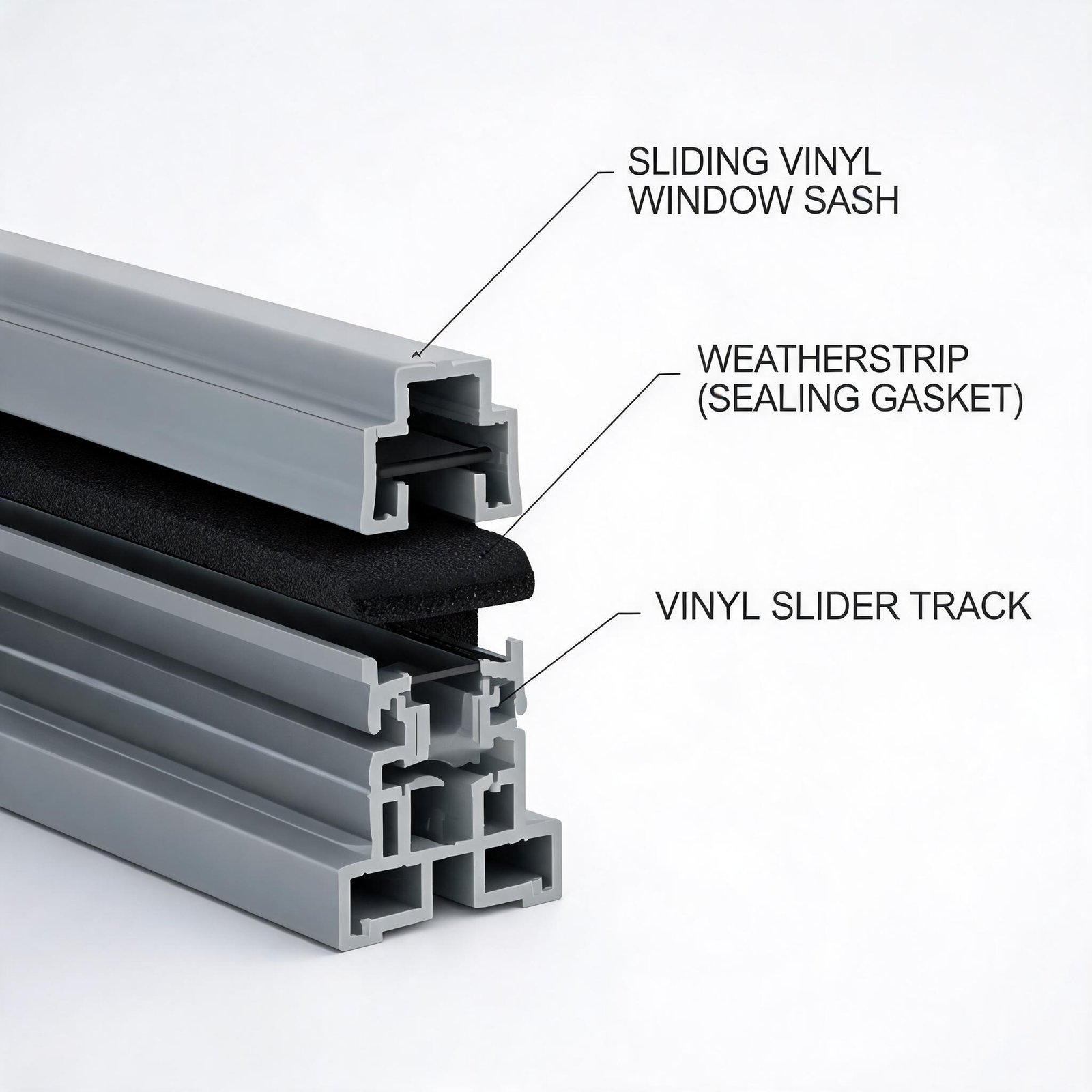
What separates a 20-year window from a 35-year window is internal reinforcement. Multi-chambered profiles with steel or aluminum reinforcing inserts maintain dimensional stability when temperatures swing from 110°F in summer to 20°F in winter. Without reinforcement, even the best vinyl can deflect under thermal stress, breaking the perimeter seal bond.
For high-performance vinyl frame awning window systems, engineered reinforcement is not optional—it is the difference between a maintenance liability and a long-term asset.
The Insulated Glass Unit: The True Lifespan Clock
Here is the engineering truth most articles avoid: the vinyl frame will likely outlast the glass seal. Industry data from the Insulating Glass Manufacturers Alliance (IGMA) shows that IGU failure rates increase sharply after 15–20 years in climates with wide temperature swings.
The weak point is the edge seal. Traditional aluminum spacers conduct heat and cold, accelerating sealant fatigue. Warm-edge spacer systems—stainless steel or structural foam—dramatically slow this process. Combined with dual-seal (polyisobutylene primary + polysulfide secondary) construction, an IGU can maintain its argon fill for 25+ years.
Critical spec for specifiers: Always request dual-seal IGUs with warm-edge spacers for vinyl awning windows in harsh climates. This single specification can add 10 years to effective service life.
Hardware Wear: The Overlooked Failure Point
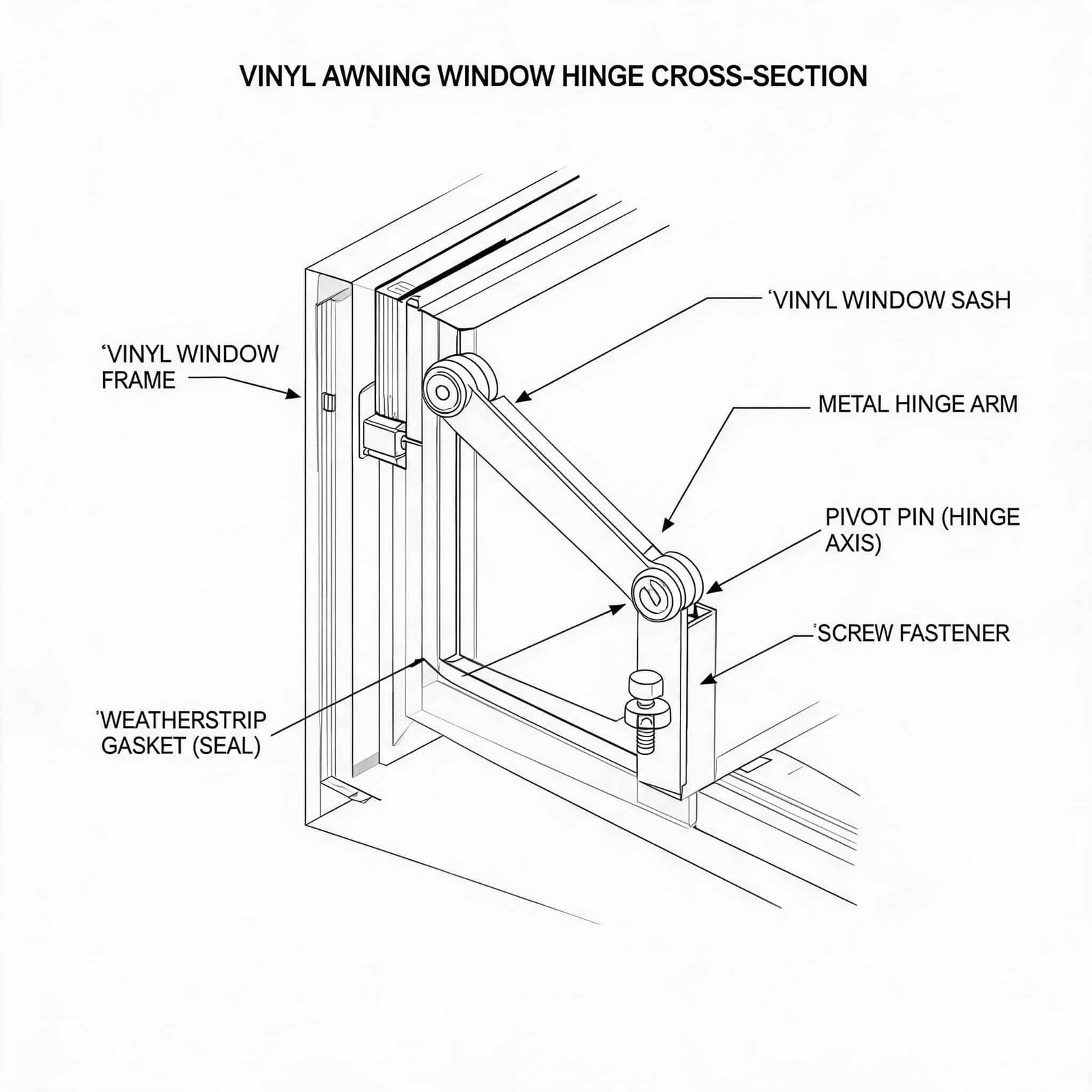
Top-hinged awning windows rely on scissor hinges and push-out mechanisms that see daily mechanical stress. In coastal environments, salt-laden air accelerates corrosion on uncoated steel components. Stainless steel hinges and nylon rollers are non-negotiable for long-term reliability.
Data-Driven Lifespan Comparison: Vinyl vs. Other Frame Materials
| Material | Average Lifespan (Harsh Climate) | Thermal Performance (U-Factor) | Maintenance Requirement | UV Resistance | Cost per Unit (Installed) |
|---|---|---|---|---|---|
| Multi-chambered uPVC/Vinyl | 25–35 years | 0.28–0.32 BTU/h·ft²·°F | Low (occasional cleaning) | Excellent (with UV stabilizers) | $450–$750 |
| Wood (Clad) | 20–30 years | 0.30–0.35 BTU/h·ft²·°F | High (paint/stain every 3–5 years) | Moderate (cladding helps) | $700–$1,200 |
| Aluminum (Thermal Break) | 20–30 years | 0.45–0.60 BTU/h·ft²·°F | Low | Excellent | $350–$600 |
| Fiberglass | 35–50 years | 0.25–0.30 BTU/h·ft²·°F | Low | Excellent | $800–$1,500 |
Key takeaway: Vinyl offers the best lifespan-to-cost ratio for commercial and residential applications. Fiberglass lasts longer but carries a 40–60% premium that often cannot be justified in project budgets.
Answering the Core Questions: How Long Do Vinyl Windows Last?
Do Vinyl Windows Warp in Extreme Heat?
Yes—if you spec low-quality commodity vinyl. Premium uPVC formulations with heat deflection temperatures above 165°F resist warping even in Arizona or Texas summers. The real risk is not the frame warping but the seal failing from differential expansion between glass and frame.
Are Vinyl Windows Good in Hot Climates?
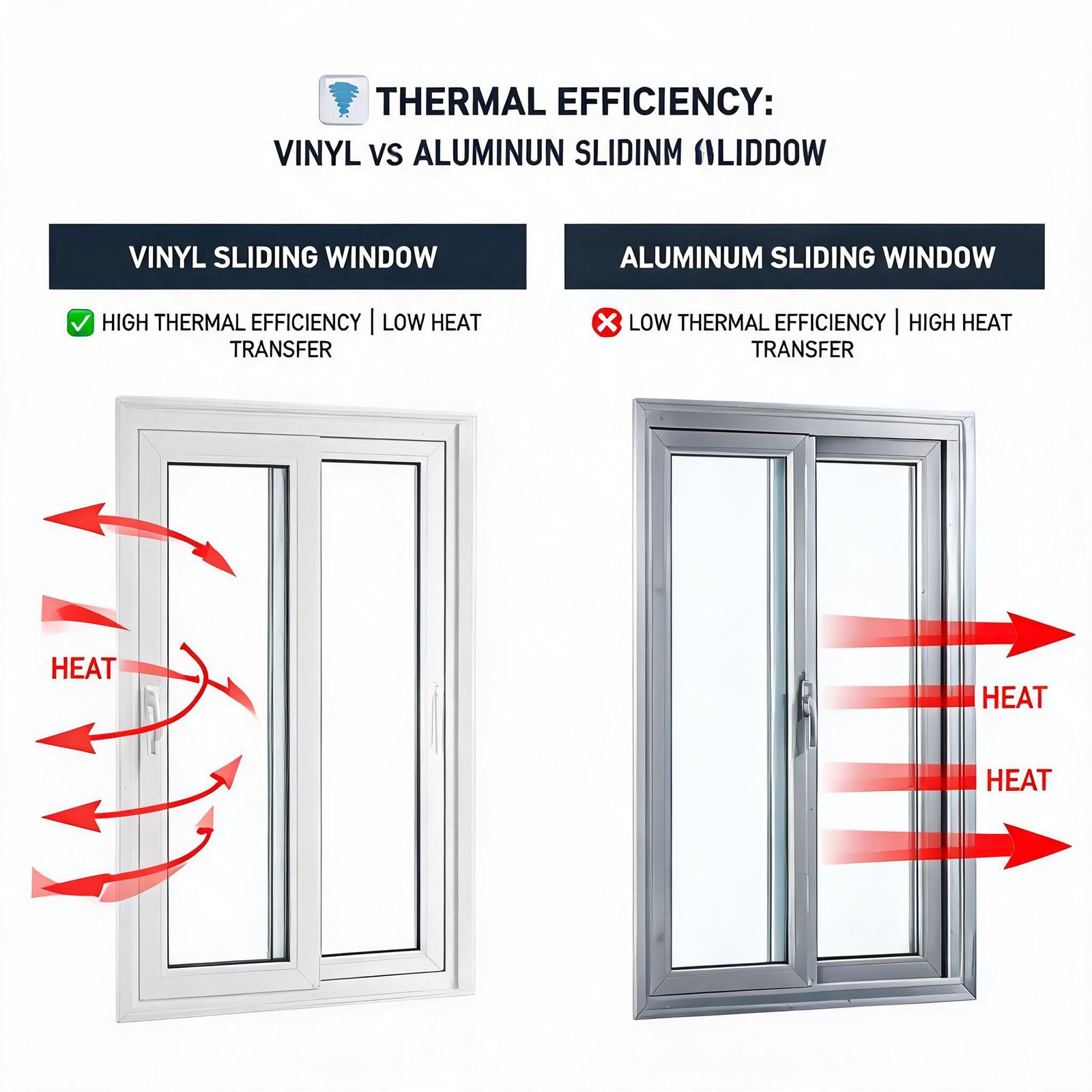
Absolutely—when properly engineered. Vinyl is a natural insulator with thermal conductivity roughly 1/1000th that of aluminum. In hot climates, this means less heat transfer through the frame, lower cooling loads, and reduced condensation risk on interior surfaces.
The key is specifying windows with:
- UV-stabilized PVC (not reclaimed or regrind material)
- Multi-chambered profiles (minimum 5 chambers)
- Reinforced frame cores for large openings
- Low-E glass with solar heat gain coefficient (SHGC) below 0.25
The 5 Factors That Kill Vinyl Awning Windows Prematurely
1. Installation Defects
The number one cause of premature failure. An improperly flashed window allows water to pool behind the frame. Over time, this causes:
- Seal degradation from constant moisture
- Frame corrosion at fastener points
- Mold growth in wall cavities
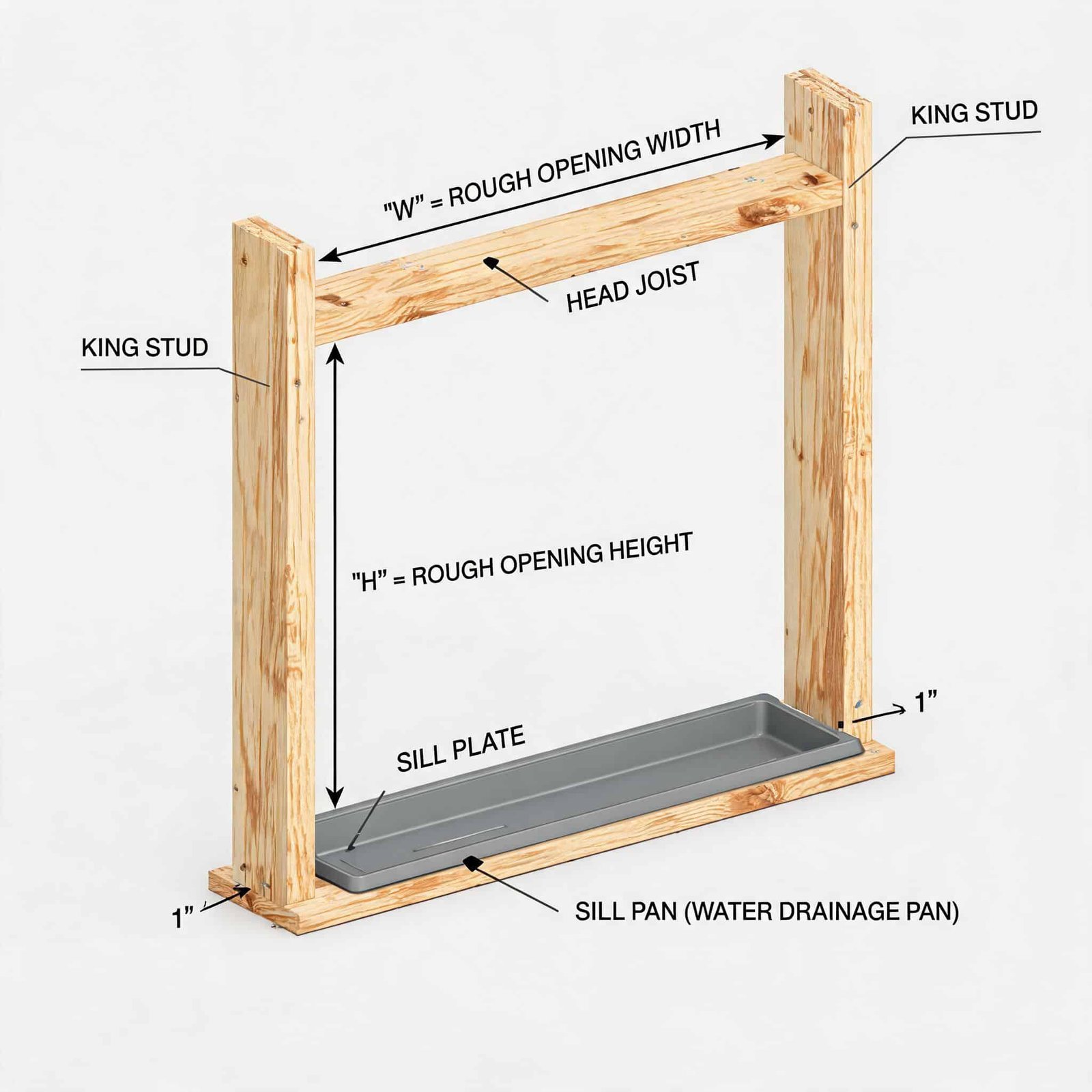
The fix: Specify continuous membrane flashing and air-sealing per ASTM E2112 standard.
2. Thermal Cycling Fatigue
In climates with 80°F+ annual temperature swings, vinyl expands and contracts approximately 0.07 mm per meter per °C. Over decades, this cyclic movement fatigues:
- Perimeter sealant bonds
- Weld joints at frame corners
- Glass-to-frame glazing tape
The fix: Use structural silicone glazing for large panes and allow proper expansion gaps during installation.
3. UV Degradation of Surface
Cheap vinyl with insufficient UV stabilizers will:
- Chalk and fade within 5–7 years
- Become brittle and crack at stress points
- Lose impact resistance
The fix: Specify co-extruded acrylic capstock or laminated UV-resistant film on exterior surfaces.
4. Hardware Failure
Hinges and operators fail from:
- Corrosion in coastal environments
- Mechanical fatigue from daily operation
- Debris accumulation in track systems
The fix: Specify stainless steel hardware and lubricate annually with silicone-based product.
5. Glass Seal Failure
As discussed, the IGU seal is the ticking clock. Once the hermetic seal breaks:
- Argon gas escapes (thermal performance drops 30–50%)
- Condensation appears between panes
- Solar heat gain becomes uncontrolled
The fix: Choose windows with warm-edge spacers and manufacturer-proven 20-year seal warranties.
Maintenance Protocol: Extending Service Life to 35+ Years
For commercial property managers and home builders, a simple annual maintenance routine can add 5–10 years to window life:
- Clean weep holes (spring and fall) – Blocked drainage causes water stress on seals
- Lubricate hinge mechanisms – Use only silicone-based lubricant, never petroleum products
- Inspect perimeter caulking – Re-seal any gaps around the frame-to-wall interface
- Clean glass and frames – Use pH-neutral cleaner; avoid abrasive pads
- Check operator function – Resistance or binding indicates hardware wear
Why Superwindowhouse.com Is the Right Partner for Harsh Climate Projects
At superwindowhouse.com, we manufacture vinyl awning windows engineered specifically for the stresses of North American harsh climates. Our frames use:
- German-engineered multi-chamber profiles
- Impact-modified PVC with 10-year UV color stability warranty
- Dual-seal IGUs with warm-edge spacers
- Stainless steel hardware rated for 20,000 cycles
For commercial builders requiring custom configurations, our aluminum and UPVC windows custom manufacturing capability means you get exactly the frame reinforcement, glass package, and hardware specifications your project demands—not off-the-shelf compromises.
When to Replace vs. Repair: The Decision Framework
| Condition | Action | Cost Estimate |
|---|---|---|
| Fogging between panes | Replace IGU or entire window | $200–$400 per window |
| Drafts around frame | Re-caulk and weatherstrip | $50–$150 per window |
| Frame warping or corner separation | Full window replacement | $450–$750 per window |
| Hardware stiffness or failure | Replace operator and hinges | $100–$250 per window |
| Chalking or fading (no structural damage) | Cosmetic only; clean and maintain | Minimal cost |
Rule of thumb: If the window is over 15 years old and has seal failure, replace. The cost of repairing an IGU often exceeds 60% of a new window, and the frame is already approaching its own service limits.
Final Engineering Verdict: Are Vinyl Awning Windows Worth It in Harsh Climates?
For builders and architects specifying window systems for commercial, multifamily, or high-end residential projects in challenging environments, properly engineered vinyl awning windows represent the optimal balance of cost, performance, and longevity. They do not require the ongoing maintenance of wood, they outperform aluminum thermally, and they deliver a 25–35 year service life when built to proper specifications.
The critical takeaway for specifiers: Do not buy on price alone. Every dollar saved on frame reinforcement, UV stabilizers, or IGU quality will cost three dollars in premature replacement and callbacks. Work with manufacturers like superwindowhouse.com who build windows to survive the climate, not just fill an opening.