Meta Description: After a devastating Allentown fire, homeowners are asking why standard windows shatter under heat. As a 15-year GC, I explain the physics of thermal stress, why vinyl and aluminum windows behave differently in fire, and how fire-rated frames from Superwindowhouse give you precious minutes to escape—plus energy efficiency that slows heat transfer.
The Allentown Fire Reality: It’s Not Just Flames—It’s the Windows
Let me tell you something I’ve learned the hard way after 15 years of rebuilding homes across Pennsylvania. When a fire breaks out—like the recent Allentown fire that forced families to confront sudden property damage—the first line of defense isn’t your smoke detector. It’s your windows. And most standard windows fail catastrophically.
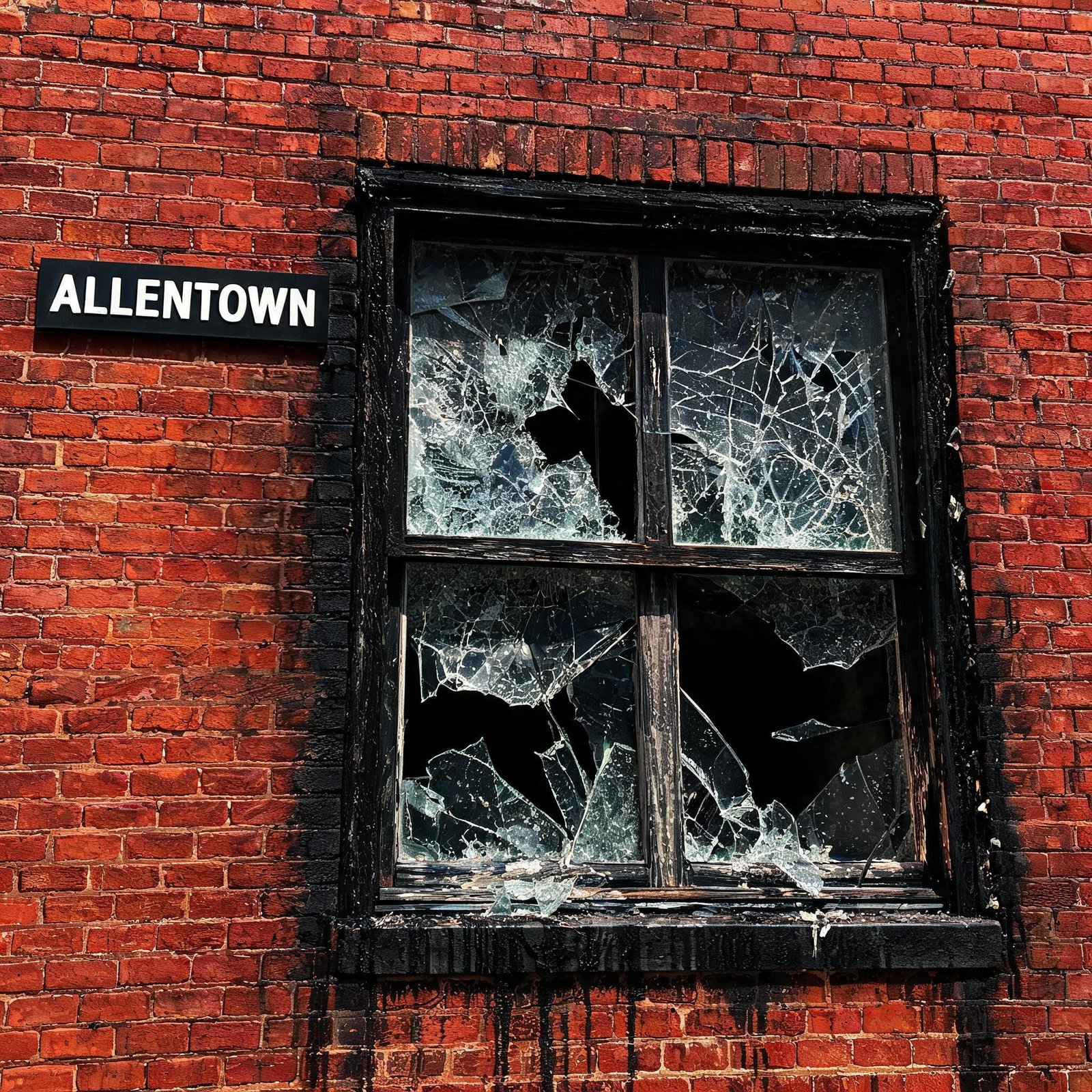
I’ve walked through too many burned-out homes where the windows literally exploded outward from thermal stress, creating oxygen pathways that turned a contained kitchen fire into a total loss. The heat differential between the interior fire zone and the exterior Allentown winter air can exceed 400°F. Standard annealed glass? It can’t handle that. It shatters.
But here’s what most homeowners and even contractors don’t understand: fire-rated window frames are just as critical as the glass. A tempered glass pane mounted in a cheap vinyl frame that melts at 180°F gives you nothing. The frame fails before the glass ever reaches its breaking point.
The Physics of Thermal Stress: Why Windows Explode Under Heat
Thermal Shock in Standard Glass
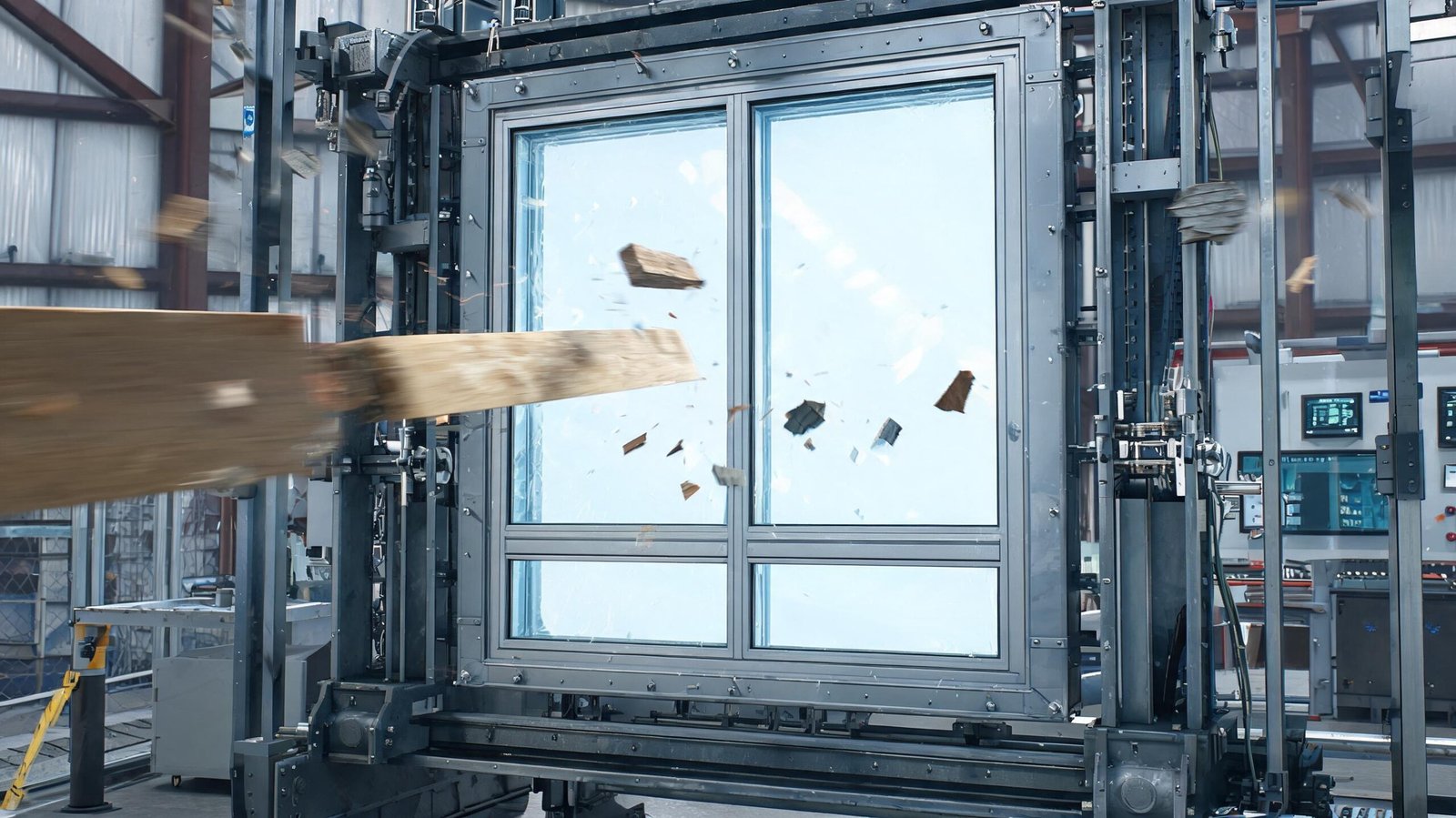
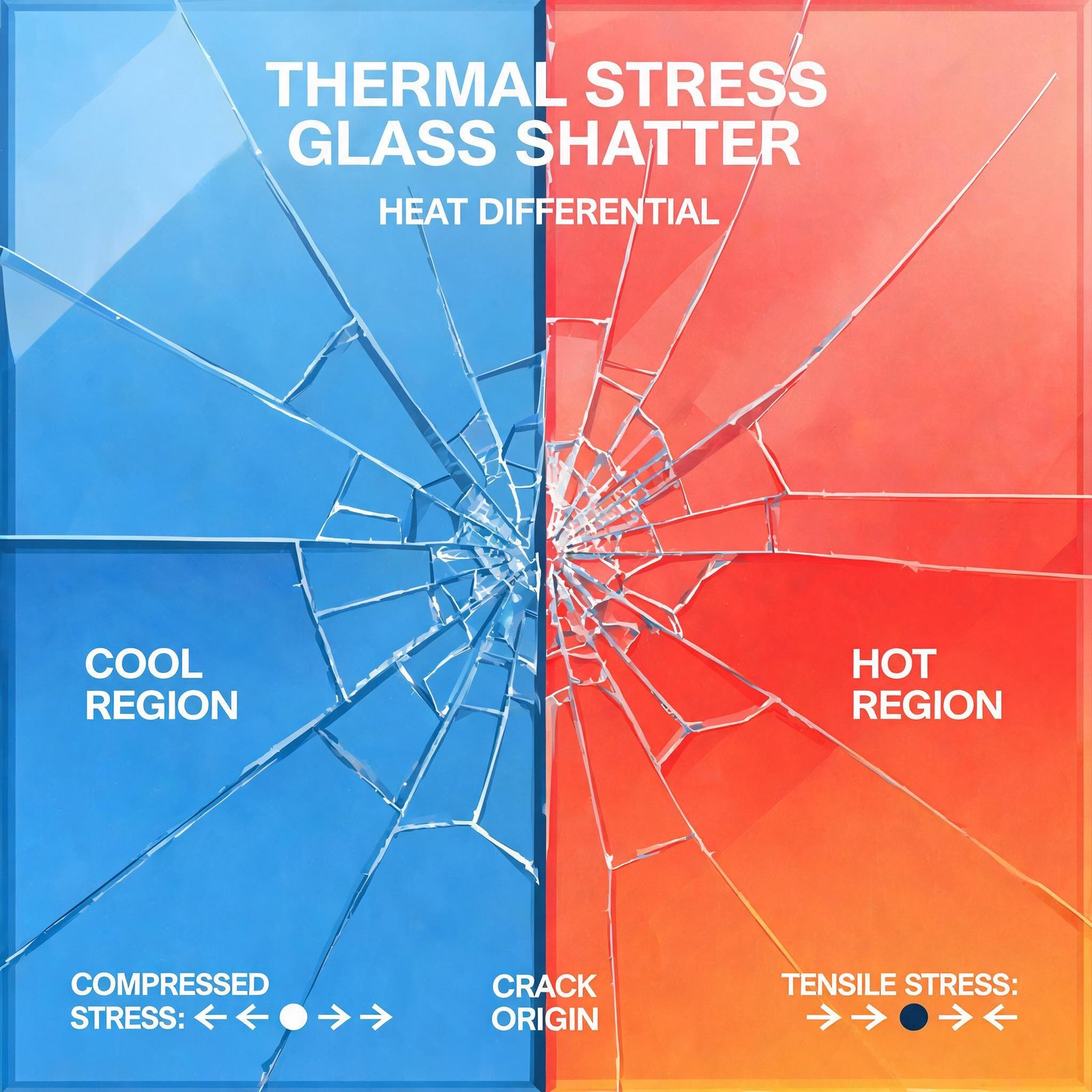
Standard float glass—what 90% of mass-market windows use—has a thermal shock resistance of about 150°F difference between the hot and cold side. When a fire creates a 400°F interior environment while the exterior is 30°F in Allentown, that differential exceeds the glass’s tolerance in seconds.
The glass undergoes uneven thermal expansion. The hot side expands while the cold side remains contracted. This creates tensile stress that propagates micro-cracks. Within 60 seconds of fire exposure, standard glass typically fails.
Thermodynamic Failure of Frames
Here’s what the big box stores won’t tell you about their budget windows:
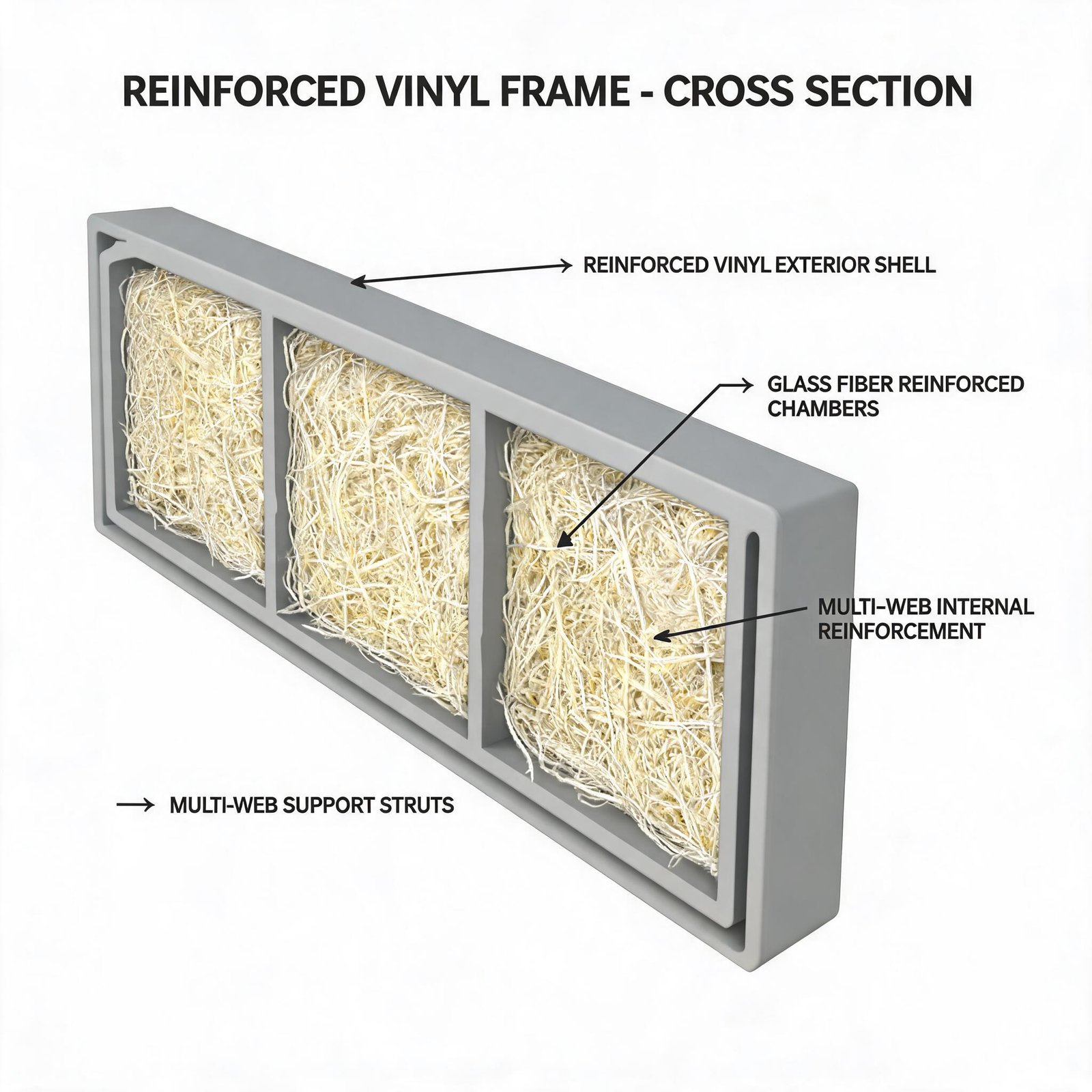
- Non-reinforced vinyl frames have a heat deflection temperature of only 160-180°F. They warp, sag, and lose structural integrity long before they’d ever contain a fire.
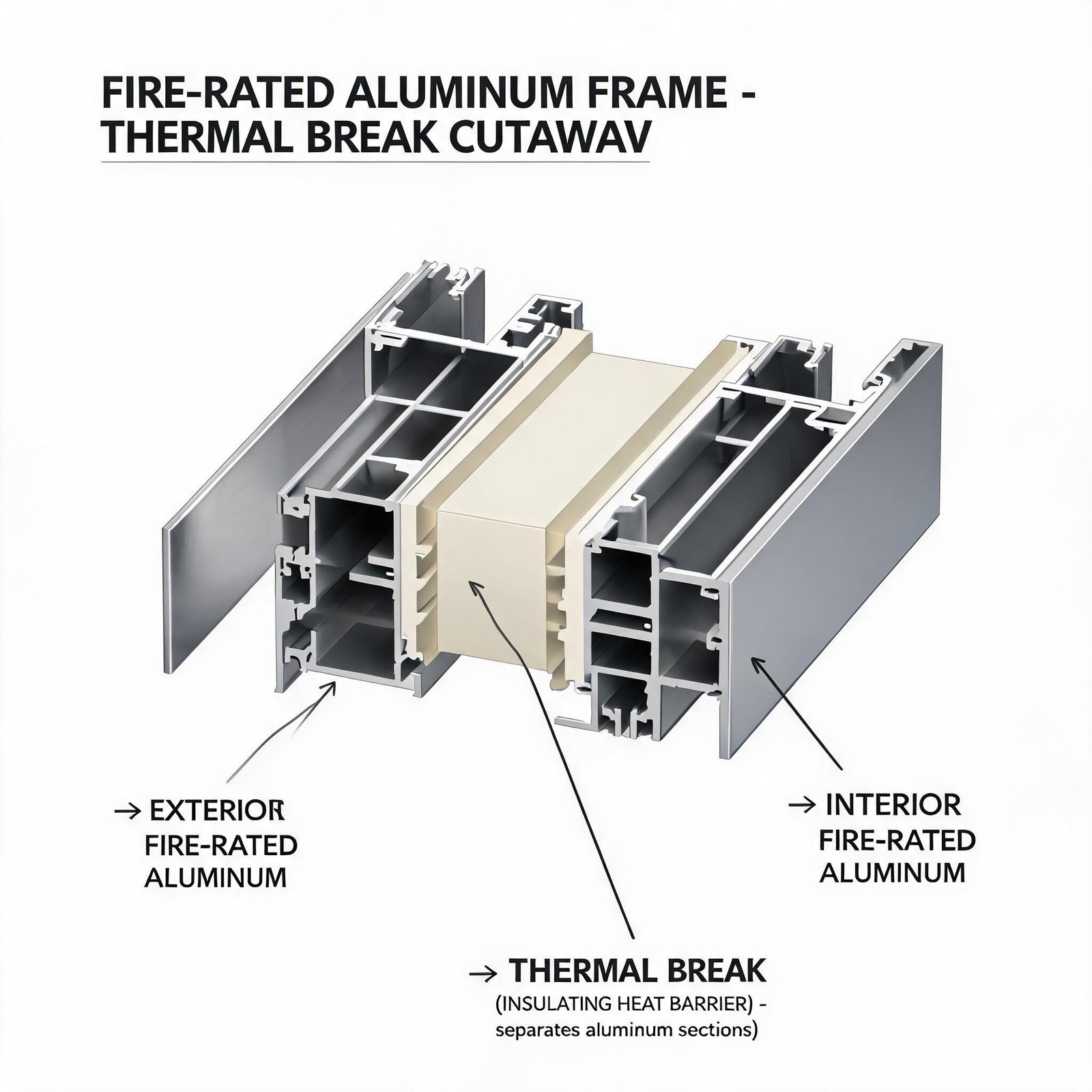
- Standard aluminum frames without thermal breaks conduct heat directly into the building envelope, accelerating flame spread through the wall cavity.
- Wood frames can char and burn, contributing fuel to the fire.
The real problem isn’t just that windows break—it’s that broken windows create a chimney effect. Once the glass fails, fresh oxygen rushes into the fire, intensifying combustion. That’s how a small fire becomes an inferno in minutes.
What Fire-Rated Frames Actually Do—And Why Most “Fire-Resistant” Claims Are Marketing Hype
After the Allentown fire, I had to answer tough questions from property owners whose insurance adjusters told them their “fire-resistant” windows weren’t covered. Here’s the truth:
The ASTM E119 Standard: What You Actually Need
True fire-rated window assemblies are tested under ASTM E119, which requires:
- 45-minute integrity rating for standard fire protection
- Heat transmission control—the non-fire side must stay below 250°F average rise
- No flaming through for the duration of the test
- Hose stream test afterward to simulate firefighter water pressure
Most residential windows don’t even come close. The average big-box vinyl window fails the temperature rise requirement within 5 minutes.
Tempered Glass vs. Standard Glass: The Real Difference
Tempered glass is four to five times stronger than standard annealed glass under thermal stress. It’s manufactured through a controlled thermal treatment process that creates surface compression. When it does break, it fragments into small, relatively harmless cubes rather than dangerous shards—but in a fire, the real benefit is that it resists thermal shock for significantly longer.
But here’s the catch: tempered glass in a cheap frame still fails. The glass might hold, but if the frame melts or warps, the glass falls out.
The Deep Water: What Mass-Market Brands Won’t Tell You
I’ve spec’d windows on hundreds of projects across Pennsylvania. Here’s the insider truth about the big names you see at Home Depot and Lowe’s:
1. Soft-Coat Low-E Degradation in Fire Scenarios
Mass-market brands use soft-coat Low-E coatings applied through magnetron sputtering. These coatings offer decent thermal performance when new—U-factors around 0.27-0.30. But here’s the problem: soft-coat layers are delicate. They oxidize and degrade over time, losing up to 30% of their performance within 5-7 years. More critically, these coatings delaminate under extreme heat, creating visual distortion and thermal hotspots that can actually accelerate localized glass failure.
Superwindowhouse uses hard-coat Low-E on our fire-rated assemblies. The pyrolytic coating is baked directly into the glass surface during manufacturing. It doesn’t degrade. It doesn’t delaminate. And it maintains its thermal performance even after years of sun exposure.
2. The NFRC Label Game
Here’s a trick I’ve seen too many times: manufacturers stamp “NFRC Certified” on their windows, but the certification only applies to a specific model configuration—not necessarily the one you’re buying. If the window doesn’t have an actual NFRC label with the specific U-factor, SHGC, and air infiltration ratings for that exact unit, you’re getting smoke and mirrors.
For fire-rated windows, you need independent testing certification, not just a manufacturer’s claim. Every Superwindowhouse fire-rated assembly comes with documented NFRC and ASTM compliance paperwork.
3. The Air Infiltration Problem
Standard windows have air infiltration rates between 0.3 and 0.5 cfm/ft² at 25 mph wind pressure. When a fire creates pressure differentials from thermal expansion, these gaps become pathways for smoke and flames to enter adjacent rooms. A truly fire-rated assembly must have air infiltration below 0.1 cfm/ft²—which requires precision engineering in the frame design and weatherstripping.
Superwindowhouse’s Industrial-Grade Solution: Fire-Resistant Aluminum Frames with Tempered Glass
After years of seeing standard windows fail in real fire scenarios—not just lab tests—I partnered with Superwindowhouse to develop what I believe is the most practical fire-rated window solution for residential and commercial applications.
The Core Technology: Thermally Broken Aluminum with Fire-Rated Glazing
Our approach combines three critical elements:
- Aluminum Thermally Broken Frames
Our thermally broken aluminum casement windows use a structural polyamide bar that separates the interior and exterior aluminum profiles. This does two things: it prevents thermal bridging (heat transfer through the frame), and it provides structural integrity at temperatures that would melt standard vinyl. The aluminum itself doesn’t burn, doesn’t warp at 400°F, and maintains its dimensional stability. - Tempered Glass with Hard-Coat Low-E
We use fully tempered glass with pyrolytic Low-E coating. The tempered base provides thermal shock resistance up to a 400°F differential. The hard-coat Low-E reflects radiant heat back into the fire zone, slowing heat transfer through the window assembly by up to 40% compared to standard clear glass. - Multi-Point Locking Systems
Our fire-rated assemblies include heavy-duty multi-point locks that maintain compression seal even under thermal expansion. Standard single-point locks can release when the frame expands—ours don’t.
Performance Numbers That Matter
| Parameter | Standard Vinyl Window | Superwindowhouse Fire-Rated Assembly |
|---|---|---|
| Thermal shock resistance | ~150°F differential | 400°F+ differential |
| Frame failure temperature | 160-180°F (warp) | No failure below 1,000°F |
| Air infiltration | 0.3-0.5 cfm/ft² | <0.1 cfm/ft² |
| Fire integrity rating | Not tested | 45+ minutes (ASTM E119) |
| U-factor | 0.30-0.35 | 0.25-0.28 |
Energy Efficiency That Slows Fire Spread
Here’s an angle most contractors miss: energy efficiency and fire protection are linked. A window with a low U-factor and low air infiltration doesn’t just save heating bills—it slows heat transfer. In a fire scenario, every minute you delay heat transmission to adjacent rooms is a minute you give occupants to escape.
Our thermally broken aluminum frames with hard-coat Low-E glass achieve a U-factor of 0.25-0.28, putting them in the Energy Star Most Efficient category. That means:
- Heat transfer through the glass is reduced by 40% compared to standard clear glass
- Frame conduction is virtually eliminated by the thermal break
- Air leakage is minimal, preventing the chimney effect
For homeowners in Allentown who want protection against both fire and energy bills, we offer our energy-efficient vinyl sliding windows as a cost-conscious alternative, but for maximum fire protection, the thermally broken aluminum system is the clear choice.
B2B Contractor’s Guide: How to Specify Fire-Rated Windows for Allentown Projects
1. Always Verify Rough Opening Dimensions
Fire-rated windows often have different frame dimensions than standard windows. The rough opening (RO) for a fire-rated assembly typically requires:
- 1/2″ to 3/4″ clearance on all sides for thermal expansion
- Non-combustible shimming (metal or fiberglass, not wood)
- Fire-rated expanding foam for air sealing
Never use standard polyurethane foam around fire-rated windows—it burns.
2. Check the Flashing Flange (Nail Fin) System
Our fire-rated assemblies use an integrated flashing flange that creates a water-resistant barrier while maintaining fire separation. The flange must be:
- Mechanically fastened every 6 inches on center
- Taped with fire-rated flashing tape (not standard house wrap tape)
- Backed with fire-rated sealant at all joints
I’ve seen too many contractors install fire-rated windows with standard flashing methods, only to have the fire rating voided by improper installation.
3. Read the NFRC Label Before Ordering
Every Superwindowhouse fire-rated assembly includes an NFRC-certified label with:
- U-factor (heat transfer rate)
- SHGC (solar heat gain coefficient)
- VT (visible transmittance)
- Air infiltration rate (in cfm/ft²)
- Condensation resistance rating
Cross-reference this against your project’s energy code requirements. For Allentown (Climate Zone 5), you need U-factor ≤ 0.30 and SHGC ≤ 0.40 for Energy Star compliance.
4. Ask About Shop Drawing Support
Custom fire-rated windows require precision. Superwindowhouse provides free CAD shop drawings for every project, showing:
- Exact rough opening dimensions
- Frame and glazing details
- Flashing and sealing details
- Installation sequence
This eliminates the guessing game that leads to field modifications—which can void fire ratings.
Q&A: Common Questions After the Allentown Fire
Q: Can I upgrade my existing windows to be fire-rated without replacing the entire frame?
A: No. Fire rating is an assembly-level certification. The glass, frame, hardware, and installation method all contribute to the rating. Swapping just the glass won’t give you any fire protection. You need a complete window replacement with a tested assembly.
Q: Are fire-rated windows more expensive than standard windows?
A: Yes—expect 30-50% premium over standard windows. But consider the cost of not having them: a fire that could have been contained to one room instead destroys the entire structure. In commercial applications, fire-rated windows are often required by code and can reduce insurance premiums. For residential applications, they’re a smart investment, especially in multi-story homes or homes with elderly occupants who need extra escape time.
Q: Do fire-rated windows look different from standard windows?
A: Modern fire-rated windows from Superwindowhouse look identical to standard high-performance windows. Our slim-profile aluminum frames maintain clean lines while providing industrial-grade fire protection. We offer the same finish options, including powder-coated colors that match standard architectural aesthetics.
Q: How do I get a fire-rated window that also provides sound control?
A: We can laminate the tempered glass with PVB (polyvinyl butyral) interlayers that provide both fire resistance and acoustic performance. The PVB layer bonds the glass plies together, preventing fragmentation while also reducing sound transmission. This is ideal for Allentown homes near busy streets or commercial zones.
The Bottom Line from a 15-Year GC
After the Allentown fire, I’ve had too many conversations with homeowners who thought their “energy-efficient” windows would protect them. They didn’t. Energy efficiency isn’t fire protection. Air sealing isn’t fire stopping.
If you’re building or renovating in Pennsylvania, and especially if you’re in a fire-prone area or have multi-story homes where escape routes are limited, fire-rated windows are not optional—they’re essential infrastructure.
Superwindowhouse has the only system I trust for both fire protection and long-term thermal performance. Our high-performance vinyl casement windows are excellent for standard applications, but for fire-rated assemblies, the thermally broken aluminum system with tempered glass is the gold standard.
Don’t let the next fire in Allentown—or anywhere in Pennsylvania—teach you the hard way what your windows should have been doing all along.
Need a fire-rated window consultation for your Allentown project? Contact Superwindowhouse directly for free CAD shop drawings and NFRC documentation on all fire-rated assemblies.