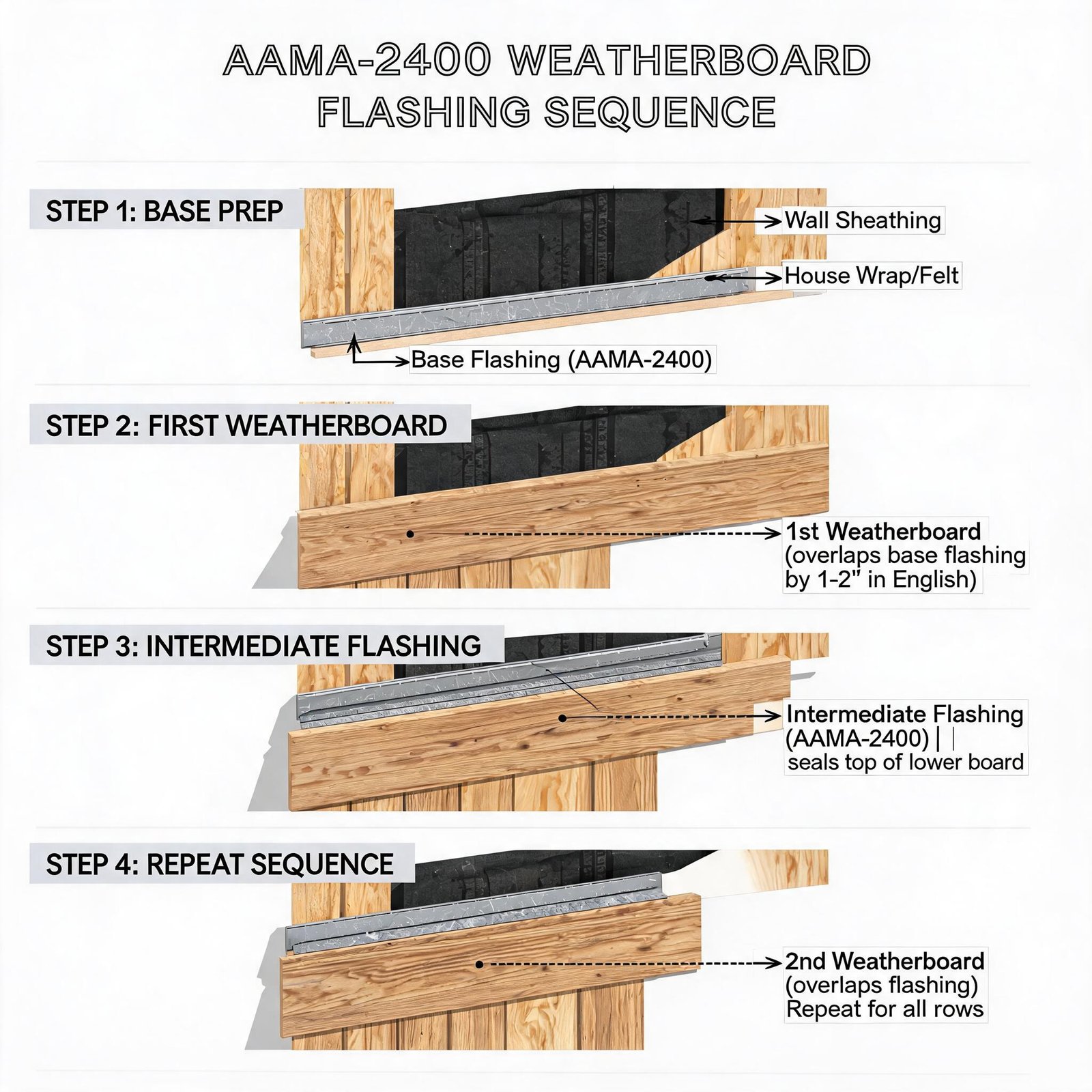
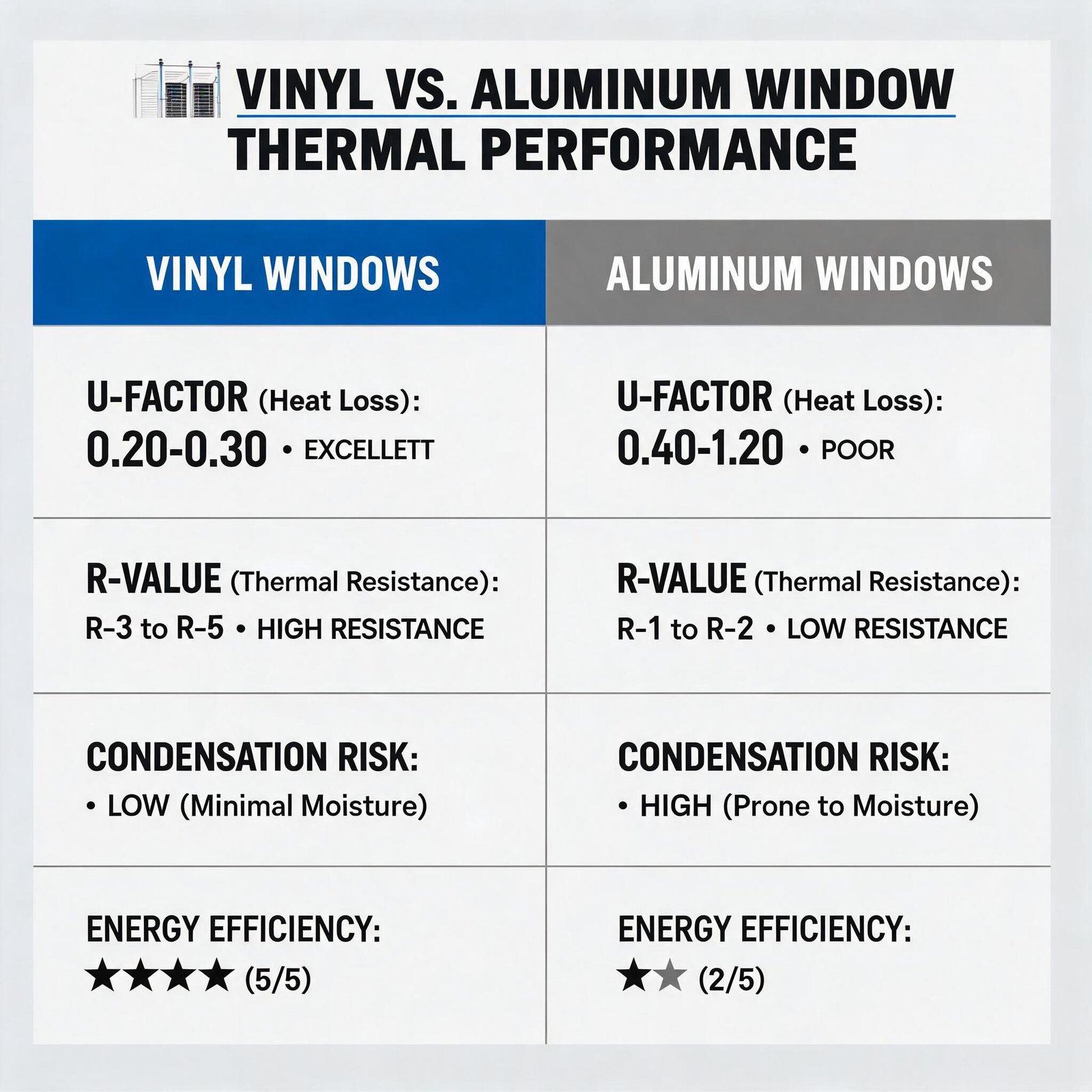
Yes, vinyl casement windows are among the most energy-efficient window types available today, provided they are constructed with multi-chamber PVC frames, dual-pane Low-E glass, and argon gas fills. The thermal efficiency of PVC windows comes from the inherent low conductivity of vinyl combined with engineered insulation chambers that reduce heat transfer by up to 40% compared to standard aluminum frames. For commercial and residential projects requiring ENERGY STAR certified vinyl windows specifications, a properly specified casement unit can achieve U-values as low as 0.25 and SHGC ratings below 0.25 – directly lowering HVAC loads and qualifying for federal tax credits.

Why Vinyl Casement Windows Dominate Energy Performance
Vinyl casement windows seal tighter than any other operating window style because they use a crank mechanism that pulls the sash tightly against the frame – creating a compression seal that minimizes air leakage. When combined with modern insulated vinyl window profiles, this design delivers exceptional thermal performance.
The Engineering Behind Insulated Vinyl Window Profiles
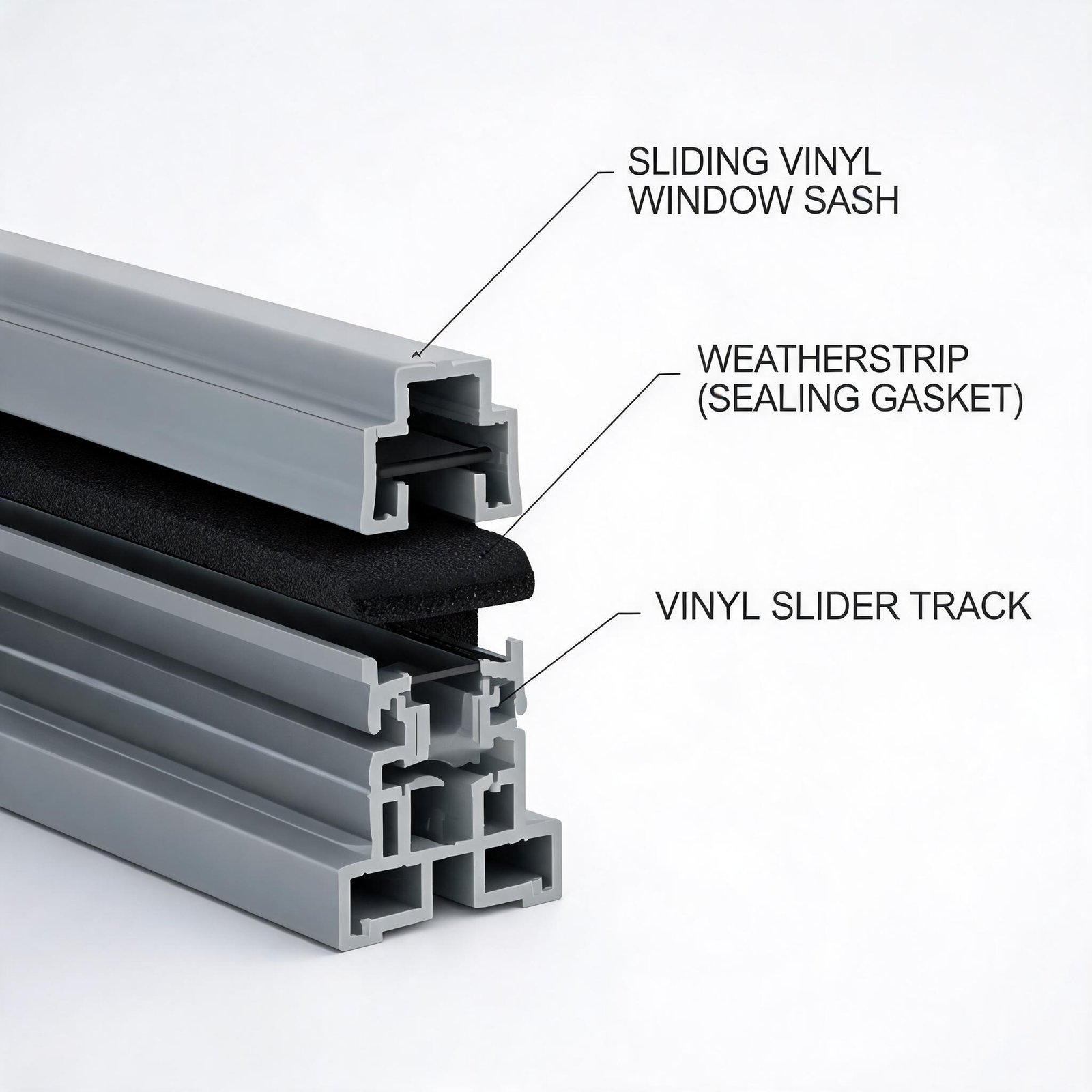
The frame itself is the first line of defense. Superior vinyl casement windows use multi-chamber PVC frame insulation – typically 5 to 7 separate air pockets within the extrusion. These chambers serve two critical functions:
- Reduce conductive heat transfer – Air is a poor conductor, so multiple dead-air spaces slow heat flow through the frame.
- Increase structural rigidity – More chambers mean less flex, which maintains the compression seal over decades.
- Provide drainage pathways – Properly designed chambers allow moisture to weep out without compromising insulation.
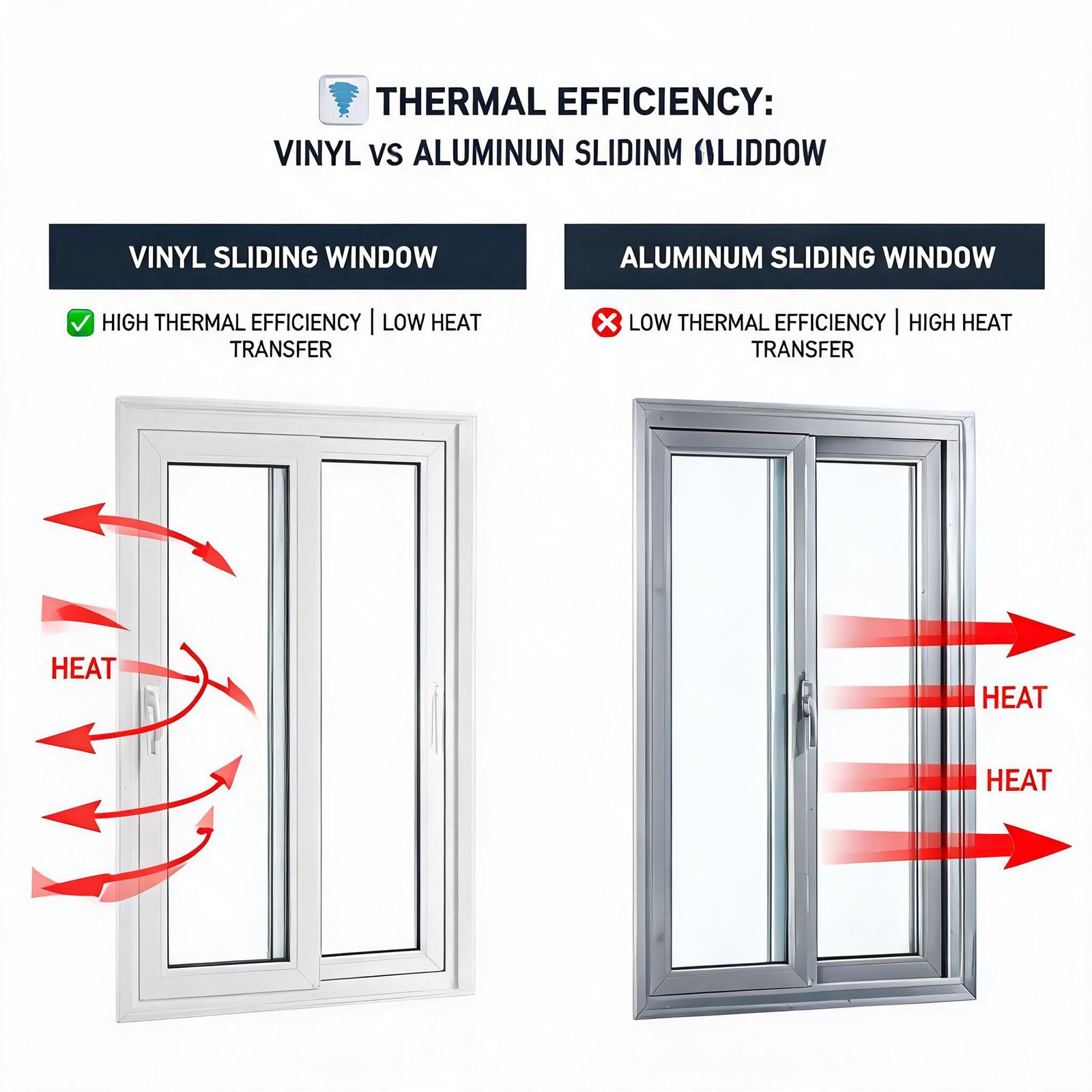
Compare this to standard single-chamber vinyl or hollow aluminum frames, which act as thermal bridges. A multi-chamber design is what separates premium products from commodity windows.
U-Value Ratings for Vinyl Casement Windows: What to Specify
The National Fenestration Rating Council (NFRC) provides the only standardized performance data. For vinyl casement windows, the critical metric is U-factor – the lower, the better. Here is how typical configurations stack up:
| Configuration | U-Factor Range | SHGC Range | VT Range | Best Climate Application |
|---|---|---|---|---|
| Single-pane aluminum | 1.20 – 1.40 | 0.60 – 0.80 | 0.70 – 0.85 | None – obsolete |
| Double-pane vinyl, clear glass | 0.45 – 0.55 | 0.50 – 0.60 | 0.65 – 0.75 | Mild climates |
| Double-pane vinyl, Low-E + argon | 0.27 – 0.35 | 0.20 – 0.40 | 0.45 – 0.60 | All climates (ENERGY STAR) |
| Triple-pane vinyl, Low-E + krypton | 0.18 – 0.25 | 0.20 – 0.35 | 0.40 – 0.55 | Cold climates (Northern zone) |
| Premium vinyl casement (5+ chambers, warm-edge spacer) | 0.22 – 0.28 | 0.20 – 0.25 | 0.48 – 0.55 | All U.S. climate zones |
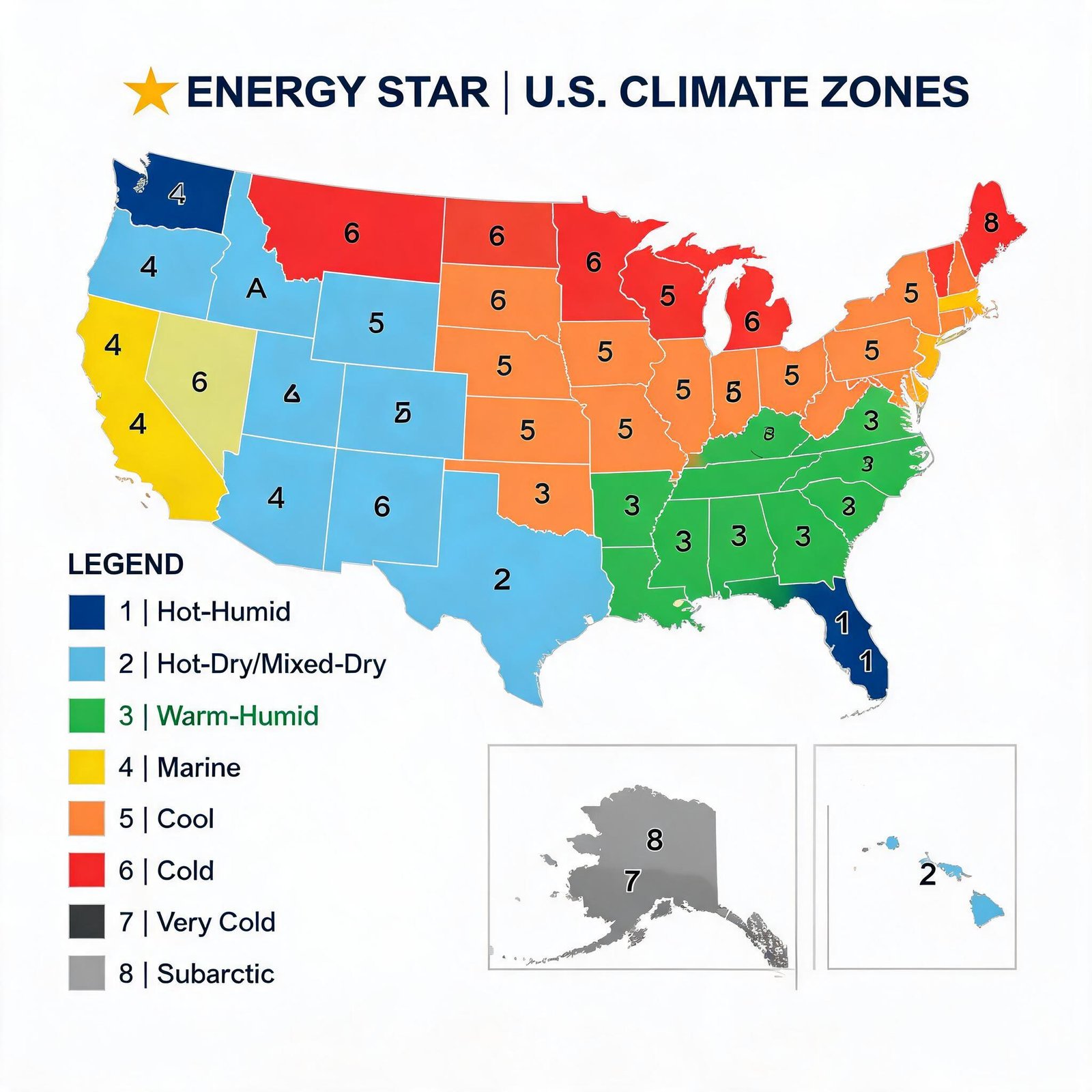
Key takeaway: For ENERGY STAR certification in the Southern climate zone (where cooling dominates), target U-factor ≤0.40 and SHGC ≤0.25. In Northern zones, prioritize U-factor ≤0.30. The best vinyl casement windows from superwindowhouse.com achieve U-values as low as 0.22, easily exceeding these thresholds.
How Casement Windows Achieve Superior Air Sealing
Unlike double-hung or sliding windows that rely on sliding contact, a casement window’s compression seal is fundamentally tighter. The cam lock mechanism pulls the sash into the frame, compressing weatherstripping along all four sides. This design yields extremely low air leakage rates – typically 0.06 cfm/ft² or less, compared to 0.30 cfm/ft² for a decent double-hung window.
For commercial projects and high-performance homes, this means:
- Less conditioned air loss – Directly reduces HVAC runtime.
- Lower infiltration of outdoor humidity – Critical in humid climates where moisture loads drive energy consumption.
- Better acoustic performance – The same compression seal blocks noise transmission.
Thermal Efficiency of PVC Windows: Beyond the Glass
While glass coatings and gas fills get the spotlight, the frame’s thermal contribution is significant. Vinyl (PVC) itself has a thermal conductivity of about 0.16 W/m·K – roughly 1,500 times lower than aluminum. When combined with insulated vinyl window profiles that incorporate foam backing or additional insulation inserts, the overall window assembly achieves far more uniform surface temperatures, reducing condensation risk and cold drafts.
At superwindowhouse.com, we engineer our vinyl casement frames with:
- 5-chamber extrusions for maximum thermal break.
- Triple-fin compression seals that prevent air and water intrusion.
- Reinforced steel cores in the sash and frame (for structural integrity without thermal penalty).
- Warm-edge spacers (e.g., stainless steel or silicone foam) that minimize heat loss at the glass edge.
ENERGY STAR Certified Vinyl Windows Specifications: A Practical Checklist
For architects, contractors, and wholesalers specifying products, here is what you need to verify:
- NFRC label – Confirm U-factor, SHGC, VT, and Air Leakage are certified (not just manufacturer claims).
- ENERGY STAR qualification – The product must be labeled for the specific climate zone where installed. A window certified for the Northern zone may not qualify in the South.
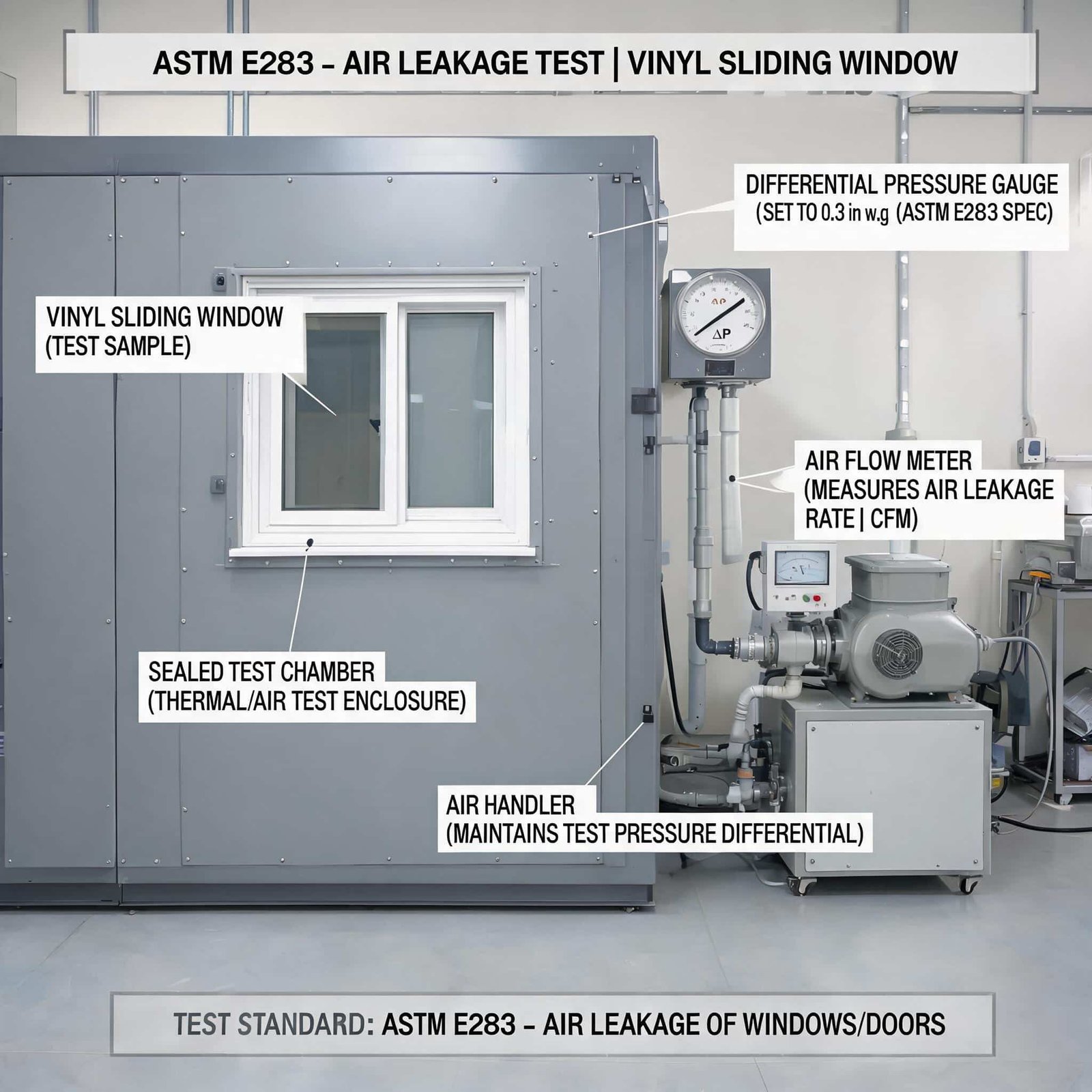
- AAMA/WDMA certification – Validates structural performance, water resistance, and air infiltration under ASTM standards.
- Low-E coating type – Soft-coat Low-E on surface #2 (or #3 for high solar control) is preferred for hot climates.
- Gas fill – Argon is standard; krypton for ultra-high-performance triple-pane units.
- Multi-chamber frame – Minimum 5 chambers for optimal thermal performance.
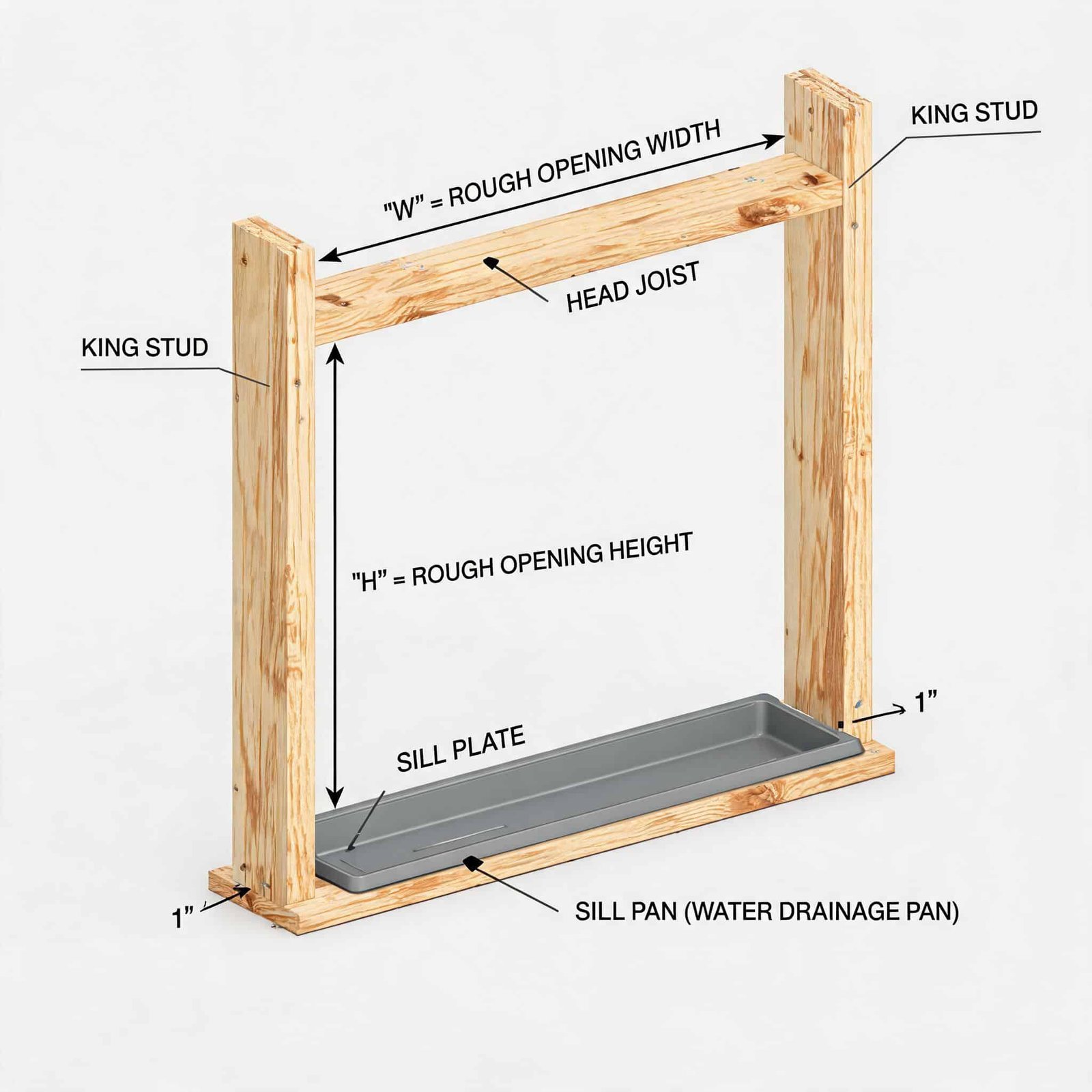
- Installation details – Even the best window fails if installed improperly. Specify proper flashing, shimming, and sealant per AAMA guidelines.
For a complete range of ENERGY STAR certified vinyl casement windows, explore our energy-efficient vinyl casement windows designed for both residential and commercial applications.
Comparing Frame Materials: Why Vinyl Wins on Efficiency
| Frame Material | Thermal Conductivity | Typical U-Factor (dual-pane) | Cost Index | Corrosion Resistance |
|---|---|---|---|---|
| Aluminum (non-thermal break) | High (237 W/m·K) | 0.70 – 1.10 | Low | Poor (salt air) |
| Aluminum (thermal break) | Medium (with barrier) | 0.45 – 0.65 | Medium | Moderate |
| Fiberglass | Low (0.30 W/m·K) | 0.28 – 0.40 | High | Excellent |
| Vinyl (multi-chamber) | Very low (0.16 W/m·K) | 0.22 – 0.35 | Low-Medium | Excellent |
Vinyl delivers the best balance of thermal performance, cost, and durability. For coastal or high-moisture environments, it is the clear choice.
Multi-Chamber PVC Window Frame Insulation: How Many Chambers Do You Need?
The industry standard for premium vinyl casement windows is 5 to 7 chambers. Here is what each chamber count delivers:
- 3 chambers: Basic thermal performance; meets minimum code but not ENERGY STAR in cold climates.
- 5 chambers: Good thermal performance; suitable for most climate zones; typical for mid-range products.
- 7 chambers: Excellent insulation; achieves lowest U-factors; recommended for passive house and net-zero projects.
At superwindowhouse.com, our vinyl casement windows incorporate a proprietary 7-chamber design in the main frame and 5-chamber sash, ensuring maximum insulation without compromising strength. When specifying custom aluminum and UPVC windows, we offer flexibility in chamber count based on project energy goals.
Real-World Energy Savings for Builders and Owners
The U.S. Department of Energy estimates that replacing single-pane windows with ENERGY STAR certified windows saves an average of $101–$583 per year per home, depending on climate. For a multi-family project or a custom home development, that translates to:
- Lower operating costs – Reduced HVAC sizing and energy bills.
- Increased property value – Energy-efficient features command premium pricing.
- Code compliance – Exceeding energy code requirements simplifies permitting.
- Rebate eligibility – Federal tax credits (up to 30% of cost) and utility incentives.
Conclusion
Vinyl casement windows are not only energy efficient – they are the optimal choice for projects demanding tight seals, low thermal bridging, and cost-effective performance. By specifying multi-chamber PVC frames, Low-E glass, and argon fill, you ensure the thermal efficiency of PVC windows meets or exceeds ENERGY STAR requirements across all climate zones. Whether you are a home builder selecting standard models or a wholesaler stocking premium inventory, the ratings tell the story: vinyl casement windows deliver measurable ROI through energy savings and occupant comfort.
Choose a manufacturer that certifies every unit. At Superwindowhouse, we provide full NFRC documentation for every vinyl casement window we produce, giving your projects the compliance and performance they need.
Still have questions about u-value ratings for vinyl casement windows or multi-chamber PVC frame insulation? Contact our engineering team for specification assistance and bulk pricing.