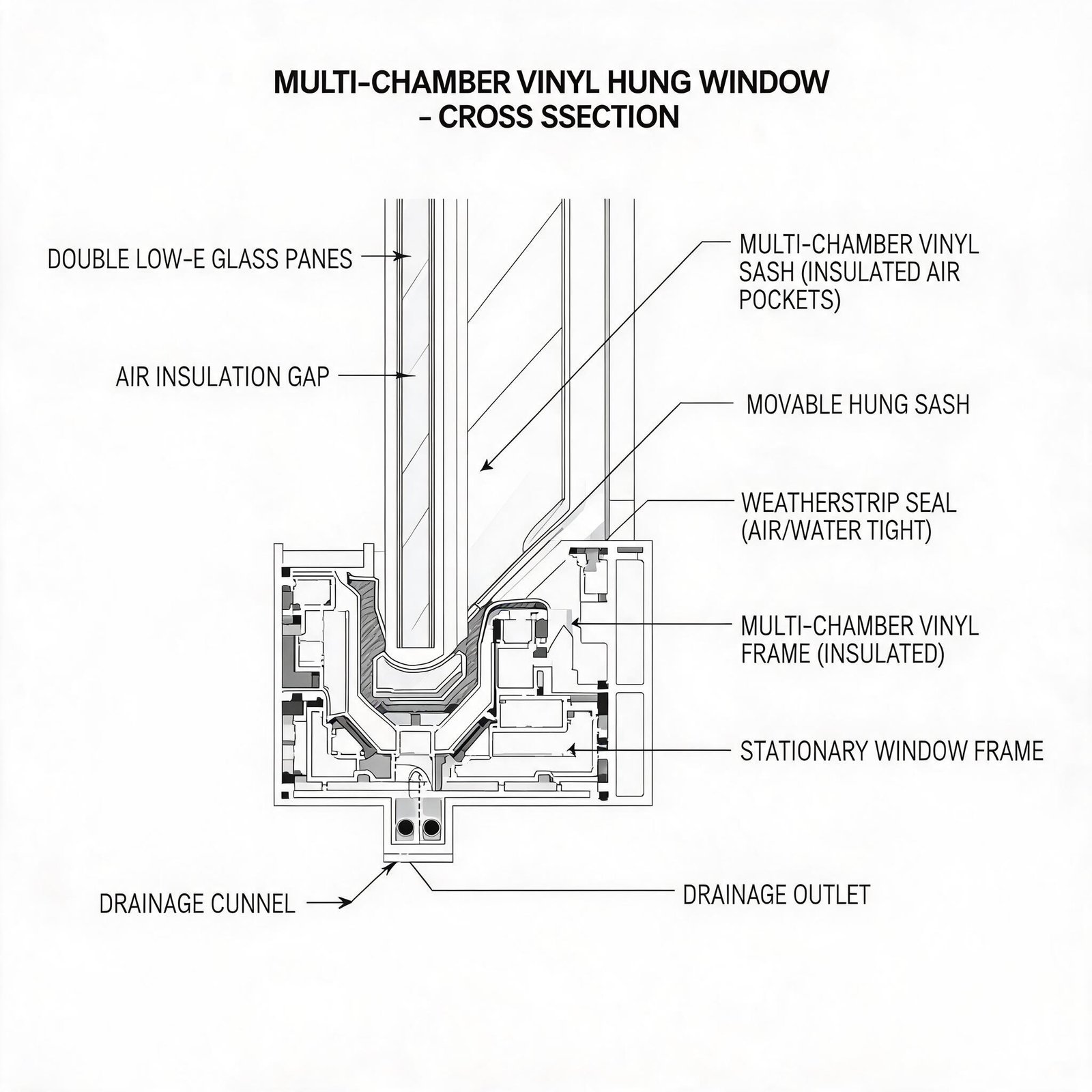
Yes, modern vinyl double hung windows deliver exceptional energy efficiency, but only when engineered with multi-chambered frames, low-E coatings, and interlocking weatherstripping that achieve U-factors below 0.30 and air infiltration rates as low as 0.06 cfm/ft². The secret lies in the thermal performance of vertical sliders—insulated vinyl hung window frames with multiple air cavities slow heat transfer like a thermos, while compression seals at every sash joint block drafts that plague older designs. For commercial and residential builders, specifying windows that meet ENERGY STAR® Most Efficient criteria can slash HVAC loads by 15-25%, directly impacting bottom-line project costs and long-term operational savings.
Why Vinyl Double Hung Windows Excel in Energy Performance
The double hung window is the most popular operating style in American homes and commercial buildings because it offers versatile ventilation and easy cleaning. But its operating mechanism—two vertically sliding sashes—introduces unique challenges for thermal efficiency. Unlike fixed picture windows or casement windows that compress against a frame, hung windows rely on slip-fit connections that can leak air and lose heat.
Here’s how top-tier manufacturers like superwindowhouse.com solve those engineering challenges:
Multi-Chambered Frame Design
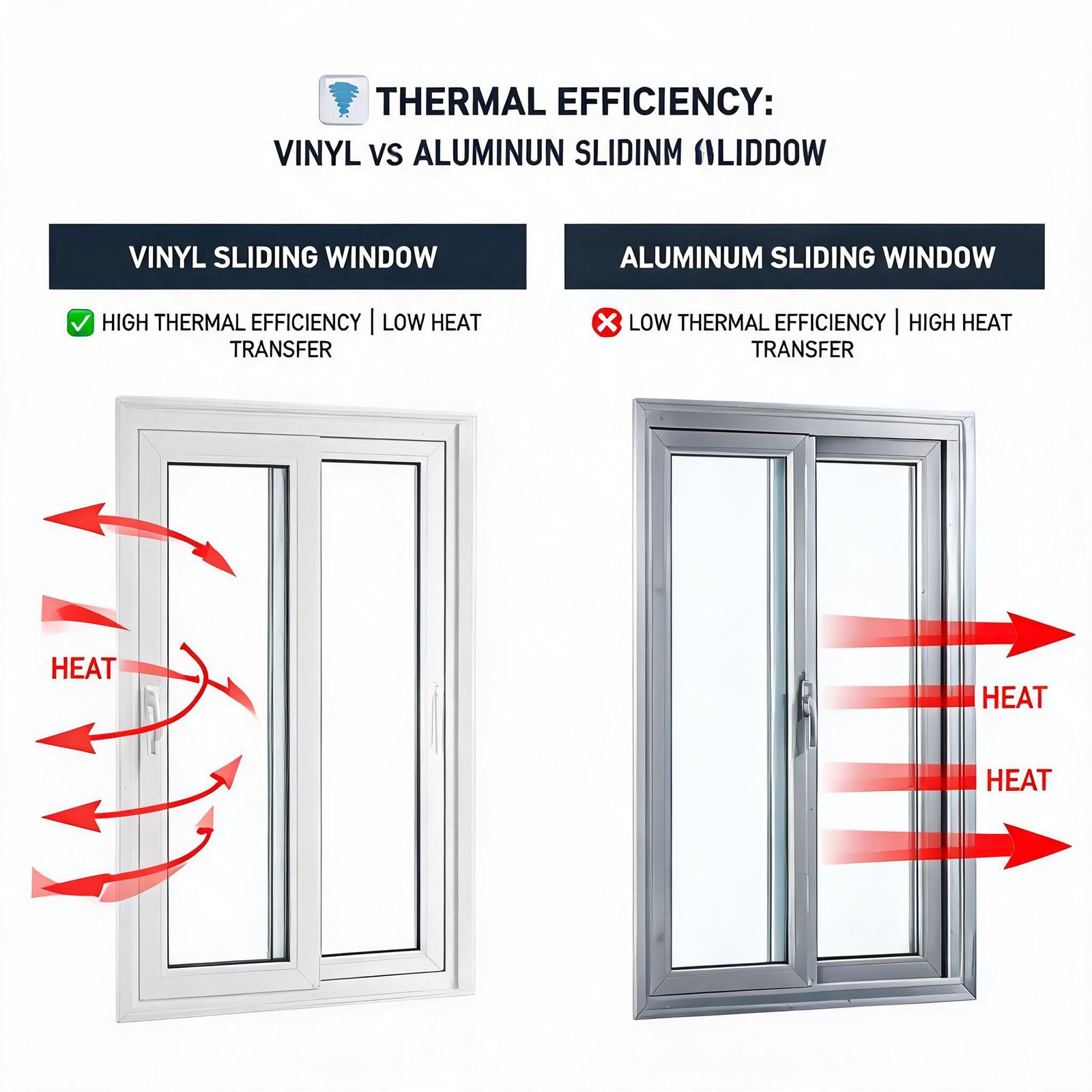
The frame and sash of a premium vinyl hung window contain multiple isolated air chambers. Each chamber acts as a thermal break, slowing conductive heat transfer through the PVC material. A well-designed extruded vinyl profile can achieve effective U-factors as low as 0.27—comparable to fiberglass and superior to standard aluminum frames.
Key specifications to look for:
- Frame thickness of 3-4 inches for adequate air space
- Minimum 3 chambers in the sash and 4-5 in the main frame
- Fusion-welded corner joints eliminate air gaps at corners
- Reinforcement options for larger openings (structural aluminum inserts)
When evaluating the thermal performance of vertical sliders, always ask for the NFRC (National Fenestration Rating Council) label. It’s your only guarantee that independent testing backs up the manufacturer’s claims.
Interlocking Sash Weatherstripping for Hung Windows
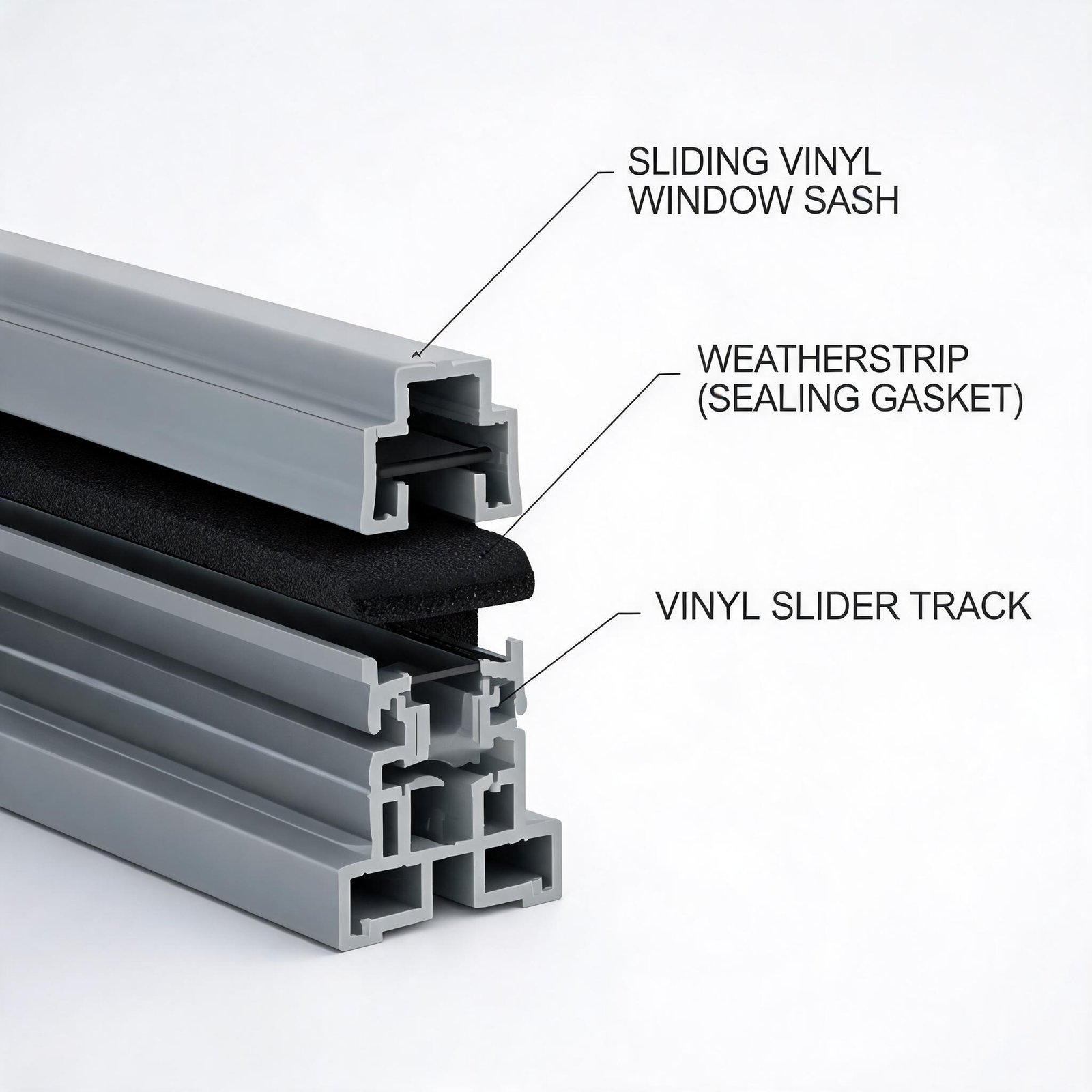
This is where most budget windows fail. Standard pile weatherstrip or simple bulb seals compress poorly at sash corners, leaving pathways for air infiltration. True interlocking weatherstripping for hung windows features a rigid fin that engages with a corresponding channel on the meeting rail and side jambs.
The engineering advantage:
- Creates a labyrinth seal that air particles must navigate
- Reduces air leakage to ≤0.06 cfm/ft² (versus 1.0+ cfm/ft² for code-minimum windows)
- Maintains compression over years of sash operation
- Works in tandem with cam-action locks that pull sashes tighter against jamb seals
Contractors specifying dual- or triple-pane units should demand this interlocking seal design, because high-performing glass is wasted if the frame leaks.
Air Infiltration Ratings for Vinyl Double Hung Windows: The Critical Metric
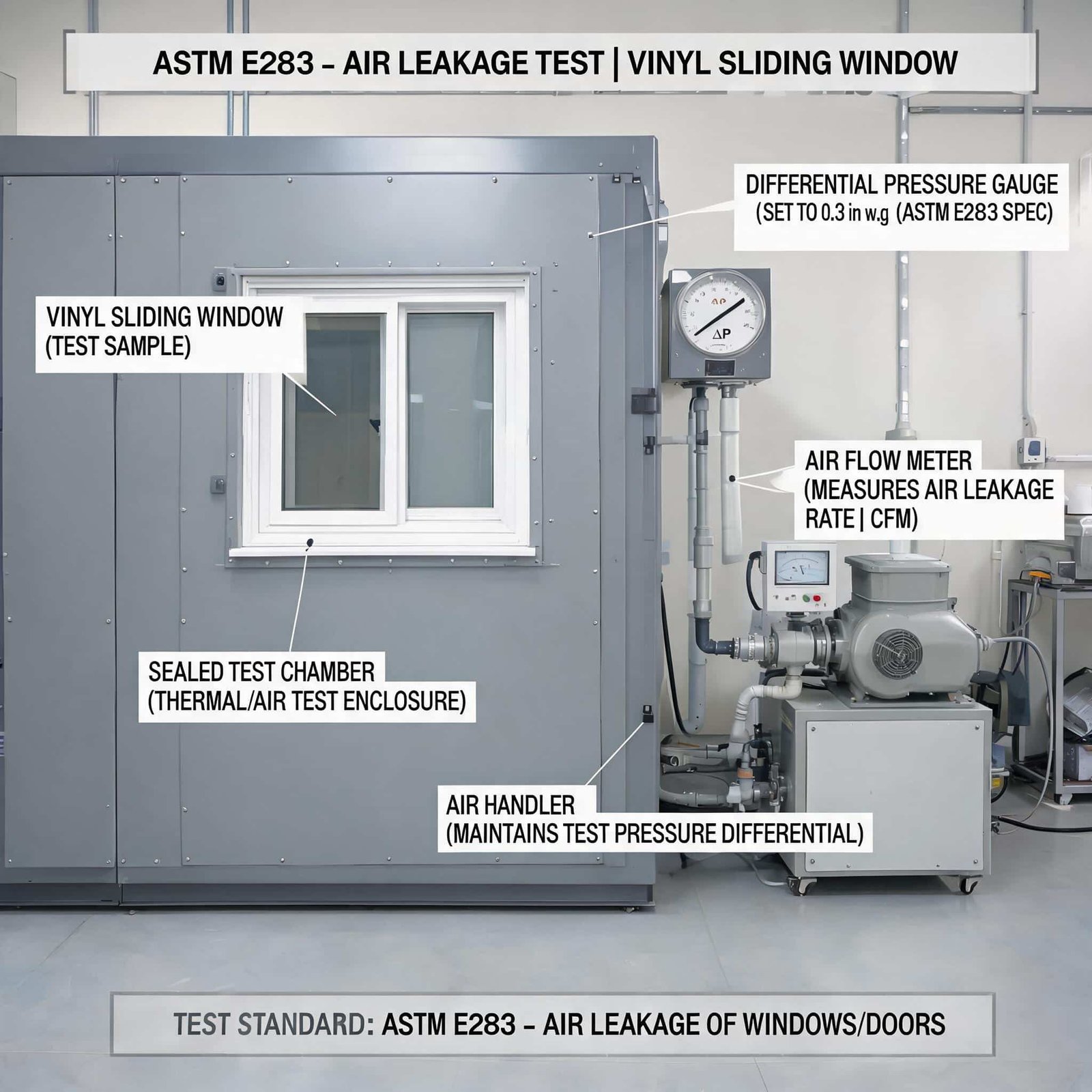
Among all energy performance numbers, air infiltration (AI) directly impacts occupant comfort and energy bills more than any other rating for hung windows. AI is measured in cubic feet per minute per square foot of window area (cfm/ft²). The lower the number, the tighter the seal.
| Rating Level | Air Infiltration (cfm/ft²) | Energy Impact |
|---|---|---|
| Industry Minimum (AAMA) | ≤0.30 | Drafts near sash joints; HVAC struggles to maintain temp |
| Good Performance | ≤0.10 | Minimal drafts; comfortable for most climates |
| Premium (Passive House-ready) | ≤0.06 | No detectable drafts; 10-15% HVAC savings versus standard |
| Ultra-Premium (Triple-seal) | ≤0.03 | Near-airtight; ideal for net-zero projects |
<