The short answer for professionals: For most commercial and production residential projects, double-hung windows offer superior lifecycle value and occupant comfort, despite a higher upfront cost, due to their enhanced ventilation control and tilt-in cleaning capabilities. However, the critical technical differentiator lies in the jamb liner and balance system; a single-hung’s fixed top sash eliminates a major potential failure point but sacrifices egress and cleaning access on upper floors. According to AAMA/WDMA/CSA 101/I.S.2/A440 standards, a properly engineered double hung with compression jamb liners can achieve an air infiltration rating equivalent to a single hung, often below 0.3 cfm/ft², making the “airtight” debate a matter of design quality, not inherent type.
The Core Engineering Difference: Operability vs. Simplicity
While the aesthetic is nearly identical, the internal mechanics of a single-hung versus a double-hung window dictate their performance across four key domains: ventilation, maintenance, cost of ownership, and weather resistance.
Single-Hung Windows: The Fixed-Top Sash Advantage
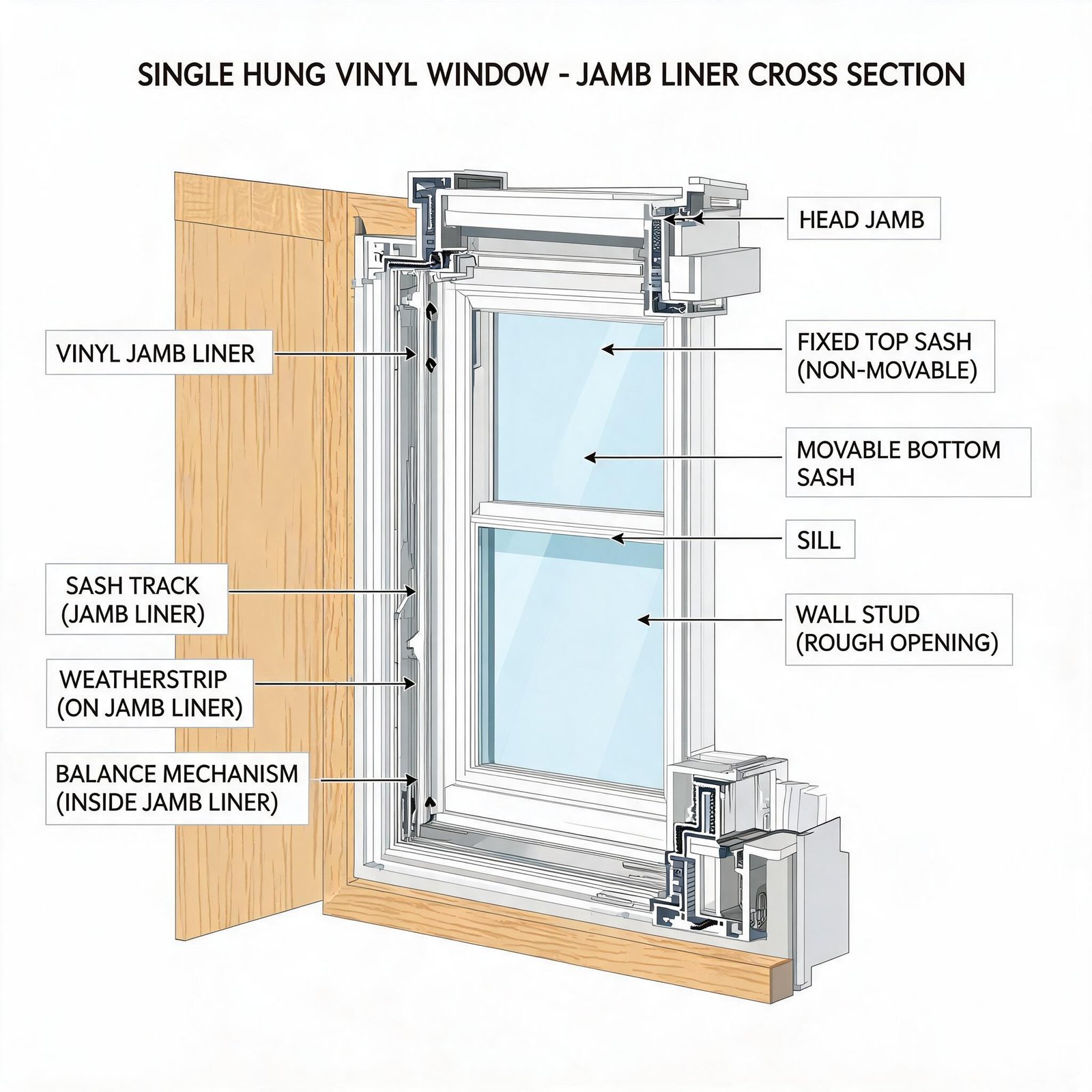
A single-hung window features a fixed upper sash and a movable bottom sash. This simplicity is its primary engineering advantage.
- Fewer Moving Parts: The absence of a sliding top sash means fewer balance mechanisms, seals, and weatherstripping. This reduces potential failure points and manufacturing complexity.
- Inherently Tighter Seal: Because the top sash is static, it can be sealed more permanently against air and water intrusion. This is a key advantage in high-wind zones or when specifying for maximum energy performance with a simpler budget.
- Cost-Effective for High-Rise or Utility Applications: For stairwells, basements, or areas where the top sash is never used, a single-hung is a pure engineering decision to save material and labor.
Double-Hung Windows: The Dual-Sash Flexibility
A double-hung window allows both the upper and lower sashes to operate. This two-way movement is the hallmark of modern residential comfort engineering.
- Natural Convection Ventilation: This is the single greatest design benefit. Opening the top sash 3-4 inches allows hot, stale air to escape from the ceiling plane, while the lower sash draws in cooler air at floor level. This creates a self-regulating air cycle without needing a fan.
- Tilt-In Sash for Washability: Modern double-hungs utilize a tilt-latch mechanism. This feature allows the sashes to pivot inward, making cleaning of the exterior glass safe and accessible from inside the building. This is a critical maintenance differentiator for mid-rise and high-rise projects.
- Code-Compliant Egress: For bedrooms, the top sash provides a secondary egress point that can be easier to clear of furniture or obstructions than a bottom sash.
The Air Infiltration & Energy Efficiency Fallacy
Many believe that single-hung windows are inherently more airtight than double-hungs. This is an oversimplification.
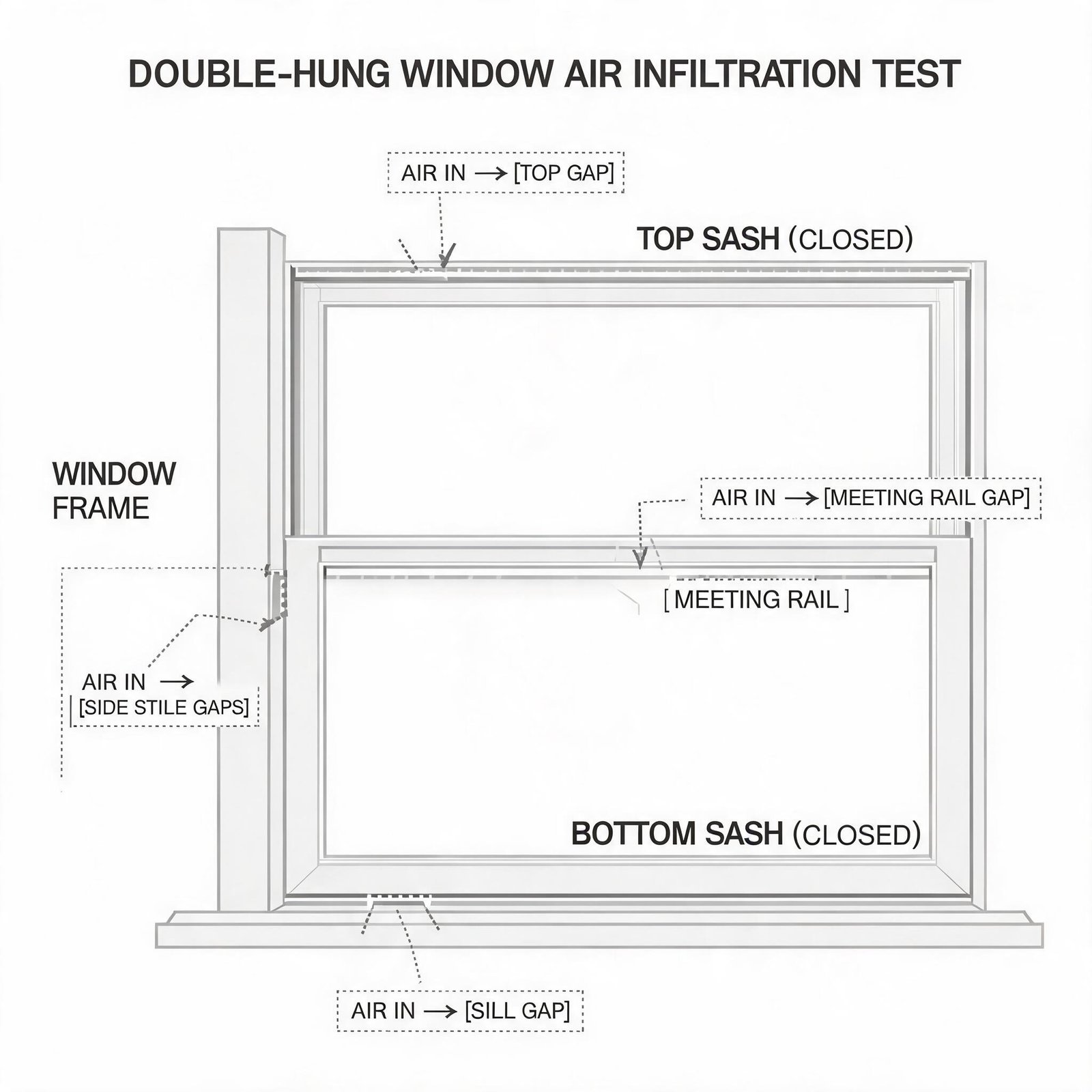
The reality is that both can achieve equivalent performance under the NFRC and ENERGY STAR ratings. The key is the quality of the balance system and weather stripping.
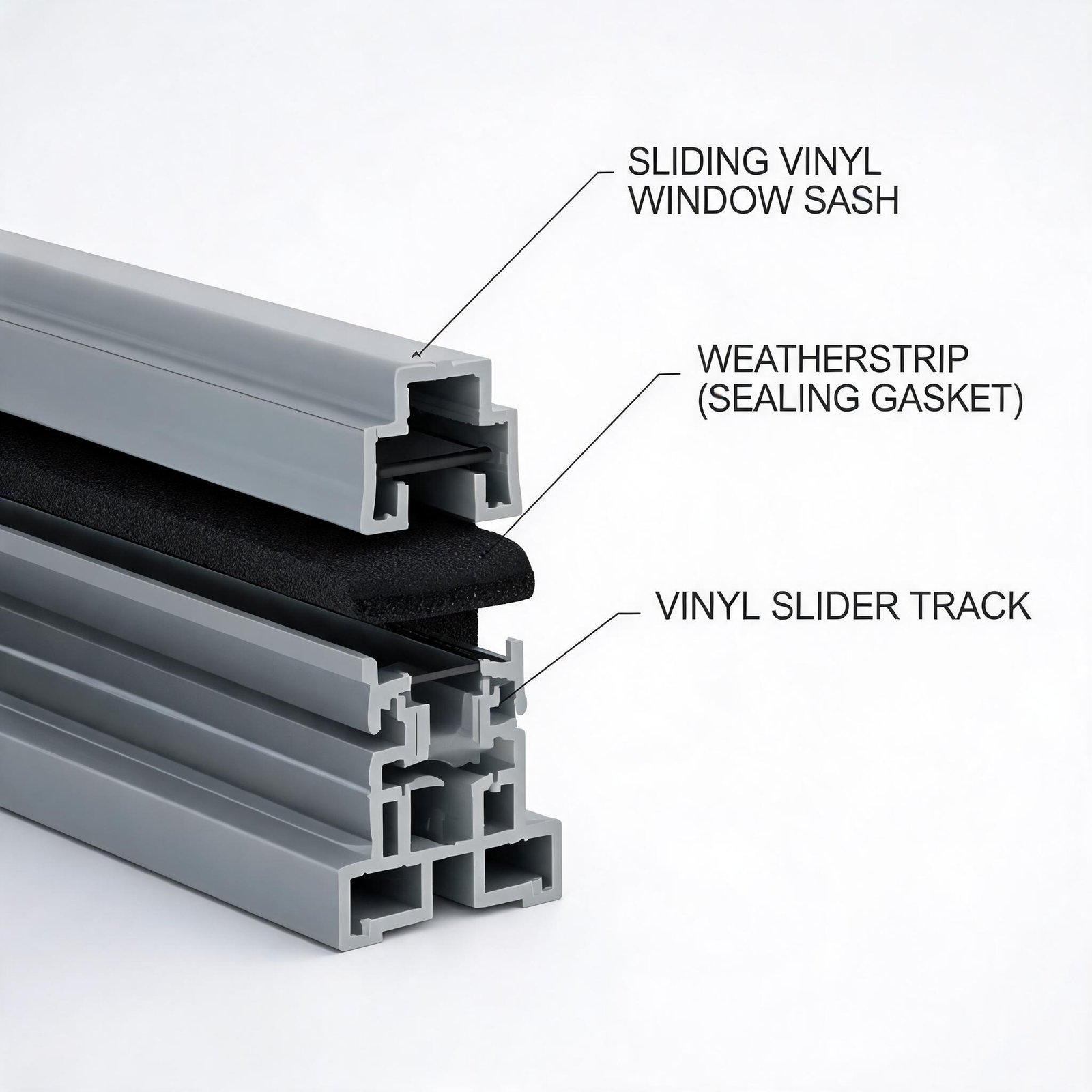
- The Weak Point: In many budget double-hungs, the jamb liner (which houses the balance and sash guides) can be a source of air leakage if not designed with continuous compression weatherstripping.
- The Engineering Fix: High-end double-hung windows, such as those in our commercial-grade Vinyl Double Hung Window line, utilize dual-fin bulb seals and a block-and-tackle balance system that maintains constant pressure against the sash, virtually eliminating leakage.
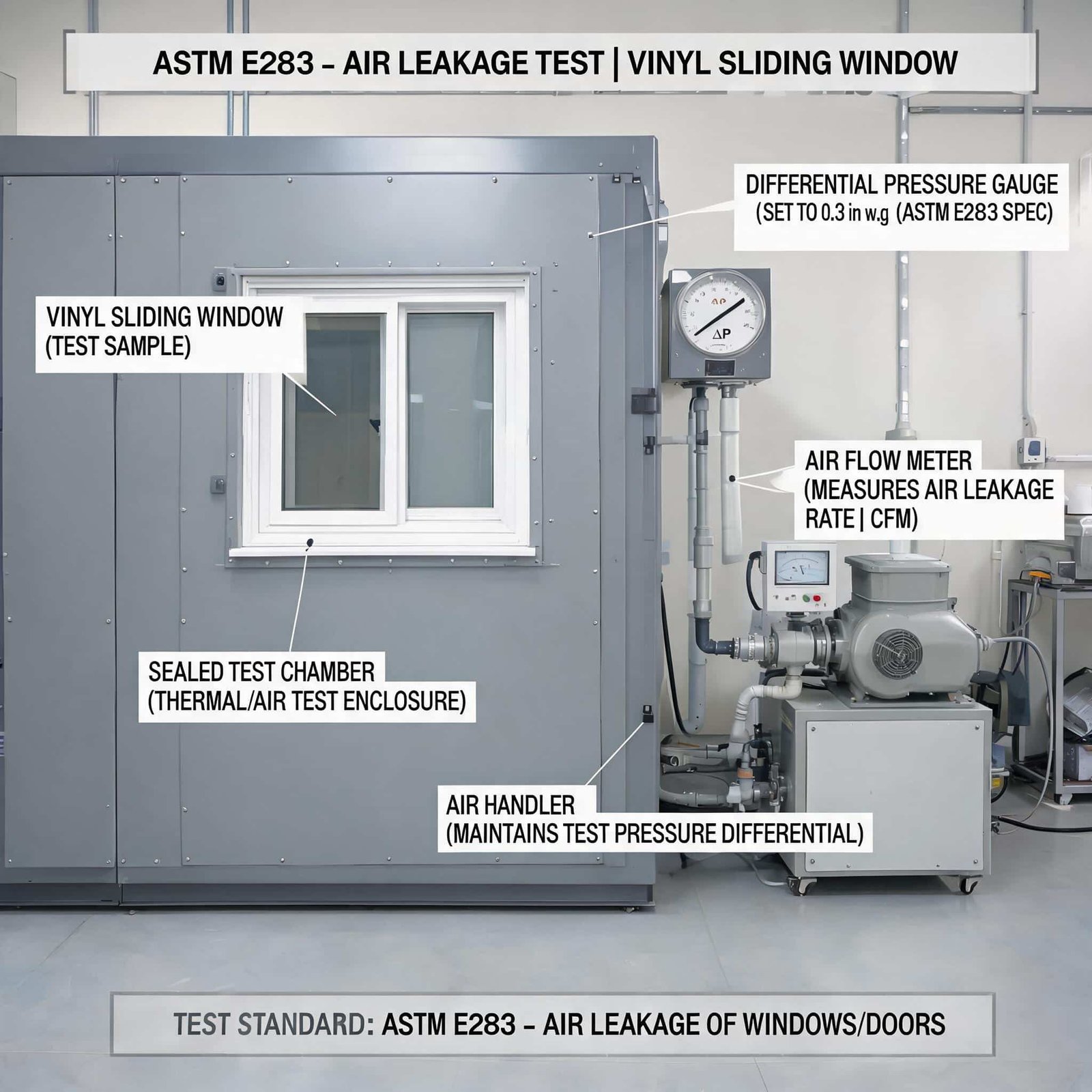
The professional’s verdict: Don’t assume single-hung is “more airtight.” Specify a DP rating (Design Pressure) of 50+ for either type, and ensure the test report confirms an air leakage rate under 0.15 cfm/ft² at 1.57 psf (75 Pa).
Single Hung vs Double Hung Cost Performance: A 5-Year TCO Analysis
Initial cost is just the first line item. A true B2B decision requires a Total Cost of Ownership (TCO) analysis. Single hung windows are cheaper upfront, but the lack of tilt-in cleaning adds significant ongoing maintenance costs, especially for multi-story buildings.
| Feature | Vinyl Single-Hung Window | Vinyl Double-Hung Window |
|---|---|---|
| Typical Unit Cost (Install) | $150 – $350 | $250 – $600 |
| Number of Operating Sashes | 1 (Bottom) | 2 (Top & Bottom) |
| Ventilation Control | Low (Standard flow) | High (Natural convection) |
| Cleaning Accessibility | Poor (Requires exterior access/ladder) | Excellent (Tilt-in from interior) |
| Annual Maintenance Cost (est.) | ~$15 (for bottom sash seals only) | ~$10 (for both sashes, but easier) |
| Air Infiltration (AAMA Tested) | Typically 0.1 – 0.3 cfm/ft² | Typically 0.1 – 0.3 cfm/ft² |
| Best Application | Utility rooms, low-cost housing, high-volume projects | Bedrooms, living spaces, multi-story projects |
The business math: For a 50-unit apartment building, choosing single-hung could save $5,000-$10,000 in upfront window cost. However, the annual cost of hiring a boom lift and crew to wash exterior glass on upper floors will erase that saving in 3-5 years. Double-hung windows pay for themselves in maintenance avoidance.
Maintenance Difference: The Ladder vs. The Tilt-Latch
This is the single most decisive factor for contractors and architects. The maintenance difference between single and double hung windows dictates labor costs and safety risks.
- Single Hung Maintenance: Requires a ladder, scaffolding, or a swing stage to reach the exterior of the fixed top sash. You cannot clean the glass from inside. This is a significant safety liability and labor expense.
- Double Hung Maintenance: The sashes are designed with a tilt-latch mechanism. You simply rotate the sash inward 90 degrees. This allows you to clean both sides of the glass and service the balance system entirely from inside the conditioned space.
Pro Tip: When specifying double-hungs for high-rise work, confirm the operating force. Tilt-latches should require less than 30 lbf (pounds of force) to operate, per AAMA standards, to ensure ease of use for all occupants.
PVC Windows: The Material Advantage
The question of “Difference between single and double hung pvc windows” is about material properties, not just style. PVC (Polyvinyl Chloride) or vinyl windows are the industry standard for cost-effective, high-performance vertical sliders.
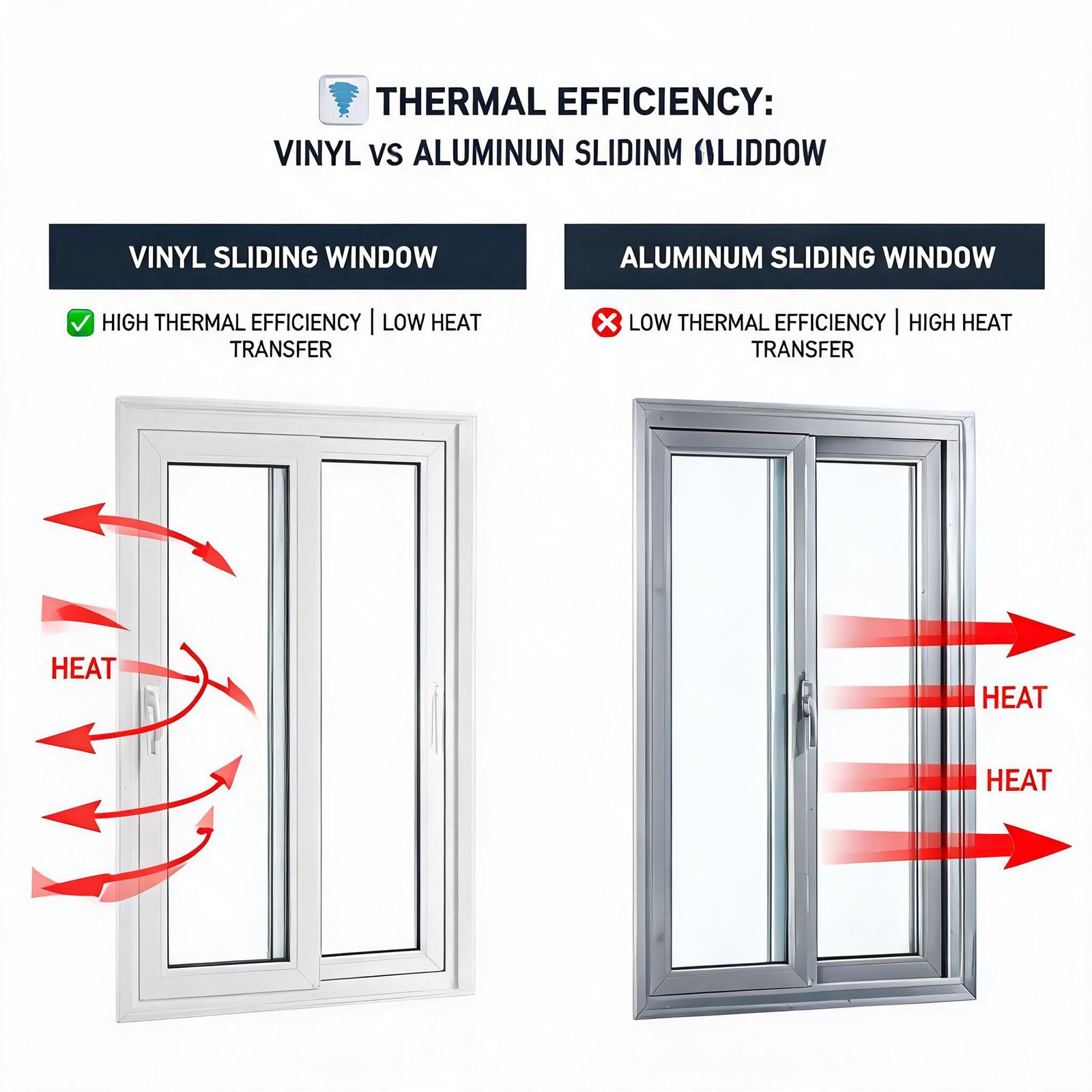
- U-Value: Vinyl frames offer superior thermal resistance (U-value typically 0.20-0.30) compared to aluminum, reducing heating and cooling loads.
- Corrosion Resistance: Ideal for coastal areas where salt spray corrodes metal frames.
- Design Freedom: PVC can be extruded into complex multi-chambered profiles, creating the internal chases needed for both block-and-tackle balances and continuous weatherstripping.
Our Aluminum & UPVC Windows Custom line allows you to integrate vinyl performance with custom dimensions and color matching for precise architect specifications.
When to Choose Single Hung vs. Double Hung: A Decision Matrix
For the general contractor or home builder, the decision often comes down to these three scenarios:
- The Budget-Tight Production Home: Go Single Hung. Specifying single-hung vinyl windows on a 2,500 sq ft tract home saves material cost. Use the savings to upgrade the Low-E coating on the glass package.
- The Custom Multi-Story Residence: Go Double Hung. The ability to clean upper-floor windows from inside is non-negotiable for homeowner satisfaction and long-term asset protection.
- The Commercial Office or Stacked Flats: Go Double Hung (as code permits). The natural convection ventilation provided by opening both sashes significantly reduces reliance on mechanical HVAC during shoulder seasons, a key selling point for green building credits (e.g., LEED points for passive ventilation).
Final Engineering Verdict
Double-hung windows are the superior choice for any project where occupant comfort, maintenance accessibility, and lifecycle cost are the primary drivers. They offer engineered flexibility that single-hung windows cannot match.
Single-hung windows remain a viable, cost-efficient solution for specific applications—particularly those with limited access requirements or extreme budget constraints. However, from a building science perspective, the double-hung’s ability to simultaneously exhaust hot air at the ceiling (top sash) while drawing in cool air at the floor (bottom sash) makes it the most effective passive ventilation strategy for a vertical wall opening.
Frequently Asked Questions
Is a single hung or double hung window more airtight?
Neither design is inherently more airtight. The deciding factor is the quality of the jamb liner and compression weatherstripping. A premium double-hung window with continuous fin seals will outperform a poorly sealed single-hung model.
What are the pros and cons of single hung vs double hung windows for a commercial project?
- Single Hung: Pros: Lowest upfront cost, fewer moving parts. Cons: No top-sash egress, difficult exterior cleaning.
- Double Hung: Pros: Superior ventilation, easy interior cleaning, code-compliant egress for bedrooms. Cons: Higher initial cost, requires more robust engineering for large sizes.
How does the maintenance difference affect long-term costs?
Maintenance is the single biggest decider. A double-hung window pays for its premium cost within 3-5 years by eliminating the need for expensive ladders, lifts, or cleaning crews to access the exterior of the upper sash.