Why Tilt and Turn Window Material Selection Matters for US Builders
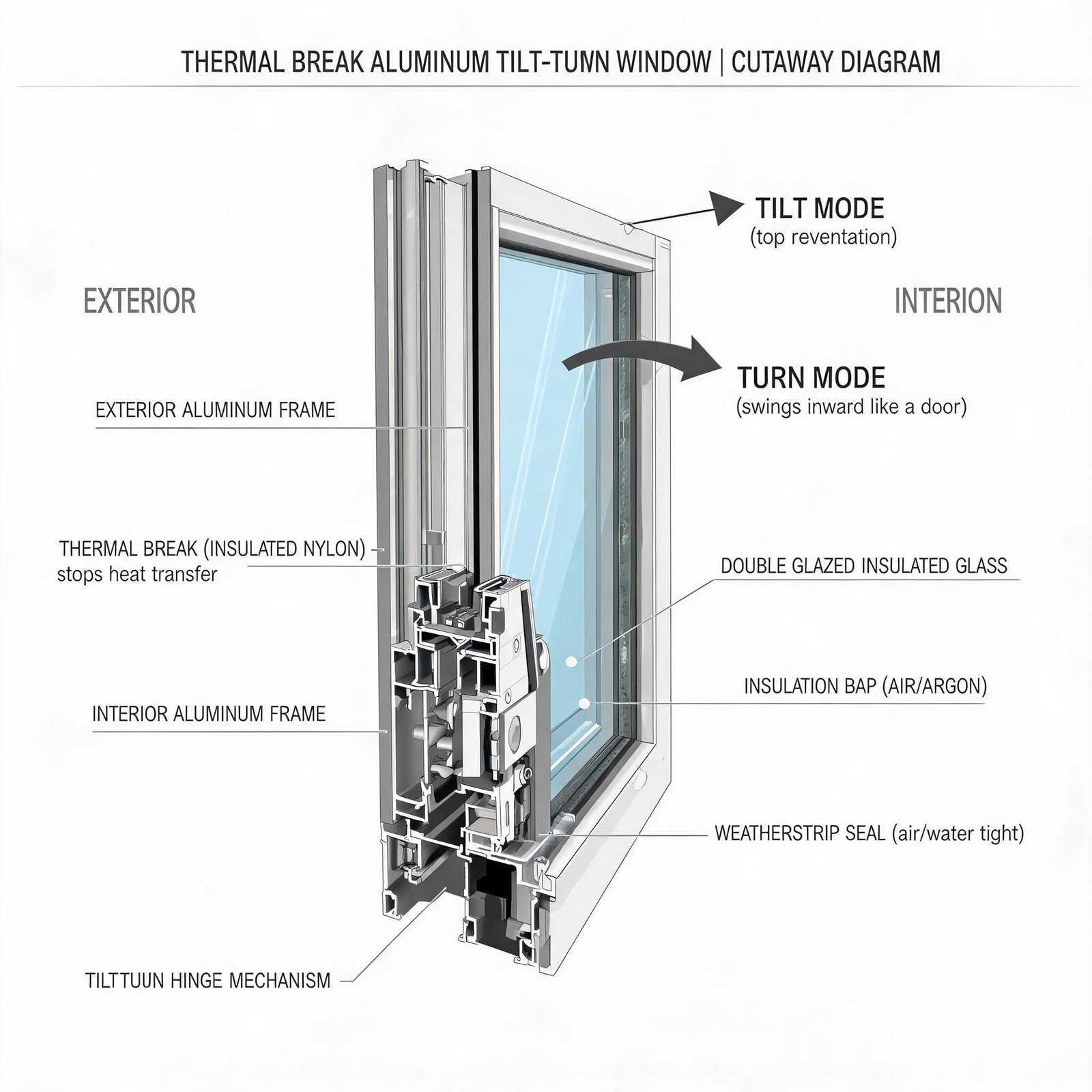
The tilt and turn window has become the dominant European-style fenestration solution gaining traction across North American residential and light commercial construction. Unlike traditional hung or casement windows, tilt and turn systems offer dual-operation functionality: the sash tilts inward at the top for secure ventilation, and swings fully inward on side hinges for emergency egress and easy cleaning.
For home builders, general contractors, and architects evaluating tilt and turn windows material comparison, the frame material decision directly impacts:
- Thermal envelope performance (meeting IECC 2024 and energy code compliance)
- Structural load resistance (hurricane zones, high-wind regions)
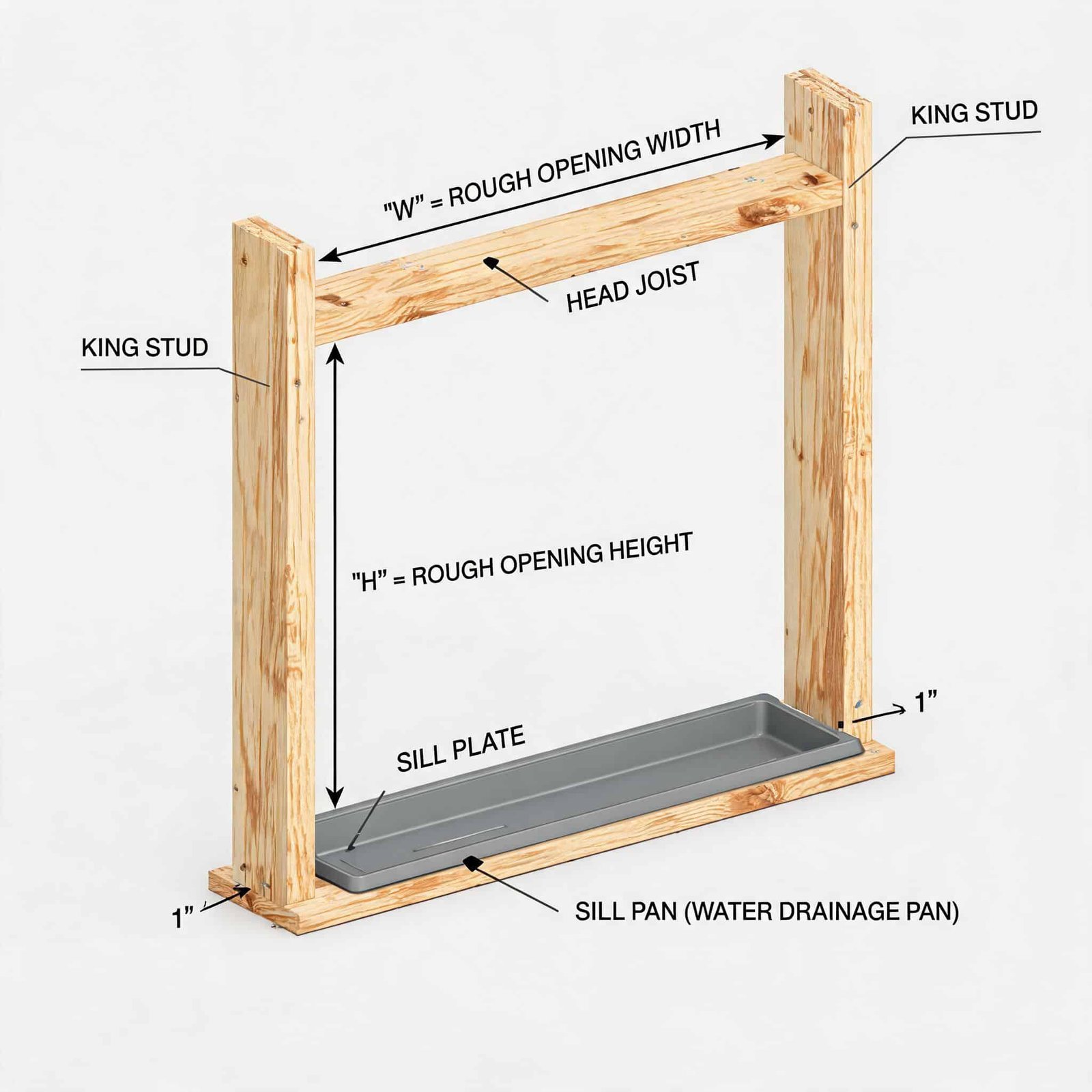
- Installation logistics (weight, handling, rough opening preparation)
- Long-term warranty exposure (material degradation, seal integrity)
- Supply chain reliability (lead times, domestic vs. overseas sourcing)
Let us examine the engineering realities behind each material option.
Thermal Performance: Where the Real Differences Live
uPVC Natural Insulation Advantage
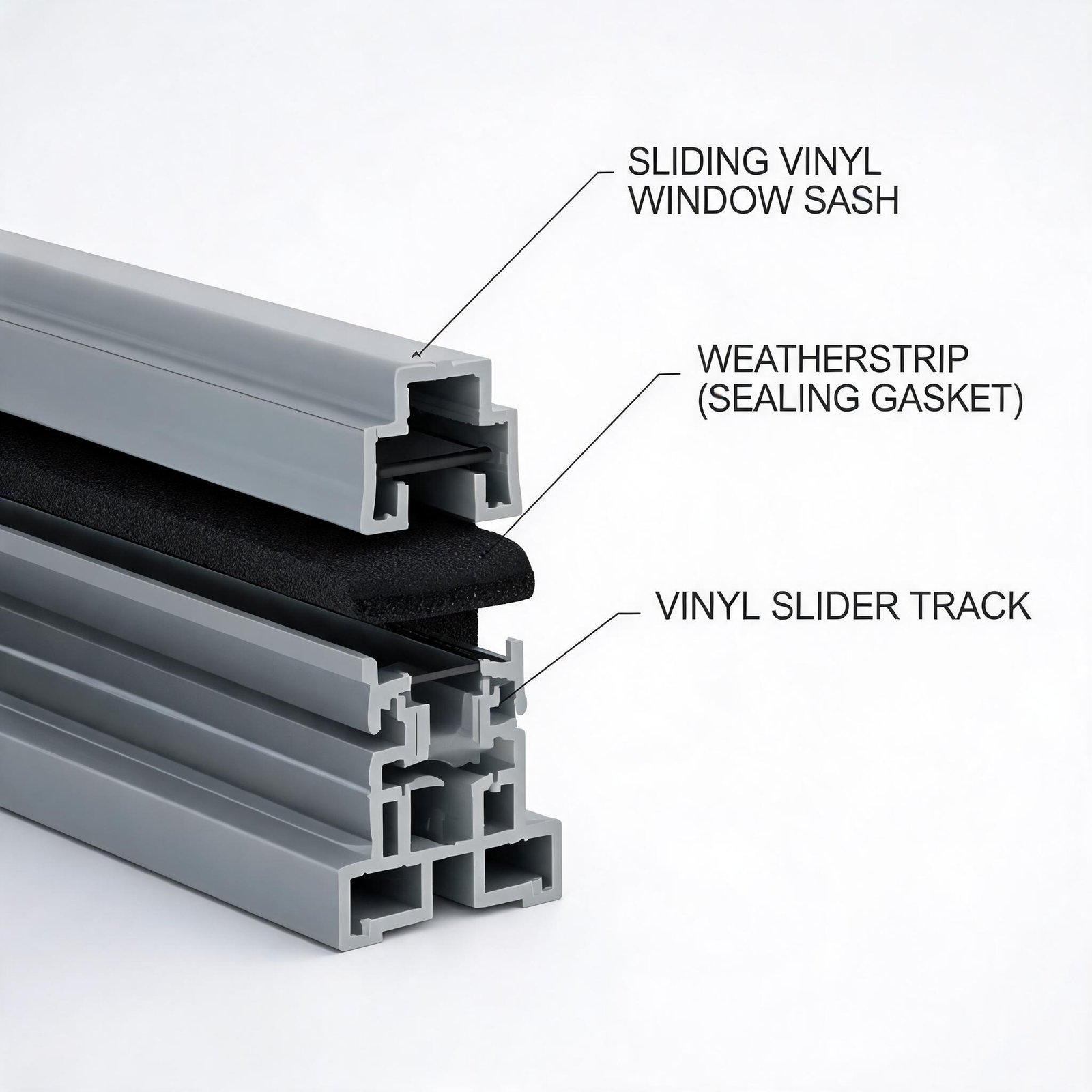
Polyvinyl chloride (uPVC) inherently delivers superior thermal resistance due to its low thermal conductivity (0.16–0.22 W/m·K). High-performance uPVC tilt and turn windows utilize multi-chamber extrusion profiles:
- 5-chamber profiles: Standard for most residential applications, achieving center-of-glass U-values of 0.18–0.22
- 6–7 chamber profiles: Premium passive house certified systems reaching 0.12–0.16 U-values
- Steel reinforcement channels: Added inside chambers for structural rigidity without compromising thermal break
For cold climate zones (IECC zones 5–7), uPVC tilt and turn windows eliminate the condensation risk common with aluminum frames at interior RH levels above 40%.
Thermal Break Aluminum Technology
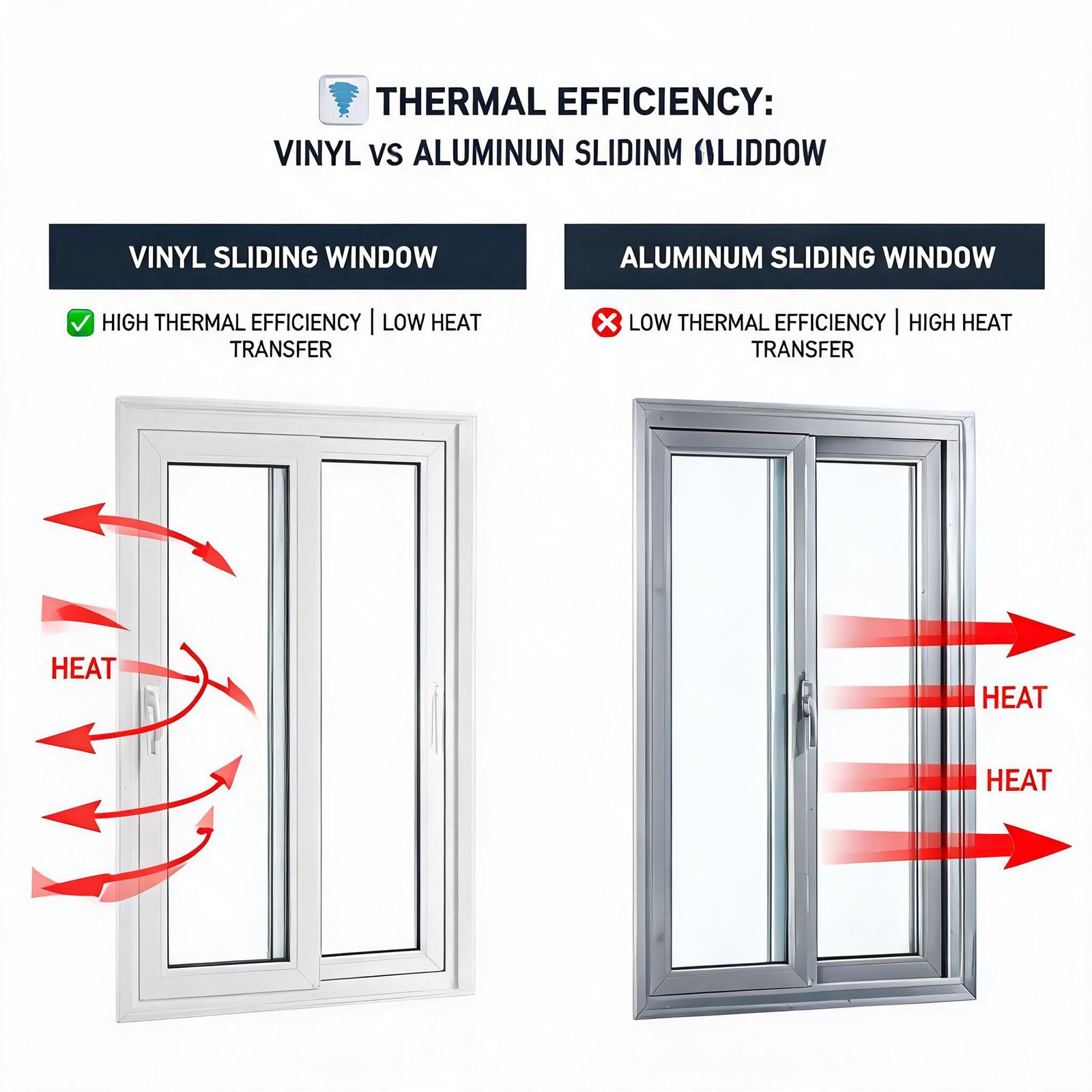
Aluminum frames conduct heat 300–400 times faster than uPVC. To compete thermally, aluminum tilt and turn systems require continuous thermal break technology:
- Polyamide 6.6 struts: 25–34mm wide, mechanically crimped between interior and exterior aluminum profiles
- PU foam injection: Fills the remaining cavity, reducing convection and achieving 0.25–0.35 U-values
- Elimination of metal-to-metal contact: Critical for preventing thermal bridging at corners and meeting rails
The best thermally broken aluminum systems now achieve NFRC-certified U-values of 0.28–0.32, which is functionally competitive with mid-grade uPVC but typically 15–20% less efficient than premium multi-chamber vinyl.

Structural Integrity and Frame Strength
For commercial projects and high-end residential builds requiring maximum glass area and slim sightlines, the inherent strength of aluminum remains unmatched.
Aluminum tilt and turn windows:
- Provide higher moment of inertia per linear inch of profile
- Allow frame depths of 60–85mm while supporting large glass panels weighing 80–150 kg per sash
- Achieve DP50–DP80 ratings without internal steel reinforcement
- Perform better in high-wind coastal regions (Florida Building Code HVHZ compliance)
- Accommodate 24mm to 42mm triple-glazed IG units
uPVC tilt and turn windows:
- Require internal galvanized steel reinforcement for any sash exceeding 900mm width
- Typically cap out at DP40–DP55 in standard configurations
- Can support glass packages up to 50–70 kg per sash without specialized reinforcement
- Thicker frames (80–95mm) needed to match aluminum structural capacity
- More susceptible to thermal expansion in dark colors exposed to direct sunlight (Δ length up to 3mm per 2m profile)
For contractors specifying large panoramic openings or coastal hurricane-rated assemblies, aluminum remains the structural standard. However, modern uPVC systems with full-perimeter steel armoring are closing that gap for standard residential applications.
Cost Analysis: Upfront vs. Lifetime Value
The cost difference between aluminum and vinyl tilt and turn windows is the most frequently asked question by home builders managing project budgets. Here is a transparent breakdown based on current wholesale pricing:
| Specification | uPVC Tilt & Turn | Thermally Broken Aluminum Tilt & Turn |
|---|---|---|
| Wholesale cost per SF (standard 1200x1500mm) | $18–$28 | $35–$55 |
| Installation labor premium | Standard | +15% (heavier frames, precision shimming) |
| Cleanability/re-paintability | Factory color only | Powder-coat refinishable every 10–15 years |
| Standard U-value range | 0.18–0.28 | 0.25–0.35 (with polyamide thermal break) |
| Weight per SF (double-glazed) | 5.5–7.5 kg | 8.5–12 kg |
| Standard frame depth | 80–95mm | 60–85mm |
| Tensile strength of profile | 45–55 MPa (reinforced) | 160–200 MPa (6000-series alloy) |
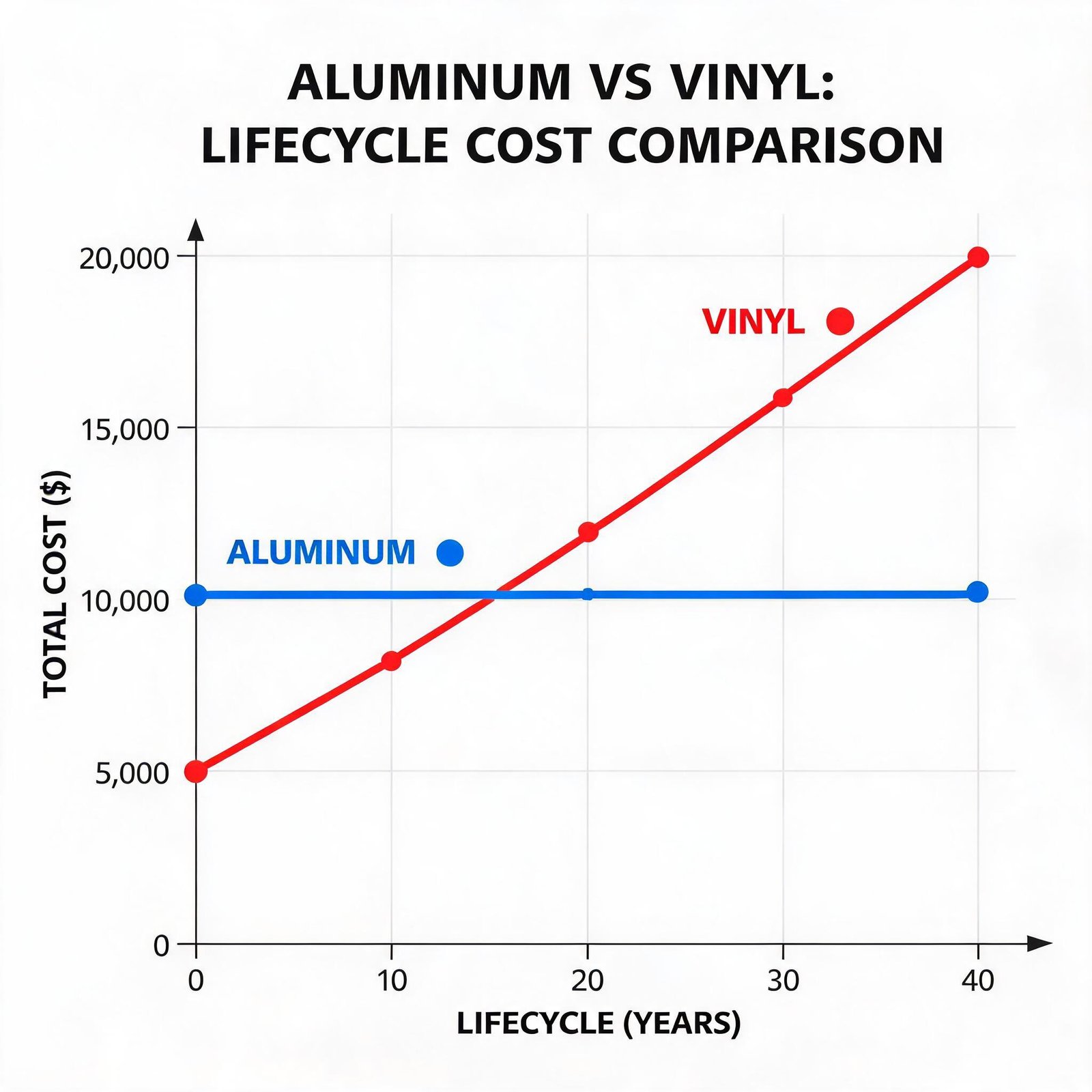
| Life cycle cost (20-year) | $22–$32/SF (replacement potential) | $28–$38/SF (lower replacement risk) |
| Typical DP rating | DP40–DP50 | DP50–DP80 |
| AAMA/WDMA certification | AAMA 303 compliant | AAMA 603 compliant (standard) |
The reality for wholesalers and production builders: uPVC tilt and turn windows offer 35–45% cost savings at initial procurement, making them the preferred choice for suburban tract developments, multifamily mid-rises, and projects where energy code compliance with moderate wind loads is sufficient. The superior cost difference between aluminum and vinyl tilt and turn windows becomes decisive when specifying 50+ units for a single development.
Maintenance, Durability, and Weather Resistance
uPVC Tilt and Turn Window Maintenance
Modern uPVC formulations include titanium dioxide UV stabilizers and impact modifiers that prevent yellowing and embrittlement for 25–30 years under normal exposure. Key maintenance considerations:
- No painting or refinishing required—color runs through the full extrusion depth
- Wipe-clean surface: Occasional soap and water wash; no chemical compatibility issues
- Replacement simpler: Entire sash or frame sections can be swapped without demolishing drywall
- Potential sagging: Large operational sashes (over 1300mm width) may develop alignment issues over time; specify steel-reinforced hardware
Aluminum Tilt and Turn Window Maintenance
Aluminum tilt and turn windows require slightly more proactive care but offer far greater longevity:
- Powder-coated finish: Re-coatable every 10–15 years to refresh appearance or change colors
- Corrosion risk: In coastal environments, specify AAMA 2605.5-certified coating (70% Kynar 500 PVDF finish)
- Hardware inspection: Aluminum frames transmit vibration more readily; lubricate friction hinges and multi-point locking mechanisms annually
- Condensation management: In humid climates, ensure thermal break is continuous—condensation on interior aluminum surfaces indicates thermal bridging failure
For commercial property owners calculating total cost of ownership over 30–50 years, aluminum’s refinishability and structural permanence often offset the higher initial investment.
Pros and Cons of Vinyl Tilt and Turn Windows: What the Data Shows
Based on field performance across 200+ completed projects in Climate Zones 3–6, here is the unvarnished assessment for home builders:
Pros:
- Lower material and installation costs (35–45% cheaper than aluminum)
- Superior thermal performance in standard configurations
- No corrosion in coastal salt air environments
- Quieter operation due to inherent dampening characteristics of PVC
- Easier to source through domestic and Canadian extrusion suppliers
- Available through reliable distributors like Aluminum & UPVC Windows Custom for project-specific sizing
Cons:
- Structural limitations for very large sash (max 1300mm x 2000mm without reinforcement)
- Color variety limited compared to aluminum powder-coating (white, beige, dark bronze standard)
- Thermal expansion visible in dark frames exposed to direct southern sun
- Not repairable if profile splits or warps; full replacement required
- Lower perceived value on custom luxury homes
Airtightness, Watertightness, and Acoustic Performance
The tilt and turn mechanism inherently outperforms any traditional North American window style in air and water infiltration resistance, provided the frame material is selected appropriately.
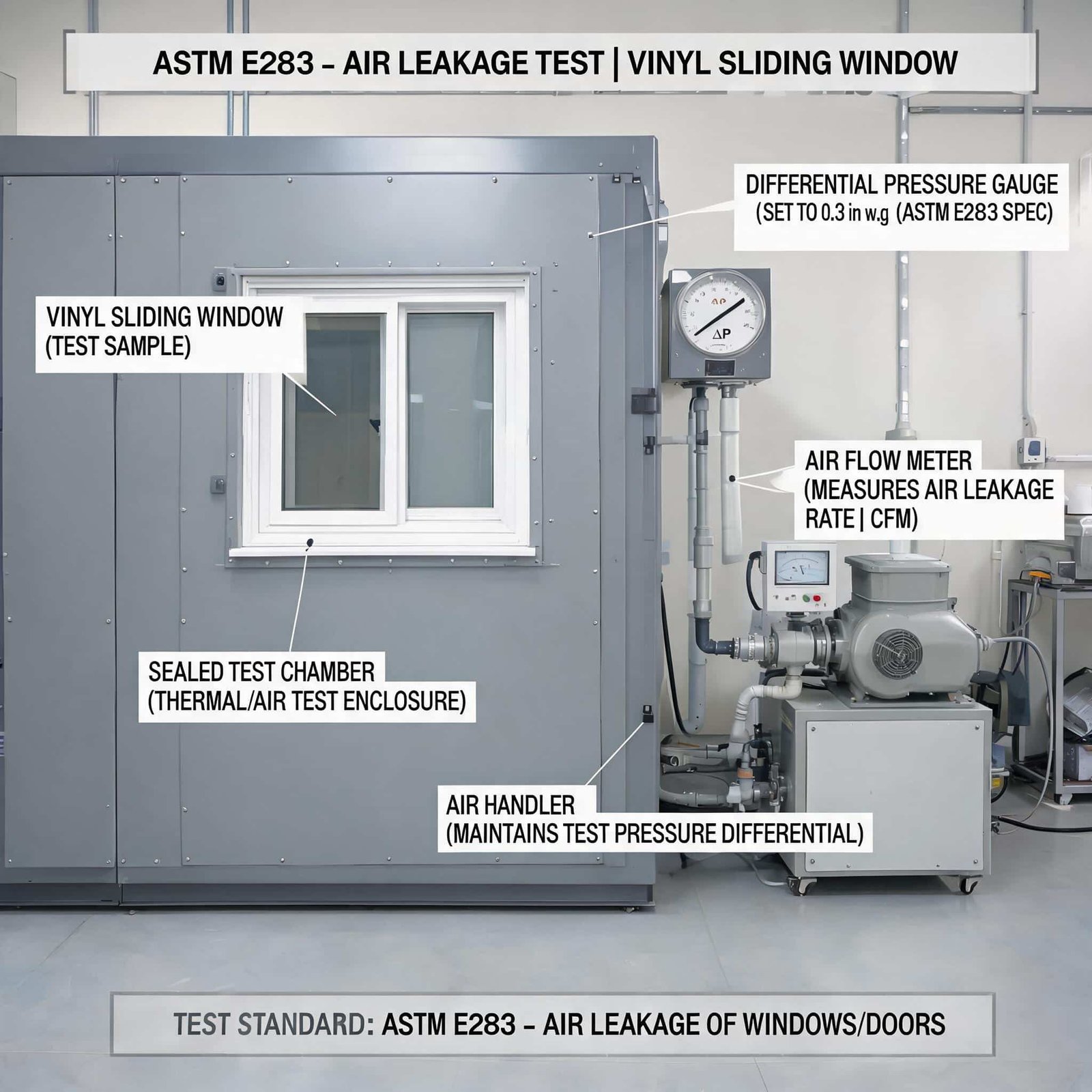
Tested performance (all per ASTM E283/E331/E1105):
| Performance Metric | uPVC Tilt & Turn | Thermally Broken Aluminum Tilt & Turn |
|---|---|---|
| Air infiltration (max) | 0.01–0.02 CFM/ft² | 0.01–0.03 CFM/ft² |
| Water penetration (test pressure) | 15–20 psf | 20–30 psf |
| STC rating (standard double glazing) | 33–37 | 30–34 |
| NFRC U-factor (standard) | 0.22–0.28 | 0.28–0.35 |
For noise-sensitive projects near airports or highways, uPVC’s natural damping characteristics provide a measurable 3–5 point STC advantage, reducing traffic noise by an additional 5–8 dB in field conditions.
Making the Final Decision: Which Material for Which Project?
Choose uPVC Tilt and Turn Windows When:
- Project budget is tight and energy code compliance is the primary requirement
- Windows are standard residential size (under 1500mm width)
- Coastal climate with salt spray exposure (Florida, Gulf Coast, Pacific Northwest)
- Multifamily or production build environment with 50+ identical units
- Cold climate (Zone 5 and above) requiring minimized condensation risk
For wholesalers and building contractors seeking reliable supply, consider the Vinyl Tilt-Turn Window product line, which offers 5-chamber profiles, continuous steel reinforcement, and NFRC-certified U-values of 0.22–0.25—a strong option for volume residential projects.
Choose Aluminum Tilt and Turn Windows When:
- Large format glazing (sashes over 2000mm height) requiring maximum structural capacity
- Custom luxury or modern architectural projects demanding slim sightlines (visible frame width under 50mm)
- Hurricane-rated installations requiring DP60+ certification
- Commercial or ADA-compliant installations where heavy-duty hardware longevity is critical
- Projects requiring field-refinishable components for long-term color flexibility
Frequently Asked Questions
Q: How does the cost difference between aluminum and vinyl tilt and turn windows change at wholesale quantities?
At wholesale volumes of 50–200 units, uPVC tilt and turn windows maintain a 35–45% cost advantage over thermally broken aluminum. The gap narrows for custom colors, non-standard sizes, and specialty hardware specifications.
Q: Are uPVC tilt and turn windows as strong as aluminum?
No, not in absolute tensile strength. However, modern uPVC profiles with full-perimeter galvanized steel reinforcement achieve structural performance sufficient for 95% of residential applications, with DP ratings of DP40–DP50.
Q: Can aluminum tilt and turn windows match uPVC energy efficiency?
With continuous polyamide thermal breaks (34mm minimum), triple glazing (U=0.18–0.22), and warm-edge spacers, aluminum tilt and turn windows can approach uPVC thermal performance but typically remain 15–25% less efficient than premium multi-chamber vinyl.
Q: Which material lasts longer—uPVC or aluminum tilt and turn windows?
Aluminum frames offer a service life of 40–60 years with proper coating maintenance. uPVC windows typically last 25–35 years before profile degradation becomes visible, though steel reinforcement can extend functional performance.
Q: For pros and cons of vinyl tilt and turn windows, what should installers know about handling?
uPVC tilt and turn sash weights are 30–40% lighter than aluminum equivalents, reducing installation crew requirements. However, the material is more prone to scratching during installation; protective film should remain in place until final cleanup.
Superwindowhouse.com is a specialized manufacturer and wholesale supplier of high-performance uPVC and aluminum tilt and turn windows for the US residential and commercial construction market. We maintain full NFRC, AAMA, and WDMA compliance on all standard product lines, with lead times of 8–12 weeks for production builder and general contractor orders.