A properly specified tilt and turn window system will deliver 20 to 30 years of reliable service, but the hardware—specifically the tilt and turn hinges, tilt and turn lock, and tilt and turn handle—is the limiting factor, typically requiring replacement or adjustment every 15 to 25 years. This is because the multi-point locking mechanism and steel-reinforced hinges endure repeated cyclic stress from both tilt and full-swing operations, unlike fixed or single-action windows. For commercial and residential builders, understanding that hardware longevity dictates the total service life is critical for lifecycle cost projections and warranty planning—swapping out a failing handle or hinge can restore full function for another decade, whereas frame failure demands a full replacement.
Why Tilt and Turn Windows Fail – Hardware Is the Achilles’ Heel
Unlike traditional casement or slider windows, tilt and turn windows operate on a dual-action mechanism that places tremendous stress on a concentrated set of components. The tilt and turn window hardware undergoes a unique fatigue cycle: the window tilts inward at the top for ventilation, then swings fully inward like a door for cleaning. This repeated motion, combined with daily locking and unlocking, causes the tilt and turn hinges and tilt and turn lock to wear out long before the PVC or aluminum frame.
A common misconception among general contractors is that the frame material—vinyl, aluminum, or uPVC—determines the lifespan. In reality, the frame may last 30 to 40 years, but the tilt and turn hardware typically needs attention by year 15. This is why our engineering team at Superwindowhouse specifies all tilt and turn windows with replaceable hardware pockets and standard Euro-groove fittings, ensuring that a simple vinyl tilt-turn window can have its hardware swapped without removing the entire unit.
The Two Distinct Lifespans: Frame vs. Hardware
| Component | Expected Lifespan | Failure Signs | Replacement Complexity |
|---|---|---|---|
| PVC/UPVC Frame | 25-40 years | Cracking, yellowing, seal failure | Full unit replacement |
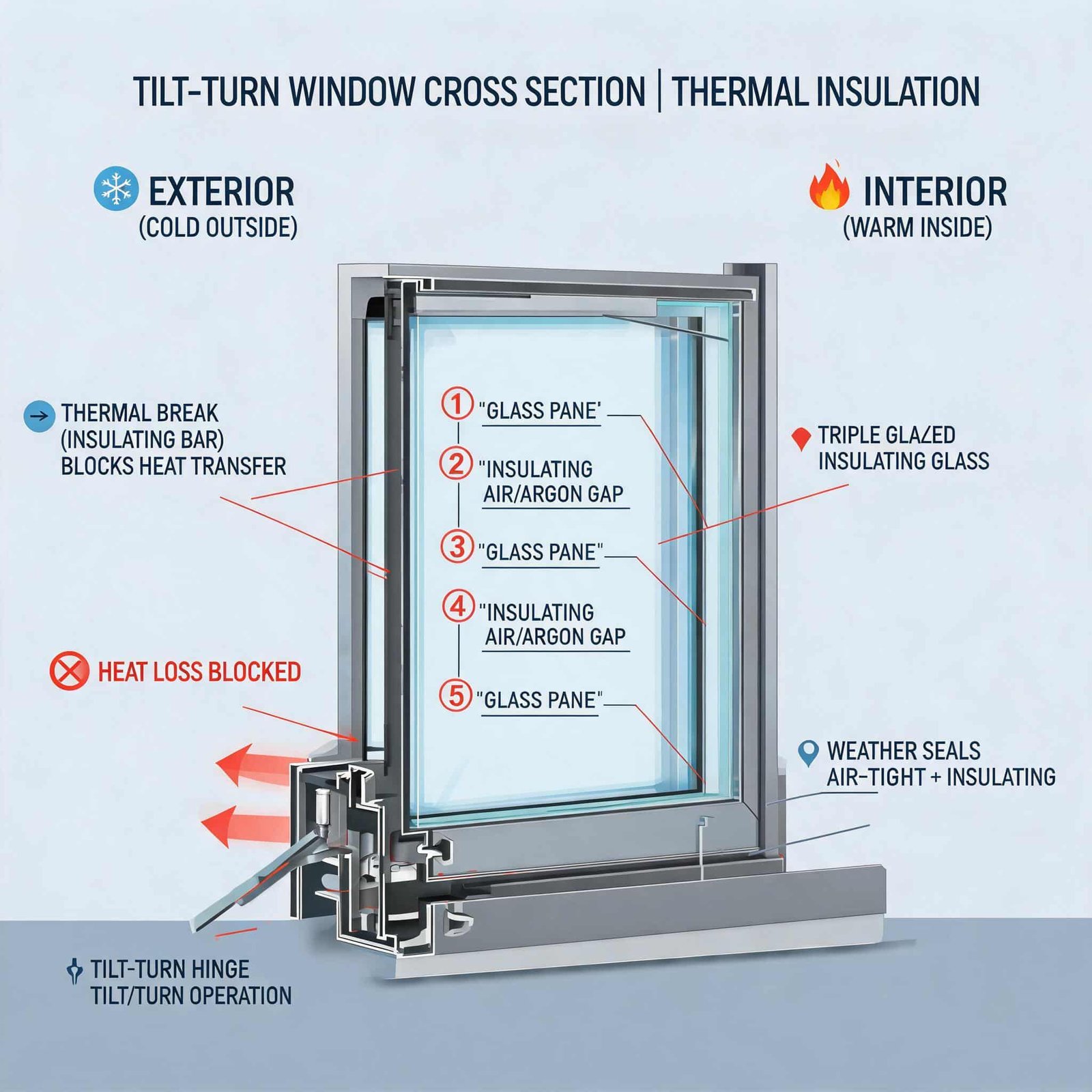
| Aluminum Frame (thermal break) | 30-50 years | Corrosion, thermal bridging | Full unit replacement |
| Tilt and Turn Hinges | 15-25 years | Sagging, resistance, misalignment | Hardware-only swap |
| Tilt and Turn Lock Mechanism | 15-25 years | Difficulty locking, loose handle | Hardware-only swap |
| Tilt and Turn Handle | 10-20 years | Stiff turning, broken spindle | Handle-only replacement |
| Seals/Gaskets | 10-20 years | Drafts, water leakage | Gasket replacement |
A Technical Breakdown of Tilt and Turn Window Hardware Components
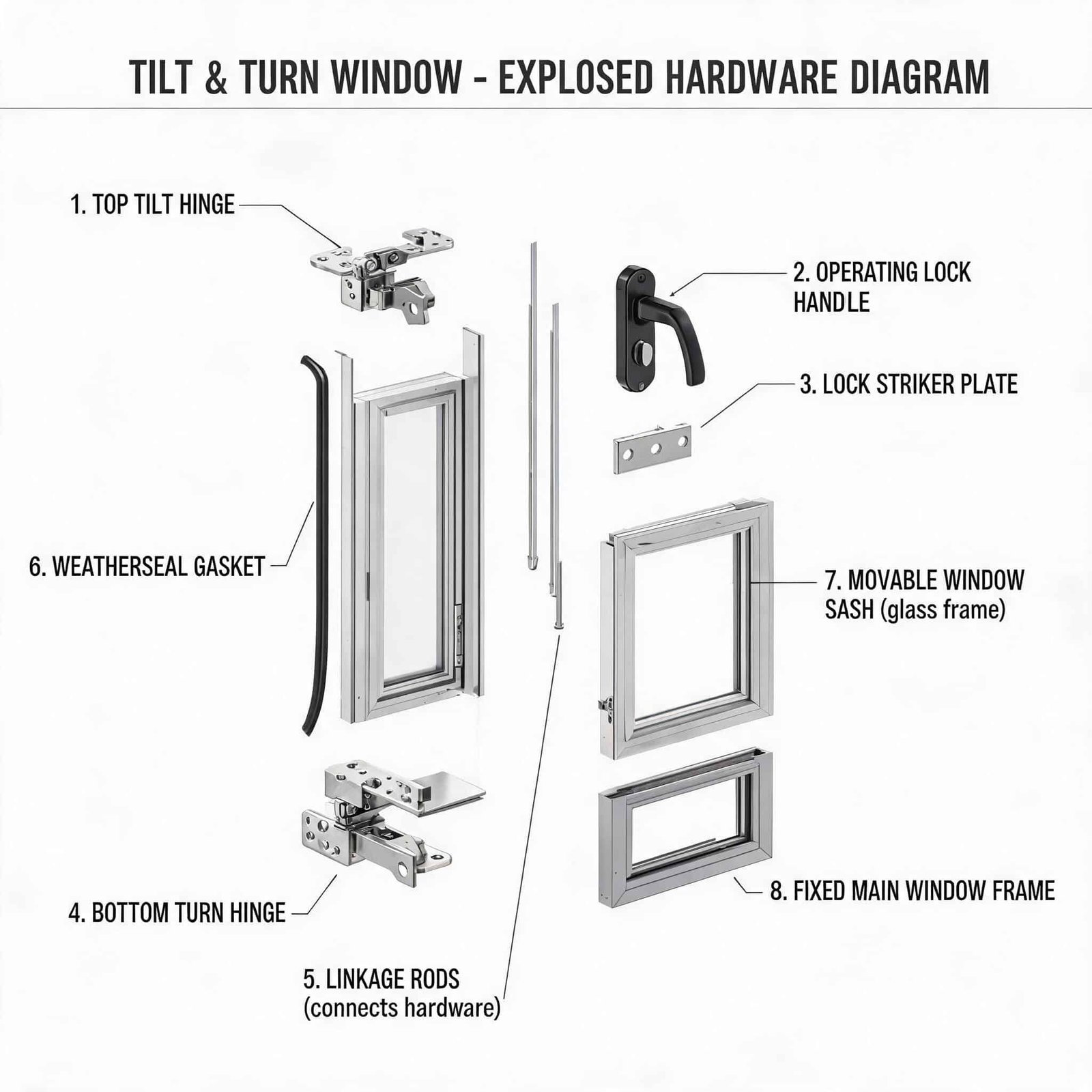
Understanding exactly which parts wear out and why will help architects and builders specify better products and plan maintenance schedules. Here is an engineering-level look at each critical component.
Tilt and Turn Hinges – The Structural Backbone
The tilt and turn hinges must support the full weight of the window sash through two axes of motion. Premium European hinges use cold-forged stainless steel with brass bushings rated for 50,000+ open-close cycles. Lower-cost hinges use zinc alloy or coated steel, which corrode and fatigue faster. For commercial projects, always specify stainless steel hinges with a minimum 200-pound static load rating per hinge pair.
Tilt and Turn Lock – Multi-Point Security and Air Sealing
The tilt and turn lock typically engages 4 to 6 locking points around the perimeter when fully closed. These mechanisms rely on hardened steel strike plates and precision-cam gears. Over time, debris accumulation and lack of lubrication cause the locking points to misalign, leading to air infiltration and reduced energy performance. Many aluminum and uPVC windows custom designs now incorporate self-lubricating nylon bushings in the lock mechanism to extend service intervals.
Tilt and Turn Handle – The User Interface
The handle is the most visible and most frequently operated component. High-cycle commercial handles are rated for 100,000 turns, while residential-grade handles typically fail around 30,000 cycles. The handle transmits rotational force to the lock gears through a steel spindle. If the handle feels loose or requires excessive force to operate, the spindle or gear teeth have worn—an easy $20 to $50 replacement that restores full function.
Tilt and Turn Window Adjustment Guide – When and How to Fine-Tune
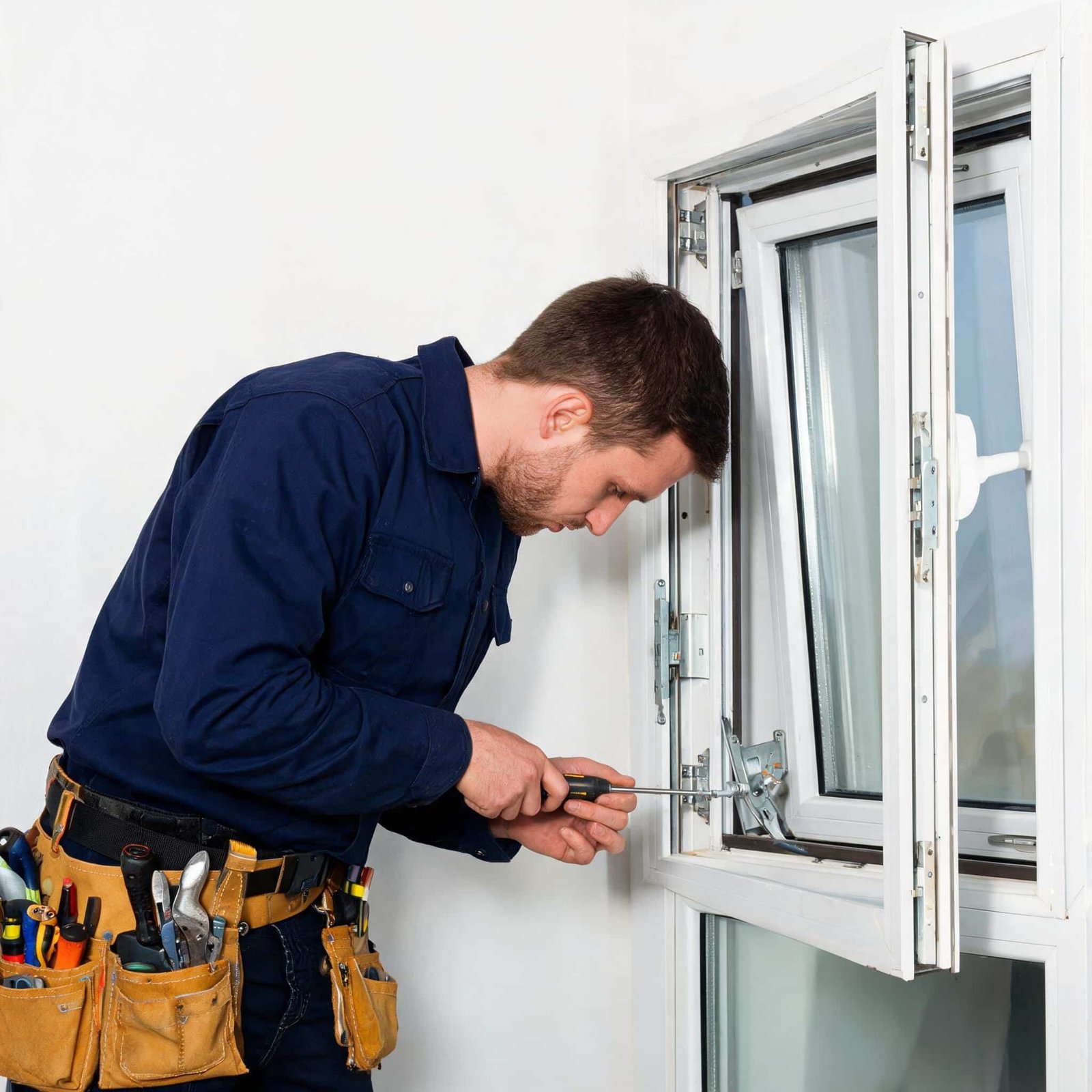
Most hardware failures can be avoided with routine adjustment. Here is the professional tilt and turn window adjustment guide that our field technicians use:
- Sagging Sash (Vertical Misalignment): Locate the adjustment screw on the bottom hinge. Turning clockwise lifts the sash; counterclockwise lowers it. Adjust in quarter-turn increments until the sash is level with the frame.
- Horizontal Misalignment: Use the adjustment screw on the side hinge—usually accessed through the sash slot. This centers the window within the frame opening.
- Lock Engagement Issues: If the handle turns stiff or the lock points don’t engage, check the strike plate alignment. Loosen the strike plate screws, shift the plate 1-2mm in the needed direction, and retighten.
- Tilt Function Sticking: Lubricate the tilt restrictor mechanism and hinge pivot points with a silicone-based spray. Never use petroleum-based lubricants, which attract dirt and degrade seals.
Maximizing Longevity: The Superwindowhouse Commercial Maintenance Protocol
For property developers and facility managers handling large portfolios, a standardized maintenance schedule drastically extends tilt and turn hardware life. Our recommended protocol, developed over 15 years of field experience, includes:
- Quarterly Inspection: Check for loose hardware, seal gaps, and debris in tracks.
- Semi-Annual Lubrication (Every 6 Months): Apply silicone lubricant to all tilt and turn hinges, lock points, and handle mechanism.
- Annual Adjustment (Every 12 Months): Check sash alignment and adjust as needed—especially after extreme temperature seasons.
- Every 5 Years: Replace weather seals and inspect hardware for corrosion or stress cracks.
- Every 15 Years: Schedule a full tilt and turn window hardware replacement for locks and hinges as preventive maintenance.
Following this protocol, builders can confidently offer 25-year performance guarantees on their tilt and turn window installations.
Signs Your Tilt and Turn Hardware Needs Replacement
Know when to replace versus repair. These indicators mean the hardware itself has reached the end of its lifecycle:
- Visible corrosion or rust on the tilt and turn hinges or lock plates.
- Permanent sash sag that cannot be corrected with adjustment screws.
- Stripped gear teeth in the handle mechanism—the handle turns but nothing engages.
- Cracked or broken tilt-restrictor arms.
- Lock points that won’t engage even after strike plate adjustment.
When any of these occur, replace the affected hardware assembly immediately. Delaying replacement can damage the frame and seals, turning a $150 hardware fix into a $2,000 full window replacement.
Frequently Asked Questions
Q: How long do tilt and turn windows last before needing hardware replacement?
A: Quality tilt and turn hardware from Superwindowhouse typically lasts 15 to 25 years with proper maintenance. The frame will last significantly longer—up to 40 years—but the tilt and turn hinges and locks should be considered consumable components.
Q: Can I replace tilt and turn window hardware myself?
A: Yes, if you have basic mechanical skills and the correct tools. Most European-standard hardware uses the same mounting geometry. However, for multi-unit residential projects, we recommend professional installation to ensure proper alignment and warranty compliance.
Q: What is the most common tilt and turn window hardware failure?
A: The most frequent failure is the tilt and turn lock mechanism becoming misaligned due to thermal expansion and contraction of the frame. This causes difficulty locking and reduced security. Regular adjustment every 12 months prevents this.
Q: How do I know if my tilt and turn handle needs replacing?
A: If the handle feels loose, wobbles, or requires excessive force to turn, the internal spindle or gear has worn. Replacement handles are inexpensive ($20-$50) and restore normal operation immediately.
Q: Are aluminum tilt and turn windows more durable than vinyl?
A: Aluminum frames last longer structurally (up to 50 years), but the tilt and turn hardware components wear at roughly the same rate—15 to 25 years. The advantage of aluminum is better thermal stability, which reduces the expansion/contraction stress on hardware.