The Core Engineer’s Verdict: Which Frame Delivers for Your Project?
When you’re specifying windows for a 50‑unit apartment complex or a custom lake‑front home, the decision between vinyl and aluminum casements isn’t about personal taste—it’s about structural physics, energy code compliance, and long‑term liability. Here’s what the data says across the metrics that matter most to contractors, architects, and wholesale buyers.
Thermal Performance and Energy Code Compliance (U-Value, SHGC, NFRC)
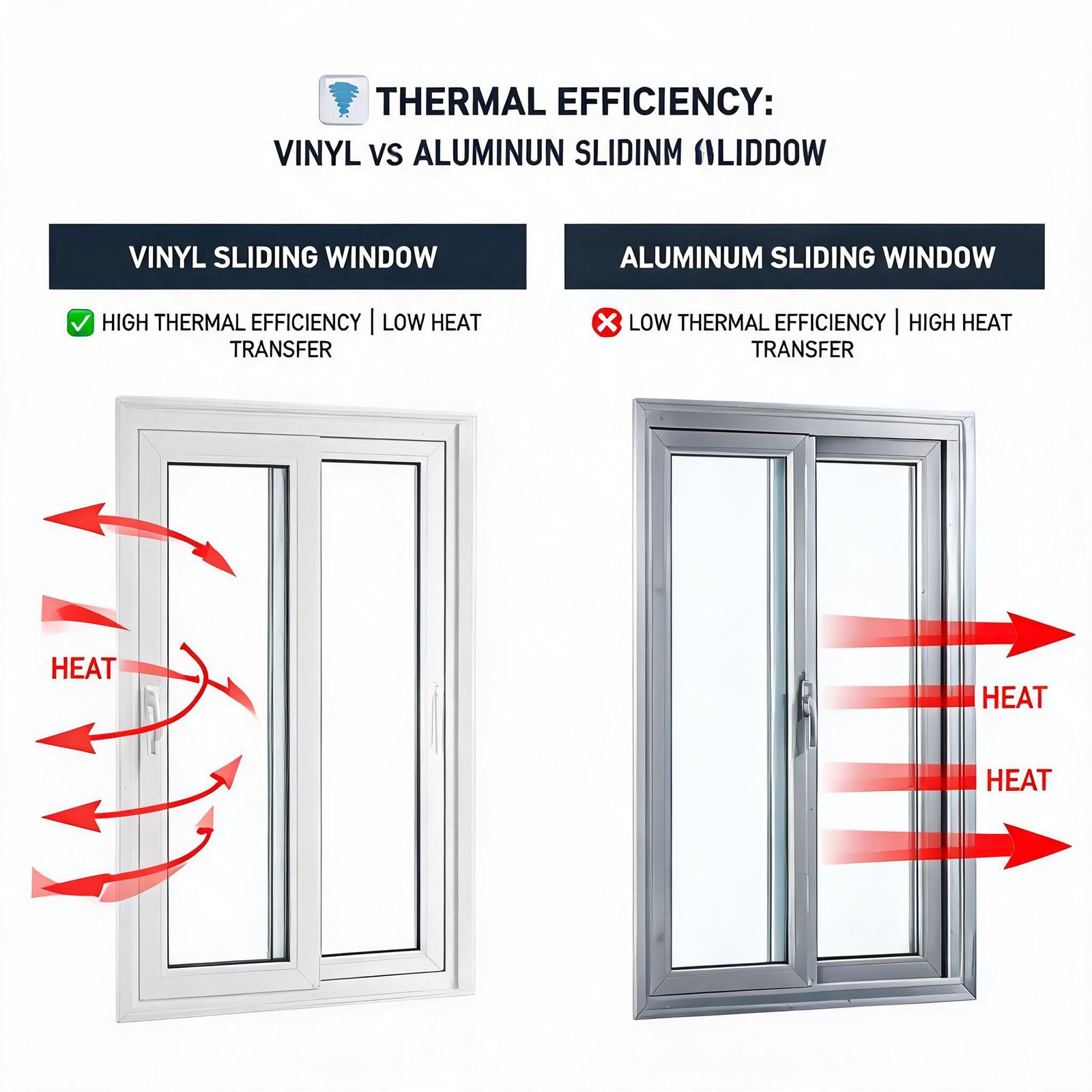
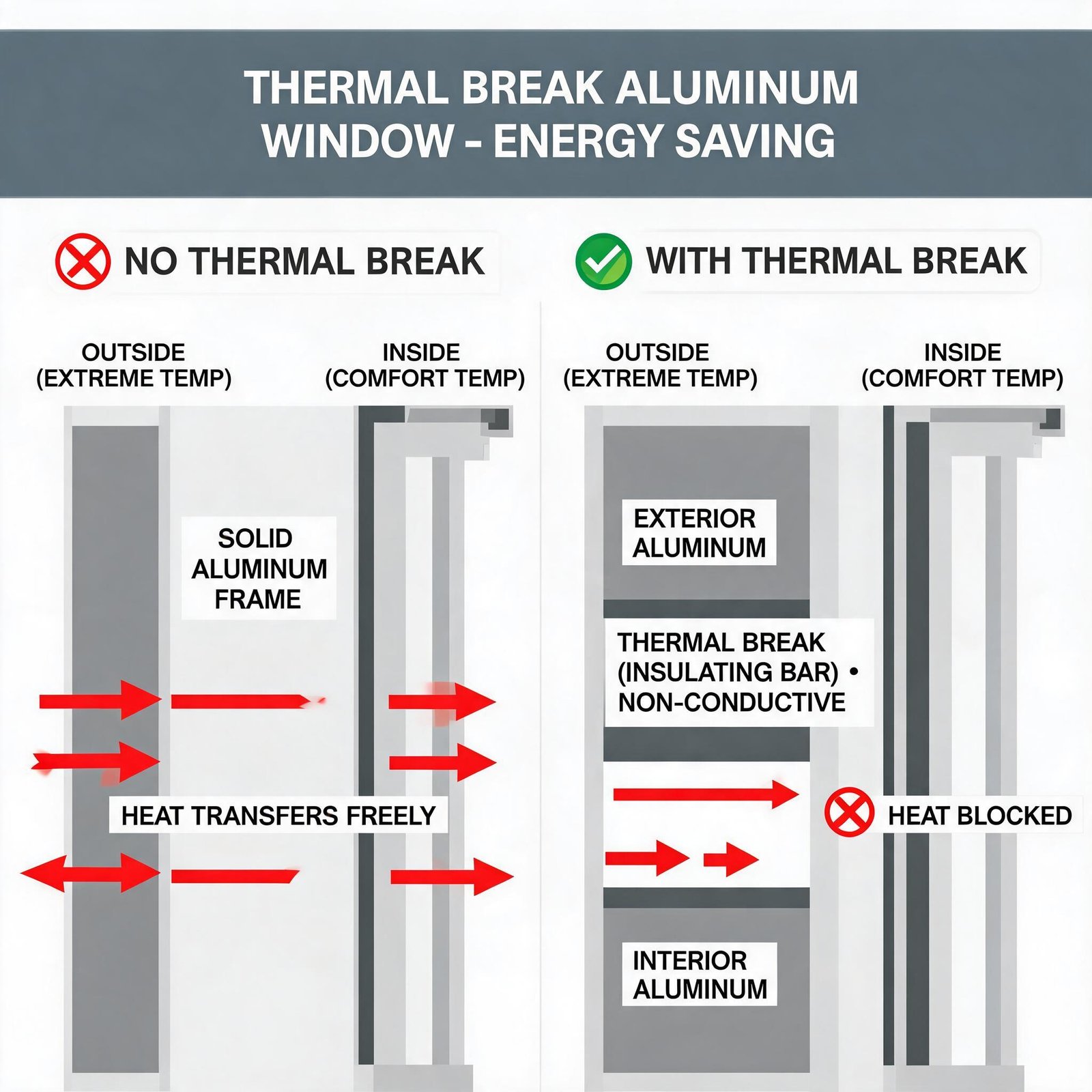
The single biggest differentiator is how each material handles heat transfer. Vinyl is a natural insulator; aluminum is a thermal conductor. To make aluminum competitive, manufacturers must incorporate polyurethane or nylon thermal breaks—adding 15–25% to the unit cost. Even then, thermally broken aluminum rarely achieves the same NFRC‑certified U‑values as a well‑designed multi‑chambered vinyl profile.
Key Thermal Specifications (Industry Averages for Double‑Glazed Low‑E Casements)
| Parameter | Vinyl Frame (Multi‑Chamber, Fiberglass‑Reinforced) | Aluminum Frame (Thermally Broken) | Aluminum Frame (Non‑Thermally Broken – Older or Budget) |
|---|---|---|---|
| NFRC U‑Factor | 0.27 – 0.35 | 0.40 – 0.55 | 0.65 – 0.80 |
| Solar Heat Gain Coefficient (SHGC) | 0.22 – 0.30 (low‑E coating) | 0.25 – 0.35 | 0.35 – 0.50 |
| Frame Conductivity | ~0.17 W/mK | ~0.5 – 1.0 W/mK (with thermal break) | ~205 W/mK |
| Condensation Resistance | High (interior surface stays warmer) | Moderate (cold bridge at sash edges) | Low – frequent condensation |
| Energy Star Certification | Most models qualify for Most Efficient 2025 | Only top‑tier products qualify | Rarely meets modern codes |
Why this matters for your projects: Every 0.10 improvement in U‑factor translates to approximately 8–10% reduction in HVAC load per window. For a 100‑window high‑rise, choosing vinyl over non‑thermally broken aluminum can save thousands of dollars annually in energy bills—and helps you meet ever‑tightening IECC and ASHRAE 90.1 requirements.
Structural Integrity and Durability Across Climates (Including Coastal Salt Air)
Both materials can be engineered for strength, but their failure modes differ dramatically.
Vinyl Casement Strengths:
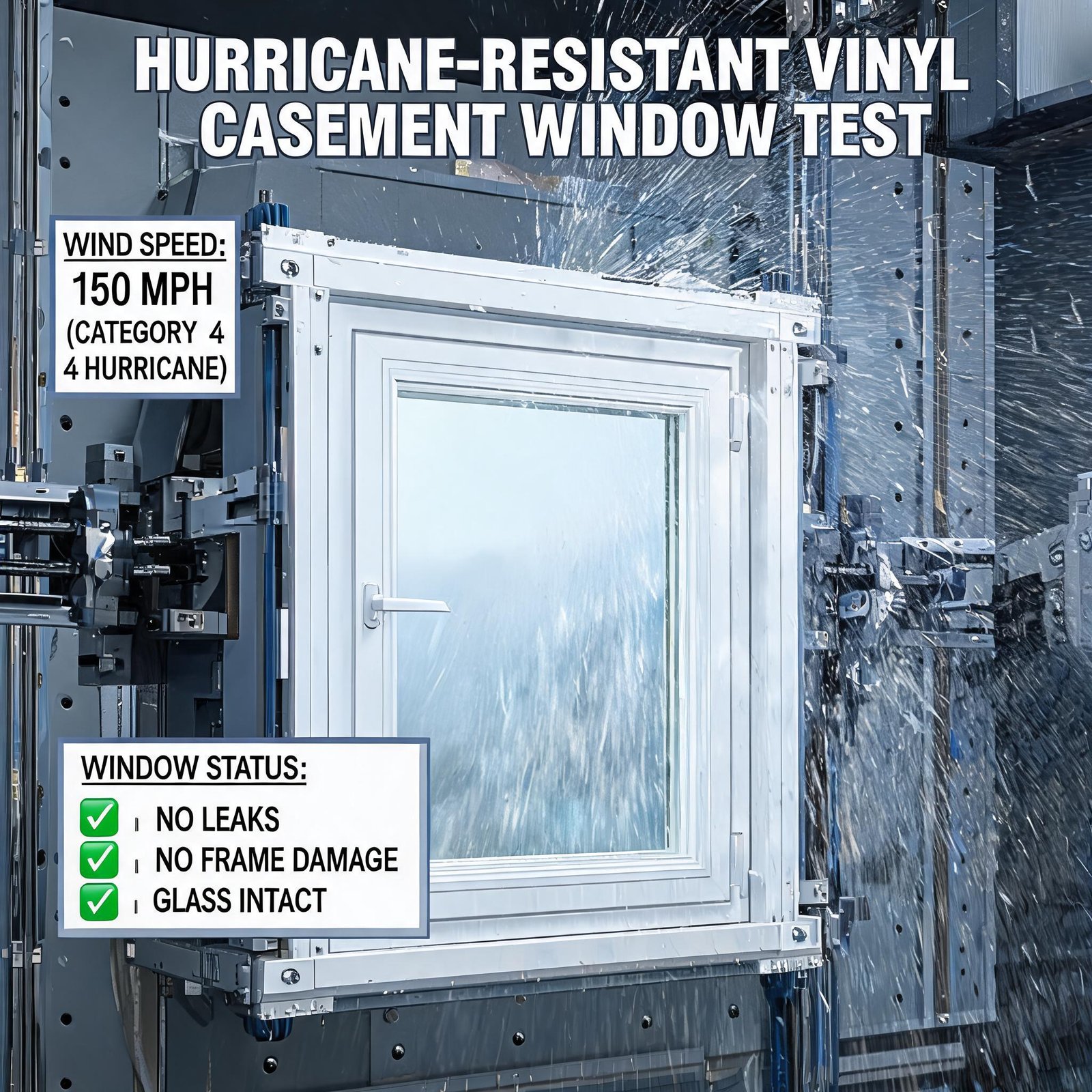
- Impact resistance: Modern vinyl formulations with fiberglass or steel reinforcements achieve Design Pressure (DP) ratings of 50–70 psi—sufficient for most hurricane zones (Miami‑Dade acceptance required).
- Corrosion resistance: PVC is completely inert to salt, chlorine, and acidic rain. In ASTM B117 salt‑spray tests, vinyl shows zero pitting or corrosion after 5,000 hours. This makes it the best window frame material for coastal salty air environments.
- Dent and scratch resistance: The material is homogenous—chips don’t reveal a different substrate. Scratches can be buffed or hidden with color‑matched filler.
Aluminum Weak Points (Even with Thermal Breaks):
- Galvanic corrosion: When aluminum contacts steel fasteners or dissimilar metals, galvanic corrosion can occur, especially in coastal zones. Stainless steel hardware is mandatory.
- Pitting and fading: Anodized or painted aluminum can pit after 5–10 years in marine climates. Powder‑coated finishes may fade under UV exposure unless top‑tier fluoropolymer (PVDF) coatings are used.
- Denting: Aluminum is softer than steel; a heavy hailstorm or construction debris can leave visible dents.
Bottom line for coastal projects: If your site is within 5 miles of saltwater, specify vinyl or a fully marine‑grade aluminum with forced thermal break and stainless hardware. Superwindowhouse offers factory‑tested aluminum and UPVC windows custom engineered for hurricane zones, with DP ratings up to 70 psi.
Installation, Maintenance, and Total Cost of Ownership
Installation ease and ongoing maintenance are often overlooked until the crew is on site.
Vinyl Installation Advantages:
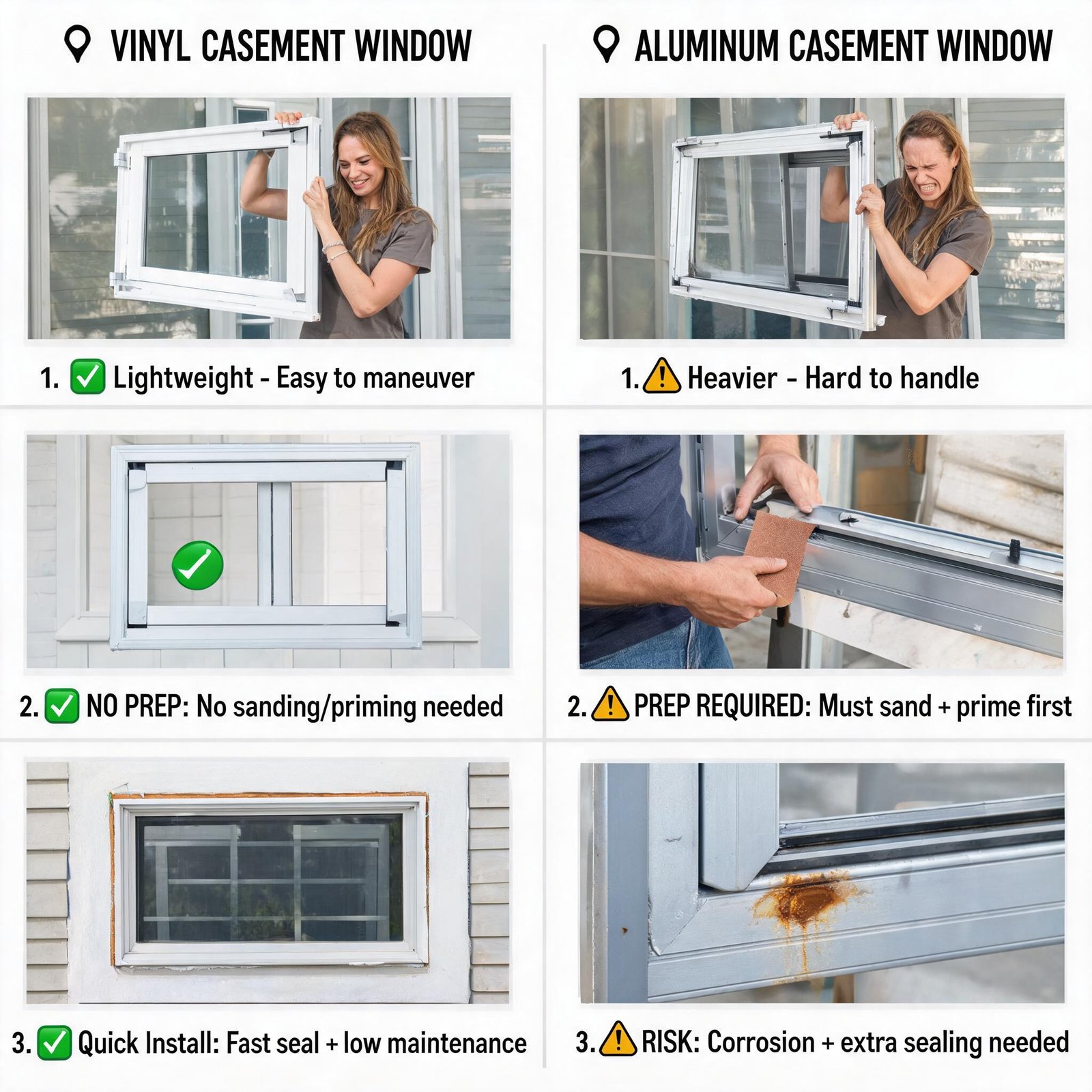
- Flexibility: Vinyl frames can tolerate minor wall irregularities (±1/8″) without binding. Expansion gaps are built into the design.
- Weight: A typical vinyl casement sash is 10–15% lighter than a comparable aluminum sash, reducing lifting fatigue for installers.
- No field painting: Color is integral; never needs repainting.
Aluminum Installation Challenges:
- Rigidity: A misalignment of even 1/16″ will cause the sash to stick or fail weatherstripping. Precision rough‑opening is mandatory.
- Weight: Heavier frames may require two‑person install for large units.
- Maintenance: Lubrication of metal‑on‑metal moving parts every 6–12 months is required to prevent squeaking and corrosion.
Cost Comparison (Per Opening – 36″x60″ Casement, Installed)
| Item | Vinyl (Mid‑Grade, Double Glaze) | Aluminum (Thermally Broken, Double Glaze) |
|---|---|---|
| Material Cost (Stick Price) | $250 – $400 | $400 – $650 |
| Installation Labor | $150 – $200 | $200 – $300 |
| Annual Maintenance | $0 – $5 (cleaning only) | $20 – $50 (lubrication, touch‑up) |
| Expected Lifespan | 25–40 years | 30–50 years (if properly maintained) |
| 10‑Year Total Cost | ~$2,800 – $3,500 | ~$4,200 – $6,000 |
*Data based on industry averages from 2024–2025 RSMeans and window distributor surveys.
Key takeaway: Though aluminum can last longer in theory, the total cost of ownership over 10 years is 30–50% lower for vinyl, assuming no catastrophic damage. For rental properties or value‑engineered multifamily projects, vinyl wins the financial argument.
Aesthetic Flexibility and Color Retention
Vinyl windows have historically been criticized for limited colors, but modern co‑extruded technologies offer wood‑grain finishes, dark hues (with solar‑reflective pigments), and smooth matte textures. Aluminum, on the other hand, can be painted any custom color and often matches anodized storefront finishes.
Aluminum’s weakness: Painted aluminum shows chips prominently because the underlying metal contrasts. Vinyl’s color runs all the way through—a scratch on a dark bronze vinyl frame remains dark bronze. For historic districts requiring wood cladding, vinyl with realistic wood‑grain laminate is indistinguishable from real wood at a fraction of the cost.
Cost of finishing: Field painting aluminum adds $100–$200 per window and must be reapplied every 5–8 years in direct sun. Vinyl never needs painting.
Noise Reduction and Security
Vinyl’s lower density might suggest poorer sound attenuation, but multi‑chambered profiles with integral insulation actually outperform single‑chamber aluminum by 2–4 dB in STC ratings. For projects near airports or highways, specify a triple‑glazed vinyl casement with laminated glass to achieve STC 40+.
Security: Both materials can be reinforced with steel cores and multipoint locking systems. Aluminum’s inherent stiffness provides slightly better resistance to forced entry (a 1/8″ aluminum sash is harder to pry than a vinyl one without steel reinforcement). However, modern vinyl casements with steel‑reinforced chambers meet ASTM F588 Grade 10 standards. For residential security, either is acceptable; for high‑risk commercial, specify aluminum with two‑point lock.
Conclusion: Which Casement Window Should You Choose?
For 90% of new‑construction and replacement projects in the U.S.—especially in coastal, humid, or mixed‑climate zones—vinyl casement windows deliver the best balance of energy performance, corrosion resistance, cost savings, and ease of installation. Aluminum remains the material of choice only when structural spans exceed 6 feet (where thinner frames and higher load capacities are required) or when a specific architectural aesthetic demands a narrow sightline.
When specifying your next project, start with premium vinyl casement windows from Superwindowhouse. Our factory‑engineered profiles are certified to NFRC 100, AAMA 2605, and Miami‑Dade HVHZ standards, with DP ratings up to 70 psi and integral color stability guaranteed for 30 years.
Frequently Asked Questions
Q: Is vinyl or aluminum better for thermal efficiency?
A: Vinyl. Its U‑value can be 40% better than aluminum with thermal breaks, and 60% better than standard aluminum. This directly impacts your building’s energy model and compliance.
Q: What is the cost difference between PVC and aluminum casement windows?
A: Vinyl casements are typically 33–58% less expensive upfront. Over 10 years, the gap widens due to lower maintenance costs.
Q: Which frame material is best for coastal salty air?
A: Vinyl. It does not corrode, pit, or fade in salt spray. Aluminum requires marine‑grade protective coatings and stainless steel hardware to last in coastal environments.
Q: Can aluminum casements achieve the same energy performance as vinyl?
A: Only with expensive thermal breaks and insulating foam fills. Even then, they rarely match the U‑value of multi‑chambered vinyl.
Q: How long do vinyl and aluminum casements typically last?
A: Vinyl: 25–40 years (no maintenance). Aluminum: 30–50 years (requires periodic lubrication and repainting). The higher initial cost of aluminum is often offset by its lifespan, but only if maintenance is strictly followed.
This article is brought to you by Superwindowhouse – your partner for high‑performance, code‑compliant window solutions. Contact our engineering team for project‑specific specifications, bulk pricing, and custom profiles.