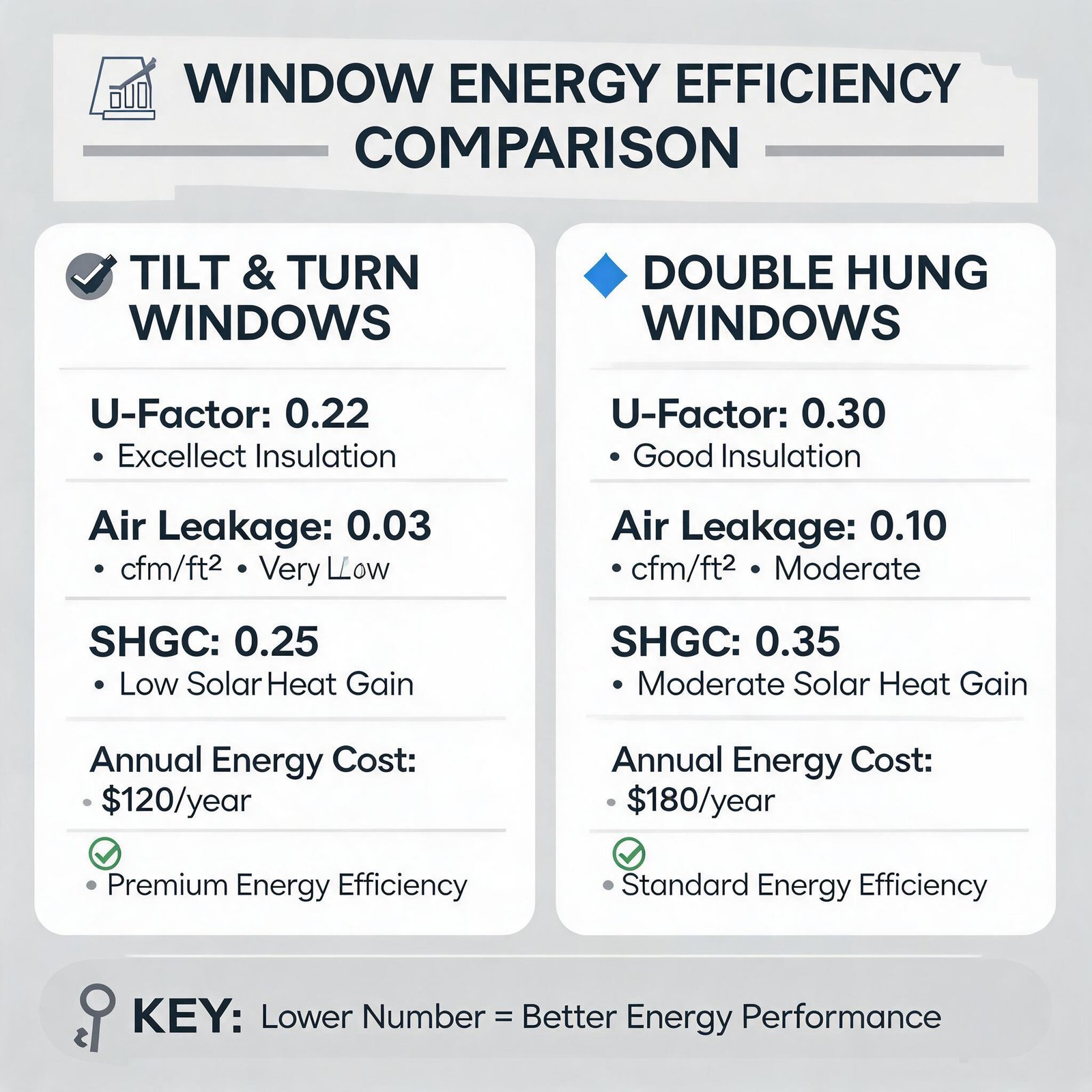
The question isn’t just about a calendar count; it’s about engineering resilience. For commercial and residential projects using high-grade materials, a properly specified and installed vinyl casement window can reliably deliver 25 to 35 years of service life, with premium multi-chambered profiles exceeding 40 years. The primary driver of failure isn’t the PVC itself, but degradation of the polymer matrix from UV radiation and thermal cycling, initiating microscopic cracking (micro-crazing) that compromises structural integrity over time. For a general contractor or architect, this translates to a lifecycle that comfortably fits a 30-year commercial mortgage or a homeowner’s 15-year renovation cycle, offering the lowest total cost of ownership compared to wood or aluminum when factoring in maintenance and energy performance.
Deconstructing the 40-Year Myth: What Real-World Data Tells Us
The competitor articles mention a generic “20-40 years.” This is a starting point, not a specification. As a systems engineer, I need to break this down by the critical failure points you will actually encounter on a job site.
The Reality of Vinyl Window Frame Degradation
The term “vinyl window frame degradation” is the engineering reality. It’s not about the material turning to dust, but about a specific sequence of failures:
- UV-Induced Embrittlement: UV rays attack the polymer chains. This creates a brittle surface layer, leading to surface chalking and micro-cracks that weaken the frame.
- Plasticizer Migration: In lower-quality vinyl, plasticizers (which make the material flexible) can migrate to the surface, making the material brittle and attracting dirt.
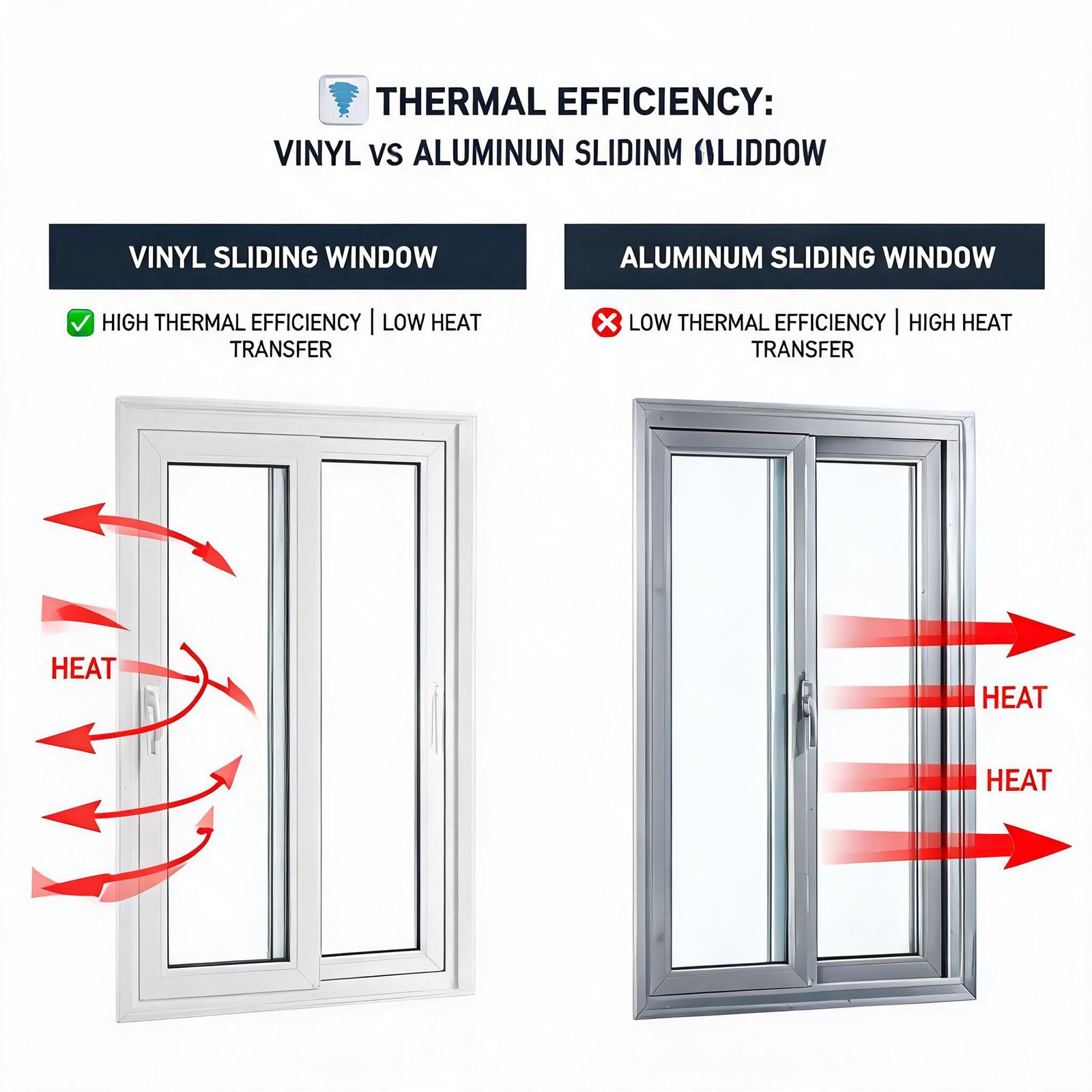
- Thermal Expansion Stress: Extreme temperature swings cause the frame to expand and contract. Over years, this stresses welded corners and glazing seals.
The Hardware is the First to Fail
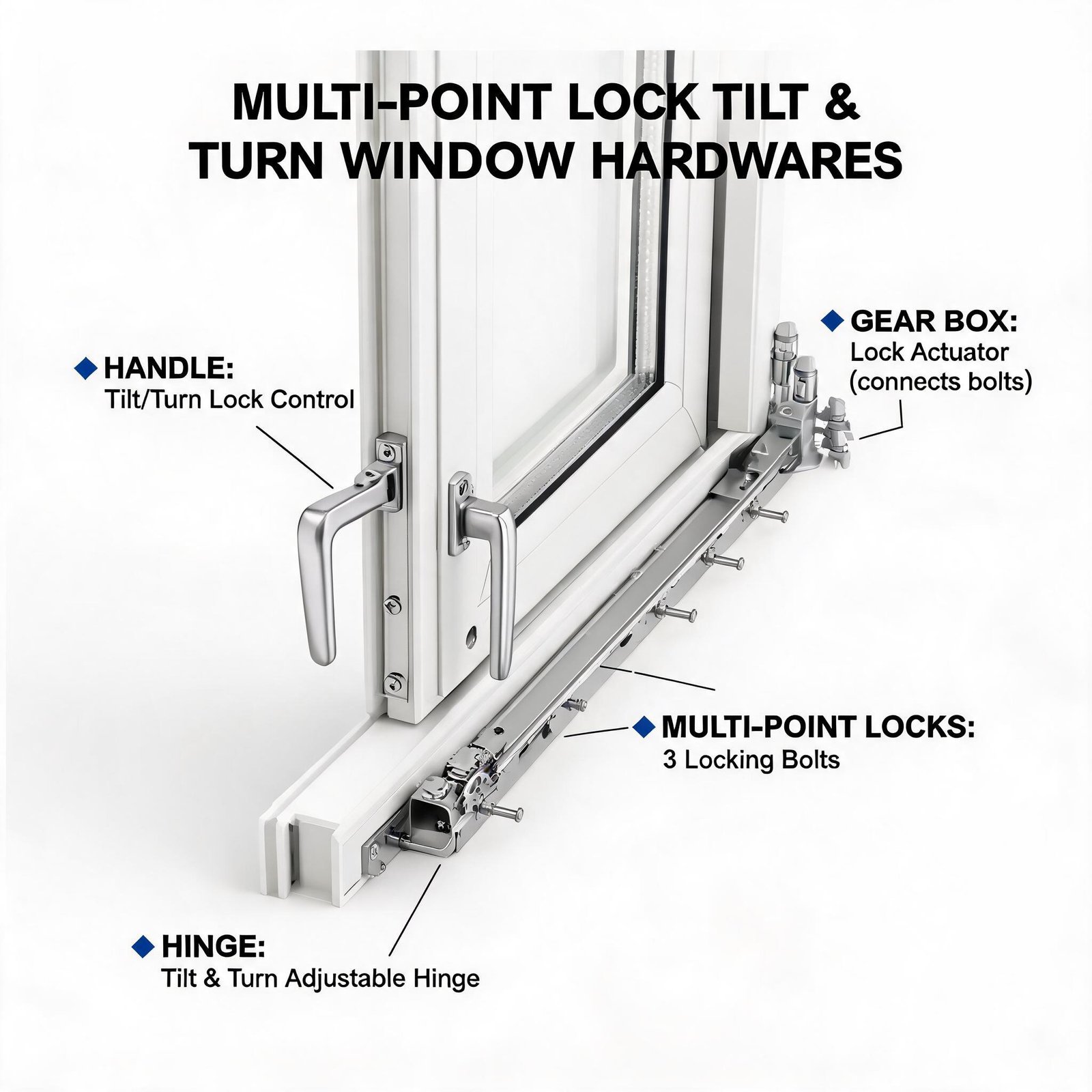
The vinyl casement window hardware lifespan test is a more critical metric than the frame’s life. The gear-driven operator and hinges are the mechanical heart of a casement window. A standard operator may only rate for 5,000 to 10,000 open-and-close cycles. In a high-use commercial application, this can fail within 10 years. In a residential setting, it might last 20.
Engineering a 40-Year Casement Window: The Key Performance Pillars
To build a product that genuinely lasts 40 years, you must specify components that go beyond the minimum AAMA (American Architectural Manufacturers Association) standards. Here are the three critical pillars for your next project.
1. Stabilizing the PVC Matrix: How to Prevent Vinyl Windows from Turning Yellow
Yellowing is the first visual sign of degradation. It’s caused by UV light breaking down the flame retardants (often based on bromine or antimony trioxide) in the PVC compound. A standard compound will yellow noticeably in 5-10 years of direct southern exposure.
The solution is in the chemistry. To prevent this, you must specify a weatherable formulation:
- Weather Resistant UV Stabilizers for PVC Windows: You must use a formulation containing Titanium Dioxide (TiO2) and a high-load of light stabilizers (HALS – Hindered Amine Light Stabilizers). This is non-negotiable for a 40-year window.
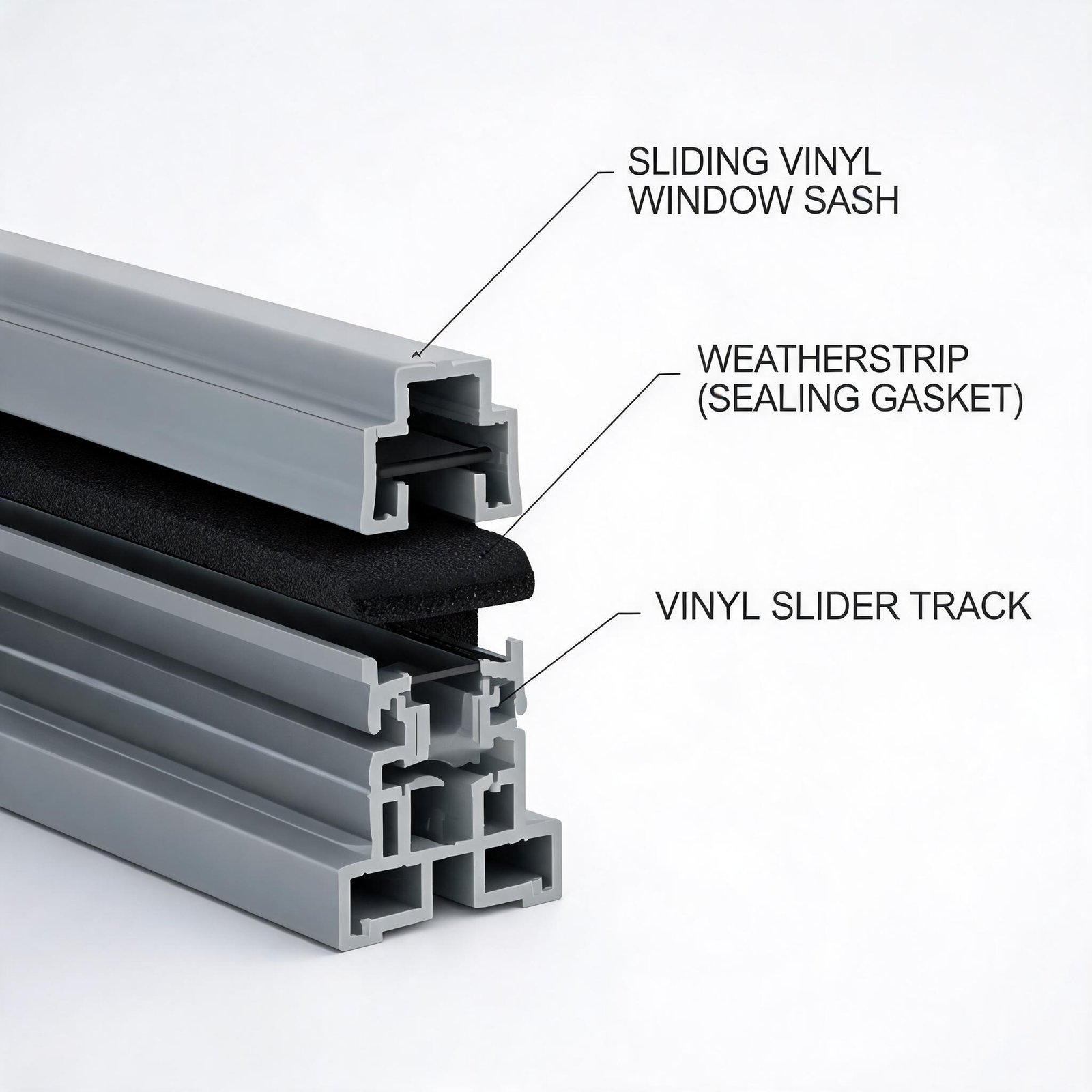
- Co-extruded Caps stock: The best method is a co-extruded vinyl cap over a lower-cost substrate. This cap is about 0.5mm thick and is packed with UV stabilizers. It acts as a sacrificial layer, absorbing UV damage so the structural core remains strong and color-stable.
- Impact Modifiers: Adding high levels of acrylic impact modifiers ensures the frame doesn’t become brittle during cold weather (below 0°F), preventing cracking from impact or thermal shock.
2. Hardware That Lasts: The 20,000 Cycle Challenge
A 40-year frame is useless if the crank fails. When sourcing or specifying, look for these hardware standards:
- Stainless Steel Gears: The operator mechanism must have stainless steel or hardened steel gears, not brass or zinc. They resist wear and corrosion.
- Corrosion-Resistant Hinges: Hinges should be 316 marine-grade stainless steel or a high-quality polymer composite designed for salt-spray resistance (ASTM B117). Standard steel hinges will rust and seize in 10-15 years.
- Multi-Point Locking System: A single central lock point can sag over time. A multi-point lock (2-3 locking points) distributes the clamping force evenly, preventing frame warping and ensuring a watertight seal for decades.
3. The Glazing Pocket: Preventing Seal Failure
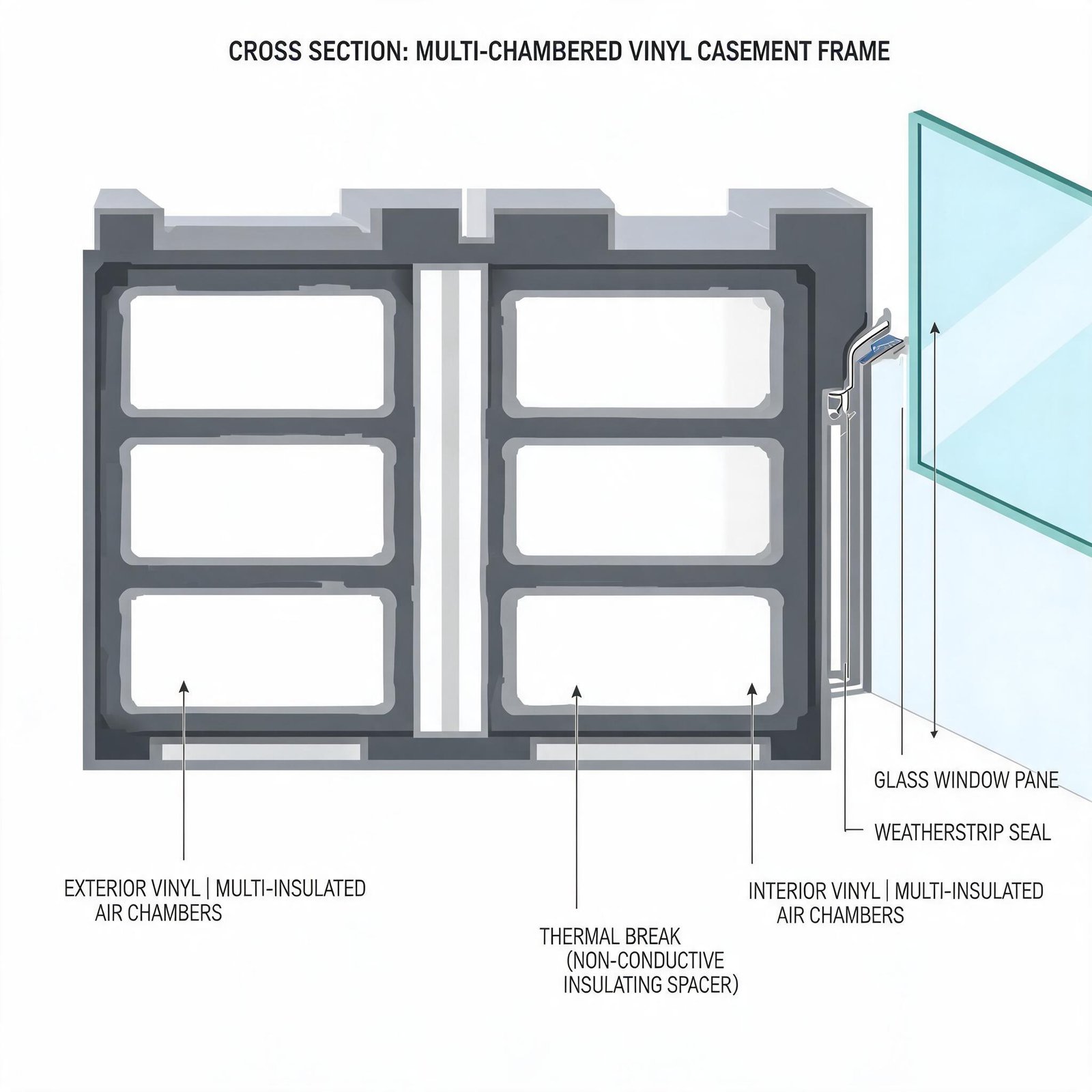
The single biggest operational failure of a window is seal failure, causing fog between the panes. This has nothing to do with the vinyl frame and everything to do with the glass unit (IGU). For longevity, you need a warm-edge spacer system (like *Super Spacer or *Swiggle*) and a primary seal of Polyisobutylene (PIB), not hot-melt butyl.
A Technical Specification Table for Your Next Project
This table goes beyond the generic “Pros/Cons” lists of competitors. It provides a data-driven decision matrix for the B2B buyer.
| Performance Attribute | Standard Vinyl Casement (The Baseline) | Premium/Commercial-Grade Vinyl Casement (The 40-Year Solution) |
|---|---|---|
| Frame Material | Single or triple-chamber profile | Multi-chambered (5-7 chambers) with internal reinforcement (steel or aluminum). |
| UV & Color Stability | Standard TiO2; will yellow in 10-15 years | Co-extruded cap stock with high-load HALS; ASTM D1925 color retention for 30+ years. |
| Hardware Life (Cycles) | 5,000 – 10,000 cycles | 20,000+ cycles; stainless steel gears and corrosion-resistant hinges. |
| Air Infiltration (AAMA Rating) | Standard (760 Pa) | Premium (950+ Pa); certified for High-Performance (HC). |
| Warranty | 15-20 year frame, 5-year hardware | Limited Lifetime on frame/finish, 10-year on hardware and glass seal. |
| Commercial Application | Low-rise, moderate exposure | High-rise, coastal, hurricane zones, high-operational frequency. |
The Commercial Buyer’s Guide: What to Look For
You are not a homeowner. You are a professional. Here is your checklist for the next spec.
- Look for the AAMA 101 Certification: This is the baseline. Ensure the window is certified for your specific wind load zone.
- Demand the DP (Design Pressure) Rating: A standard residential window might have a DP-35 rating. For a commercial project, look for DP-50 or better. This is the window’s raw strength against wind.
- Check the Warranty Language: A great warranty covers the frame and finish for life. A good one covers the hardware for 10 years. Read the fine print. Does it cover labor for replacement?
Proactive Prevention: A Maintenance Schedule for Maximum Life
Even the best window needs some care. This isn’t for the homeowner; this is for the building maintenance team.
- Annual Visual Inspection: Check for chalking, cracking, or fading. Look at the hardware for wear. Listen for grinding noises.
- Bi-Annual Lubrication: Use a dry silicone lubricant on the track, hinges, and operator arm. Do not use WD-40 (it attracts dirt and will gum up the mechanism).
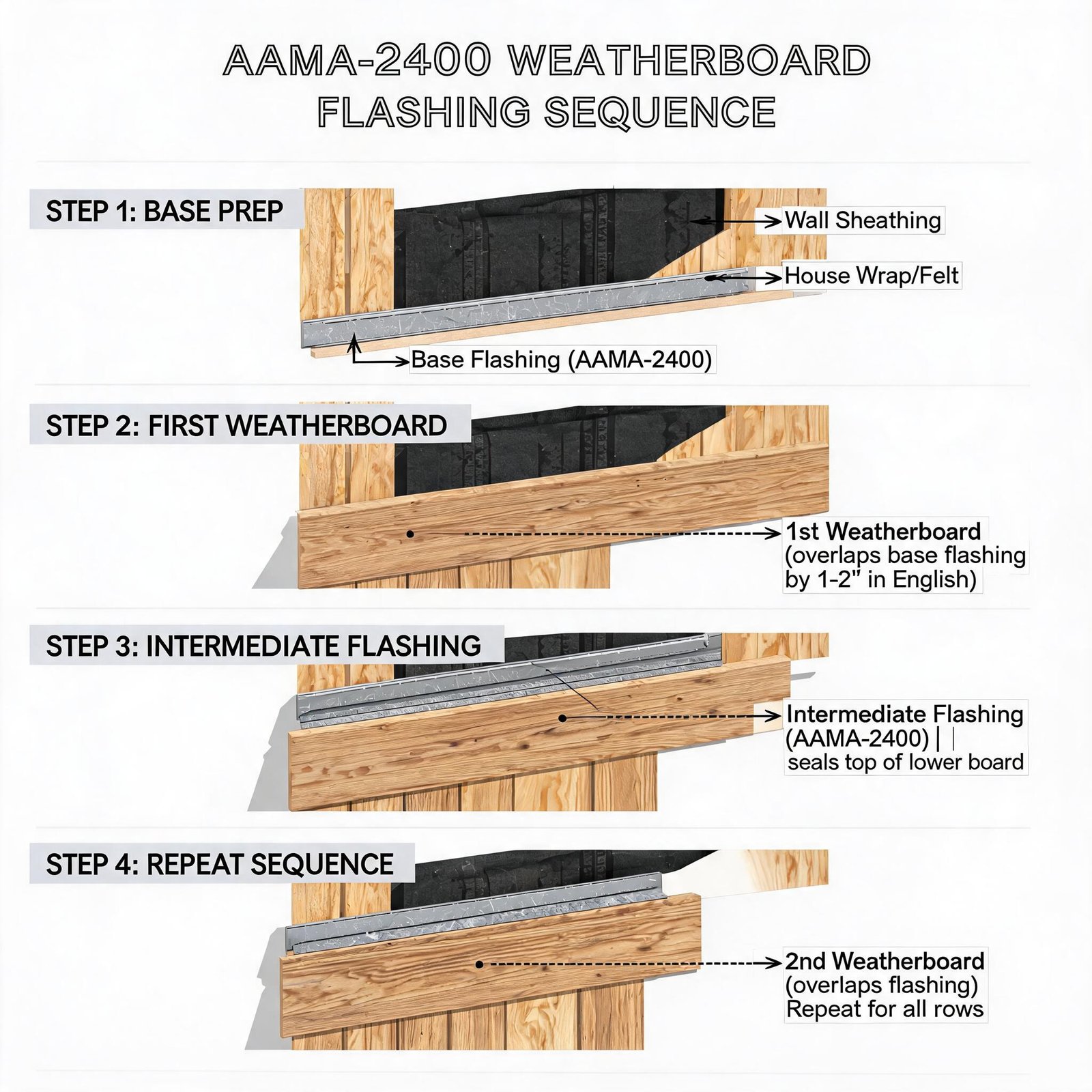
- Caulk & Seal Check: Every 3-5 years, inspect the exterior caulk line between the window frame and the building wall. Re-caulk as needed to prevent water intrusion.
- Cleaning Protocol: Use only mild soap and water with a soft cloth. Abrasive cleaners will damage the UV-protective cap stock.

Why the Average Lifespan is 20-30 Years (The Contractor’s Reality)
Let’s be clear: the 20-30 year figure from competitors is the average, not the exception. This is because most windows on the market are built to a price point, not a performance point. They use thinner walls, less steel reinforcement, cheaper PVC compounds, and mass-produced hardware.
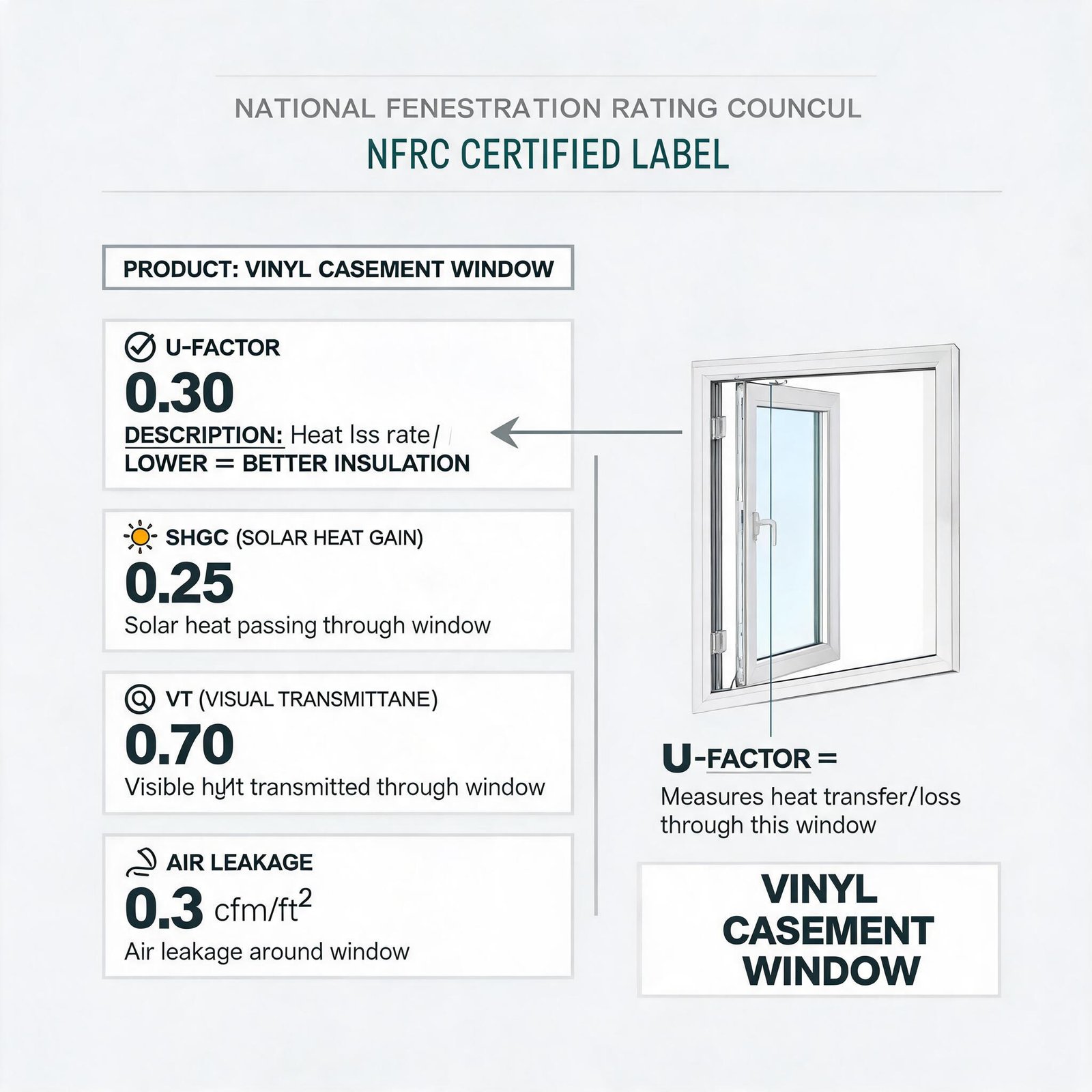
The industry standard, which you should be aware of, is the National Fenestration Rating Council (NFRC) label. This label provides real data on U-factor and Solar Heat Gain Coefficient (SHGC), which are essential for energy modeling. A window with a lower U-factor provides better insulation, reducing HVAC loads and extending the life of the window by reducing condensation risk.
Final Verdict: A 40-Year Window Requires a 40-Year Specification
You get what you specify. For a single-family home, a well-made, standard-grade vinyl casement can easily hit the 20-year mark. For a commercial building, a multi-family project, or a custom home where longevity is a non-negotiable requirement, you must move up to a premium grade, often custom-sourced.
As a Window Manufacturer, Superwindowhouse understands that durability is not a marketing claim—it’s a summation of material science, mechanical engineering, and quality control. We do not just manufacture frames; we engineer building envelopes. When you need a window that will perform for decades, you don’t buy a product; you specify a system. Explore our range of custom aluminum & uPVC windows custom options designed for demanding projects where standard off-the-shelf solutions simply won’t suffice.