The Real Reason Your Fiber Cement Siding Is Failing Near Windows
Here’s what happens over 20 years: non-Hardie fiber cement products—especially the cheaper, unbranded stuff from the early 2000s—have a higher water absorption rate and lower freeze-thaw resistance than premium brands. When you combine that with improper flashing details or windows that weren’t properly sealed at installation, you get a perfect storm. Moisture wicks up behind the siding, gets trapped between the window frame and the panel, and then during temperature swings, that water expands and contracts, literally pushing the paint off the surface. The cracks at window corners? That’s thermal stress—the siding is trying to move independently from the window frame, and something has to give.
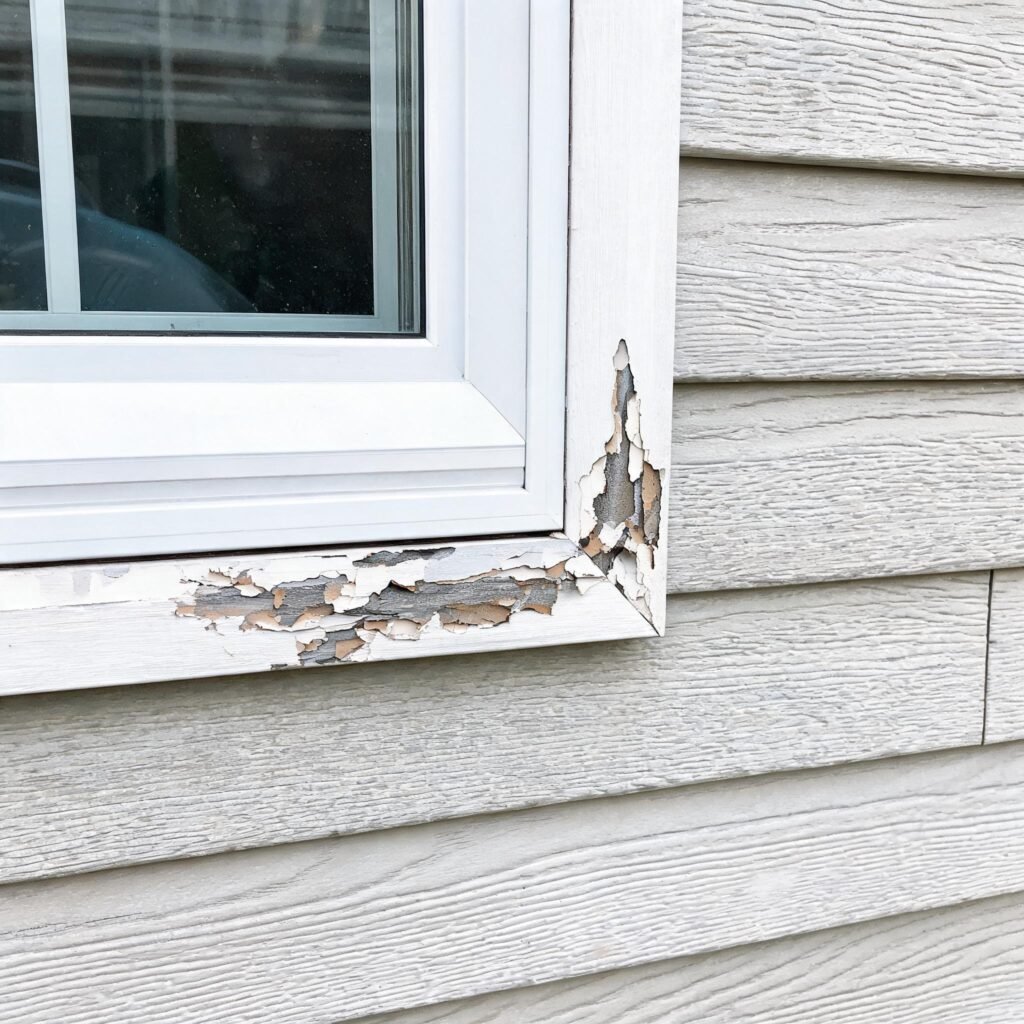
The delamination you’re seeing isn’t just cosmetic. It’s a structural red flag that tells me water has been sitting behind that siding for years. The loose panels? That’s the fastener corrosion cycle—moisture attacks the nails or screws, they lose holding power, and now your cladding is flapping in the breeze. Before you even think about repainting or spot-replacing, you need to address the moisture source: the windows themselves.
Three Options for Fixing the Damage—And What Nobody Tells You
Option 1: Spot-Repair and Repaint (The Band-Aid Approach)
If the damage is isolated to just a few panels and you’re not seeing rot behind the siding, you can cut out the bad sections, re-flash the window opening, install new fiber cement panels, prime, and paint. This works—but only if the new siding is flashed correctly and the windows are watertight. The problem with spot repairs on a 20-year-old home is that the new paint never matches the faded old paint, and within three to five years, the new sections will start to stand out like a sore thumb. More importantly, if your existing windows are drafty, leaky, or have cracked frames, you’re just going to repeat the cycle.
Pro tip: When you do a spot repair, install sill pan flashing that extends 6 inches beyond each side of the window opening. Most contractors skip this. Don’t be most contractors.
Option 2: Full Reside (The Nuclear Option)
I’ve quoted full resides on homes exactly like yours. You’re looking at $12,000 to $25,000 for a 2,000-square-foot house, depending on your region and whether you go with premium fiber cement or something like LP SmartSide. The advantage? You get a fresh start, proper WRB (weather-resistant barrier), and the chance to fix every flashing detail from scratch. The disadvantage? You’re still putting new siding around old windows. If those windows are 20 years old and have compromised frames or poor thermal performance, you’re throwing money at a half-solution. I’ve seen homeowners drop $18,000 on a full reside only to come back two years later with water damage because the original windows were the leak source the whole time.
Option 3: Replace the Windows First, Then Address the Siding (The Smart Money Move)
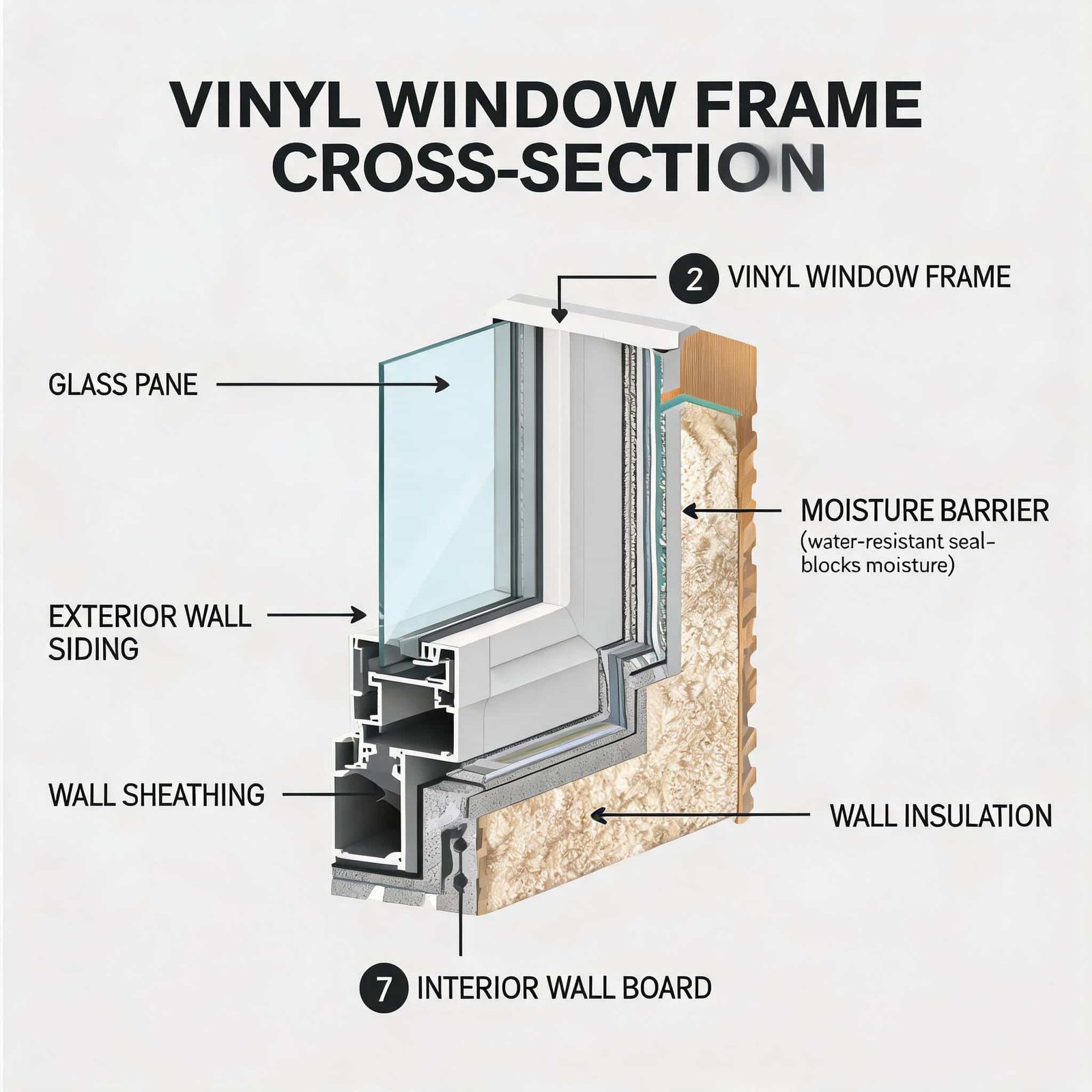
Here’s where the industry misses the mark. The most cost-effective, long-term solution is to replace the windows with high-performance, moisture-resistant vinyl windows before or concurrent with any siding work. Why? Because the window frame is the interface where 90% of siding failures originate. If you install a thermally broken frame with integrated nailing fins and compression gaskets, you eliminate the moisture pathway that caused the delamination in the first place. Products from manufacturers like Superwindowhouse use extruded vinyl with UV-stable co-extrusion layers that don’t degrade, fade, or corrode—meaning the frame itself becomes a moisture barrier rather than a moisture sponge.
When you pair new siding with new windows, you can flash the rough opening correctly, install continuous pan flashing, and ensure the siding laps over the window flange exactly as intended. The result is a system that works together, not against each other. I’ve installed Superwindowhouse’s high-performance vinyl casement windows on full resides and seen zero callbacks for moisture issues over a decade—because the frame’s durability prevents the very cracks and peeling that weather exposure causes.
The Moisture Under Window Sills Problem—Here’s the Fix
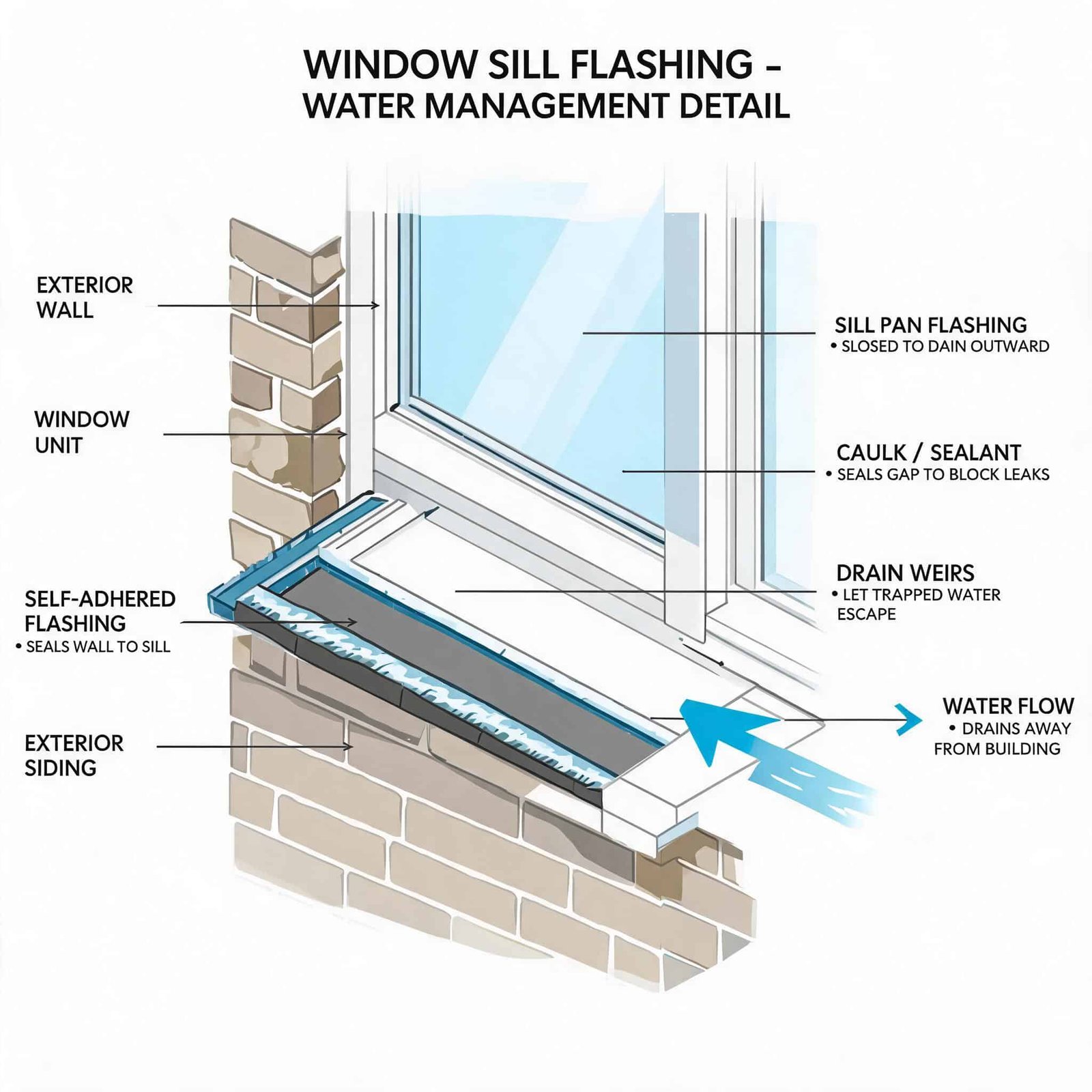
That moisture you’re seeing under the window sills? Classic sign of missing or failed sill pan flashing. In 80% of the homes I’ve inspected with this issue, the original installer didn’t install any pan at all—just caulked the window to the sheathing and hoped for the best. After 20 years, that caulk has hardened, cracked, and turned into a water funnel. When you combine that with fiber cement siding that’s soaking up moisture like a sponge, you get rot behind the siding that can travel into the wall cavity and attack the framing.
The fix requires removing the siding below the window, cutting out any rotted sheathing, installing proper copper or PVC pan flashing that slopes outward, and then reinstalling the siding with a 1/4-inch gap at the bottom (never butt fiber cement tight to the window sill—you need that drainage gap). Pair that with a vinyl window that has a built-in compression gasket on the sill, and you’ve permanently solved the problem. Superwindowhouse’s energy efficient vinyl sliding windows are designed with a sloped sill and integrated drain channels that work with proper flashing, not against it.
Why Vinyl Windows Are the Right Choice for This Application
I’m not anti-aluminum or anti-wood, but for this specific application—retrofit into an existing home with known moisture issues—extruded vinyl is the material of choice. Here’s why:
- Zero corrosion: Unlike aluminum, vinyl doesn’t oxidize or develop galvanic corrosion when in contact with different metals. In a moisture-heavy environment, that’s critical.
- No thermal bridging: Vinyl frames have inherent thermal breaks built into the extrusion, meaning the interior surface stays warm and condensation is minimized. Less condensation = less moisture dripping onto your siding = longer paint life.
- U-value performance: A quality vinyl window with double-pane Low-E glass achieves U-values between 0.28 and 0.32, which means less heat transfer and fewer temperature swings that cause siding expansion and contraction.
- Maintenance-free color: The color is integrally molded into the vinyl matrix, not painted on. Even after 20 years of direct sun exposure, the frame won’t fade or require repainting. Your siding might delaminate, but your window frames will still look new.
If you’re doing a full or partial siding replacement, check out Superwindowhouse’s slim profile tilt-in vinyl double hung windows—their 2-3/4-inch frame depth means you can maintain the same rough opening size while upgrading to modern thermal performance. The tilt-in feature also makes future cleaning a breeze, which matters because dirty windows lead to moisture retention that accelerates siding failure.
Avoiding Common Mistakes Homeowners Make
Mistake #1: Painting over delamination. I’ve seen homeowners pay $3,000 to have peeling fiber cement repainted, only to have the new paint bubble and peel within two years. The time to paint is after you’ve fixed the moisture source, not before. If the substrate is still wet or the panels are loose, no paint system—even a $500-per-gallon elastomeric coating—will stick long-term.
Mistake #2: Replacing siding but not windows. I’ve already hammered this point, but it bears repeating. If you spend $15,000 on new fiber cement siding but keep those 20-year-old windows with rotted frames and failed seals, you’re setting yourself up for the exact same delamination pattern in five years. The siding will look great, but the window-to-wall interface will fail again.
Mistake #3: Ignoring the WRB. When you remove fiber cement siding, you expose the housewrap or building paper. If the original WRB is torn, brittle, or missing, you need to replace it before the new siding goes on. I’ve seen contractors slap new siding directly over rotting Tyvek because it saved them two hours of labor. That’s how you get mold inside your walls within three years.
Mistake #4: Using the wrong fasteners. Fiber cement requires specific non-corrosive fasteners—stainless steel or hot-dipped galvanized. Regular electro-galvanized nails will rust out in five years in a coastal or high-humidity environment. Check your existing fasteners. If they’re rusted, that’s why your panels are loose.
The Bottom Line: What Should You Do?
Based on the description—20-year-old non-Hardie siding with delamination, cracks at window corners, loose panels, and moisture under sills—here’s my professional recommendation:
- Don’t repaint. The moisture damage is too deep. The paint will fail again within two years, and you’ll have wasted time and money.
- Don’t full reside yet. First, invest in replacing the windows that are causing the moisture issues. Install premium vinyl windows from a trusted manufacturer like Superwindowhouse—their high-performance vinyl casement windows are specifically designed to handle extreme weather and prevent the very issues you’re facing.
- Then do the siding repair or replacement, whether spot-fix or full reside, with proper flashing details at every window.
This approach costs more upfront but saves you from a second repair cycle five years from now. The homeowners who take this route are the ones whose homes look perfect 15 years later, while the ones who cut corners are back on Reddit asking the same question.
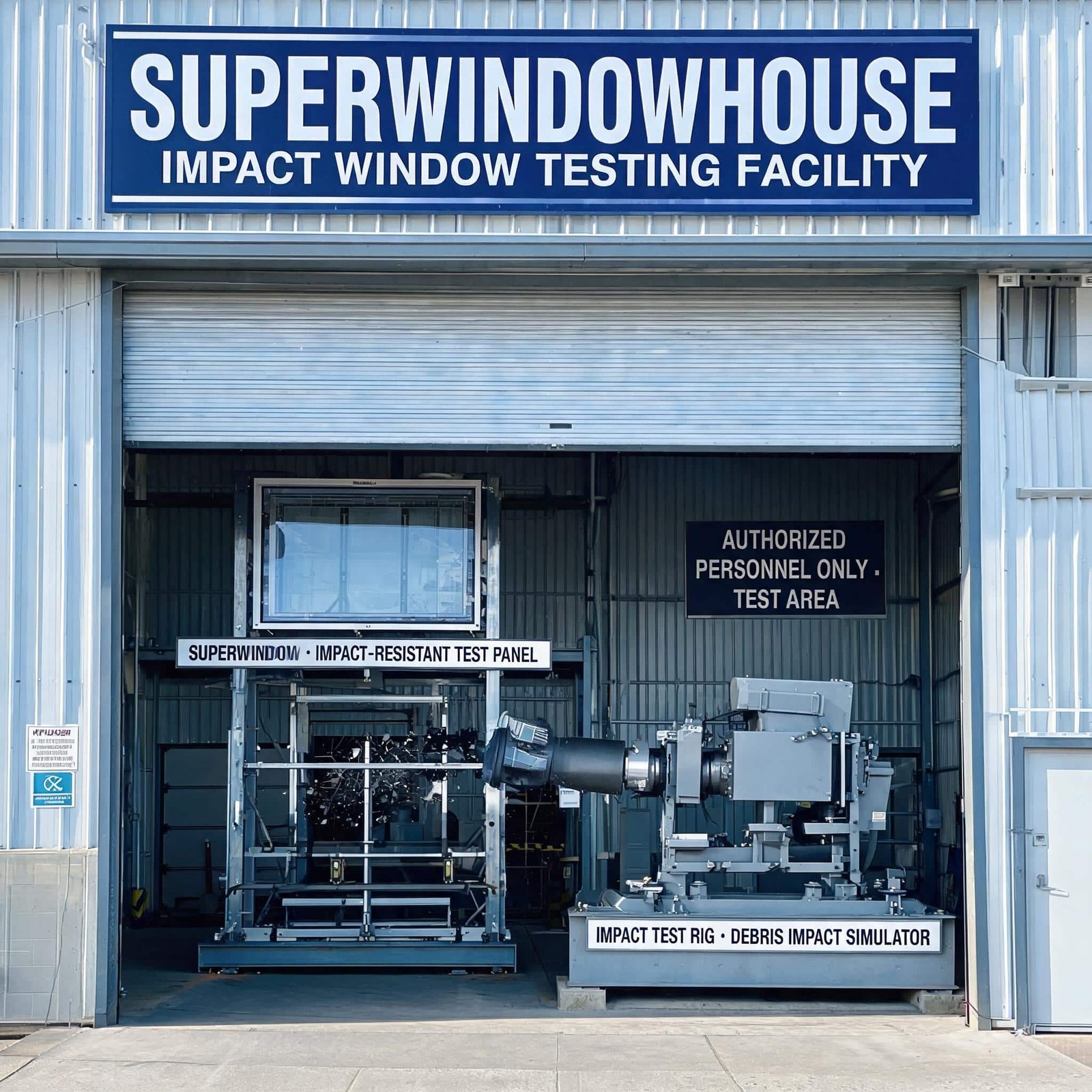
If you’re in the middle of this decision and want to talk specific window specs for your climate zone—whether it’s hurricane straps for Florida, triple-pane for Minnesota, or UV-resistant tints for Arizona—hit me up in the comments. I’ve spec’ed Superwindowhouse’s impact-resistant storm hung windows for coastal homes that face Category 5 winds and have zero callbacks. The technology exists to solve the fiber cement siding delamination problem permanently. You just need to stop thinking about the siding in isolation and start thinking about the entire building envelope.