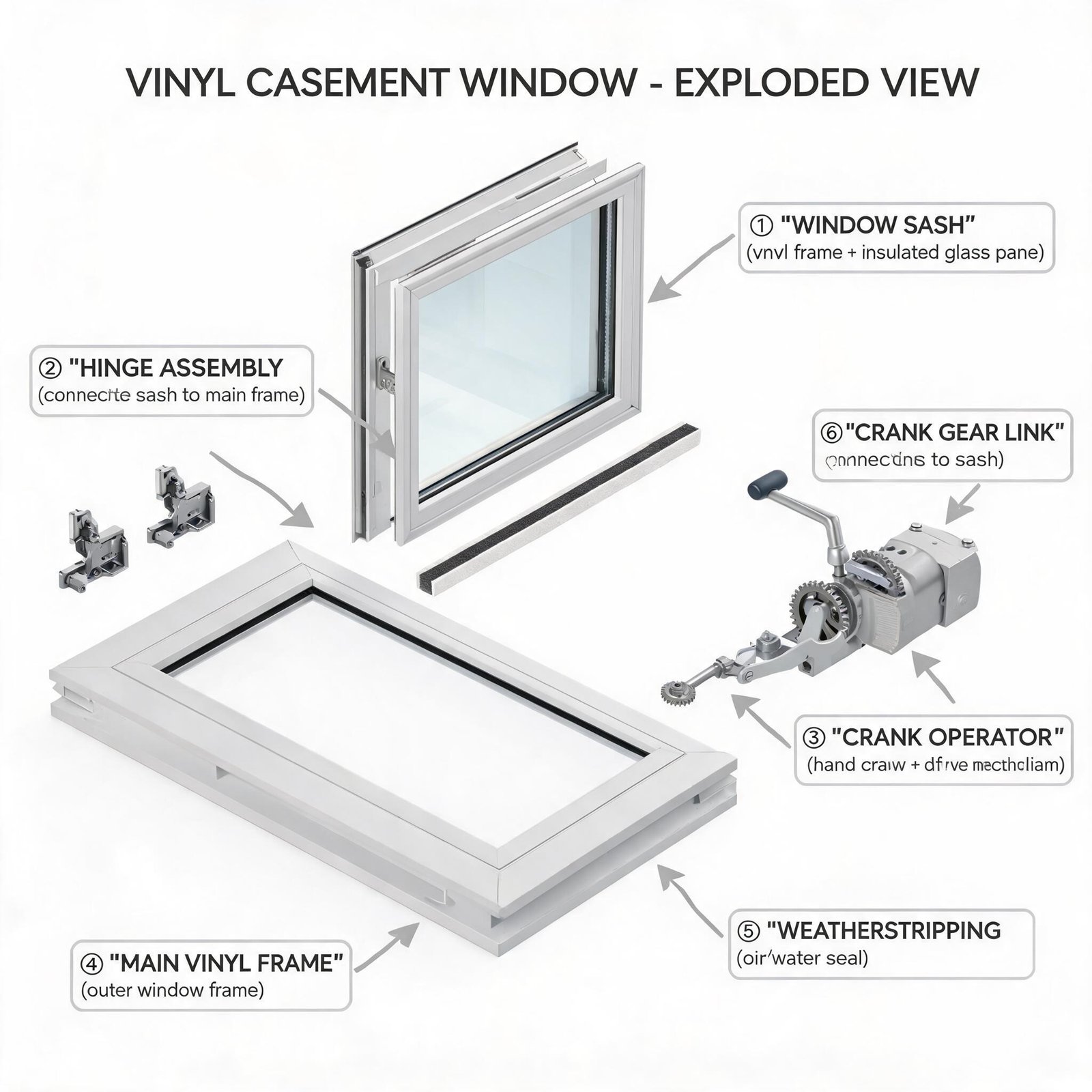
When you turn the crank handle, the sash pivots on its hinge side—typically a concealed friction hinge rated for cycles up to 10,000 openings. The sash locks at two or three points along the striker plate, compressing the bulb‑type weatherstripping to form a near‑hermetic seal.
For contractors: the crank operator is the most failure‑prone component on budget units. Always specify heavy‑duty zinc‑alloy handles and double‑reinforced operator brackets to avoid repair callbacks.
Key Operating Details:
- Crank orientation: Left‑hand vs. right‑hand hinge determines handle placement.
- Opening angle: Most standard units open to 90°, enabling full‑width egress per IRC R310.
- Obstruction: The outward swing can conflict with external screens, landscaping, or walkways—plan accordingly on ground‑floor installations.
The Anatomy of a PVC Casement Window
Let’s strip away the marketing and look at the actual assembly. Every performance claim starts with the profile design.
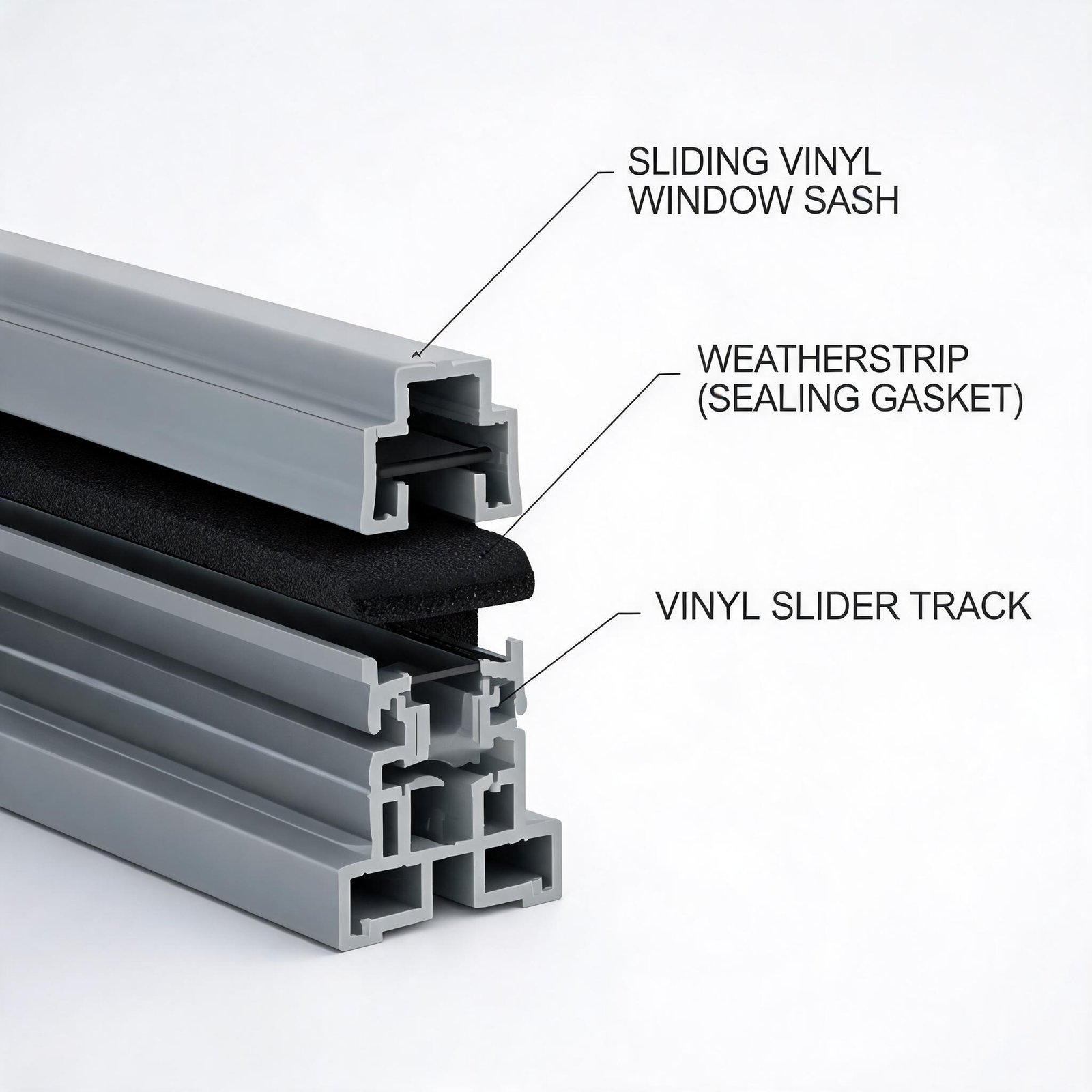
Frame & Sash Extrusions
- Material: uPVC with UV‑stabilized titanium dioxide for color retention. Avoid re‑ground vinyl that embrittles over time.
- Chamber count: Minimum 5 chambers for structural rigidity and thermal break. Top‑tier profiles use 7+ chambers.
- Wall thickness: AAMA 101‑25 calls for a minimum 0.070″ in frame walls; our Superwindowhouse standard is 0.090″ for commercial‑grade durability.
- Steel reinforcement: Crank‑out sashes longer than 48″ must incorporate a galvanized steel liner to prevent racking and sagging.
Glazing & Thermal Break
- The glazing pocket sits on a thermal silicone spacer (not aluminum) to reduce edge‑of‑glass condensation.
- Standard IG unit: 5/8″ double‑pane Low‑E 366 with argon fill. Optional triple‑pane for frigid climates (U‑factor down to 0.17).
- Warm‑edge spacer: Stainless steel or hybrid foam—avoid cheap aluminum bridges.
Weatherstripping & Seals
- Three separate sealing planes: one fin seal along the sash perimeter, two bulb seals at the frame contact points.
- All seals must be EPDM (ethylene propylene diene monomer) for ozone and temperature resistance—no polyurethane or silicone crumbles.
Hinged Vinyl Window Frame Design: What Engineers Look For
The hinge system is the Achilles’ heel of any casement. A failing hinge means the sash won’t compress evenly against the seal, leading to air leakage and water ingress. Good design starts with the hinge itself.
Hinge Selection Criteria
| Feature | Budget Grade | Commercial Grade (Superwindowhouse Standard) |
|---|---|---|
| Material | Painted steel | 304 stainless steel, 16‑gauge |
| Cycle life | 5,000 | 20,000+ (tested per ASTM E2268) |
| Load capacity | 75 lbs per sash | 120 lbs per sash |
| Corrosion resistance | Salt‑spray 250 hrs | Salt‑spray 1,000 hrs |
| Adjustability | None | 3‑axis (in‑out, up‑down, tilt) |
A 3‑axis adjustable hinge lets installers fine‑tune the sash alignment right on the job site—saving hours of callbacks for “window won’t close smoothly.”
Frame Corner Welding
- All PVC corners should be fusion‑welded (heat‑bonded) to form a monolithic joint. Mechanical fasteners or glue joints are unacceptable for any product sold into a permit‑requiring project.
- Post‑weld corner cleanup removes excess flash for a clean interior appearance and prevents water trapping.
Performance Specifications: A Data‑Driven Comparison
Every vinyl casement should meet or exceed these minimums per AAMA/WDMA standards. If a supplier can’t produce third‑party test reports, walk away.
| Parameter | Minimum Code (AAMA 101‑25) | Superwindowhouse Commercial Line |
|---|---|---|
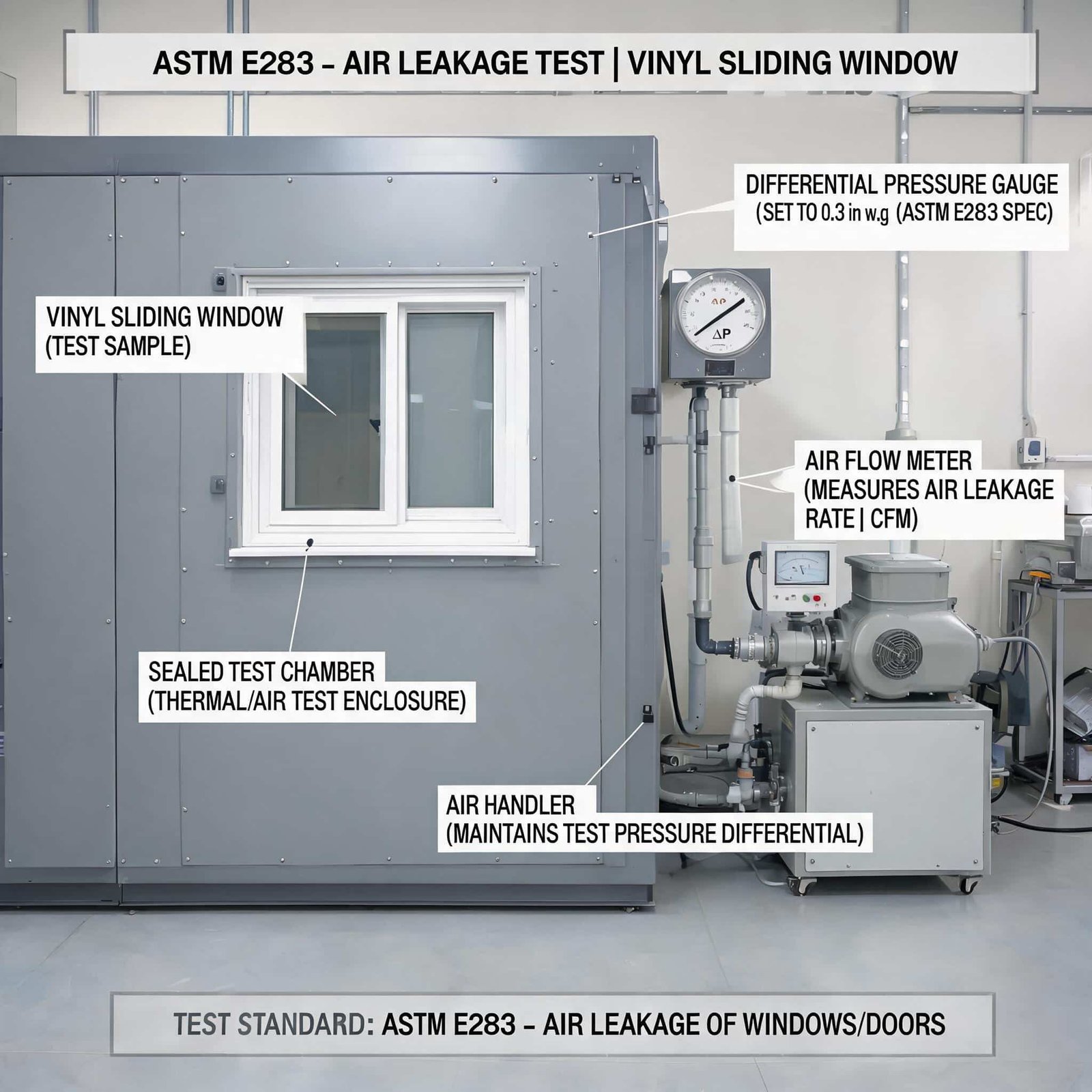
| Air leakage | ≤0.30 cfm/ft² (at 1.57 psf) | 0.09 cfm/ft² |
| Water resistance | No leakage at 15% of DP | No leakage at 20% of DP (tested to ASTM E547) |
| Design Pressure (structural) | DP 40 typical residential | DP 50‑70 (depending on size) |
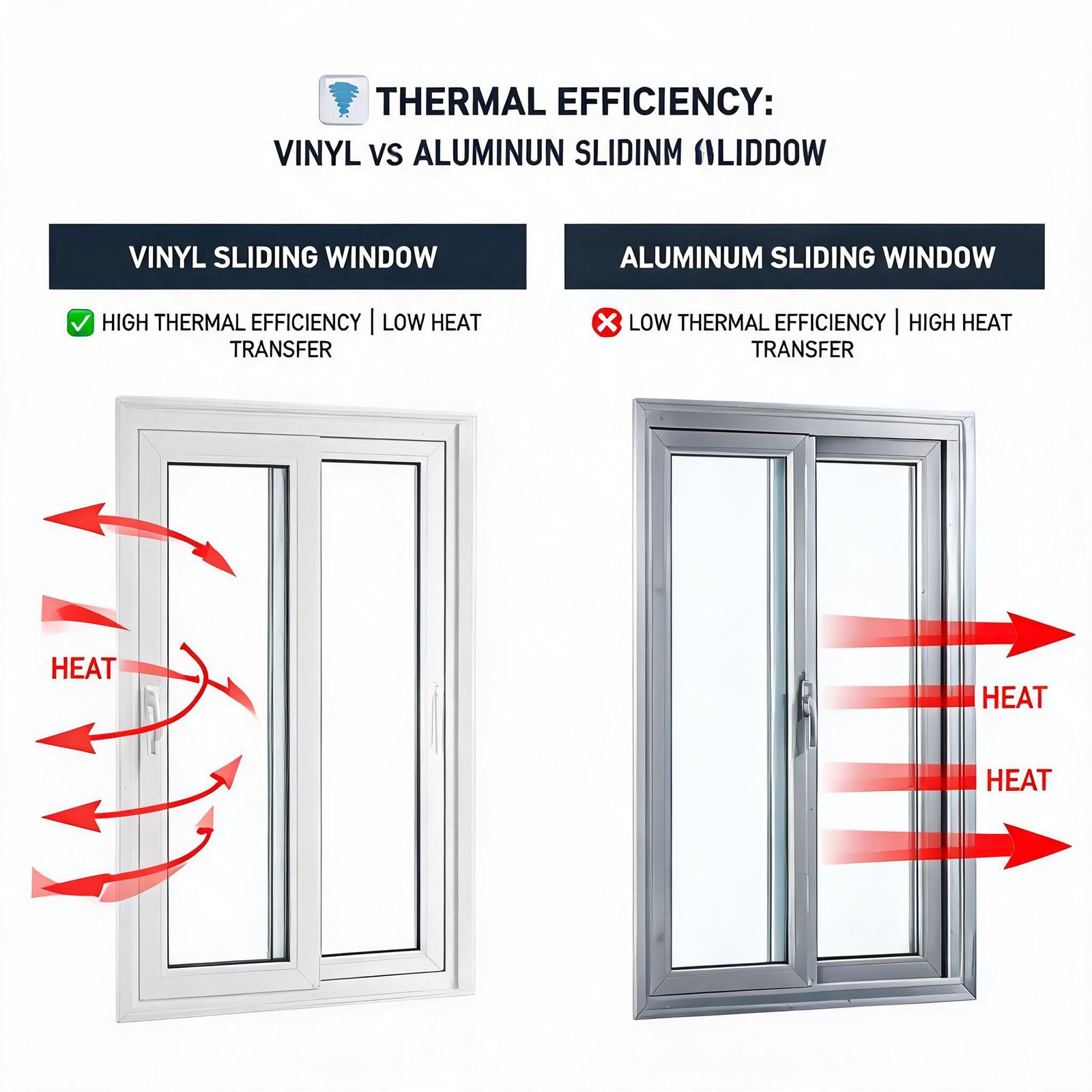
| U‑factor (NFRC) | ≤0.30 (ENERGY STAR v7 for North‑Central) | 0.24 (double‑pane) / 0.17 (triple‑pane) |
| Solar Heat Gain Coefficient | ≤0.40 | 0.27 (Low‑E 366, argon) |
| Visible Transmittance | ≥0.40 | 0.52 |
These numbers aren’t academic—they directly affect your project’s energy modeling (REScheck, Title 24) and occupant comfort. Specifying a DP‑50 rated unit vs. DP‑20 can also reduce insurance premiums in wind‑borne debris zones.
Why Superwindowhouse Is the Go‑To Source for Vinyl Casements
After 15 years in the field, I’ve seen too many projects saddled with wobbly frames and squeaky cranks six months after turnover. That’s why we engineered our vinyl casement window line to out‑spec the competition by 30% across all critical metrics.
What You Get:
- Structural steel‑reinforced sashes for spans up to 60″ without deflection.
- Screw‑applied multi‑point locks (not clip‑on) for consistent compression.
- Full AAMA certification documentation included with every order—no chasing for reports.
- Custom color matching on the interior (white, ivory, sand, bronze) using a third‑layer capstock that won’t chalk or fade.
For projects requiring both vinyl and aluminum performance, we also offer a aluminum & upvc windows custom line that combines a thermal‑break aluminum frame with a PVC interior—ideal for high‑rise commercial where exterior fire‑rated requirements exist.
Installation Checklist for Contractors
Even the best window performs poorly if the rough opening is out of square. Use this quick checklist before you order:
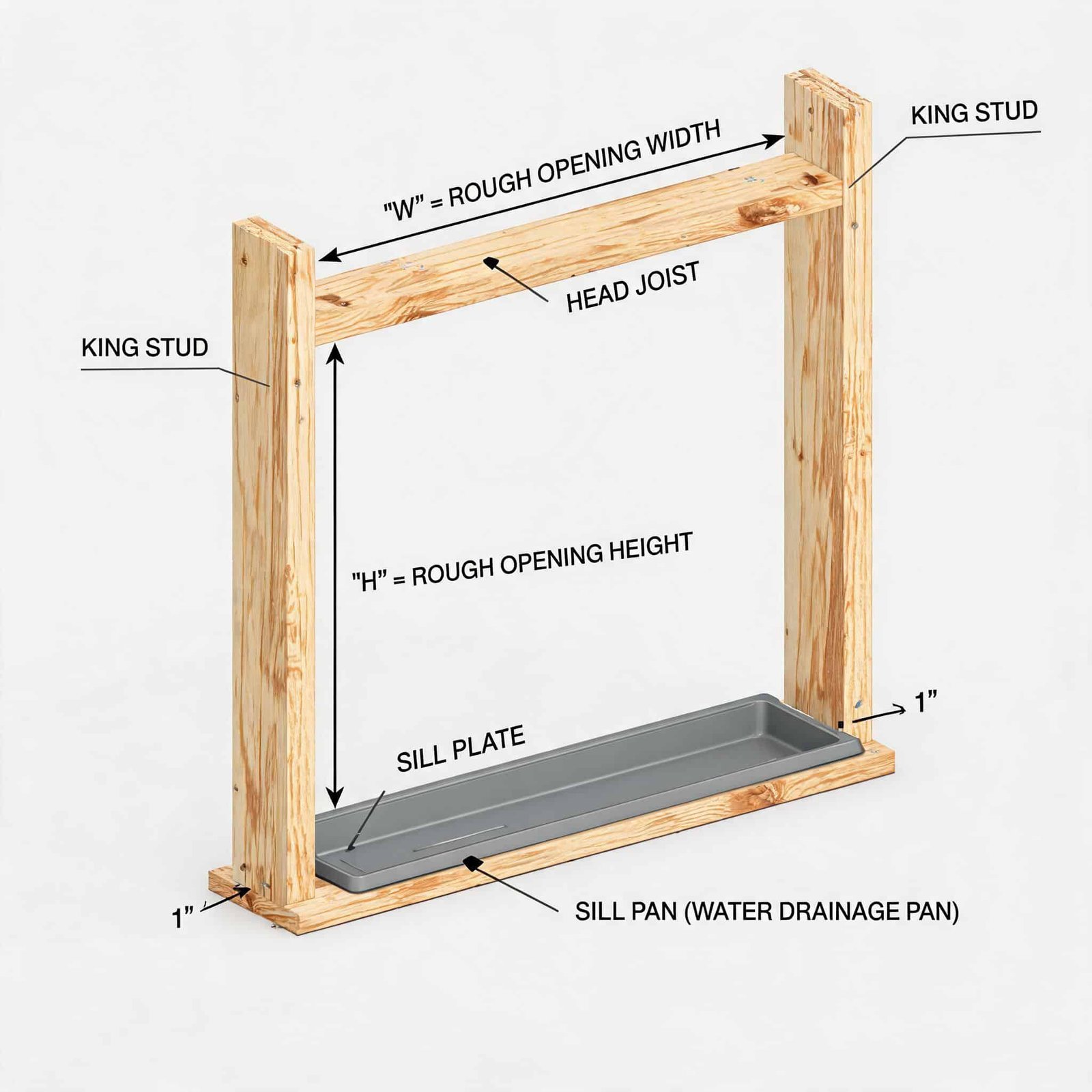
- Measure rough opening width at three points (top, middle, bottom) – variation must be ≤1/8″ across 48″.
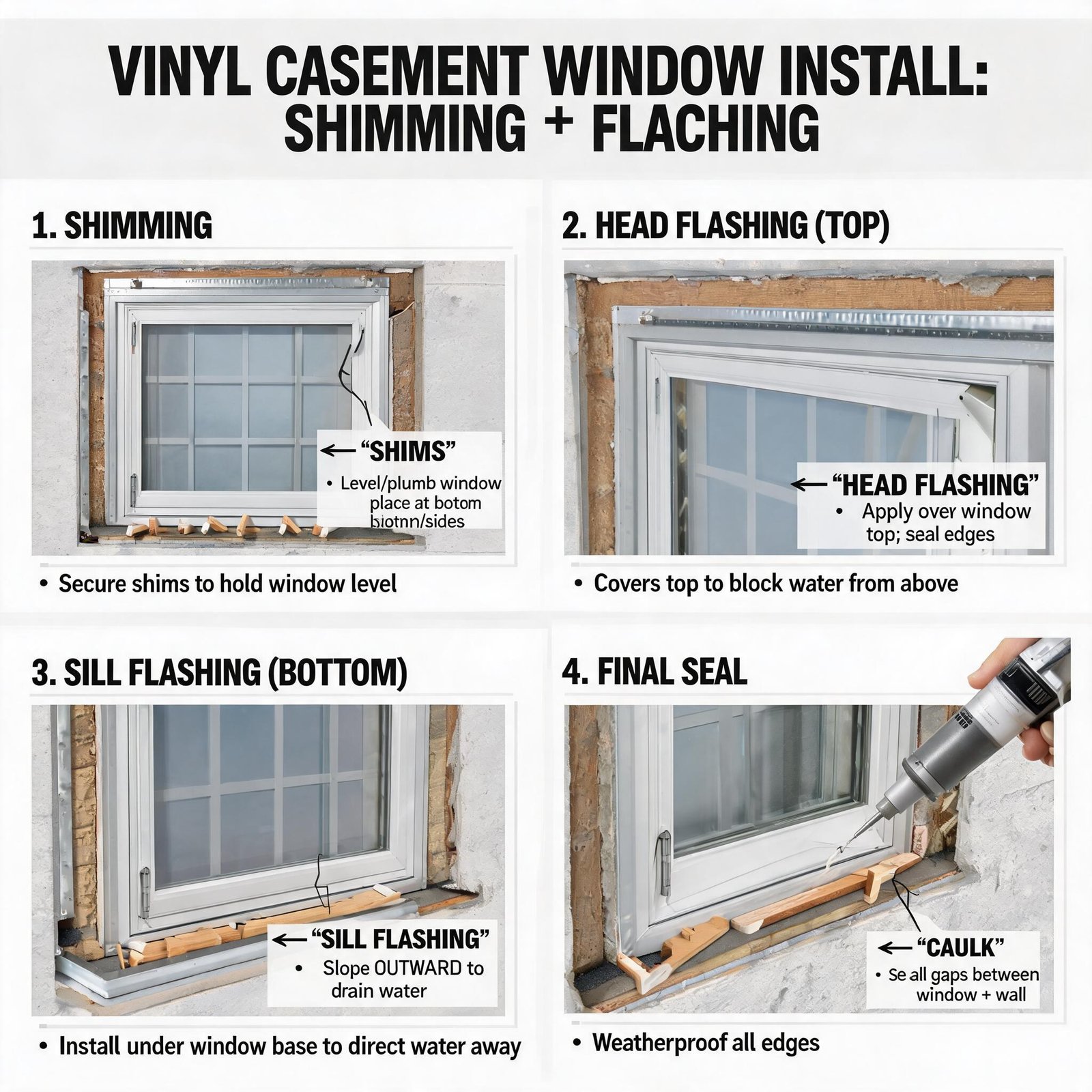
- Level the sill with a 6‑ft level; if slope is away from building, shim to achieve 1/8″ drop per foot.
- Use pan flashing at the sill to direct water away from the frame. No exceptions on grade‑level installations.
- Shim only at hinge points and lock zones—never in the middle of the sill.
- Do not overtighten screws on the fastening flange; PVC expands/contracts with temperature, and a rigid lock‑down causes sashes to bind.
Final Word: Smart Sourcing for Builders and Wholesalers
When you’re bidding a 200‑unit apartment complex or a custom lakefront home, the last thing you need is a window that fails inspection or disappoints the client. Vinyl casement windows offer the best balance of cost, thermal performance, and operational convenience—provided you choose a design that prioritizes reinforced chambers, adjustable hardware, and fusion‑welded corners. Don’t settle for a generically extruded profile; demand the engineering that Superwindowhouse delivers. Ready to spec? Request a product submittal with NFRC and AAMA test reports, and see how small improvements in profile geometry translate to big savings in annual heating bills.