Florida has a way of quickly separating window products that genuinely perform from those that merely look the part. Humidity, salt spray, blistering UV exposure, and the ever‑present hurricane threat create one of the toughest testing grounds in the country. When you’re facing months of 90‑degree heat punctuated by mandatory evacuation warnings, your window material choice stops being a design decision and becomes a real safety and durability equation.
As a manufacturer that builds impact windows specifically for this environment, I’m often asked the same two questions: is vinyl or aluminum windows better for a coastal Florida home, and are aluminum windows cheaper than vinyl in the long run? The short answer is that the right pick isn’t about picking a winner across the board – it’s about matching the material to your specific structure, proximity to salt water, energy goals, and maintenance tolerance. Below we’ll go far deeper than a typical comparison chart, unpacking what our own engineering data, contractor feedback, and decades of Florida field performance actually tell us.
How Material Composition Shapes Real‑World Performance
Every performance attribute you care about – thermal transfer, rigidity, corrosion resistance, and even sound attenuation – traces back to the chemistry of the frame.
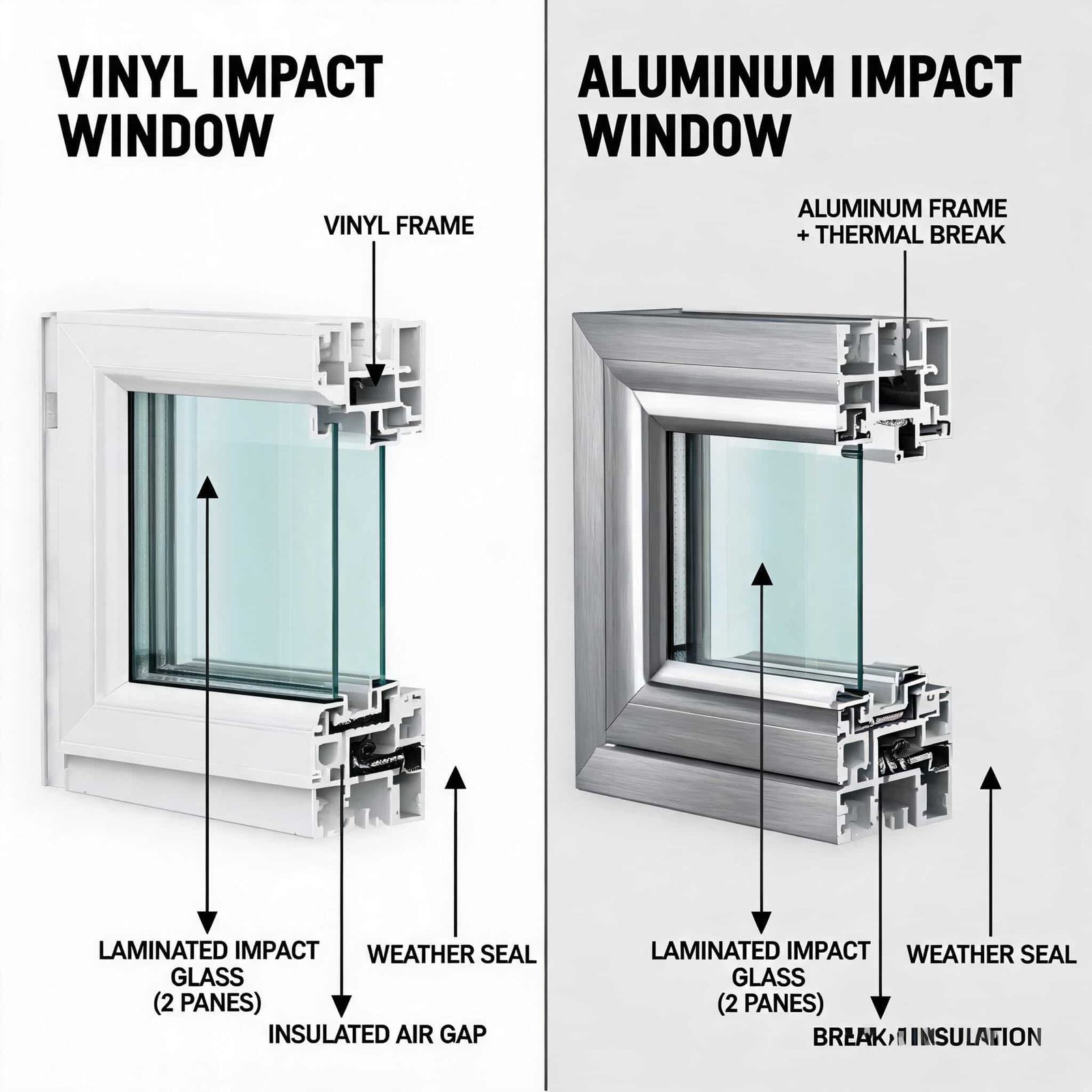
Vinyl impact windows begin as a PVC resin compound. In high‑quality production, the extrusions use virgin vinyl rather than recycled content. Virgin vinyl allows tighter molecular bonding, which directly affects corner strength and long‑term resistance to brittleness. Fusion‑welded corners, where the meeting stiles and rails are heated and fused at the molecular level, create a single, monolithic frame unit. This is significant because if a window takes a pressure hit during a storm, the corners don’t hinge open; the whole assembly absorbs the load as one piece.
Aluminum impact windows are extruded from structural aluminum alloy, often 6063‑T5 or equivalent, with a thermal break in thermally improved models. The metal inherently delivers high tensile strength, which means narrower frame profiles can still meet large‑missile impact ratings. But bare aluminum also conducts heat readily, and in Florida’s climate that can turn a window frame into a radiator. That’s why premium aluminum windows get a polyamide thermal break – a strip of low‑conductivity material separating the interior and exterior aluminum halves – to slow heat passage. The surface treatment matters enormously here: an architectural‑grade finish like Durastar or AAMA 2604/2605 compliant coatings can make the difference between a frame that still gleams after a decade of salt‑laden air and one that pits prematurely.
Energy Efficiency: What the Numbers Actually Mean for Your Utility Bills
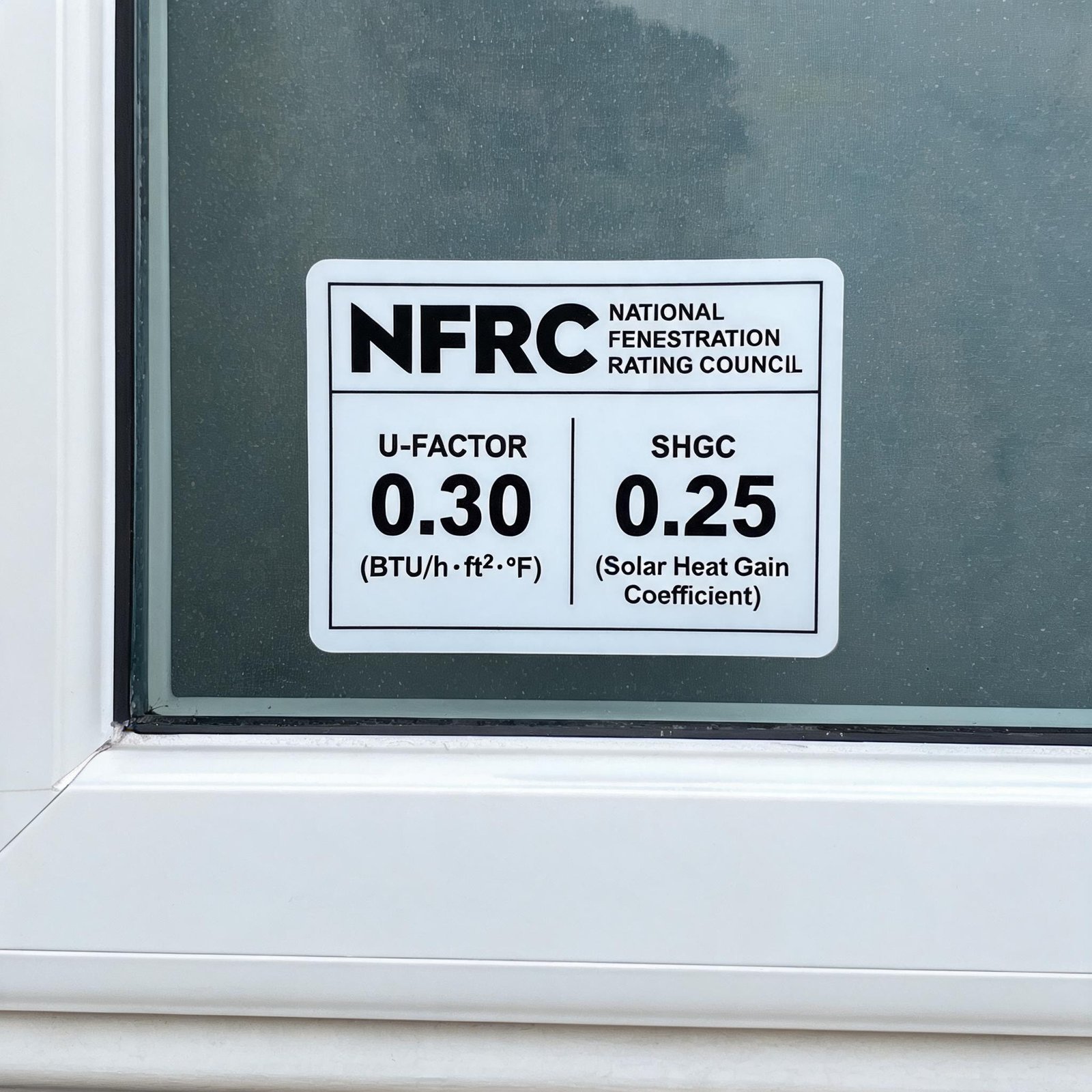
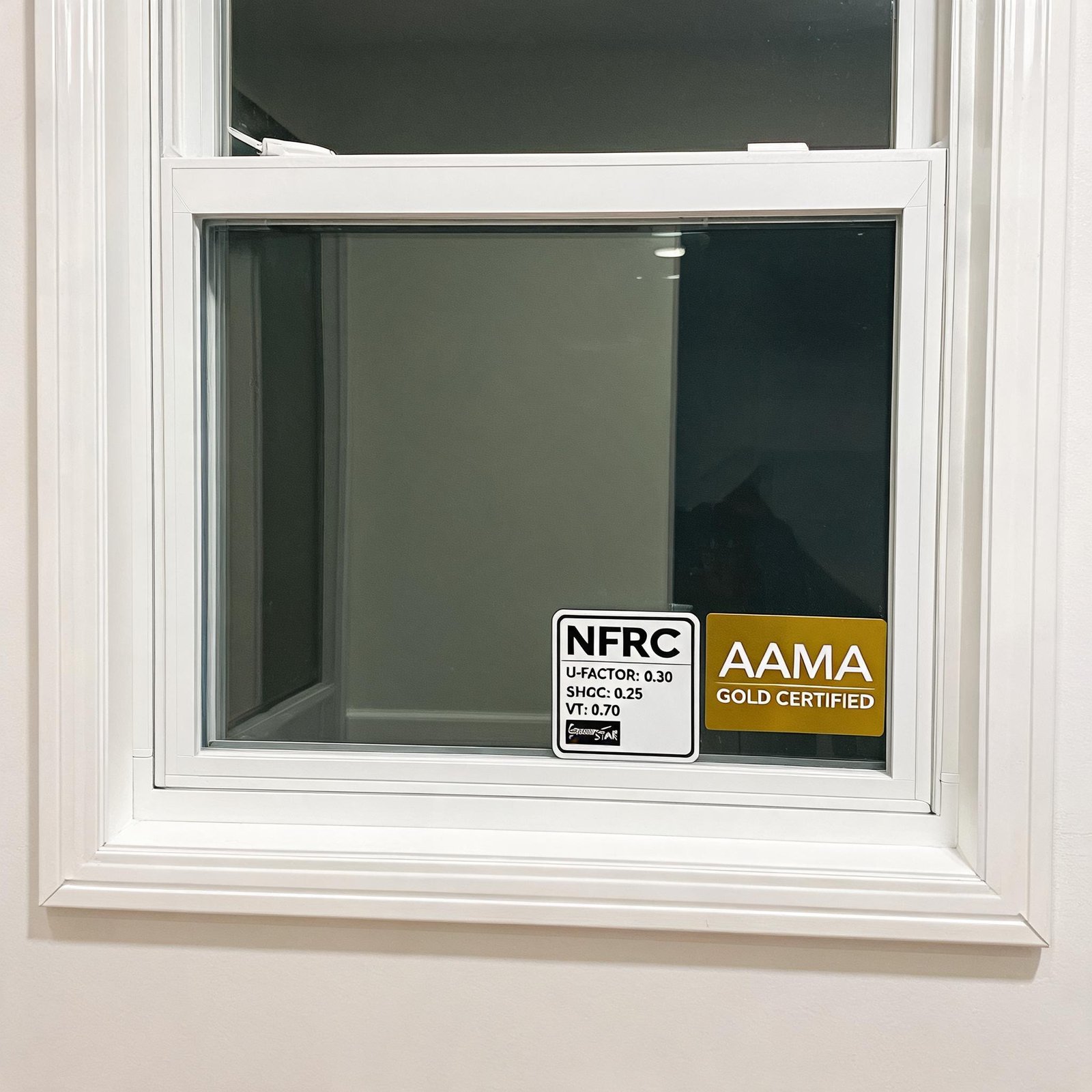
When we put our vinyl and thermally broken aluminum frames through NFRC thermal simulation, the U‑factor spread becomes revealing. A well‑made vinyl impact window with insulated glass can comfortably achieve a U‑factor between 0.25 and 0.29, which falls squarely in Energy Star Most Efficient territory for the Southern zone. Aluminum, even with an excellent thermal break, typically lands in the 0.35–0.45 range for the same glass package. That difference may look small on paper, but when you’re cooling 2,400 square feet with a dozen openings, it translates into real compressor run time.
Why does vinyl hold an edge? The base material itself is a poor conductor. An aluminum frame, no matter how good the thermal break, still has metal‑to‑metal contact points around hinges, locking mechanisms, and installation clips. These act as tiny thermal bridges. That doesn’t mean aluminum can’t perform – our coastal customers who prioritize minimal sightlines often accept a slight energy trade‑off – but if driving down air‑conditioning consumption is your number one goal, vinyl is the stronger baseline. Also worth noting: Low‑E glass coatings and argon fills benefit both materials enormously, so never evaluate a frame in isolation from its glazing package.
Durability and Maintenance in Florida’s Unique Microclimates
This is where the conversation shifts dramatically depending on how many blocks from the beach you sit.
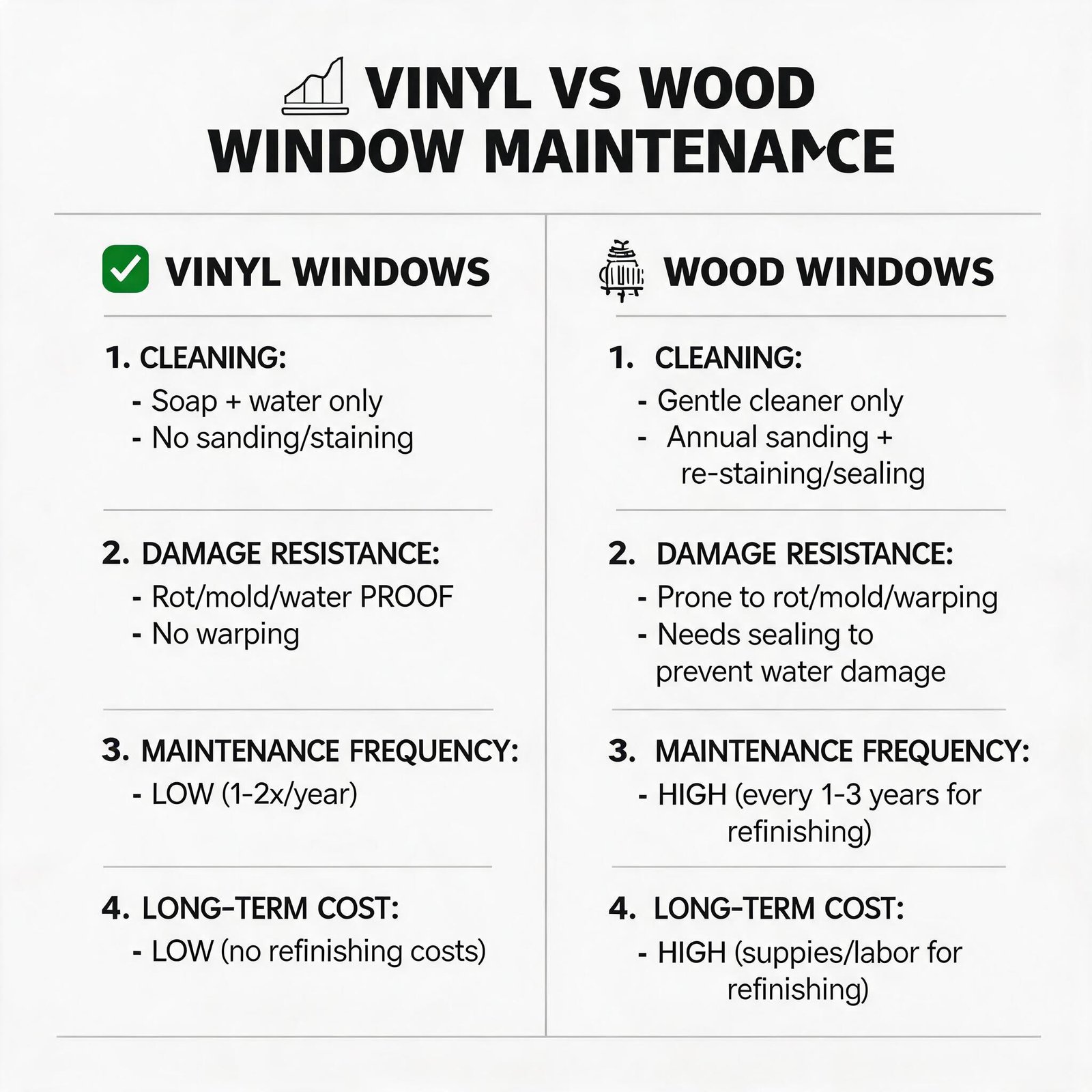
Aluminum’s Achilles’ heel along Florida’s coast has always been galvanic corrosion. When salt mist settles on the frame and combines with humidity, untreated aluminum can start to oxidize, leading to white, powdery deposits and eventual pitting. The key phrase is “untreated.” Modern marine‑grade finishes and anodizing processes have largely solved this problem – provided the window is cleaned regularly with fresh water. We recommend a simple garden‑hose rinse once a month for aluminum frames within a half‑mile of the ocean. If that maintenance cadence sounds like a chore you won’t keep, or if the property is a vacation rental that won’t get regular attention, vinyl immediately becomes more forgiving. Vinyl is inherently inert to salt, doesn’t oxidize, and the color runs through the entire extrusion, so an accidental scrape won’t reveal a different shade underneath.
For inland Florida homes – Orlando, Ocala, interior Tampa – both materials face a different challenge: intense UV cycling. Darker aluminum finishes can absorb so much solar energy that the frame itself expands measurably during the day and contracts at night. Over time, this thermal movement can stress sealants and weatherstripping. Vinyl’s coefficient of expansion is different, but a dark vinyl profile can also suffer distortion if the compound isn’t heat‑stabilized. Our advice from the manufacturing floor: light to medium frame colors perform measurably better in Florida regardless of material, and if you must have deep bronze or black, insist on documented heat‑reflective pigment technology.
Aesthetic Flexibility and Design Authenticity
Aluminum’s superior strength‑to‑weight ratio allows manufacturers to extrude remarkably thin sightlines. For mid‑century modern or contemporary homes that bank heavily on expansive glass walls, narrow aluminum stiles and mullions deliver a look that vinyl simply can’t match without internal steel reinforcement – which then adds weight and cost. If the architectural brief calls for spans over 60 inches with minimal visual obstruction, aluminum is often the answer.
Vinyl, on the other hand, offers a softer, more traditional aesthetic that suits Mediterranean, ranch, and Key West‑style homes. Modern vinyl extrusions can mimic wood grain convincingly, and because the color is integral, there’s never a peeling paint line. Custom color matching does get trickier with vinyl; the palette, while growing, is still narrower than the near‑infinite paint and anodized options available for aluminum. If you plan to repaint your windows a decade from now to match a new exterior trim color, aluminum is the more adaptable substrate.
The Full Cost Picture: Purchase Price, Installation, and Lifecycle
It’s the rare homeowner who doesn’t ask, are aluminum windows cheaper than vinyl? In isolation, aluminum impact windows often carry a higher raw material cost, which can make the initial quote look more expensive. But price tags don’t tell the whole story. Installation costs can swing in the opposite direction. Because aluminum frames are stiffer and lighter per linear foot relative to their strength, installers can sometimes handle larger assemblies with fewer helpers, and the frames are less prone to racking during hoisting. Vinyl windows, especially large heavy‑missile impact units with laminated glass, can be notably heavy and demand meticulous shimming to prevent bowing. That can add labor hours.
On the lifecycle side, we encourage customers to do a 15‑year projection, not a point‑of‑sale comparison. Factor in energy premiums: if vinyl saves you $40 a month in cooling across July, August, and September, that’s $360 a year – north of $5,000 over 15 years. Subtract from that number the occasional aluminum frame touch‑up or hardware replacement near the shore. For many waterfront homeowners, the lower‑maintenance promise of vinyl closes the total‑cost gap rapidly. For others with a design requirement that only aluminum can achieve, the extra expense is simply part of delivering the architecture.
is vinyl or aluminum windows better truly depends on which cost variables dominate your specific situation. We’ve seen smart decisions go both ways.
Installation, Weight, and Structural Considerations
Not enough window comparisons talk about what happens before the first screw goes in. Vinyl impact windows, particularly in sizes over 72 inches in width, need reinforced meeting rails and sometimes steel‑core inserts to pass Florida’s large‑missile testing. These reinforcements add bulk, and the installer has to be very precise with the rough opening dimensions because vinyl isn’t as forgiving of an out‑of‑square opening. In older concrete‑block Florida homes, where openings may have shifted over decades, this can mean more preparation work.
Aluminum’s inherent rigidity tolerates slightly larger deviations without frame distortion. However, aluminum frames also require thermal break alignment to be maintained during fastening; an over‑driven screw can short‑circuit the thermals. Installer knowledge of these material‑specific quirks is non‑negotiable. We always recommend that homeowners ask potential contractors how many of that exact brand’s aluminum vs. vinyl units they’ve installed in the last two years – not just how many windows they’ve hung generically.
Hurricane Code Compliance and Real‑World Impact Testing
Both vinyl and aluminum windows can achieve HVHZ (High Velocity Hurricane Zone) approval, including Miami‑Dade and Florida Building Code compliance, provided the complete assembly – frame, glass, laminated interlayer, and anchoring system – has been tested together. What often gets glossed over is that the test reports are product‑ and size‑specific. A certain aluminum window may have passed missile impact at 72 x 84 inches, but an identically branded vinyl window’s certification might top out at 60 x 72. If your home has oversized openings, the material