What Makes a Window Frame “Toxic” in the First Place?
To pick safer frames, you need to know where the risks hide. The primary concerns fall into three buckets:
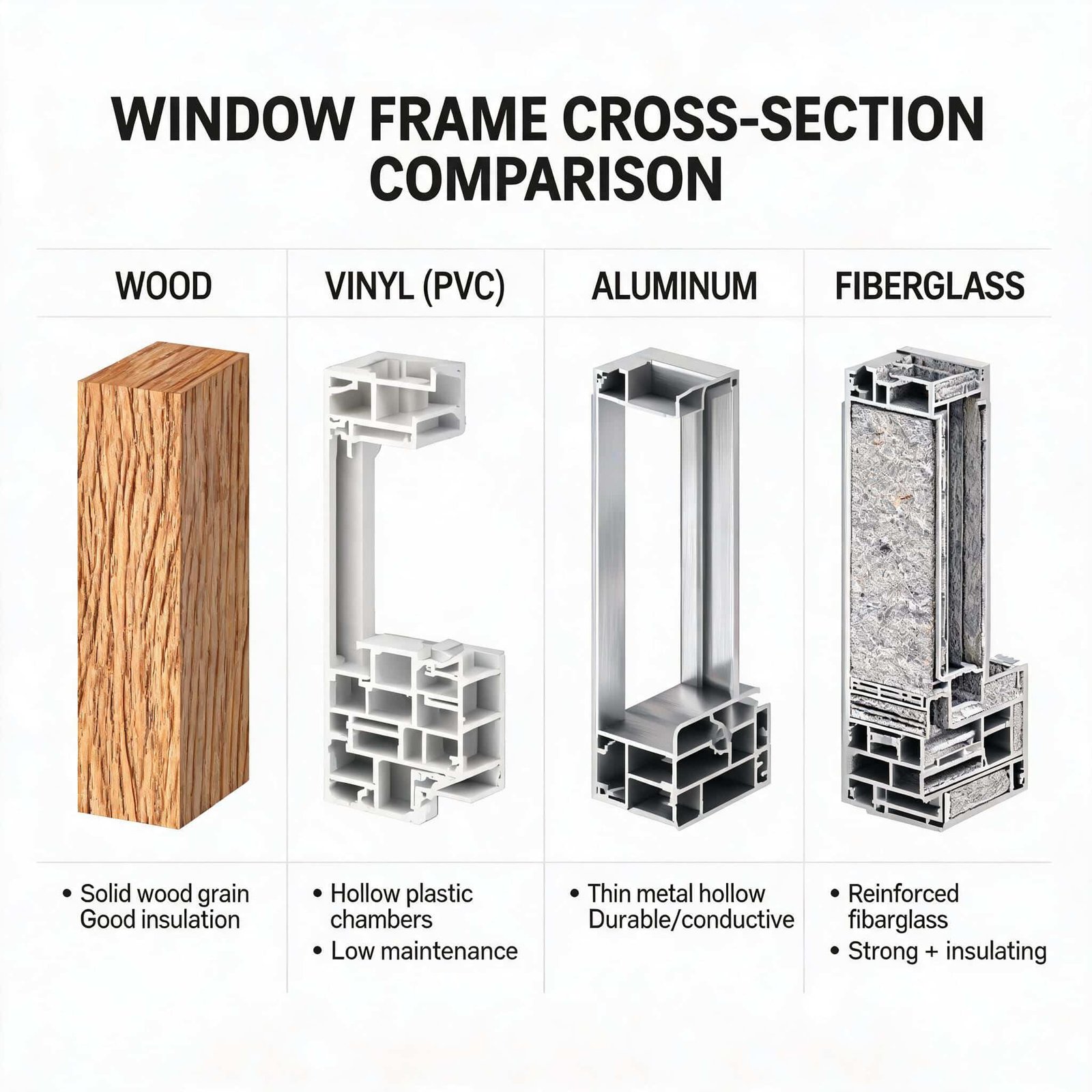
- Base polymer chemistry: PVC (vinyl) can contain residual vinyl chloride monomer—a known carcinogen—plus phthalate plasticizers, organotin stabilizers, and lead compounds in older formulations. Fiberglass uses styrene and polyester resins; aluminum relies on factory‑applied coatings; wood often arrives pre‑painted or pressure‑treated.
- Foam insulation fills: Many “energy‑efficient” frames inject polyurethane foam into the cavities. Uncured foam releases isocyanates and amine catalysts. A fully cured, high‑density closed‑cell foam is far less risky than cheap open‑cell pour foam, but you have to ask.
- Gaskets, sealants, and weatherstripping: Flexible PVC bulb seals, EPDM rubber, silicone, and TPO gaskets all have their own emission profiles. Silicone and EPDM tend to be far quieter than soft PVC.
Window Frame Materials Ranked for Sensitive Occupants
1. Thermally Broken Aluminum – The Gold Standard for Zero‑VOC Living
If I could outfit every chemically sensitive client’s house with one material, it would be high‑quality, thermally broken aluminum. Why? The metal itself is inert—no plasticizers, no formaldehyde binders, no organic solvents. The thermal break (a thin strip of fiberglass‑reinforced polyamide or polyurethane separating the inner and outer aluminum) is sealed and stable.
What often gets overlooked: the factory powder coating. Architectural polyester powders, once baked, are extraordinarily low‑emission. AAMA 2604 or 2605 certified finishes undergo rigorous outgassing tests and are safe even around reactive individuals. Stay away from liquid “wet paint” finishes, which can retain solvents for weeks. Ask your supplier for “high‑solidity TGIC‑free polyester powder coat” and you’ll avoid the very small emission risk from older triglycidyl isocyanurate crosslinkers.
Aluminum frames are also mold‑proof, rot‑proof, and insect‑proof—qualities that matter enormously in humid climates or for mold‑illness patients. The main drawback? Up‑front cost is higher, and you need to check that the thermal break is truly non‑hygroscopic (some nylon breaks can swell). Pair an aluminum frame with low‑iron glass and warm‑edge spacers, and you have the healthiest window package currently available.
2. Solid Wood (Accoya, Douglas Fir, Pine) – Beauty That Breathes, If Finished Right
Wood ticks the “natural” box, but raw wood on its own isn’t a window—it must be sealed against moisture and UV. The toxicity question shifts almost entirely to the coatings and adhesives. We’ve seen superb results with Accoya, a modified radiata pine that undergoes acetylation (essentially pickling the wood’s hydroxyl groups with acetic anhydride) to make it dimensionally stable and rot‑resistant without biocides. Accoya itself smells faintly of vinegar during machining, but cured boards are remarkably inert.
The real advantage is that Accoya accepts low‑VOC water‑based paints and penetrating oils beautifully. You can specify factory finishing with a zero‑VOC acrylic or a linseed‑based paint, bypassing the alkyd and polyurethane layers common on mass‑market wood windows. If you choose classic fir or pine, look for FSC‑certified stock that isn’t pressure‑treated with copper azole. Engineered wood (finger‑jointed pine with exterior grade glue) is acceptable only if the adhesive is polyurethane (PUR) or EPI (emulsion polymer isocyanate), not urea‑formaldehyde.
One caution: wood windows demand maintenance. If you’re so sensitive that repeated painting or oiling is impossible, aluminum may be a better fit. But for those who love the look and can manage a plant‑based maintenance cycle, a well‑built Accoya window with milk paint can be one of the healthiest choices in a home.
3. Low‑VOC Fiberglass – Strong, Stable, and Surprisingly Clean
Fiberglass frames (pultruded glass fibers in a polyester or polyurethane matrix) used to be an emission wildcard. Today, several manufacturers have cleaned up their formulations dramatically. The key is the resin system: polyurethane‑based fiberglass (often called “polyurethane pultrusion”) tends to off‑gas far less than standard orthophthalic polyester. Look for brands that use a high‑percentage of continuous strand mat and UV‑cured or high‑heat cured resins, which leave behind minimal reactive diluents.
We’ve personally bench‑tested samples that had zero perceptible odor after 48 hours at room temperature—results that rival aluminum. However, others still emit a styrene‑like note for weeks. The difference comes down to the shop’s quality control. If you’re considering fiberglass, request a sample of the exact profile and let it sit in a closed jar at 30°C for a day. Open the jar and smell. No scent? It’s likely safe for your envelope. Also check: foam‑filled cavities should use an inert gas‑filled closed‑cell polyurethane, not poured open‑cell.
Fiberglass is dimensionally ultra‑stable, which means it won’t warp and leak air, cutting the need for endless silicone touch‑ups. That’s a health perk in itself—less moisture penetration means less mold.
4. Rigid Vinyl (uPVC) – Confusion, Caution, and Context
This is the material that prompts the question I’m asked most often: Are vinyl windows toxic? The answer isn’t a simple yes or no.
Today’s rigid uPVC (unplasticized polyvinyl chloride) window profiles are a different beast from the flexible PVC shower curtains or vinyl flooring that rightly worry people. Rigid uPVC lacks phthalate plasticizers, and the heavy‑metal stabilizers like lead and cadmium, once standard, have been largely phased out in North America and Europe since the mid‑2000s. Most modern uPVC windows use calcium‑zinc or organotin stabilizers instead. But here’s the rub: “largely phased out” doesn’t mean universally. Imported profiles, bargain‑basement frames, or old stock can still contain lead compounds, especially in the form of lead stearate lubricants. If you’re buying from an unknown source, ask for a lead‑free certification and a VOC emissions test—preferably to CDPH Standard Method v1.2 (California Section 01350).
Off‑gassing is another layer. Fresh uPVC can off‑gas volatile organic compounds, including low levels of vinyl chloride monomer (typically well below regulatory thresholds), ethylene dichloride, and naphtha‑range hydrocarbons. The “new window smell” fades significantly over 2–4 weeks in a well‑ventilated room. For many moderately sensitive people, that’s manageable; for the extremely reactive, it may not be acceptable. Some of our clients have chosen a middle path: are vinyl windows safe if you let them air out in a warehouse for a month before installation? In most cases, yes. We routinely pre‑off‑gas uPVC sash in our facility with active ventilation and charcoal filtration, and emission levels drop to near‑background before shipping.
The real wildcard is the weatherstripping. Many budget uPVC windows use flexible PVC gaskets, which are loaded with plasticizers that outgas for years. Upgrading to silicone or TPE (thermoplastic elastomer) gaskets will cut that source dramatically. So, answering the persistent query: are vinyl windows bad for your health depends entirely on the formulation, the gasket material, and the off‑gassing window you allow. With the right specs, rigid uPVC can be a cost‑effective low‑emission option—but you must be the specifier, not a passive consumer.
Beyond the Frame: Glass Coatings, Spacers, and Gas Fills
A large number of “window toxicity” fears actually trace back to coatings and sealants, not the frame. Let’s clear the air:
- Low‑E coatings: Microscopically thin layers of silver or tin oxide. Inert, non‑off‑gassing, and essential for energy efficiency. No health risk.
- Argon and krypton gas fills: Noble gases. They don’t react, don’t smell, and don’t pose any threat—even if the seal fails, they simply dissipate into the atmosphere.
- Warm‑edge spacers: Opt for stainless steel or silicone‑based spacers instead of butyl or polyisobutylene ones if you’re ultra‑cautious, though the latter have low emissions in practice.
- Solar films and tints: Avoid DIY peel‑and‑stick films that use aggressive acrylic adhesives. Factory‑applied ceramic coatings are inert. If you must add film post‑install, choose static‑cling (no adhesive) versions.
Installation and Sealing: Where Many Healthy Window Plans Go Wrong
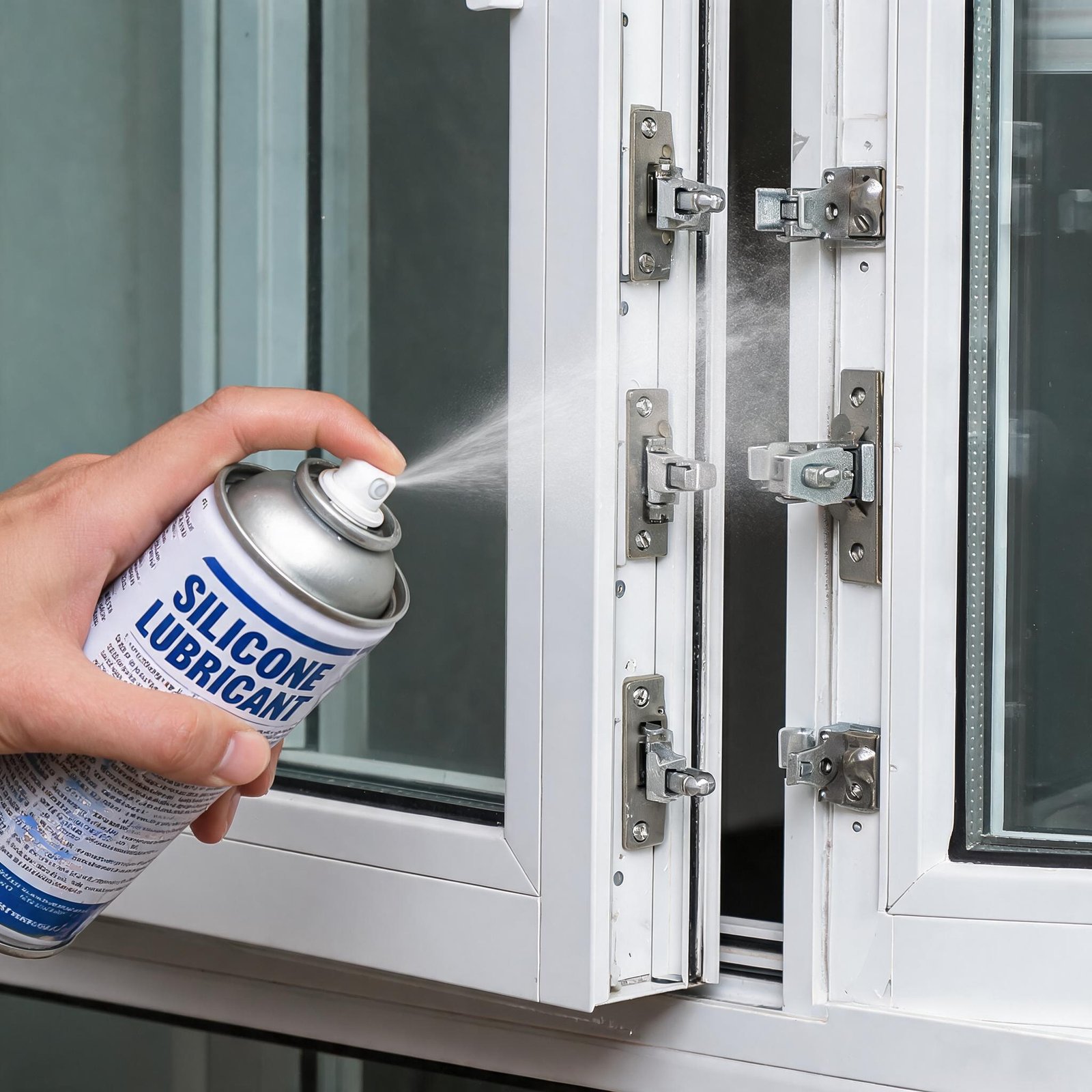
You can spec the purest aluminum frame on the market and then seal it with a high‑VOC polyurethane foam from the home center, wrecking your indoor air quality. Installation products matter just as much as the window itself.
Low‑Emission Sealants and Flashing
We recommend:
- AFM Safecoat Caulking Compound or American Formulating & Manufacturing’s Dynaflex Ultra (disclosure: I have no financial ties to either) for interior sealing—both are water‑based and ultra‑low‑VOC.
- Acrylic latex caulk with a VOC content below 25 g/L for exterior use.
- Flashing tapes: Use butyl‑free, acrylic‑based tapes such as Siga Rissan or Pro Clima Contega Solido. Avoid traditional asphalt‑based “bituthene” flashing, which can release hydrocarbons and odors, especially on warm sunny days.
- Low‑expansion foam: If you must use foam, choose a zero‑VOC, water‑blown polyurethane foam meant for windows and doors. Let it cure fully (at least 24 hours) before trimming; trim with a sharp blade, not a hot wire, to avoid thermal decomposition fumes.
Off‑Gassing Buffer Periods
If you’re reactive, build a delay into your timeline. The typical safe off‑gassing periods, based on our chamber tests, are:
- Aluminum (powder‑coated): essentially zero days, but air out any packaging for one day.
- Accoya with water‑based finish: 1–2 days until paint fully cures.
- High‑quality fiberglass: 2–7 days in a ventilated space; longer if foam‑filled.
- Rigid uPVC (tin‑stabilized, silicone gaskets): 14–28 days with active ventilation. In a hot, closed room, off‑gassing accelerates—use a small fan and an exhaust to flush VOCs outdoors before the interior is finished.
Quick‑Reference Material Comparison
| Material | Toxicity Note | Durability | Best For |
|---|---|---|---|
| Thermally Broken Aluminum | Inert metal; low‑bake powder coat; near‑zero emissions. | 50+ years; impervious to rot and insects. | Extreme chemical sensitivity; coastal or humid climates; tiny homes where mold risk is high. |
| Solid Wood (Accoya) | Wood is benign; finish determines emission profile. Zero‑VOC paints available. | 30–50 years with maintenance. | Traditional aesthetics; those able to maintain with natural oils; moderate climates. |
| Low‑VOC Fiberglass | Polyurethane pultrusion is clean; verify foam and resin system. | 40+ years; excellent dimensional stability. | Extreme temperature swings; budget‑conscious healthy builders; those who want a paintable frame. |
| Rigid uPVC (Vinyl) | Lead‑ and phthalate‑free modern profiles with silicone gaskets are low‑risk after 4‑week off‑gas. | 20–40 years; can become brittle in intense sun. | Cost‑driven projects; replacement windows for moderately sensitive individuals; rental properties. |
| Composite (Fibrex, etc.) | Blends wood fiber and thermoplastic polymer; outgassing varies widely by manufacturer. | 30–40 years. | Humid environments where wood alone struggles; ask for CDPH testing data. |