Why Accurate Measurements Matter More Than You Think
Vinyl replacement windows are built to fit precisely inside your existing window frame. Unlike new construction windows that have nailing fins for attachment, replacement windows slide into the old frame and get secured in place. This means the measurements must be exact.
A window that’s too small leaves gaps that require excessive shimming and caulking. A window that’s too large simply won’t fit. Either scenario means delays, extra costs, and potentially having to order a completely new window.
The good news is that measuring correctly isn’t difficult when you know what to look for. The key is understanding that window openings are rarely perfectly square, level, or plumb. Older homes settle, frames warp, and previous installations may have been less than perfect.
What You’ll Need Before You Start
Before you begin measuring, gather these tools:
- A quality steel tape measure (25-foot is ideal)
- A pencil and notepad
- A level (6-inch or longer)
- A step ladder for upper-floor windows
- A helper for larger windows and doors
Avoid using cloth measuring tapes or retractable rulers. They flex and give inaccurate readings. A stiff steel tape measure is your best friend here.
How to Measure for Replacement Vinyl Windows: Step by Step
Understanding how do you measure for vinyl replacement windows starts with knowing that you measure the window opening, not the old window itself. The old window may have shifted or been installed imperfectly, so the opening is your true reference point.
Step 1: Measure the Width in Three Places
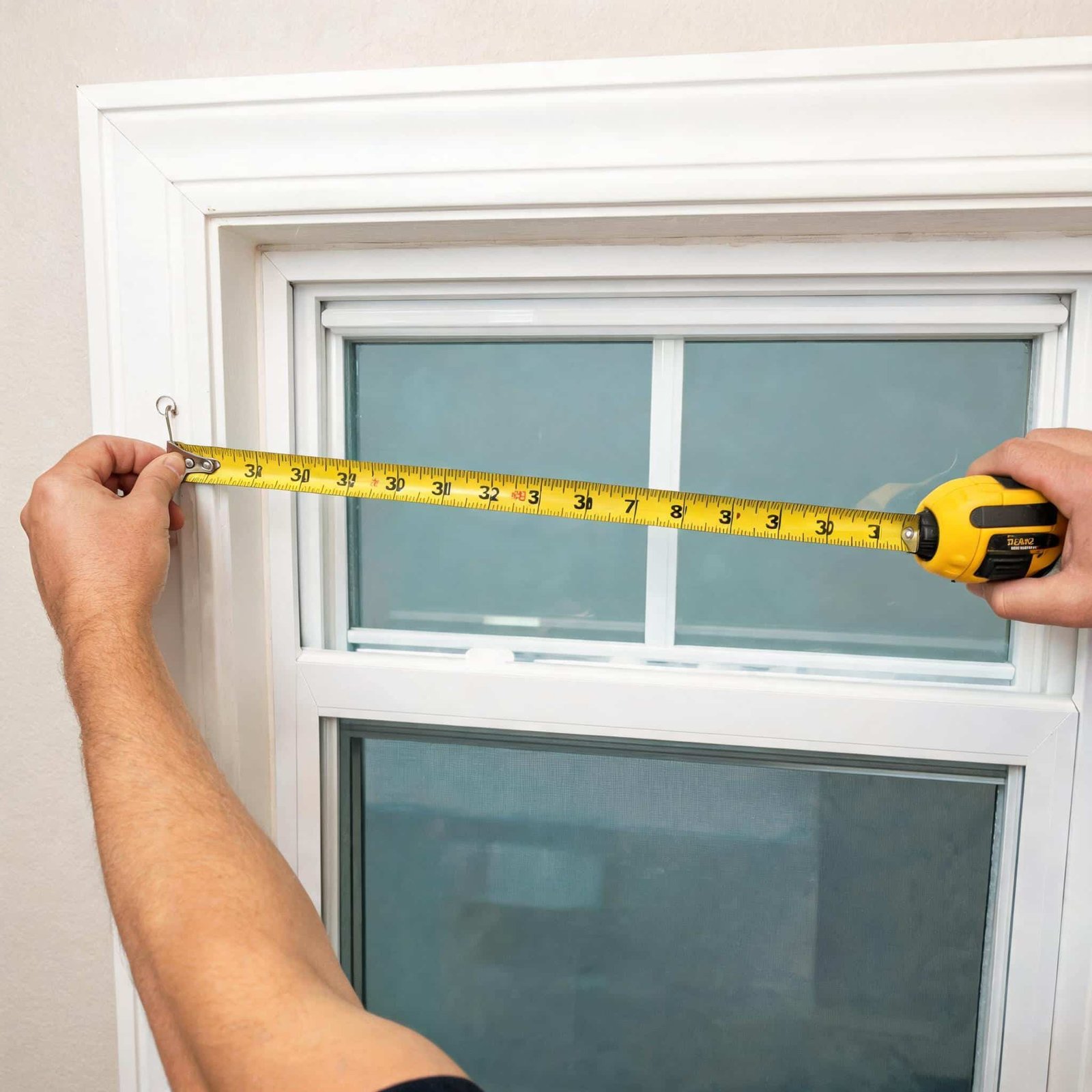
Start by measuring the width of the window opening at the top, middle, and bottom. Here’s the correct technique:
- Place the tape measure against the left side of the frame (not the window sash)
- Extend it to the right side of the frame
- Record the measurement to the nearest 1/8 inch
- Repeat at the middle and bottom of the opening
The critical rule here is to use the smallest of these three measurements when ordering your window. Why? Because the window must fit into the narrowest part of the opening. If you order based on the widest measurement, the window won’t fit through the tighter spots.
For example, if your top measurement is 35 1/2 inches, the middle is 35 3/4 inches, and the bottom is 35 5/8 inches, you would order based on 35 1/2 inches.
Step 2: Measure the Height in Three Places
Height measurements follow the same principle. Measure from the top of the window frame (the head) to the bottom of the frame (the sill) at the left, center, and right of the opening.
Again, record all three measurements and use the smallest one. Many homeowners make the mistake of measuring only the center and missing a low spot on one side.
Step 3: Check for Square
A window opening that isn’t square will cause installation problems. To check for square, measure diagonally from the top left corner to the bottom right corner, then from the top right corner to the bottom left corner.
If these two diagonal measurements differ by more than 1/4 inch, your opening is out of square. This doesn’t mean you can’t install replacement windows, but it does mean you’ll need to account for this during installation with proper shimming.
Step 4: Measure the Depth
Vinyl replacement windows require sufficient frame depth for proper installation. Measure from the inside of the window frame to the outside stop. Most replacement windows need at least 2 1/2 inches of depth, but this varies by manufacturer.
If your frame depth is too shallow, you may need special adapters or a different window style. This is one of those details that many online guides overlook, but it’s crucial for a successful installation.
Common Mistakes When Measuring for Vinyl Windows
After years in the industry, we’ve seen the same mistakes repeated. Here are the ones to watch for:
Measuring the old window instead of the opening. The old window may be smaller than the actual opening due to shimming or settling. Always measure the frame opening.
Not measuring in enough places. A single measurement isn’t enough. Windows shift and settle, so three measurements per dimension are necessary.
Forgetting to account for slanted sills. Many windows have sills that slope outward for drainage. If you measure from the sill instead of the frame bottom, you’ll get an incorrect height.
Rounding measurements. Always record measurements to the nearest 1/8 inch. Rounding up or down can cause fit problems.
Ignoring obstructions. Check for window cranks, locks, or handles that might interfere with the new window. Also check for drywall returns or trim that might reduce the opening size.
How to Measure for New Vinyl Windows in Different Window Styles
Not all windows measure the same way. Here are specific considerations for common window types:
Double-Hung Windows
These are the most common replacement windows. Measure the width and height as described above. Pay special attention to the balance system area, as some replacement windows require specific clearances for the spring balances.
Casement Windows
Casement windows crank outward, so the hinge side and crank side may have different clearance requirements. When learning how to measure for new vinyl windows in casement style, check that the crank mechanism won’t hit any obstructions when fully opened.
Sliding Windows
For sliding windows, the width measurement is especially critical because the panels must slide past each other. Measure the track width carefully, as some tracks are narrower than the frame opening.
Picture Windows
Picture windows don’t open, so they’re simpler to measure. However, because they’re fixed, any measurement error means the window simply won’t fit. Double-check everything.
What to Do If Your Measurements Aren’t Perfect
Perfectly square, level window openings are rare in real homes. Here’s what to do when your measurements reveal imperfections:
If the width varies by less than 1/4 inch across three measurements, use the smallest measurement and plan to shim during installation. If the variation is greater than 1/4 inch, consult with a professional installer or your window supplier. They may recommend custom-sizing the window or making frame adjustments.
For height variations, the same rule applies. Minor differences can be handled with shims. Major differences may require frame modifications.
The Role of Your Window Dealer
Once you have your measurements, it’s time to work with a dealer. Professional dealers have experience interpreting measurements and can spot potential issues before you place an order. They can also advise on whether your specific measurements require custom sizing.
When you understand how do you measure for vinyl replacement windows correctly, you’ll have more confidence when speaking with dealers. You’ll be able to ask informed questions and verify that the windows being quoted will actually fit your openings.
Beyond Measurements: What to Consider Before Ordering
Accurate measurements are essential, but they’re just one part of a successful window replacement project. Here are other factors to consider:
Window style and operation. Think about how you want your windows to function. Double-hung windows are traditional and easy to clean. Casement windows offer excellent ventilation. Sliding windows work well in tight spaces.
Glass options. Energy-efficient glass packages, Low-E coatings, and gas fills can significantly improve your home’s comfort and energy savings.
Frame color and finish. Vinyl windows come in various colors and finishes. Some can be painted, while others have integral color that won’t fade or chip.
Warranty and installation. A good warranty protects your investment, but proper installation is equally important. Make sure your installer is experienced with vinyl replacement windows.
How to Measure for Replacement Windows: The Professional Approach
Professional installers follow a systematic approach that goes beyond basic measurements. Here’s what they do differently:
They inspect the window frame for rot, damage, or deterioration before measuring. A compromised frame needs repair before new windows can be installed.
They check for proper drainage. Window frames should have weepholes and proper slope to direct water away from the home.
They verify that the rough opening is structurally sound. If the framing around the window has shifted, it may need reinforcement.
They take photos of each window opening for reference during ordering and installation.
This level of thoroughness ensures that the windows they order will fit correctly and perform well for years to come.
Final Thoughts on Measuring for Vinyl Replacement Windows
Measuring for replacement windows doesn’t have to be intimidating. With the right tools, a systematic approach, and attention to detail, you can get accurate measurements that will lead to a successful installation.
Remember these key points:
- Measure width in three places (top, middle, bottom)
- Measure height in three places (left, center, right)
- Use the smallest measurement for ordering
- Check for square with diagonal measurements
- Verify frame depth is sufficient
- Record everything to the nearest 1/8 inch
If you’re unsure about any measurement, don’t hesitate to ask for help. A small mistake in measuring can lead to a big problem during installation. It’s always better to verify than to guess.
Frequently Asked Questions
Q: Do I measure the old window or the frame opening?
A: Always measure the frame opening, not the old window. The old window may be smaller than the actual opening due to shimming or settling.
Q: What if my window opening isn’t square?
A: Minor variations (less than 1/4 inch) can be handled with shims during installation. Larger variations may require custom sizing or frame adjustments.
Q: Should I measure from inside or outside the house?
A: Measure from inside the house. Replacement windows are designed to fit inside the existing frame, so interior measurements are what matter.
Q: How precise do my measurements need to be?
A: Measure to the nearest 1/8 inch. Never round measurements up or down.
Q: Can I install replacement windows myself?
A: While DIY installation is possible, professional installation is recommended for best results. Improper installation can void warranties and cause performance issues.
Q: What if my measurements are different from the standard window sizes?
A: Many manufacturers offer custom sizes. Your dealer can help you determine the best option based on your measurements.
Q: How do I measure for a bay or bow window?
A: Bay and bow windows require measuring each individual window section separately. This is more complex and often best handled by a professional.
Q: Do I need to remove the old window before measuring?
A: No. Measure the existing frame opening without removing the old window. The replacement window will fit into this same opening.