Few things are more frustrating than wrestling with a stubborn window that refuses to glide smoothly along its tracks. If you’re dealing with vinyl windows that stick, bind, or require excessive force to operate, you’re not alone. This is one of the most common complaints we hear from homeowners, and the good news is that most issues can be resolved without calling a professional.
In this comprehensive guide, I’ll walk you through the exact steps we use to diagnose and fix sticky windows. Whether you’re dealing with a window that won’t budge at all or one that slides unevenly, these proven techniques will restore smooth operation and extend the life of your windows.
Understanding Why Vinyl Windows Stick
Before diving into solutions, it helps to understand what causes windows to become difficult to operate. Vinyl windows are engineered for low maintenance, but they’re not immune to problems. The most common culprits include:
Dirt and debris buildup in the tracks is the number one cause of sticking windows. Over time, dust, pollen, and grime accumulate in the channels where the sash slides, creating friction that makes movement difficult.
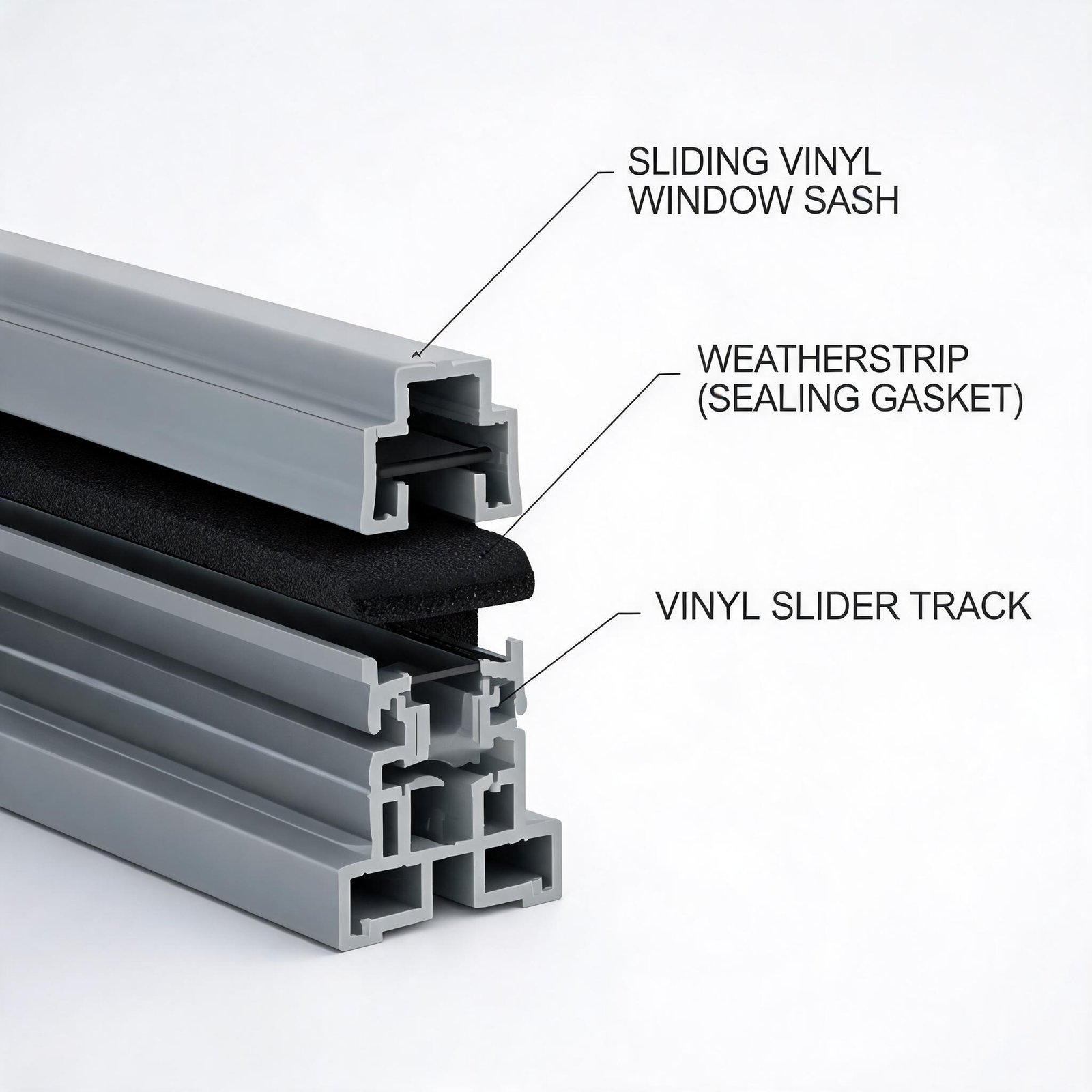
Weather stripping compression can also create resistance. When weather stripping becomes flattened or misaligned, it can drag against the sash rather than creating a smooth seal.
Sash balance issues are another frequent problem. Double-hung windows use spring-loaded balances or spiral balances to counterbalance the weight of the sash. When these fail, the window may not stay open or may feel unusually heavy.
Temperature-related expansion affects vinyl windows more than many homeowners realize. On hot days, vinyl expands slightly, which can cause the sash to bind against the frame. Conversely, cold weather can cause contraction that creates gaps.
Tools and Materials You’ll Need
Before starting any window repair, gather these supplies:
- Shop vacuum with brush attachment
- Microfiber cloths (lint-free)
- Soft-bristle brush or old toothbrush
- Silicone-based lubricant spray (never use oil-based products)
- Putty knife (for stuck windows)
- Replacement weather stripping (if needed)
- Phillips head screwdriver
- Isopropyl alcohol for cleaning
Step 1: Thorough Track Cleaning
The single most effective thing you can do to improve window operation is clean the tracks thoroughly. This simple step resolves roughly 70% of sticking window problems.
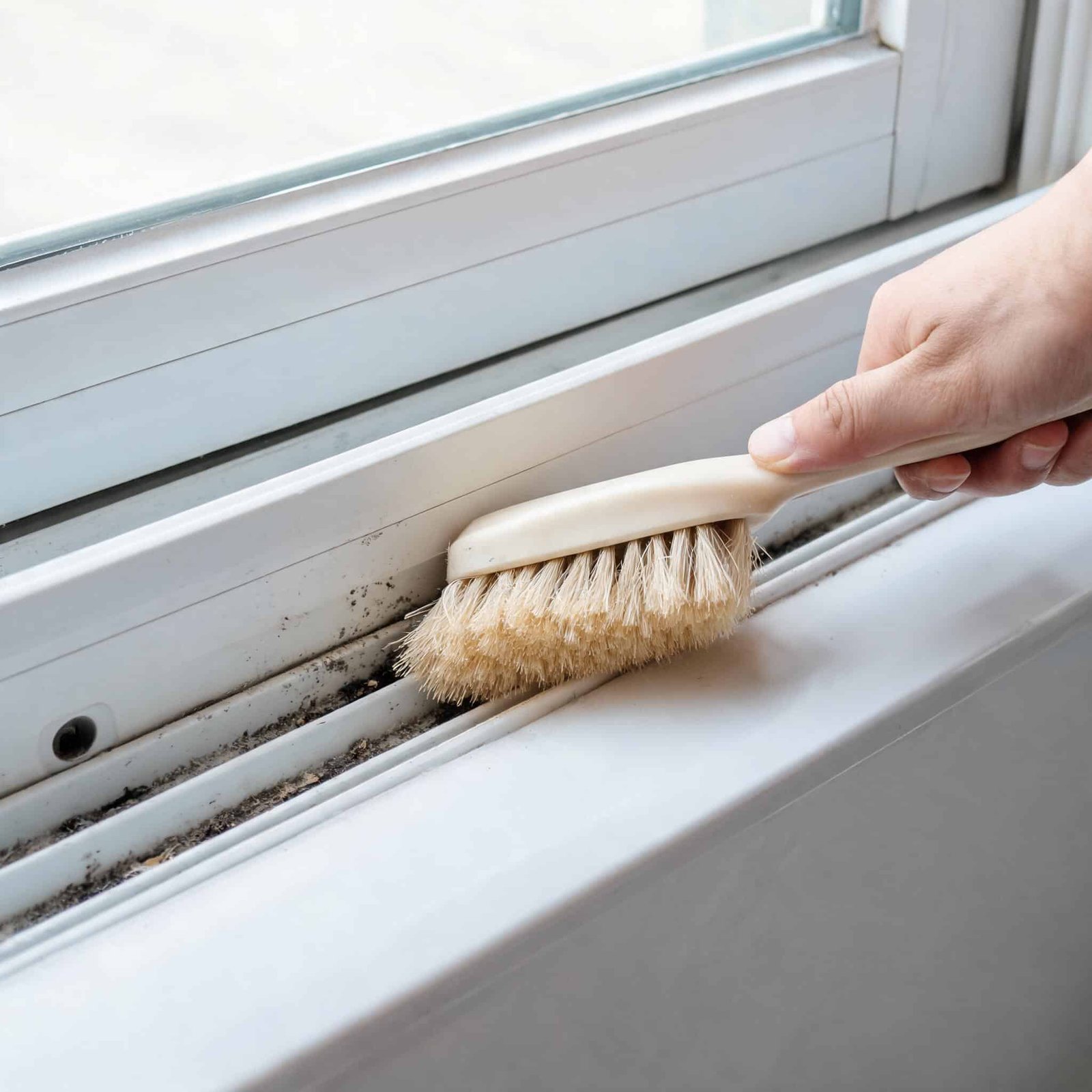
Start by removing any loose debris with your shop vacuum, using the brush attachment to reach into the track channels. Pay special attention to the bottom track where dirt accumulates most heavily.
Next, use a soft-bristle brush or toothbrush dipped in isopropyl alcohol to scrub the tracks. Alcohol evaporates quickly and won’t leave residue that could attract more dirt. Work the brush back and forth along the entire length of the track, focusing on corners where grime tends to collect.
Wipe the tracks clean with a dry microfiber cloth. You’ll be surprised how much dirt comes off even on windows that look clean. Repeat this process until the cloth comes away clean.
For windows that haven’t been cleaned in years, you may need to repeat this process several times. Don’t be tempted to use water-based cleaners, as they can leave residue that actually increases friction once dry.
Step 2: Proper Lubrication Technique
Once your tracks are spotless, it’s time to lubricate. This is where many DIYers make critical mistakes that actually worsen the problem.
Never use WD-40, cooking oil, or petroleum-based lubricants on vinyl windows. These products attract dust and dirt, creating a sticky residue that will make your windows harder to operate over time. They can also degrade the vinyl material itself.
Instead, use a high-quality silicone-based lubricant specifically designed for window tracks. Silicone spray dries to a slick, non-sticky film that repels dust and provides long-lasting smooth operation.
Apply the lubricant sparingly to a clean cloth first, then wipe it onto the track surfaces. Avoid spraying directly into the tracks, as overspray can get onto the glass or frame. Focus on the contact points where the sash meets the track.
Work the window up and down several times after lubricating to distribute the product evenly. Wipe away any excess with a clean cloth.
For those wondering how to lubricate vinyl windows properly, remember that less is more. A thin, even coating is far more effective than a heavy application.
Step 3: Inspecting and Replacing Weather Stripping
Weather stripping plays a dual role: it seals your home against drafts and helps windows glide smoothly. When weather stripping becomes compressed, torn, or misaligned, it creates drag that makes windows difficult to operate.
Examine the weather stripping along the sides and top of your window sash. Look for signs of wear such as flattening, cracking, or areas where the material has pulled away from the frame.
To test whether weather stripping is causing resistance, try operating the window with the weather stripping temporarily removed. If the window moves freely, you’ve identified the problem.
Replacing weather stripping is straightforward. Most vinyl windows use either adhesive-backed foam strips or snap-in bulb weather stripping. Remove the old material, clean the surface thoroughly, and install the new strip according to the manufacturer’s instructions.
Choose weather stripping that matches the original in thickness and density. Too thick, and your window will be difficult to close. Too thin, and you’ll lose the sealing benefit.
Step 4: How to Remove a Vinyl Window Sash for Deep Cleaning
Sometimes track cleaning alone isn’t enough. For windows that have been neglected for years, you may need to remove the sash entirely for a thorough cleaning. Knowing how to remove a vinyl window sash is an essential skill for any homeowner.
Most double-hung vinyl windows have tilt latches that allow the sash to pivot inward. Start by locating the tilt latches at the top of the lower sash. These are small tabs or buttons that release the sash from the track.
Press both tilt latches simultaneously while gently pulling the top of the sash toward you. The sash should pivot inward, allowing you to lift it out of the bottom track.
With the sash removed, you have full access to the track channels for cleaning. This is also an excellent opportunity to clean the sash itself, particularly the edges that contact the tracks.
While the sash is out, inspect the balance mechanisms. These are the spring-loaded components that help the window stay open at any height. If you see broken springs or damaged components, replacement is necessary.
To reinstall the sash, reverse the process. Tilt the sash into the bottom track first, then pivot the top back into place until you hear the tilt latches click.
For those working with how to lubricate vinyl windows, removing the sash provides the best access for thorough lubrication of all contact points.
Step 5: Addressing Window Balance Problems
If your window won’t stay open or feels unusually heavy, you’re likely dealing with a balance issue. Double-hung windows use counterbalance systems to make operation effortless.
There are two common types of balance systems in vinyl windows:
Spiral balances use a coiled spring inside a metal tube. When these fail, the sash may drop suddenly or refuse to stay in position.
Block and tackle balances use a system of pulleys and springs. These are more common in newer windows and typically last longer.
To diagnose a balance problem, remove the sash as described above and test the balance mechanism. If the spring is broken or the balance doesn’t provide tension, replacement is necessary.
Balance replacement requires removing the sash and accessing the balance pocket in the window frame. This is a more involved repair that may require professional assistance if you’re not comfortable working with tensioned springs.
When DIY Solutions Aren’t Enough
Despite your best efforts, some window problems require professional attention. Consider calling a specialist if:
- The window frame itself is warped or damaged
- You’ve cleaned and lubricated multiple times with no improvement
- The glass is cracked or the seal has failed
- You notice rot or water damage around the window frame
- The window is more than 20 years old and showing signs of wear
In these cases, replacement may be more cost-effective than continued repairs. Modern vinyl windows offer superior performance, better energy efficiency, and smoother operation than older models.
Preventing Future Window Problems
Once your windows are operating smoothly, a little preventive maintenance goes a long way. Clean your window tracks at least twice per year, ideally in spring and fall. Apply a fresh coat of silicone lubricant after each cleaning.
Check weather stripping annually and replace it at the first sign of wear. Keep window hardware clean and lightly lubricated. And most importantly, operate your windows regularly. Windows that sit unused for months are more likely to develop sticking problems.
For homeowners considering new construction or replacement, choosing quality how to make vinyl windows slide easily starts with proper installation. Windows that are installed level and square from the beginning will operate smoothly for decades with minimal maintenance.
Frequently Asked Questions
Q: Can I use WD-40 on my vinyl windows?
A: No. WD-40 is a solvent and light lubricant that attracts dust and can damage vinyl over time. Always use silicone-based lubricants specifically designed for window tracks.
Q: Why does my window only stick in hot weather?
A: Vinyl expands in heat, which can cause the sash to bind against the frame. This is normal, but excessive sticking may indicate the window was installed with insufficient clearance.
Q: How often should I lubricate my windows?
A: Most windows benefit from lubrication twice per year, typically in spring and fall. High-use windows may need more frequent attention.
Q: My window won’t stay open. What’s wrong?
A: This is almost always a balance issue. The spring mechanism that counterbalances the sash weight has likely failed and needs replacement.
Q: Can I paint my vinyl windows?
A: Most vinyl windows cannot be painted successfully. Paint doesn’t adhere well to vinyl and can interfere with operation. If you want a different color, replacement is usually the better option.
Q: Is it normal for new windows to be hard to open?
A: New windows should operate smoothly from day one. If your new windows are difficult to operate, contact the installer to adjust the installation.
Q: What’s the best lubricant for vinyl window tracks?
A: Silicone spray lubricant is the industry standard. Look for products labeled specifically for window tracks or garage door tracks, as these are formulated to resist dust attraction.